The Recall (or: Hook Your Readers!)

What’s the single most important command your dog needs to understand?

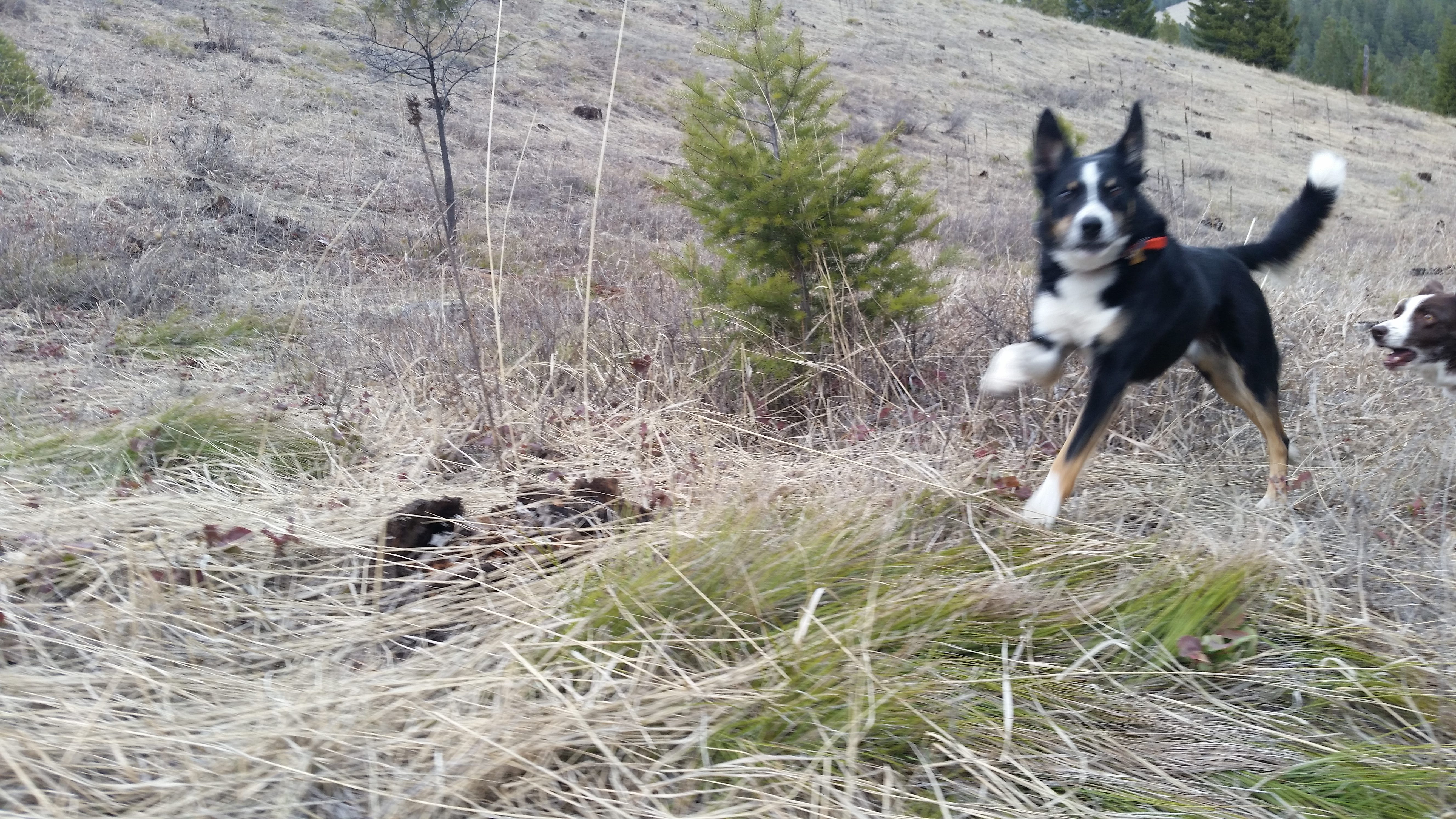
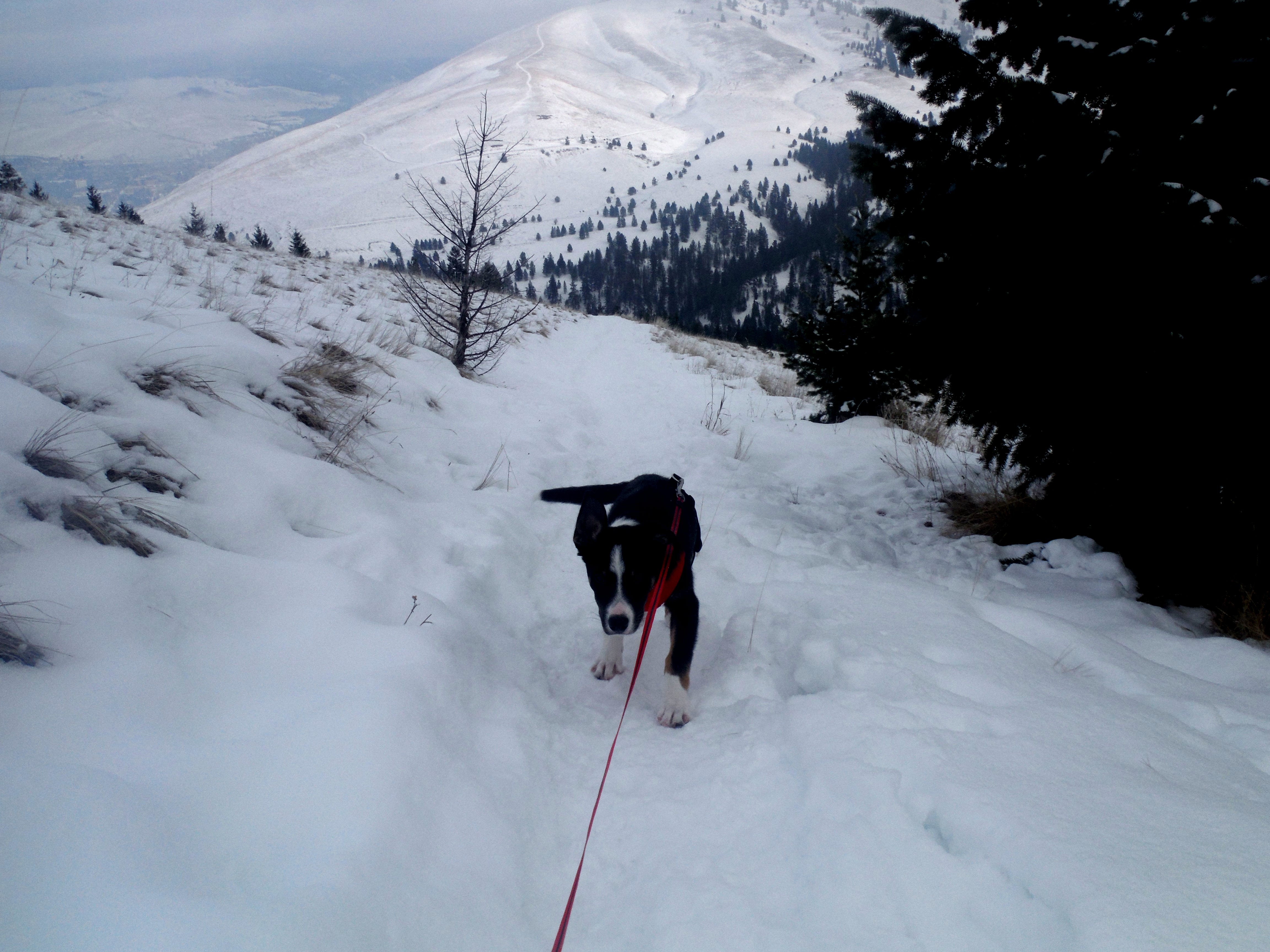
Dog running toward camera

That’s right! The recall.

Being able to get your dog back to your side whenever and wherever you want is super critical. Not just for convenience, but for safety. Imagine if you see him running in a high-speed game of chase with another dog toward a road. Or what if an aggressive-looking dog is heading your way, or a dog you know yours won’t like for some other reason? Or maybe you see a herd of deer that your beloved pet will be quite interested in disturbing, or a raft of ducks, or a clowder of cats. Even just one cat.

Without a recall, you’ve got zero control. A dog-owner relationship can’t really happen, in fact, because you won’t have a dog most of the time. Instead, you’ll have a loose fluffy cannon that’s likely to get itself lost, run over, taken home by someone else, or spend a delightful afternoon chasing rabbits or deer in the woods (delightful for your dog, not so much for you or the wildlife, of course).

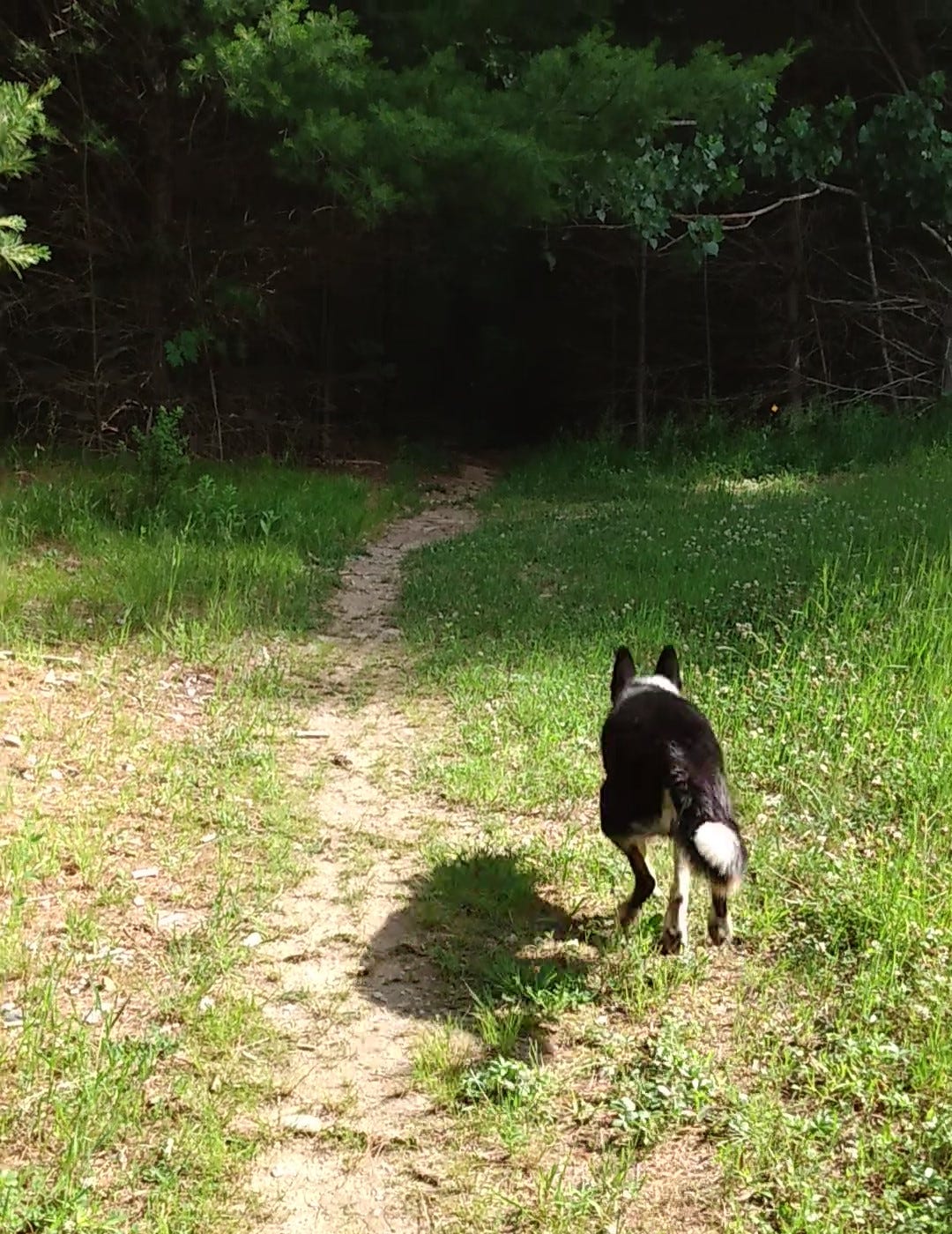
Dog running away

We’ll talk more about training the recall in a moment, but let’s take a quick turn inward toward our writerly selves. We need to ask the same critical question about our stories as we did about our dogs:

What’s the single most important part of your story?

Open book
Photo credit: Kourosh Qaffari

Yep. The hook. Most readers, agents, and editors agree that they simply won’t continue reading without a good one.

If, like me, you’ve been querying publishing professionals for some time, you already know that both queries and pitches contain a single line that captures the essence of what your protagonist wants and what’s keeping them from getting it. This is the hook. Add another line about what happens if they don’t get what they want, and boom, you’ve got the stakes of your story.

Of course, in the story itself, setup of the hook can take many pages. The obstacles to a character’s chief want may not actually present themselves until the end of the first few chapters, but readers should have a solid idea of what the character wants on page one or by the end of chapter one, depending whom you ask. And by the time readers are ten percent of the way through your story, they’re gonna want to know what it’s about. Smaller hooks work great at the end of each scene or chapter.

In other words, a story hook answers the question: why do we care enough to keep reading?

Agents often say they read queries and sample pages line by line. If they don’t feel intrigued enough to go on at any point, they’ll put it down. This goes for readers, too. So it’s good idea to begin to get the essence of your hook out there from the very first sentence. Can you hook your readers into sticking around?

Likewise, can you hook your dog into sticking around?

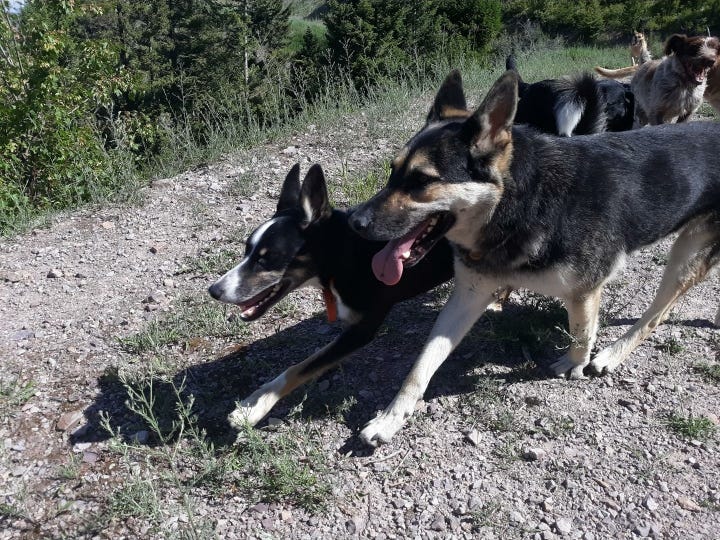
Pack of trotting dogs

There’s actually a lot of similarity here. Picture your dog as the “reader” and yourself as the “story.” What can you do to make your dog care enough to come back to you?

The simplest solution is to divide that question into three smaller ones:
1. What do they want most in the world?
2. How easily and successfully can they get it? (specifically, are there any obstacles or distractions in their way?)
3. What happens if they don’t get it? (i.e., what are the stakes?)

Let’s answer those three questions for Tock:
Q. What does he want?
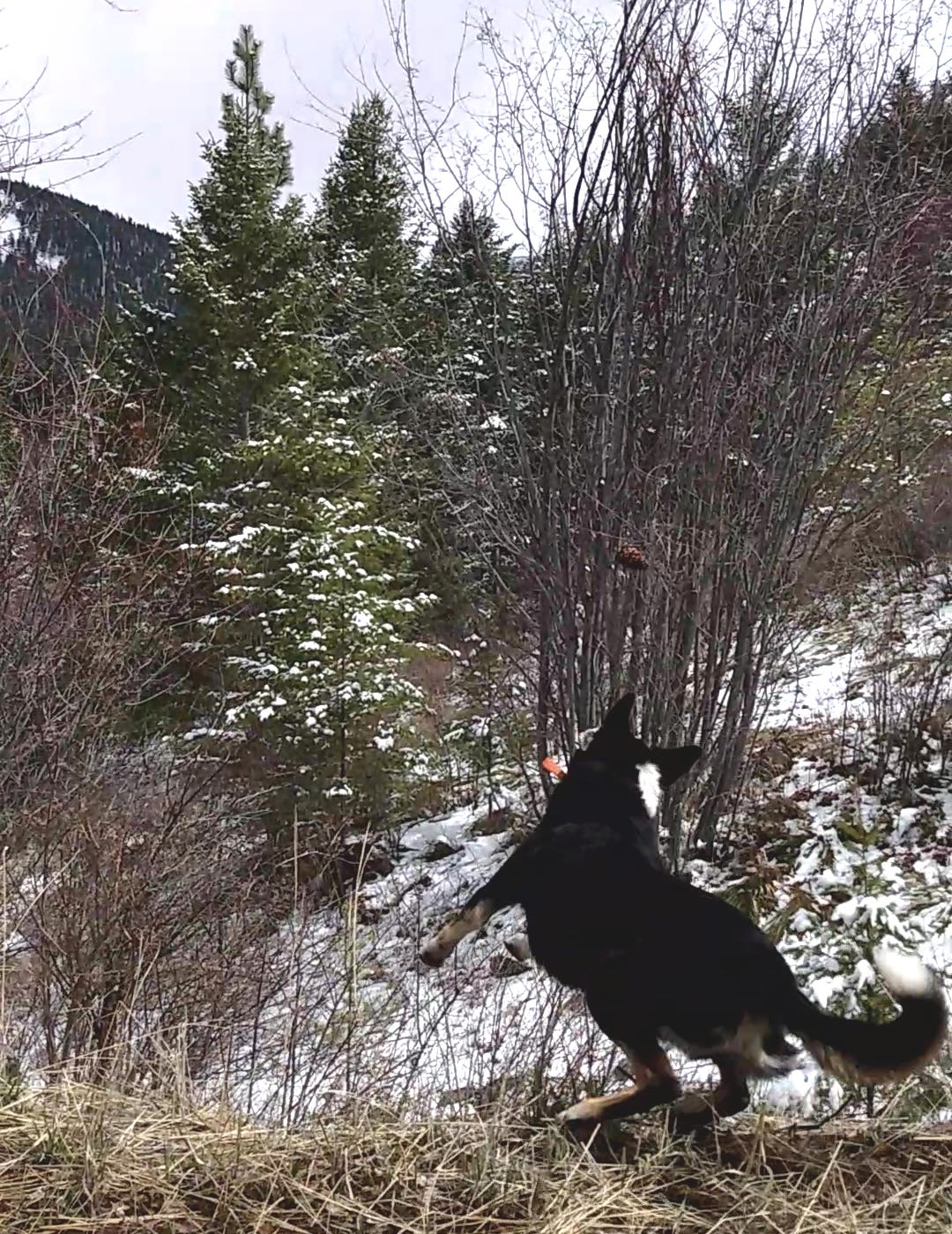
A. Tock: “Pinecone, please. If we (translation: Wendy) can’t find one, then I’ll take a snowball. Or a frisbee. In desperate situations, a stick.

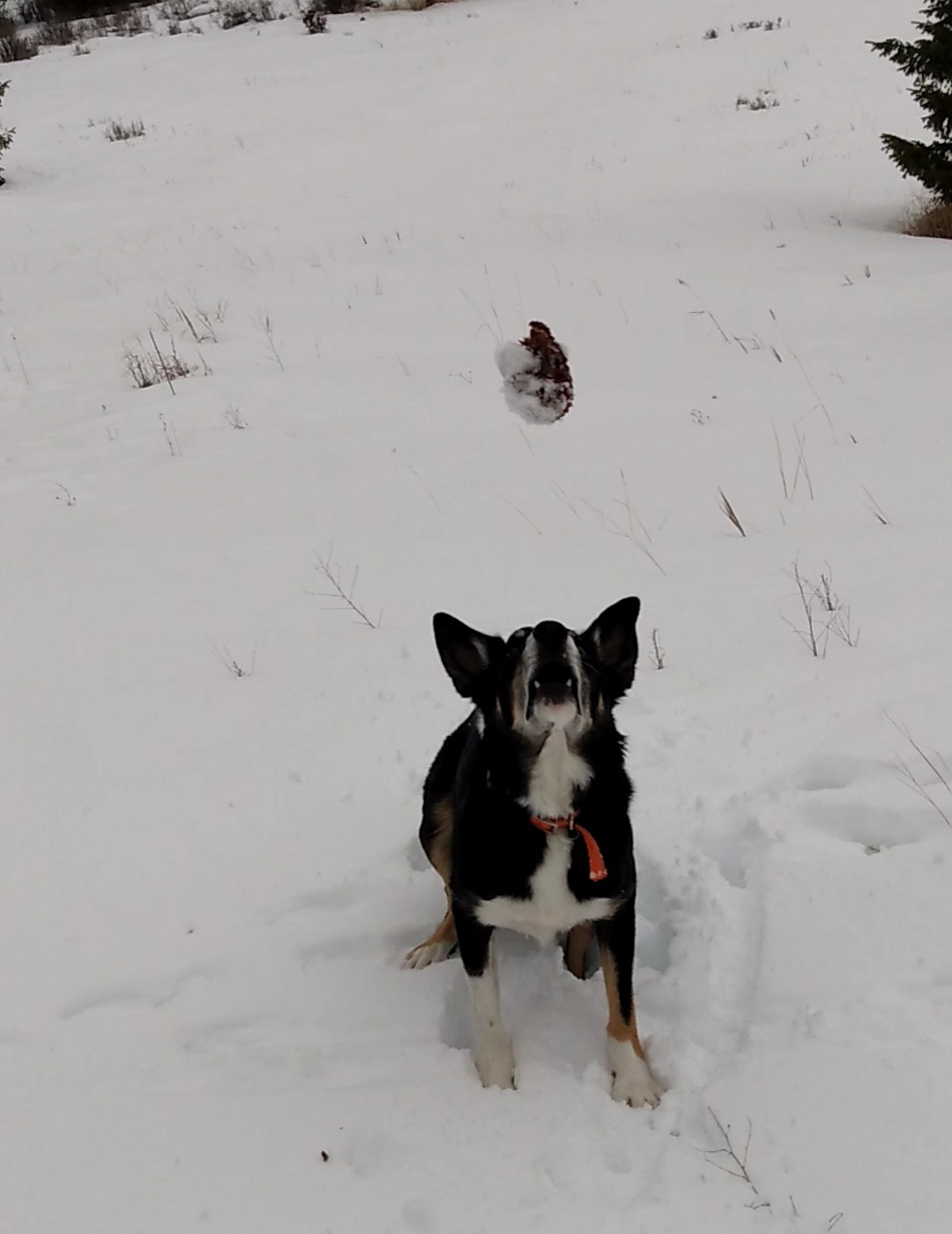
Dog about to catch pinecone


Q. How can he get it?
A. Tock: Wierdest thing. Wendy always wants me close to her before she throws the darned thing. So I get close. Who cares about what other dogs, squirrels, or deer are doing if something’s gonna go hurtling through the air that I get to fetch?

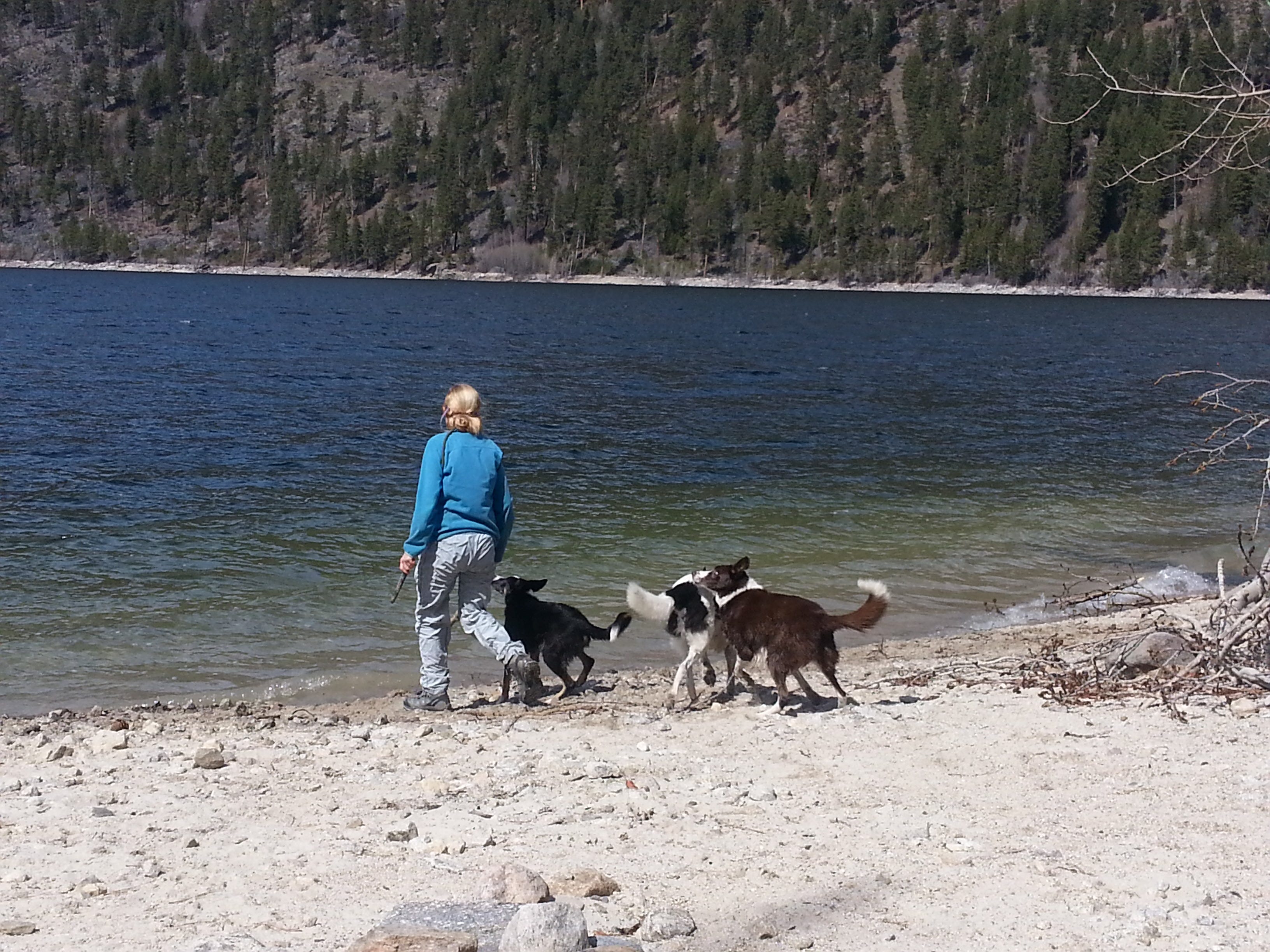
Dog next to person holding stick

Q. What are the stakes for him not getting it?
A. Tock: Obvs. If I don’t come back right away, I don’t get to play my favorite game! And if I’m really bad, not that I ever, ever am (clarification: Tock may have a faulty memory of his younger days), I might find myself on the boring end of a leash for a while.

Dog on leash

Now, not all dogs have a pinecone receptor in their brains like Tock. They might prefer playing catch or tug with another kind of toy, or getting to inhale a treat. But—and this is important—it better be the most fascinating toy (preferably one they only get to see during recall training) or the most delectable treat ever! No boring kibble, unless that’s the thing they love most. And little treats in a row are way better than just one. Dogs can count. They know when they’ve hit the jackpot.

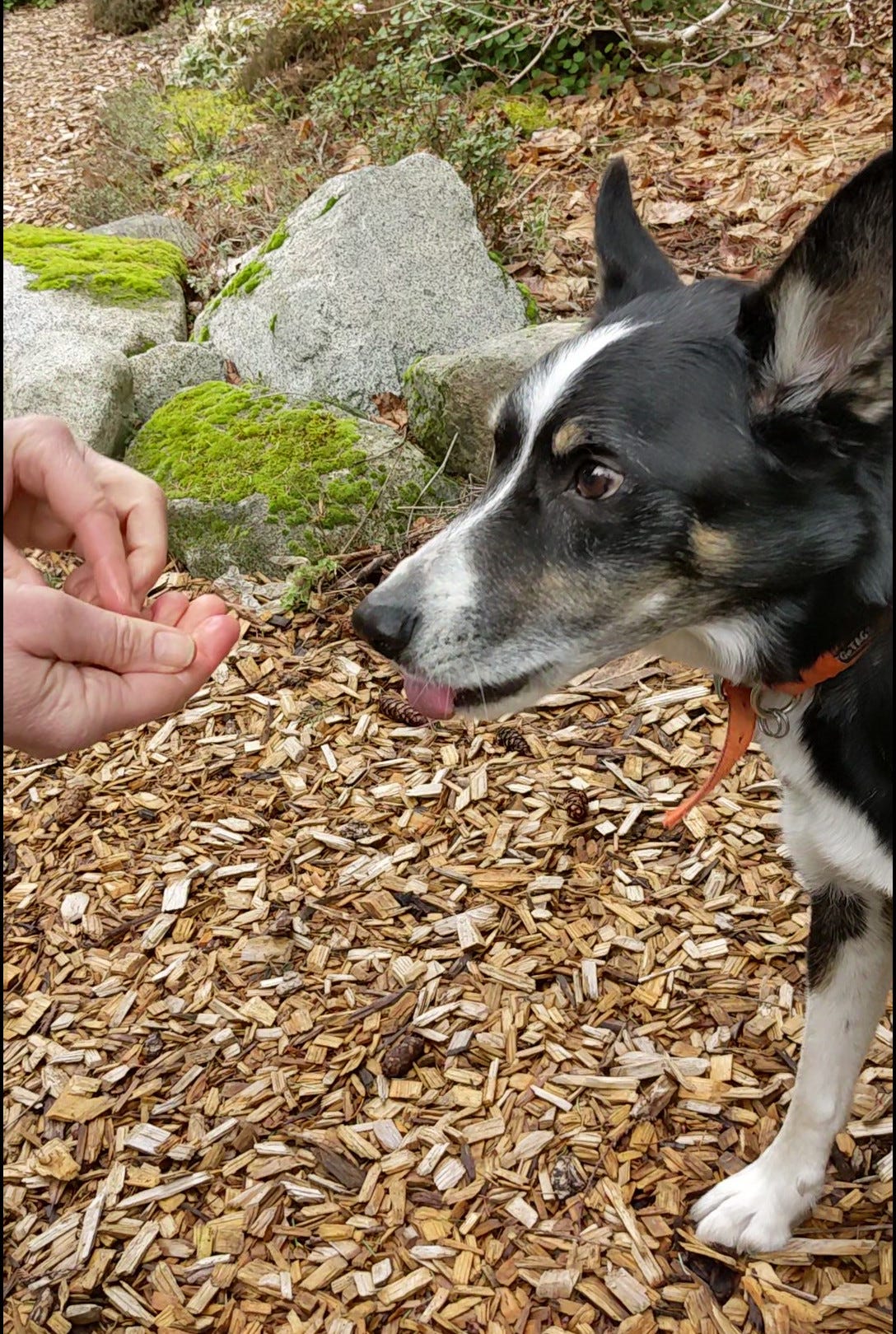
Dog getting treat reward
Tock getting the first of many treats in a row for a good recall.

Some dogs might like being petted and fussed over by their human more than anything else.

Person patting dog
Tock is 99% work, but here he is getting love anyway.

The biggest rule to live by is to keep yourself interesting to your dog! No matter what the reward, lots of dogs love to engage in a game of chase with their person right before getting it. Just as a live squirrel is way more fun for a dog than a dead squirrel, so is a “live” toy or treat that the dog has to chase and perhaps tug away from you. A recall should always be a fun game in which you get to be an active participant!

Share Happy Tales

When either training a dog or thinking about your story hook, it’s best to start simple. Many beginning writers throw too many enormous life or death obstacles at their poor protagonist right away. But your readers might not care about the characters enough at that point to get why those problems even matter. Remember to start with: What does your protagonist want? (Note: this doesn’t mean lots of backstory. Make sure characters aren’t too passive and keep as much of the action as you can in the present time.)

Likewise, it’s tempting to try recalls with dogs all the time, all over the place—at the dog park, on the sidewalk, in the hills. But your poor puppy might not know you well enough yet to want to come back to you in the presence of all those fun distractions (translation: he might not understand the stakes he’ll be missing out on.) Start your recall training inside with lots of great rewards (trust me, if your dog isn’t crazy over-the-top about them, they’re not good enough). Start by calling your dog a very short distance with zero distractions! And don’t jack up the difficulty until you’re 100% sure they’ll do it. Otherwise you’re diluting the power of their name. They’ll learn that they can ignore it when the Great Outdoors offers them something more interesting than you.

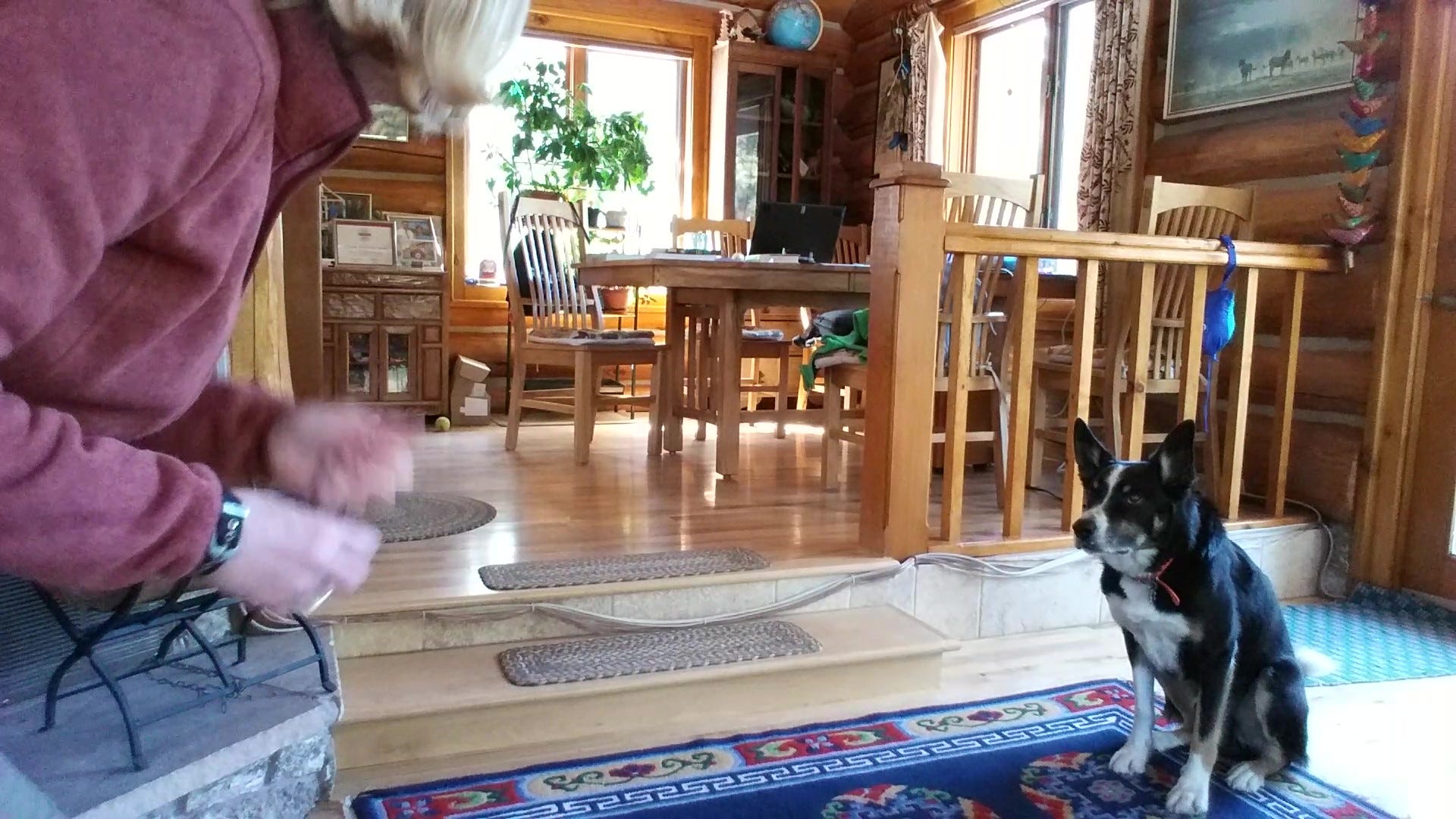
Dog in a sit-stay, waiting for treat

Back to writing, try crafting a simple hook before you even start your story. This can help it gel in your mind. Most importantly, this hook helps you bond with your story – because if you don’t understand it, how will your readers? Next, keep that hook in mind while you’re writing the first draft of your first few chapters. Re-visit it and make sure it’s compelling. Envision your hook like an invisible leash, pulling your readers—or your dog—back to you whenever and wherever you want.

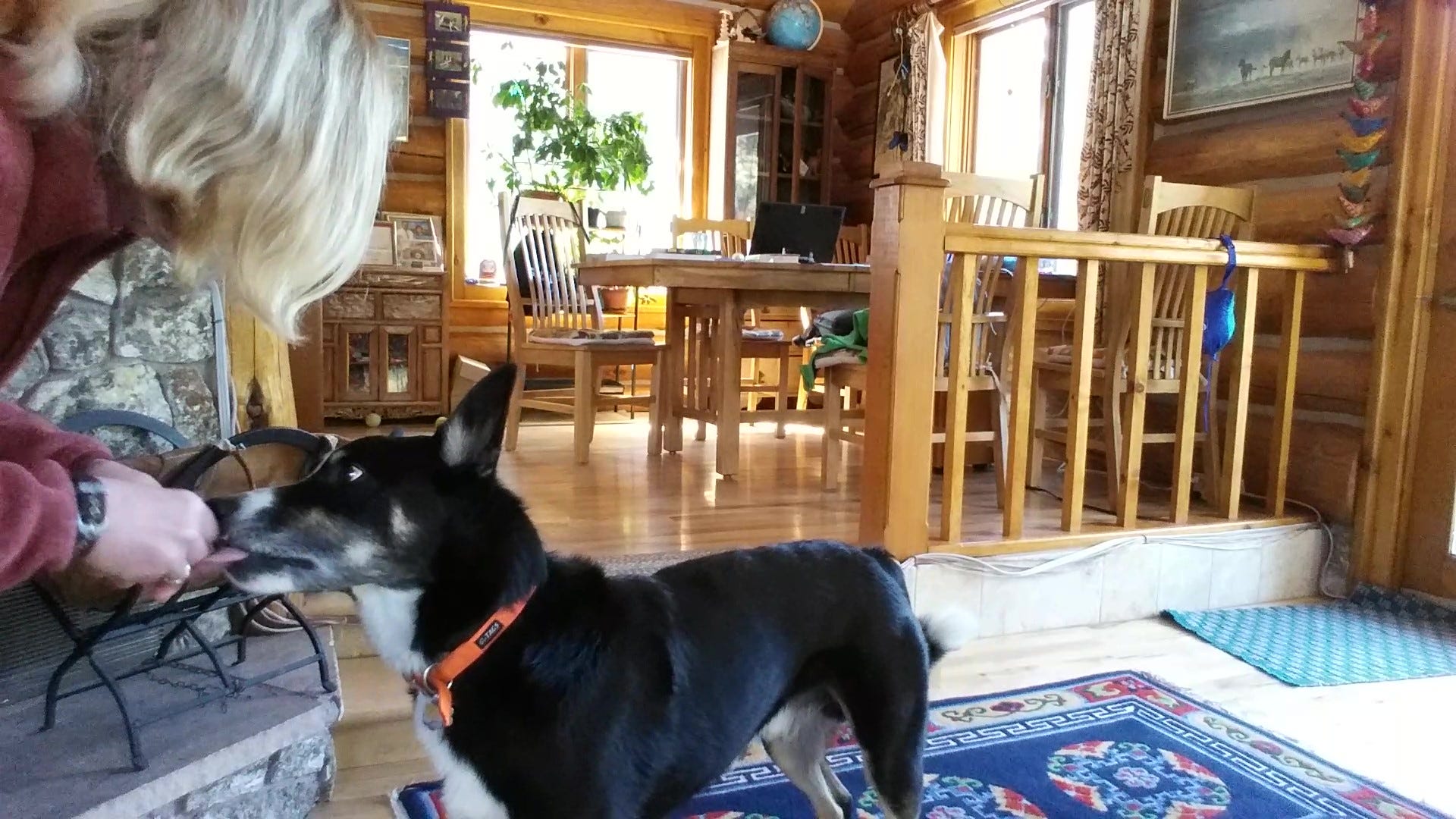
Dog recalled to handler, getting treat

Happy Tales!

Wanna Go For a Walk? (or: How Your Dog Will Solve Your Writer’s Block)

“Ready for walkies?”

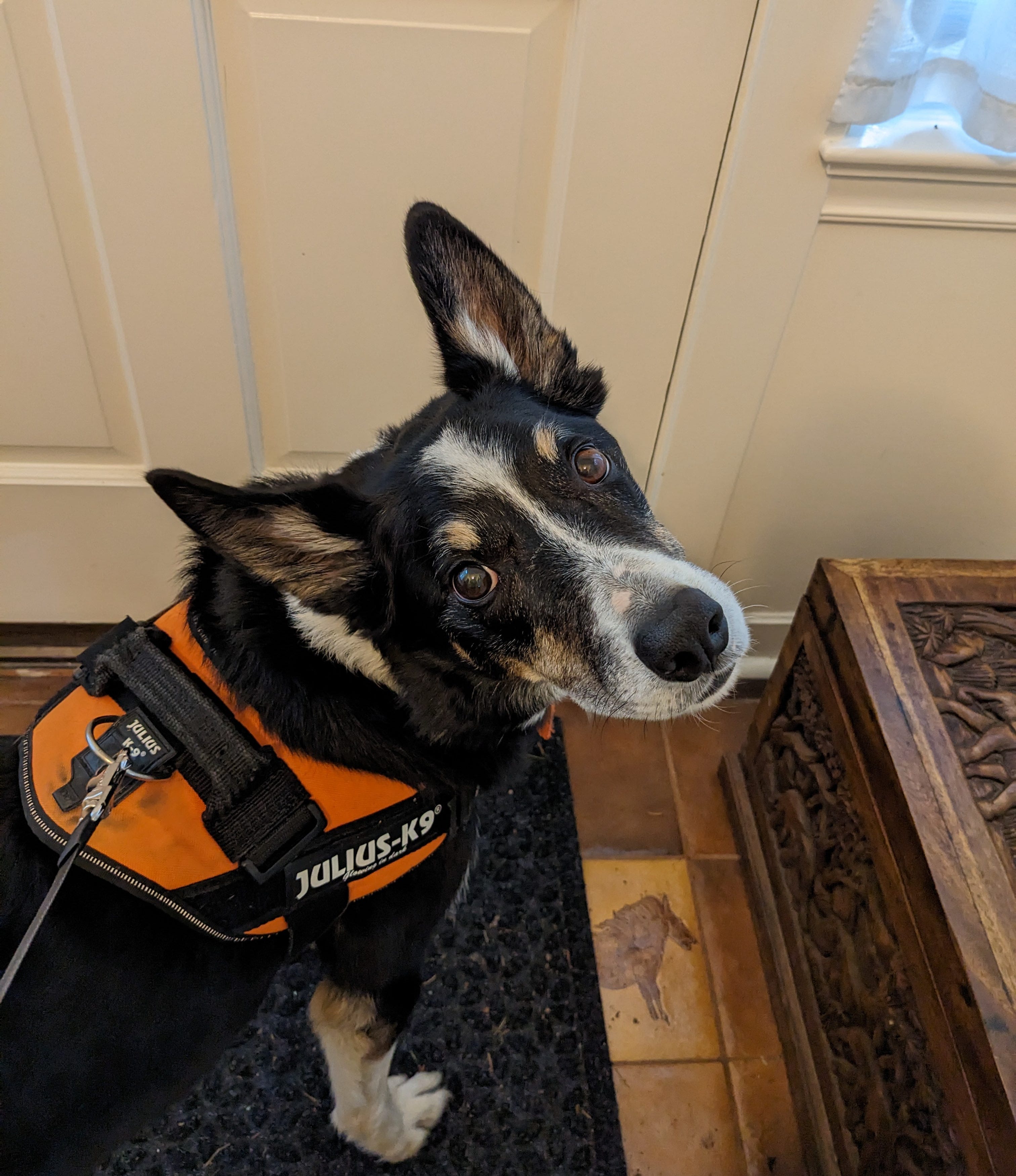
Dog standing at door

If you have a dog, you probably say something of this sort every single day. Hopefully more than once. It’s an auditory litany that mustn’t be missed, even though as a writer, you’ve probably learned that unintentional repetition isn’t a great thing. If you skip it, you’re likely to end up with a miserable pet and a messy house (okay, one that’s even messier than usual). You’ll miss out on one of the most fruitful sources of inspiration known to humankind, and a surefire solution to Writer’s Block. This holds true even if you don’t have a dog, though of course a canine companion provides the best excuse for getting outside whether you feel like it or not.

An addiction to walks is why my dog and I traipse through the hills each morning. We put aside chores, snacks, conversations, and actual writing in favor of retreating to the forested hills out our back door. No matter whether it’s hot and smoky from forest fires, gray and rainy and inches deep in mud, or icy and blizzarding and ten degrees F, we suit up and begin a brisk walk up a bumpy trail. To the uninitiated, this trip might sound mundane or downright unpleasant. But to my dog and me, it’s an entry into our own fantastic Land of Oz.

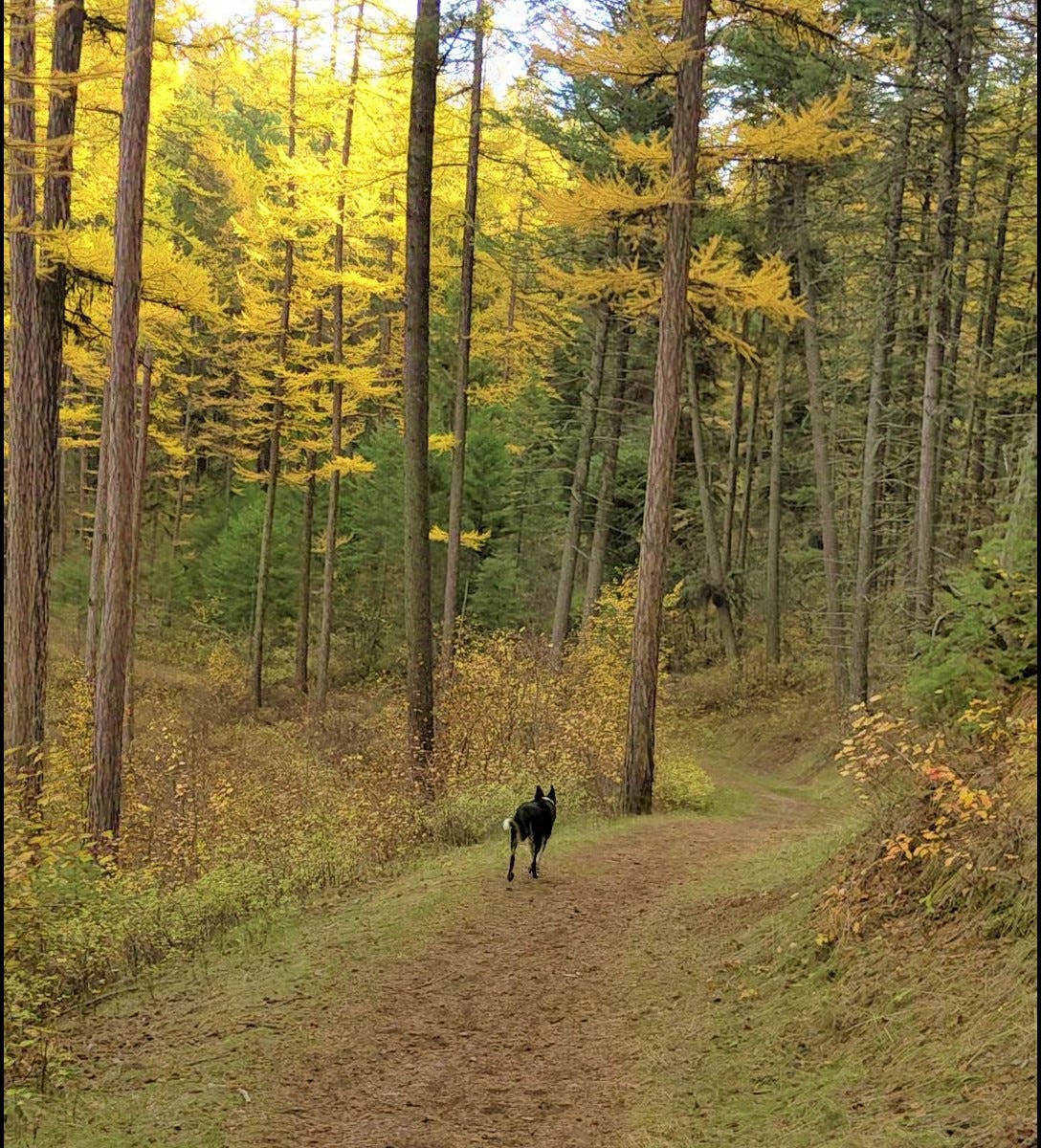
Dog trotting through woods

Huh? you might wonder. How could a trudge along a dirt trail remotely resemble the fantasy world in one of the most classic of childrens’ books?

Easy. You know that trail my dog Tock and I follow? Don’t be fooled by the ice, dirt, rocks, roots, hounds-tongue burrs, and knapweed. Nope. It’s actually the yellow brick road. Not only does it lead us to our goal—a high point with a view—but we always, always get more than we bargained for. In a good way. Mostly. Here’s what happens:

  1. We get to hunt down wicked witches (Tock’s translation: pine cones or snowballs, depending on season. In desperate situations, a stick will suffice.)
  2. We make every effort to scare off the flying monkeys (Tock’s translation: squirrels).Photo credit: Andrey Svistunov
  3. We make some friends (Tock’s translation: other dogs) if we’re lucky.
  4. We go on an interesting adventure in which our hearts pump furiously.

And then? Like Dorothy and Toto, we go home.

Okay, fine, you say. Land of Oz. Cute analogy. But what does it have to do with me writing a single word of my recalcitrant Work-in-Progress?

Glad you asked. In fact, the great outdoors is one of the most perfect places to think about and talk about writing. First of all, we—meaning everyone, not just writers—live in our own stories all the time. Stories that we create every day. They might be wholly true, they might be wholly fictional, or they might be somewhere in between. They’re our own personal narratives, about ourselves, people we know, things that’ve happened to us, or things in news.

Now if you’re a writer, or want to be a writer, you spend even more time in your head sifting through those stories, and other people’s stories, and your thoughts, feelings, and reactions to all those stories to find the ones that you want to write down.

Sometimes, this is pretty overwhelming. You get stuck. You can’t dig through the mess deep enough to find a fresh new idea. Or you have so many ideas that you can’t decide which one to work on. Or you can’t solve a problem in your plot, or your characters, or your world. You might feel like the solution is off in the wings, in your peripheral vision where you just can’t quite grasp it. It darts away when you try to look at it because there’s simply too much stuff going on in your head. Too many thoughts and stories distracting you.

So what can you do? Simple. Get away from your screens! Put yourself in a situation where your subconscious mind can take over. Engage your entire body (your physical self) to the best of your ability, so much that you can damp out all the clutter. Get your heart pounding, your lungs acting like bellows, your muscles working, your sweat glands pumping. Get some fresh air! (Hopefully fresh, depending where you live.)

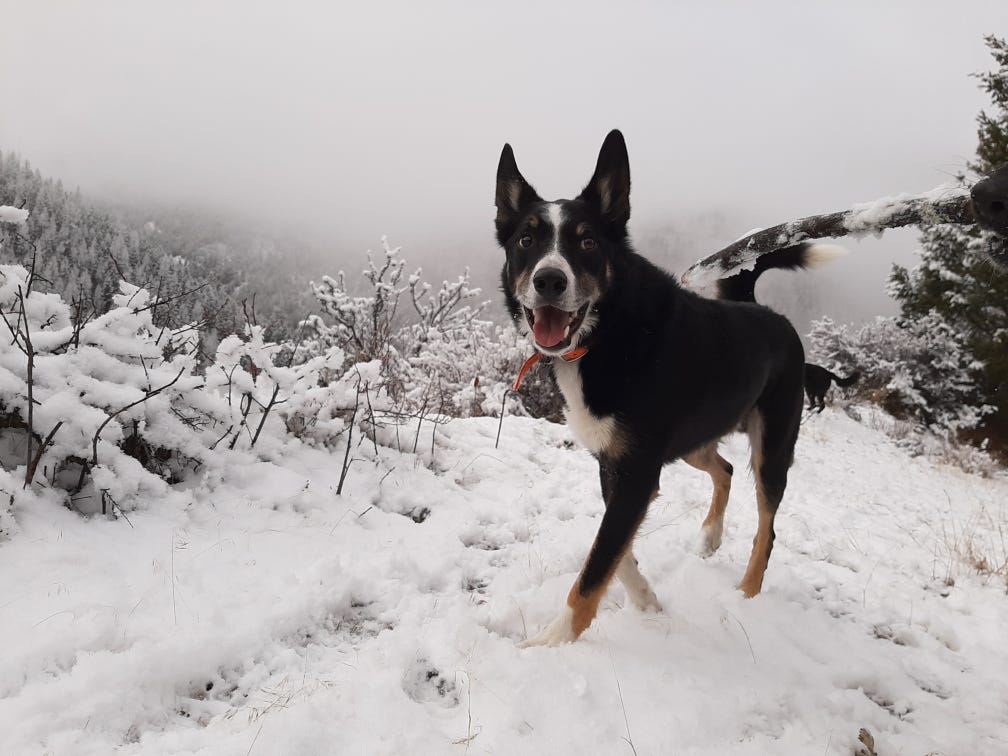
happy dog outdoors

And the beauty of this is that you can do all of it by going for a walk! As you probably know, exercise has major physical health benefits for your heart, muscles, bones, and immune system. All those endorphins released by exercise lead to higher levels of happiness and relaxation. Even better, regular aerobic exercise benefits your brain! It increases the size of your hippocampus (the part of the brain associated with verbal memory and learning) and promotes neurogenesis—the growth of nervous tissue. You can become more resistant to neurodegenerative disease.

From a writing standpoint, here’s the most important thing: moderate aerobic exercise such as walking can provide you with your best ideas. You get to live entirely in the present, experiencing the real world—the one that’s happening right this second. Because you’re devoting all your energy to your physical self, your brain simply doesn’t have energy to keep up with the many story threads whirling around inside it. It relaxes and lets go, unmooring you from preconceived notions, assumptions, and worries. You find yourself able to see details and the big picture at the same time. And that’s when the ideas happen.

I’m speaking from experience here. Unless it’s deathly cold (below ten degrees F is the cutoff for my dog’s paws) or I’m deathly ill, I walk every day. After a few throws of a pinecone for my dog, ideas, memories, and solutions to tricky plot problems begin to pop into my head without any effort on my part. By my side, Tock chases, fetches, sniffs, and runs, thoroughly enjoying every second.

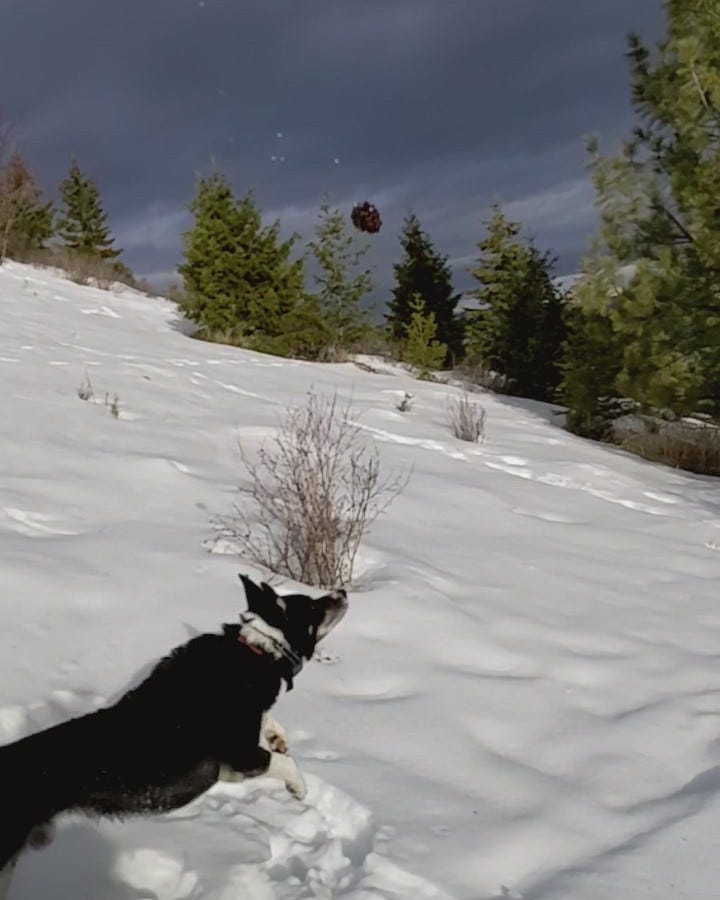
Dog running after pinecone

All you have to do to immerse yourself in your own Land of Oz adventure is to turn your phone off and your body on. Take your dog, if you have one and it’s willing. A walk in the woods is a truly magical place to most dogs. Unless they’re very nervous (in which case you’ll need to start much closer to home), they carry with them a sense of wonder, excitement and joy, as well as total immersion in the present. These feelings will spill over into you, too, no matter how down or worried you were before you went out the door.

This may sound strange, but I truly believe our dogs have a lot to teach us about writing. Twice per month, I’m gonna translate the basic precepts of dog minds, dog ownership, and dog training into simple writing tips. So if you love animals, if you love the outdoors, or if you love writing about these things, I invite you to join me here.

And now, from one writer to another, I urge you to get out there in the Land of Oz. I’ll be looking for you on the Yellow Brick Road.

Yellow brick road
Photo credit: Akshay Nanavati

Happy Tales!

(from: https://happytales.substack.com/p/wanna-go-for-a-walk)