“Do you like to play games?” I’m known to ask shyly of new friends. I wait with trepidation for their answer, hoping I won’t have to lump them into some “other” category, like people in an opposing political party, or those who eat red meat rather than no meat, or who don’t care that “Resident Alien” is ending after Season Four. They either do play games or they don’t, and if they don’t, they’ll think I’m weird for asking. Plus, there’s a whole area of conversation that they won’t understand and of fun times ahead with our family that they’ll never have.
To be fair, we’re friends with plenty of people who don’t get games and would rather just chat. That’s fine. But if they say “yes,” this opens up a world of possibilities.
“What kind?” I’ll ask eagerly. Board games, card games, word games, trivia games, solitary games, cooperative games, computer games, role-playing games, party games … there’s a favorite flavor for everyone.
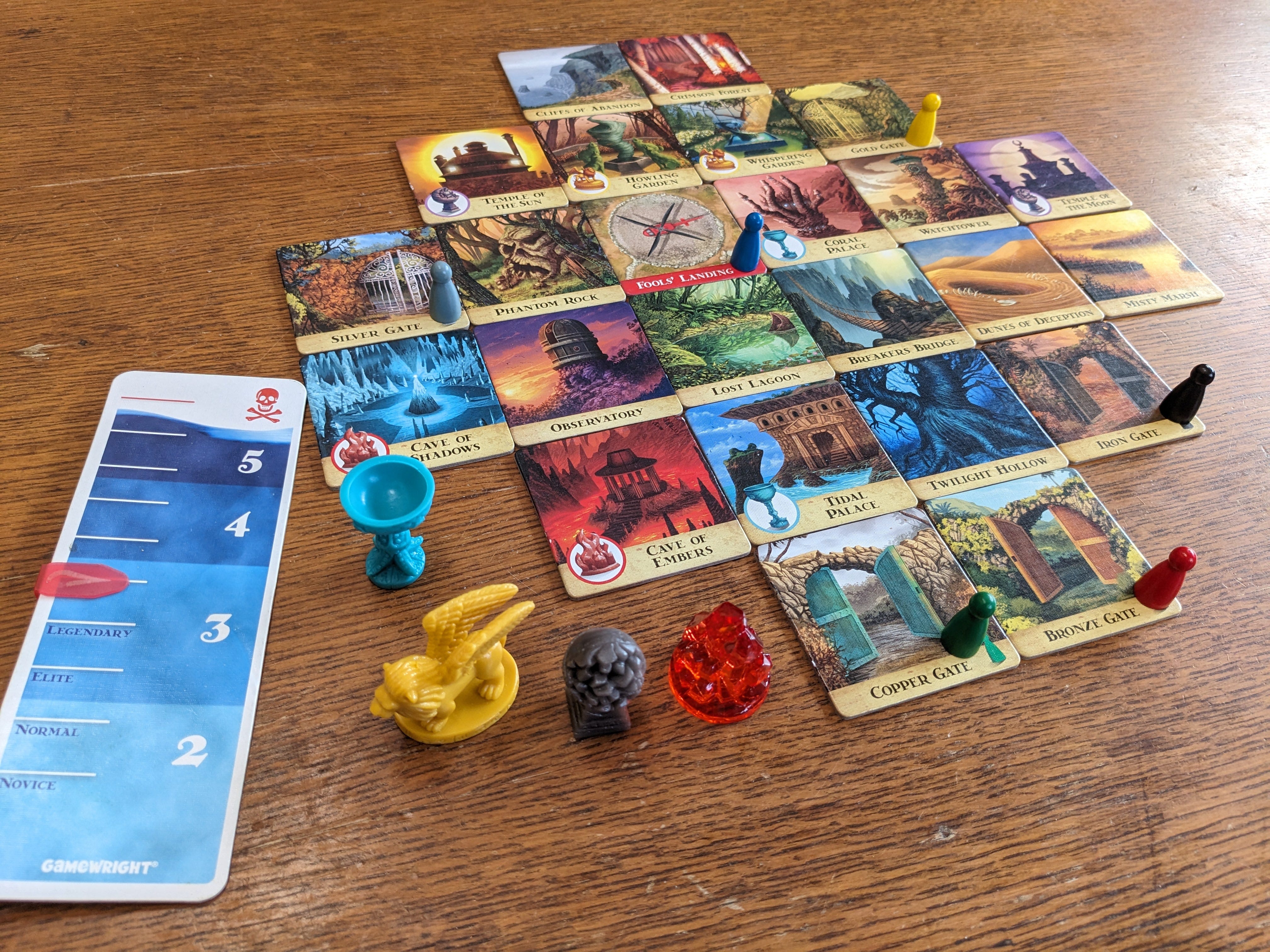
Forbidden Island – a surprisingly tense cooperative game
Deciding on my favorite game is almost as hard as choosing a favorite book. Depending on my energy level, mood, and who I’m with, I might pick “Uno” (a very simple but oddly addictive card game; great with one other person in a calm setting) or “Robo-Rally” (a chaotic game involving programming robots to move across as many game boards as you choose to fit on your table; best with lots of happy, loud people). I adore “Sculptionary” (easily created if you have tubs of Play-Dough and want to try sculpting answers rather than drawing them as you would in “Pictionary”) and “Balderdash” (i.e., the Dictionary Game because that’s really all you need). “Code Names” has been known to lure members of our family who professed not to like games, and “Myst” has the distinction of being the one computer game I truly loved because of the setting (who doesn’t enjoy treetop boardwalks and Mediterranean-looking islands?) and the slowly unfolding story it tells if you find the right clues.
The most fun part of Robo-Rally is when the board takes its turn – and a conveyor belt sweeps a robot into the abyss!
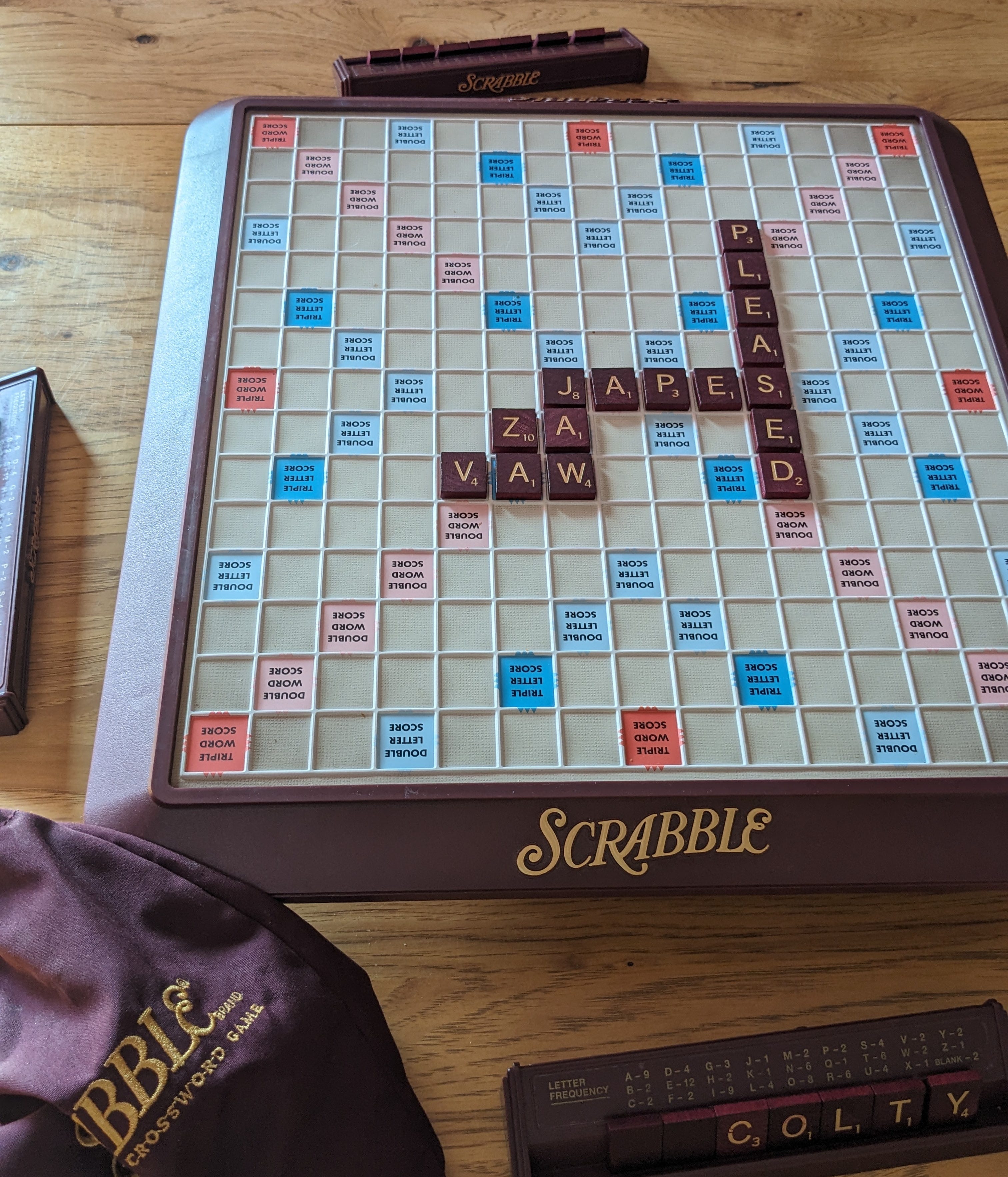
My all-time favorite game—the one I play every single day without fail (multiple times per day, actually) is Scrabble. Maybe there’s a correlation between writers and word games, maybe not, but for me, I find the simple act of combining letters into words—often obscure ones I didn’t know existed before—immensely satisfying. I have three different games going with three family members at all times. It works well on a phone during road trips or during my 2:00 am insomnia, but of course a good old-fashioned board is fun, too. We have an ancient board as well as the Deluxe version with the rotating turntable, though our Super Scrabble board (more tiles, more spaces, more points!) got lost in the move.
Getting a seven-letter Scrabble is the most triumphant feeling.
So what is it about games that is just so freaking fun? For me, I think, it’s a return to childhood. A chance to play at real life, with all its risks and scary decisions, but without actual life-or-death consequences. It’s a way to immerse oneself in an imagined world, to adopt a fictional persona, to be bold even if you’re not, to be as cutthroat or as savvy as you’ve always wished you could be.
Sound familiar? It should if you’re a writer, because it’s pretty darned similar to crafting a story. Now take it a step further and imagine yourself and your writing project as part of a writing RPG (role-playing game). Let’s call it “Path to Publication.” In such a game, you’d gain or lose skills, powers, and health points for completing a draft, receiving brutal editorial comments, submitting a query, or getting a rejection from an agent. My two best writer friends and I once had a lot of fun coming up with names for ourselves in this imaginary game. Mine is Wendy the Diligent. I’ve never really gotten into RPGs (with the exception of Munchkin), but remembering my chosen character always propels me to get back to work!
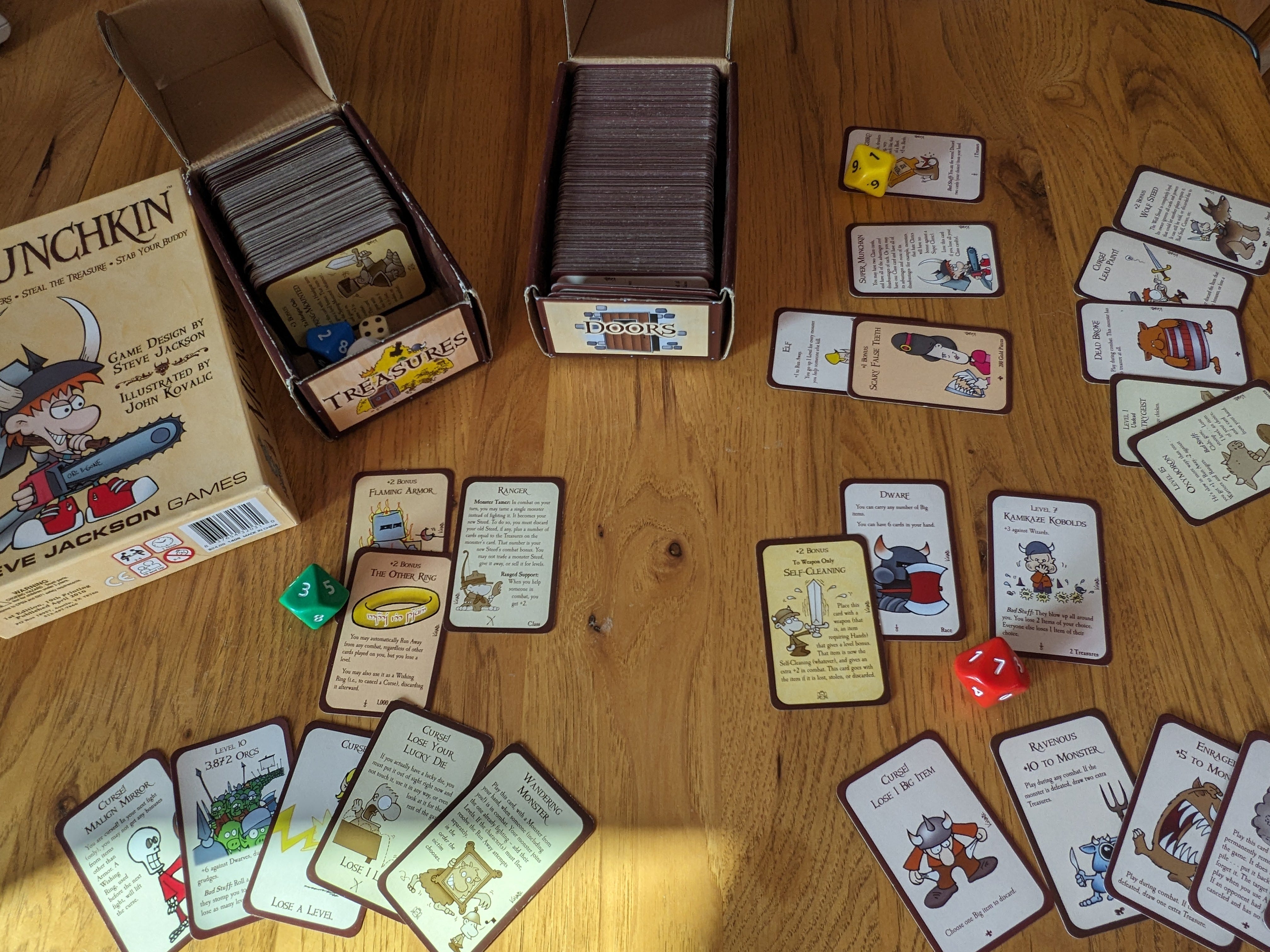
I love Munchkin because it’s such a goofy take on an RPG.
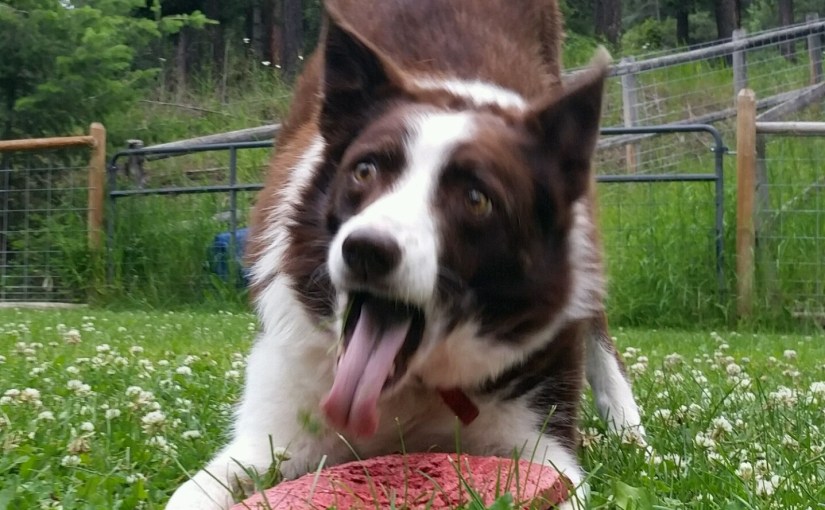
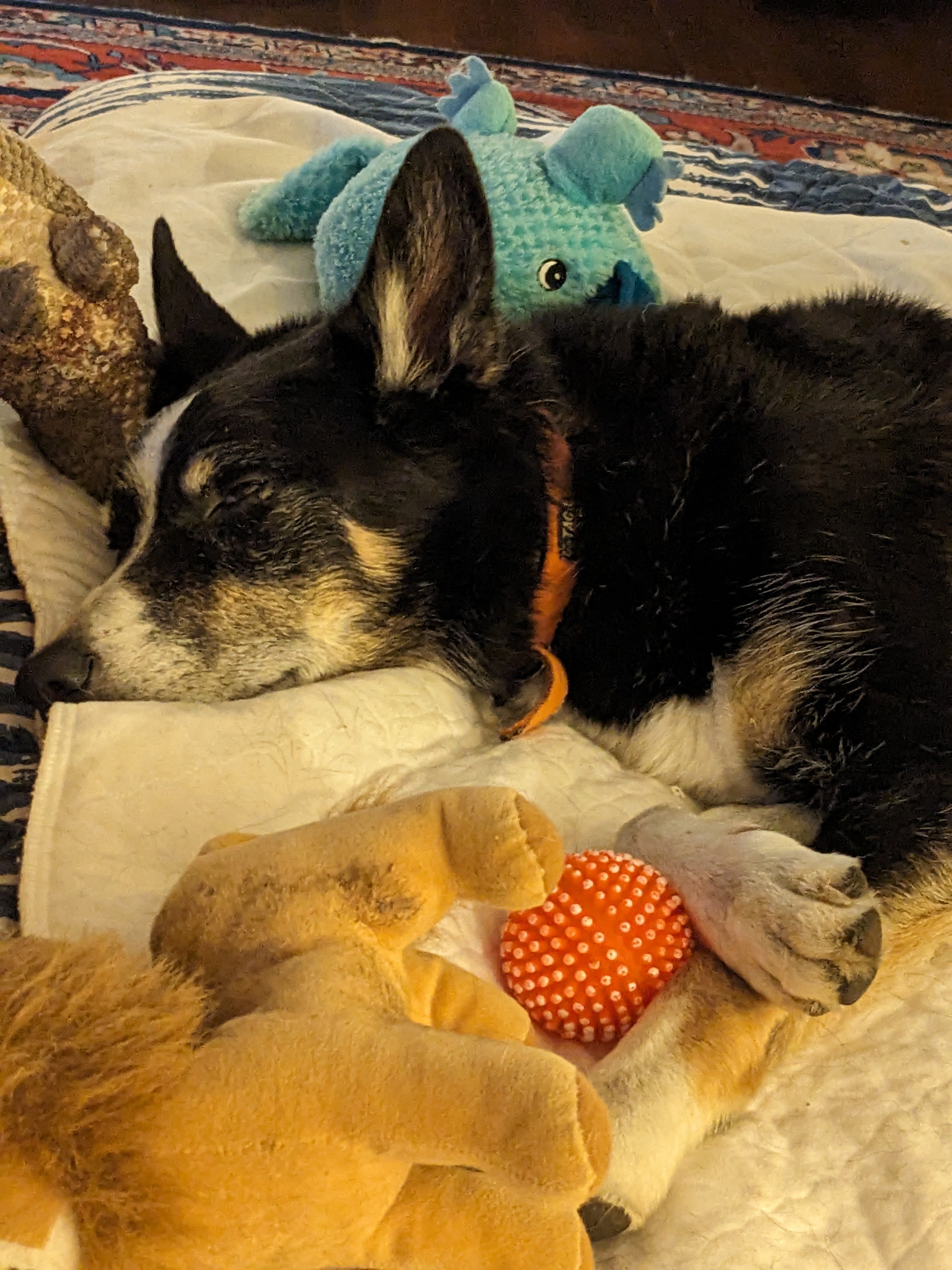
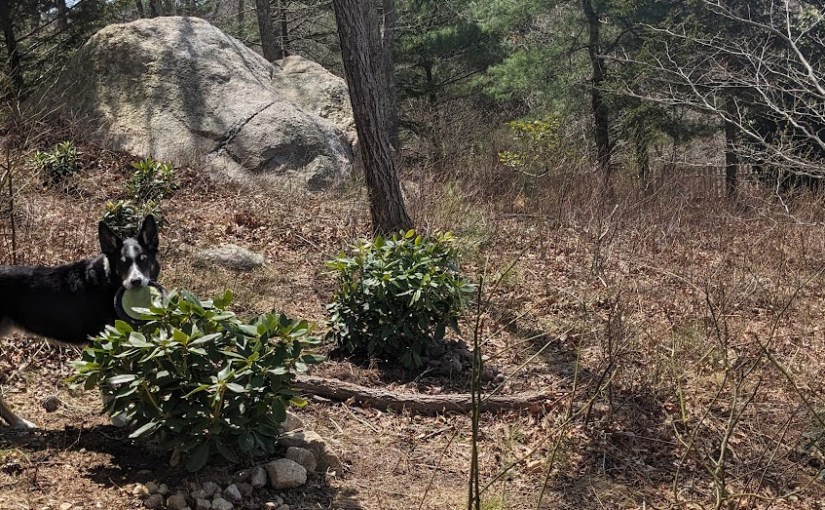
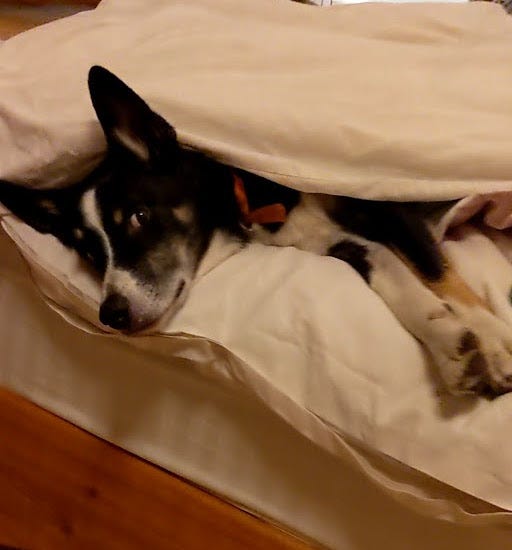
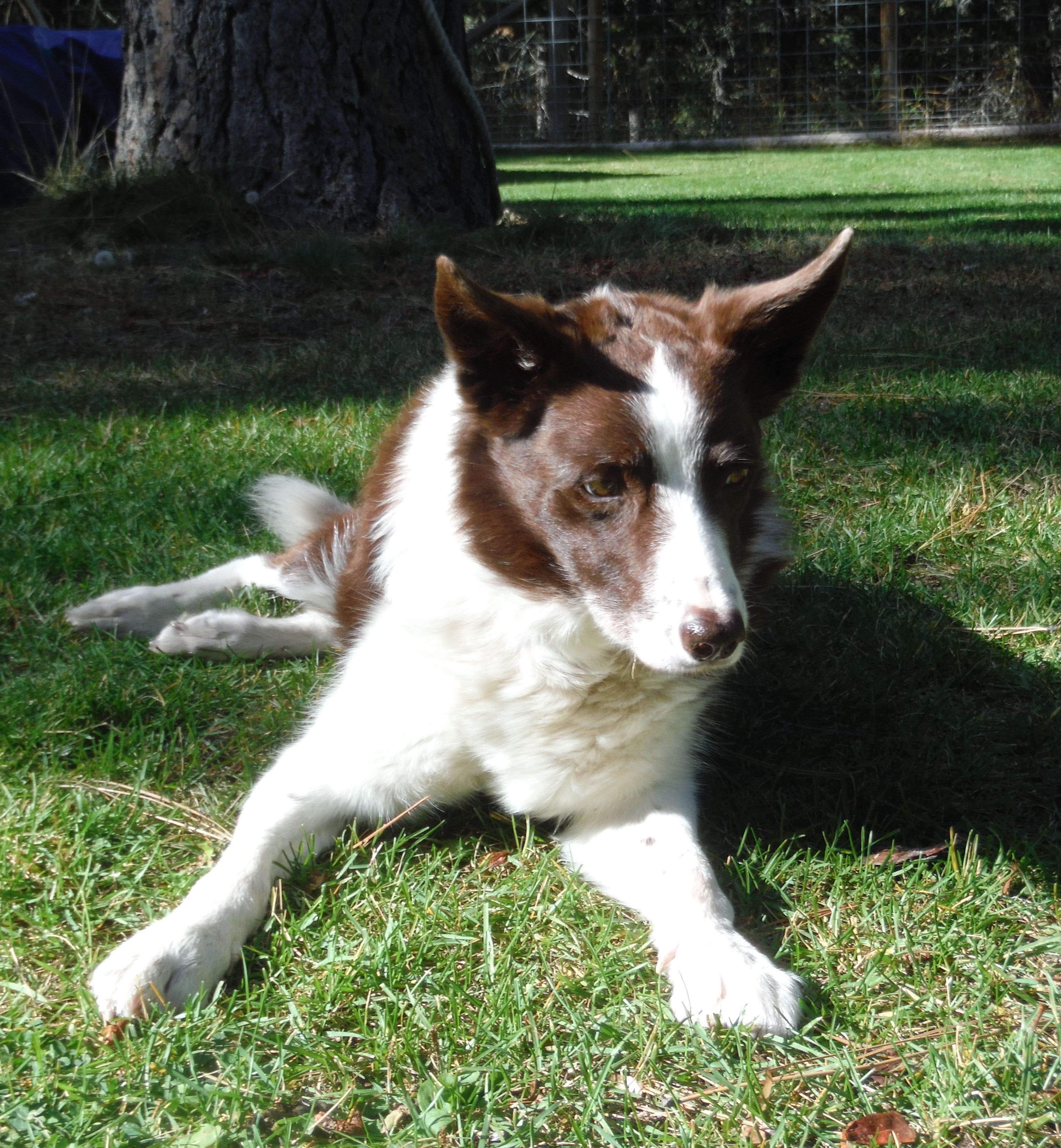
Now that I’ve been here at the computer for awhile, I’m gonna go hang out with another member of our household who’s an expert at playing games (pictured below. Need I say more?).
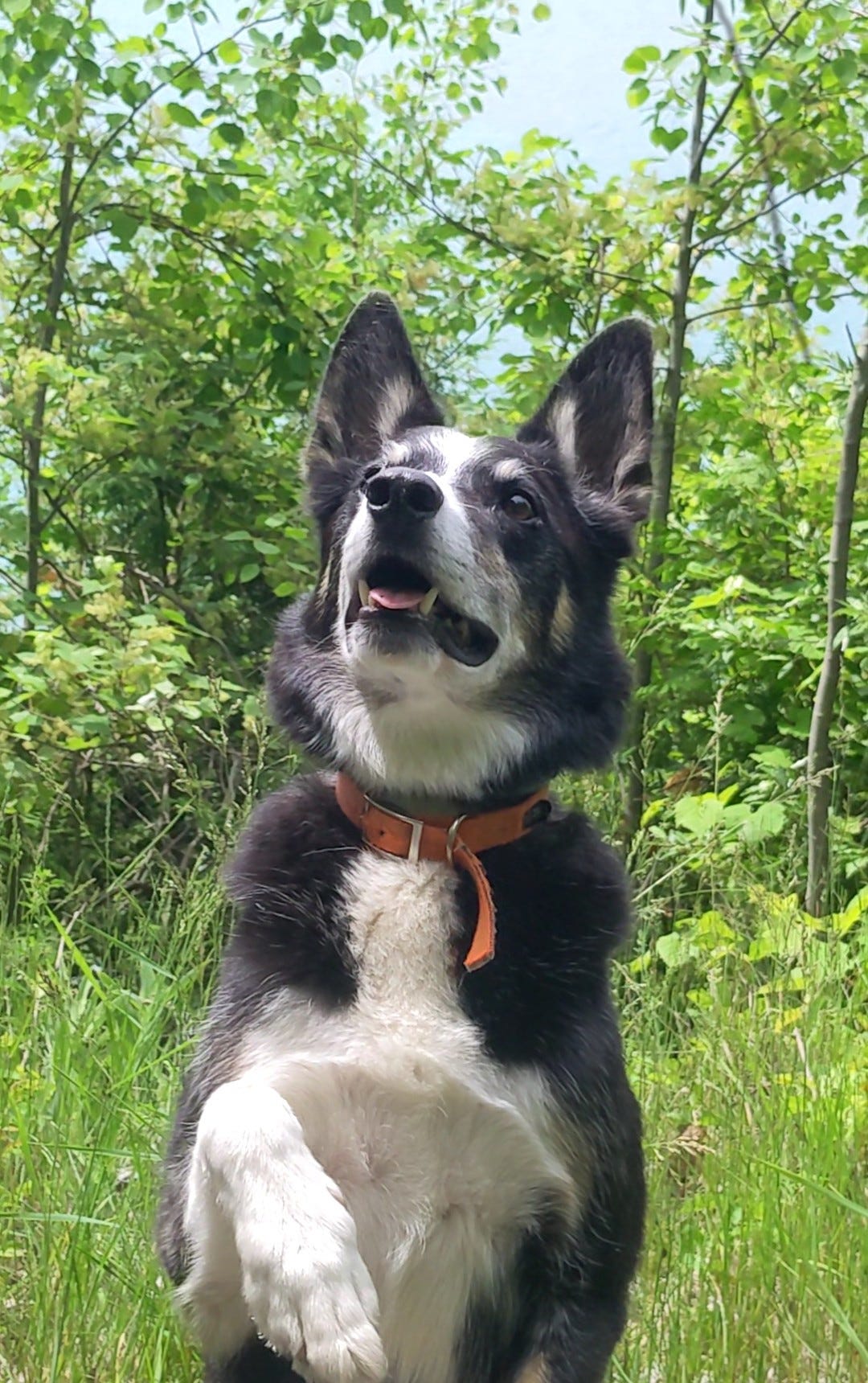
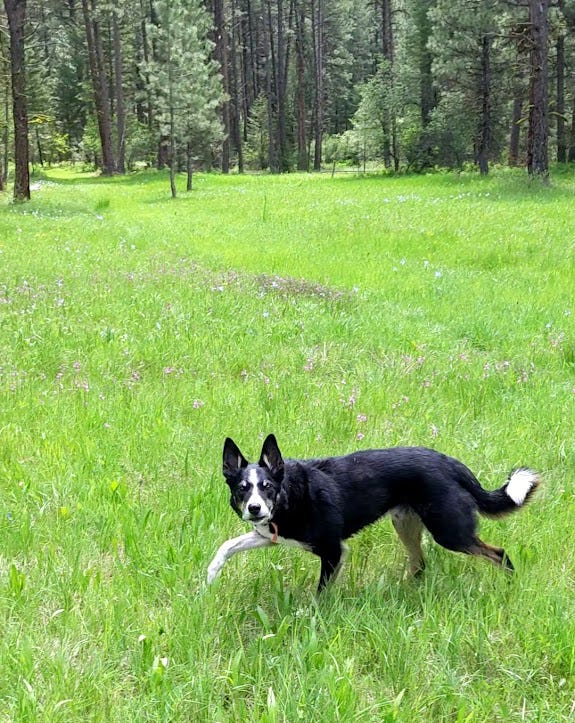
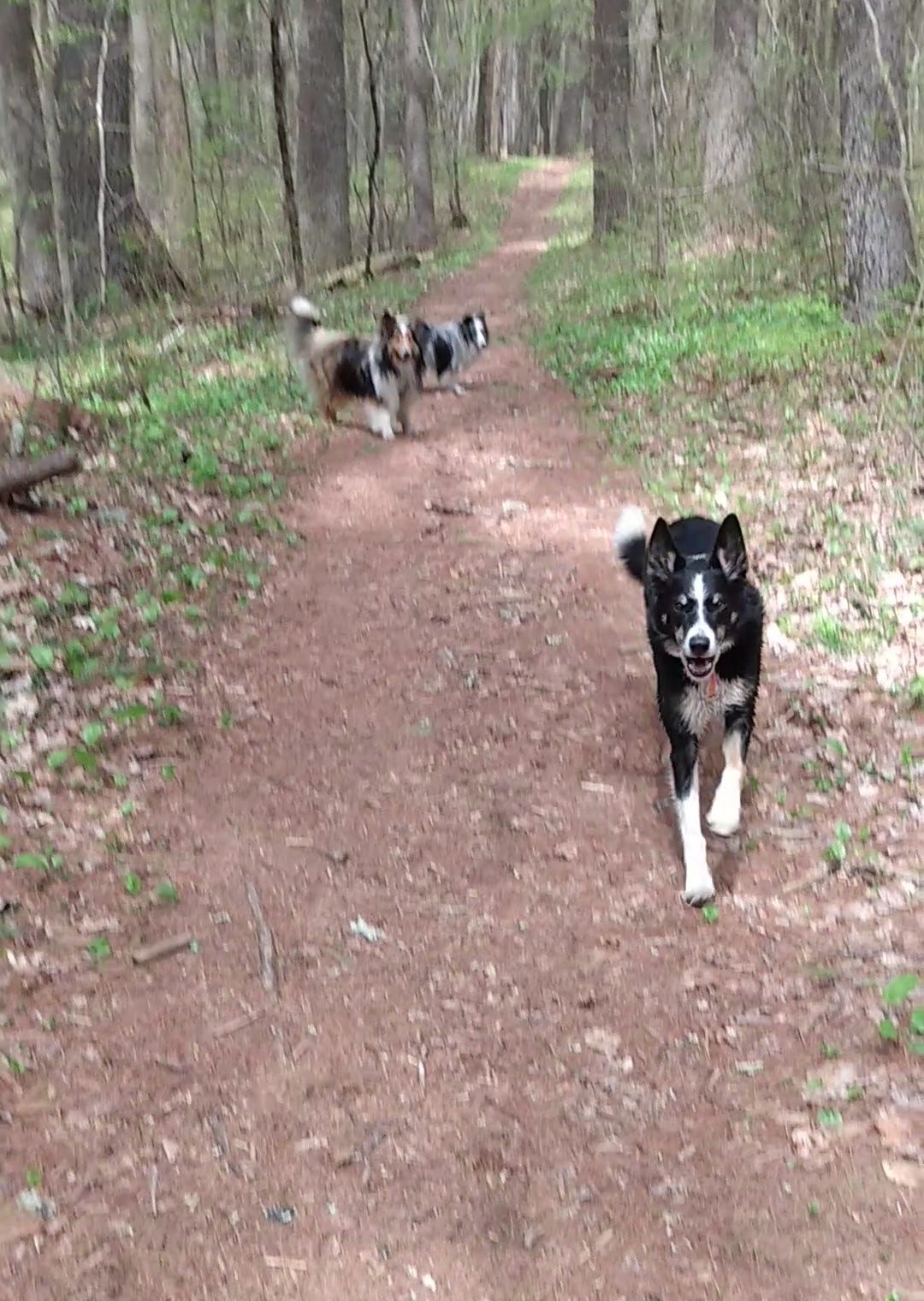
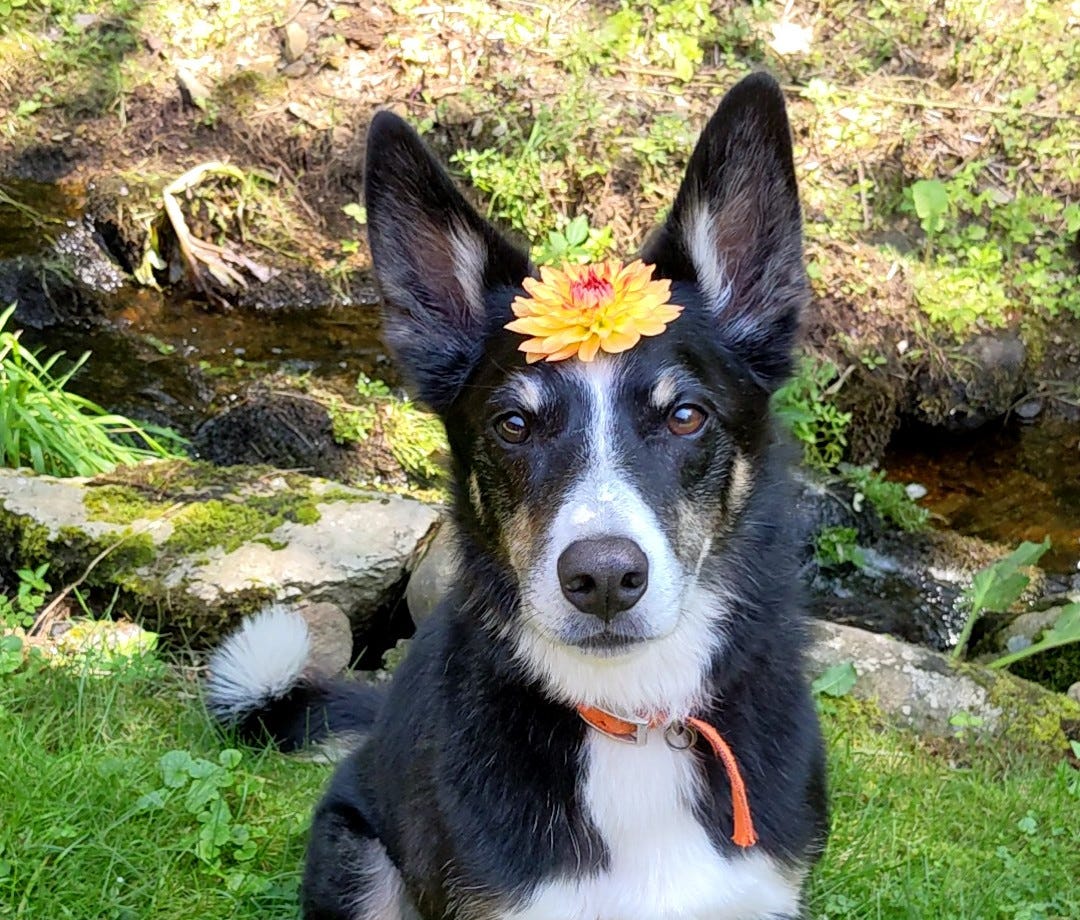
Tock is always ready to play.
Happy Tales!
Obvious question I have for you: What’s your favorite game?
Less obvious question: If you were playing an RPG of your life (or your writing, or whatever), what would your character’s name be?
Do you find your writing sliding into the realm of the subconscious in midsummer? I do, and I’m not ashamed to admit it. The Dog Days of Summer are my favorite time of year.
I get up at dawn just before sunrise, before the heat and the bugs have swamped the woods. There are too many trees to spot Sirius the Dog Star, the phrase’s namesake, but I know it’s there. For one thing, the Romans wouldn’t have put dies caniculares, or “days of the dog star,” in their midsummer calendar if it weren’t reliable. For another, if I were to visit a field in late July or early August on a clear pre-dawn morning with the intent of spotting Sirius, I’m fairly certain I’d succeed (at least until several millenia from now, when the Earth’s wobble will have shifted the dog days to midwinter). Sirius is the brightest star in the constellation Canis Major and the brightest star seen from Earth, after all. The stars of Orion’s Belt—one of the few constellations I can recognize—point southeast, straight towards it.
In lieu of Canis Major, here is Orion’s Belt. Sirius would be off the lower left. Photo credit: NASA Hubble Space Telescope
But the origin of the phrase isn’t why I love this stretch of days.
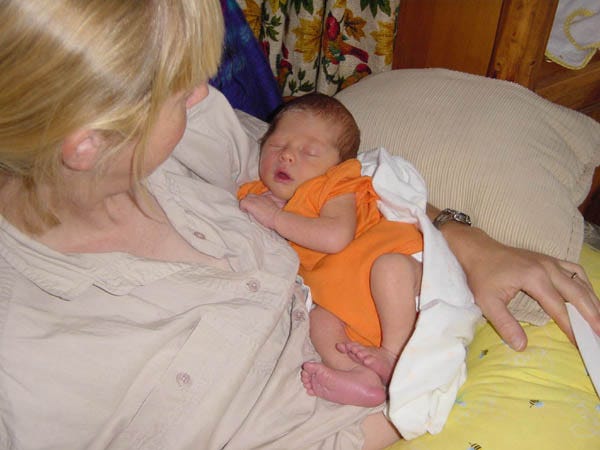
I think it’s partly because the Dog Days are ushered in by my son’s late-July birthday. For its combination of sheer hard work (labor, right?) and the astonishing and incredible euphoria of holding my baby for the first time, that particular day has imprinted itself in my brain as the best one of my life. It doesn’t hurt that he’s grown into one of the sweetest, most conscientious human beings I know (yep, biased, but pretty close to the truth all the same).
I also love the Dog Days because I’m at last at last down to a single layer of clothing. No more long johns, jackets, or even long-sleeved shirts. The world and I have reached equilibrium. Even as I heat up on a walk, sweat dripping down my cheeks, I feel as if I’m part of everything around me, swallowing and blowing great lungfuls of humid air with abandon, rather than burrowing inside hood, jacket, turtleneck, and gloves to protect myself from the harshness of a winter wind. Through the sultry heat and clouds of bugs, through the great gulps of water my dog and I take from our bottle, through the daily marathons of endurance these walks become, the Dog Days of Summer envelop me in their green, bee-buzzing, frog-burping, osprey-chirping womb.
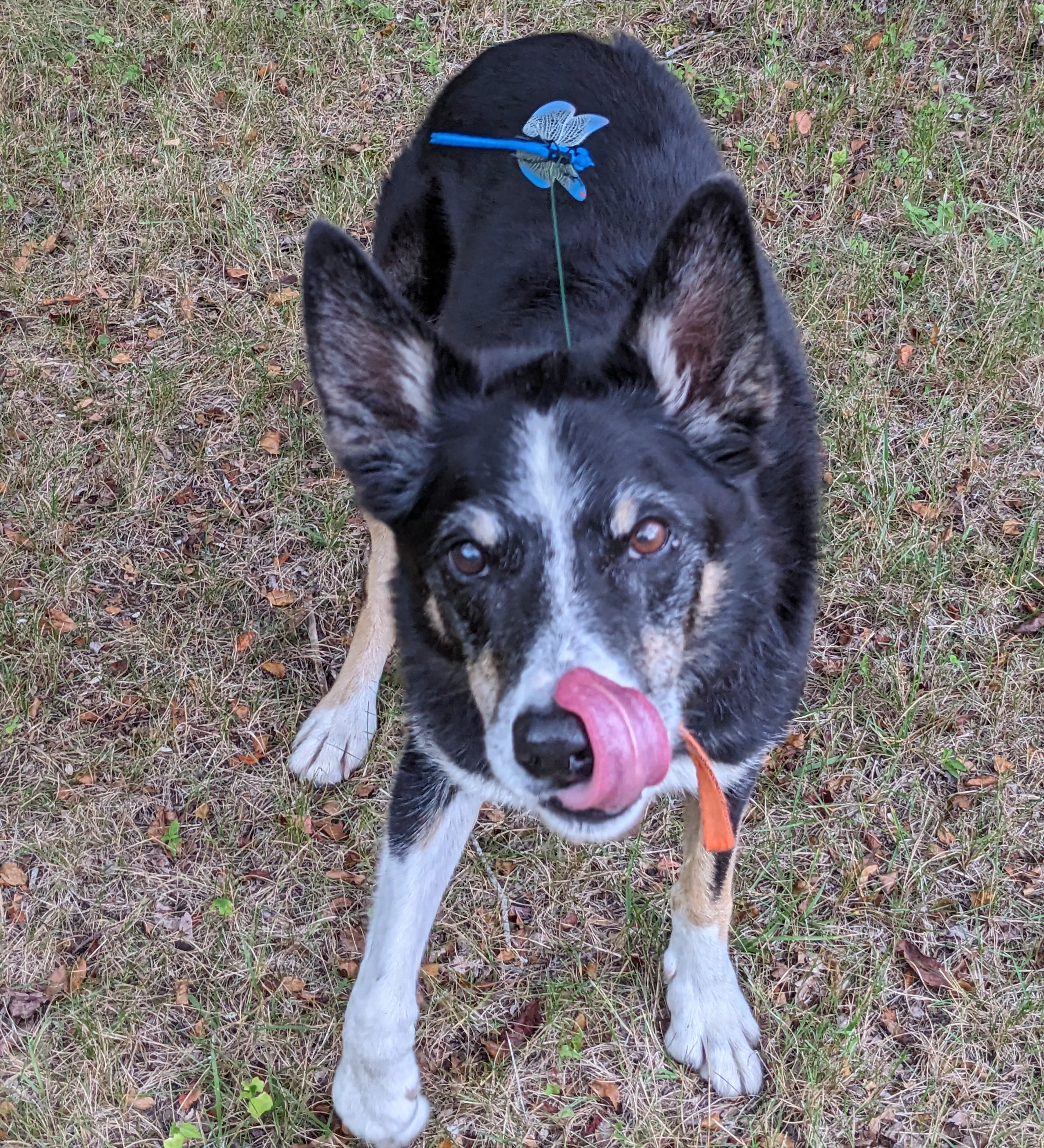
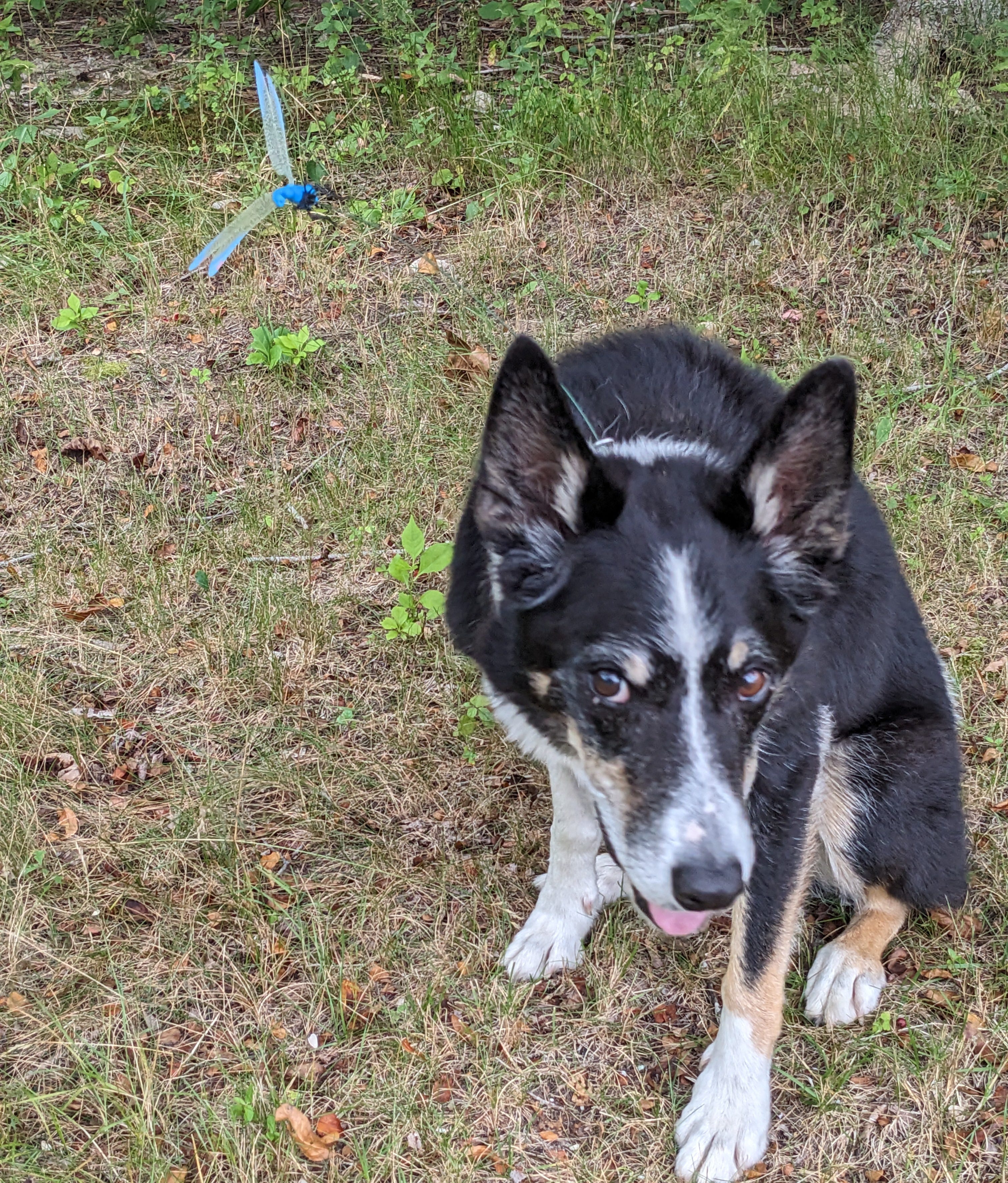
Tock’s defense against deerflies: a fake predatory dragonfly attached to his collar that “flies” above his head.
Works great! (except when he rolls in the dirt after a swim)
I can’t even picture winter right now. Nor can I imagine myself spending hours each day in front of the computer, wrapped in blankets while exercising my mind. Normally, I jump right into editing a newly completed story, sending the edited version to critique groups, composing drafts of query letter and synopsis, but not during these precious Dog Days. I’m too busy submerging myself in the moment. Each footstep becomes a lifetime of sensations. Any frustrations I felt last month about making progress on my writing disappear. The Earth wraps around me, and I find myself taking the break that everyone tells me should happen after a first draft. My worries slip into the warm waters of the pond along with my dog, into the shovelfuls of dirt in the garden, into the spray of cool water on the azaleas, into the paint on the siding of the house. Hopefully, my subconscious is still working on the story, figuring out how to address the problems that’ll surface when I revisit it. But I can’t be bothered to check at the moment. My conscious mind has detached from it, immersed in the real world. The good thing about this is that after the Dog Days have ended, I’ll view my draft as a first-time reader might. I’ll be able to spot those flaws that my mind glossed over back when it knew the story too well.
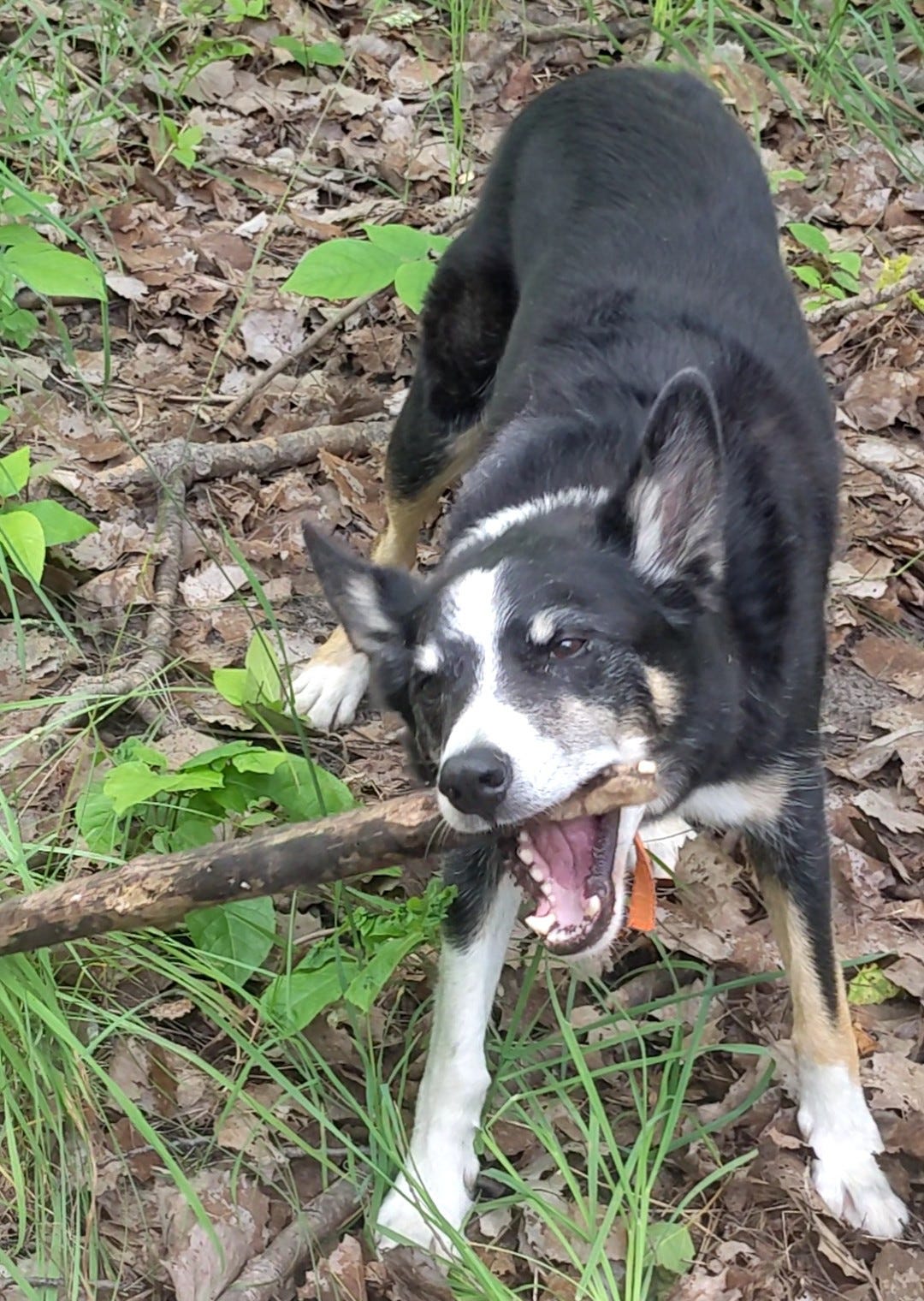
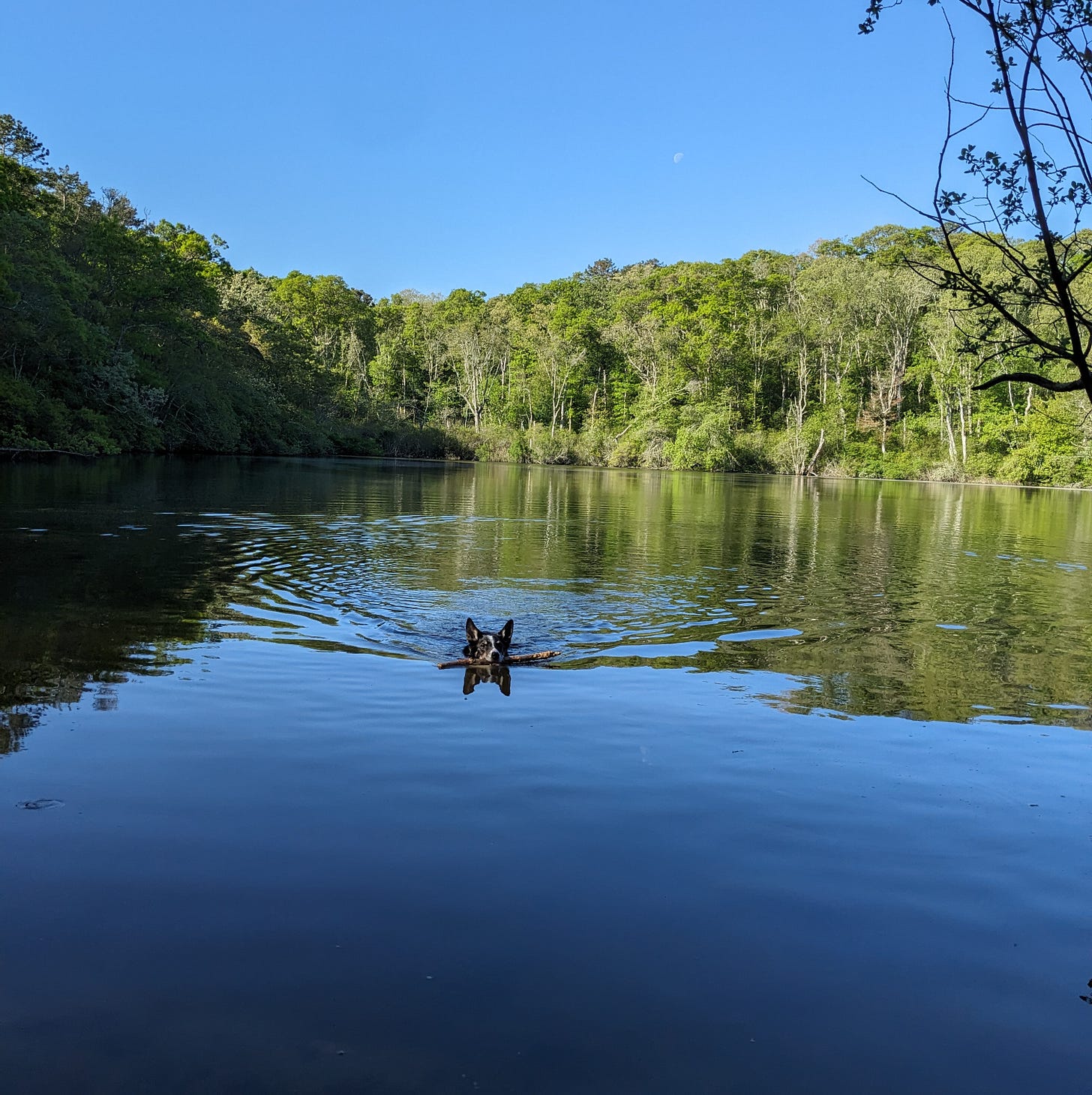
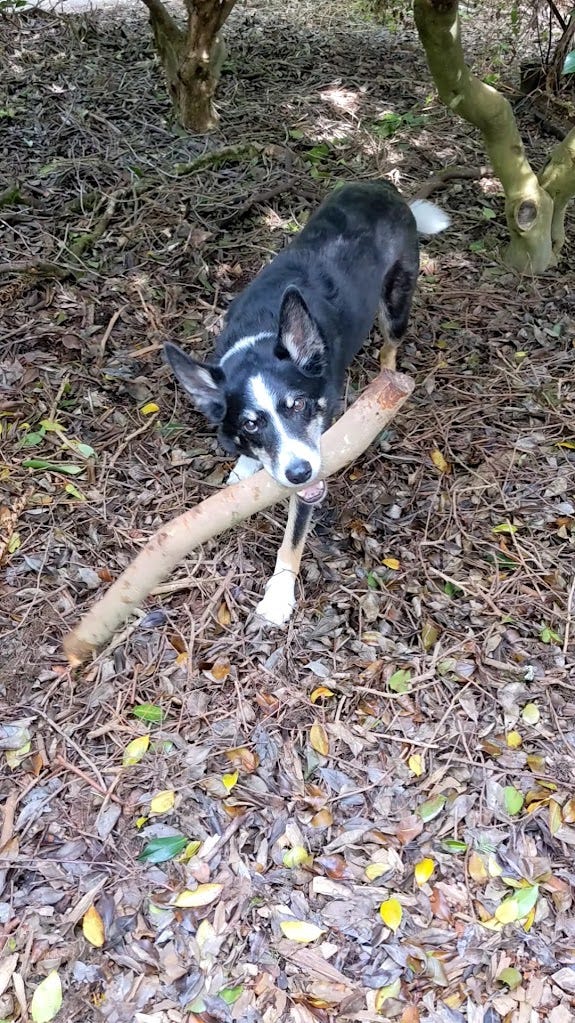
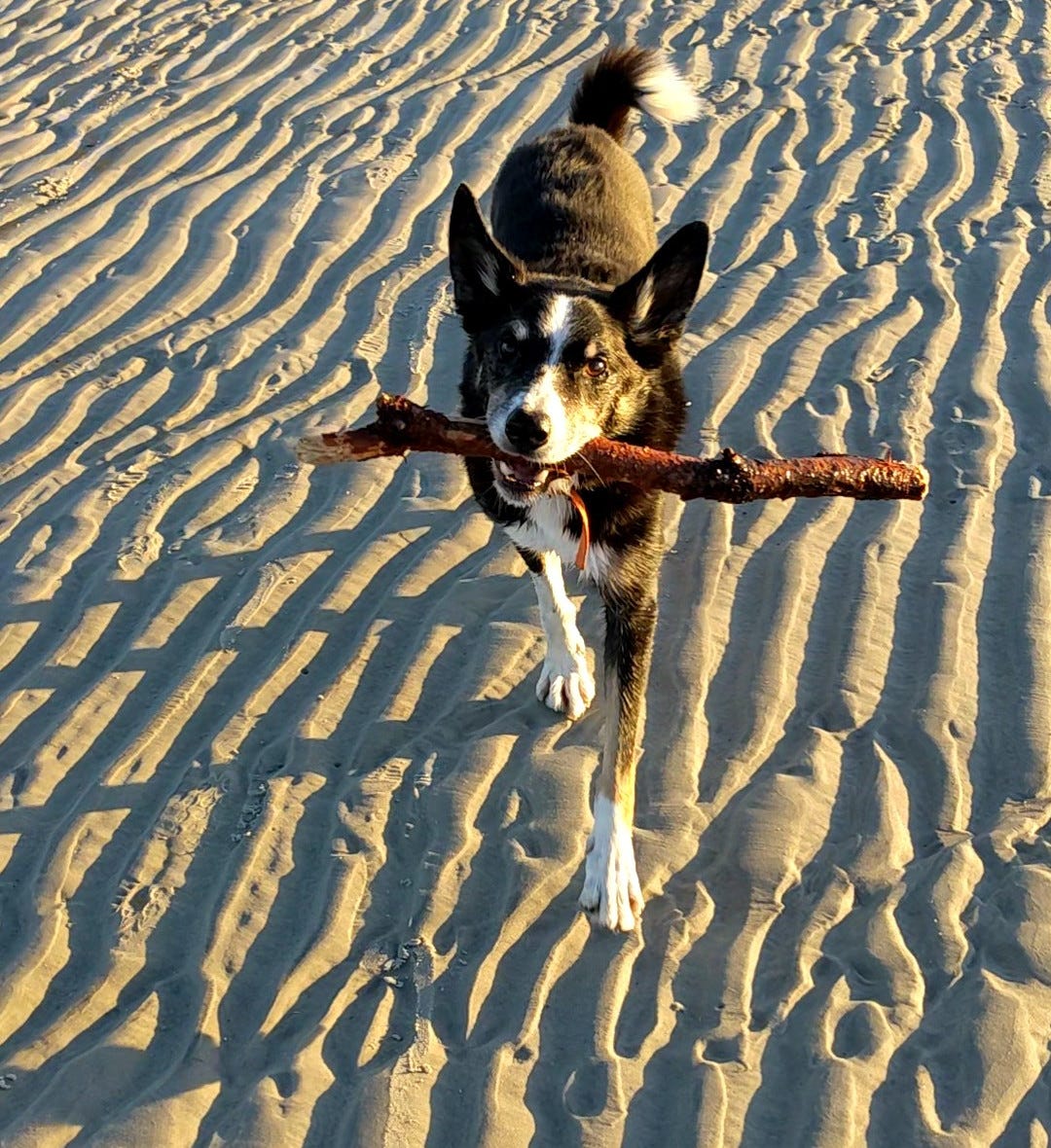
Tock’s favorite Dog Day pasttime (that’s a stick, not a dead fish).
But enough of writing. I’m gonna go do some hard physical labor and forget about the state of my draft—and the state of the world, other than its immediate, comforting presence all around.
Where do you sit on that lifelong seesaw of work and play?
My husband and I differ in a lot of ways, but there’s one area in which we are extremely similar: we’re prone to becoming maniacally devoted to the job at hand, whatever it is. Could be cleaning, chainsawing, or computer work. Could be fixing some broken household item, painting the bathroom, playing Scrabble, boating, or brush cutting. Once we start doing something, we want to keep on doing it until it’s either done or as perfect as we can possibly get it.
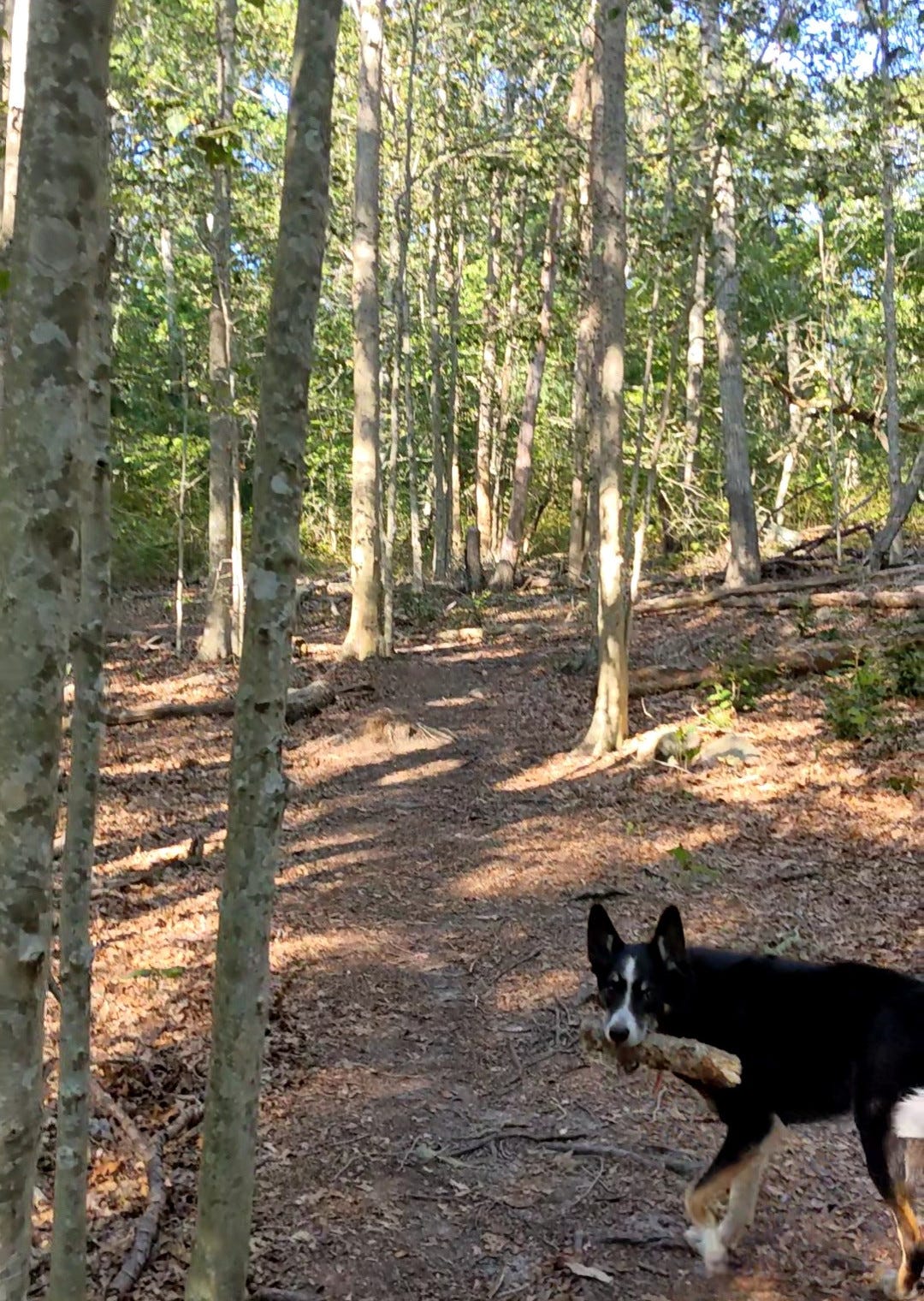
I call these behaviors Border Collieisms. Our own border collie will keep herding as long as there’s anything to herd (in his world, this includes pinecones, sticks, and tennis balls). No matter how hot, exhausted, and frustrated he becomes with a giant stuck stick or a ball lost beneath the couch, he carries on. We do the same, though not with sticks unless it’s to remove them from a trail we’re building.
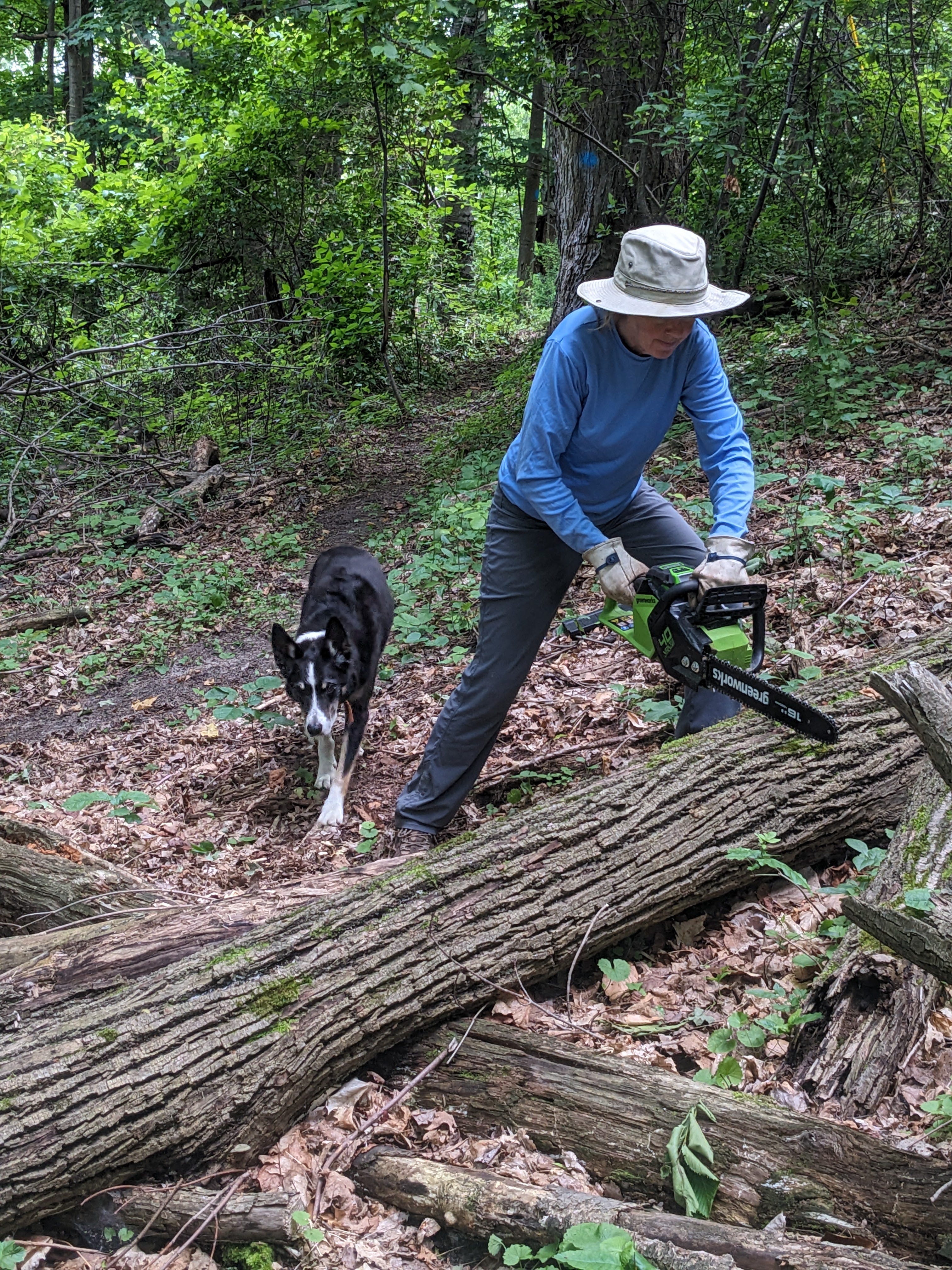
Tock loves trail building. Sticks are constantly flying his way!
I’m not sure whether we wanted a border collie because he reminded us of ourselves—or whether he trained us to become like him. Probably some of both. I’m also not sure whether the Border Collieism tendencies we display are good or unfortunate. Again, probably some of both.
Everyone says that to be happy, you have to find balance. But how is that possible when you seem to spend all your time obsessing over something? Ironically, one of the things I obsess over the most is writing a well-balanced story—one that has even pacing and the exact right amount of world-building versus plot versus character development. So I guess I’m sacrificing my personal balance in the interest of writing the perfect story, right?
Wrong. First of all, there’s no such thing as a perfect story. You can never edit it enough, to the point that every single rough edge is ironed out, every single typo or grammatical error is deleted, and every single reader will love it. Second, what if nourishing my Border Collieisms makes me happy? What if striving over and over to perfect my words in story after story brings me joy?
Tock delights in the anticipation of a big stick.
Because it does. I find nothing so satisfying as the feeling of a job well done, my body physically and mentally exhausted at the end of an arduous day of work. I can’t speak for my husband (whom I think would actually prefer a little less labor and more fun at times), but I know that if my dog could speak, he’d agree with me, one hundred percent.
At the end of the day, a tired dog is a happy dog.
Just like a book at its best will please only a fraction of the readers out there, I think the question of balance is one with a different answer for each of us. The right balance for me is one that would seem extremely unbalanced to a lot of other people. For many writers, in fact, the best balance may tip toward the hard work side of the scale. How else can you ever apply yourself enough to visualize that written world, fully understand those characters, and figure out that plot until everything is spelled out from the first page to the last? How can you ever polish each word, sentence, and scene, seeking out critiques, writing and rewriting until your story shines? The answer is, without a lot of pure hard work, you can’t.
I guess the moral of this little piece is to recognize whatever balance works for you—and then live it. Work hard, play hard, and revel in the Border Collieisms that help you along your chosen path.
The mundane things that give me hope when I need it most
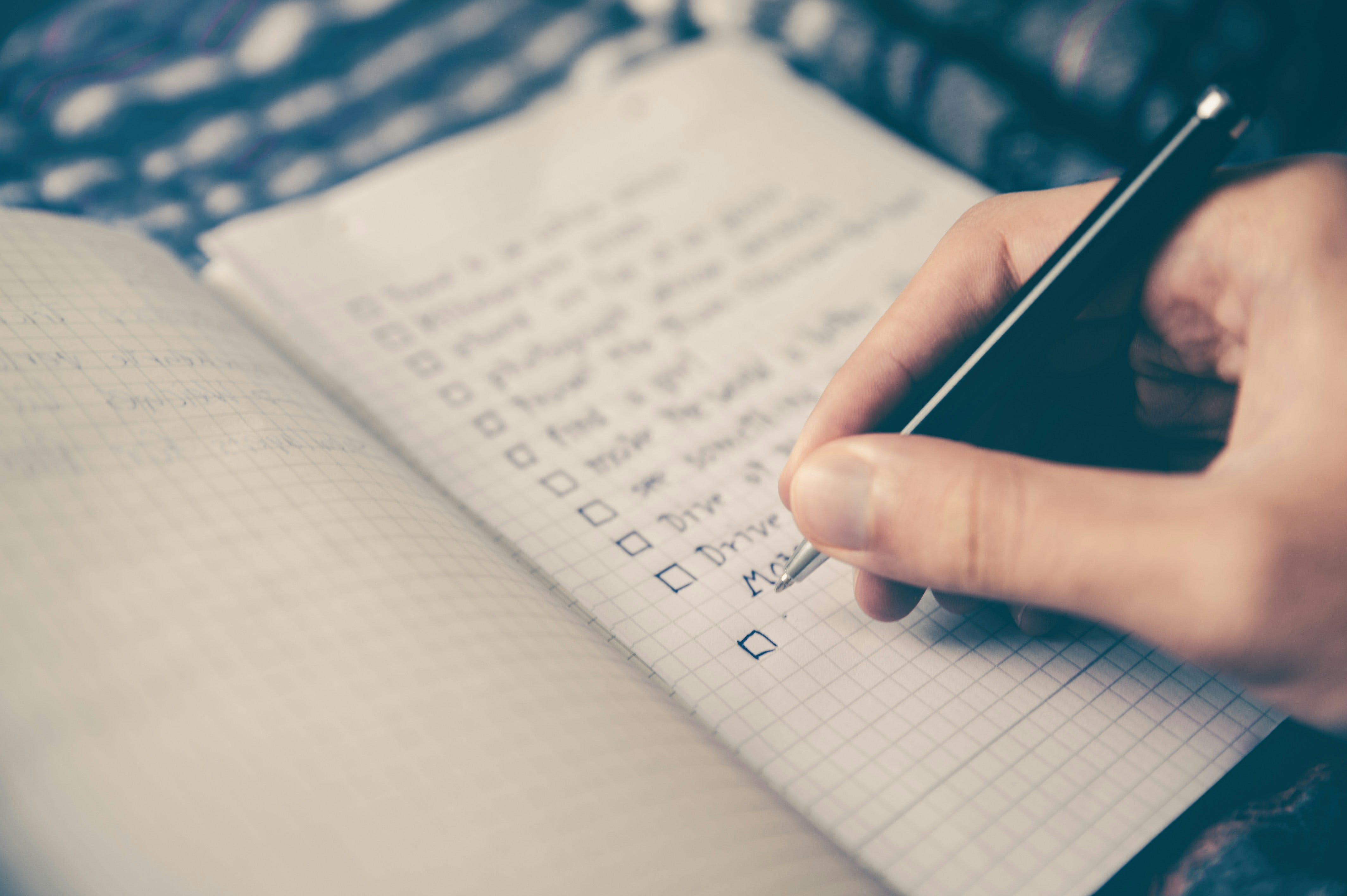
Three per day, I’m told.*
Write them down. Doesn’t matter how ridiculous, how real, how important to anyone but you. If they bring you some degree of happiness, they deserve your recognition.
Like swallowing daily pills, capture your observations. Any spark of interest, any surge of hope: jot it down. Here’s my list for a week in May.
1. The nightlight’s pattern on the wall
2. Waking up: wow, I was able to go back to sleep after all
3. Dog watching me, always
4. No gloves!
5. Edits to make on a manuscript
6. Leaves four times bigger than last week
7. Blender clatter: oats + water = oat milk
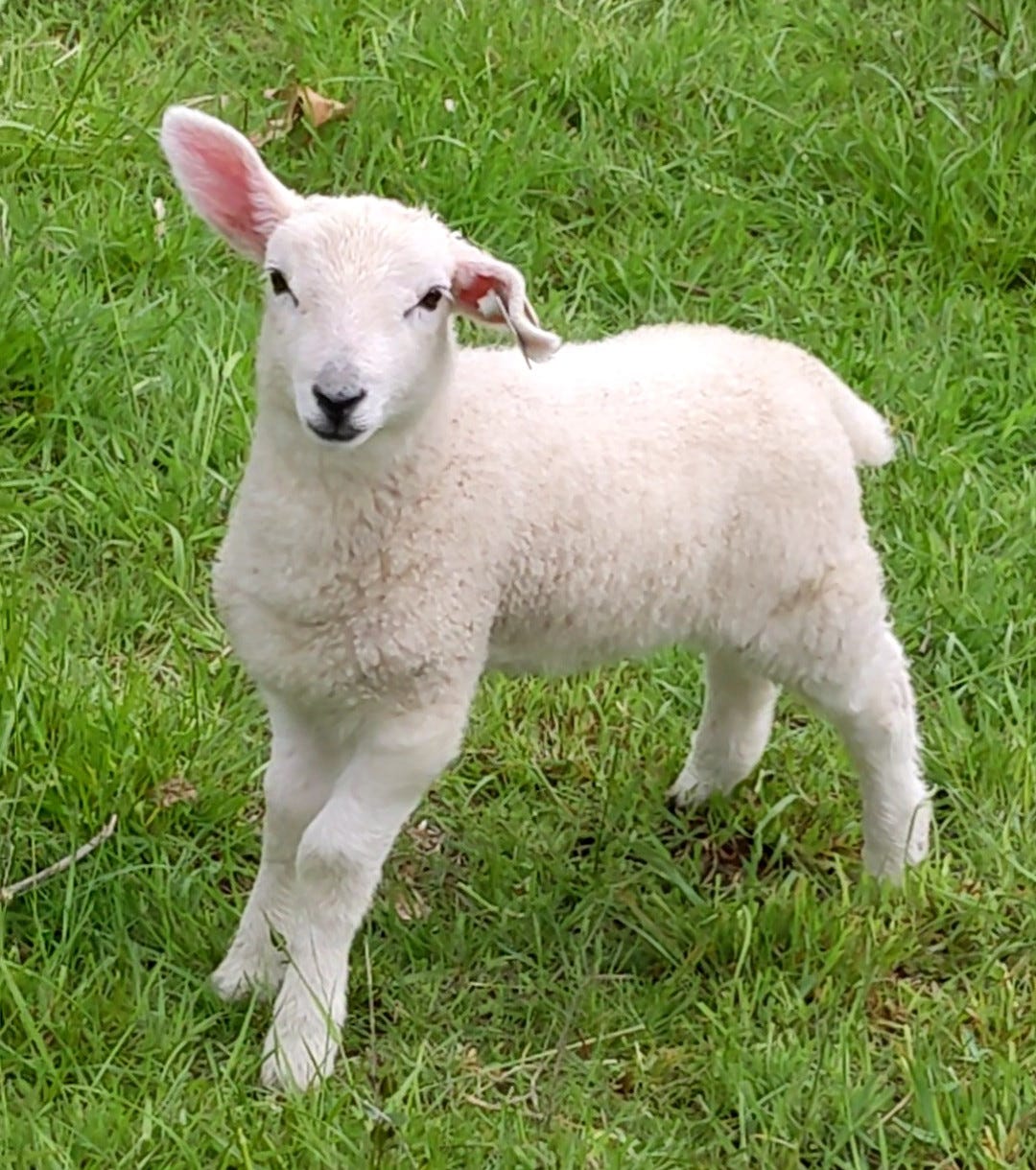
8. Wiggly lamb tails
9. Flash of orange: an oriole on the picnic table
10. Small red frog in the brown leaf litter
11. Reading a chapter of my recently completed story: I like it!
12. Greenery ringing the pond
13. A pair of curious otters poking their heads from the water
14. The chocolate-rich aroma of spring soil
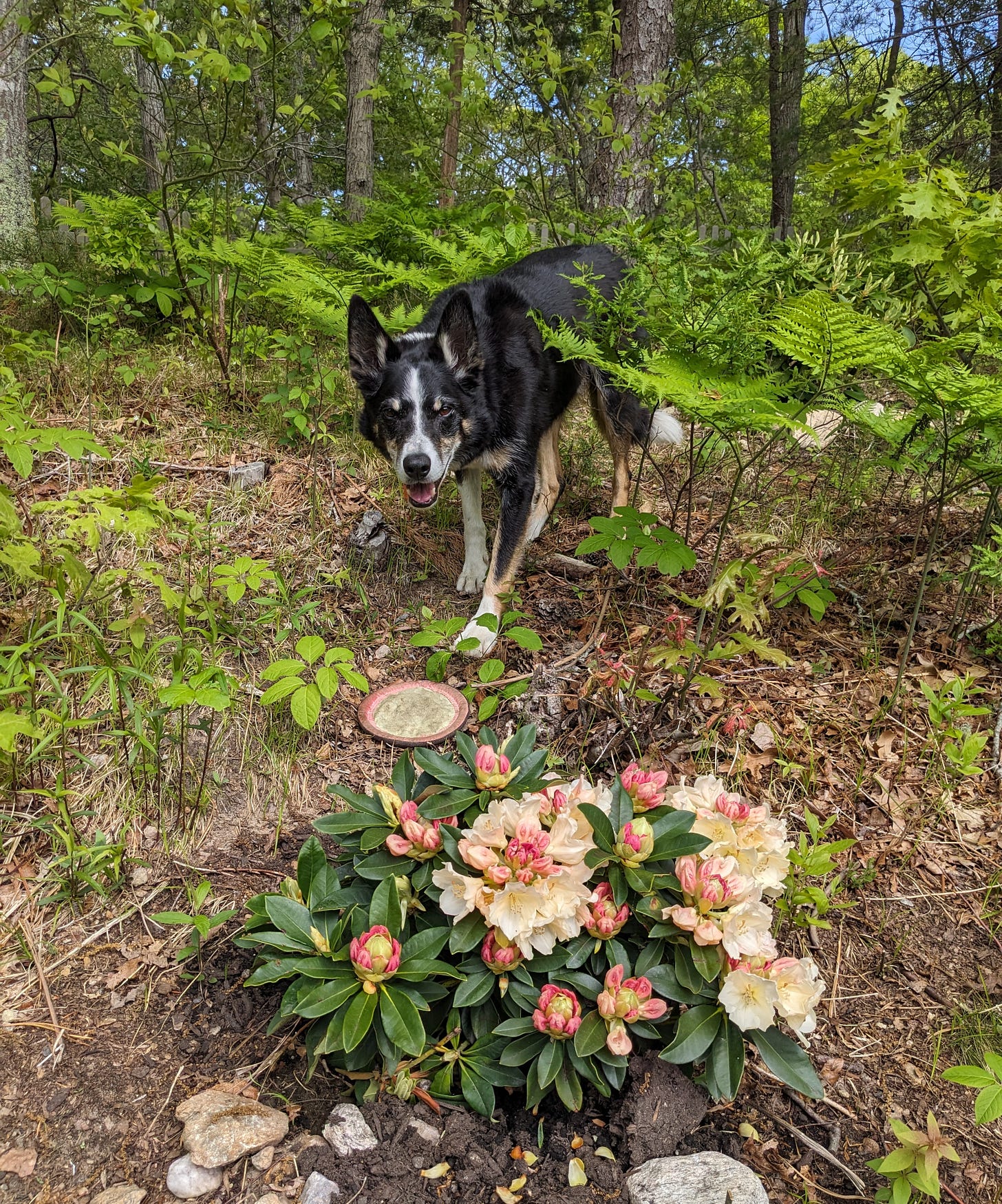
15. Watching the rhododendrons bloom
16. A query, successfully sent into the ether
17. A card game with my son: this time I will win
18. The pride of owning a big stick … for a couple minutes
19. Scrabble with my husband: this time I will win
20. Curling up in bed to read
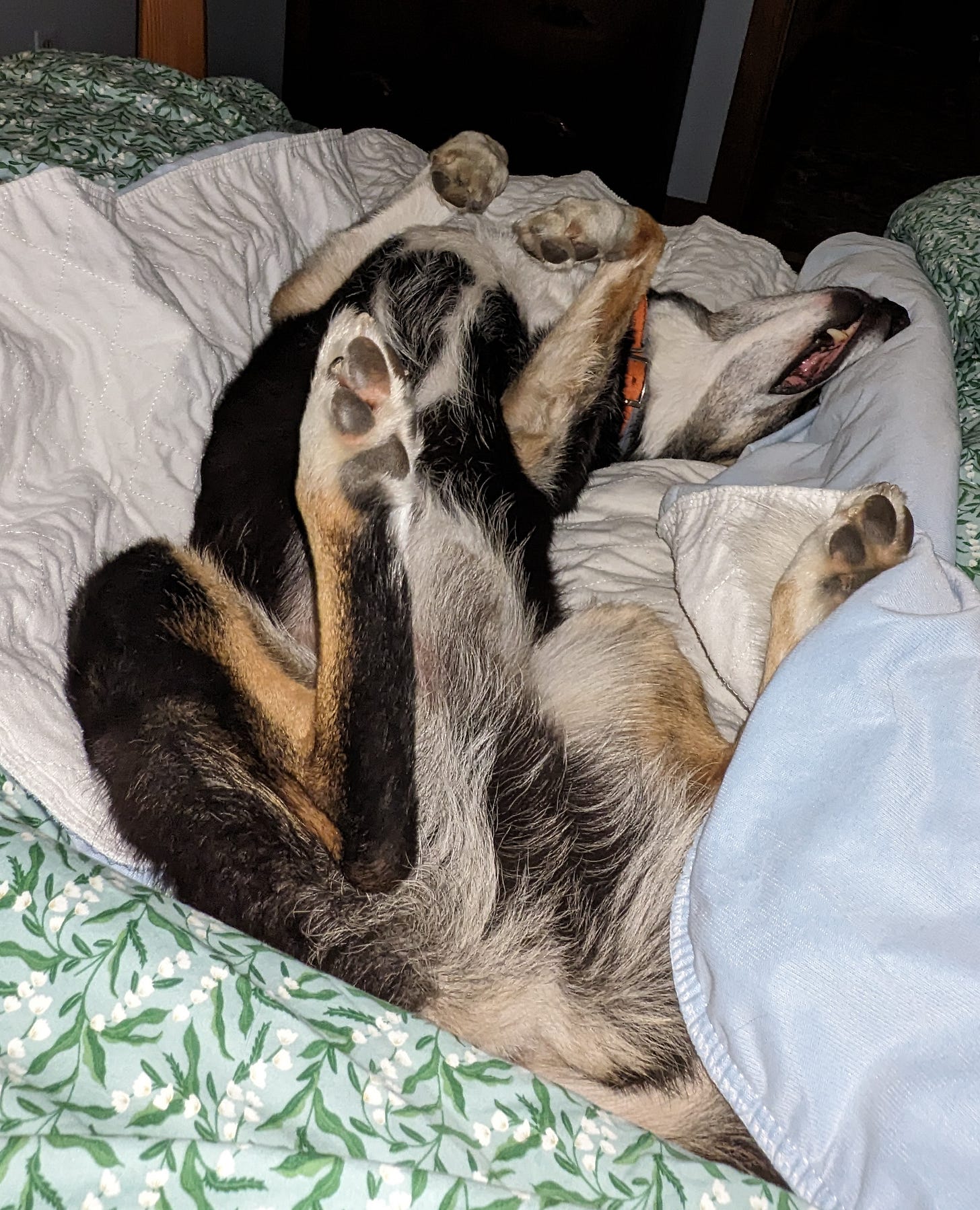
21. Upside-down dog
What’s on your list?
Happy Tales!
*Thanks to my writer friends Robin and Suzy for insisting I do this exercise. What would I do without you?
Often when I hear people explain why they haven’t been writing lately (or editing or querying), they’ll sigh, and then justify themselves by saying, “Life got in the way.”
I’ve always nodded sympathetically and agreed with them that it can be so hard to get anything done writing-wise when we have all these other more urgent tasks to attend to. And … dare I say it? … things that are a heck of a lot easier to do than focus on writing.
Photo credit: Glenn Carstens-Peters
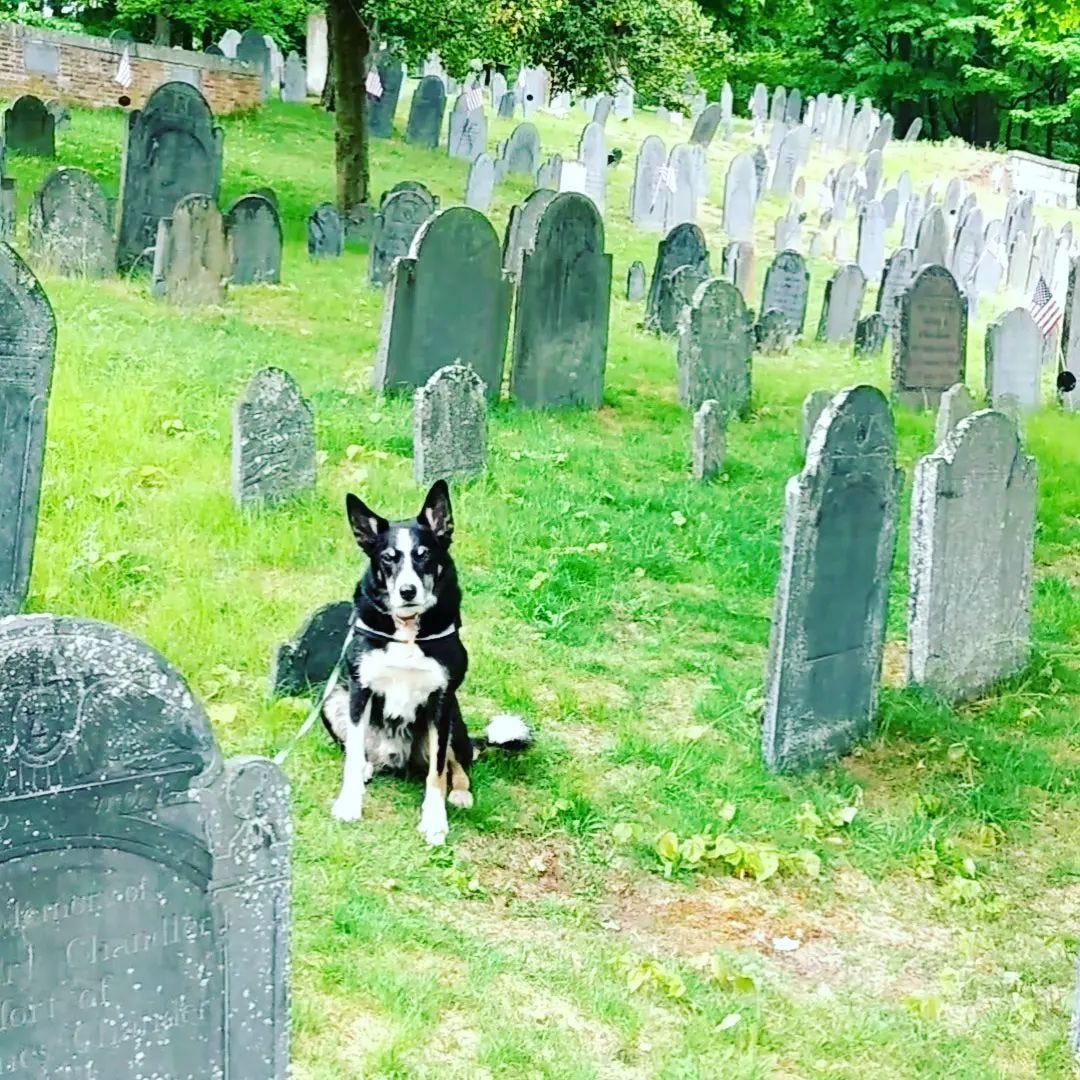
But now that I really think about that age-old idiom life gets in the way, I feel the need to counter it with: “Really? Isn’t everything we do part of living? Including writing? I mean, it’s not like we’re tapping away at a keyboard from six feet below ground in a cemetery—unless we’re a particularly inspired gravedigger.
So the next time you arise from your computer or your notebook to make a phone call, pay a bill, go to a day job so you can pay that bill, care for someone sick, buy groceries, figure out what to make for dinner from those groceries, do your taxes, go on vacation, or walk your dog, remember: all this stuff is an inevitable part of living. There’s no need to make excuses or resent these interfering tasks. Just do them. Enjoy them if you can. Because life isn’t in the way—it is the way. (Yes, even the taxes! I’ve found that if I immerse my mind long enough in those nonsensical numerical calculations, they can become relaxing, almost hypnotic).
Say to yourself: I’m gonna steep myself in this chore of the moment. I’ll fully experience it in present time, including (but definitely not limited to) my writing.
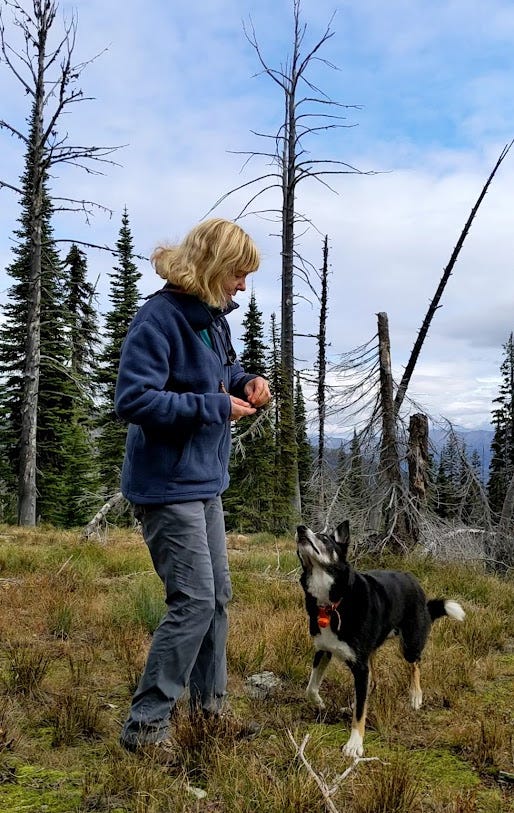
For me, of course, living means walking my dog every day. Multiple times, beginning with a long, vigorous jaunt soon after dawn, before I’ve jotted down a single line. Lately, living has also meant painting the interior of our house, one slow room at a time. And it’s meant digging roots and rocks from the hillside to make space for ten rhododendrons.
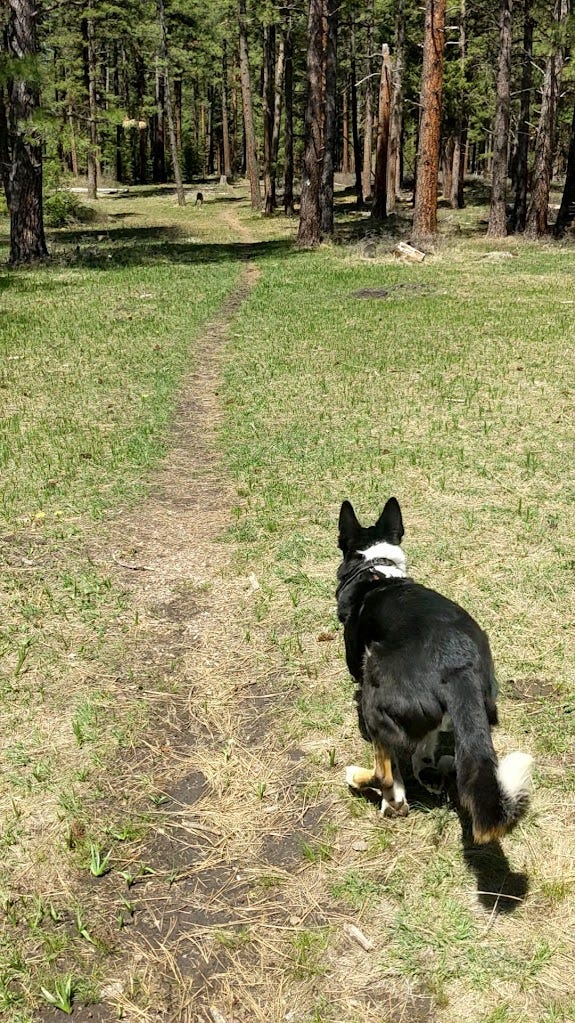
While I step through the wet leaves and brush past budding shrubbery in the woods, I smell the moist earth, I listen to the Carolina Wrens and Pine Warblers, and I help my dog search for the perfect-sized stick (i.e., big) that he can carry proudly down the trail.
While I dip the brush into a can or the roller into a tray, I gaze at the silky-creamy texture of the paint and the glistening coat it leaves on the formerly dull, grubby wall. This brings me a pleasure that almost makes the tedium of the wall-cleaning, hole-filling, and trim-taping worth it.
I meant to take a picture of my own paint roller, but never found a time when I wasn’t covered with paint in order to do it. Photo credit: Callum Hill
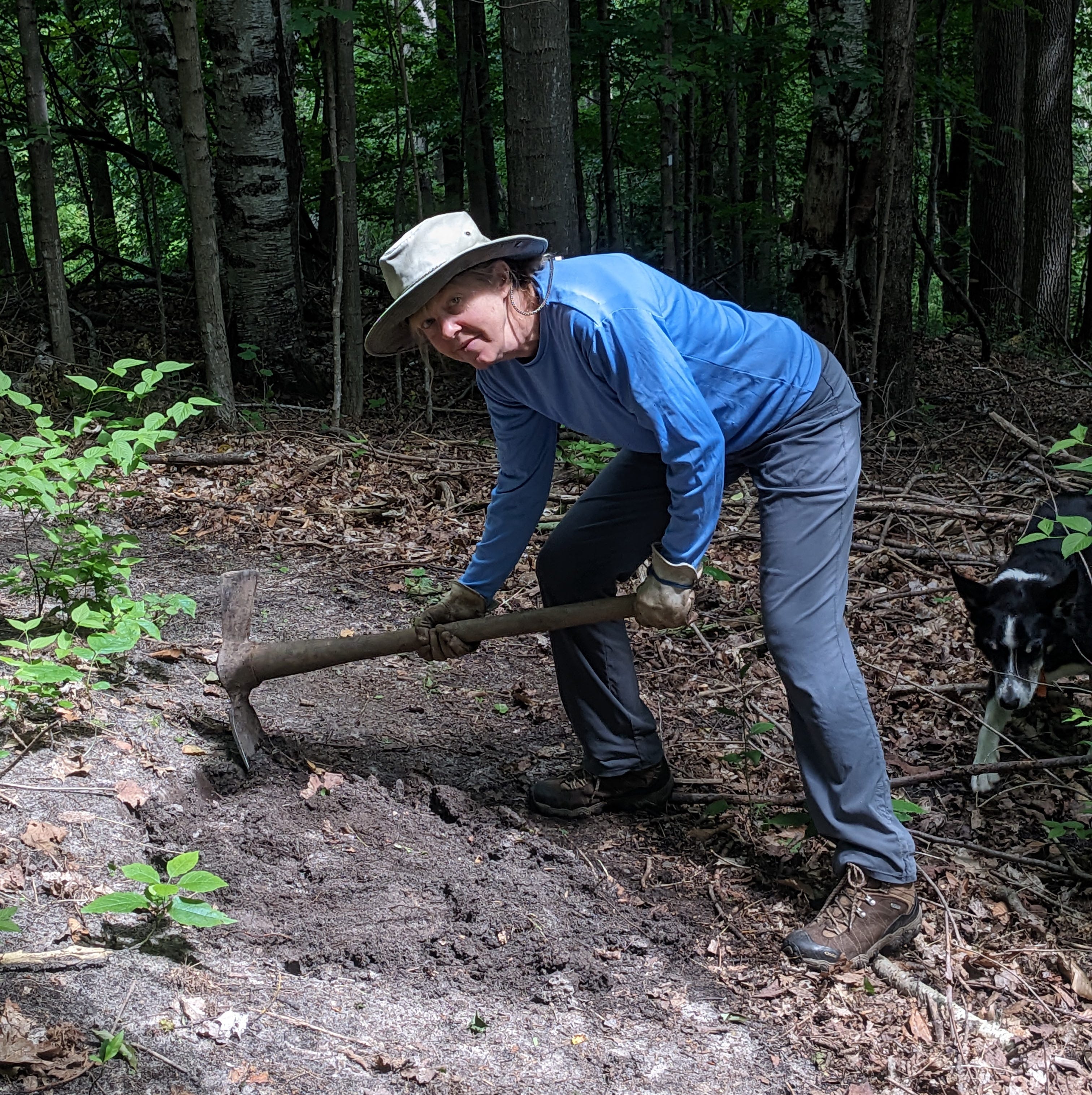
While I heave a pickaxe at a stubborn rock in that tenth rhododendron hole, I endure my aching back and wrists and splatters of dirt in my eyes, and enjoy the satisfaction of the pick slipping beneath the rock, jiggling it loose so I can fit my gloved fingers around it and heave it out. Space at last for a young plant to be freed from its pot, so its roots can begin to explore the musty, mushroomy loam, and its leaves and buds can plumpen and brighten.
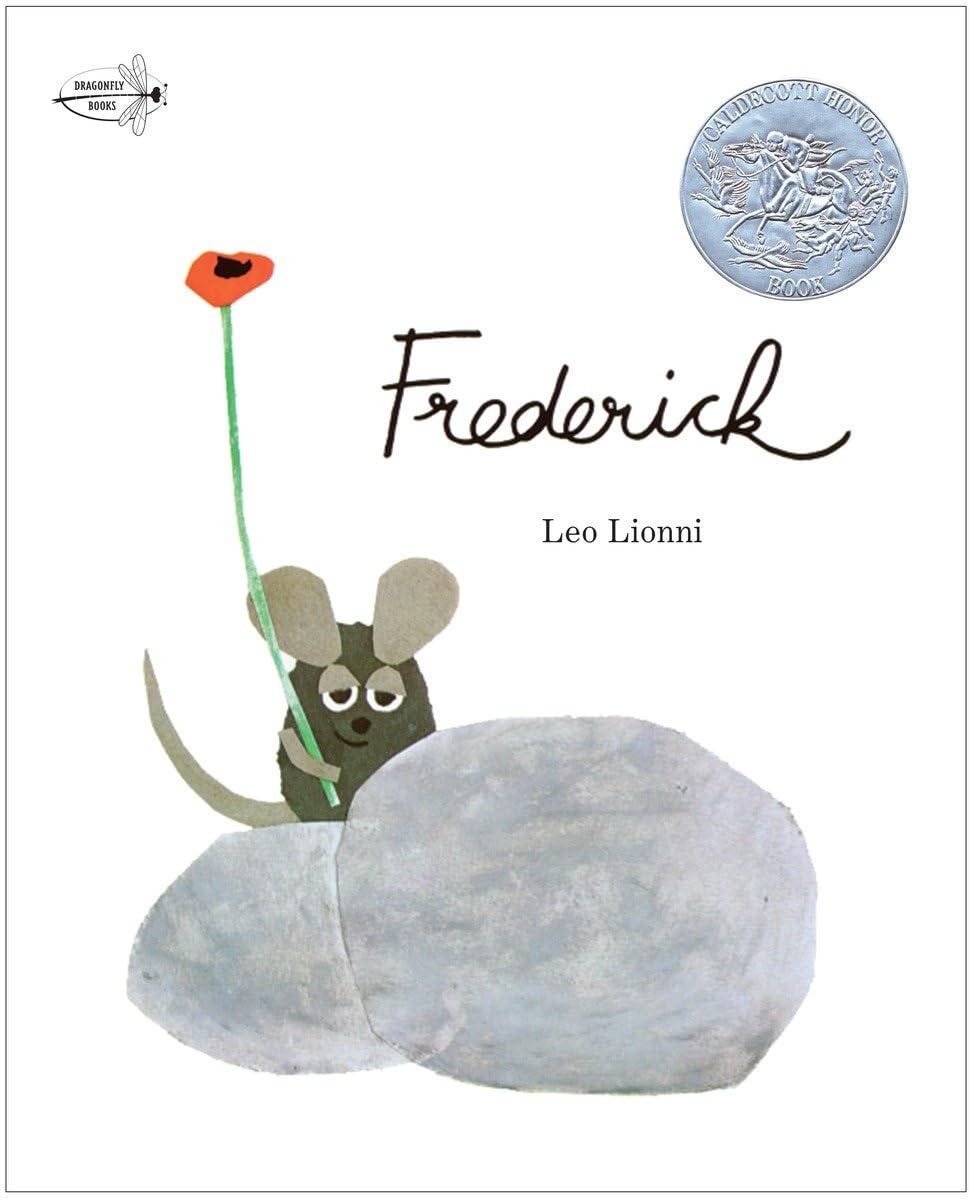
Like Frederick the Mouse, I store away these thoughts, feelings, and sensations I experience in the non-writing world. And when I am able to sit in my office once again with a few free hours beckoning, I’ll draw out the memories. The colors, scents, sounds, frustrations, tedium, sadness, satisfaction, and joy. Always the joy.
Simply one of the greatest picture books ever.
For to be a good writer requires one thing above all else: an appreciation of this incredible, complex planet and our lives on it. Life, in all its ugliness and beauty, is the way.
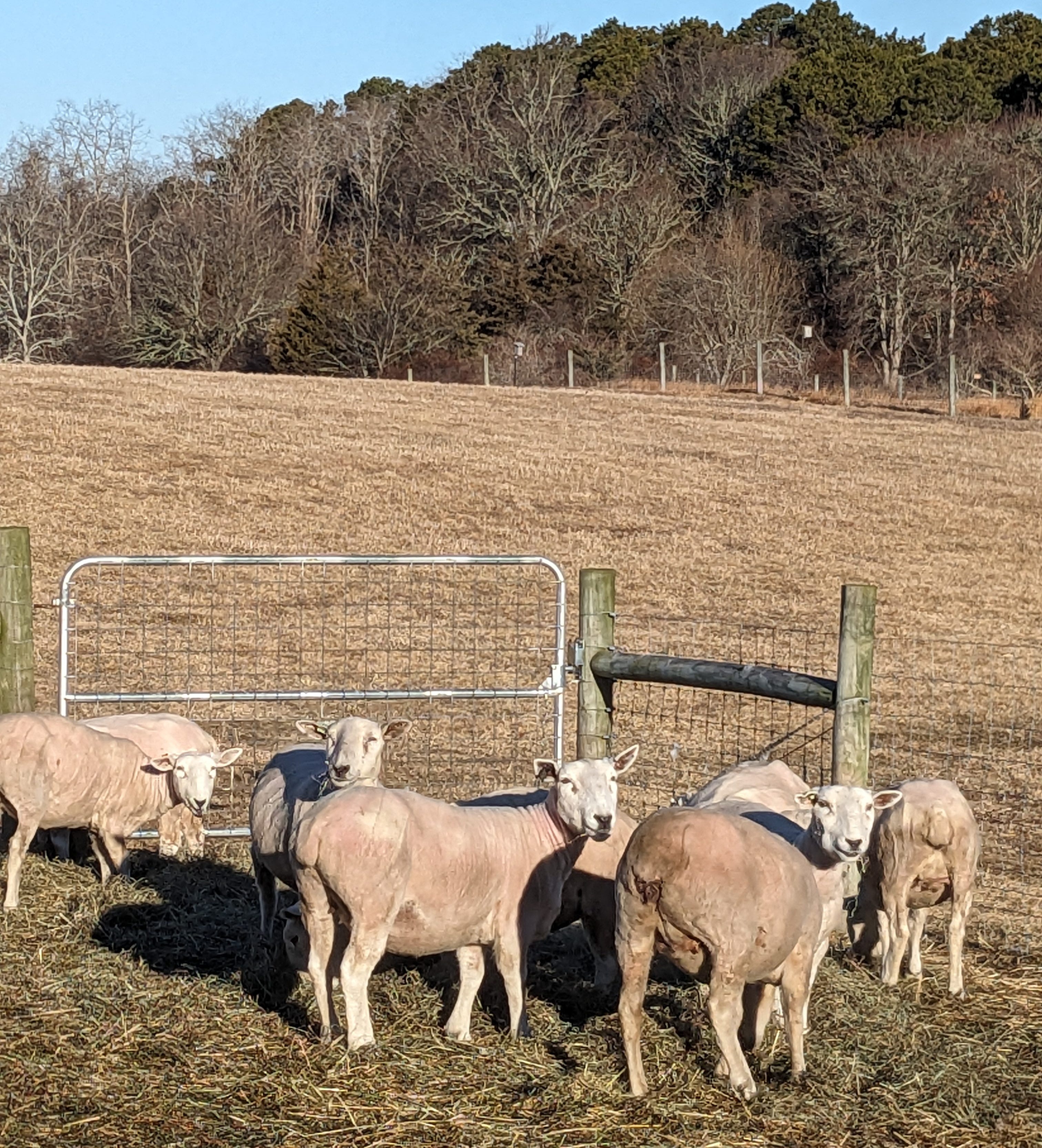
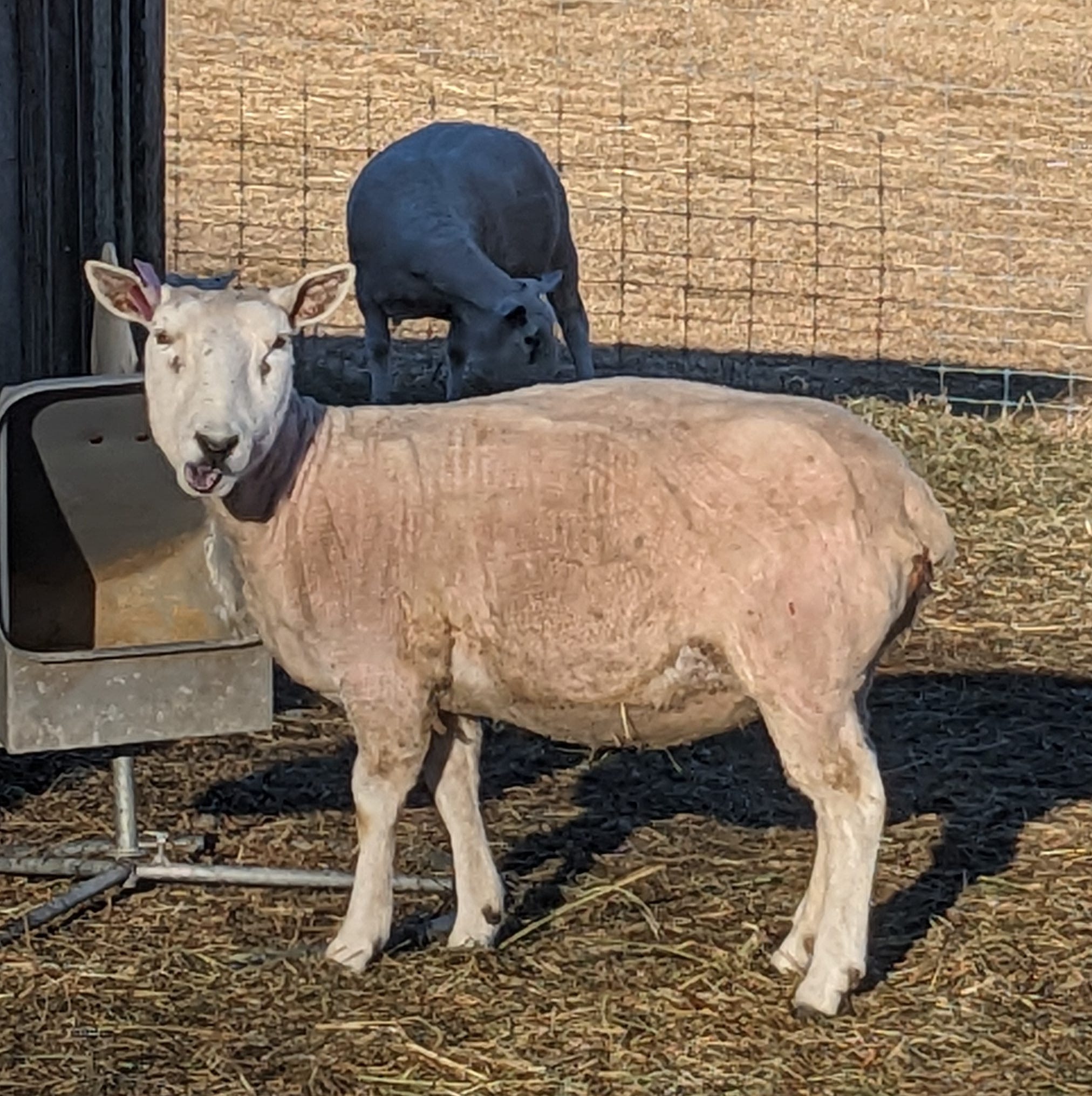
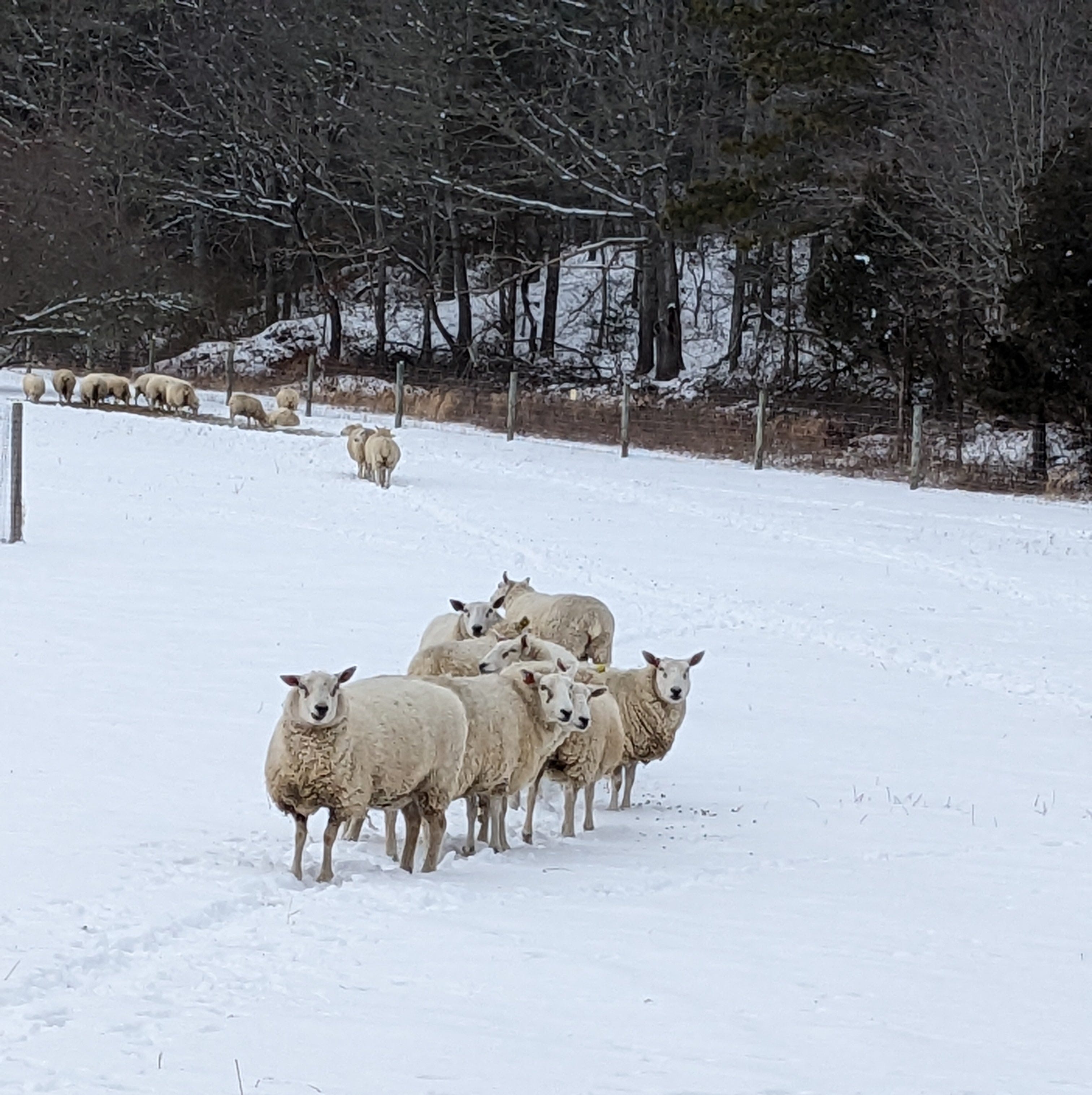
The sheep have been shorn. Once round balls of gray fluff, they transformed in the space of a morning to scrawny pink creatures half their former size. Their bellies still bulge with approaching babies, but otherwise they seem mere skin and bones. When I first saw them from a distance, I thought they were lambs.
The thing is, winter isn’t yet over. Though it must feel good to be rid of all that woolly weight during the ever-strengthening noon sun, how are those sheep going to feel in the windblown 15-deg-F cold that’s coming in a few days? Just thinking about it from within the warmth of my house and my many layers of clothing makes me shiver. And it makes me glad I’m not a sheep.
When Tock & I go outside in the winter, we have to layer up and keep moving to stay warm!
Happy as I am to be human, I feel as if the sheep shearer pays me unexpected visits, too. On a surprisingly frequent basis, I am ripped down to my very essence. I’m forced to take a good hard look inside: at who I am, what I’ve done, and what I’m going to do about it. (Note: I’m talking metaphorically here, not physically—except for my recent scalp-and-hair-ripping surgical experience that I hope never to repeat.)
The arduous “shearing” process probably happens to me a lot because I’m a writer, and the writing life bears a remarkable similarity to a newly shorn sheep. No sooner do I celebrate finishing Draft 1 of a manuscript, for instance, than I must make an abrupt transition to some other aspect of writing. Querying an older manuscript, for instance—matching myself to agents and putting together query packages in which I promote myself and my story as much as possible—such fun! (if you’re a writer, I hope you detected the high level of sarcasm). Or, ooh, here’s another shift: from drafting to the formidable process of editing a new manuscript.
This transition between creation and revision happened to me the day the sheep were shorn, and boy, could I relate to them. I felt as though I were stepping from my comfortable writing cave into the bright, cold world, clutching the story I’d just birthed to my belly, knowing it was time to take a good hard look at it, to strip it down to its bones and examine every aspect of plot and character, to figure out what works and what doesn’t.
Me, in sheep form.
Thing is, I adore revision. Being done with a first draft infuses me with the same sense of relief the sheep must feel. I can write! Enough to complete a whole novel! It’s only the transition from the initial writing to the tearing-down and reconstruction of it that’s difficult. I know that once I get into the routine of re-reading, of searching for inconsistencies and re-writing those places, I will get used to my new thin skin and begin to bulk it up once more. I guess the same can be said for switching gears from writing or editing to querying, but less so. Let’s just say I’m grateful that a bout of querying doesn’t take nearly as long as those other parts of the process.
Since no post of mine feels complete without the inclusion of my dog, I’d like to add that he, too, finds changing gears shocking. I once trained Tock to lie down in the middle of a recall. He’d be bounding my way, expecting a treat, when he’d hear the command to stop before reaching me. When I first did this, he ignored me and continued running, assuming I’d misspoken, no doubt. Granted, the second command was confusing because it ran counter to the strong instant recall he’d formerly been trained. But when no treat emerged from my pocket for the recall, he started to realize that he needed to heed the change in orders. He’d slow to a trot, then a walk, then maybe a stop a few feet away from me. Only after further training did he learn to stop fairly quickly as soon as he heard the command. So it can be done, even with a dog who is not the brightest of border collies. It’s a similar behavior to the one skilled herding dogs are trained to perform when they’re galloping toward a flock of sheep. An even more advanced behavior these working dogs learn is to stop mid-gallop and “look back” for a missing sheep or group of sheep. Imagine the intelligence and drive it would take to abandon the first flock and head off for a second one that might not even be visible.
Tock is told to lie down mid-recall. This is hard for him!
The good news is that dogs can indeed learn how to handle shifts in their established routines. The shorn sheep have also accepted their big lifestyle change (though I’m pretty sure they’re going to be shivering a bit during the coming cold snap). Not that they had any choice in their shearing, but I like to think they’re walking with an extra bounce in their step now that they don’t weigh so much. And if they can, surely we can, too. So if it’s time, writers, move on! Wrap your arms around your torso to bolster your spirits, and get to those queries, or to that revision, or maybe to dreaming up a whole new story and putting pen to paper once again. The good thing about being a human rather than a sheep is that you get to decide which it’s going to be.
This phrase is one that a lot of dog owners know well. They’ll ask their furry companions this question before tossing a frisbee, or heading out for a walk, up to bed, or in and out of the car. Really, they’ll ask it before any sort of change in their dog’s routine from one activity to another. It’s a fabulous way to get a dog’s attention and motivate them to start paying attention and get moving, or do whatever it is you want them to do next.
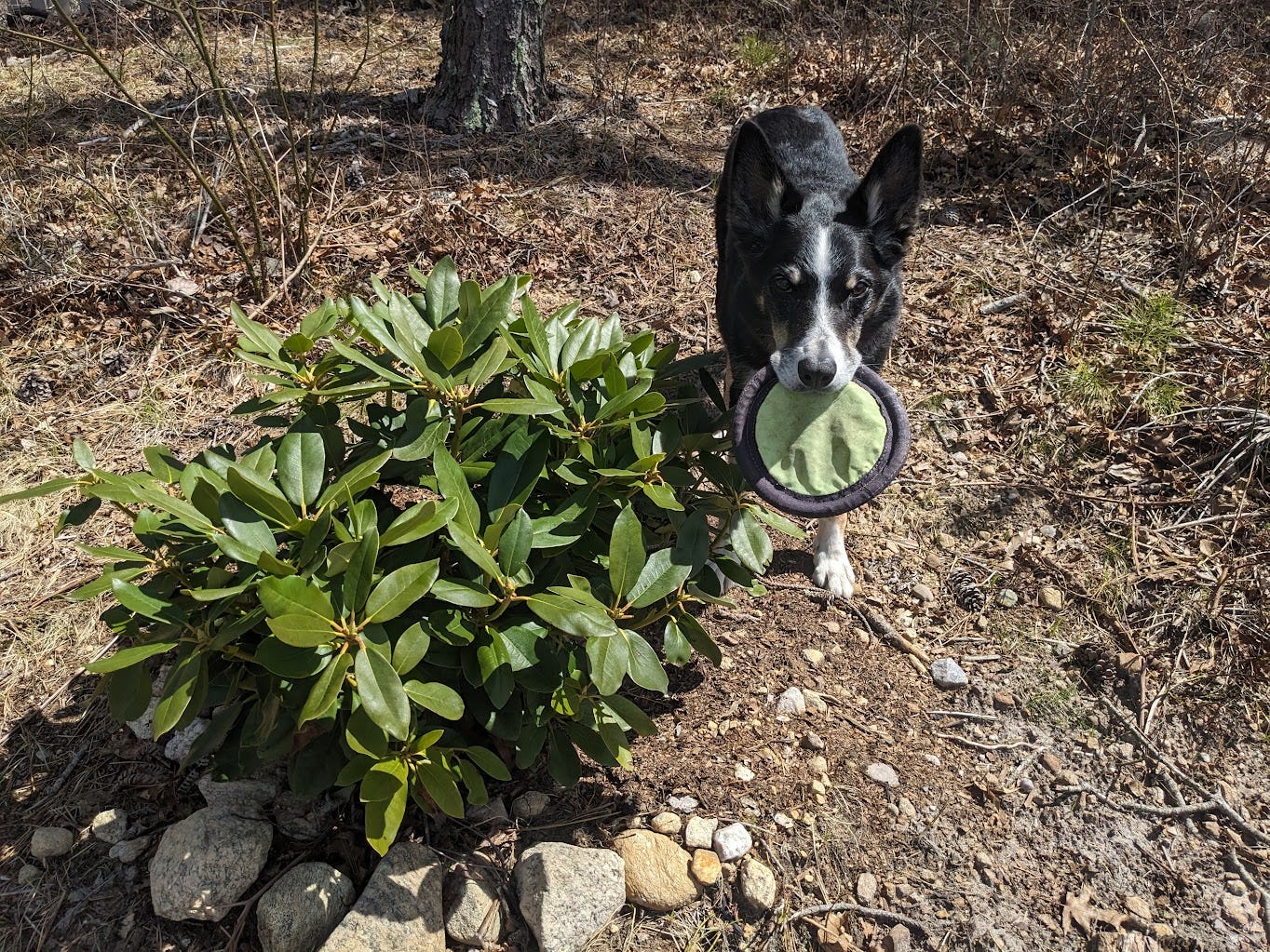
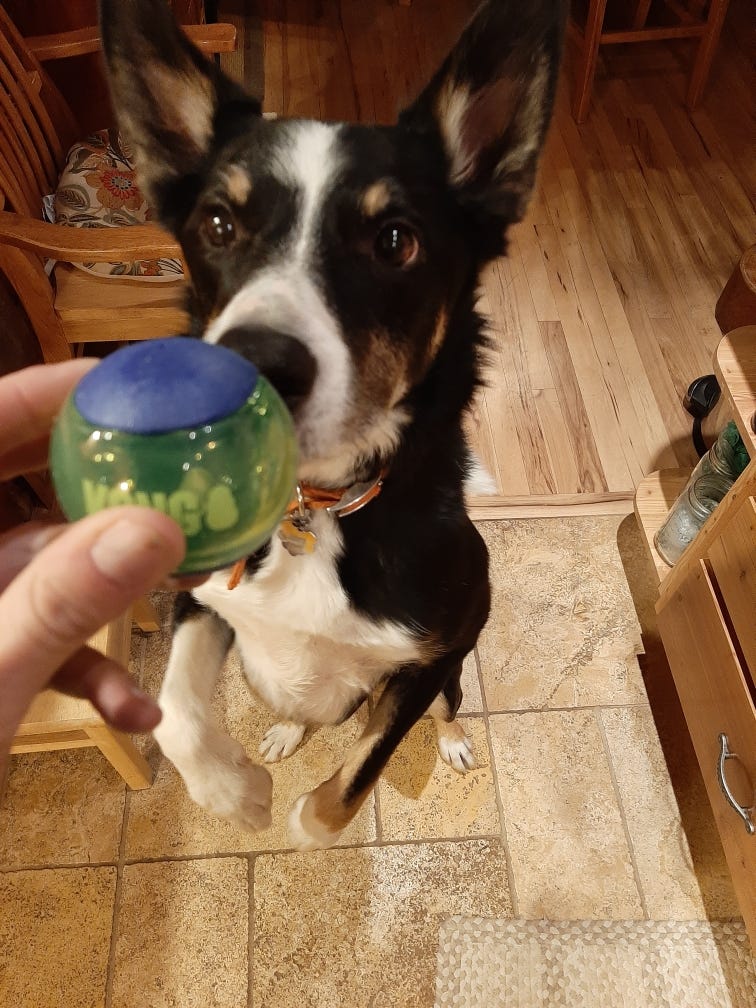
Tock is definitely ready for this ball!
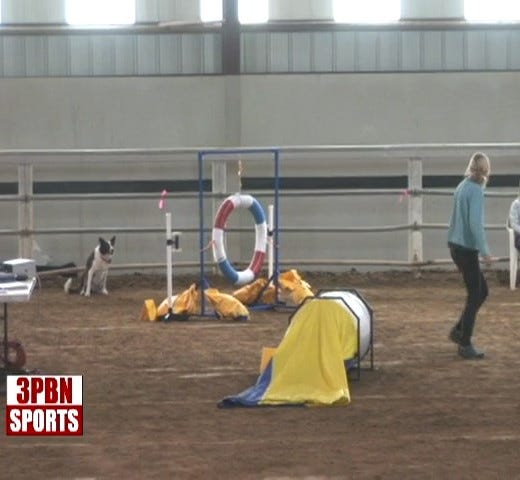
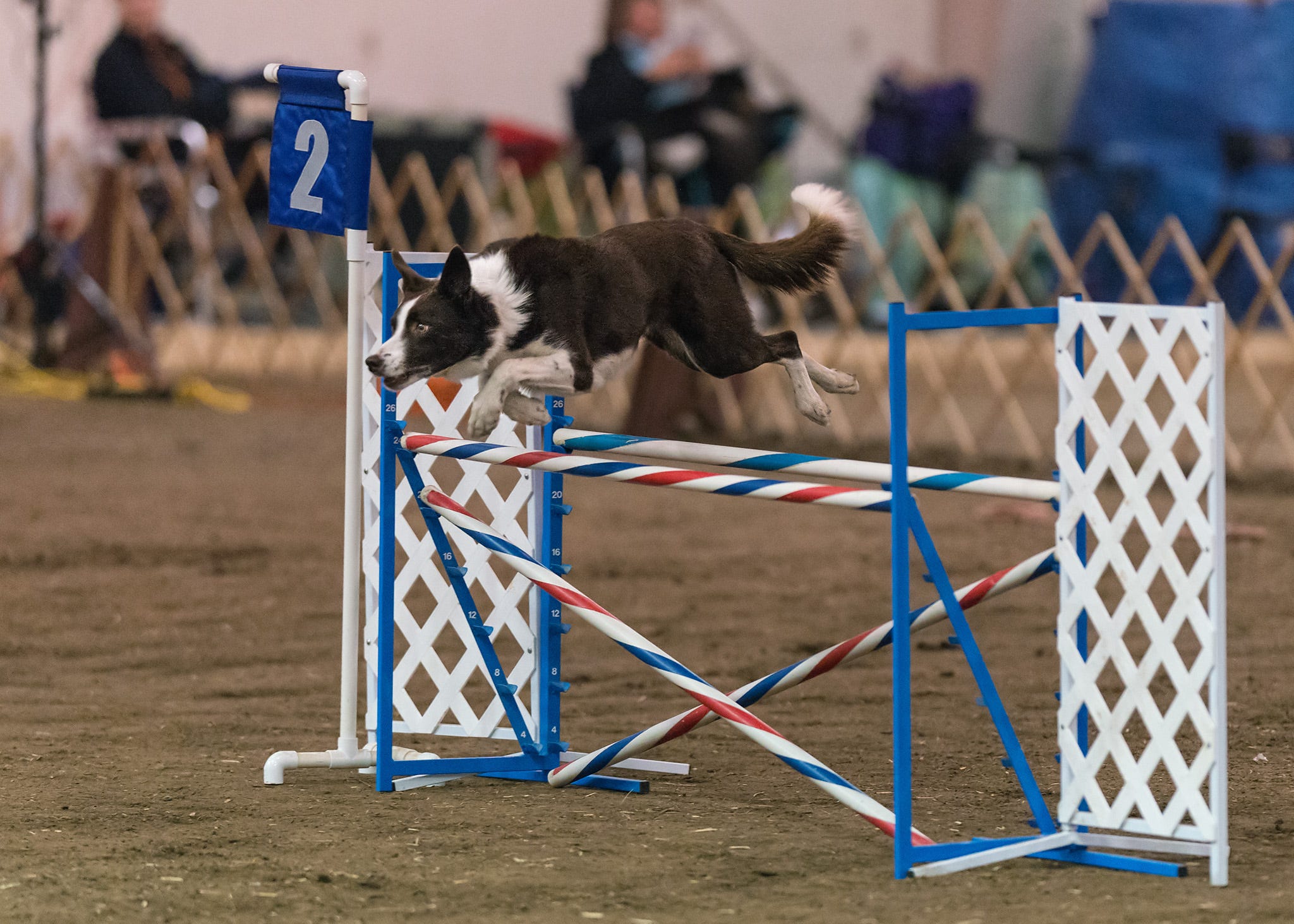
Those of us who participate in dog sports know the phrase even better. I learned it when I first took an agility class, and it became part of the “rev-up words” that I’d teach my beginning students to use before beginning any training activity.
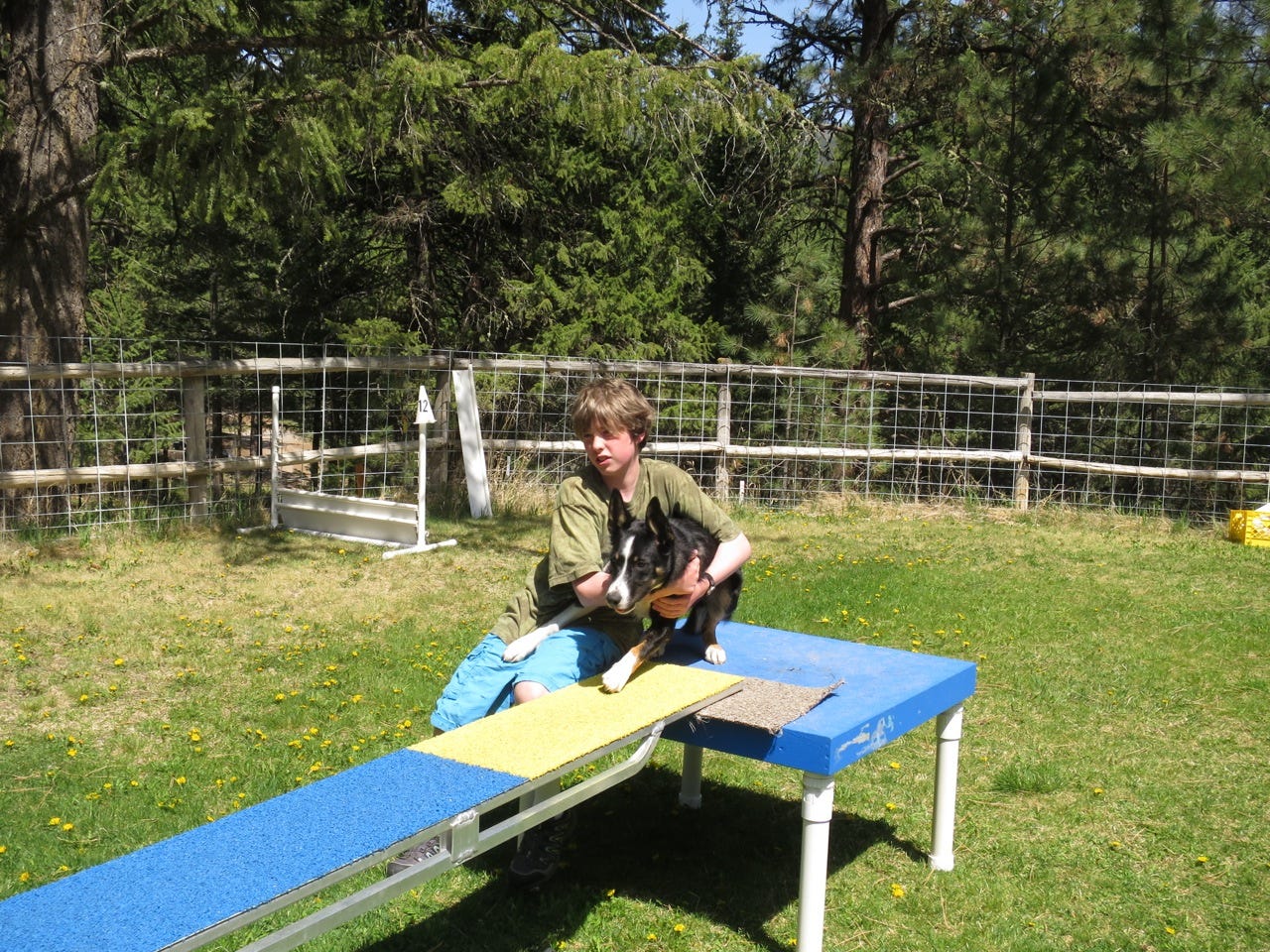
Here is Tock learning the teeter. My faithful assistant (and son) restrains him while I rev him up from the other end. This is a great way to get a dog excited about tearing across a noisy, tippy board (as long as it’s raised incrementally to full height).
Are you ready? In an excited voice, we handlers will ask this of our dog, who is lying, sitting, or standing, maybe in front of an agility obstacle like a jump, or maybe not, if the goal is to train something else, like a recall. It’s an invitation to our dog to get ready to do something fun with us.
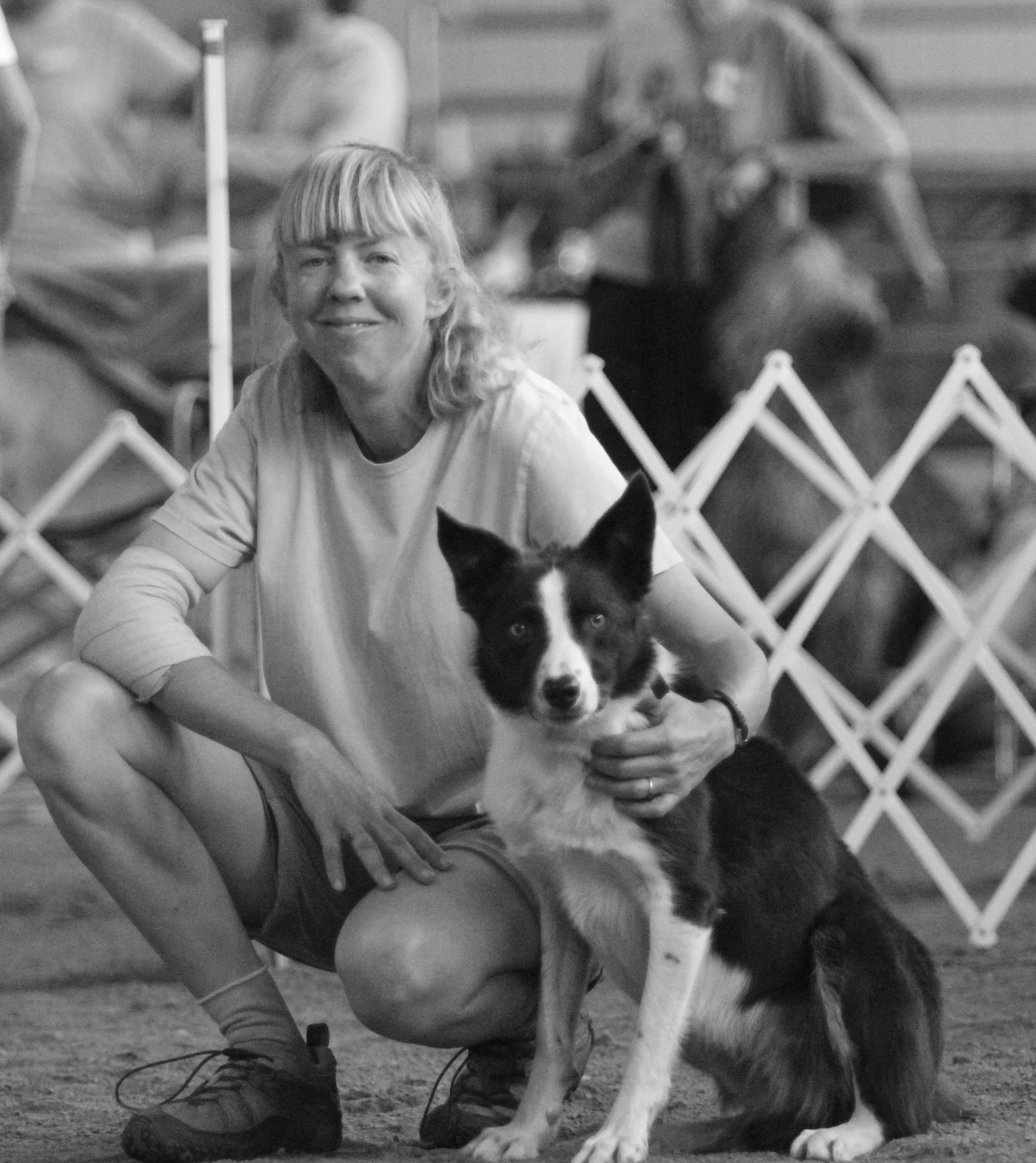
Moth & me at the start line, getting ready to run
Are you steady? We’ll follow up with another eager phrase if our dog still seems a bit distracted and not bursting at the seams to do what’s coming. And hey, rhyming phrases are easy to remember, so why not?
At this point, Moth has received her rev-up words and is anxiously waiting to be released.
Okay! When our dog can barely restrain itself from a rocket launch (i.e., is quivering, salivating, or possibly bug-eyed with anticipation), we’ll at last use our specially chosen “release word.” Note: it’s always best to rely on a release word that can’t be mistaken for something else and is unlikely to be used for some unrelated purpose. I was taught to use Okay and kept it up with successive dogs out of habit, but my students and many others have more wisely chosen a less common word such as Break! This is because it’s all too easy to release your dog accidentally from a start line in an agility competition while saying “okay” to the judge or some other official. And then your dog is racing off through the ring, leaving you standing there, completely unprepared.
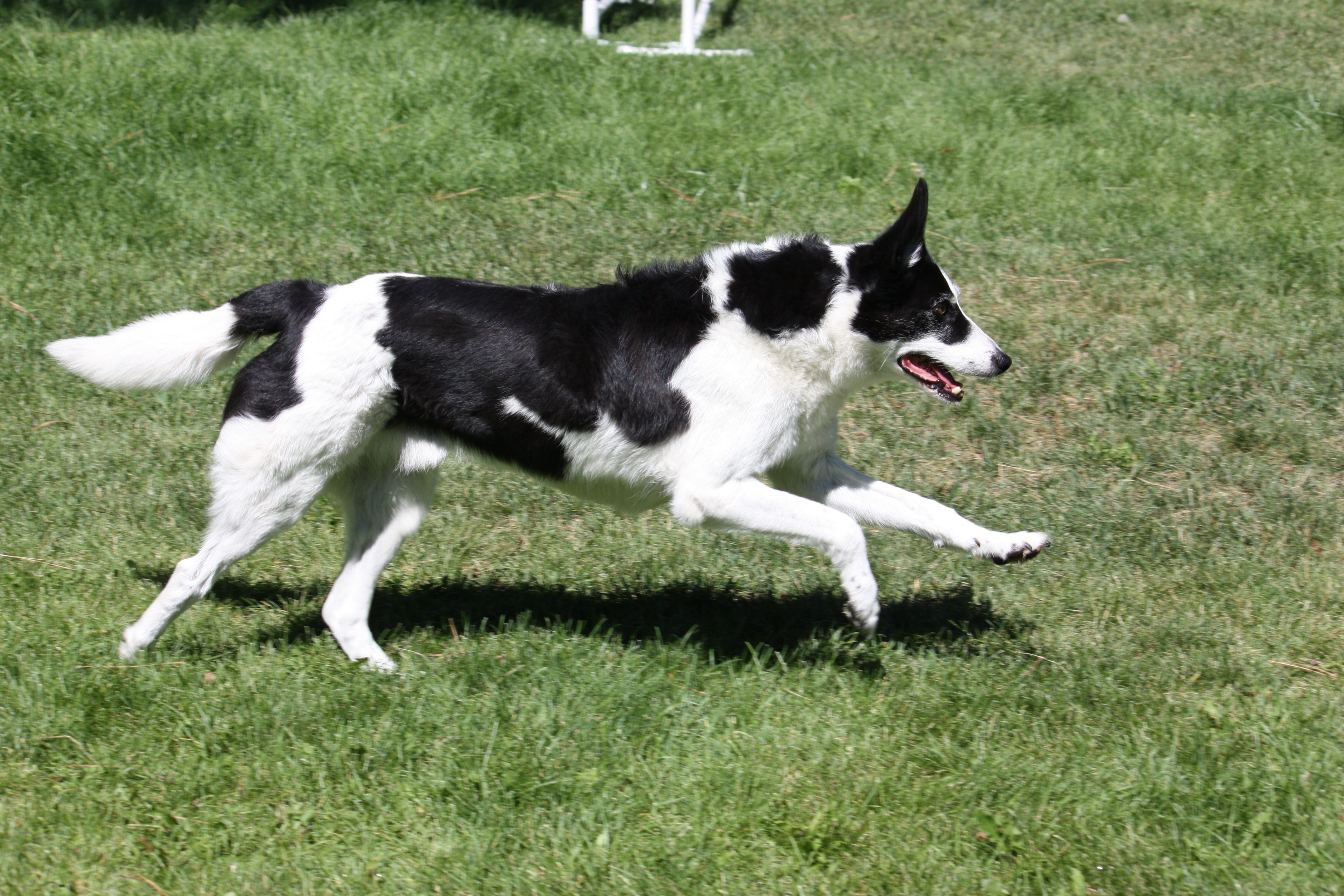
Tarzan, galloping free! (full disclosure: Tarzan never actually had a release-word accident at the start line. This picture was taken by Sneed B Collard III for the cover of his wonderful MG novel, The Governor’s Dog is Missing.)
Because everything in my past life seems to parallel things in my present, I can’t help but think of these rev-up words in the context of writing. One of the most essential things we learn as new writers is that our story must hook the readers. The obvious hook, of course, is a line at the end of the first chapter that compels us to keep reading. But the hook itself isn’t analogous to the rev-up words. No, the hook is the same as the release word in the doggy world. It’s the thing that gives the reader permission to zoom off into the rest of the story. Before the hook can make any sense, your readers need to be revved up. They need to understand the context for the hook: why should they care about your character and the situation the character has found themselves in? The “rev-up” material in your early pages can present the character in all their misunderstood (or misunderstanding) glory—quivering with desperation for something to happen. Once this foundation is laid, the hook makes total sense.
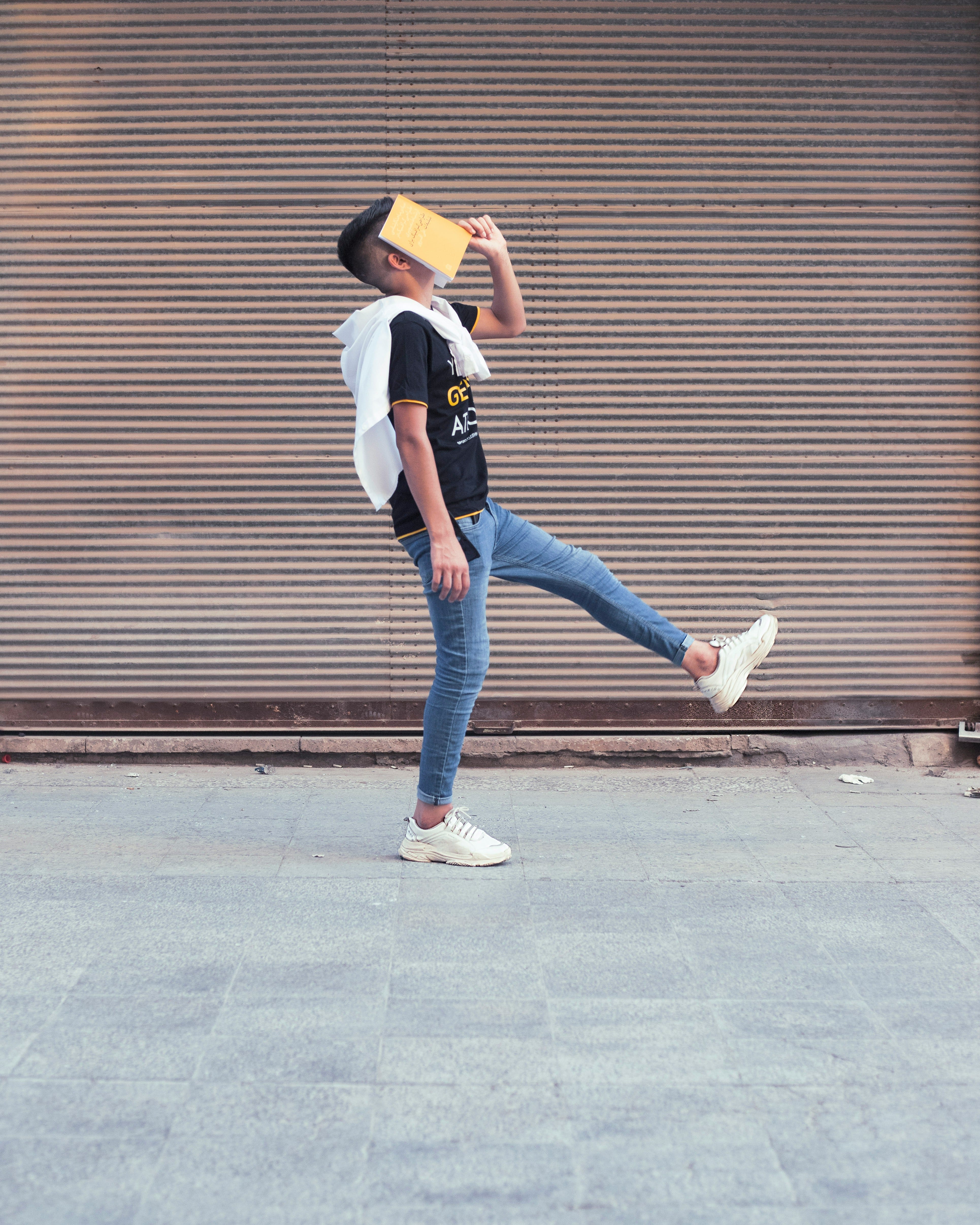
This reader appears to be fully hooked. Photo credit: Hosein Ashrafosa
Another writerly use of the rev-up—and this time it’s the actual words—comes once you’ve written something. Humans are social creatures who secretly crave to share their work. This is true even if they’re cave-dwelling introverts (speaking from experience). Readings by an external audience will likely result in some pleasant and self-affirming compliments, while at the same time providing us writers with valuable editorial feedback. So why not let others—family, friends, critique group partners—read our pages before they’re in publishable form? Isn’t it terrific to get feedback at every stage, whether it’s an idea for a premise, a first page, or a first draft?
Every writer’s dream: an appreciative audience. Photo credit: Anthony Delanoix
Not necessarily. Here’s where the rev-up part comes in. I feel strongly that we need to ask ourselves in a firm voice: Are you ready? Have you thought about your story on your own enough that input from others isn’t going to strip your own writerly essence away from it? Are you steady in your ideas, your voice, and your determination to say something in particular, so that now all you need are some nudges from others to catapult you in the right direction—whether that’s writing an outline, or that first page, or what comes after the first page, or draft two, three, four, etc?
I personally never share a single thing about my stories until I’ve written and self-edited Draft 1. Sometimes I don’t show them to anyone until after Draft 2. At that point, if someone asks me about my premise, I have a pretty solid idea of what I’ll say. I also think I get why I’ve started the story in a particular place, I think I’ve gotten to know my characters better than my own family, and I think I understand how I want the journey to unfold. Note: I’ve prefaced all these statements with “I think” because I’m often wrong. Editorial feedback will be crucial to point me in the right direction. Probably many times over.
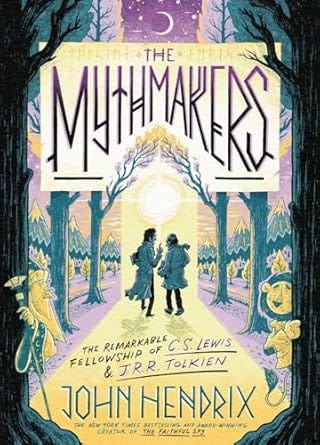
But this isn’t an essay about the value of critical feedback. It’s about how to maximize that value by asking for it when you’re truly ready for it. Depending on your writing process, this point may happen at a different stage for you than for other writers you know. J.R.R. Tolkien, for instance, was an extremely thorough and careful writer, who took seventeen years from when he first started writing the Lord of the Rings to its completion (and that’s not counting the forty years he worked on the Elvish languages!). He wanted things to be as perfect as possible before revealing them. Though I have nowhere near his skills, I think of myself as that type of writer. Tolkien’s methodical nature contrasts with his pal C.S. Lewis, who met in the same weekly literary group and wrote much faster, without Tolkien’s level of revision (thanks to John Hendrix’s The Mythmakers for these insights). Both of them, of course, were brilliant writers. I bring them up simply to point out that neither approach is right or wrong.
The real question is: what is right for you? When will you submit your premise, hook, first pages, or manuscript for review? When are you ready to gallop into the ring and show your writing to the world?
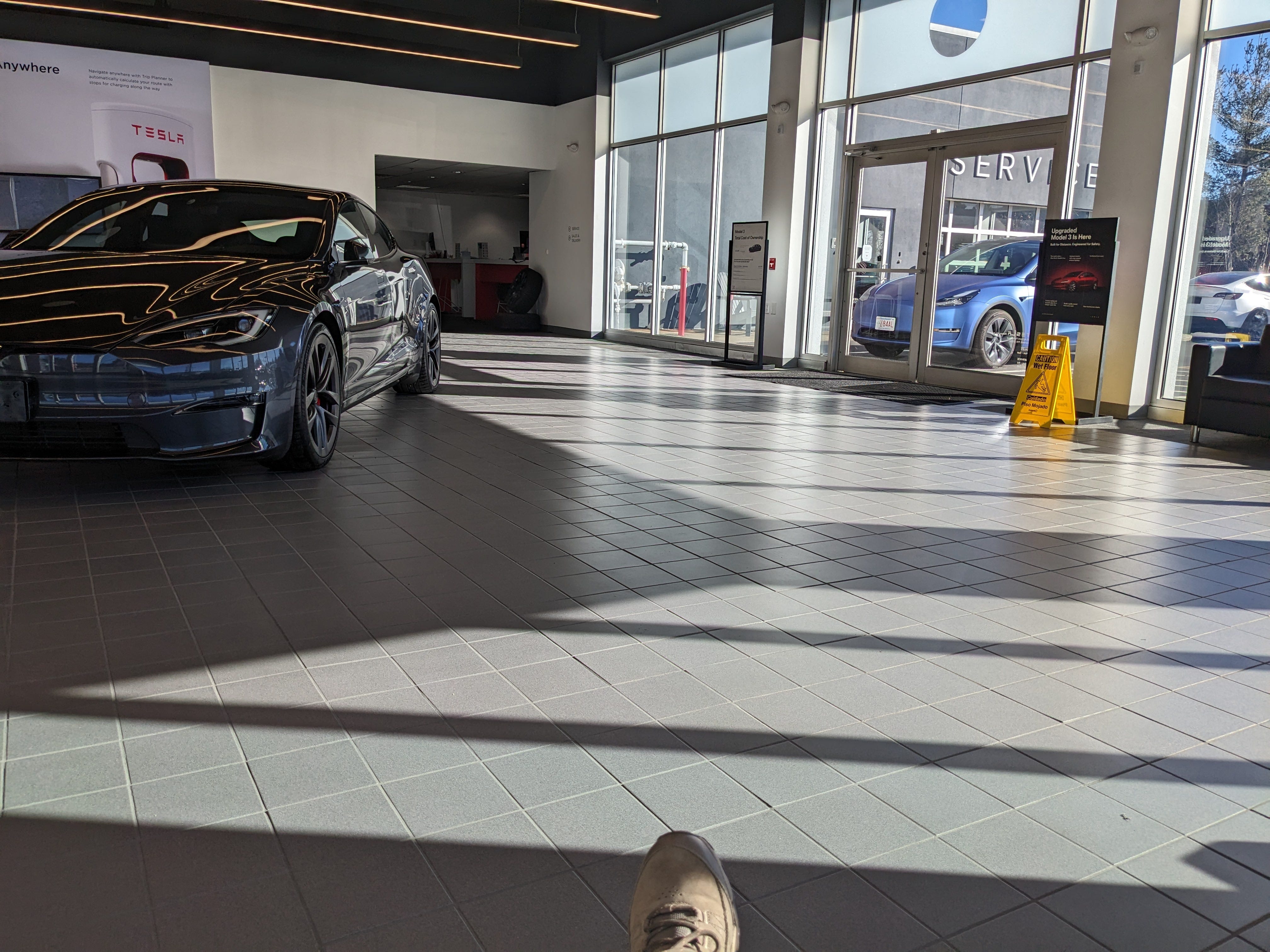
I had to take our car in for service this week. A mundane task, right? Well, I was dreading it. Not because of the hour-long drive in frozen weather, nor because the appointment was scheduled to take all day for some inexplicable reason. I was even willing to put up with the insipid pop music blasting without cease into the waiting room.
The endless wait
No, the main reason I was so reluctant to go was because I couldn’t bring my dog.
Pathetic? Maybe.
Weird? Yep.
True? Definitely.
He’s like a boomerang, always coming back to me.
In my defense, I’d better back up. I’m sure I’m not the only one for whom 2024 was a super tough year. For me, it was the toughest year on record (in my admittedly privileged life)—and that’s not even counting the usual pitch and query rejections that continue to chisel away at my sense of writerly worth. I won’t dwell on the chaos my family experienced because I’ve written about it plenty already. Let’s just say that while this past year was sometimes exciting and possibly character-building, it’s also been exhausting and downright scary.
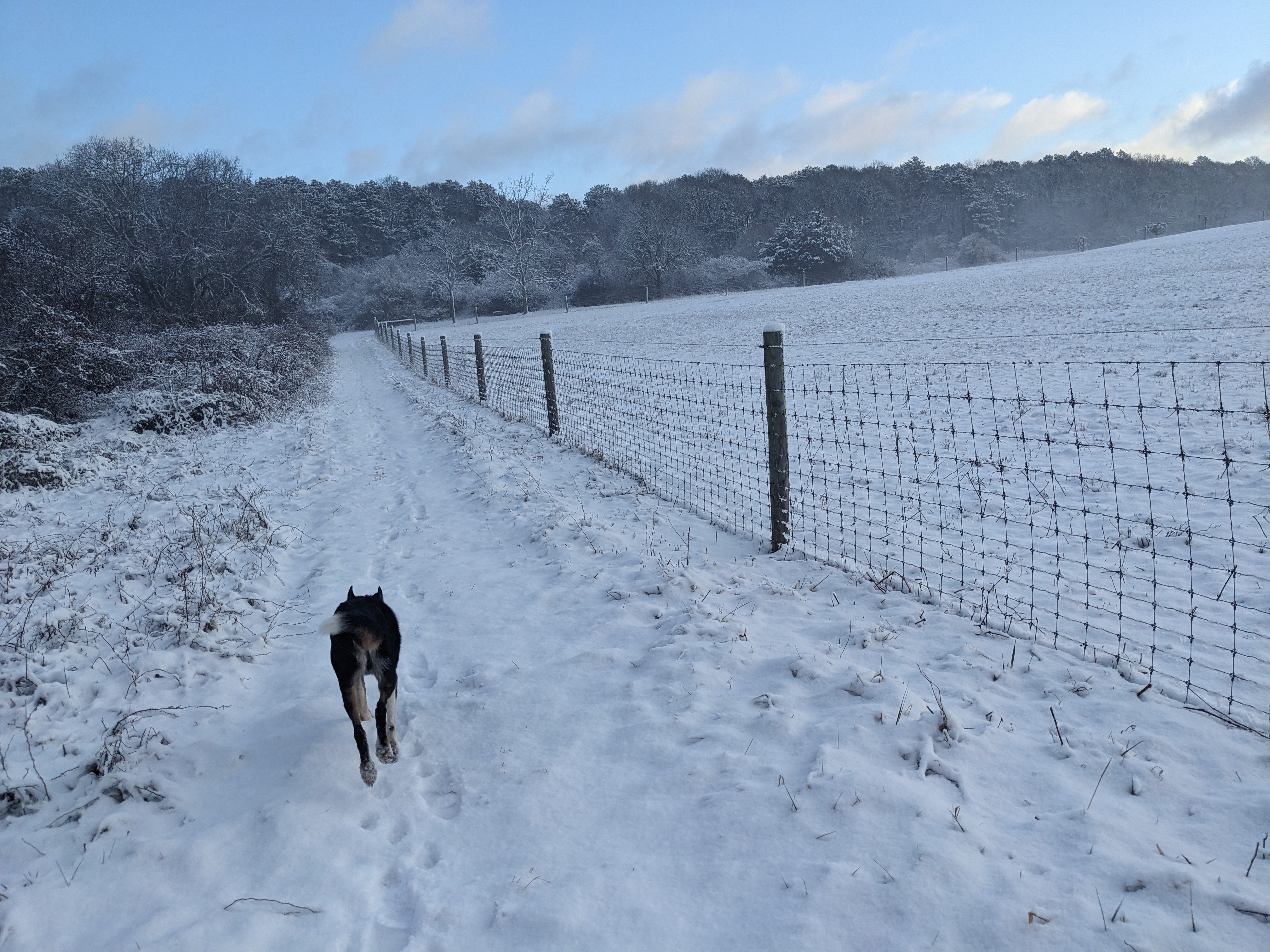
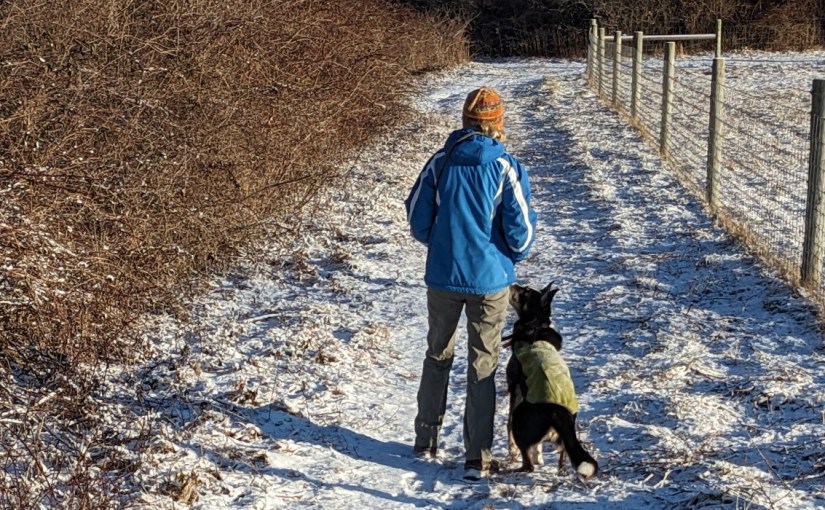
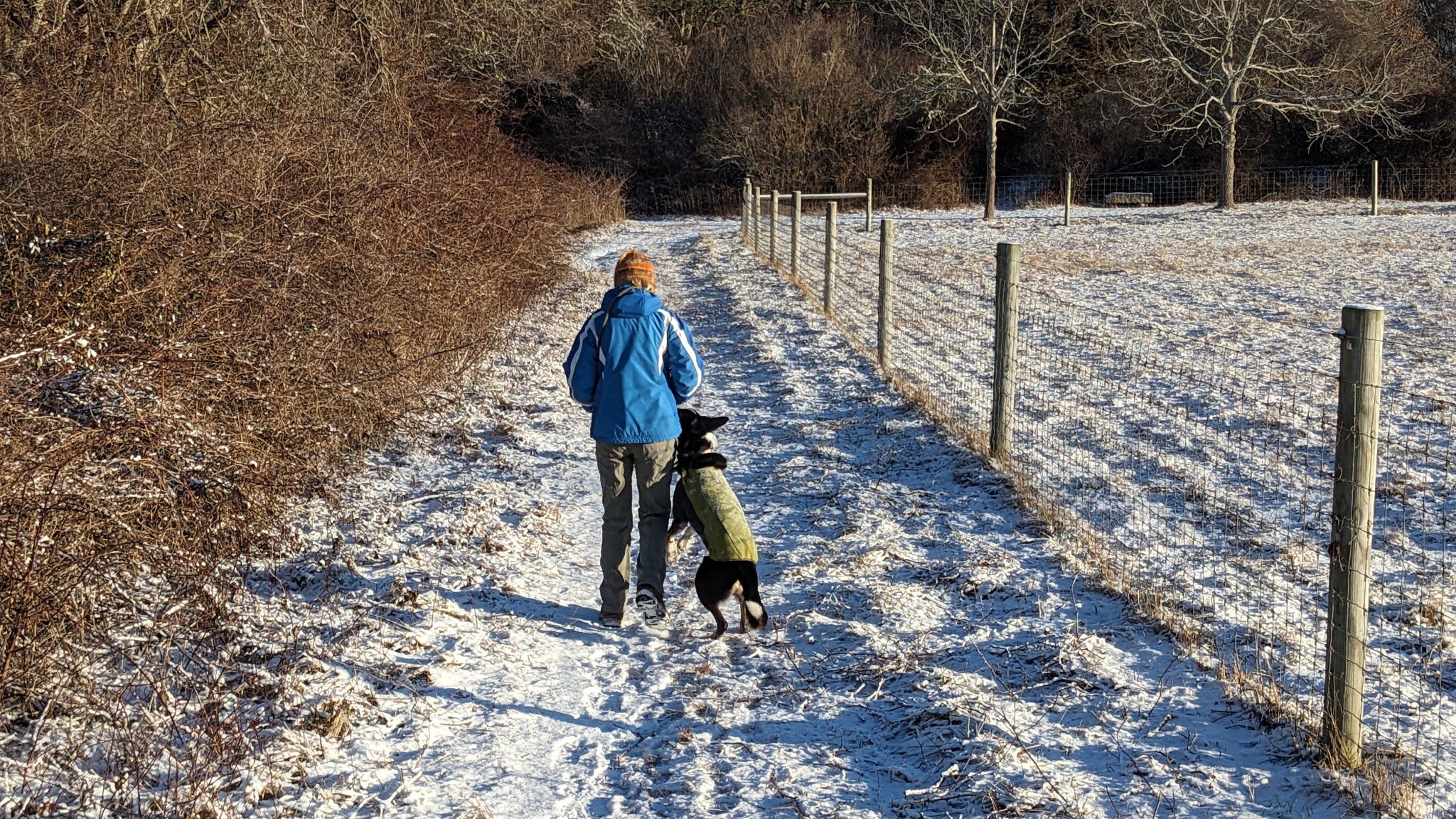
The one constant through all the turmoil, the one warm fuzzy creature by my side has been—you guessed it—my dog. He gets up when I do from his bed next to mine, he crunches his kibbles while I work on my cereal, he gets dressed (with help) in his fleece jacket right before I pull on my down one, and he strikes out on the trail while simultaneously leaping in my face to remind me how wonderful an excursion together will be. And so we walk, for two hours every morning and another half hour in the afternoon, despite horizontal rain, branch-snapping winds, and cold that freezes the sheep farm’s trickling faucets into lumpy white shrouds.
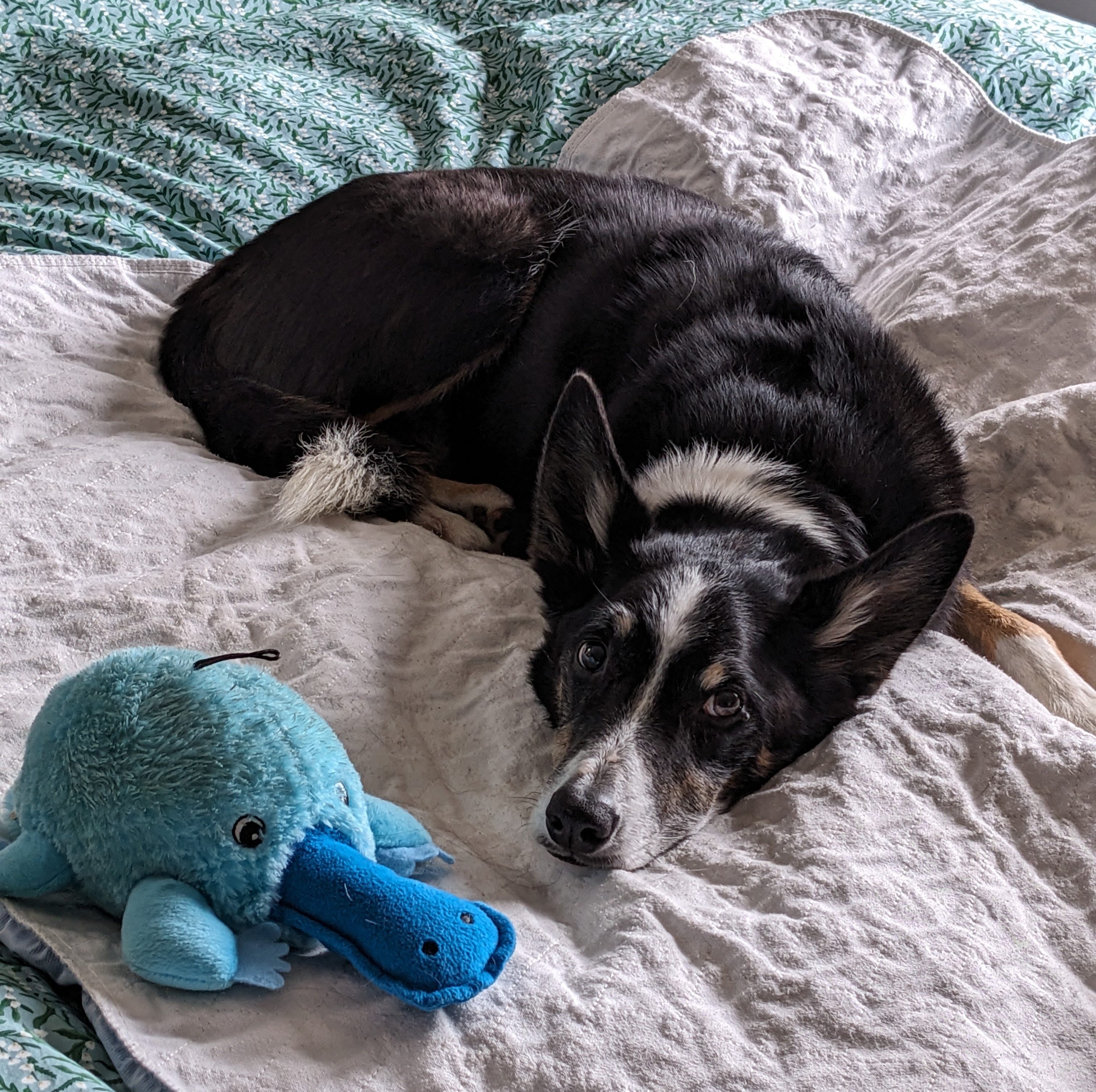
Could anyone avoid binding to this fellow? I think not. (True with or without the platypus.)
But my dog’s proximity doesn’t end with feeding and walks. He lies on the rug outside the bathroom while I shower, he sleeps in my office while I write, he sprawls at my feet while I cook, and he hops in the car to attend any errand with me, whether it’s a quick trip to the store or a multi-hour excursion to a distant town. Wherever we go, he usually gets an outing, even if only a brief stroll around a parking area or a game of frisbee in a small patch of grass by the hospital. (In the interest of dog safety, I feel it’s important to note that our car has a Dog Mode, in which the battery keeps the car at an optimal temperature no matter how inhospitable the weather is outside. Bringing a non-service dog along for errands would otherwise be impossible).
Tock is excellent at performing the dual functions of kitchen rug and auxiliary garbage disposal.
I’ve always kept my dogs close, but this year and this dog more than any other. He has become part of me, as inseparable as a limb from my body. On the rare occasions when he’s not with me, I feel his absence like a gaping wound that will never heal. Dramatic? You bet. True? Well, my arm has never actually been ripped off, so probably not, but you get the picture. My dog is part of my essence—that indefinable aggregation of things that makes up a person’s personality and convictions. My sense of self. My soul. I can’t picture myself without him.
This gets me to wondering: are there other things from which I am inseparable? That is, if they were taken away, I would feel as though I’m no longer me.
Short answer, yes. Some of these inseparabilities (is that even a word?) are vain and trivial. I can probably quickly get over them. My hair, for instance. I’m scheduled for surgery this week for skin cancer on my scalp. Though the doctor is hopeful they’ll be able to suture the area closed, it’s possible the removed section will end up large enough that they’ll have to do a skin graft and then I’ll end up with a bald patch on the top of my head. I’ve been trying to envision myself either wearing a hat or wig to cover it for the rest of my life or going the other route and shaving my head entirely. I know people routinely lose their hair for all sorts of reasons, so it’s totally selfish that I find this upsetting. I don’t know why my view of myself in the mirror is so strongly tied to my sense of who I am. I have to remind myself that at least my dog won’t care.
Breaking News: Surgery #1 (of 2) is done, with sutures!
Then there are the bigger things, like my human family. Son, husband, parents … all of them hold a part of me within them just as I do of them. Work is another big one. Though I’ve never had a steady, traditional, well-paying career, I seem to have spent most of my life working in one way or another. For whatever misguided reason, I’ve chosen to grind away at things that take a long time to learn and perfect, and I’ve invested years of passion in each. Music first: giving that up due to injury was traumatic and required a lot of internal rewiring of my sense of self. Next ecology, then dog agility training, then writing. I’ve now spent so much time studying the craft of writing middle-grade fiction, specifically, that it’s become a huge part of my identity. Even if no one but my husband and my critique partners ever read my finished works, writing these novels occupies an important part of every one of my days. I love being part of the writing community, and experiencing the pleasure of crafting a phrase, a scene, a story.
Photo credit:Glenn Carstens Peters
At this point in my life, if anyone asked me who I am, I’d say: children’s book writer and dog / nature lover (those last two things go hand in hand for me, because how can you have a dog if you don’t like to get outside?). Of course, this is but one moment in my existence. Maybe by next year, I’ll have added another inseparability to my list.
How about you? What are those things so intrexicably tied to your being that you can’t imagine existing without them?
Or: How to Get Readers to Relate to Your Characters
How many times have you put down a book because you can’t get close to the main character? Maybe they give no sense of what’s important to them and thus come across as lifeless automatons. Or maybe they express themselves, but in a way that makes no sense.
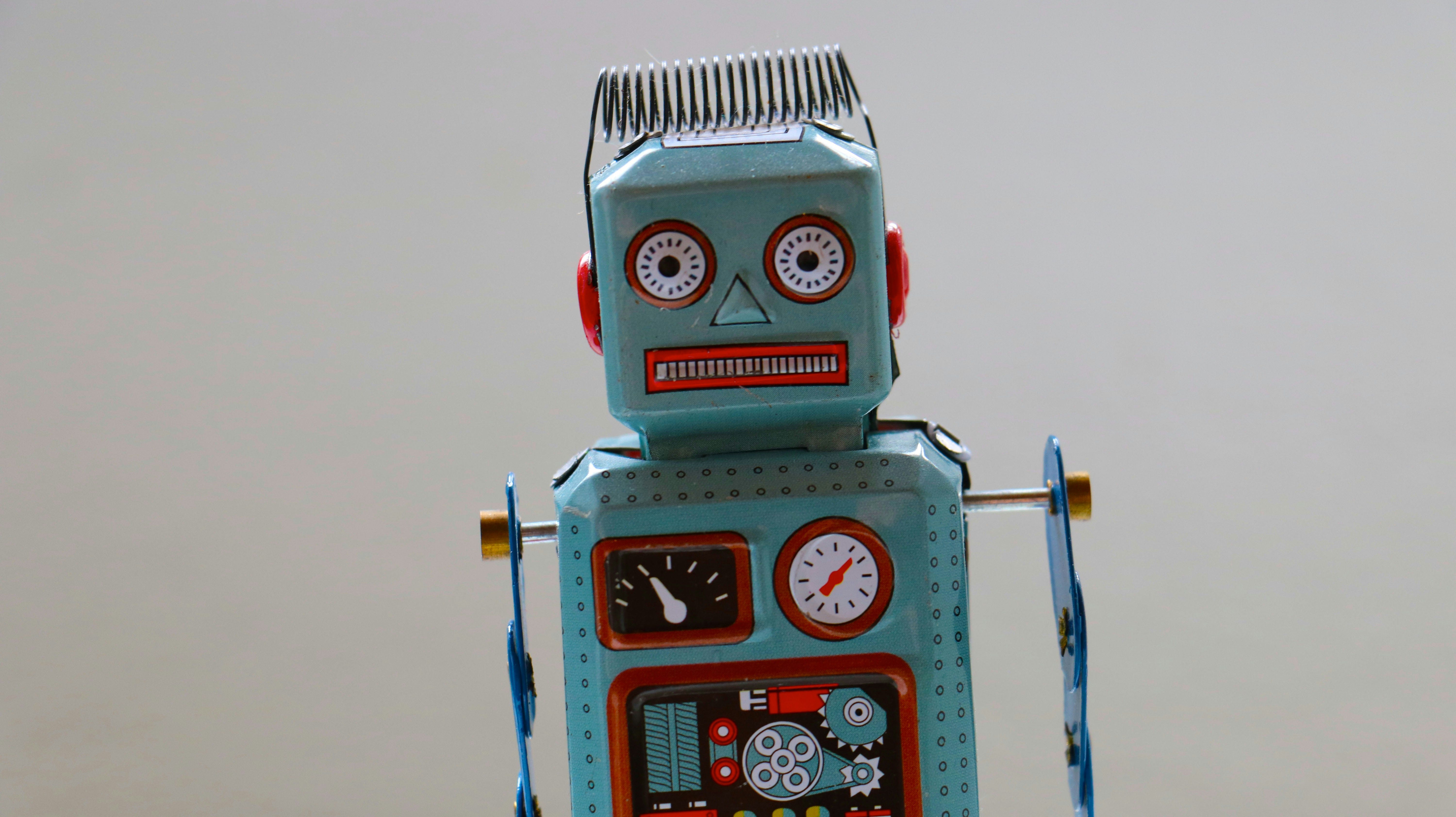
This robot actually has a lot more life to it than some characters I’ve read. Photo credit: Rock’n Roll Monkey.
Worse, how many times have you gotten a query rejection in which an agent tells you they don’t find themselves invested in the protagonist? And you’ve wondered what is wrong with your writing? Are you really that terrible?
Both of the above-mentioned scenarios have happened to me. Tthe first not as much because I tend to plug away at books for far too long even when I’m not enjoying them. But the second thing—the professional rejection—has occurred more times than I care to admit.
I could use the excuse that writing is a subjective business and some agents simply don’t like my style. I do tend to write strange stories, with quirky characters set in strange worlds and situations. But if reading hundreds of books over the years has taught me anything, it’s that even when a particular genre of story or style of writing isn’t my favorite, I often can relate to the characters within it.
So what’s the secret? How do we get readers to “fall in love with” our protagonists?
We might as well ask: How do we fall in love with a new dog? (don’t worry, Tock. You are our One and Only for many more years yet. I hope). Puppy cuteness aside, many new dogs are a lot of work. They might be fully grown with their own personalities already set. They might have behavioral issues that make them difficult to handle. No matter their age, they are most definitely not a replacement for our other dogs. Each one has unique traits, and it can takes some time to get used to them.
Unlike our previous dog, Tock has only a few precise times of day when he will allow himself to be cuddled. It can be hard to wait!
What is it, then, that causes us to take that new creature into our home? To essentially sign a contract that says we will commit to the care and well-being of this furry beast for the rest of its life?
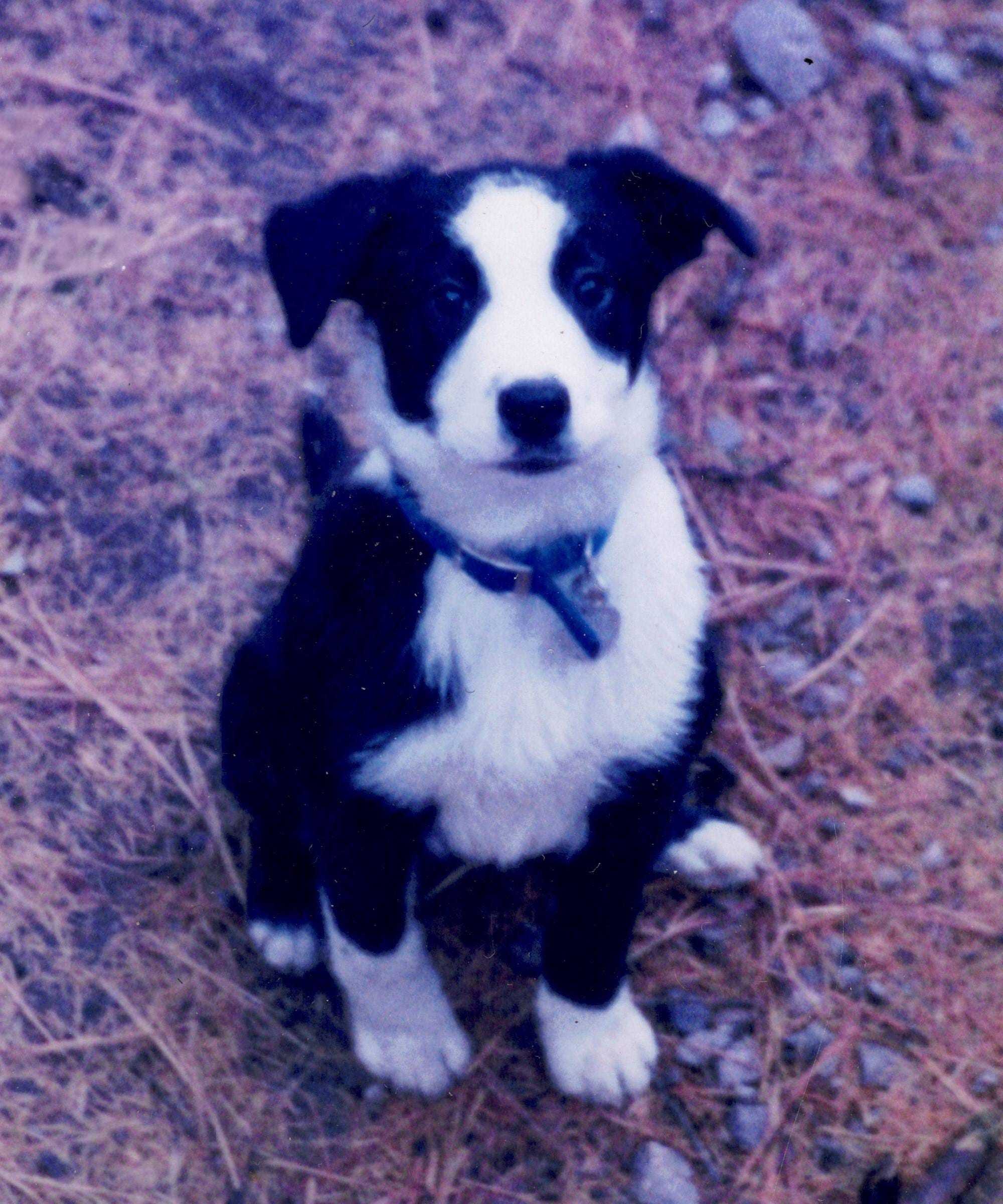
The answer, I believe, comes down to a way of being a particular dog possesses that makes us empathize with it. Think about the first time you gazed upon that litter of puppies, or on that one animal out of dozens or hundreds at the rescue facility. My husband and I still remember spotting our first dog, Tenzing, at the Humane Society. The little guy sat alone in a corner, clearly overwhelmed by the barks echoing from the cages around him. But the thing that drew him to us in an instant was the way he searched our faces, his chocolate eyes switching back and forth from one to the other of us. Clearly, he was trying to send us the telepathic message: Are you my parents? Will you get me out of here?
Tiny Tenzing
We adopted him in minutes. If he’d been in a book, I would have read past the first page. And by the time I finished Chapter One, my bond would have been so strong that I’d have kept turning the page to the end.
When agents talk about falling in love with a character, my guess is they’re expecting some sort of spark on that first page. By the completion of the first chapter, for sure. Unlike getting used to a new dog, we don’t have the luxury of months when introducing readers to our story. We need something fast.
We need to generate empathy!
One of the most tried-and-true methods for producing empathy in readers for a character lies in the Save the Cat method (see the many books by Blake Snyder). This is when a character demonstrates something warm-hearted, likeable, or thoughtful about their personality. They might literally save a cat stuck in a tree, or they might simply display a way of thinking about something that indicates they’ve got an ability to feel. We readers understand that even if the character seems pretty screwed up, they’re not all bad.
Photo credit: Braedon McLeod
To me, generating empathy lies in a combination of action (e.g., Tenzing’s eyes darting back and forth), thought (it was pretty obvious what he was thinking), and dialogue (it was too noisy to hear him, but it’s entirely possible that he was whimpering or at least snuffling a little). The trick is to put a bit of this on Page One, like sprinkling seasoning on a soup, and then add more as the story progresses. This will enable your reader to relate to the character in some small way, and to feel as though they’re developing a relationship with them.
But what about the rest of the story? How do you maintain that trust? No matter how endearing a character is initially, a reader’s only going to want to stick with them if the things that character does, feels, and says make sense in the context of their life. And not only in the present, but in their history. Their backstory.
Figuring out a character requires lots of thought.
You know how sometimes you do things that you wish you hadn’t—and you don’t know why? Or you suspect something happened to you in the past that messed you up—but you can’t quite figure out what? This is often true of a character in a book, too. The difference between real life and fiction is that in a story, you the author need to understand precisely why your character is acting, thinking, or speaking a certain way. You need to know that character better than you know yourself. Bit by bit, you can then impart a character’s historical context to your reader so they’re not completely befuddled by what the character is doing, saying, or thinking.
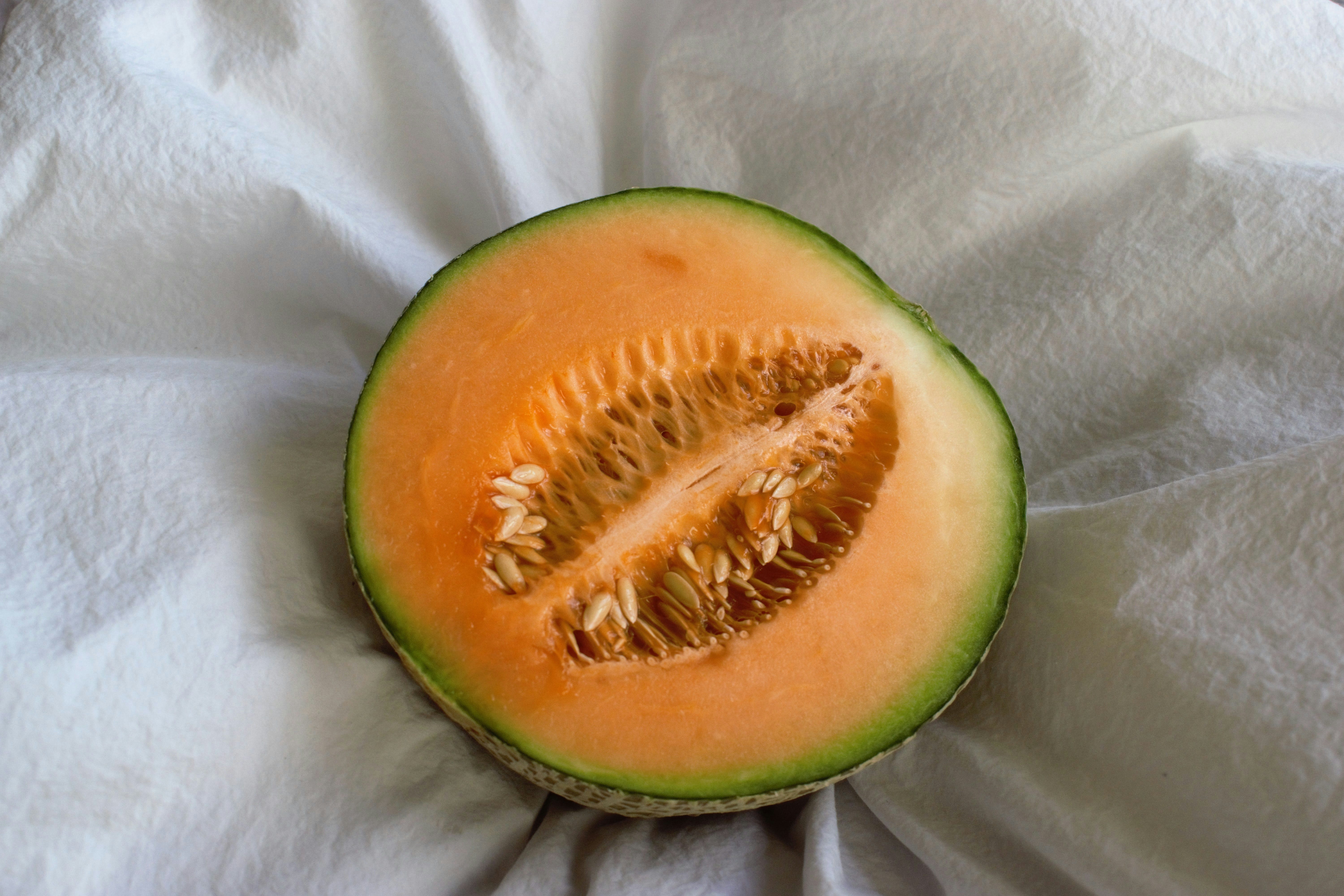
There are a lot of things I still don’t understand about myself. I don’t know why I have a revulsion to the sight of rows of seeds in a cantaloupe or rows of scales on a fish (actually, I think it’s at least partly genetic, because my son has it too. He’s the one who told me it’s called Trypophobia). I don’t know why I frantically yank at my coat if the zipper gets stuck (actually, I think it stems from accidentally locking myself in a closet at age four and developing a fear of tight spaces). Self-analysis aside, I truly don’t know why I feel like I have to apologize for everything, or why I need to work every second of the day until I collapse in bed and finally allow myself some time to read.
This perfectly fine picture makes me cringe. Photo credit: Martin Moore
As a dog owner, on the other hand, I strive to develop a thorough understanding of my dog’s personality and actions. Tenzing, for instance, began growling at children after an incident in which he was snorkeling for pebbles in a pool (one of his favorite pasttimes), and a group of schoolchildren surrounded him and began “helpfully” tossing stones at him. This terrified him, and though I pulled him out of the situation quickly, he’d made an unforgettable association between children and danger. It’s especially tricky with an adult rescue dog, for whom you don’t know all the things that contributed to their strange and often defensive behaviors. But by watching them closely or knowing a little of their history, you can make some strong conclusions about what might have led them to a particular mannerism. We knew our dog Moth had been forced to spend the first years of her life in a basement, and as a border collie must have been desperately bored and looking for work. I believe this explained her obsession with light spots on floors and walls. The poor thing would jab at them until her nose bled, so we had to make every effort to keep her away from them (and provide her with more suitable work in dog agility).
Even near the end of her life, Mothie spent her spare time gazing at light and shadows.
Like a responsible dog owner, a good writer yearns for a deep knowledge of their characters. When I begin a new draft, I work up detailed character sketches, complete with preliminary scenes of emotionally scarring incidents that show how they became who they are in the story. Even with those sketches entrenched in my mind, I invariably discover that my knowledge of my characters isn’t yet full enough. I have to step back from writing and think some more. Why are they acting the way they do? Saying the things they say? Enduring those thoughts that keep running through their heads? Only by knowing their inner histories can I write my characters in a meaningful way—and a way that generates empathy in my readers.
How about you? Do you toss books down in frustration when the protagonist isn’t relatable? Have you ever gotten one of those “can’t quite relate” query rejections? Here’s hoping our next attempts draw readers in rather than push them out.