Transitions

Or: How to Carry On When You’d Rather Dig Your Heels into the Ground and Grind to a Halt

I’ve said this before, but I’m terrible at accepting change. One of the toughest adjustments for me isn’t even that bad. It’s something we all experience on a regular basis. It pales in comparison to traumatic life events like major illness, divorce, job or home loss, war, and death. Many of us probably welcome it, in fact. Yet still, I struggle with it, every year.

Large maple tree in field with some orange leaves mixed in with the green
The Faerie Tree is beginning to turn.

You may have guessed what I’m talking about: the seasons. Given my current location in the Northern Hemisphere, I specifically mean the transition from summer to fall. Late-summer days with the crickets chirring and the pleasant-but-not-hot sun warming my face are, to me, the definition of perfection. The natural world feels calm and friendly. I experience moments of certainty that everything is fine, and will continue to be so forever.
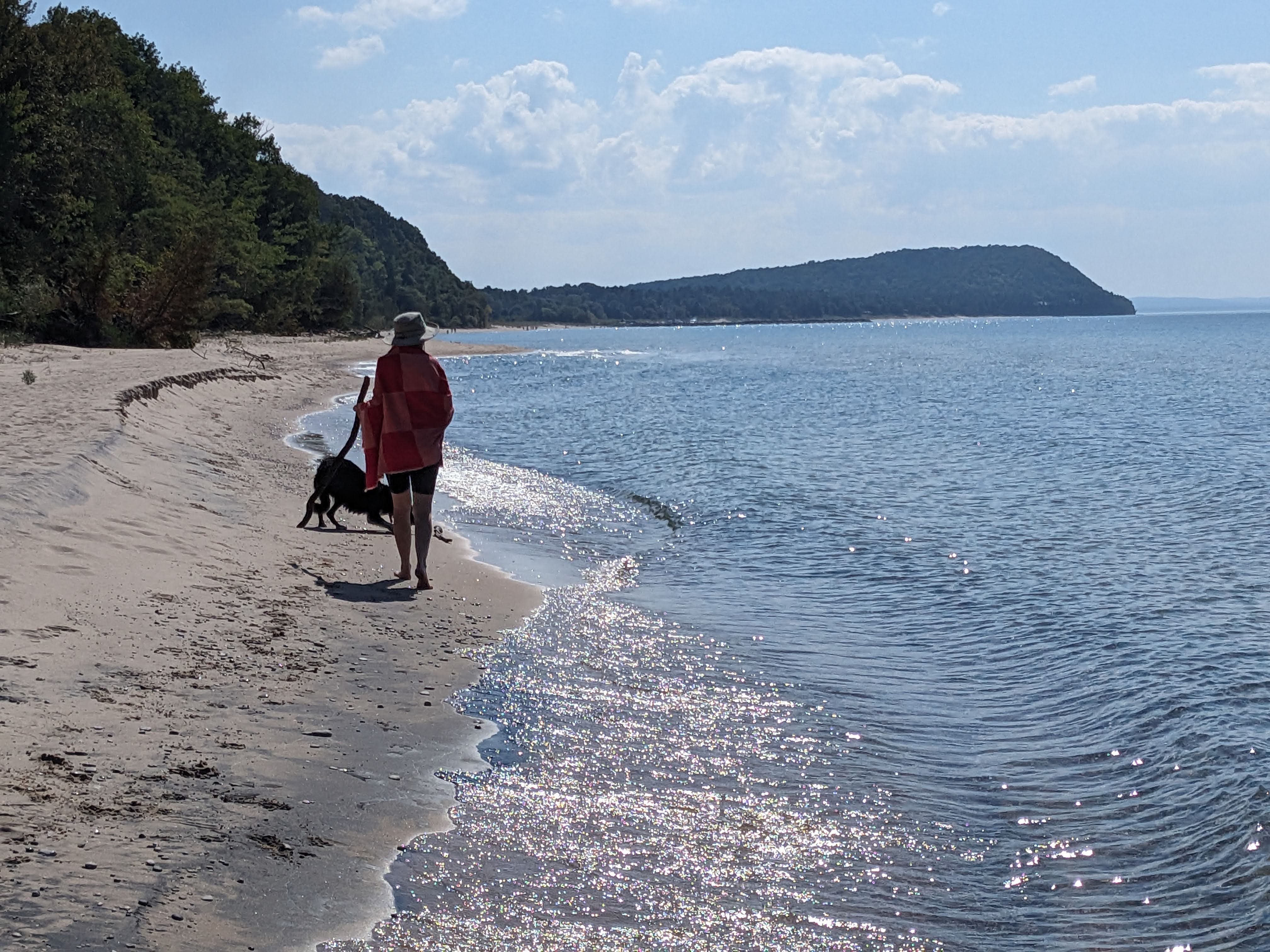
It really does not get much more sublime than this.

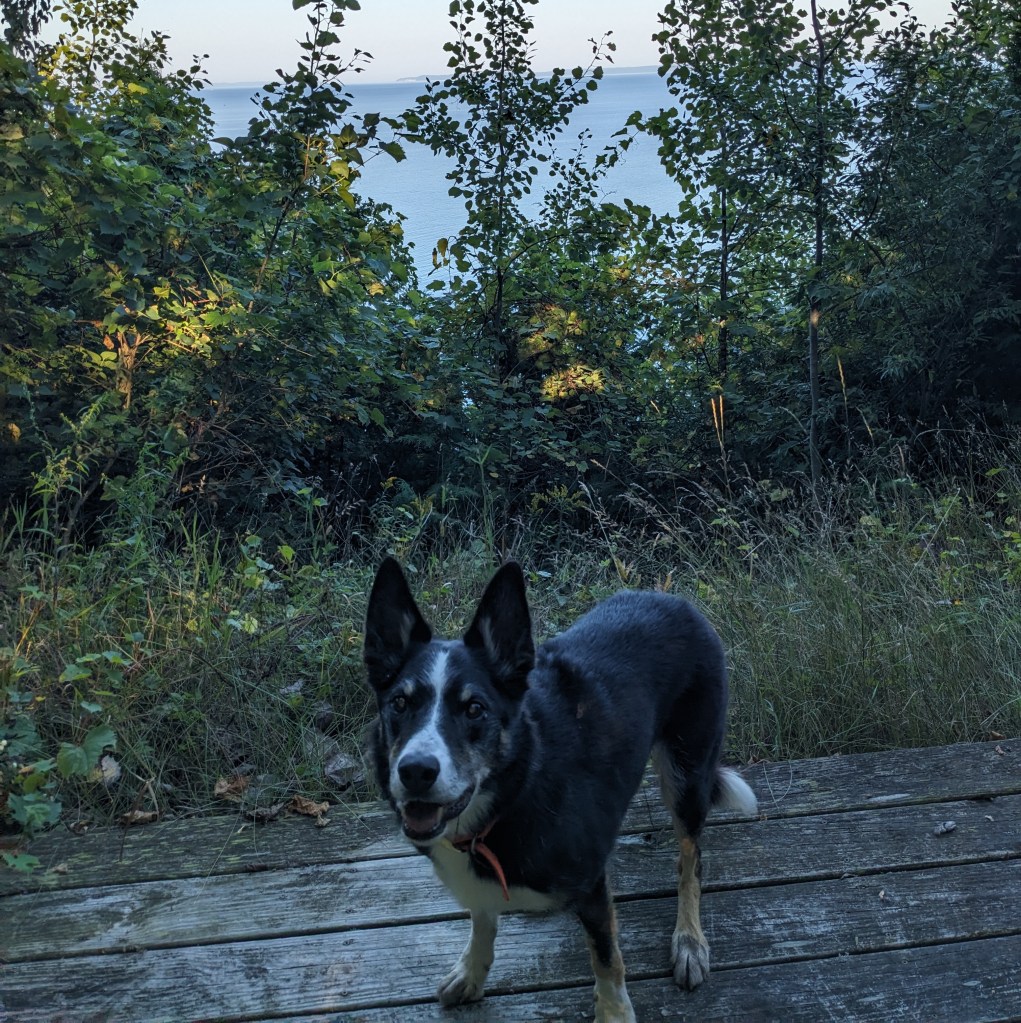
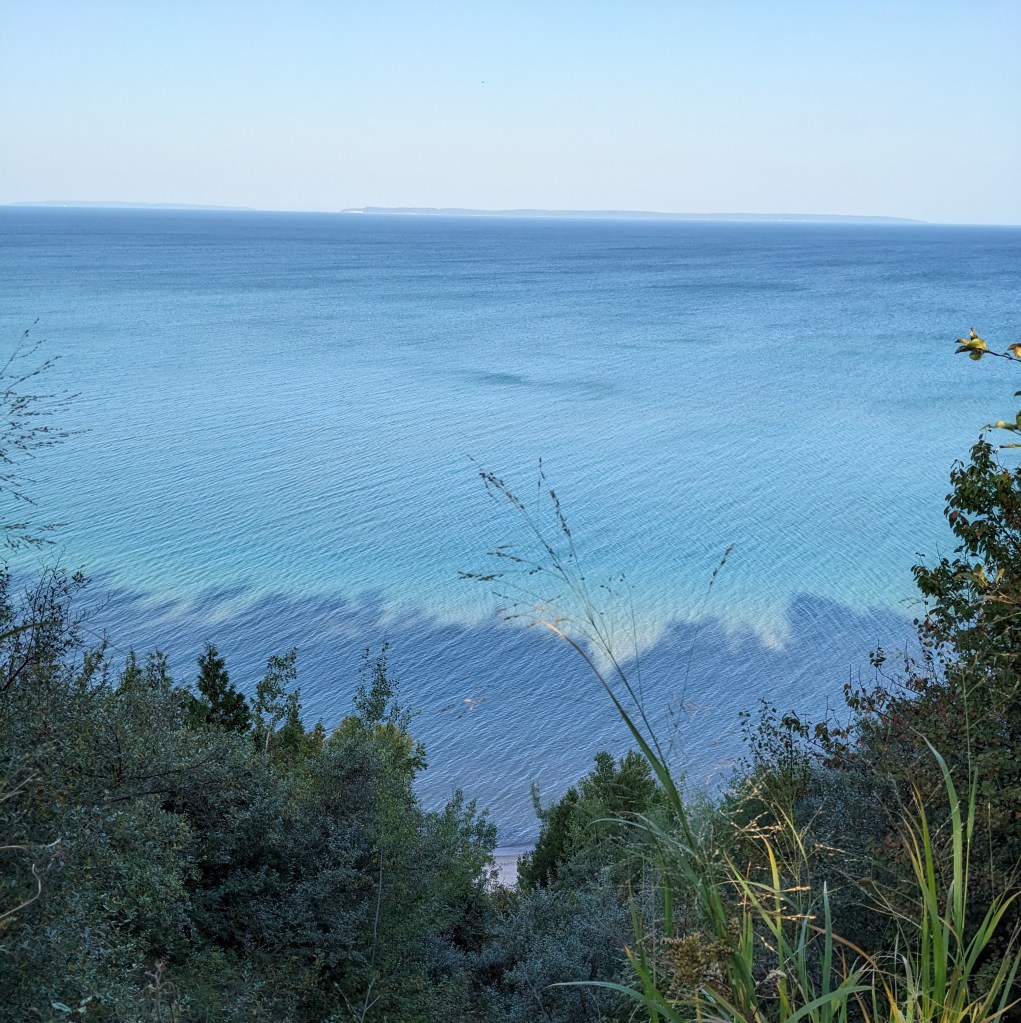
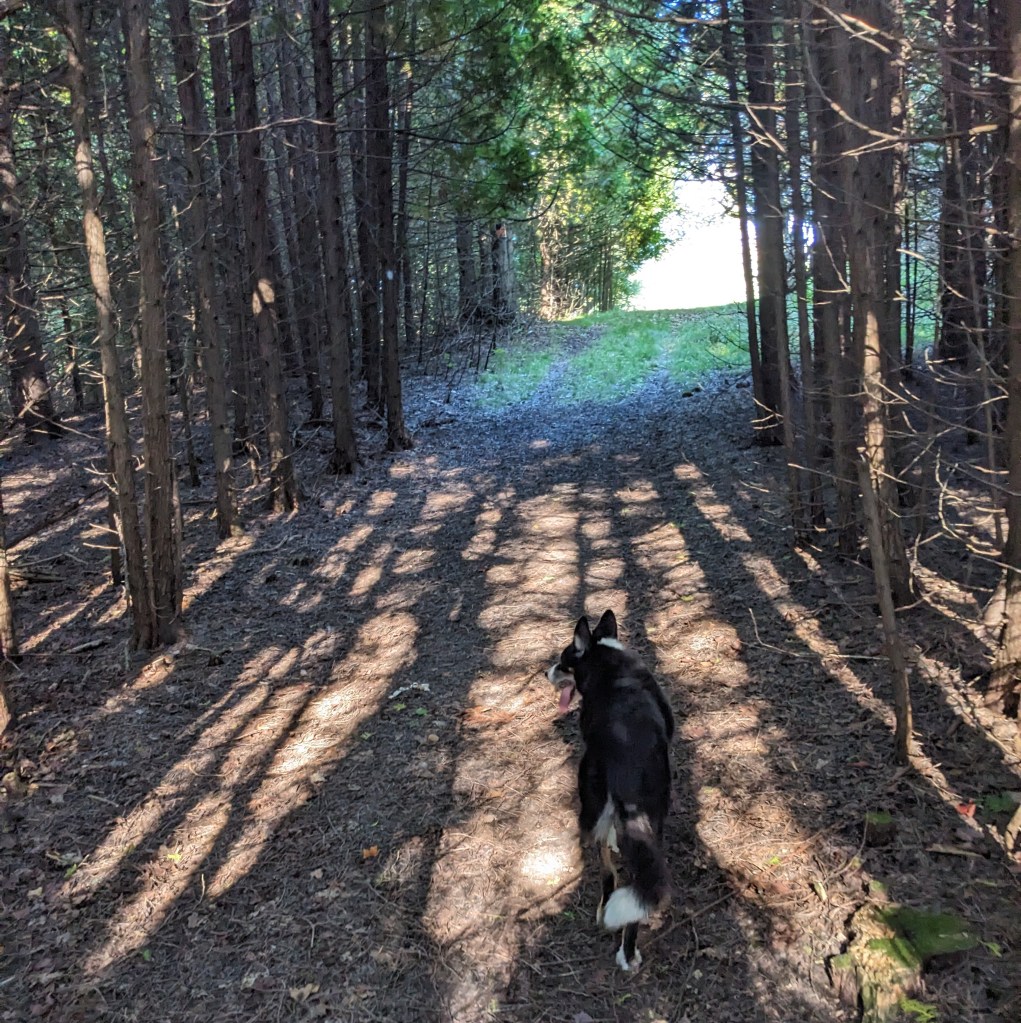
Wise people say that perfection is boring. So why is it so hard for me to part ways with the old family summerhouse: the high built-in bookshelves stuffed full of musty tomes, the quaint kitchen ice box, the six generations of family photographs and portraits, the many porches and white-gabled windows, the half-mile-long forested driveway, the view from the bluff of the distant Manitou Islands? Even tougher to leave behind is the land itself: the 200 steps down to the beach, the half mile of wild Lake Michigan waves, the bears, porcupines, and foxes, the 2.5 miles of hiking trails that I poured gallons of sweat into building for hours each day this summer. On my last walk of the trail system the day before our departure, I paused at each of the landmarks I’d named on the trail to say goodbye. That was the saddest end to summer for me.
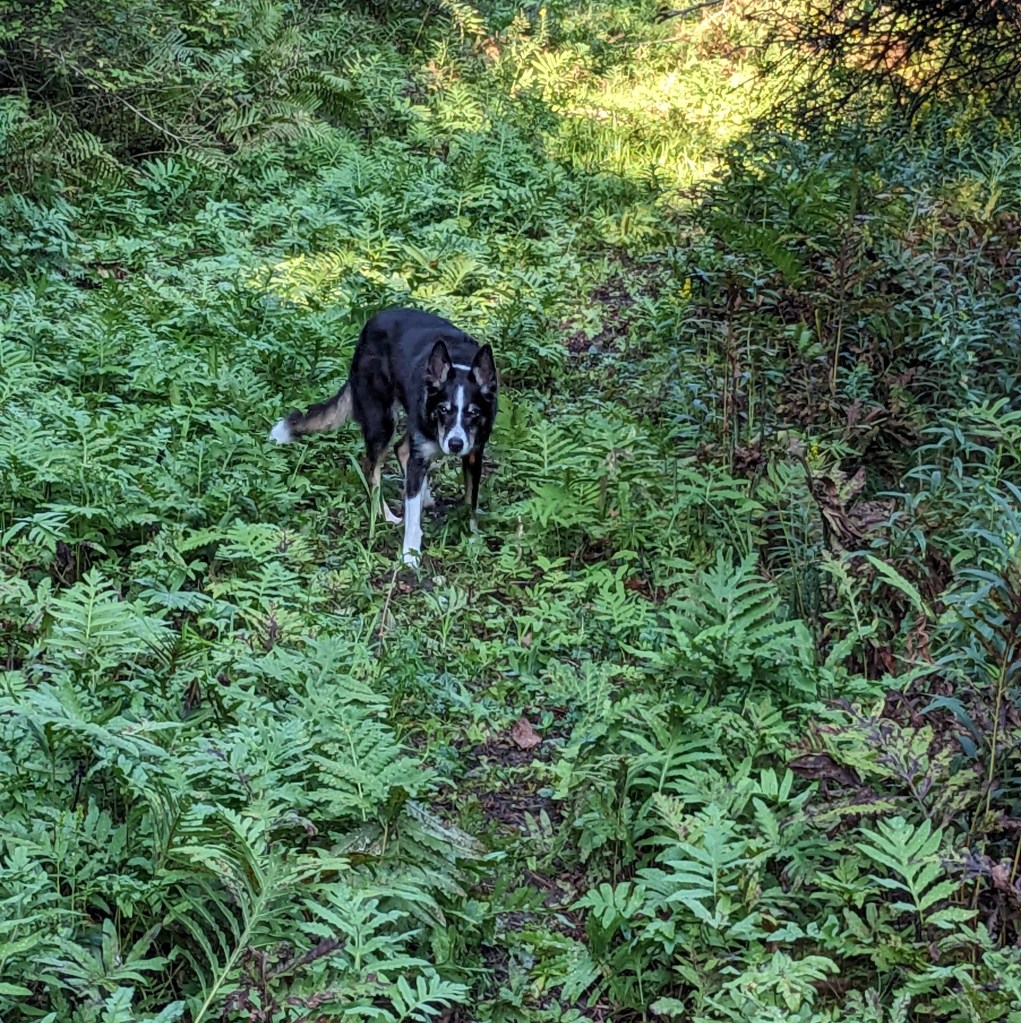
Left to right from top: Fern Gully, Haunted Birch Grove, Precarious Plunge, Southern Wilds, Streams of Consciousness, Terrace of Triumph, The Monarchy, Vista Sur, Wanderer Track

But the house is not winterized and must sit shuttered and cold throughout fall, winter, and early spring. None of us live remotely close to it, so we can’t visit during those months, either. Not that I would want to – when the nighttime temperature begins to dip into the 40’s, the house starts to feel more like a refrigerator than a home, and it never quite warms up enough during the days. It is a necessary goodbye, and one I understand completely if I stick with the logical side of my brain.
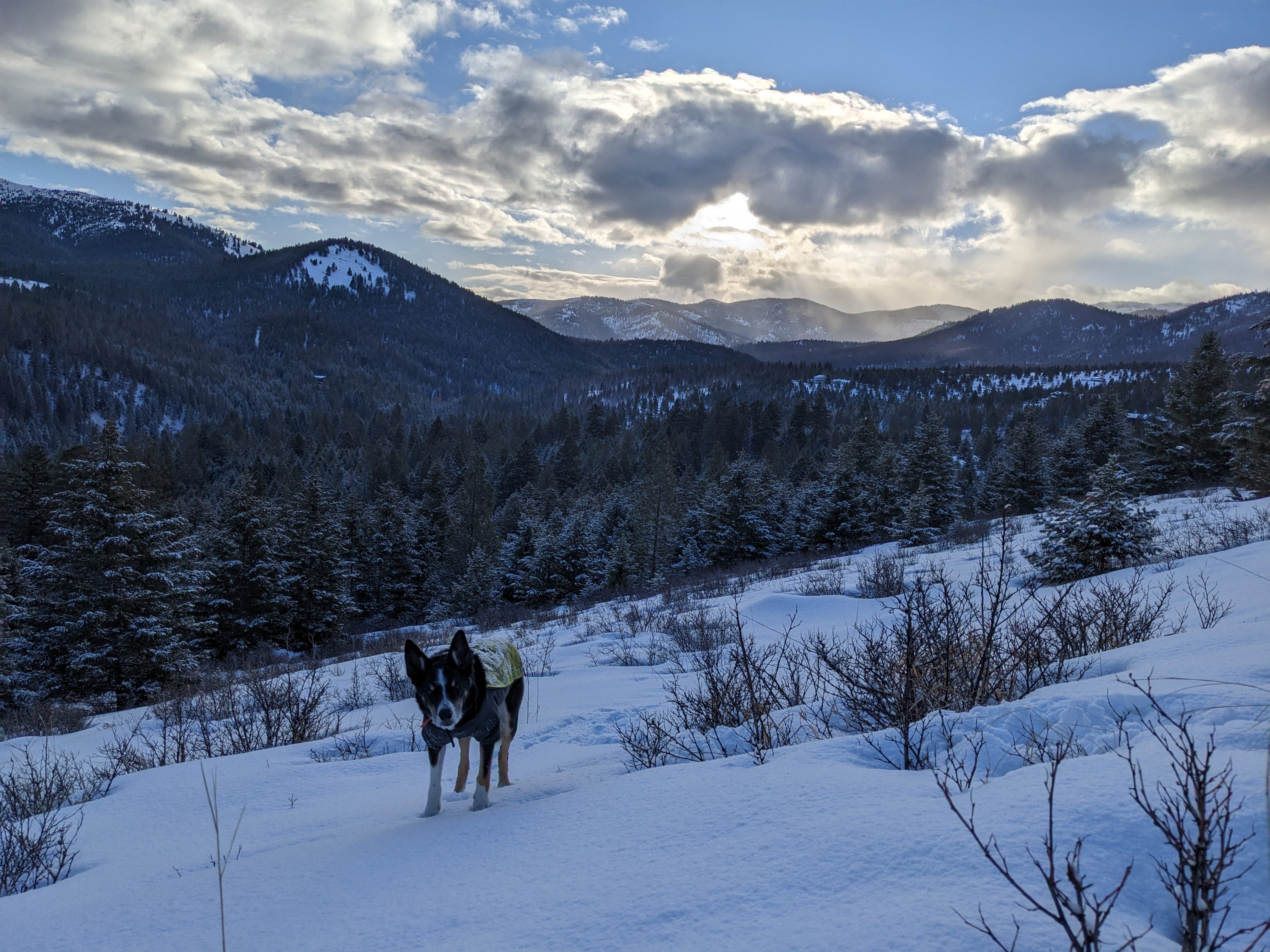
Dog in winter jacket on a snowy slope in early morning
Not all of us love a frozen landscape (Tock begs to differ).

Unfortunately, my brain has a creative, romantic, illogical side as well. It’s this part of me that pats the trunks of the big trees to try to remember the feel of each rough rib of bark. It’s this part that grips the handrails on my last climb up the bluff as if I will never let go. It’s this part that says a silent farewell to all the other bits of myself that have embedded in this summer place as we bump down the dirt drive on our way back to our “real” lives.
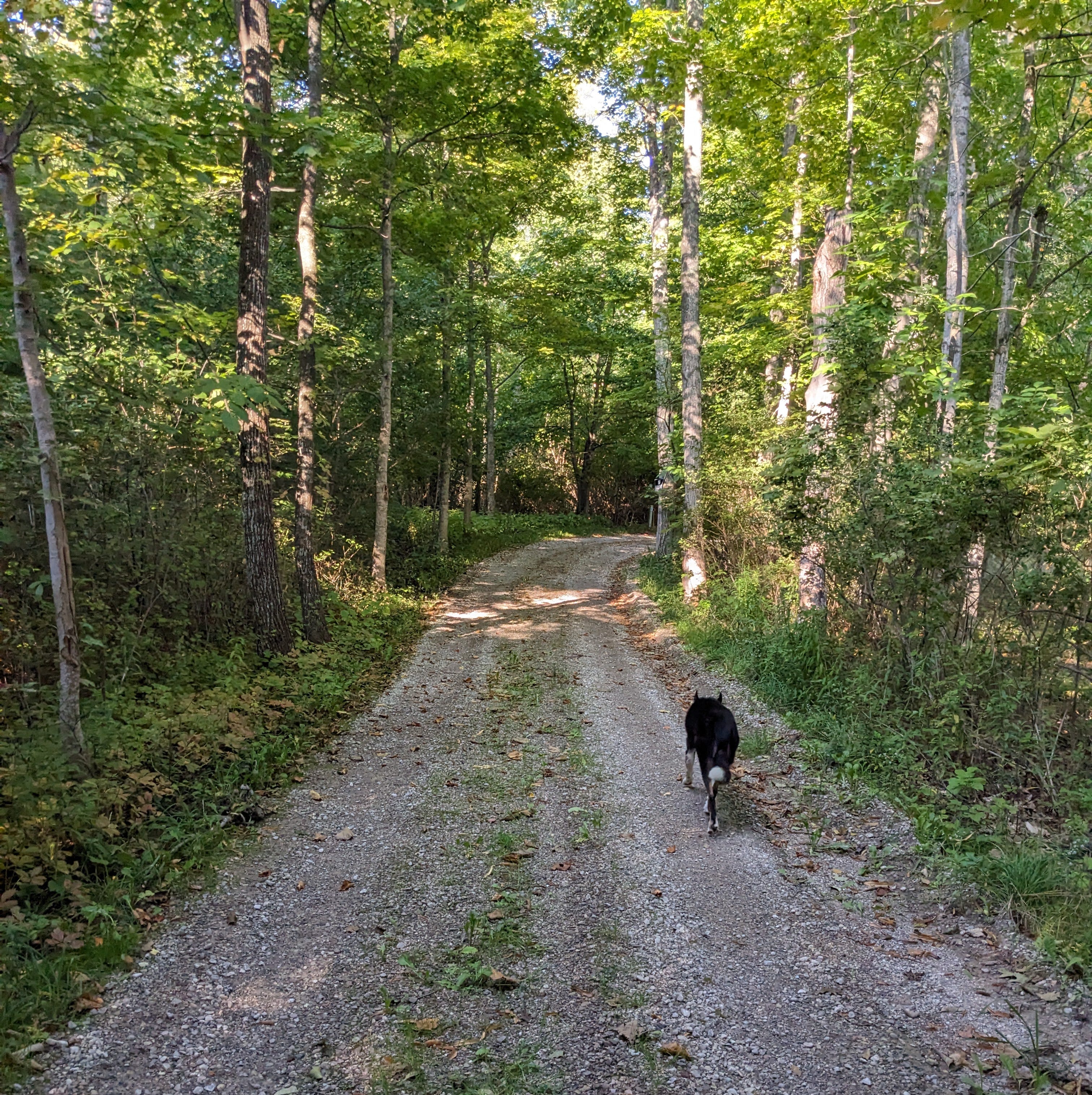
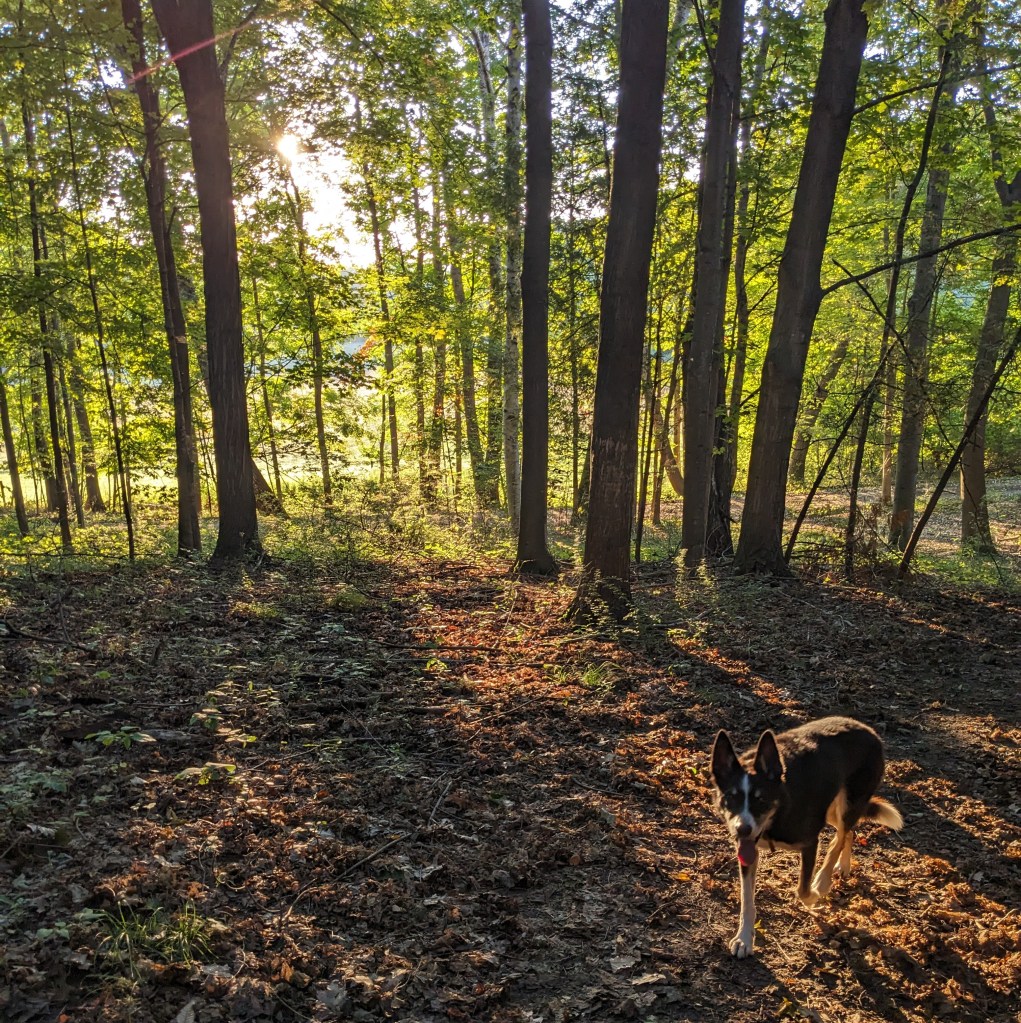
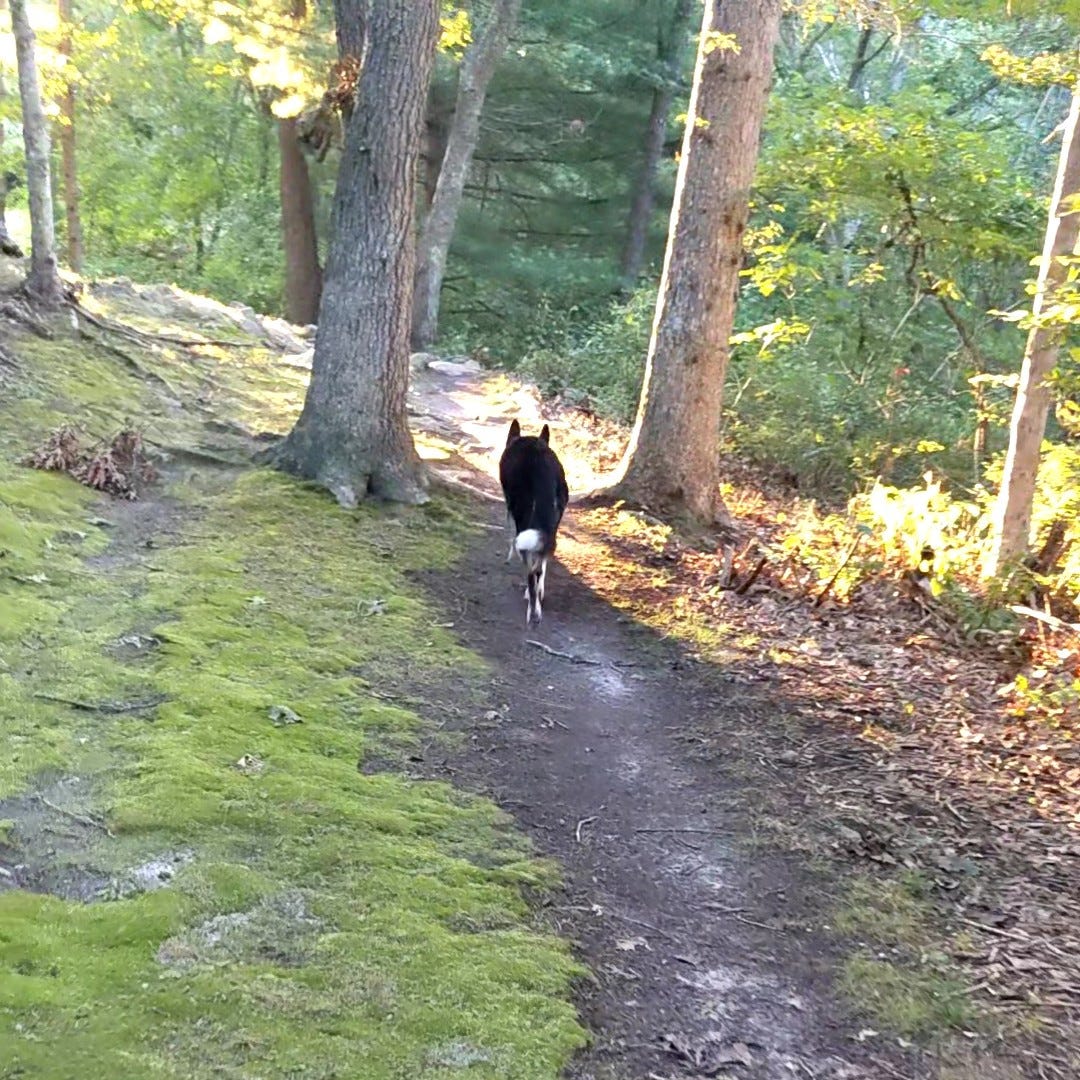
Dog trotting along a long, sun-dappled driveway in a deciduous forest

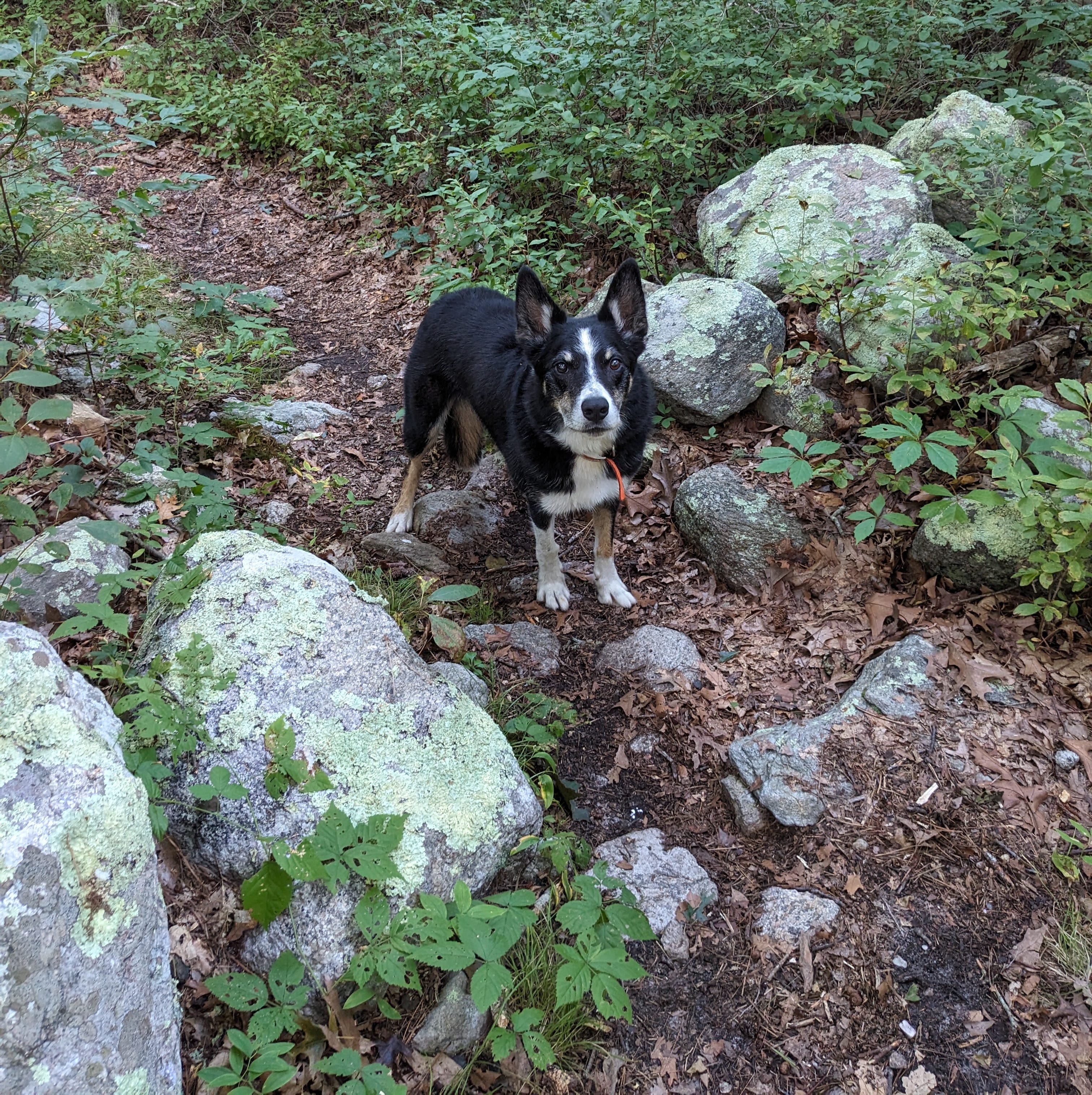
How do I carry on after such a transition? Naturally, I look to my dog. He’s dedicated like no other to the sand, the water, and the trail-building, yet he displays no regrets when it’s time to leave. He simply curls into a ball on the seat and becomes a road-tripping Zombie Dog for as long as it takes to get to his next fun adventure. He’s delighted to return to his other house, his other toys, his other woods and ponds. He doesn’t care that his primary house has little history, that the neighboring woods must be shared with other people and dogs, that his owners don’t spend three-quarters of the day outside anymore. If he could speak, he’d probably reassure me that this is his time to catch up on sleep, to dream of the scents and sounds he stored over the summer (at least, when he’s not reacquainting himself with the scary sheep on the farm next door).
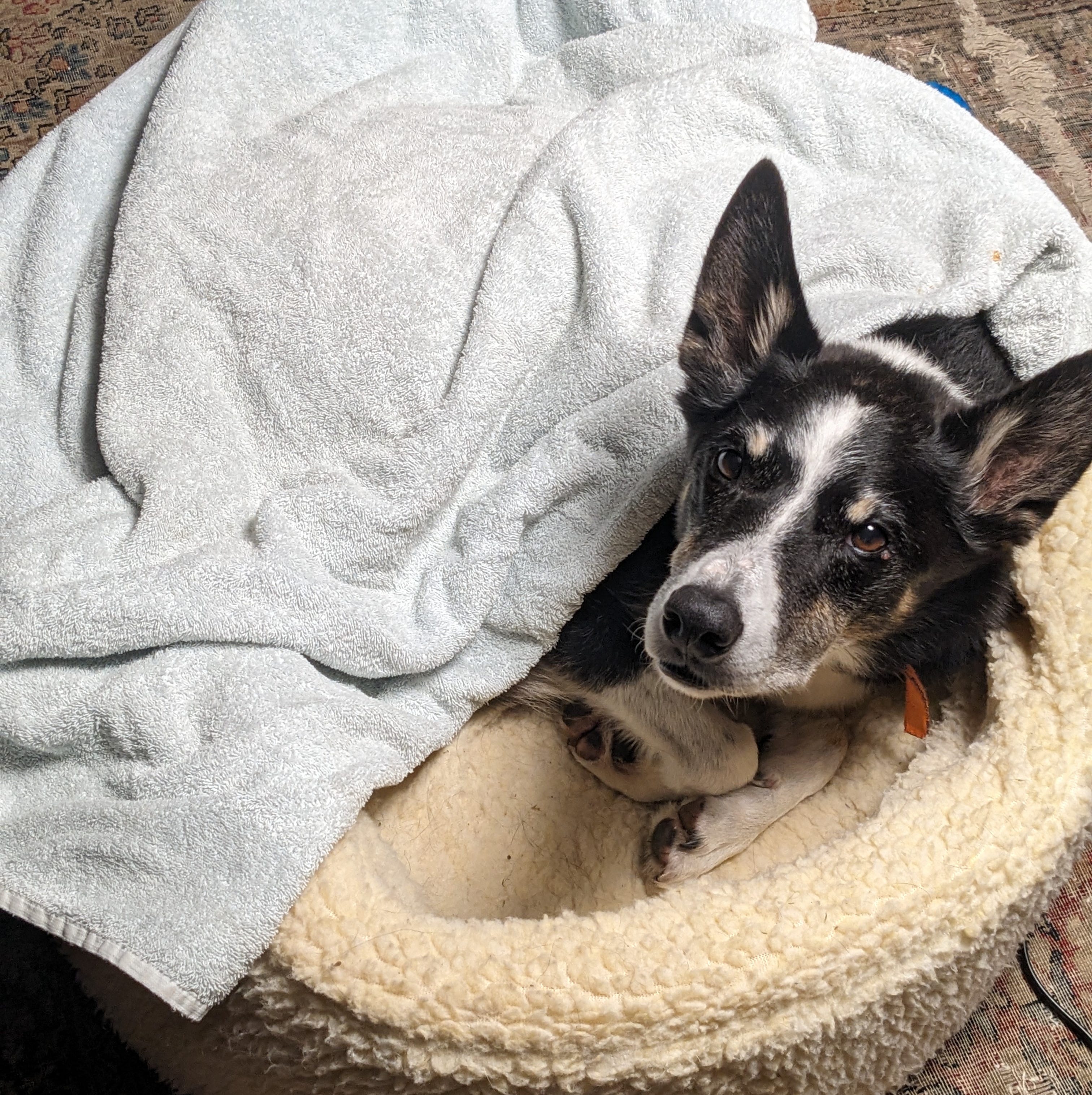
Dog curled up in a small bed with a blanket on top

If he can do it, I can, too. During the coming damp, cold winter days, I’ll pull up the pictures of my fifty-nine trail landmarks. I’ll remember what it felt like to tread past them atop the sandy soil, cedar roots, and birch bark. I’ll think of the sound of the waves, the funky smell of the goldenrod, the sight of a fat porcupine waddling over the birch logs that I’d dragged in place to keep the trail out of the mud. I don’t think I’ll ever relish winter the way one might if one has fur and a penchant for snowballs, but my memories of summer will push me along. At some point, those memories will turn into hopes. They’ll pull me toward an enticing future summer that I wouldn’t even know I had to look forward to if I’d never had to leave. I can picture my dog already, rousing himself from his back-seat slumber and pressing his nose to the window when he senses we’re getting close to a change. To something different, interesting, and precious. Always precious.
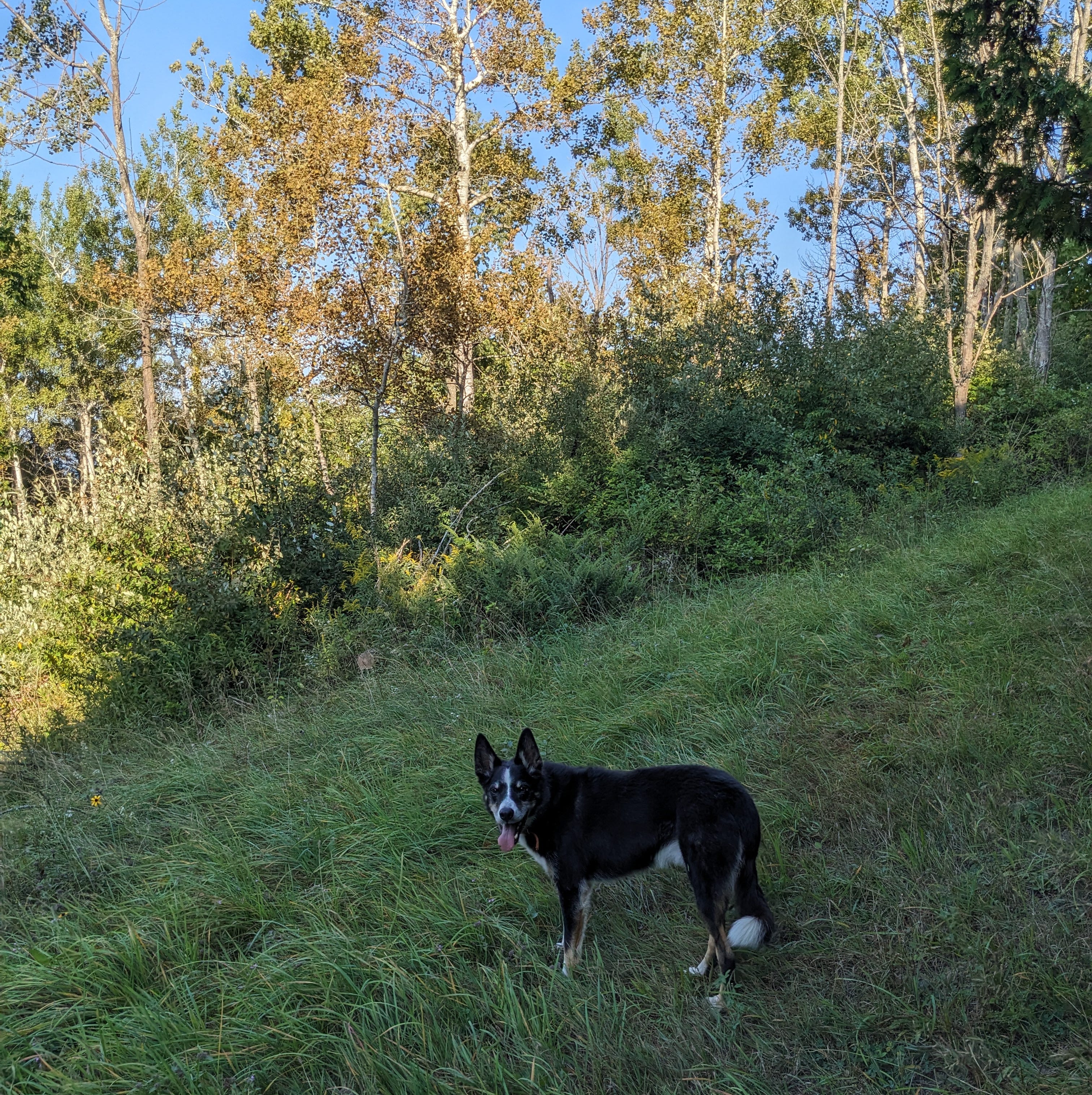
Dog standing in a meadow near a thicket of shrubs and trees
The Tangle of the Tyrants (invasive Russian Olive) lies just ahead. One of these years, we’ll get it all cleared and I’ll rename this landmark.

Maybe if summer weren’t ephemeral, it wouldn’t be so sublime. Those mythical wise people must know what they’re talking about.

Happy Tales!
Walk with a View

Do you focus afar … or up close?

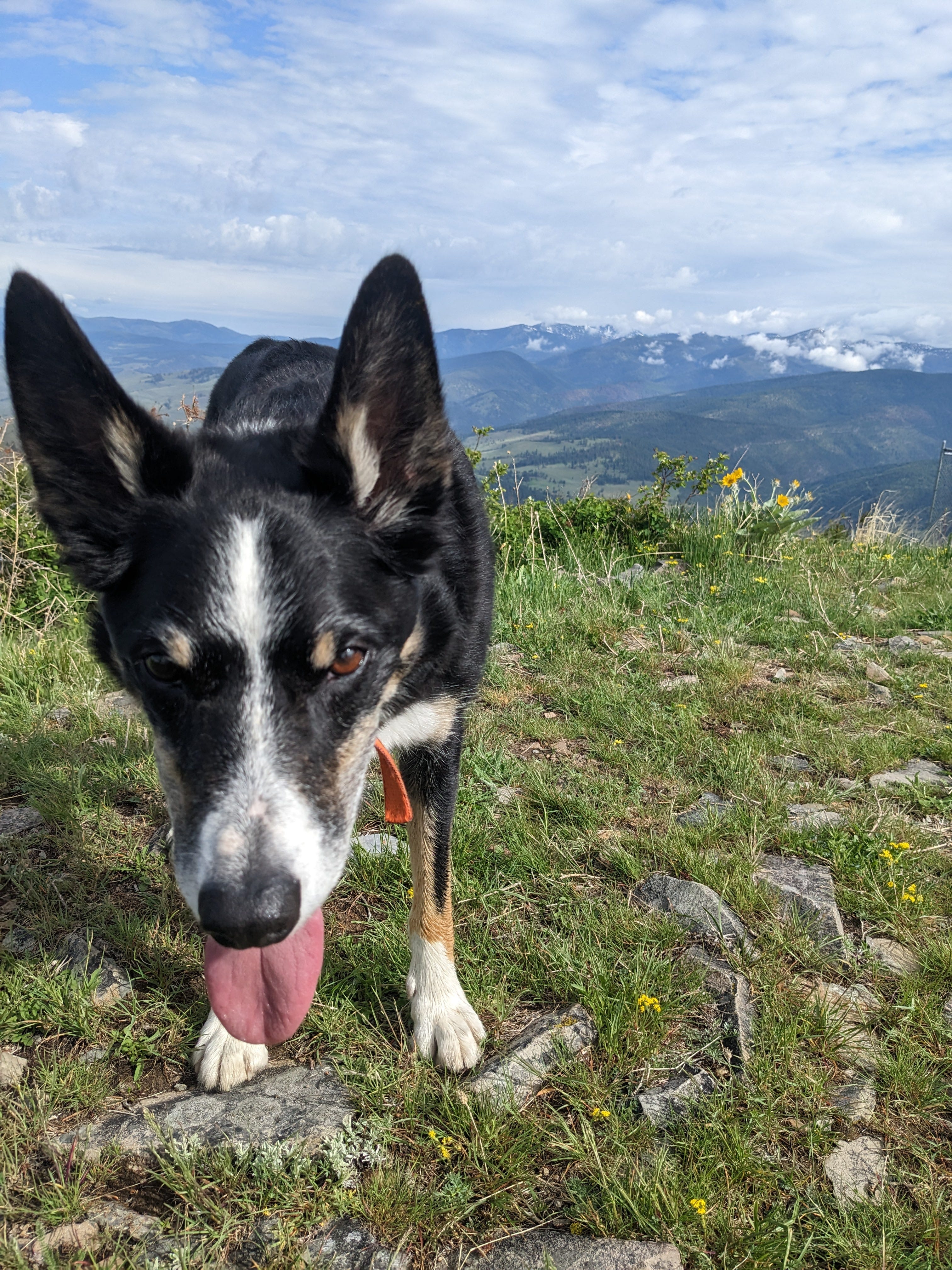
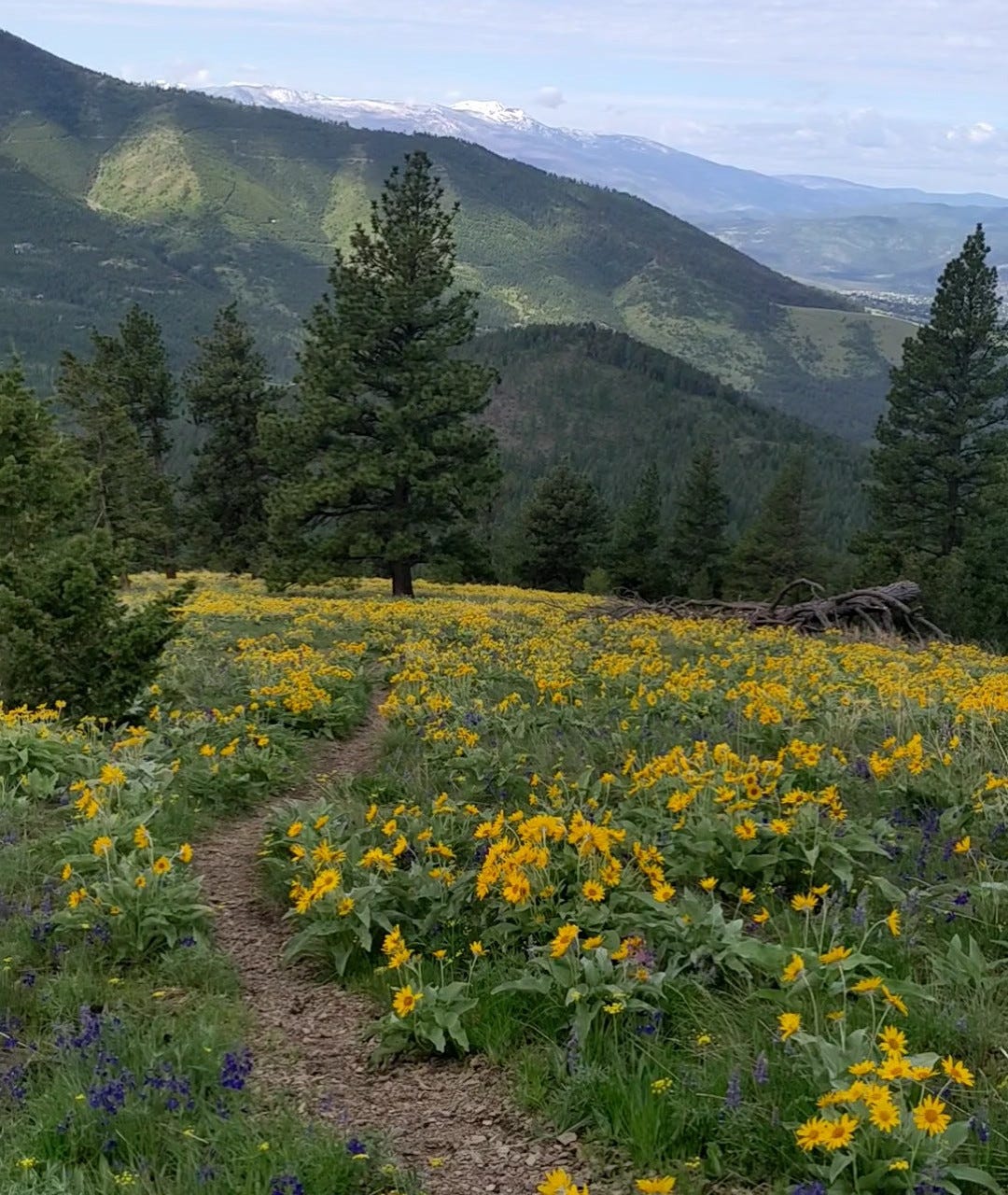
A grassy, flowered Montana slope with Ponderosa Pines and other mountains in the distance.

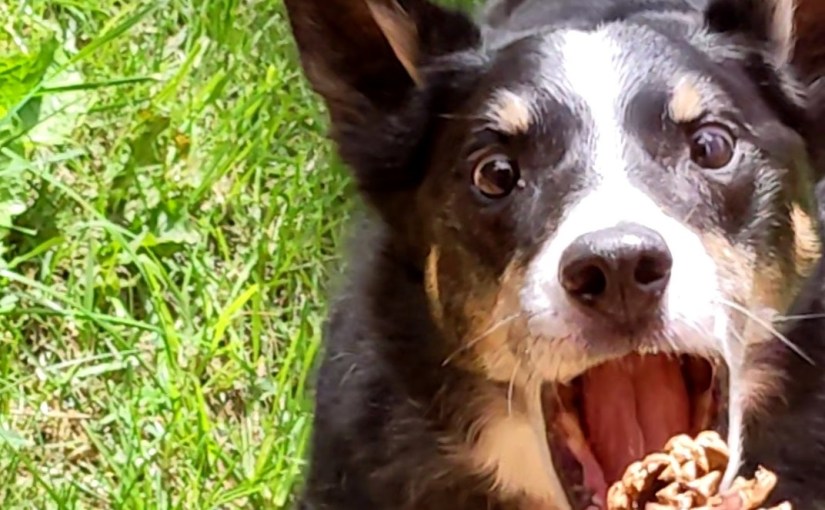
When I lived in Montana, the “Big Sky” state, I walked in the hills every day. These were grassy rises dotted with Ponderosa Pines, which prefer a lot of open space around their red-black trunks. Mountains rose not only beneath my feet, but miles away, blue with distance. Sometimes the grass was green and speckled with purple lupine, orange paintbrush, and yellow balsam root, sometimes it was brown and shriveled in the summer heat, and sometimes it was covered with a shawl of snow. But no matter the vividness of the hues, no matter the searing heat or the biting cold, my one constant was a sense of space. An expansive feeling, as if I had taken a big breath of helium over the course of an hour and a half walk and could practically float downhill toward home. My dog, too, seemed to feel this way, galloping and leaping far from me for pine cones, rarely slowing in the crisp dry air, even on the hottest of days. We always arrived home tired but exuberant. My head would spin at the thought of the distance we had covered and the far-off allure of hills we had yet to climb. Maybe tomorrow…

Dog panting on summit of a hill, with more mountains in view behind him.

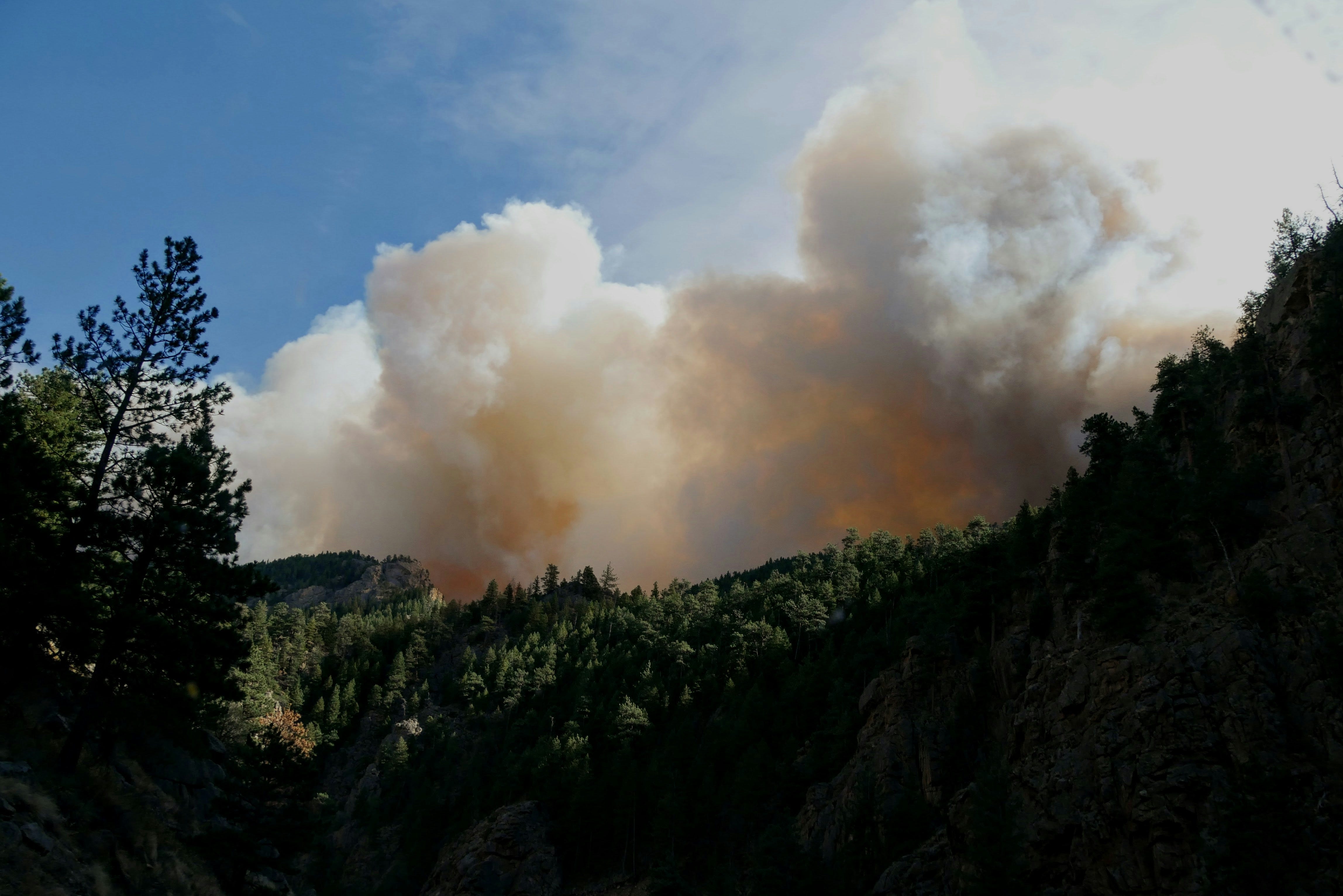
To me, this experience of traveling while keeping a loose focus on the horizon mirrors how I feel when I draft a new novel. From that very first step onto the metaphorical path, I have a lofty goal in mind. The top of a hill becomes the “what-if” that my main character is heading toward. What if a musical prodigy suddenly loses her ability to play? What if a phobic kid discovers he has to get rid of his safe space? What if a girl wants to sing, but is forbidden because it’s too distracting? I take some loose warm-up steps and my mind releases the premise, the inciting incident, and the theme. I see the major obstacles my protagonist will face as clearly as spotting a plume of fire on a slope.

Orange smoke rising from behind a forested hill
Photo credit: Malachi Brooks

As I approach the top, chest heaving, legs burning, I begin to understand how my main character will take a long hard look in the mirror and come to grips with some difficult self truths. I scrabble higher still. The mountain no longer seems impossible to climb. I step to the summit — the climax of the story! On my way back down the hill, the final resolution unfolds. I’m now able to link my characters’ emotional journeys and all of those critical plot developments into a full story. Even the setting becomes more alive. I can see the entire thing! As soon as I get home, my fingers fly across the keyboard as fast as my feet.

Wrong turns happen, of course. Sometimes I end up on a completely different summit than the one I envisioned when I started out. This is not only the reason I spend so much time plotting out a story in advance but the reason it’s so fun. My creativity never feels constricted in any way – not during this plotting stage, nor during the actual writing of the story itself. There’s always room for change.

The time for a constricted view comes later in the writing process: the editorial stage. Though revision starts and ends with a big-picture look at the whole story, the majority of the work lies in much smaller sections. It’s crucial to read closely with an eye for detail and an ability to dismantle the writing chapter by chapter, scene by scene, even line by line.

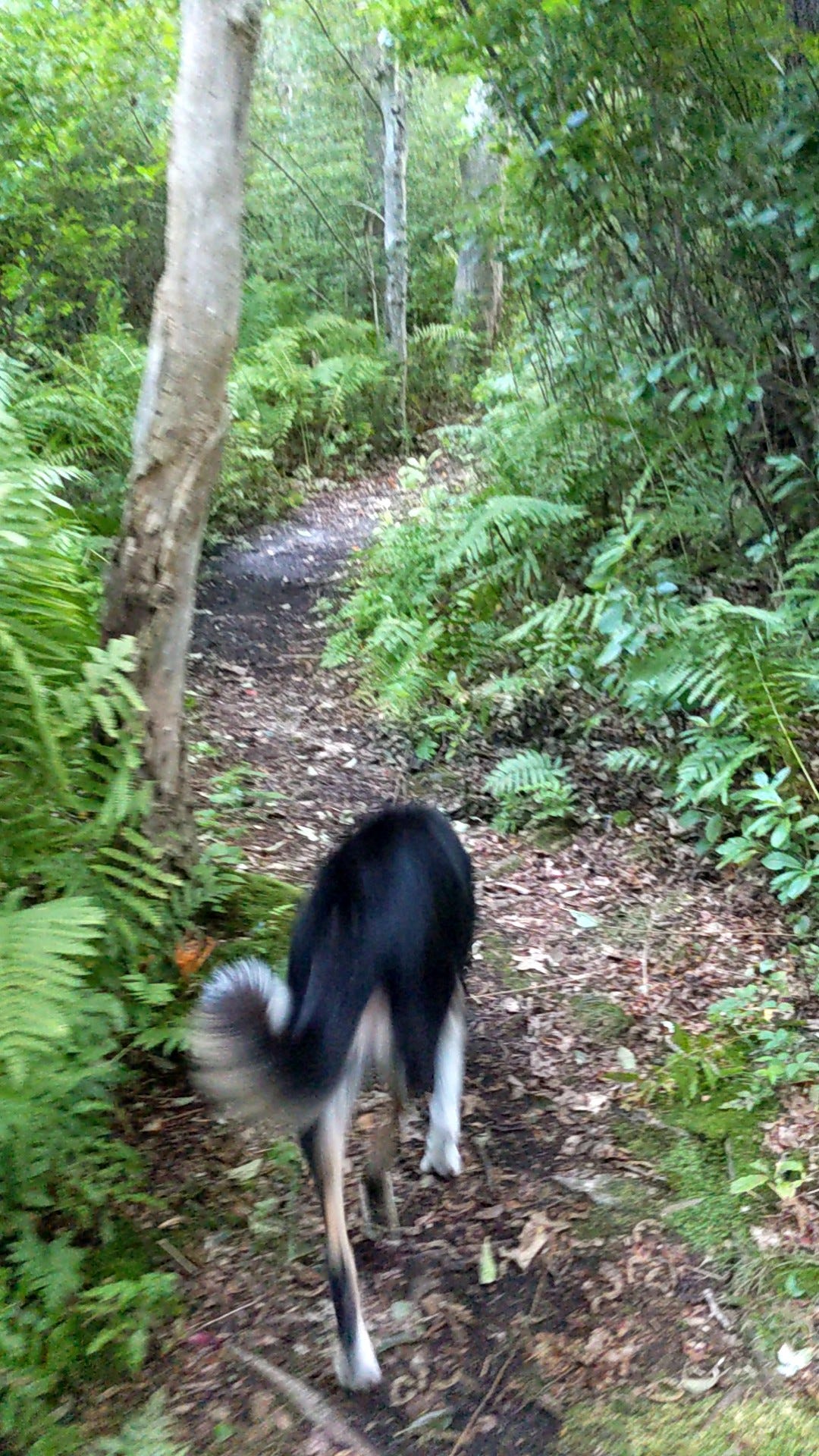
My new daily walks in the woods on Cape Cod are the perfect example of close focus. As soon as my dog and I plunge into the dense vegetation, we lose sight of the sky. We’re immersed in a jungle of branches, vines, and leaves. We follow narrow paths beneath tilted rotten trunks, twisting to avoid the sticky, insect-ridden webs that stretch from one side to the other. My dog bites at deer flies. I swat at mosquitoes.

When vegetation brushes my arms, I think of the tiny, nearly invisible ticks it harbors, carrying all sorts of nasty diseases that can lead to joint pain, fevers, organ failure, and death. Unlike Montana with its bears, mountain lions, and wildfire, the dangers here are so small they can’t be seen with the naked eye: a parasite, a bacteria, a virus. My mind travels inward to dark, anxious problems that I know I must solve. What does my protagonist really want? How can I make her more relatable? Is his voice consistent from one page to the next? Except for a ferry foghorn and a Barred Owl’s hoot, sounds in the woods are small and muffled. A mosquito’s whine, the thud of a foot atop damp leaves. Even the air is difficult to breathe, close, still, thick with humidity.

Such is the slow, painstaking process of revision. If you feel trapped in the minutia of your story, you are not alone.

Dog sitting behind a bright red mushroom in the woods

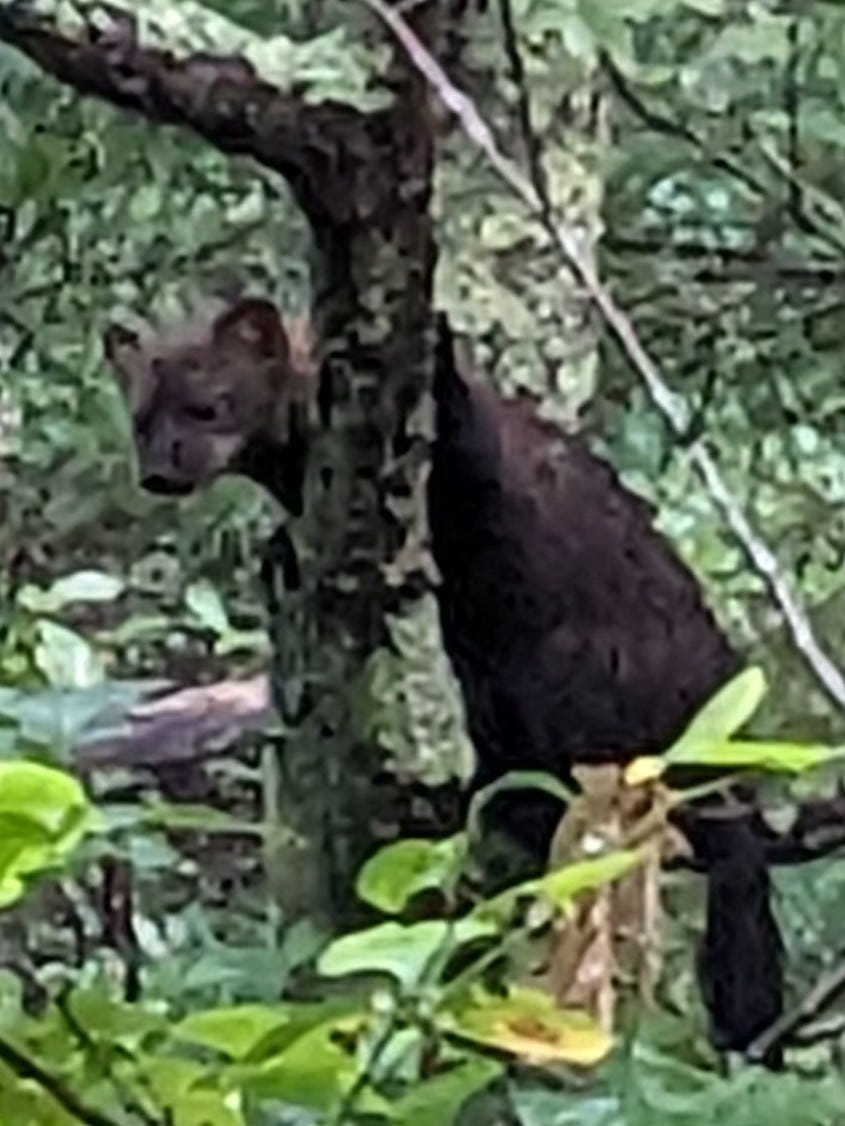
Yet great beauty lies in the closeness. In some ways, I would argue, it is more vivid and special than those distant spectacular views of mountain peaks. The impossible green of new leaves. The bright pink Lady’s Slipper peeking from beneath a blueberry bush. Mushrooms everywhere, sporting unreal colors on their fruiting bodies. The nutty aroma of dead leaves, so potent in places that my stomach growls, hungry for baked goods. The meandering line of an old stone wall, appearing on one side of the trail and disappearing on the other. The fuzzy face of a young fisher clinging to a tree, seemingly as curious about me as I am about it. The kingfisher skimming the pond’s flat surface, the osprey scanning for fish from its high snag, a chorus of invisible frogs. Something rustling the underbrush: a deer, an otter, a turkey, a gloriously red-brown coyote. I stop to soak in the surrounding jungle with all my senses, my face dripping with sweat or rain. Often I can’t tell which. Though the elevation gain is small compared to climbing an entire mountain, the roller-coaster ups and downs of the trail are just as exhausting. Maybe more so, in the heat of summer.

This slow, strenuous progress is probably why many people dislike revision. But I’ve come to love it. And when I’m finally ready to step back and read the whole manuscript again, to see whether it makes sense, it’s like stepping from the shade of the trees into the sunny field, brushing away the spiderwebs, knowing that soon I’ll wash all the bugs off in the shower, my dog collapsed on his side in a happy stupor. For both of us, only the sense of accomplishment and memories of forest beauty remain.

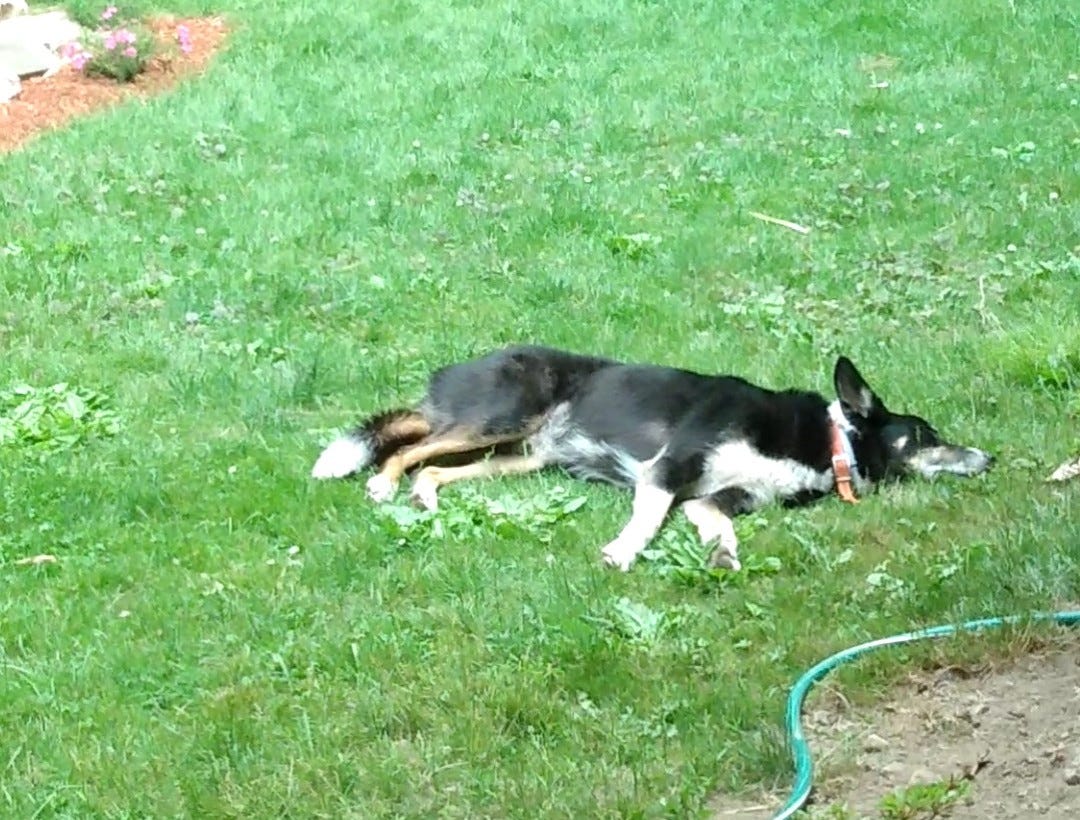
Dog sleeping in the grass

What’s your favorite part of the writing process: loose focus or close?

How about when you go outside?

Young fisher in a tree

Happy Tales!

What I Will Miss

Thoughts two weeks before embarking on the 2,627-mile journey to our new home.

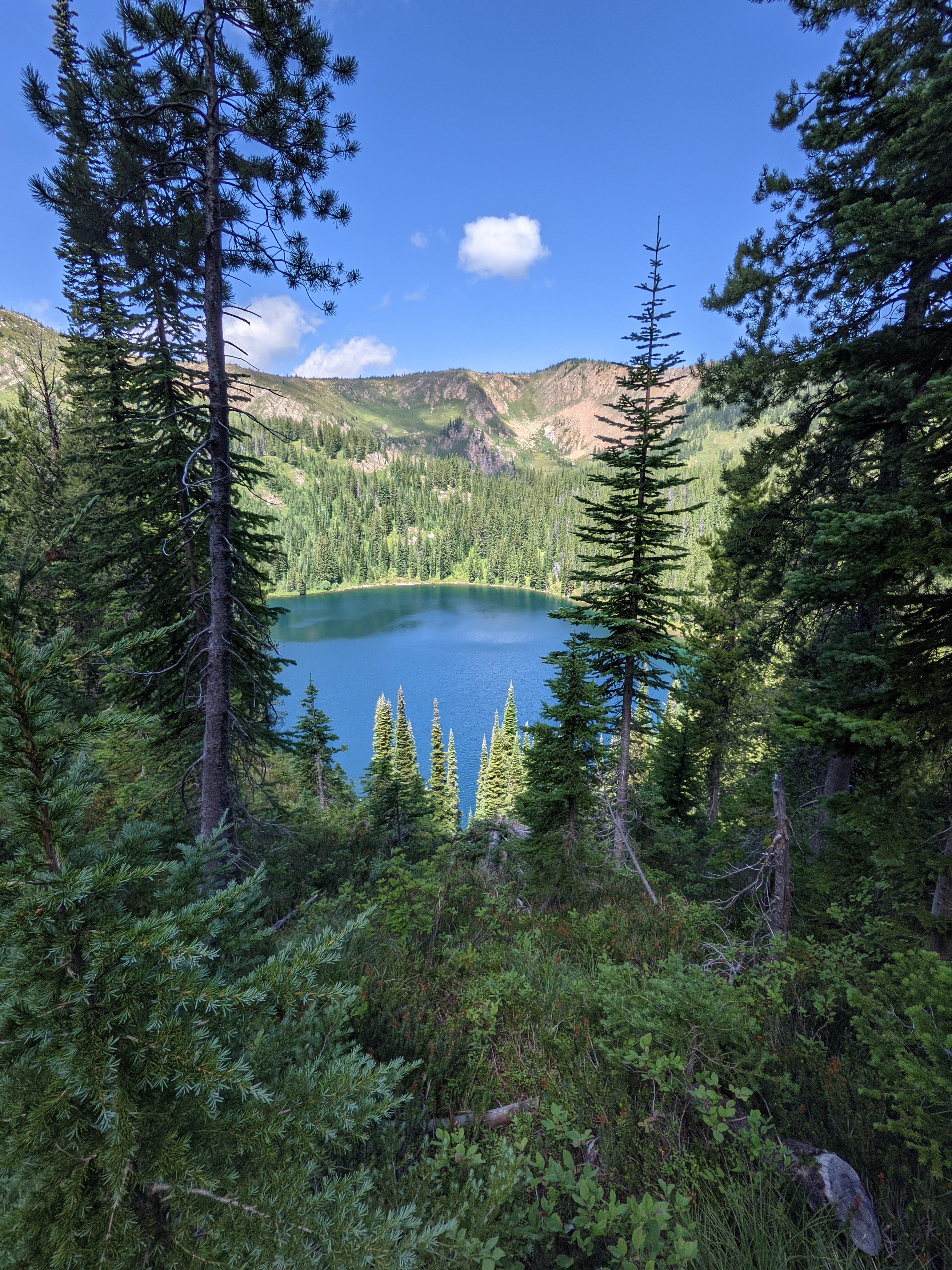
Alpine lake nestled in coniferous trees surrounded by mountains

The sweet scent of pine pitch

The tang of subalpine fir

The golden glow of fall larch

The crest of dark conifers on the ridge

The hollow thwock of granite stones underfoot

The sweep of jagged peaks, up up up

The raven croaking over a still azure pool

The pungent meadow ripe with beargrass, glacier lilies, lupine, paintbrush

The contented burbles of a meandering stream

The joy a ponderosa pine cone brings to my dog

The exhausted afterglow of a strenuous climb

The granite and sandstone shrines beneath the pine — cat, parakeet, three dogs — our beloved family

These are more senses than things, yet they tie me to the land

Will the string break, or will I still feel tethered to it from far away?

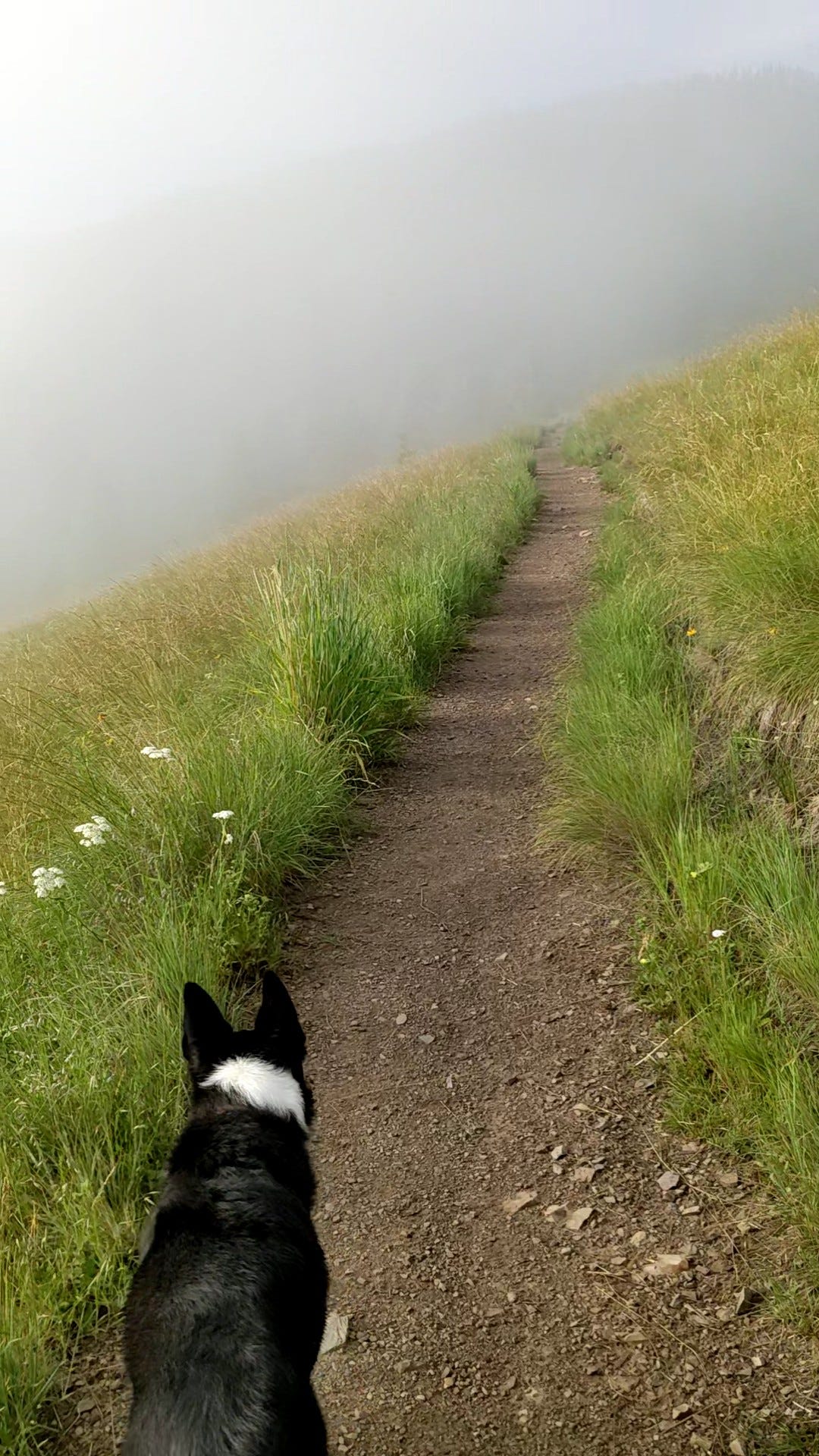
Dog on trail ascending through meadow

I guess I’m going to find out.

Say Goodbye … Say Hello.

Or: Thinking like your dog will make you feel better

Woman signing documents
Photo credit: Dimitri Karastelev

When we first enter this world, it’s as if we’re signing a really tough job contract. It’s an agreement that in exchange for life, we’re going to have to endure all the hard things that come with it: getting an education, finding a decent job, trying to get along with difficult people, and suffering physical and mental pain, trauma, and loss.

Newborn infant crying
Photo credit: Jessica Hearn

I don’t know about you, but if I could have wrapped my newborn brain around the enormity of this contract, I’m pretty sure I would have wrinkled it up and chewed it into a soggy ball as soon as I figured out how to put my hands in my mouth. This is because one of the hardest things for me to do is to accept big changes—to say goodbye to a certain part of my life as time inevitably marches on. When I turned ten, for example, I remember sobbing because I didn’t want to leave the single-digit ages behind.

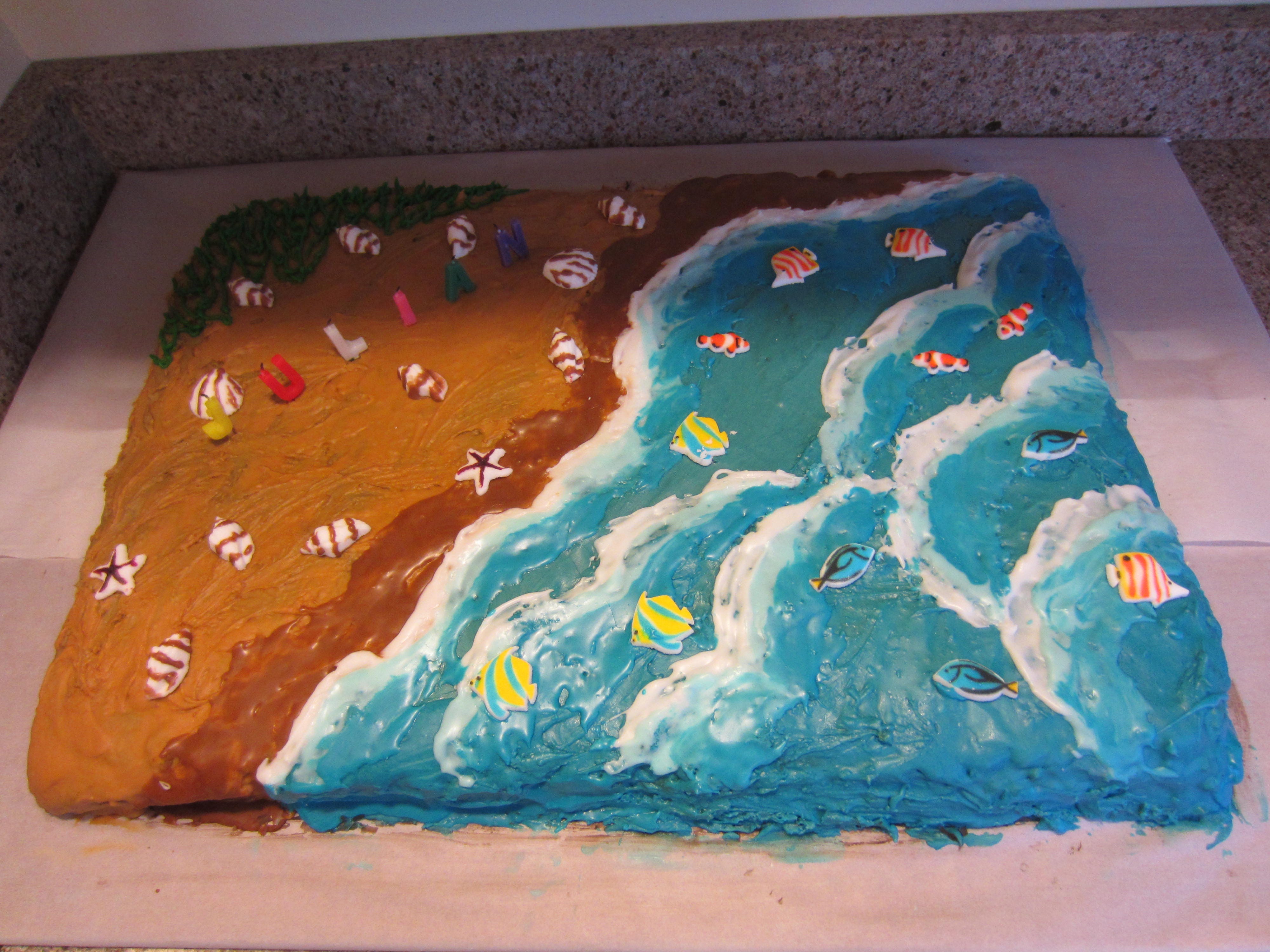
Unlike me, my son was quite happy for his 10th birthday and a homemade ocean cake.

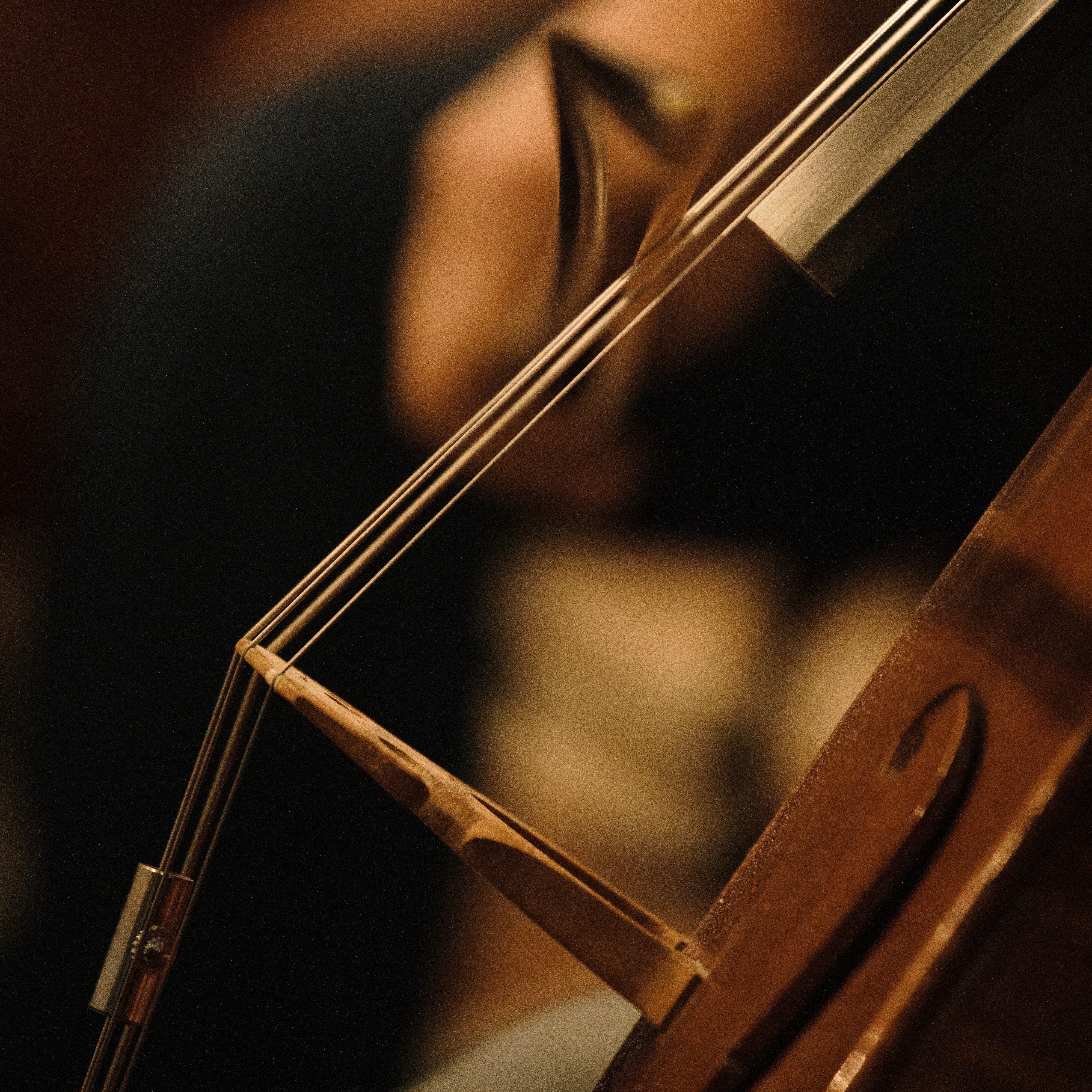
That birthday seemed hard at the time, but I experienced a true calamity as a college music student. Dedicated to my cello since the delightful single-digit age of nine, I was certain I’d be spending my life performing Bach, Brahms, and Beethoven. But I injured my hand and suddenly could no longer play at all. You can probably guess that if your entire identity is wrapped up in a cello, your Life Contract is going to get some pretty big tears in it. I finally began to come to grips with my altered situation after about a year, but the struggle was agonizing. That contract of mine needed a lot of tape.

Cello
Photo credit: Andrea Zanenga

Many times since then, I’ve wondered why I keep getting so entrenched in a certain way of being (let’s just say that it didn’t end with music). Is this normal? And if most of us struggle with this at one time or another, what are we supposed to do about it?

To answer to the first question, I turn, as I so often do, to the topic of dogs. I bet any dedicated dog owner would agree with me that the tendency to rail against difficult changes in our dogs is a very typical human response. We know full well when we adopt a new dog that our Life Contracts are going to be tested to their utmost. Eventually, we’ll face a heartbreak stronger than when we lose some of our own human family members. The reasons are simple: dogs bond to their humans like hydrogen atoms to oxygen … and their lifespans are far shorter than ours. They don’t even live as long as cats or parrots, for goodness sake. It seems completely unfair that such an intelligent, devoted creature could reach middle age at six years old, and be ready to take the last step in its life cycle at little more than twice that.

Dog & human sitting together
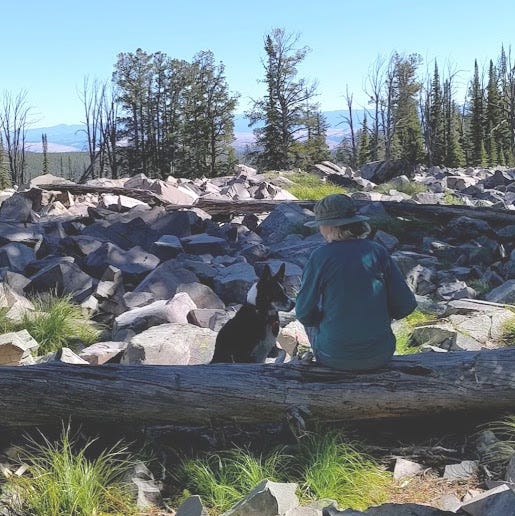
I cherish every second of my time with Tock.

Even knowing this, even with our human-brain capability of seeing past, present, and future all at once, we insist on befriending dogs. We hold them close, and we give a chunk of our hearts to them forever. I’ve said goodbye to three dogs so far, and I can assure you that it never gets easier, and I never stop missing the ones who’ve departed. Each dog is like a novel I might write, full of love and flaws and revising—I mean training—and did I say love?

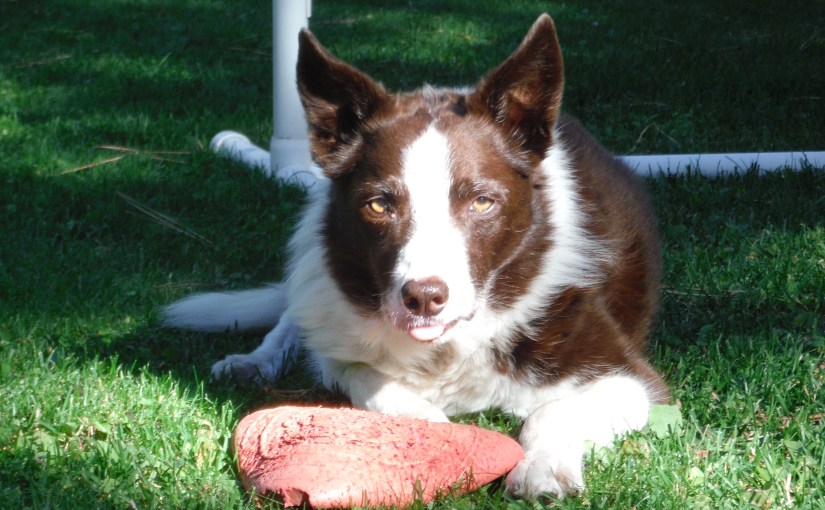
Old Border Collie
Old Tarzan. The best agility instructor I ever could have wished for, he hiked and fetched frisbees with me for more than 16 years.

Saying Goodbye: There comes a time when I can do no more to fix a story I’ve written. It’s complete, I adore it despite any residual imperfections, and I know it’s time to let it go. If I’m lucky, it’ll move onward in its path to publication. If not, I’ll put it aside for now. Either way, it’s super hard to say farewell to it (I understand why authors write sequels). But I take comfort in knowing that it’s still there, in my computer or in a picture on my wall, whenever my memories want to pay a visit.

Human with arm around dog
Mothie came to us with a lot of issues, but she wormed her way closer to my heart than any other dog.

Saying Hello: In the meantime, I continue to attach myself to new dogs, and I continue to write. These things are my answer to how to deal with life’s difficult changes. My old stories never really go away, and new ones never can replace them, but dogs and writing both keep me from dwelling in the past or worrying about the future for too long. My new dogs—or characters—allow me the pleasure of living in the present right along with them. Sometimes, they even remind me a little bit of my old ones, and there’s nothing more comforting than that.

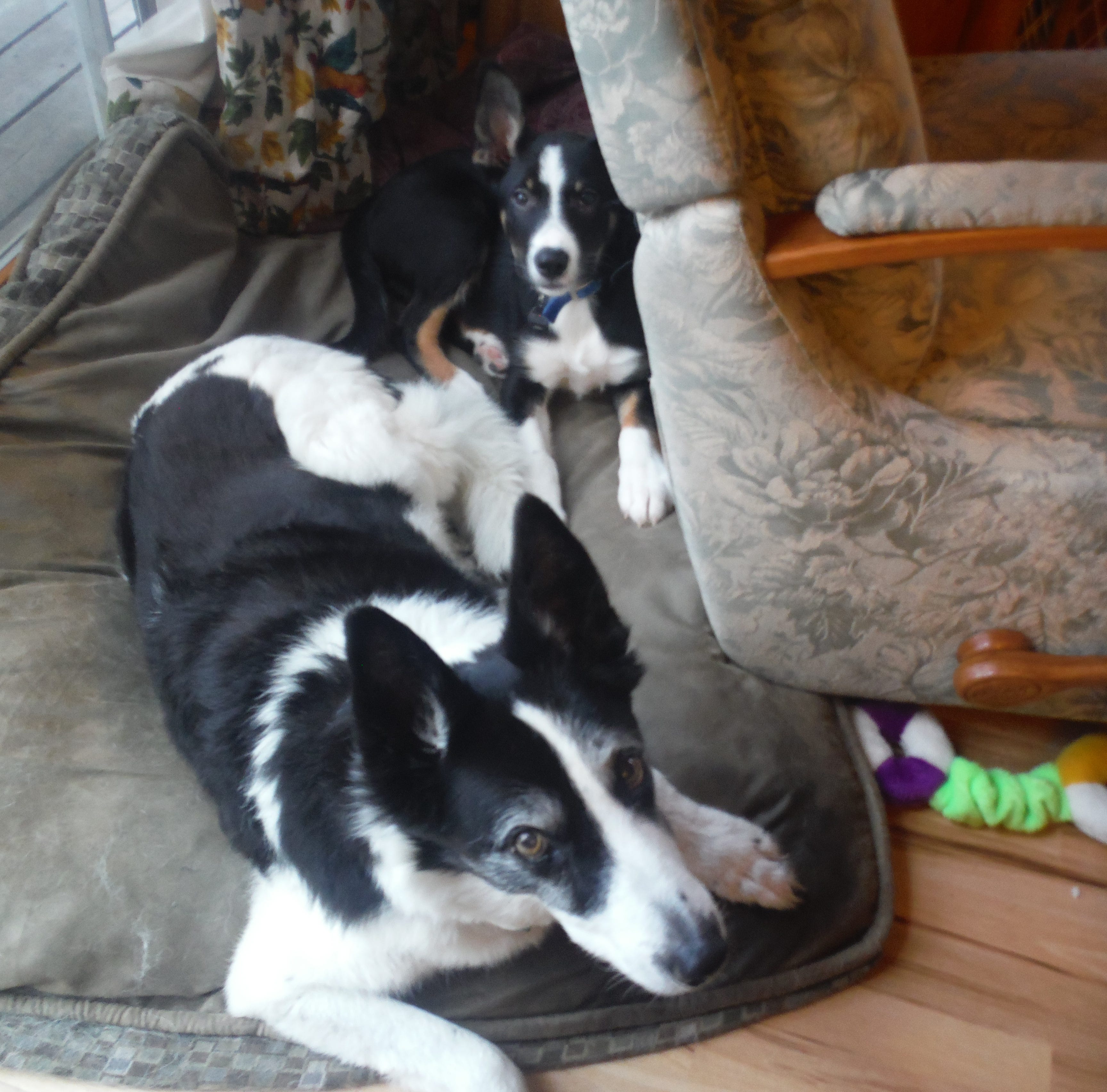
Two border collies lying together, one old, one young
Puppy Tock waits in the wings. He and Tarzan were BFFs in the couple years they had together – and share the same favorite game of rolling a tennis ball down the stairs.

Happy Tales!

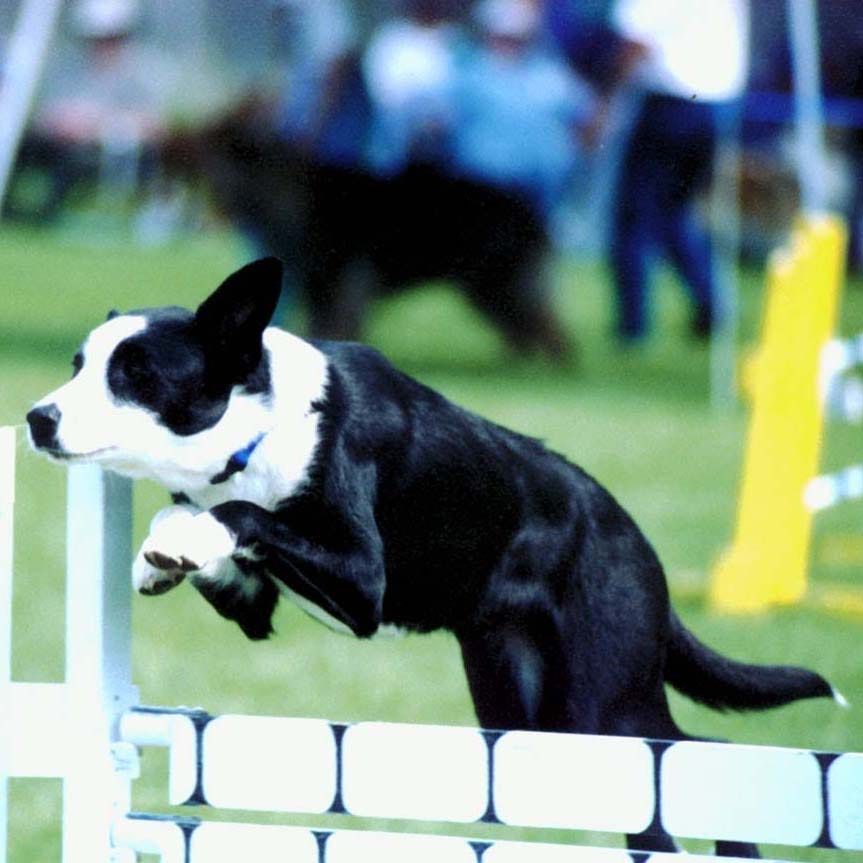
Dog jumping a panel jump
Tenzing, our first dog, possessed the very same goofiness as Tock, though they never knew eachother.

.