What’s in a Verb?

Ask any dog for the answer…

Even though they don’t speak, dogs have an incredible ability to understand language. I can hardly think of a dog who doesn’t get excited when they hear the words “walk,” “dinner,” or “get it!” Conversely, they’ll put their tails between their legs when they hear words like “no,” “bad dog,” or “leave it.” And if they’ve been trained well, they’ll respond quickly and correctly when they hear “come,” “sit,” or “down.” They demonstrate that they can distinguish between these words through their appropriate responses to each one.
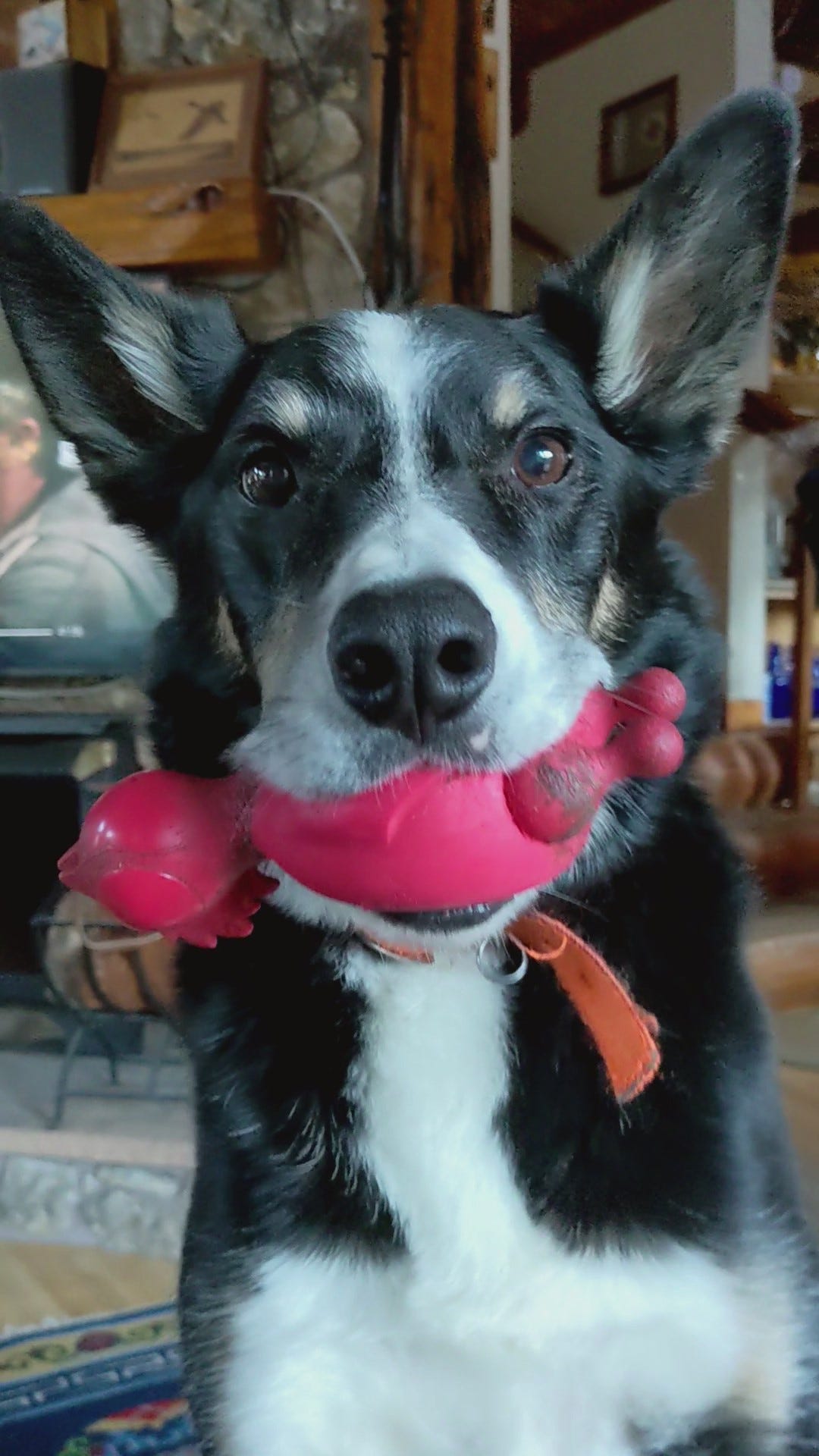
Dog with toy
Tock fetches his rubber chicken when asked, even if it’s hidden in a pile of toys in another room.

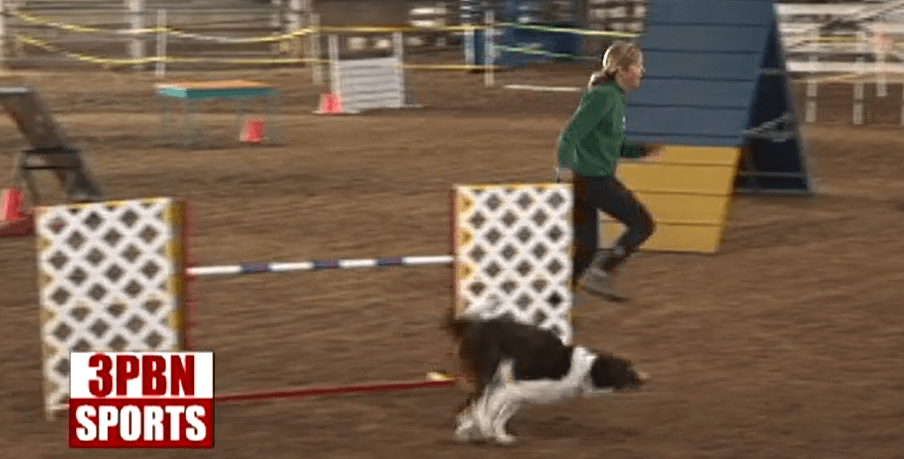
Naturally, this canine affinity to words is super exciting to someone who writes. I can spend enjoyable day upon day searching for the perfect words for my stories … and I like to give my dog that opportunity, too. In agility training, I invest a lot of time in deciding which words to use for commands—for my students’ dogs as well as my own. Our time running a competition agility course is short—from thirty to sixty seconds, usually—so we don’t want to blather on, using three words when one will do, or hollering out a word that’s difficult to enunciate or one that could be confused with other commands we’re also using. We need the right word for each situation, telling the dog exactly which obstacle to take, how to take it, or where to run.

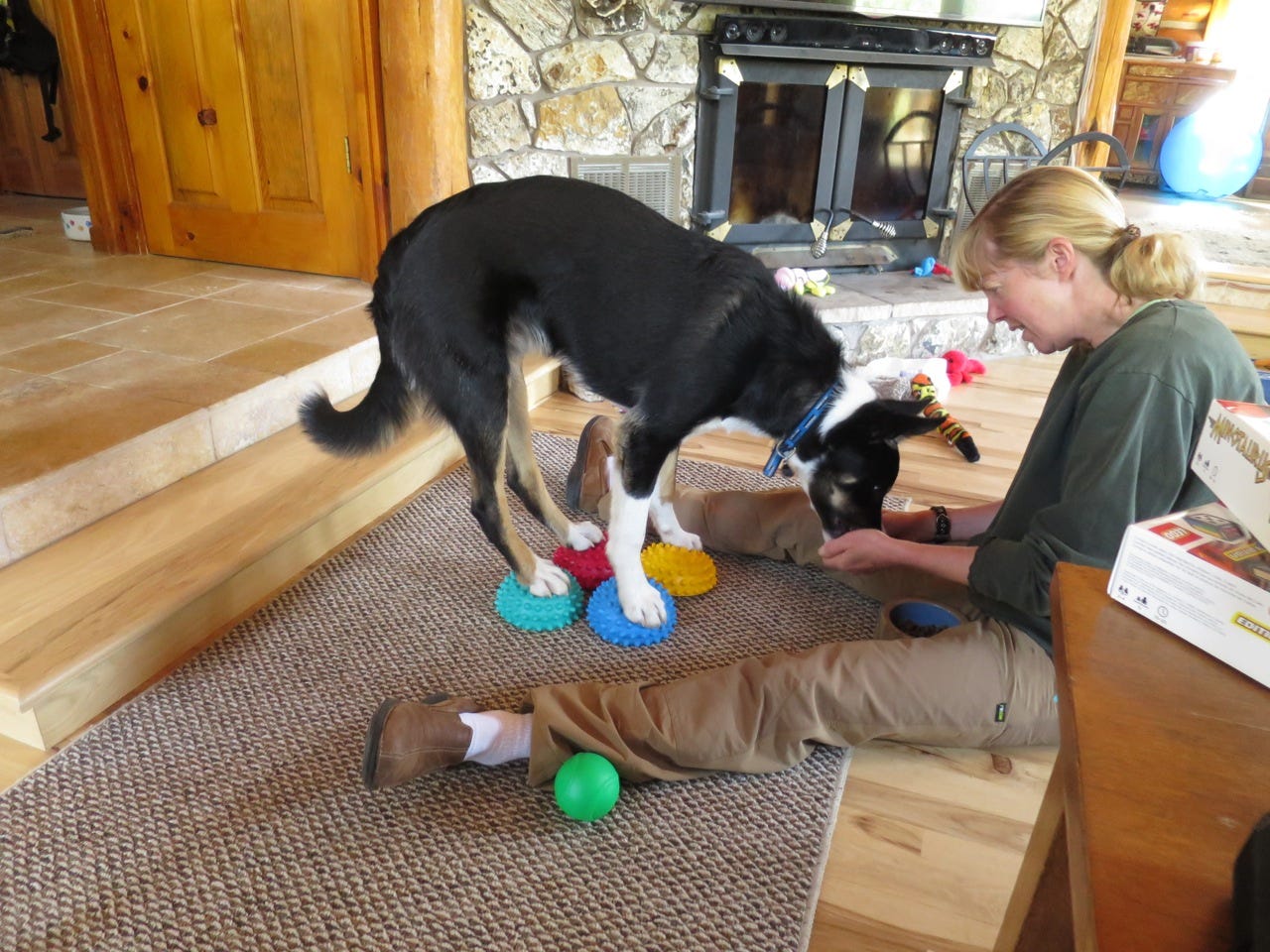
Tock responds to the “Dig” verbal cue. My dogs learn 4 commands for different turns, which they receive as they commit to an obstacle, alerting them to collect their stride so they’re ready to turn. “Right” means turn 90 deg to the right, “left” is 90 deg to the left, “dig” is a tight righthand wrap (much more than 90 deg), and “tuck” a tight lefthand wrap. The prefix “Go” before any of these words tells my dog that I’ll be crossing behind him as he takes the jump ahead of me.

Humans are intensely verbal creatures, and the more our dogs can understand us, the happier we are in our interactions with them. From the dogs’ perspective, words provides them with a way to learn and grow even as they age. You may have heard of the border collies who’ve mastered 200 to 1,000 or more words for their toys. Even more impressive, though, is the latest evidence that shows dogs have the capability to learn new contexts for words, and to put words together into novel (and appropriate) phrases that they’ve never heard before. And the coolest thing is that dogs can learn to communicate using these words, rather than simply hearing them as commands.
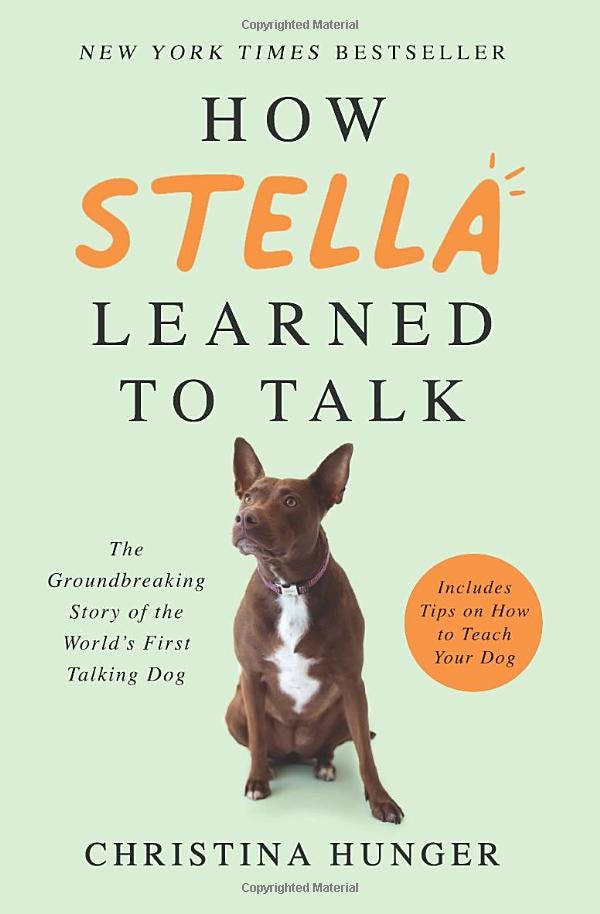
Book cover for "How Stella Learned to Talk"
Thanks to Christina Hunger’s book, Tock is learning to use his knowledge of words to get what he wants.
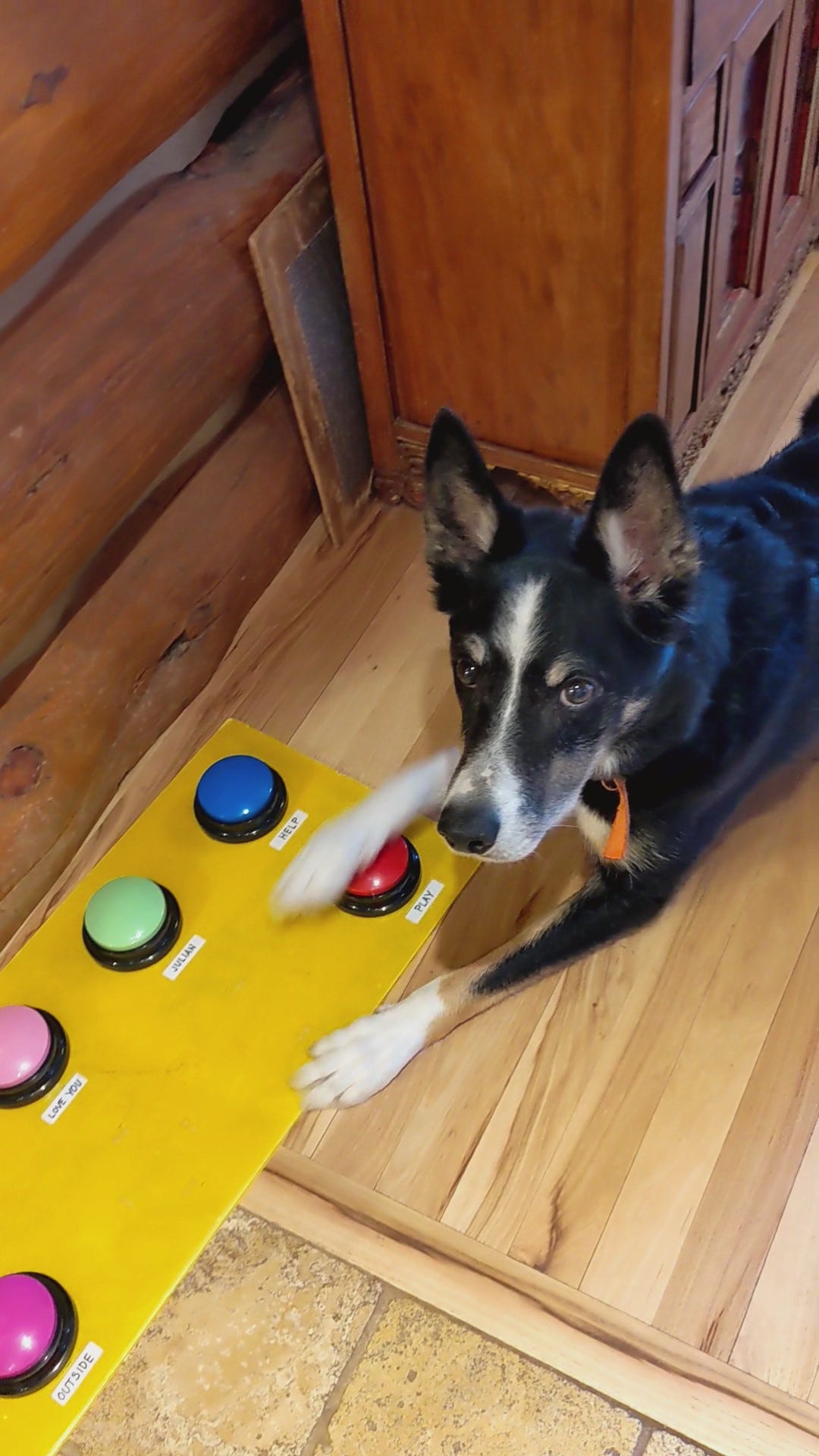
Dog pressing a "talking" button
Tock mastered his first “talking” button within a week, though at eight years old, it’s taking him awhile to understand that he can ask for things whenever he wants and not just when I expect him to.

If you’ve read my previous posts, you’re probably wondering how I’m going to tie canine word use to some sort of writing advice. I will not disappoint, so here goes: I think that the satisfaction gained from the ideal word has a positive effect on the relationship not only between humans and dogs, but between writers and readers. As my critique groups know all too well, one word I write quite a lot in my comments for other people’s writing samples is “vague.” It almost always applies to word choice. Verb choice, in particular.

This attention to verbs is probably no coincidence for me. In the dog world, I’m constantly looking for new verbs to describe actions my dog uses that I, in turn, could put to use in agility or on Tock’s button board. But I’ve found that many writers get lazy when employing verbs, saying things like “she came forward,” or “he moved across the room,” rather than a more descriptive verb that gives us additional information. How do these characters come or move? Are they skulking, trotting, hurrying, bounding, or stumbling?

Another problem that brings out my metaphorical red pen is when writers employ boring verbs to describe characters engaging in the repetitive motions that we all do a million times in a day. These include words such as “looking,” “staring,” “gazing”, “turning,” or “pointing.” Now, I’m the first one to admit that finding substitutions for these words isn’t easy. How can we show what our characters are seeing without using them? My first choice for a solution is simply that: show it. Just describe the thing they’re looking at, and the word “looked” is implied. The reader knows the character had to look at it in order to see it, and thus the verb itself isn’t even necessary. My second choice is to find a more interesting way to describe those actions. You could describe a character’s eyes, and then we know that another character is staring at or gazing into them. You could use a verb phrase, such as “he spun on his toes,” or “she prodded his chest with her finger,” to indicate turning or pointing.
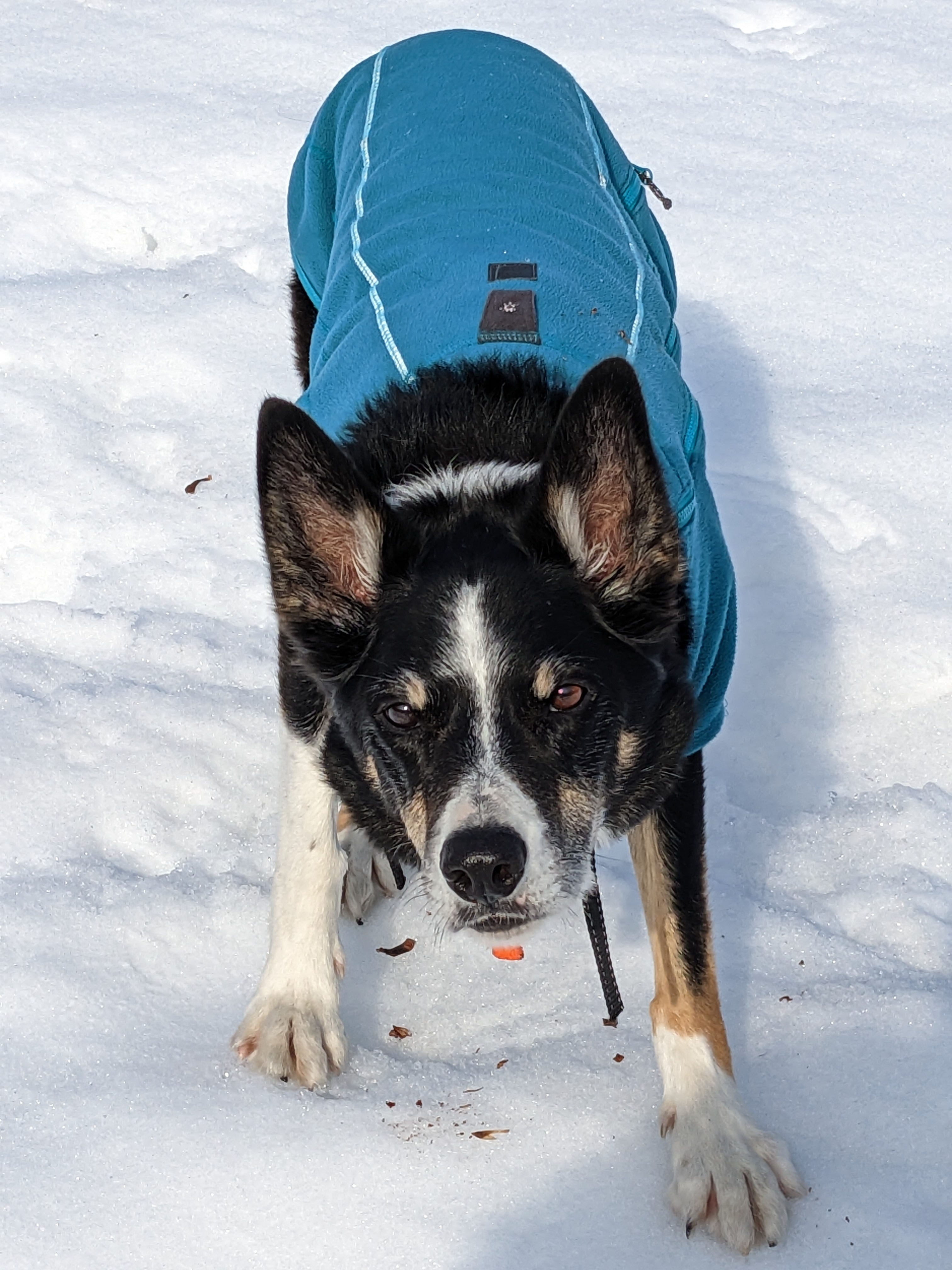
Border collie staring
Stemming from their sheep-herding history, border collies are famous for giving “the eye” at something they want. Tock uses this technique at least fifty times a day. Probably a hundred.

I need to digress here with an important note: verbs for written dialogue are the one exception you’ll want to make to the use of “interesting” words. This is because dialogue tags (such as “said,” “shouted,” and “whispered”) ought to remain as invisible as possible so our brains can simply read the spoken exchange without interference from the tags. Words such as “whined,” “snapped,” and “interrupted,” tend to distract readers too much from the characters’ back-and-forth. Also, a lot of verbs are mistakenly used as tags that aren’t in fact dialogue words at all. It’s best to save actions such as “smiled,” “giggled,” and “sobbed” for complete sentences separate from the dialogue.

So as usual, my advice is pretty simple. The next time you’re writing an action scene, remember your dog! Think up bright, memorable verbs or verb phrases that encapsulate the situation in the most concise but appropriate way possible. Your dog will get a clearer understanding of what’s going on … and so will your reader.
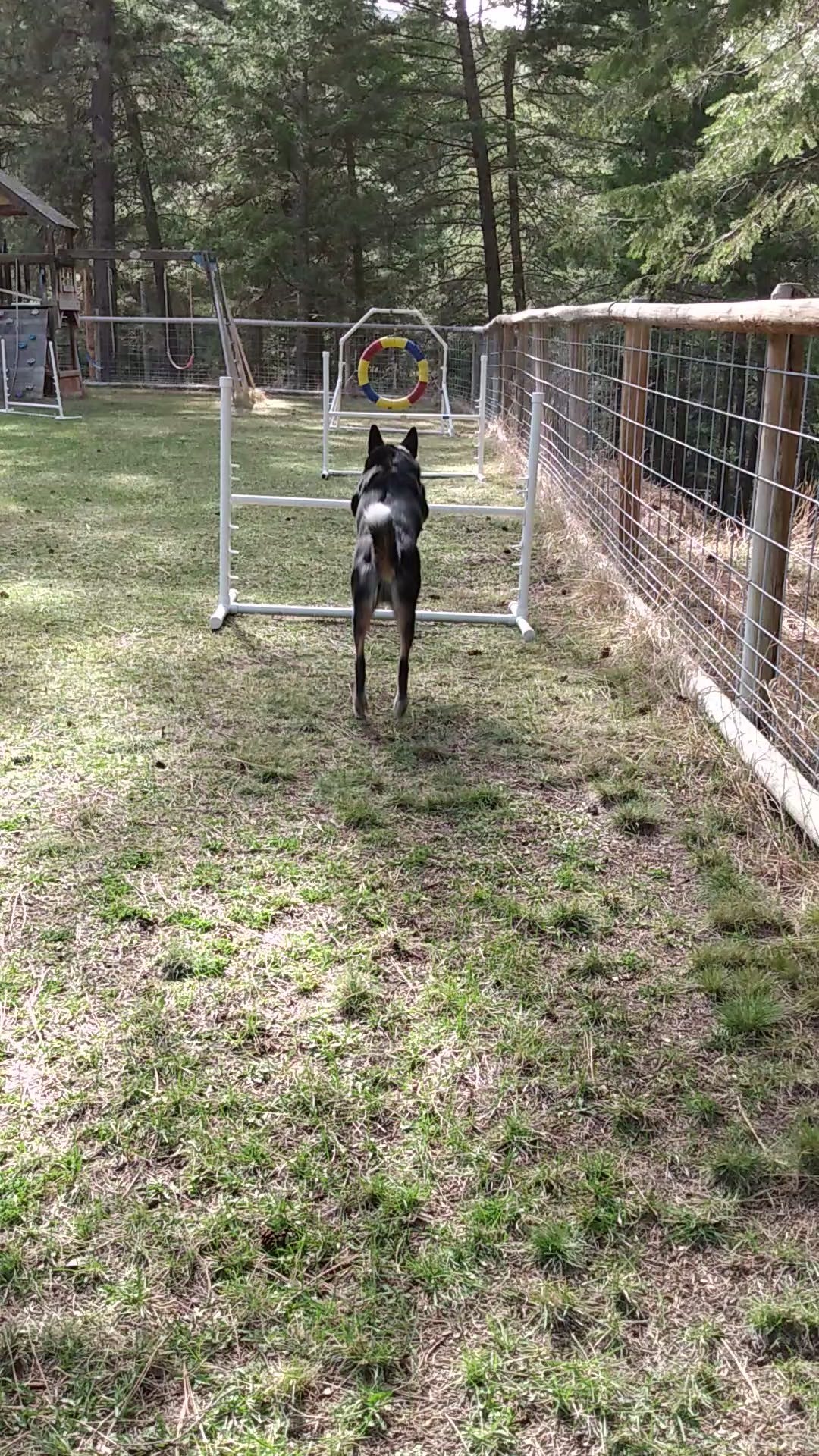
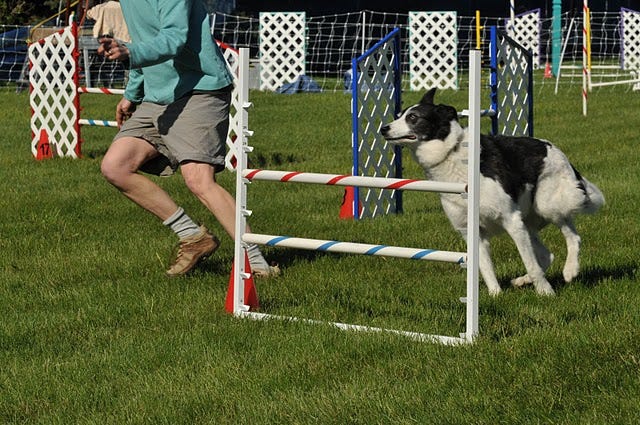
Dog in extension over jumps, heading away from camera
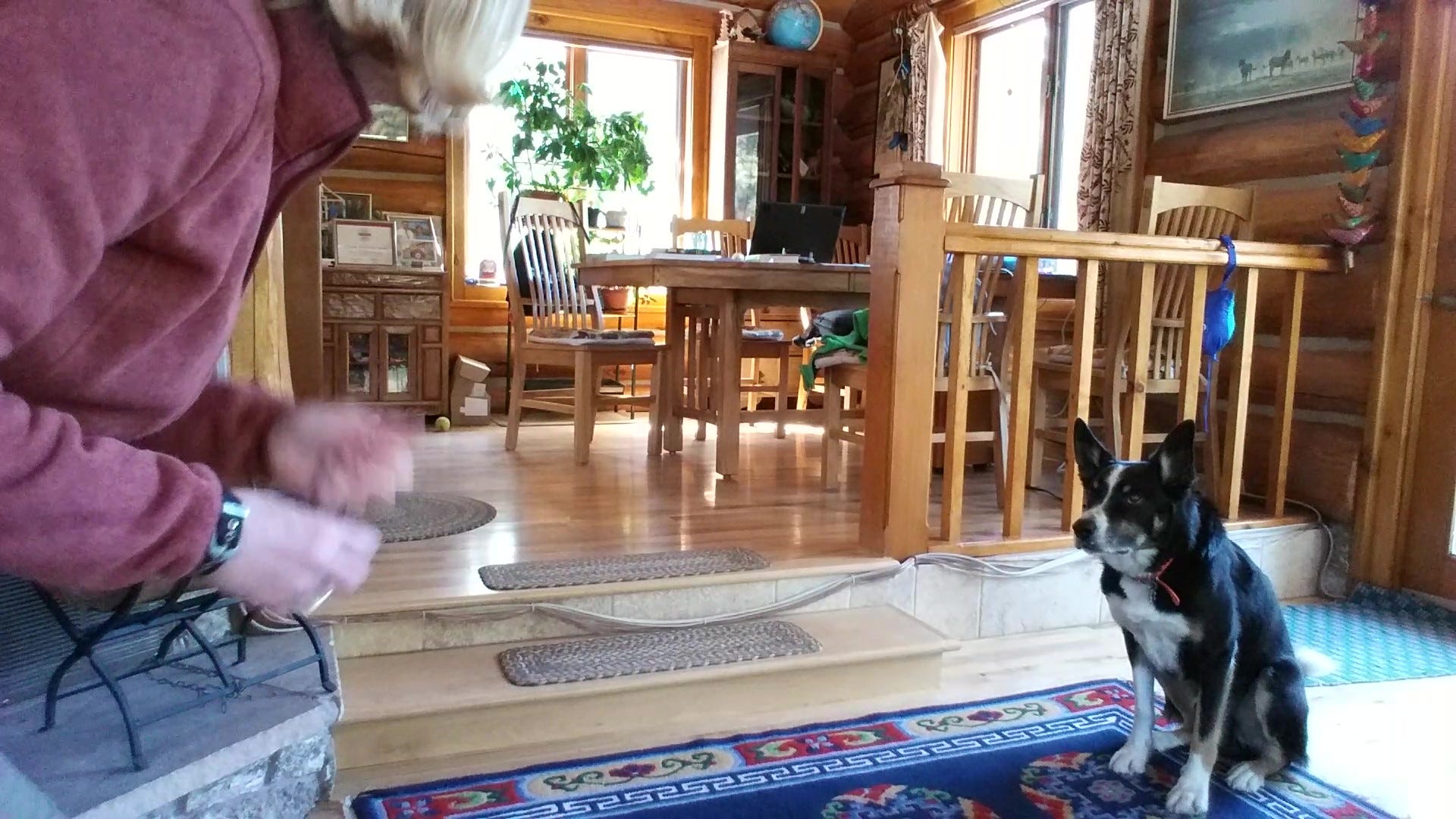
Here, Tock has been given his “Go On” command. Can you tell what that means?

Happy Tales!

Writing is Just Another Trick!

When most people think about dog training, they think “tricks.” Dogs doing sits, downs, and stays, rollovers, high-fives, and sitting up on their haunches. There are books about the 101 tricks you can teach your dog to do with a carboard box. And the beauty of these tricks is that they’re not hard to teach, as long as you have a reward your dog really likes, a way of marking the moment they do something right, the patience to teach the trick in small, incremental steps, and the wisdom of when to raise the bar and ask for your dog to do something a little bit harder. Keep upping your criteria and bingo, you have a fully trained behavior that your dog will perform after a single command.

Dog performing a trick

Wouldn’t it be great if we could write books that way?

Impossible, you’re probably thinking. Writers aren’t dogs, or monkeys, or seals with balls on our noses! We’re artists. Creatives. We write when the muse calls, through a magical process that’s known only to us. Other writers might have the tiniest glimmer of understanding of how it works—but they’ll have trouble describing it if pressed.

I disagree. Now, I appreciate my muse as much as any writer ever does. I know all too well that glorious feeling of urgency when I’m in the throes of a work-in-progress—when I must simply write rather than think, when my soul pours into the words flowing off my fingertips and onto the page. But this sort of writing is the end result of study and planning. I know it’s good writing because I’ve spent years teaching myself all the writerly tricks of the trade. I’ve studied premises, first pages, inciting incidents, plot arcs, character goals and development, dialogue, voice, pacing, show versus tell, world-building, how to use backstory effectively, and on and on. Most important of all, I’ve come to appreciate that these components of writing—these “tricks,” if you will—can be synthesized into something that’s greater than the sum of its parts. The humongous, artful, creative, and tricky masterpiece of a good story.

Story Genius book cover
One of my favorite books on the craft of writing

It’s possible I think about writing this way because of my background as a dog agility trainer. I still remember the epiphany I experienced when I learned from another trainer that agility is nothing more than a series of tricks.

Whoa, you might be saying. Aren’t all dogs agile until they get old? Why would you need to train them in something called agility?

You’ve probably caught a glimpse of agility on television or in someone’s back yard, or you’ve glazed over when a dog-owning friend of yours complained to you about how expensive their agility classes have become. But on the chance that you haven’t heard of it, dog agility consists of directing a dog through a course filled with obstacles. These include fun things such as jumps, tunnels, tire jumps, weave poles, and giant painted structures (teeter-totter, A-frame, and a long, skinny plank called a dogwalk). In competition, two courses are never the same, and each run is timed so that dogs are judged both on speed and on whether they run the course without accruing any faults (knocked bars, wrong courses, refusals, and many, many more).

Dog about to jump
Tock’s departed “brother” and BFF Tarzan navigating through a minefield of jumps in a competition.

Just as people don’t need to come from a particular background or level of education to learn to write effectively, dogs don’t have to be innately “agile” to participate in the sport of dog agility. Sure, some dogs are better at it than others (okay, a lot better), but this mostly has to do with motivation and not with any genetic differences that predispose them to the skills.

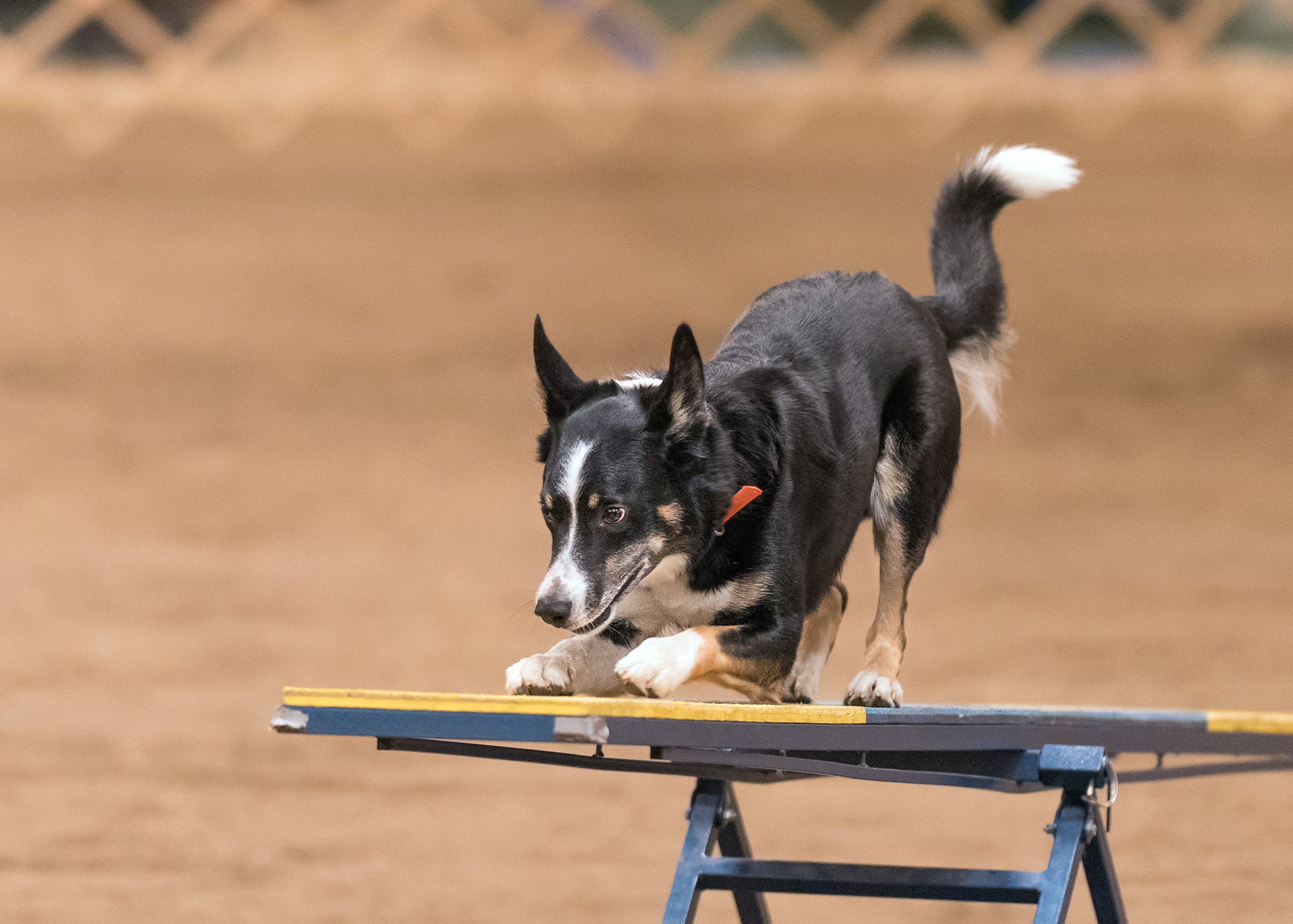
Dog on teeter
Tock demonstrating his motivation to bang the teeter to the ground!

Lest this lead you to think that agility is easy, I can assure you that it’s not. There are invariably students in beginning agility classes who assume that all they need to do is clip a leash on their dog and cajole them over the jumps, haul them onto the contact obstacles (the A-frame, teeter, and dogwalk), and stuff them into the tunnels. They’re certain that they’ll be doing a full course by the end of the first class.

But I forgot to mention that there are no leashes. And dogs need to learn how to run through courses they’ve never seen before without any mistakes. At full speed. An inexperienced handler attempting to achieve all this in one evening is akin to a novice writer whipping out a captivating, error-free book on the first try. I suppose it could be done (in a parallel universe?), but the chances are infinitesimally small.

This is why my beginning students don’t start on the obstacles. They get foundation training, in which they learn how to shape their dog’s behaviors into lots of little tricks. Because the foundation I teach is specific to agility, the tricks dogs learn all lead to something they eventually need to do. Some are so basic that the dogs may already know them, like sit, down, stay, and recall. Others are a bit more advanced, like learning to “go on” to some distant point away from their handler, or learning to move by their handler’s side at a walk or a run, stopping when they stop, and switching to the other side when signaled to do so. They’ll even get to start learning how to interact with the obstacles—the ends of the contact equipment, the openings of tunnels, the standards of jumps (but no bars!).

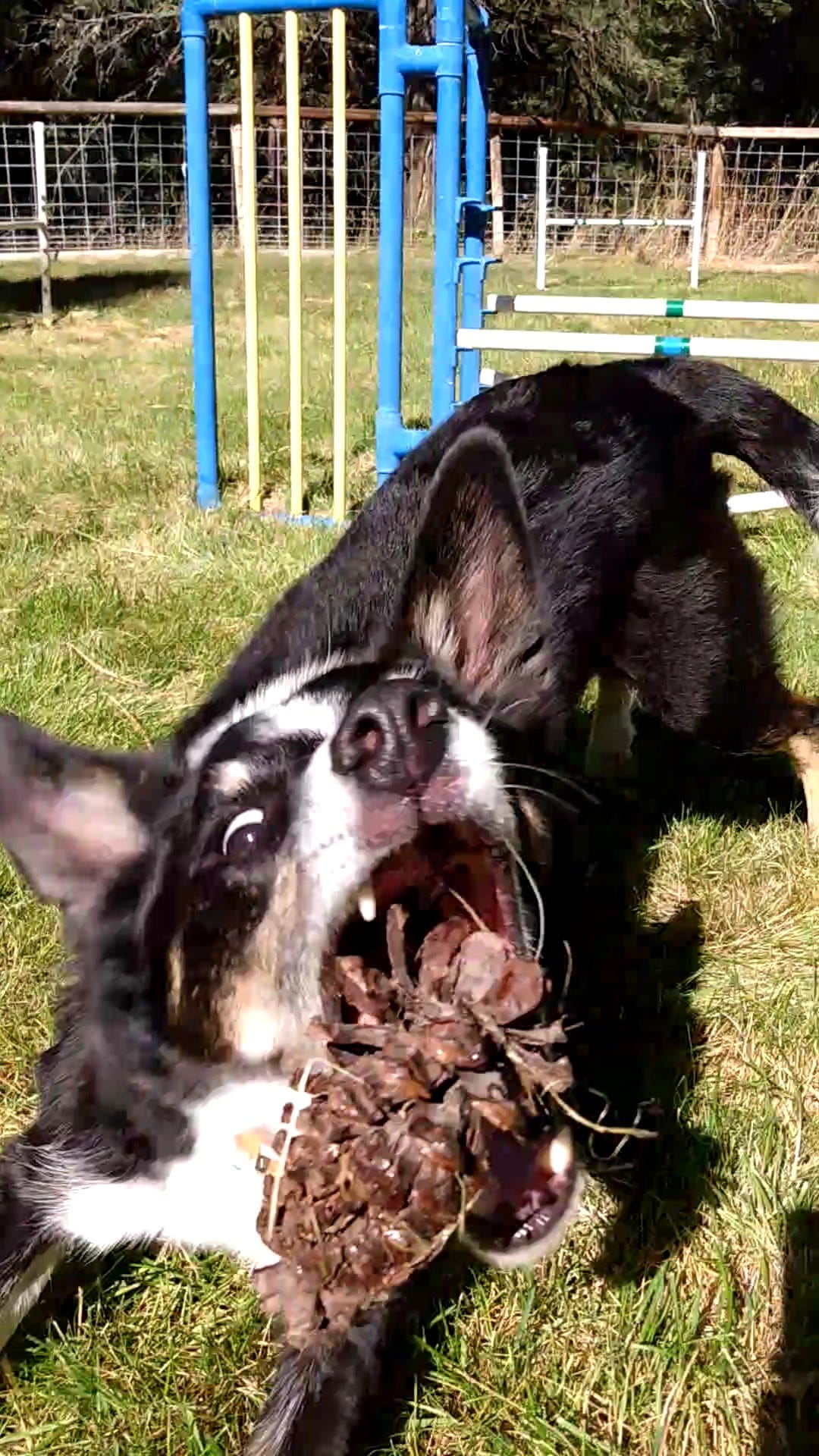
Dog catching pinecone
Tock learning what he has to do to get his pinecone reward. Training agility foundation is similar to attending writing workshops or reading books in which you learn the basic components of writing craft.

Similar to writing a book, agility training happens in many stages. After dogs learn how to work and move with their human handlers, they need to become comfortable with the individual obstacles. Once they’re performing an obstacle correctly and confidently, they’re ready to learn its name, so they can run to it when they’re commanded to do so (beware of assigning names to things too early, or you’ll end up having to say “tunnel” five times while your dog runs around it or stares cluelessly at you). Finally, dogs have to learn how to string obstacles together into sequences and to understand both verbal and body language signals in order to know where to go next on course.

After lots of time learning the little things, Moth & I became a team

The main point I’m trying to make here is that for agility dogs and writers both, it takes time and lots of patience to learn the craft. But as you master the tricks of your trade, you’ll be able to string them together into an entire manuscript. This masterpiece is the most tremendous trick of all—and only you will know just how much work went into it.

Happy Tales!

The Recall (or: Hook Your Readers!)

What’s the single most important command your dog needs to understand?

Dog running toward camera

That’s right! The recall.

Being able to get your dog back to your side whenever and wherever you want is super critical. Not just for convenience, but for safety. Imagine if you see him running in a high-speed game of chase with another dog toward a road. Or what if an aggressive-looking dog is heading your way, or a dog you know yours won’t like for some other reason? Or maybe you see a herd of deer that your beloved pet will be quite interested in disturbing, or a raft of ducks, or a clowder of cats. Even just one cat.

Without a recall, you’ve got zero control. A dog-owner relationship can’t really happen, in fact, because you won’t have a dog most of the time. Instead, you’ll have a loose fluffy cannon that’s likely to get itself lost, run over, taken home by someone else, or spend a delightful afternoon chasing rabbits or deer in the woods (delightful for your dog, not so much for you or the wildlife, of course).

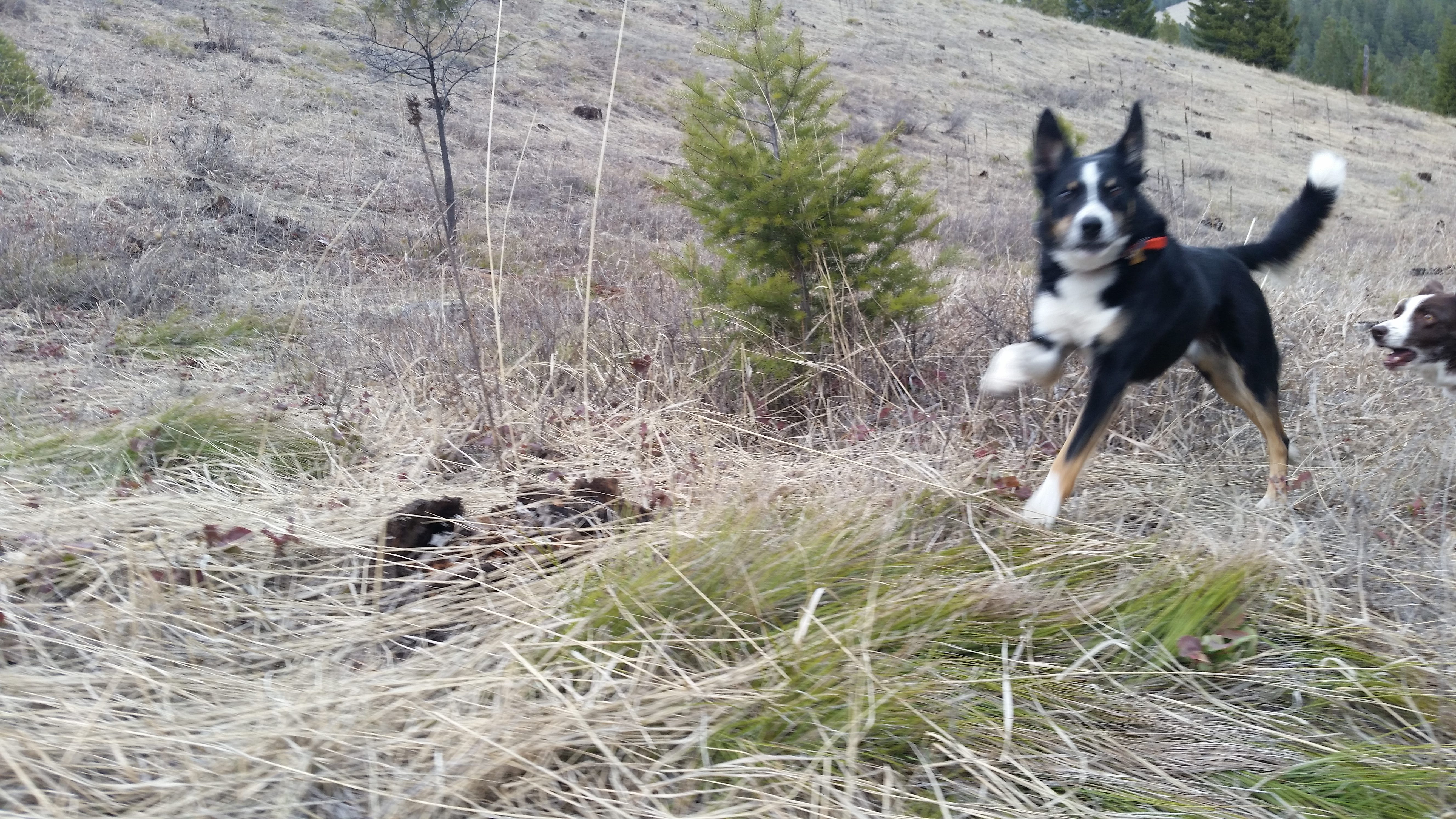
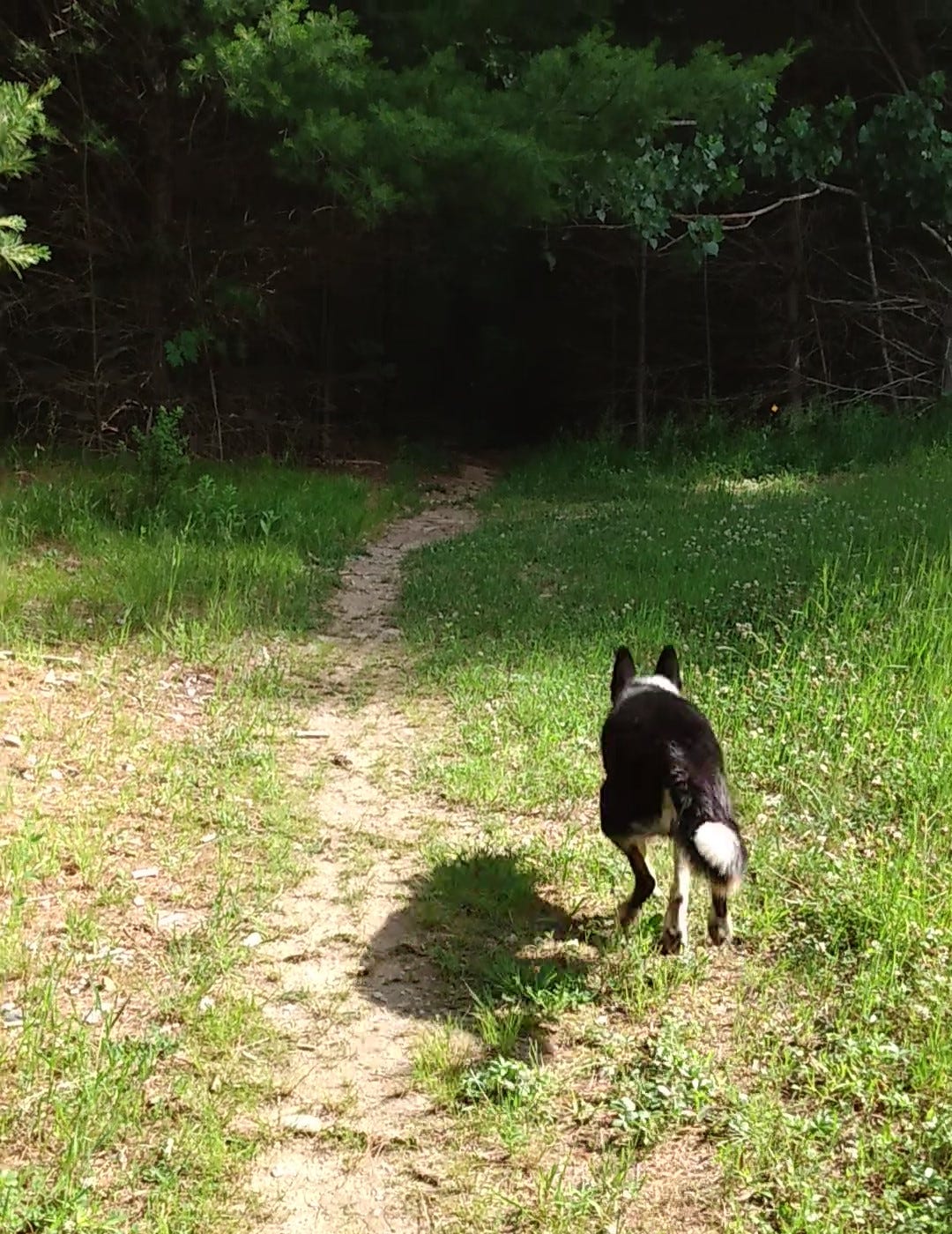
Dog running away

We’ll talk more about training the recall in a moment, but let’s take a quick turn inward toward our writerly selves. We need to ask the same critical question about our stories as we did about our dogs:

What’s the single most important part of your story?

Open book
Photo credit: Kourosh Qaffari

Yep. The hook. Most readers, agents, and editors agree that they simply won’t continue reading without a good one.

If, like me, you’ve been querying publishing professionals for some time, you already know that both queries and pitches contain a single line that captures the essence of what your protagonist wants and what’s keeping them from getting it. This is the hook. Add another line about what happens if they don’t get what they want, and boom, you’ve got the stakes of your story.

Of course, in the story itself, setup of the hook can take many pages. The obstacles to a character’s chief want may not actually present themselves until the end of the first few chapters, but readers should have a solid idea of what the character wants on page one or by the end of chapter one, depending whom you ask. And by the time readers are ten percent of the way through your story, they’re gonna want to know what it’s about. Smaller hooks work great at the end of each scene or chapter.

In other words, a story hook answers the question: why do we care enough to keep reading?

Agents often say they read queries and sample pages line by line. If they don’t feel intrigued enough to go on at any point, they’ll put it down. This goes for readers, too. So it’s good idea to begin to get the essence of your hook out there from the very first sentence. Can you hook your readers into sticking around?

Likewise, can you hook your dog into sticking around?

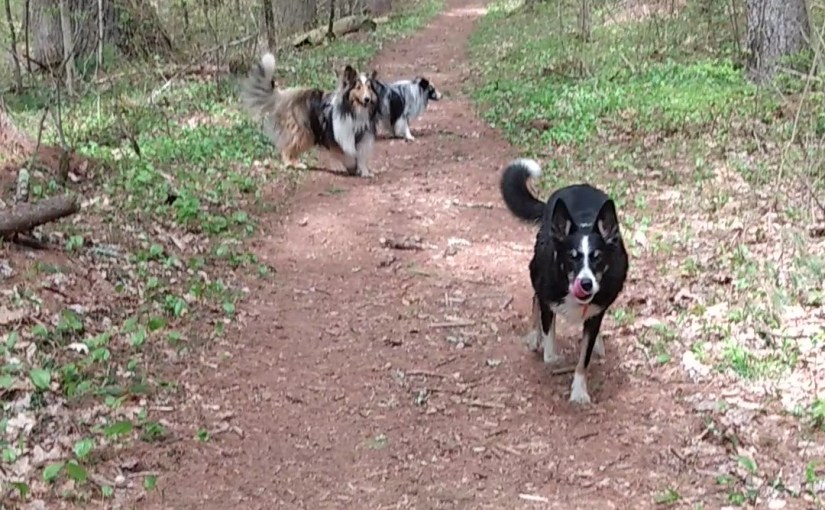
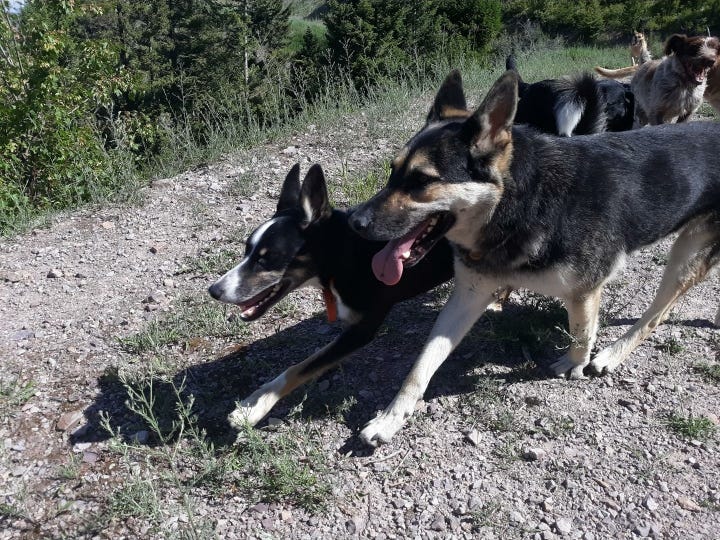
Pack of trotting dogs

There’s actually a lot of similarity here. Picture your dog as the “reader” and yourself as the “story.” What can you do to make your dog care enough to come back to you?

The simplest solution is to divide that question into three smaller ones:
1. What do they want most in the world?
2. How easily and successfully can they get it? (specifically, are there any obstacles or distractions in their way?)
3. What happens if they don’t get it? (i.e., what are the stakes?)

Let’s answer those three questions for Tock:
Q. What does he want?
A. Tock: “Pinecone, please. If we (translation: Wendy) can’t find one, then I’ll take a snowball. Or a frisbee. In desperate situations, a stick.

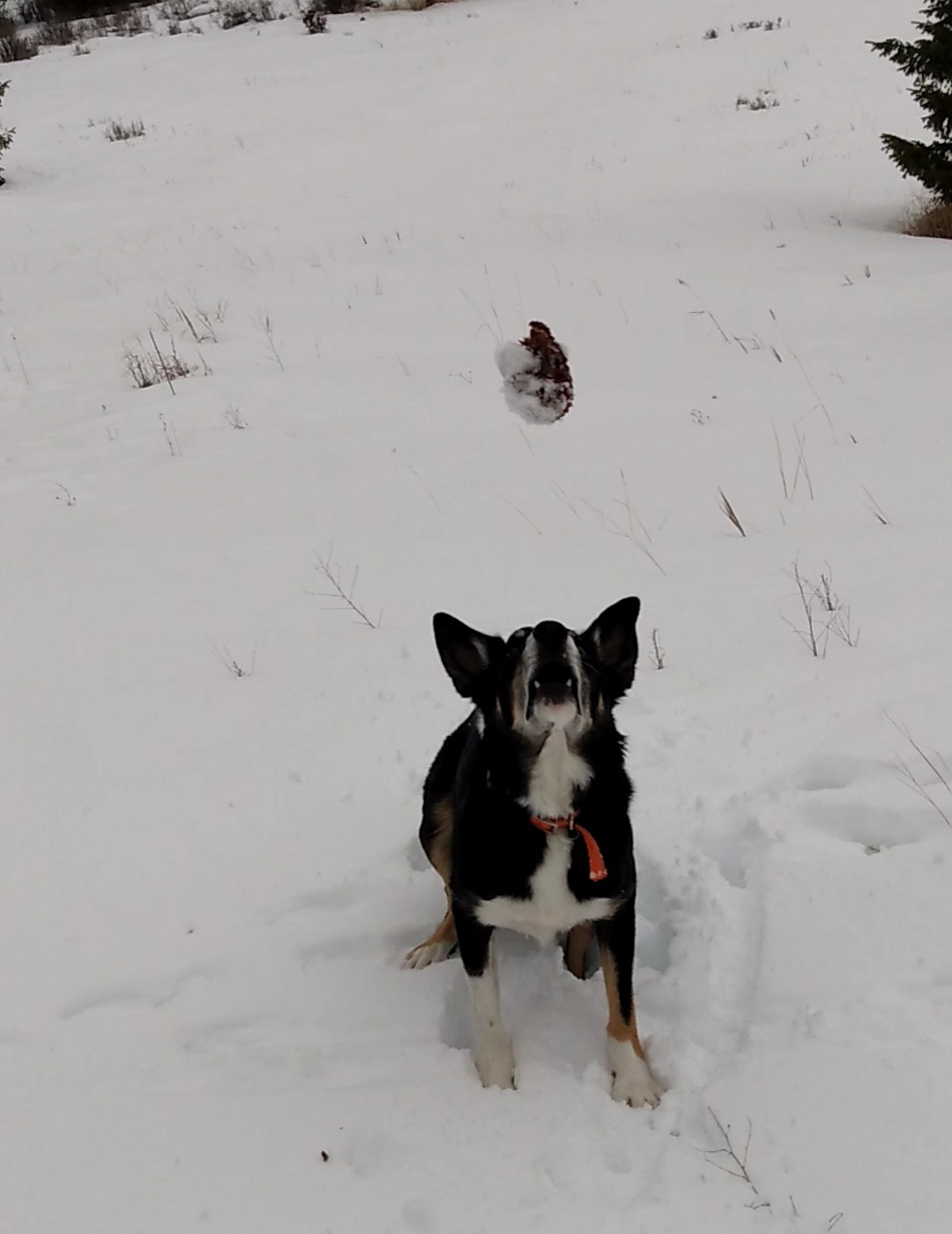
Dog about to catch pinecone


Q. How can he get it?
A. Tock: Wierdest thing. Wendy always wants me close to her before she throws the darned thing. So I get close. Who cares about what other dogs, squirrels, or deer are doing if something’s gonna go hurtling through the air that I get to fetch?

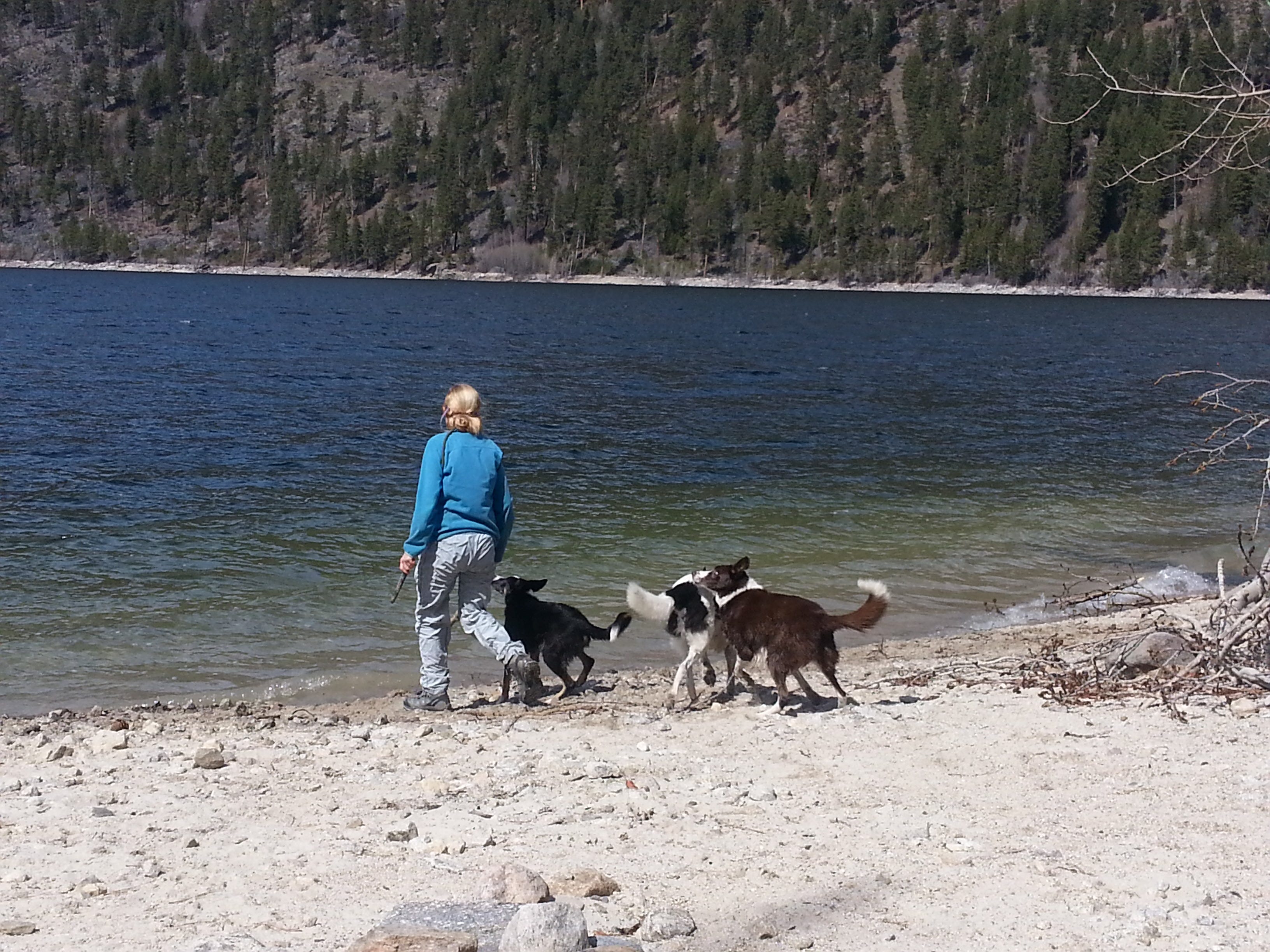
Dog next to person holding stick

Q. What are the stakes for him not getting it?
A. Tock: Obvs. If I don’t come back right away, I don’t get to play my favorite game! And if I’m really bad, not that I ever, ever am (clarification: Tock may have a faulty memory of his younger days), I might find myself on the boring end of a leash for a while.

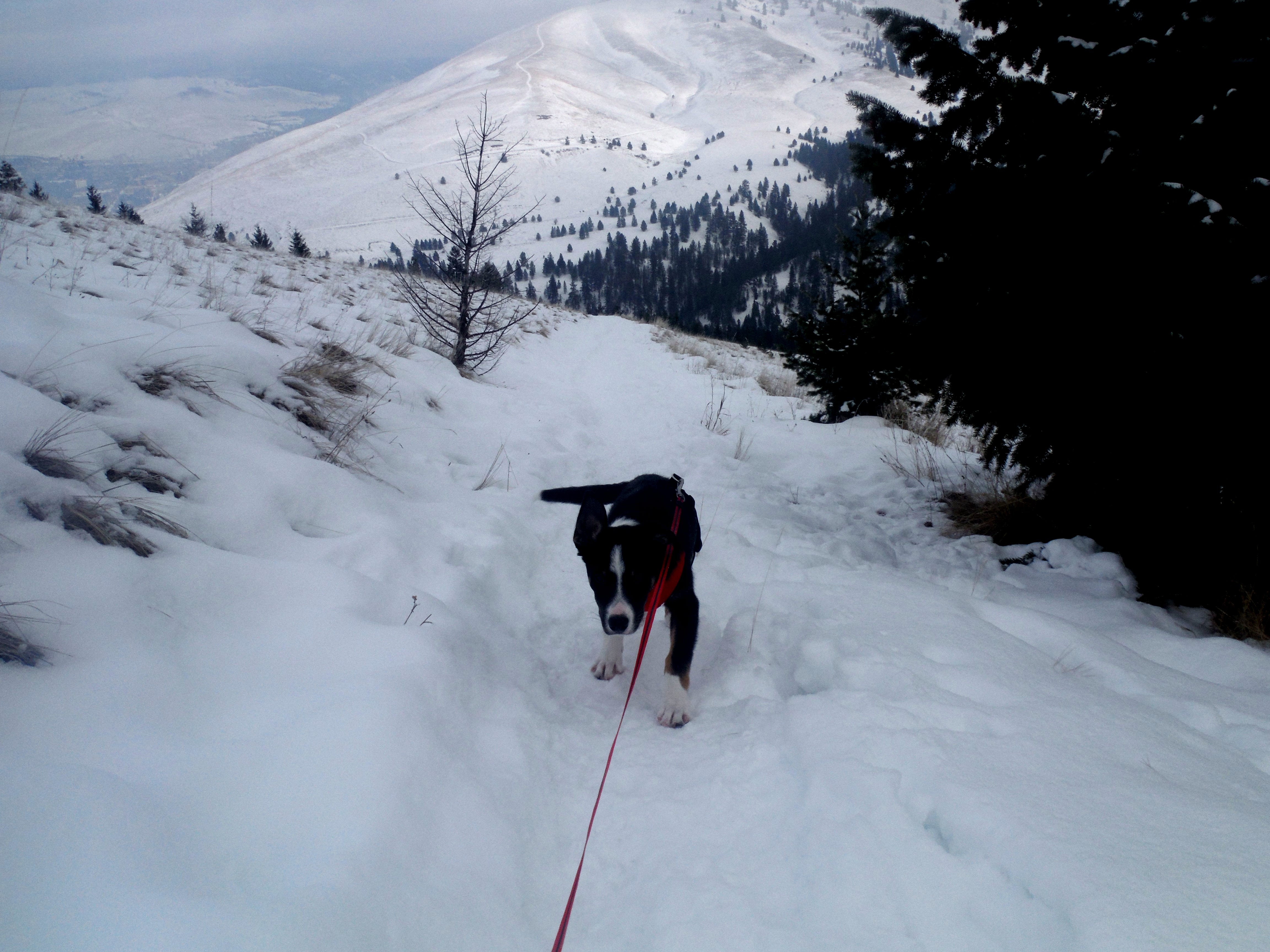
Dog on leash

Now, not all dogs have a pinecone receptor in their brains like Tock. They might prefer playing catch or tug with another kind of toy, or getting to inhale a treat. But—and this is important—it better be the most fascinating toy (preferably one they only get to see during recall training) or the most delectable treat ever! No boring kibble, unless that’s the thing they love most. And little treats in a row are way better than just one. Dogs can count. They know when they’ve hit the jackpot.

Dog getting treat reward
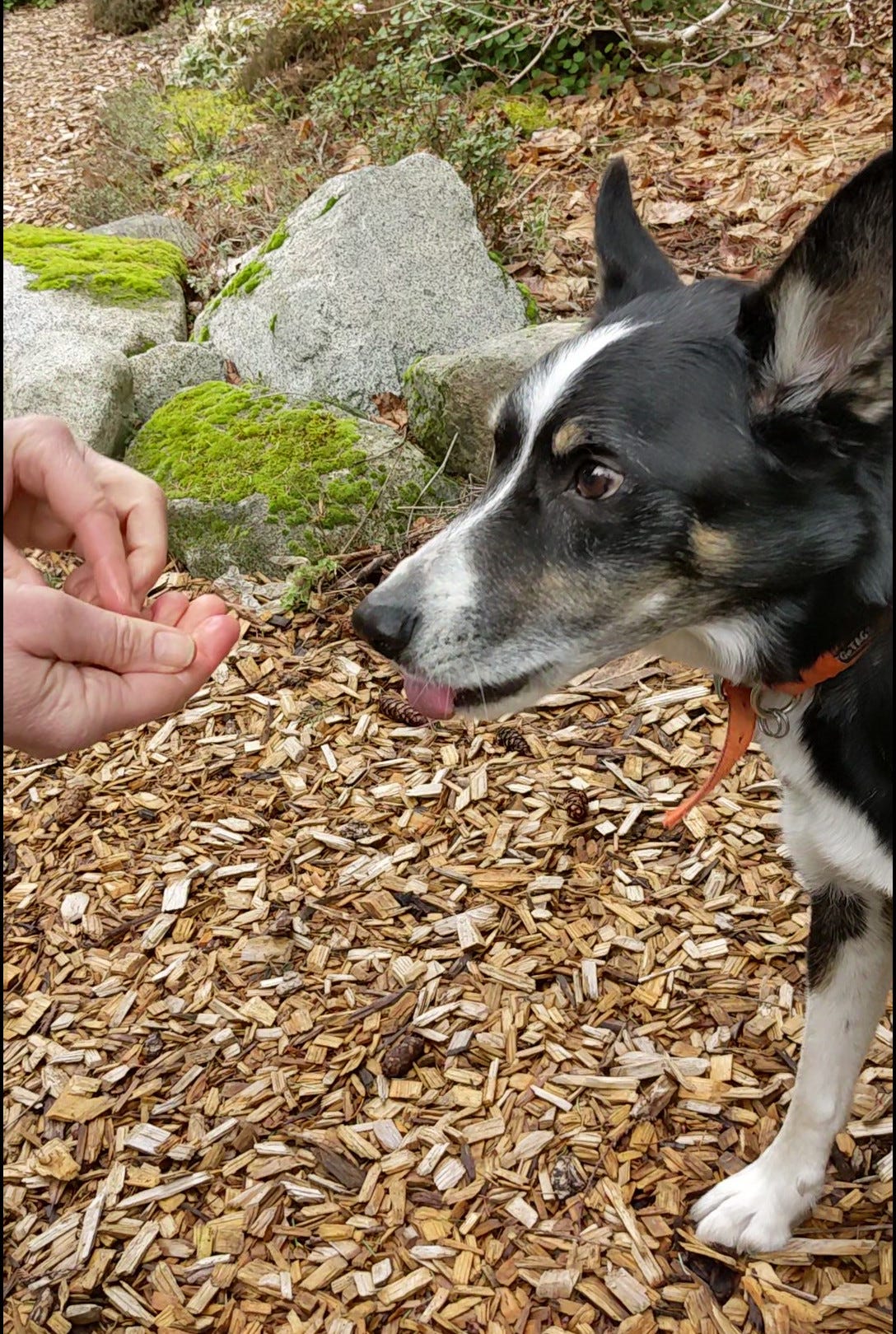
Tock getting the first of many treats in a row for a good recall.

Some dogs might like being petted and fussed over by their human more than anything else.

Person patting dog
Tock is 99% work, but here he is getting love anyway.

The biggest rule to live by is to keep yourself interesting to your dog! No matter what the reward, lots of dogs love to engage in a game of chase with their person right before getting it. Just as a live squirrel is way more fun for a dog than a dead squirrel, so is a “live” toy or treat that the dog has to chase and perhaps tug away from you. A recall should always be a fun game in which you get to be an active participant!

Share Happy Tales

When either training a dog or thinking about your story hook, it’s best to start simple. Many beginning writers throw too many enormous life or death obstacles at their poor protagonist right away. But your readers might not care about the characters enough at that point to get why those problems even matter. Remember to start with: What does your protagonist want? (Note: this doesn’t mean lots of backstory. Make sure characters aren’t too passive and keep as much of the action as you can in the present time.)

Likewise, it’s tempting to try recalls with dogs all the time, all over the place—at the dog park, on the sidewalk, in the hills. But your poor puppy might not know you well enough yet to want to come back to you in the presence of all those fun distractions (translation: he might not understand the stakes he’ll be missing out on.) Start your recall training inside with lots of great rewards (trust me, if your dog isn’t crazy over-the-top about them, they’re not good enough). Start by calling your dog a very short distance with zero distractions! And don’t jack up the difficulty until you’re 100% sure they’ll do it. Otherwise you’re diluting the power of their name. They’ll learn that they can ignore it when the Great Outdoors offers them something more interesting than you.

Dog in a sit-stay, waiting for treat

Back to writing, try crafting a simple hook before you even start your story. This can help it gel in your mind. Most importantly, this hook helps you bond with your story – because if you don’t understand it, how will your readers? Next, keep that hook in mind while you’re writing the first draft of your first few chapters. Re-visit it and make sure it’s compelling. Envision your hook like an invisible leash, pulling your readers—or your dog—back to you whenever and wherever you want.

Dog recalled to handler, getting treat

Happy Tales!