The Dog Days of Writing

Do you find your writing sliding into the realm of the subconscious in midsummer? I do, and I’m not ashamed to admit it. The Dog Days of Summer are my favorite time of year.

I get up at dawn just before sunrise, before the heat and the bugs have swamped the woods. There are too many trees to spot Sirius the Dog Star, the phrase’s namesake, but I know it’s there. For one thing, the Romans wouldn’t have put dies caniculares, or “days of the dog star,” in their midsummer calendar if it weren’t reliable. For another, if I were to visit a field in late July or early August on a clear pre-dawn morning with the intent of spotting Sirius, I’m fairly certain I’d succeed (at least until several millenia from now, when the Earth’s wobble will have shifted the dog days to midwinter). Sirius is the brightest star in the constellation Canis Major and the brightest star seen from Earth, after all. The stars of Orion’s Belt—one of the few constellations I can recognize—point southeast, straight towards it.

Orion's Belt in the night sky
In lieu of Canis Major, here is Orion’s Belt. Sirius would be off the lower left. Photo credit: NASA Hubble Space Telescope

But the origin of the phrase isn’t why I love this stretch of days.

I think it’s partly because the Dog Days are ushered in by my son’s late-July birthday. For its combination of sheer hard work (labor, right?) and the astonishing and incredible euphoria of holding my baby for the first time, that particular day has imprinted itself in my brain as the best one of my life. It doesn’t hurt that he’s grown into one of the sweetest, most conscientious human beings I know (yep, biased, but pretty close to the truth all the same).
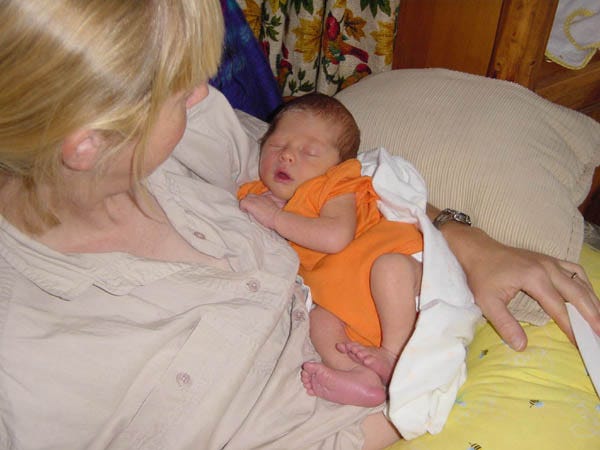
The author holding her newborn infant

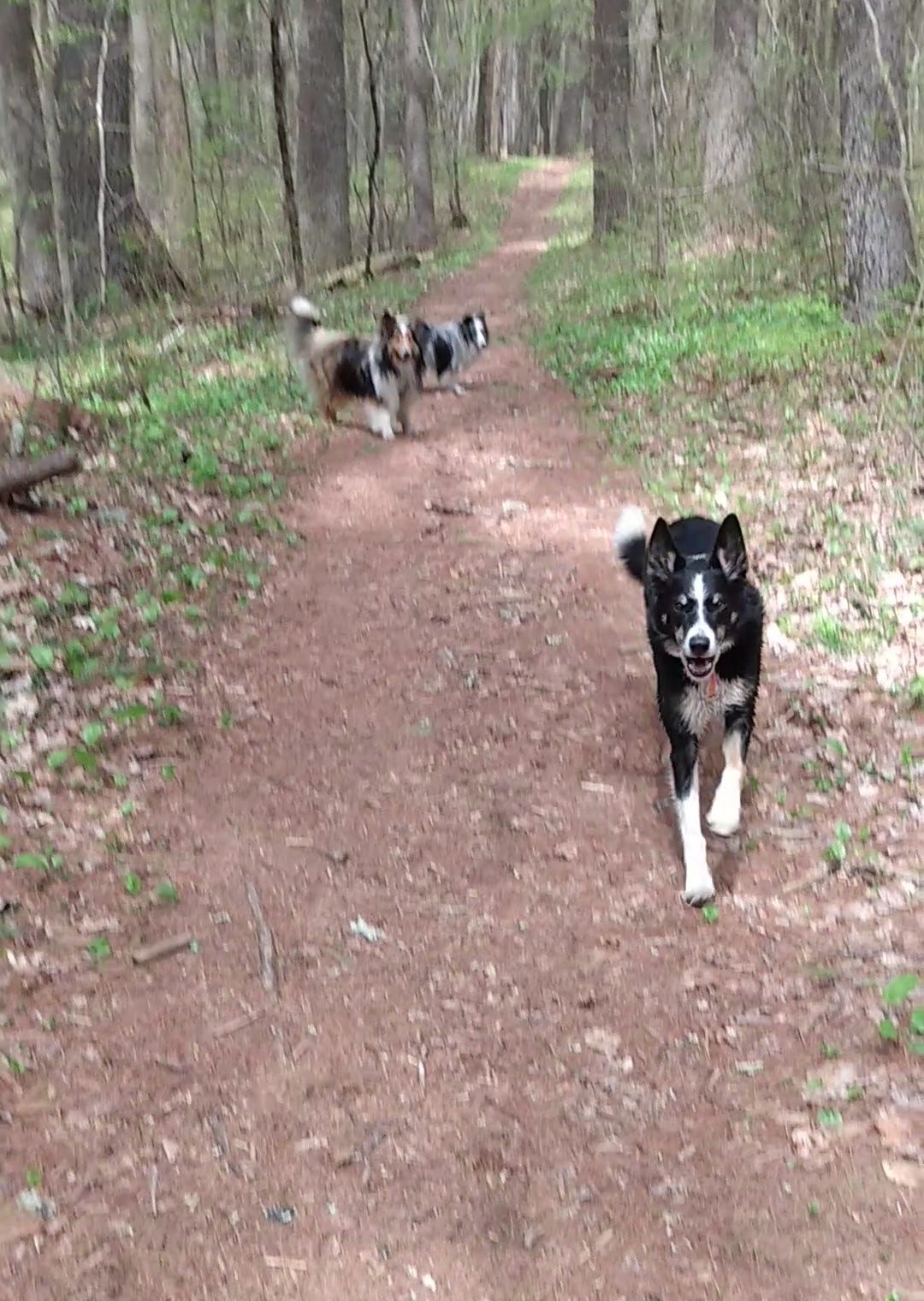
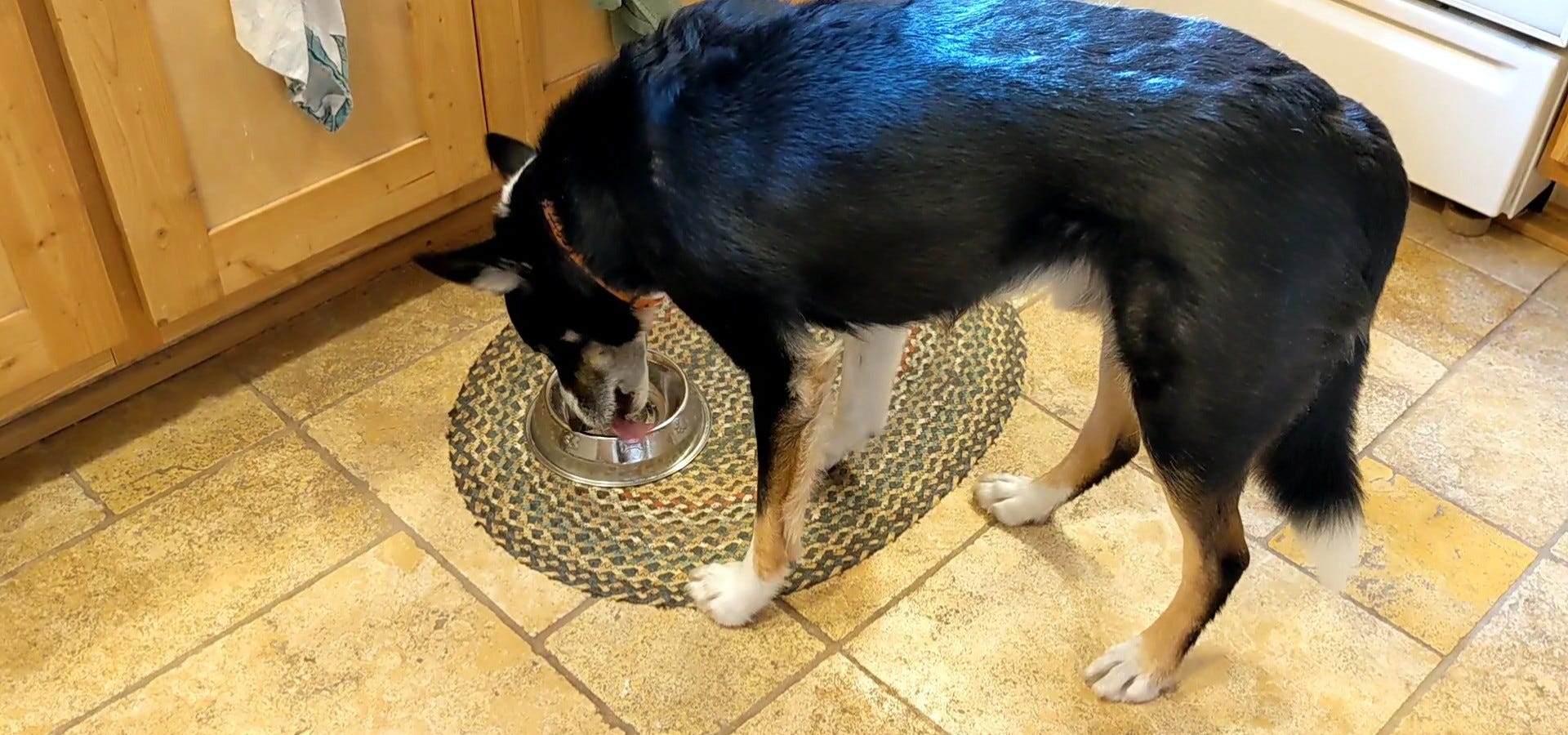
I also love the Dog Days because I’m at last at last down to a single layer of clothing. No more long johns, jackets, or even long-sleeved shirts. The world and I have reached equilibrium. Even as I heat up on a walk, sweat dripping down my cheeks, I feel as if I’m part of everything around me, swallowing and blowing great lungfuls of humid air with abandon, rather than burrowing inside hood, jacket, turtleneck, and gloves to protect myself from the harshness of a winter wind. Through the sultry heat and clouds of bugs, through the great gulps of water my dog and I take from our bottle, through the daily marathons of endurance these walks become, the Dog Days of Summer envelop me in their green, bee-buzzing, frog-burping, osprey-chirping womb.
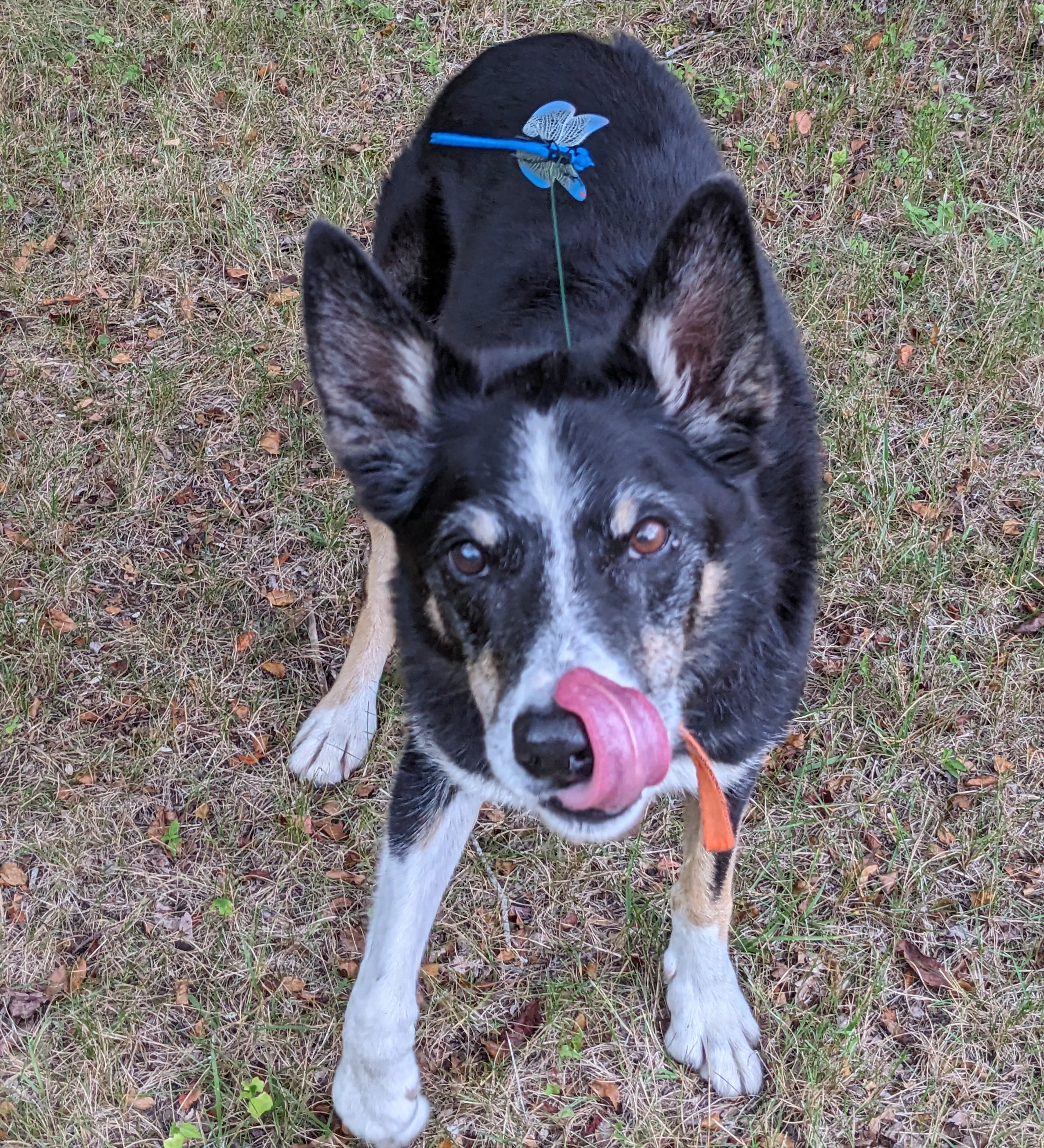
Dog with plastic dragonfly attached to his collar and "flying" above his head
Tock’s defense against deerflies: a fake predatory dragonfly attached to his collar that “flies” above his head.
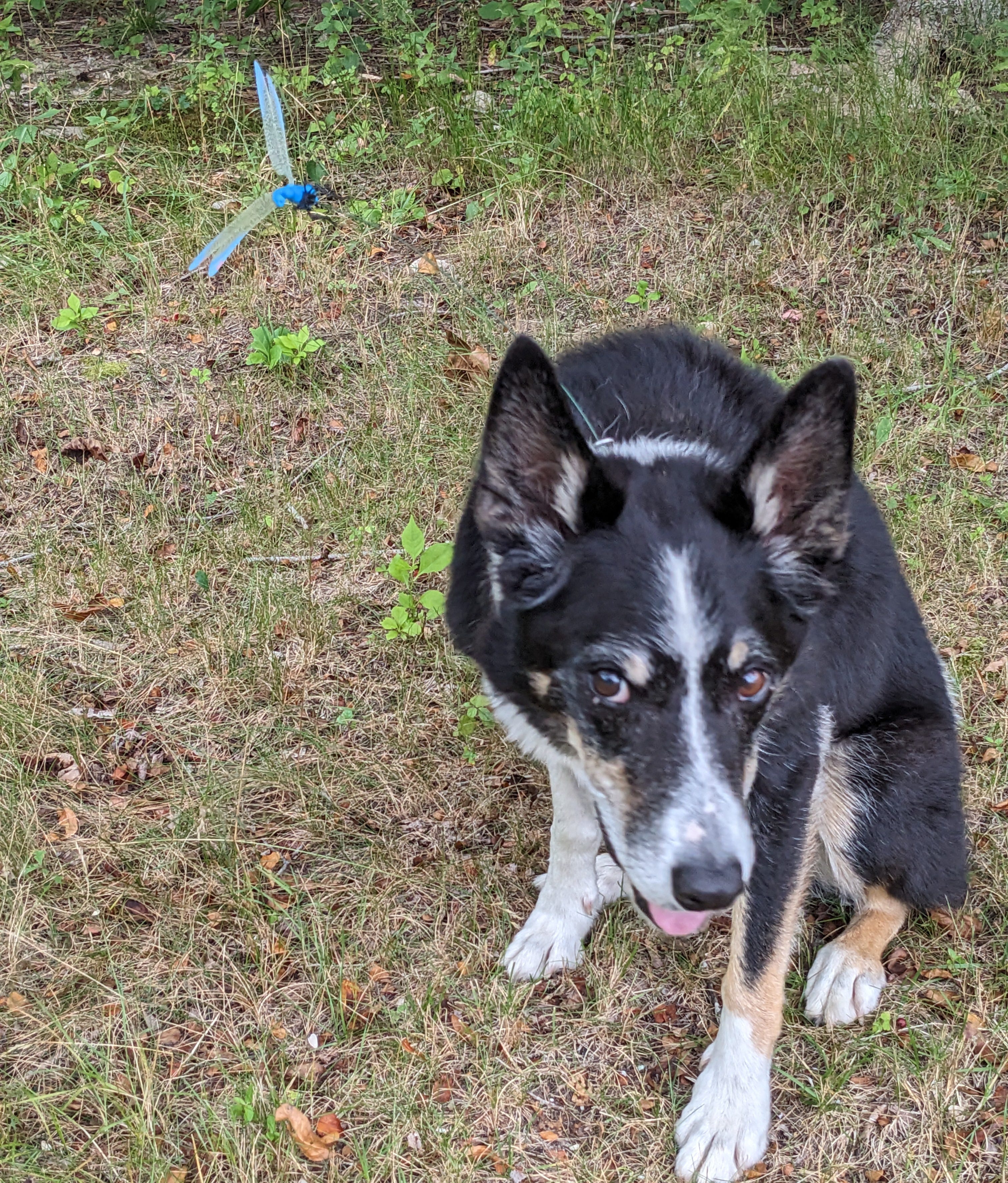
Another view of dog with fake dragonfly flying above his head
Works great! (except when he rolls in the dirt after a swim)

I can’t even picture winter right now. Nor can I imagine myself spending hours each day in front of the computer, wrapped in blankets while exercising my mind. Normally, I jump right into editing a newly completed story, sending the edited version to critique groups, composing drafts of query letter and synopsis, but not during these precious Dog Days. I’m too busy submerging myself in the moment. Each footstep becomes a lifetime of sensations. Any frustrations I felt last month about making progress on my writing disappear. The Earth wraps around me, and I find myself taking the break that everyone tells me should happen after a first draft. My worries slip into the warm waters of the pond along with my dog, into the shovelfuls of dirt in the garden, into the spray of cool water on the azaleas, into the paint on the siding of the house. Hopefully, my subconscious is still working on the story, figuring out how to address the problems that’ll surface when I revisit it. But I can’t be bothered to check at the moment. My conscious mind has detached from it, immersed in the real world. The good thing about this is that after the Dog Days have ended, I’ll view my draft as a first-time reader might. I’ll be able to spot those flaws that my mind glossed over back when it knew the story too well.

Dog swimming to a stick
Tock’s favorite Dog Day pasttime (that’s a stick, not a dead fish).

But enough of writing. I’m gonna go do some hard physical labor and forget about the state of my draft—and the state of the world, other than its immediate, comforting presence all around.
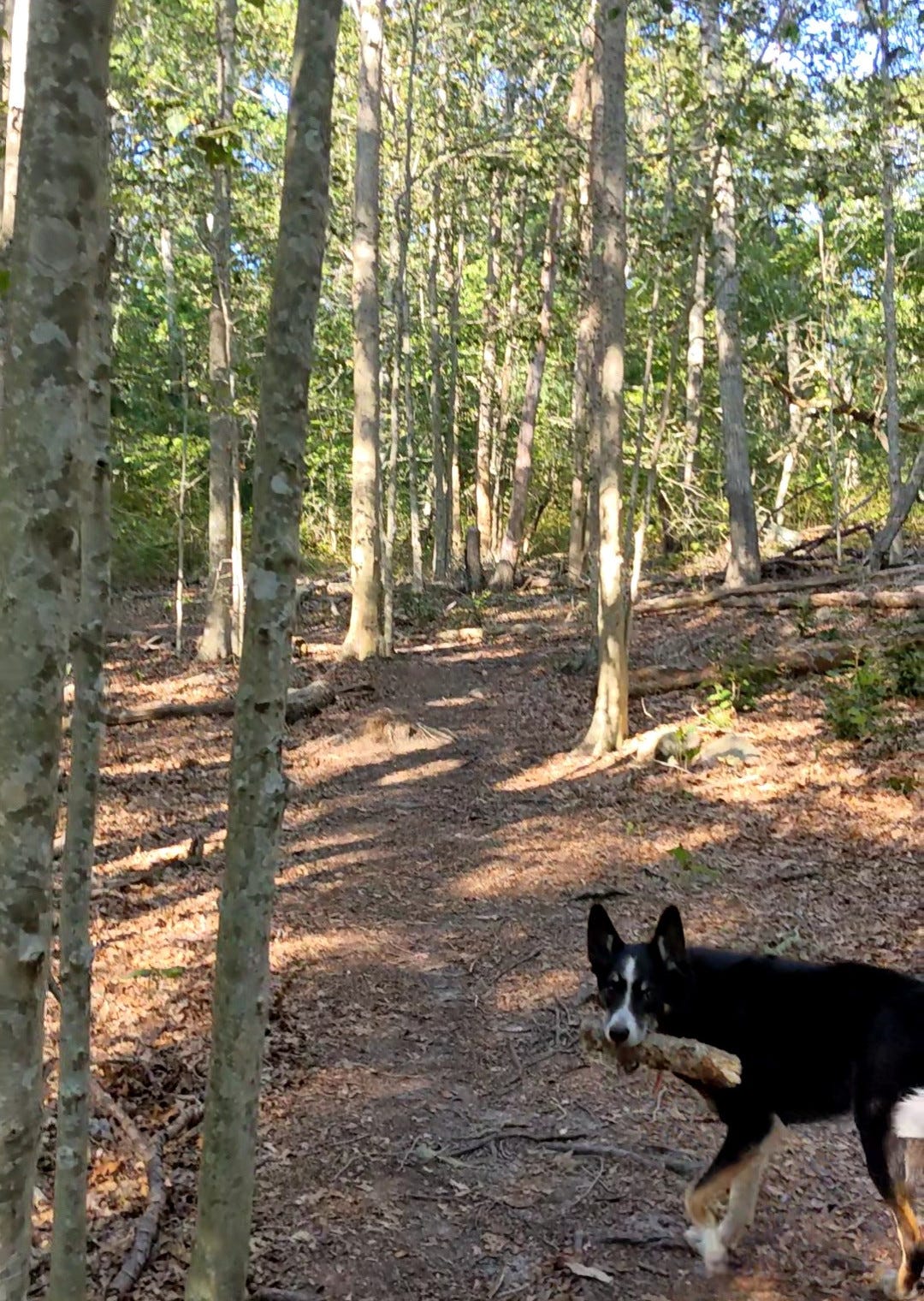
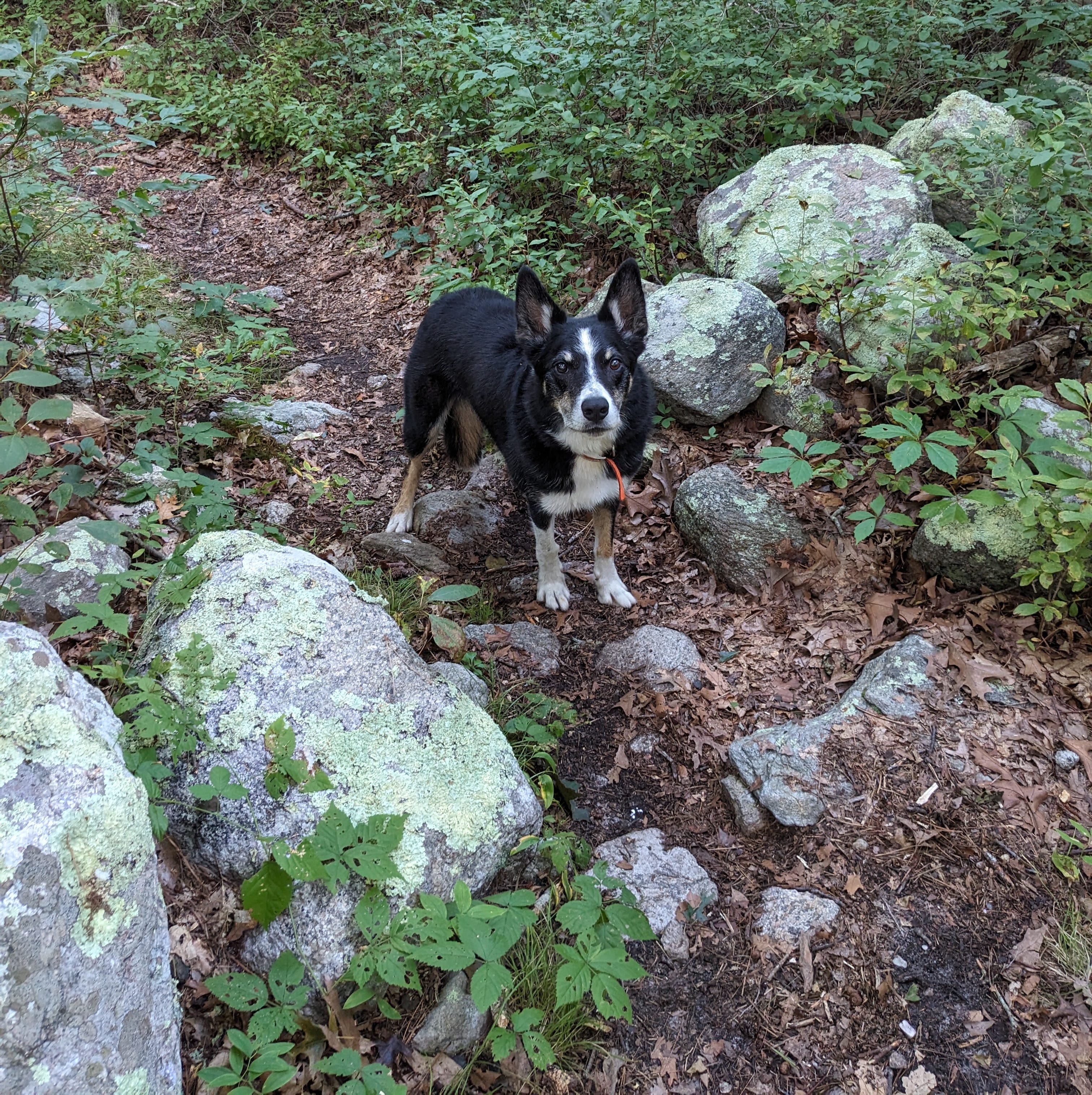
Dog carrying a stick in an open woods
A coastal beech forest

Happy Tales!

Finding Balance

Where do you sit on that lifelong seesaw of work and play?

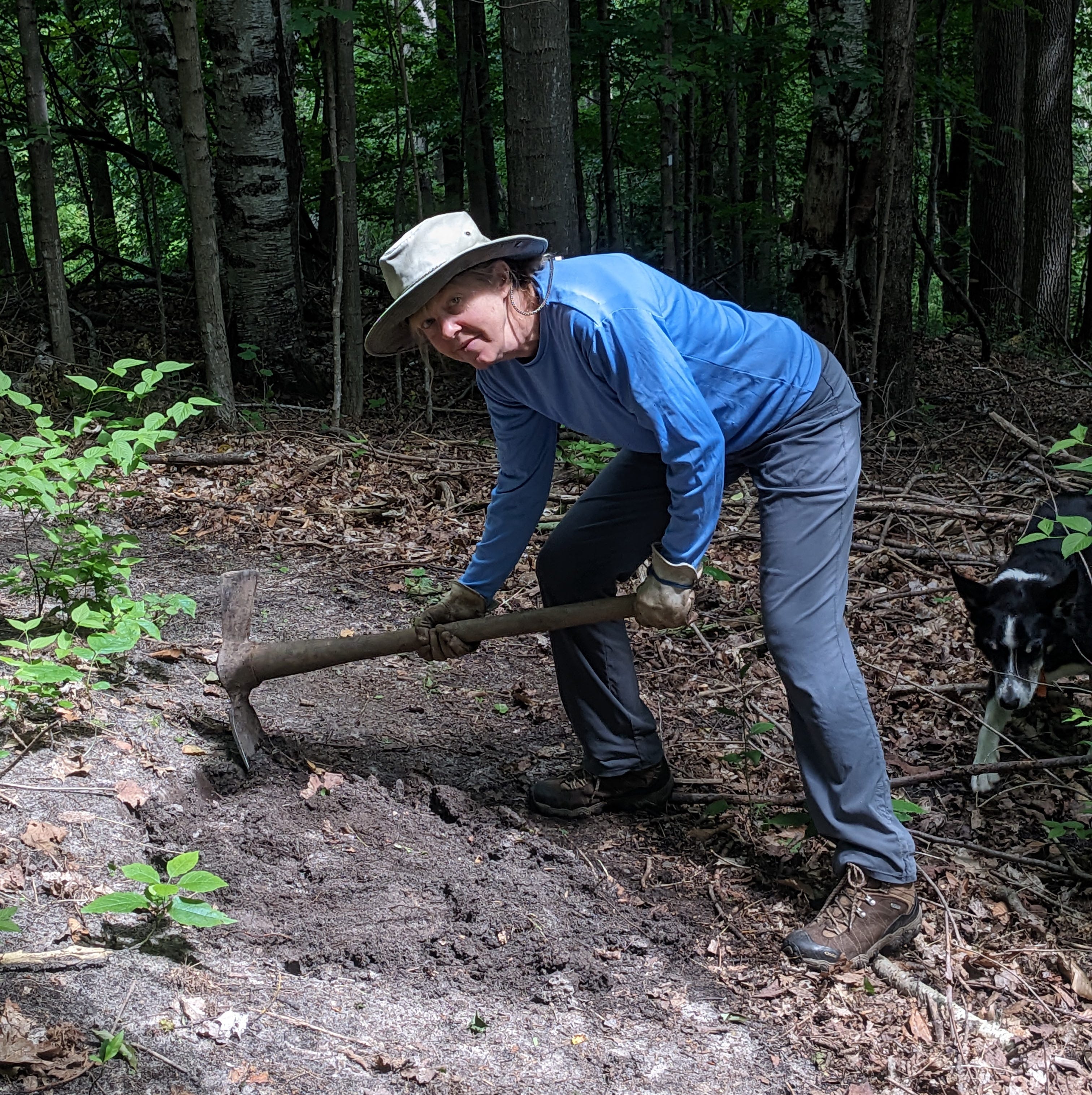
My husband and I differ in a lot of ways, but there’s one area in which we are extremely similar: we’re prone to becoming maniacally devoted to the job at hand, whatever it is. Could be cleaning, chainsawing, or computer work. Could be fixing some broken household item, painting the bathroom, playing Scrabble, boating, or brush cutting. Once we start doing something, we want to keep on doing it until it’s either done or as perfect as we can possibly get it.

I call these behaviors Border Collieisms. Our own border collie will keep herding as long as there’s anything to herd (in his world, this includes pinecones, sticks, and tennis balls). No matter how hot, exhausted, and frustrated he becomes with a giant stuck stick or a ball lost beneath the couch, he carries on. We do the same, though not with sticks unless it’s to remove them from a trail we’re building.

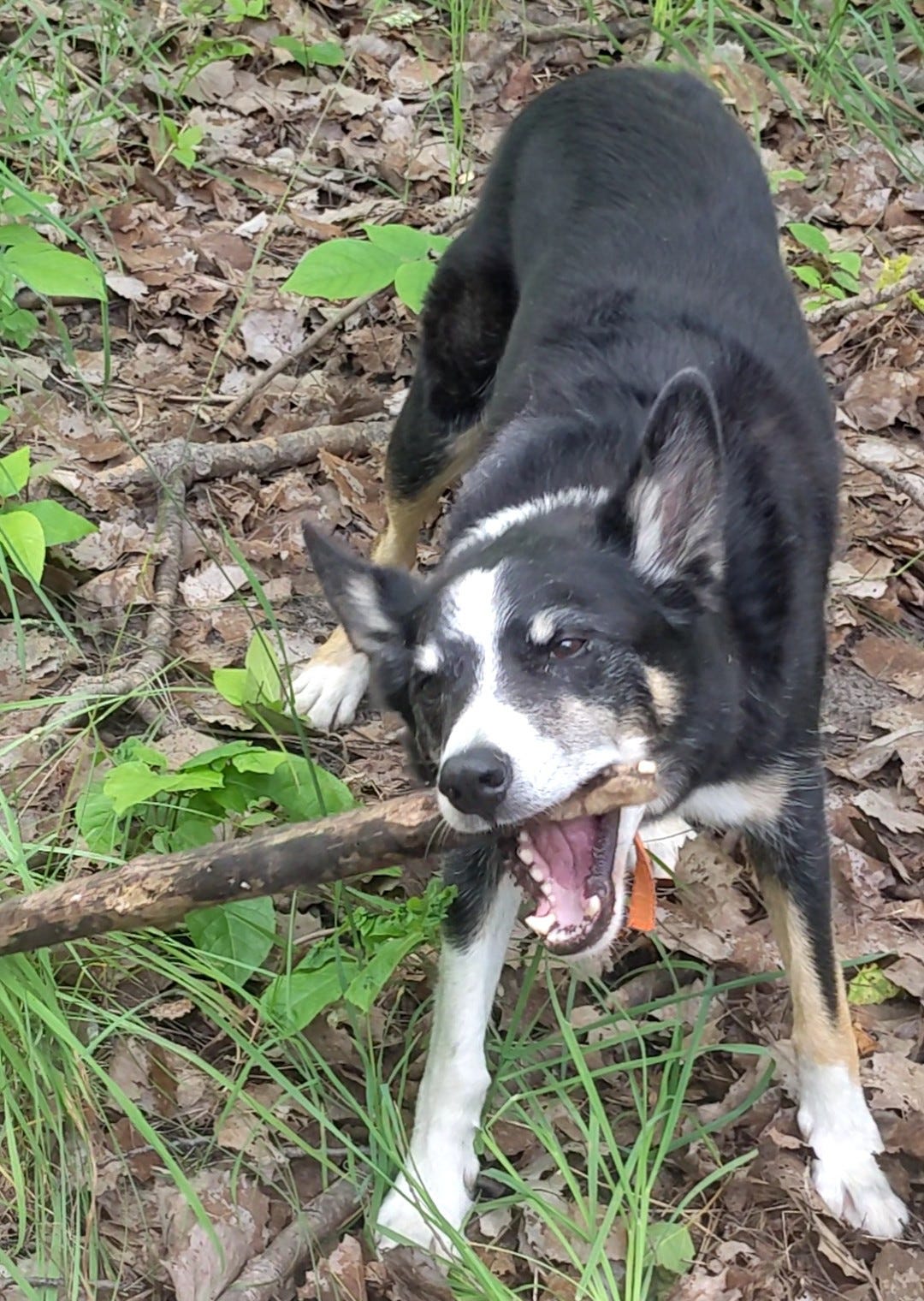
Dog gnawing on a stick
Tock loves trail building. Sticks are constantly flying his way!

I’m not sure whether we wanted a border collie because he reminded us of ourselves—or whether he trained us to become like him. Probably some of both. I’m also not sure whether the Border Collieism tendencies we display are good or unfortunate. Again, probably some of both.

Everyone says that to be happy, you have to find balance. But how is that possible when you seem to spend all your time obsessing over something? Ironically, one of the things I obsess over the most is writing a well-balanced story—one that has even pacing and the exact right amount of world-building versus plot versus character development. So I guess I’m sacrificing my personal balance in the interest of writing the perfect story, right?

Wrong. First of all, there’s no such thing as a perfect story. You can never edit it enough, to the point that every single rough edge is ironed out, every single typo or grammatical error is deleted, and every single reader will love it. Second, what if nourishing my Border Collieisms makes me happy? What if striving over and over to perfect my words in story after story brings me joy?

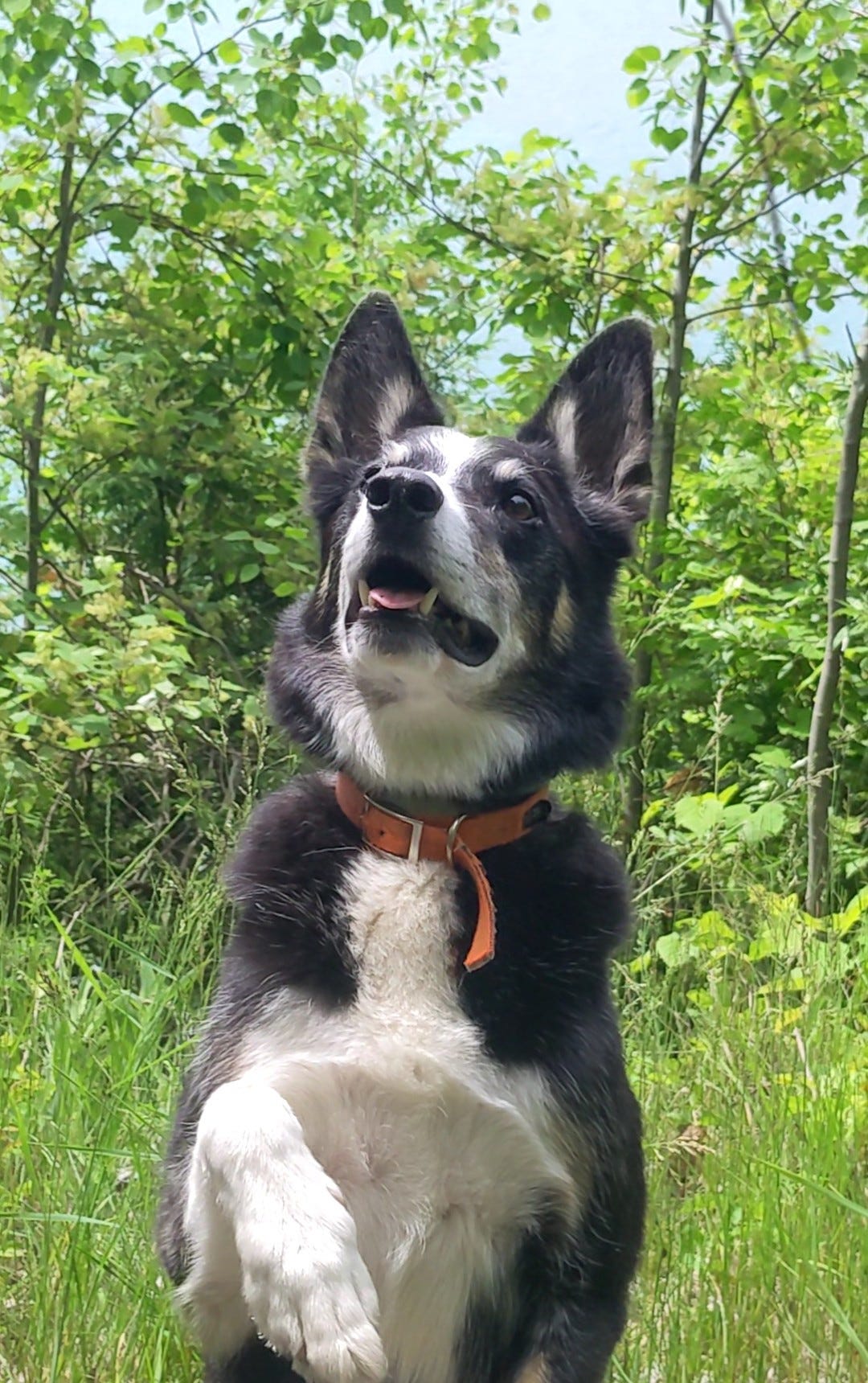
Dog sitting up watching for a stick to come flying overhead
Tock delights in the anticipation of a big stick.

Because it does. I find nothing so satisfying as the feeling of a job well done, my body physically and mentally exhausted at the end of an arduous day of work. I can’t speak for my husband (whom I think would actually prefer a little less labor and more fun at times), but I know that if my dog could speak, he’d agree with me, one hundred percent.

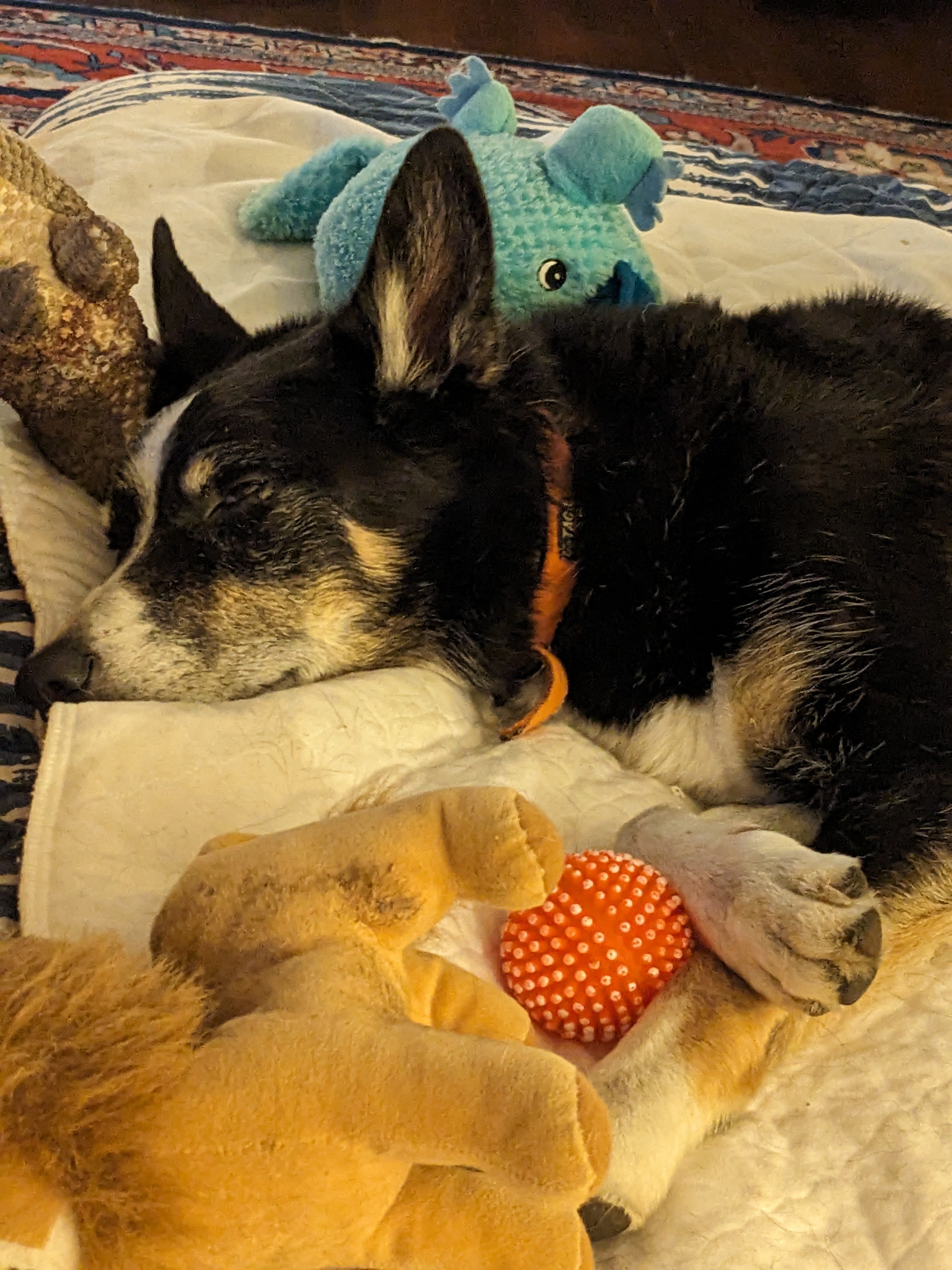
Dog sleeping in his bed surrounded by toys
At the end of the day, a tired dog is a happy dog.

Just like a book at its best will please only a fraction of the readers out there, I think the question of balance is one with a different answer for each of us. The right balance for me is one that would seem extremely unbalanced to a lot of other people. For many writers, in fact, the best balance may tip toward the hard work side of the scale. How else can you ever apply yourself enough to visualize that written world, fully understand those characters, and figure out that plot until everything is spelled out from the first page to the last? How can you ever polish each word, sentence, and scene, seeking out critiques, writing and rewriting until your story shines? The answer is, without a lot of pure hard work, you can’t.

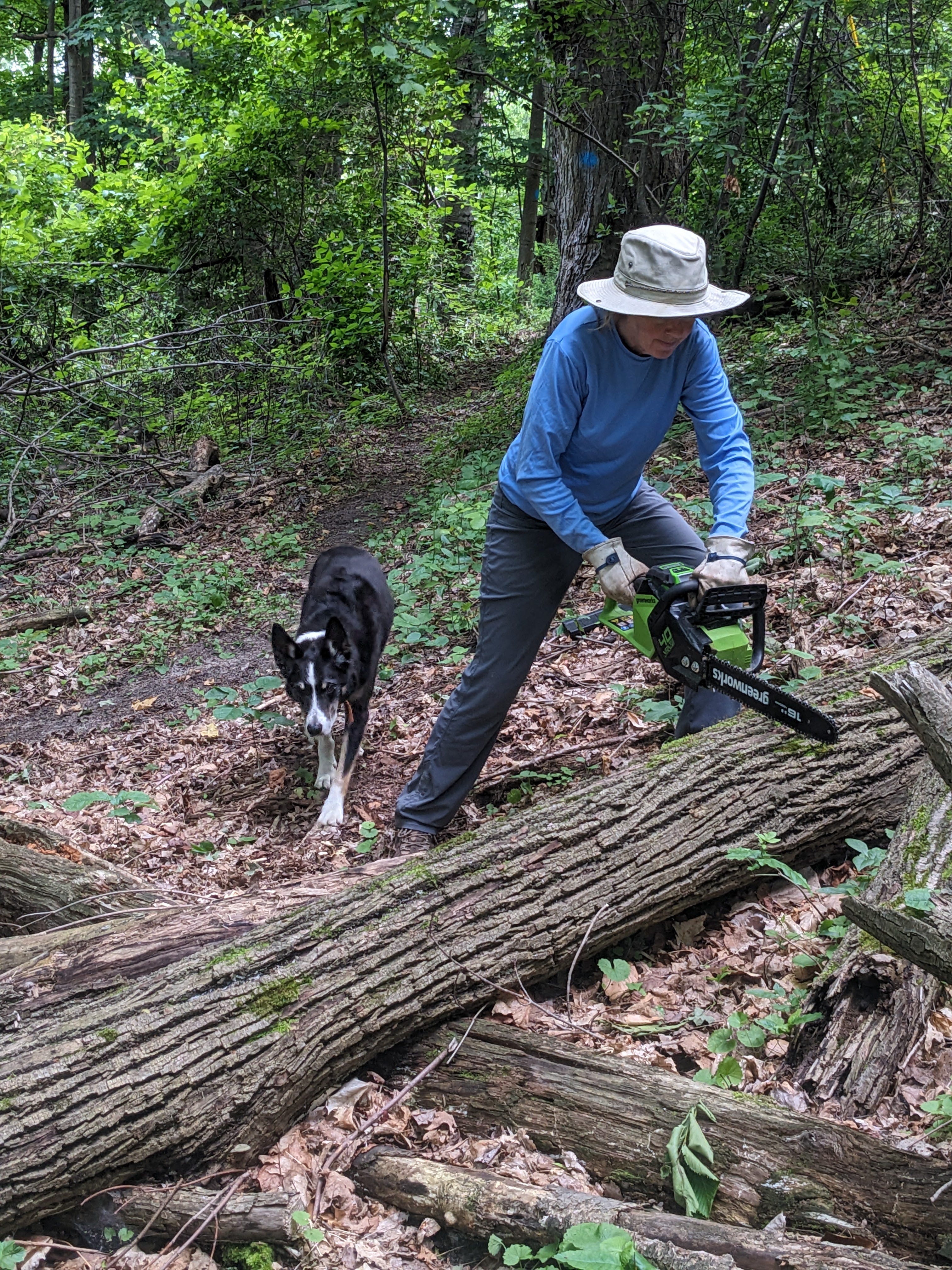
Writer chainsawing a log

I guess the moral of this little piece is to recognize whatever balance works for you—and then live it. Work hard, play hard, and revel in the Border Collieisms that help you along your chosen path.

Happy Tales!
Nothing but Skin and Bones

The sheep have been shorn. Once round balls of gray fluff, they transformed in the space of a morning to scrawny pink creatures half their former size. Their bellies still bulge with approaching babies, but otherwise they seem mere skin and bones. When I first saw them from a distance, I thought they were lambs.

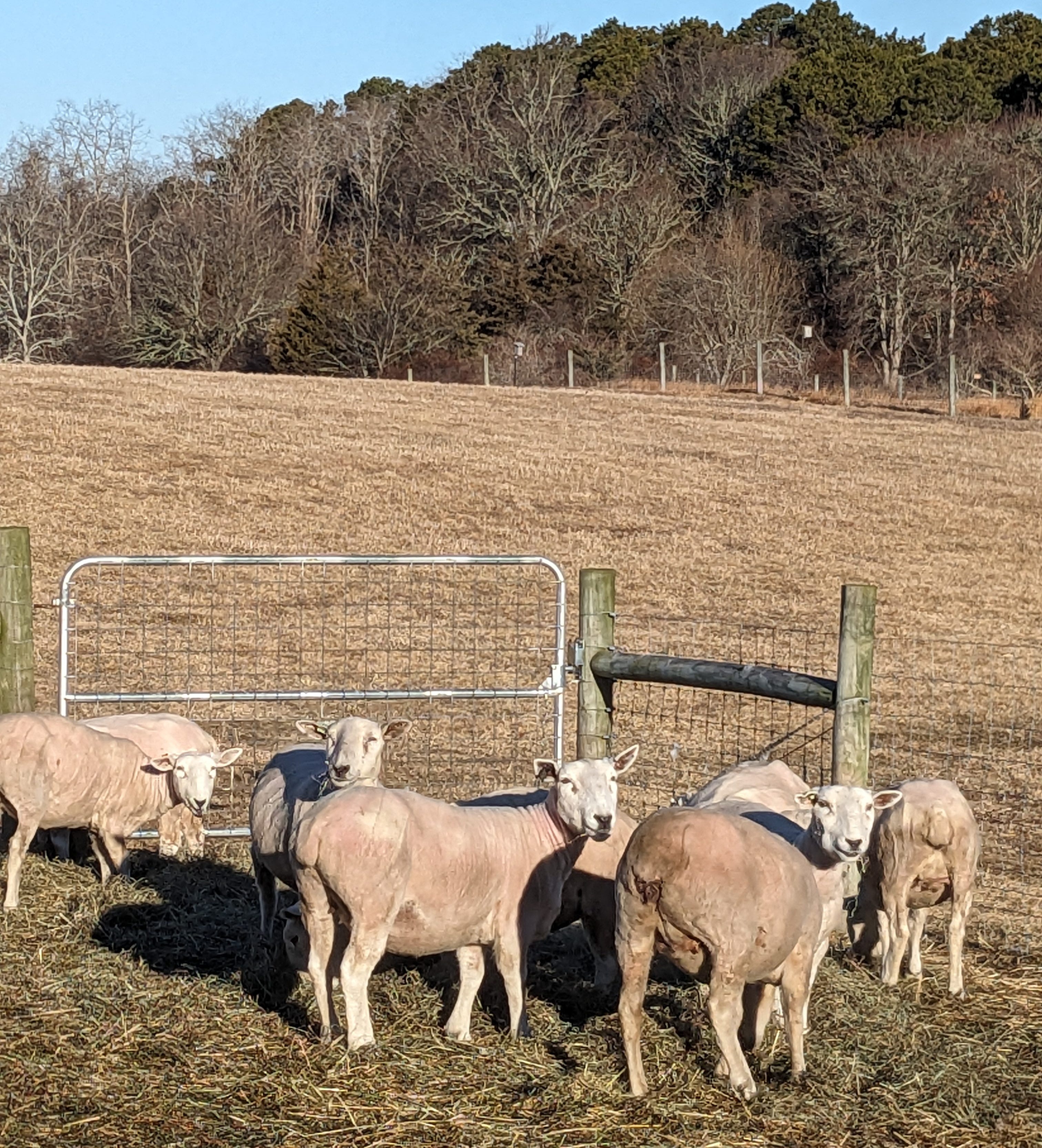
Shorn sheep in a pasture

The thing is, winter isn’t yet over. Though it must feel good to be rid of all that woolly weight during the ever-strengthening noon sun, how are those sheep going to feel in the windblown 15-deg-F cold that’s coming in a few days? Just thinking about it from within the warmth of my house and my many layers of clothing makes me shiver. And it makes me glad I’m not a sheep.

When Tock & I go outside in the winter, we have to layer up and keep moving to stay warm!

Happy as I am to be human, I feel as if the sheep shearer pays me unexpected visits, too. On a surprisingly frequent basis, I am ripped down to my very essence. I’m forced to take a good hard look inside: at who I am, what I’ve done, and what I’m going to do about it. (Note: I’m talking metaphorically here, not physically—except for my recent scalp-and-hair-ripping surgical experience that I hope never to repeat.)

The arduous “shearing” process probably happens to me a lot because I’m a writer, and the writing life bears a remarkable similarity to a newly shorn sheep. No sooner do I celebrate finishing Draft 1 of a manuscript, for instance, than I must make an abrupt transition to some other aspect of writing. Querying an older manuscript, for instance—matching myself to agents and putting together query packages in which I promote myself and my story as much as possible—such fun! (if you’re a writer, I hope you detected the high level of sarcasm). Or, ooh, here’s another shift: from drafting to the formidable process of editing a new manuscript.

This transition between creation and revision happened to me the day the sheep were shorn, and boy, could I relate to them. I felt as though I were stepping from my comfortable writing cave into the bright, cold world, clutching the story I’d just birthed to my belly, knowing it was time to take a good hard look at it, to strip it down to its bones and examine every aspect of plot and character, to figure out what works and what doesn’t.

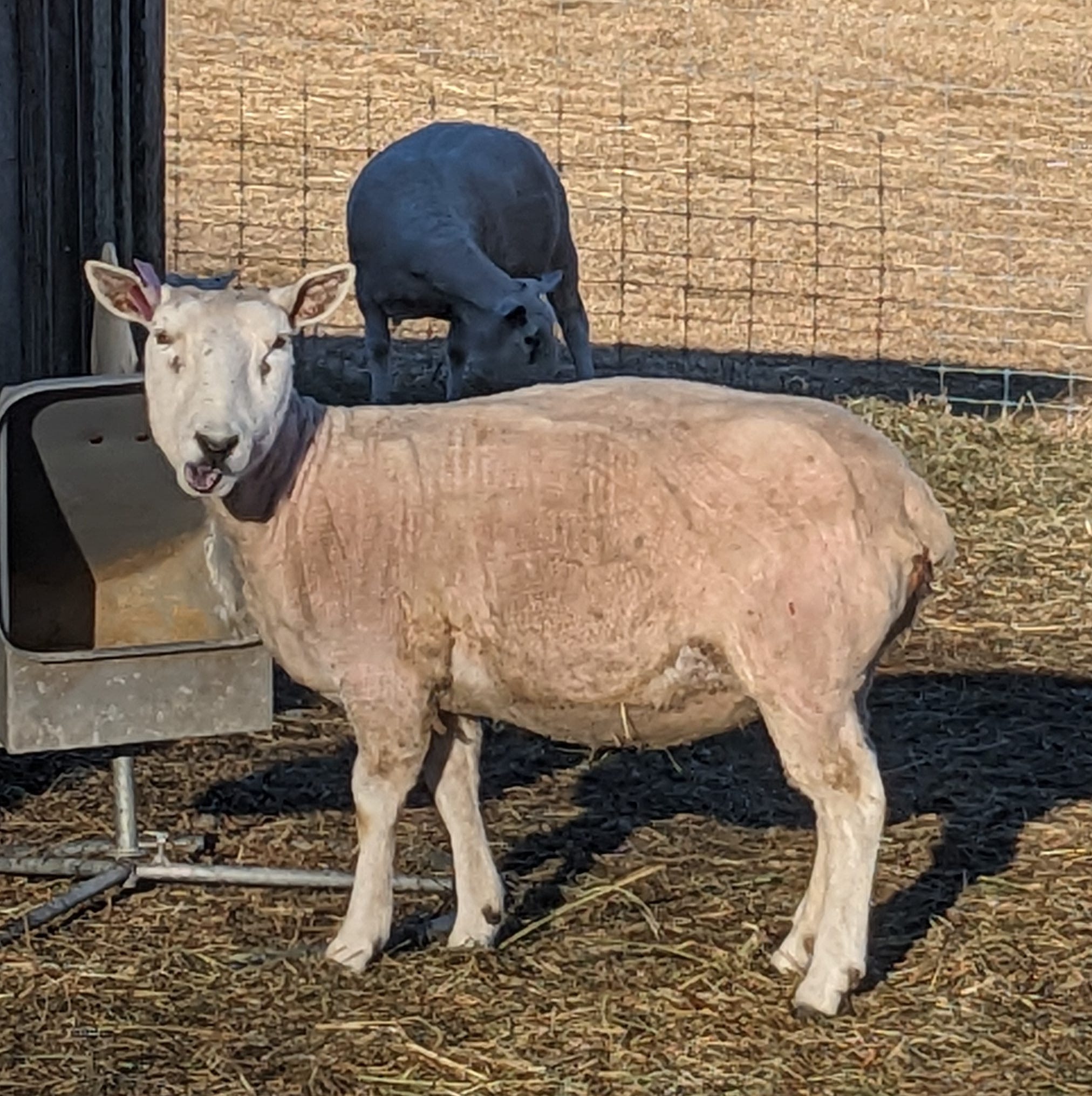
A shorn sheep
Me, in sheep form.

Thing is, I adore revision. Being done with a first draft infuses me with the same sense of relief the sheep must feel. I can write! Enough to complete a whole novel! It’s only the transition from the initial writing to the tearing-down and reconstruction of it that’s difficult. I know that once I get into the routine of re-reading, of searching for inconsistencies and re-writing those places, I will get used to my new thin skin and begin to bulk it up once more. I guess the same can be said for switching gears from writing or editing to querying, but less so. Let’s just say I’m grateful that a bout of querying doesn’t take nearly as long as those other parts of the process.

Since no post of mine feels complete without the inclusion of my dog, I’d like to add that he, too, finds changing gears shocking. I once trained Tock to lie down in the middle of a recall. He’d be bounding my way, expecting a treat, when he’d hear the command to stop before reaching me. When I first did this, he ignored me and continued running, assuming I’d misspoken, no doubt. Granted, the second command was confusing because it ran counter to the strong instant recall he’d formerly been trained. But when no treat emerged from my pocket for the recall, he started to realize that he needed to heed the change in orders. He’d slow to a trot, then a walk, then maybe a stop a few feet away from me. Only after further training did he learn to stop fairly quickly as soon as he heard the command. So it can be done, even with a dog who is not the brightest of border collies. It’s a similar behavior to the one skilled herding dogs are trained to perform when they’re galloping toward a flock of sheep. An even more advanced behavior these working dogs learn is to stop mid-gallop and “look back” for a missing sheep or group of sheep. Imagine the intelligence and drive it would take to abandon the first flock and head off for a second one that might not even be visible.

Dog starting to lie down during a recall
Tock is told to lie down mid-recall. This is hard for him!

The good news is that dogs can indeed learn how to handle shifts in their established routines. The shorn sheep have also accepted their big lifestyle change (though I’m pretty sure they’re going to be shivering a bit during the coming cold snap). Not that they had any choice in their shearing, but I like to think they’re walking with an extra bounce in their step now that they don’t weigh so much. And if they can, surely we can, too. So if it’s time, writers, move on! Wrap your arms around your torso to bolster your spirits, and get to those queries, or to that revision, or maybe to dreaming up a whole new story and putting pen to paper once again. The good thing about being a human rather than a sheep is that you get to decide which it’s going to be.

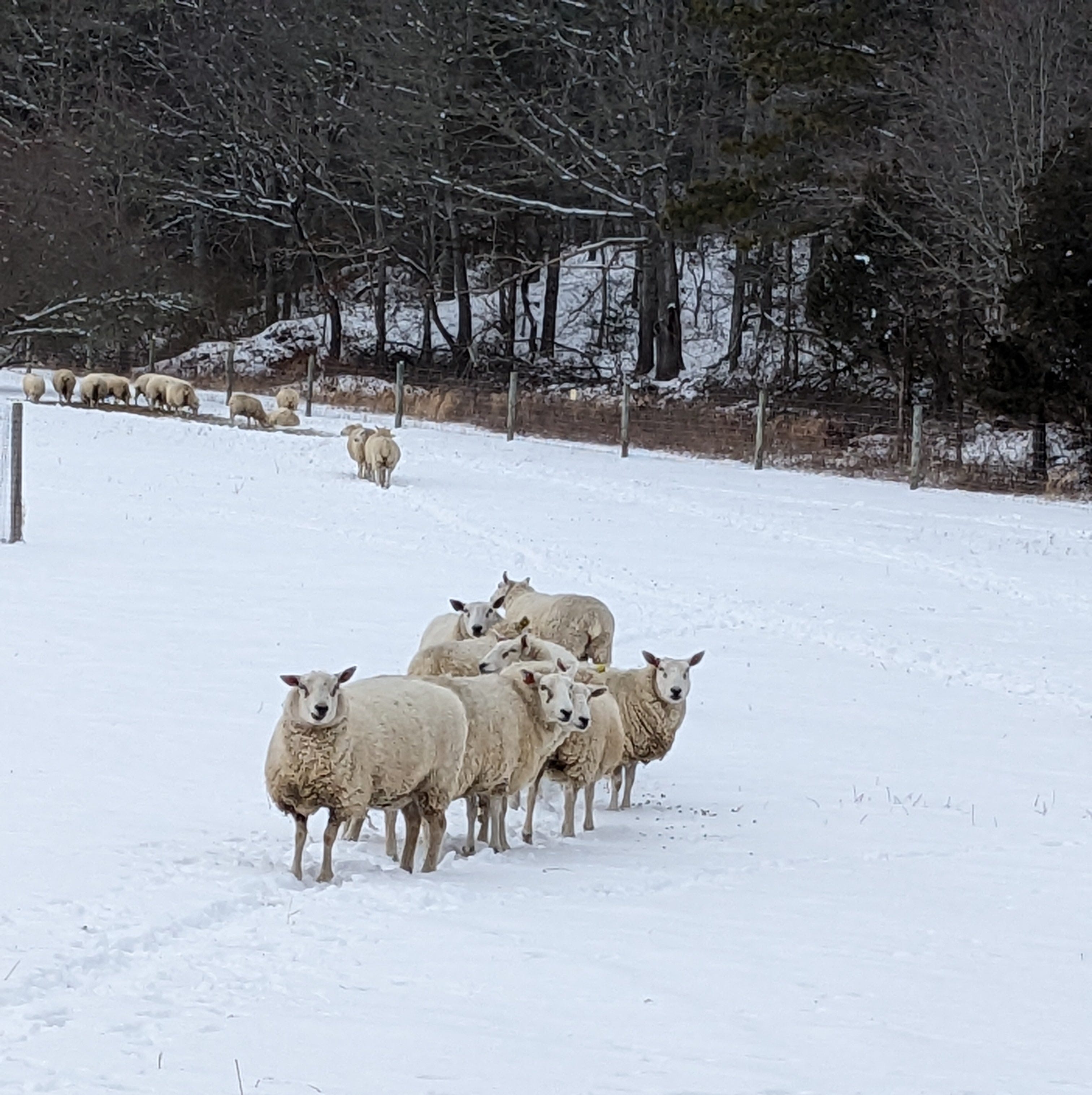
Sheep with big wool coats in a snowy field
Fluffy warm sheep a few weeks prior to shearing.

Happy Tales!
Are You Ready?

This phrase is one that a lot of dog owners know well. They’ll ask their furry companions this question before tossing a frisbee, or heading out for a walk, up to bed, or in and out of the car. Really, they’ll ask it before any sort of change in their dog’s routine from one activity to another. It’s a fabulous way to get a dog’s attention and motivate them to start paying attention and get moving, or do whatever it is you want them to do next.

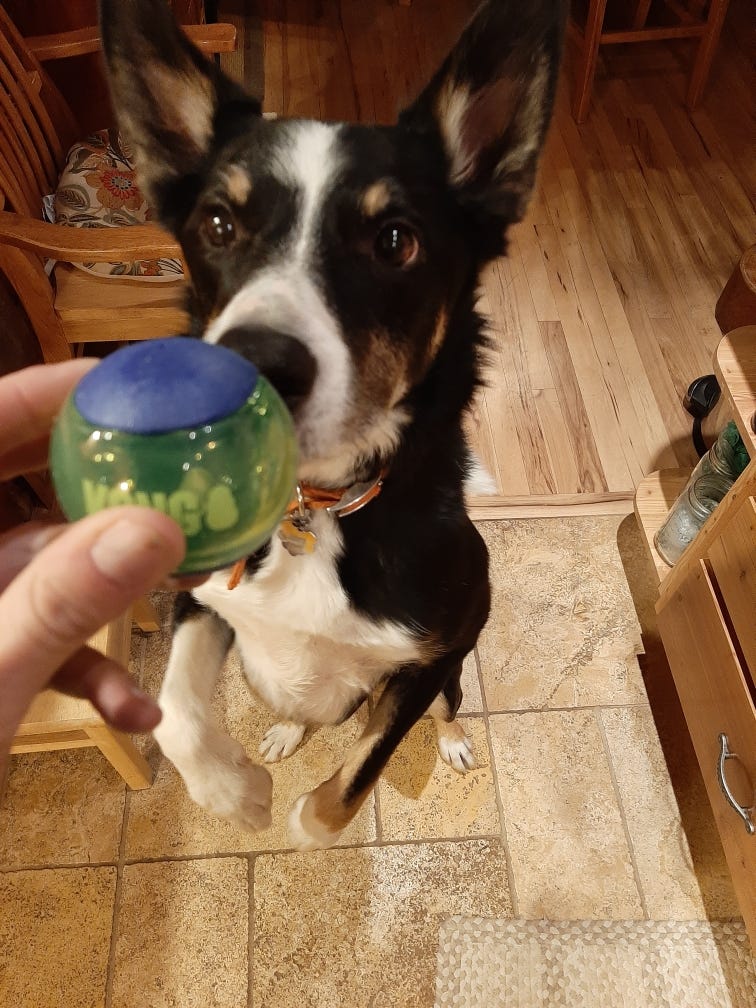
Dog standing on hind legs with his eyes on a ball held right in front of him
Tock is definitely ready for this ball!

Those of us who participate in dog sports know the phrase even better. I learned it when I first took an agility class, and it became part of the “rev-up words” that I’d teach my beginning students to use before beginning any training activity.

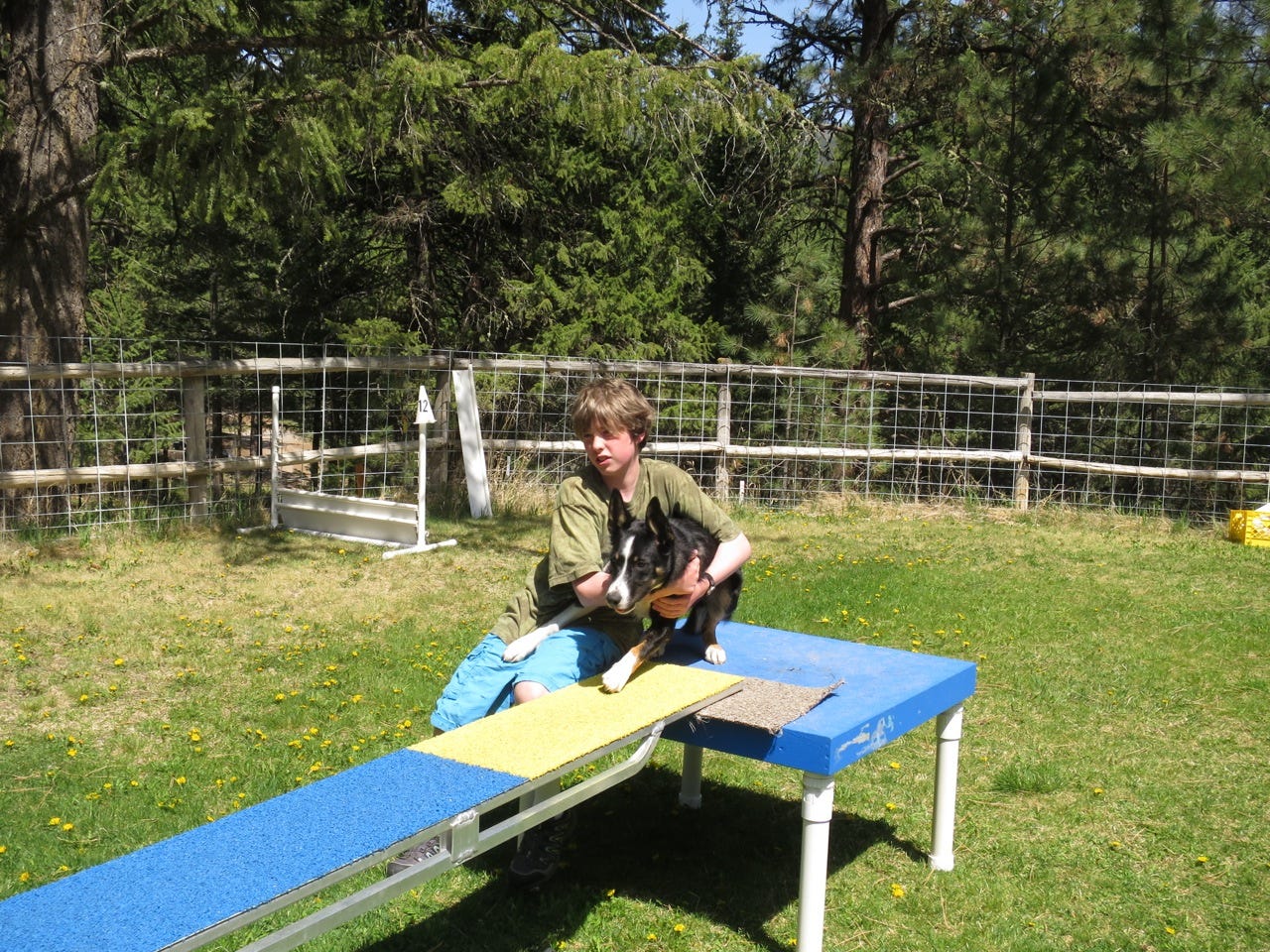
Boy restraining dog at the start of the teeter
Here is Tock learning the teeter. My faithful assistant (and son) restrains him while I rev him up from the other end. This is a great way to get a dog excited about tearing across a noisy, tippy board (as long as it’s raised incrementally to full height).

Are you ready? In an excited voice, we handlers will ask this of our dog, who is lying, sitting, or standing, maybe in front of an agility obstacle like a jump, or maybe not, if the goal is to train something else, like a recall. It’s an invitation to our dog to get ready to do something fun with us.

Handler & dog crouching together at the start line of an agility course
Moth & me at the start line, getting ready to run

Are you steady? We’ll follow up with another eager phrase if our dog still seems a bit distracted and not bursting at the seams to do what’s coming. And hey, rhyming phrases are easy to remember, so why not?

Handler has led out from dog in an agility course, and dog is sitting waiting to be released
At this point, Moth has received her rev-up words and is anxiously waiting to be released.

Okay! When our dog can barely restrain itself from a rocket launch (i.e., is quivering, salivating, or possibly bug-eyed with anticipation), we’ll at last use our specially chosen “release word.” Note: it’s always best to rely on a release word that can’t be mistaken for something else and is unlikely to be used for some unrelated purpose. I was taught to use Okay and kept it up with successive dogs out of habit, but my students and many others have more wisely chosen a less common word such as Break! This is because it’s all too easy to release your dog accidentally from a start line in an agility competition while saying “okay” to the judge or some other official. And then your dog is racing off through the ring, leaving you standing there, completely unprepared.

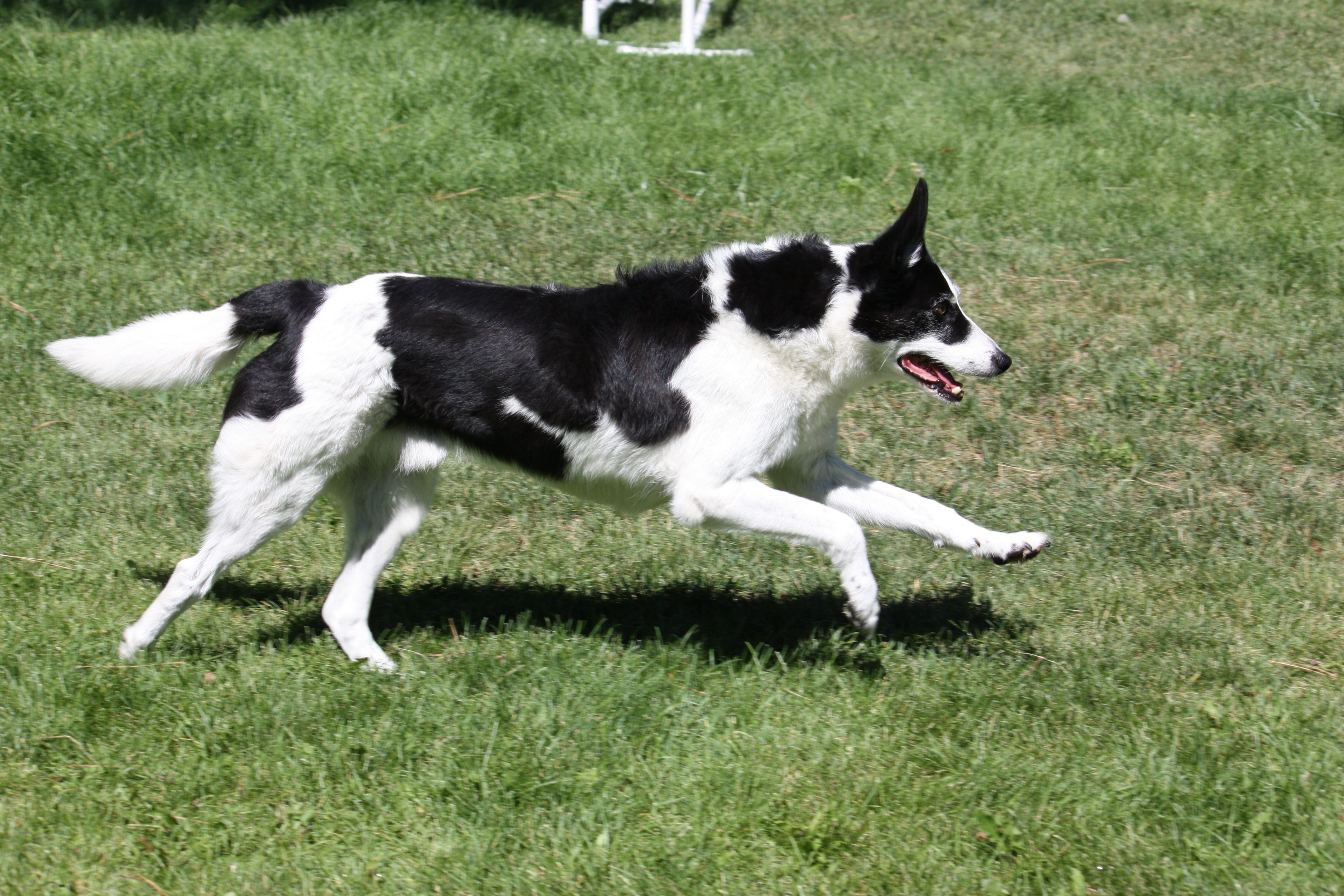
Border collie galloping unrestrained through an agility field
Tarzan, galloping free! (full disclosure: Tarzan never actually had a release-word accident at the start line. This picture was taken by Sneed B Collard III for the cover of his wonderful MG novel, The Governor’s Dog is Missing.)

Because everything in my past life seems to parallel things in my present, I can’t help but think of these rev-up words in the context of writing. One of the most essential things we learn as new writers is that our story must hook the readers. The obvious hook, of course, is a line at the end of the first chapter that compels us to keep reading. But the hook itself isn’t analogous to the rev-up words. No, the hook is the same as the release word in the doggy world. It’s the thing that gives the reader permission to zoom off into the rest of the story. Before the hook can make any sense, your readers need to be revved up. They need to understand the context for the hook: why should they care about your character and the situation the character has found themselves in? The “rev-up” material in your early pages can present the character in all their misunderstood (or misunderstanding) glory—quivering with desperation for something to happen. Once this foundation is laid, the hook makes total sense.

Person walking with a book draped over their face
This reader appears to be fully hooked. Photo credit: Hosein Ashrafosa

Another writerly use of the rev-up—and this time it’s the actual words—comes once you’ve written something. Humans are social creatures who secretly crave to share their work. This is true even if they’re cave-dwelling introverts (speaking from experience). Readings by an external audience will likely result in some pleasant and self-affirming compliments, while at the same time providing us writers with valuable editorial feedback. So why not let others—family, friends, critique group partners—read our pages before they’re in publishable form? Isn’t it terrific to get feedback at every stage, whether it’s an idea for a premise, a first page, or a first draft?

An enthusiastic crowd, one member of which is making the "heart" symbol
Every writer’s dream: an appreciative audience. Photo credit: Anthony Delanoix

Not necessarily. Here’s where the rev-up part comes in. I feel strongly that we need to ask ourselves in a firm voice: Are you ready? Have you thought about your story on your own enough that input from others isn’t going to strip your own writerly essence away from it? Are you steady in your ideas, your voice, and your determination to say something in particular, so that now all you need are some nudges from others to catapult you in the right direction—whether that’s writing an outline, or that first page, or what comes after the first page, or draft two, three, four, etc?

I personally never share a single thing about my stories until I’ve written and self-edited Draft 1. Sometimes I don’t show them to anyone until after Draft 2. At that point, if someone asks me about my premise, I have a pretty solid idea of what I’ll say. I also think I get why I’ve started the story in a particular place, I think I’ve gotten to know my characters better than my own family, and I think I understand how I want the journey to unfold. Note: I’ve prefaced all these statements with “I think” because I’m often wrong. Editorial feedback will be crucial to point me in the right direction. Probably many times over.

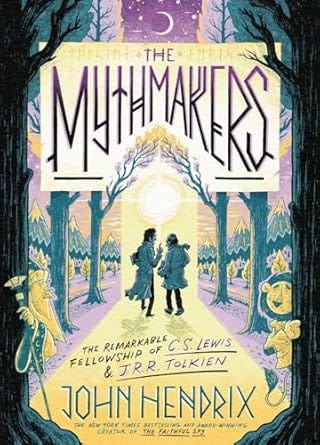
But this isn’t an essay about the value of critical feedback. It’s about how to maximize that value by asking for it when you’re truly ready for it. Depending on your writing process, this point may happen at a different stage for you than for other writers you know. J.R.R. Tolkien, for instance, was an extremely thorough and careful writer, who took seventeen years from when he first started writing the Lord of the Rings to its completion (and that’s not counting the forty years he worked on the Elvish languages!). He wanted things to be as perfect as possible before revealing them. Though I have nowhere near his skills, I think of myself as that type of writer. Tolkien’s methodical nature contrasts with his pal C.S. Lewis, who met in the same weekly literary group and wrote much faster, without Tolkien’s level of revision (thanks to John Hendrix’s The Mythmakers for these insights). Both of them, of course, were brilliant writers. I bring them up simply to point out that neither approach is right or wrong.

Cover the "The Mythmakers"

The real question is: what is right for you? When will you submit your premise, hook, first pages, or manuscript for review? When are you ready to gallop into the ring and show your writing to the world?

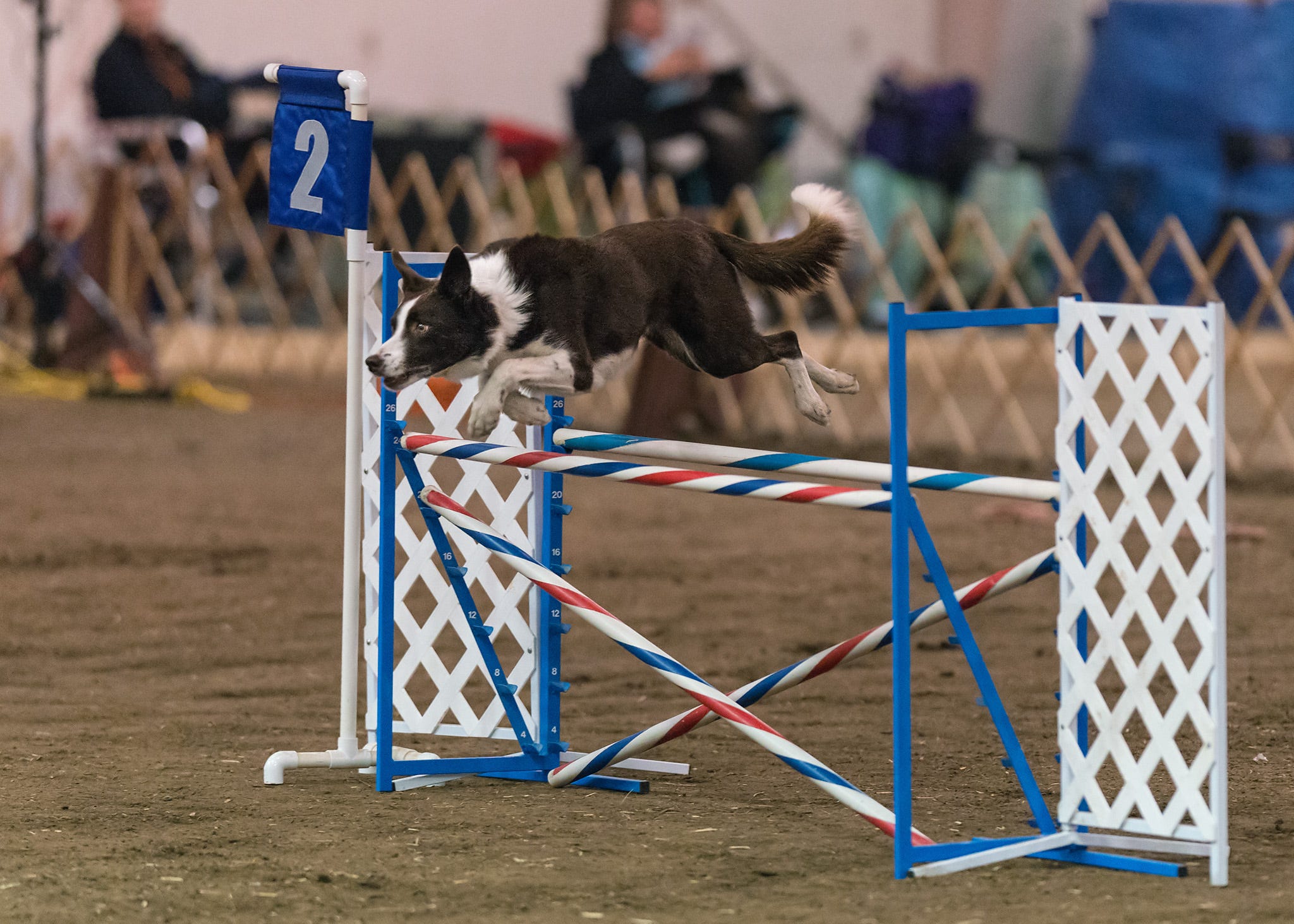
Border collie leaping over a double jump

Happy Tales!
Walk with a View

Do you focus afar … or up close?

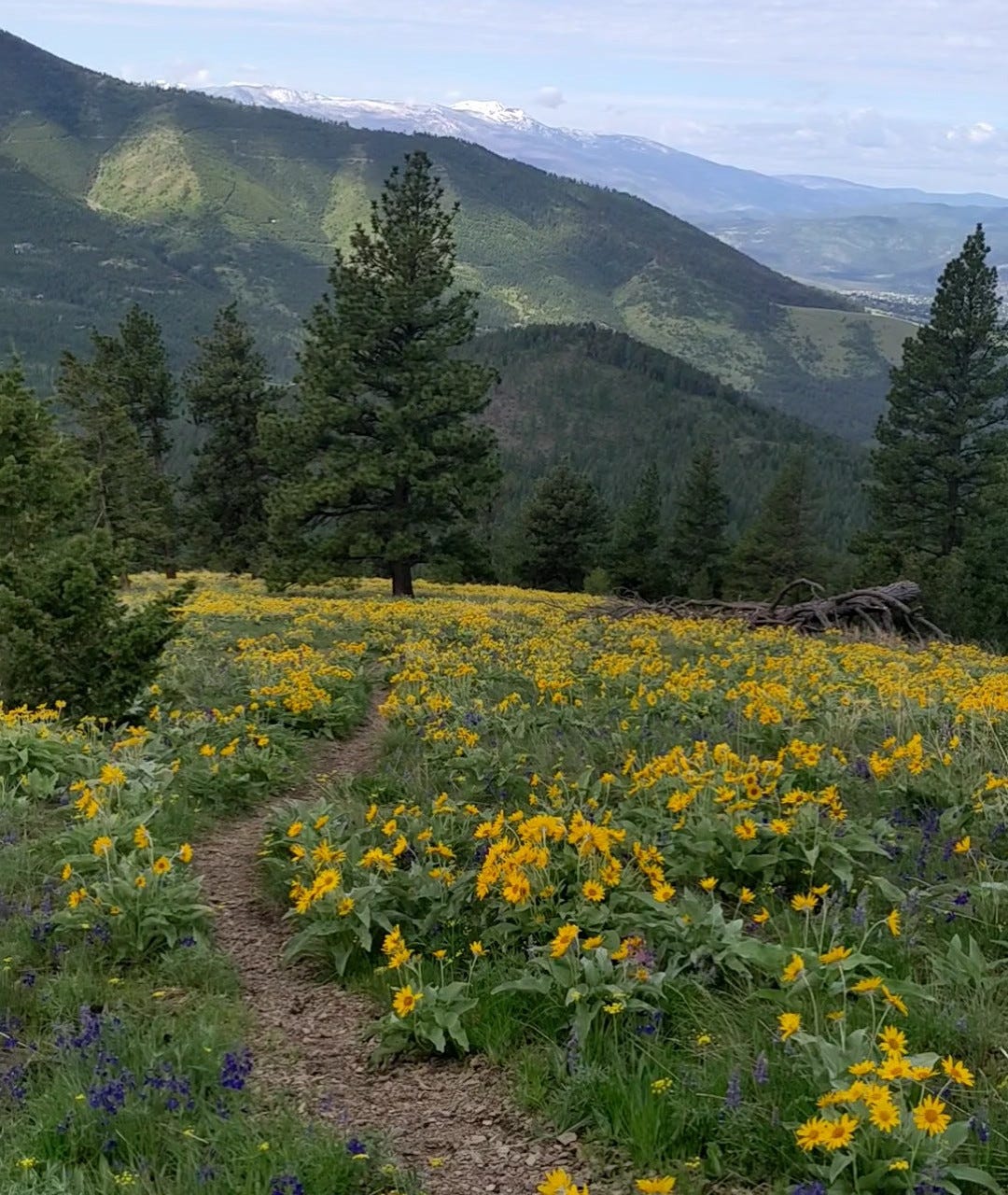
A grassy, flowered Montana slope with Ponderosa Pines and other mountains in the distance.

When I lived in Montana, the “Big Sky” state, I walked in the hills every day. These were grassy rises dotted with Ponderosa Pines, which prefer a lot of open space around their red-black trunks. Mountains rose not only beneath my feet, but miles away, blue with distance. Sometimes the grass was green and speckled with purple lupine, orange paintbrush, and yellow balsam root, sometimes it was brown and shriveled in the summer heat, and sometimes it was covered with a shawl of snow. But no matter the vividness of the hues, no matter the searing heat or the biting cold, my one constant was a sense of space. An expansive feeling, as if I had taken a big breath of helium over the course of an hour and a half walk and could practically float downhill toward home. My dog, too, seemed to feel this way, galloping and leaping far from me for pine cones, rarely slowing in the crisp dry air, even on the hottest of days. We always arrived home tired but exuberant. My head would spin at the thought of the distance we had covered and the far-off allure of hills we had yet to climb. Maybe tomorrow…

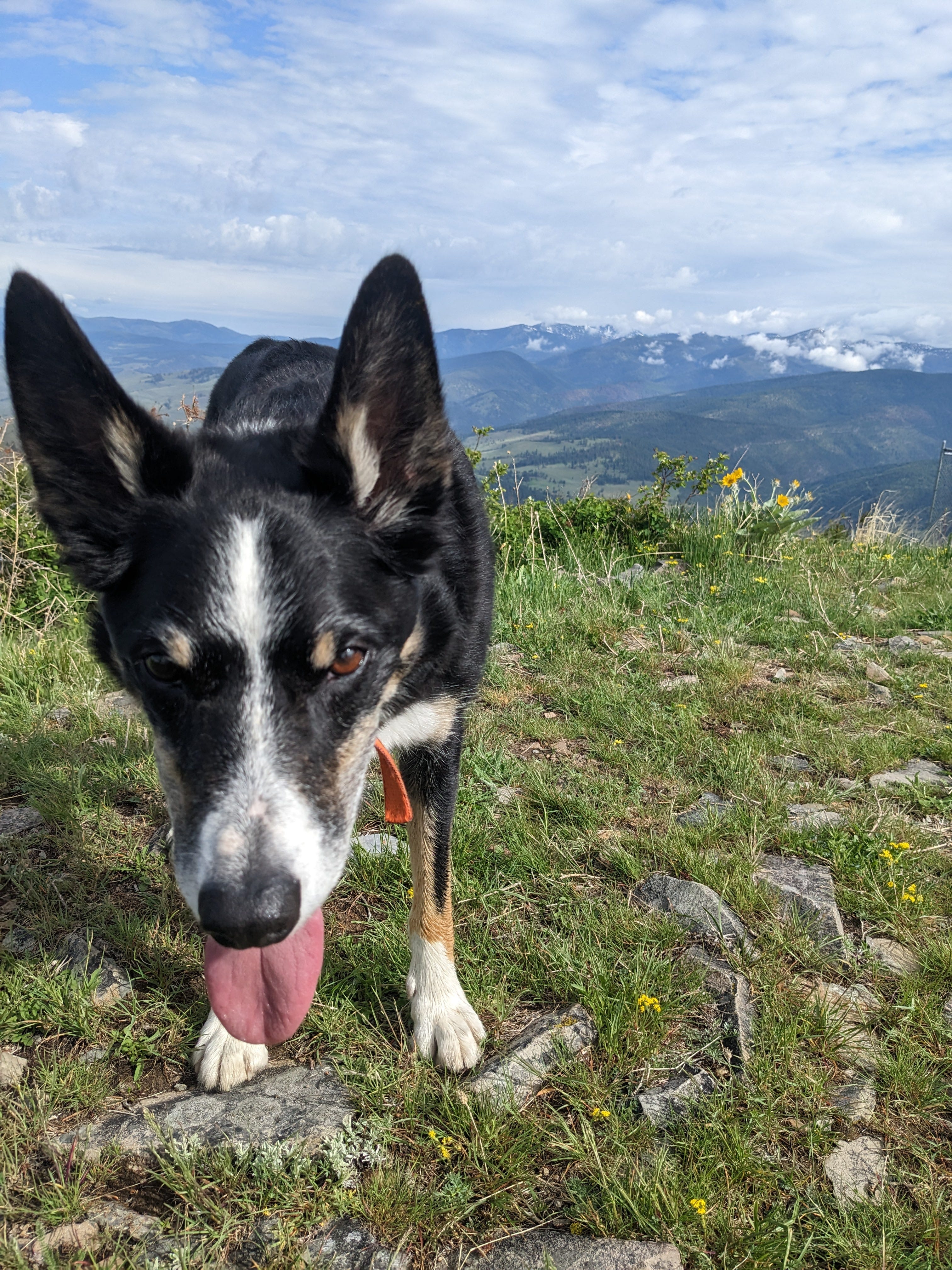
Dog panting on summit of a hill, with more mountains in view behind him.

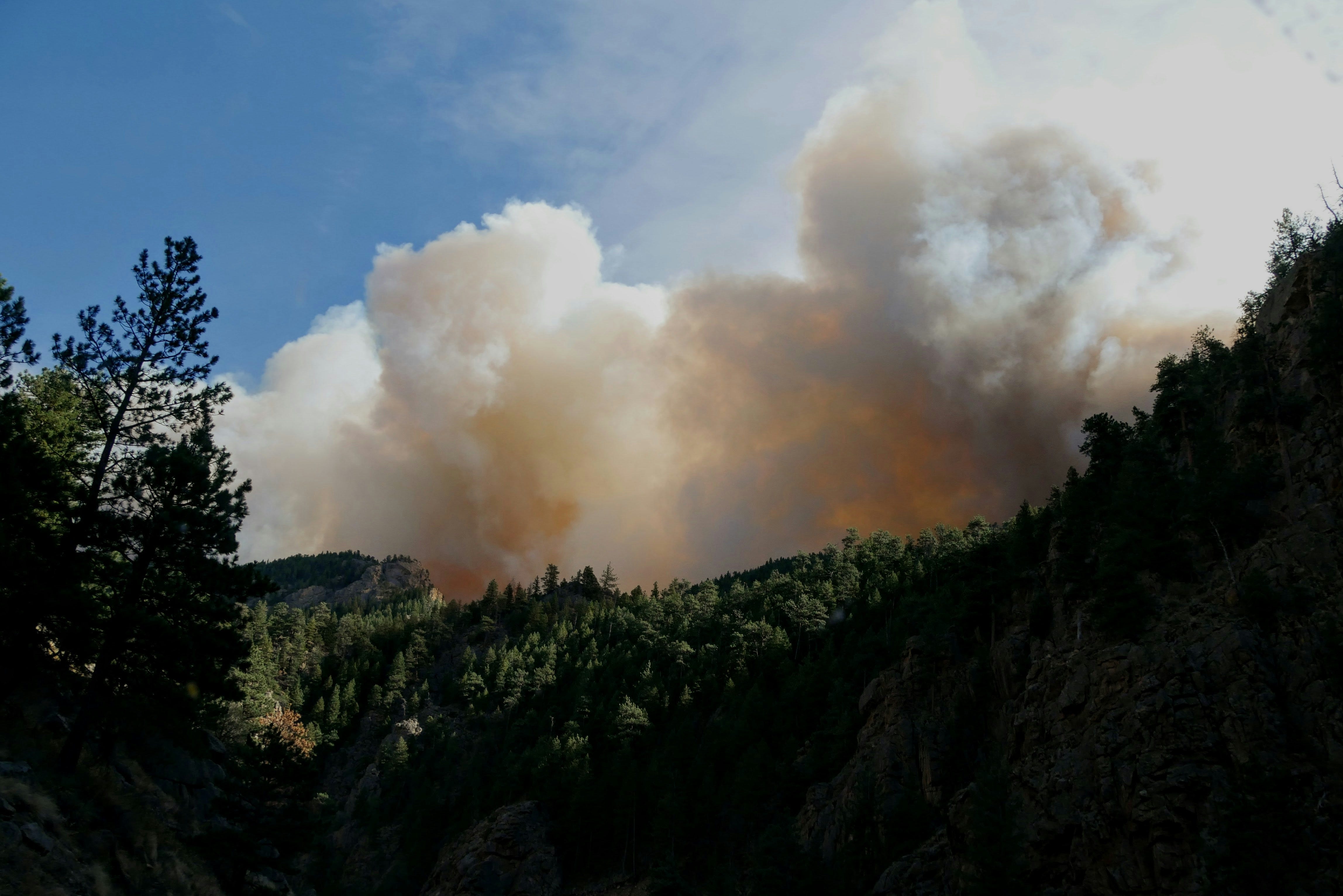
To me, this experience of traveling while keeping a loose focus on the horizon mirrors how I feel when I draft a new novel. From that very first step onto the metaphorical path, I have a lofty goal in mind. The top of a hill becomes the “what-if” that my main character is heading toward. What if a musical prodigy suddenly loses her ability to play? What if a phobic kid discovers he has to get rid of his safe space? What if a girl wants to sing, but is forbidden because it’s too distracting? I take some loose warm-up steps and my mind releases the premise, the inciting incident, and the theme. I see the major obstacles my protagonist will face as clearly as spotting a plume of fire on a slope.

Orange smoke rising from behind a forested hill
Photo credit: Malachi Brooks

As I approach the top, chest heaving, legs burning, I begin to understand how my main character will take a long hard look in the mirror and come to grips with some difficult self truths. I scrabble higher still. The mountain no longer seems impossible to climb. I step to the summit — the climax of the story! On my way back down the hill, the final resolution unfolds. I’m now able to link my characters’ emotional journeys and all of those critical plot developments into a full story. Even the setting becomes more alive. I can see the entire thing! As soon as I get home, my fingers fly across the keyboard as fast as my feet.

Wrong turns happen, of course. Sometimes I end up on a completely different summit than the one I envisioned when I started out. This is not only the reason I spend so much time plotting out a story in advance but the reason it’s so fun. My creativity never feels constricted in any way – not during this plotting stage, nor during the actual writing of the story itself. There’s always room for change.

The time for a constricted view comes later in the writing process: the editorial stage. Though revision starts and ends with a big-picture look at the whole story, the majority of the work lies in much smaller sections. It’s crucial to read closely with an eye for detail and an ability to dismantle the writing chapter by chapter, scene by scene, even line by line.

My new daily walks in the woods on Cape Cod are the perfect example of close focus. As soon as my dog and I plunge into the dense vegetation, we lose sight of the sky. We’re immersed in a jungle of branches, vines, and leaves. We follow narrow paths beneath tilted rotten trunks, twisting to avoid the sticky, insect-ridden webs that stretch from one side to the other. My dog bites at deer flies. I swat at mosquitoes.

When vegetation brushes my arms, I think of the tiny, nearly invisible ticks it harbors, carrying all sorts of nasty diseases that can lead to joint pain, fevers, organ failure, and death. Unlike Montana with its bears, mountain lions, and wildfire, the dangers here are so small they can’t be seen with the naked eye: a parasite, a bacteria, a virus. My mind travels inward to dark, anxious problems that I know I must solve. What does my protagonist really want? How can I make her more relatable? Is his voice consistent from one page to the next? Except for a ferry foghorn and a Barred Owl’s hoot, sounds in the woods are small and muffled. A mosquito’s whine, the thud of a foot atop damp leaves. Even the air is difficult to breathe, close, still, thick with humidity.

Such is the slow, painstaking process of revision. If you feel trapped in the minutia of your story, you are not alone.

Dog sitting behind a bright red mushroom in the woods

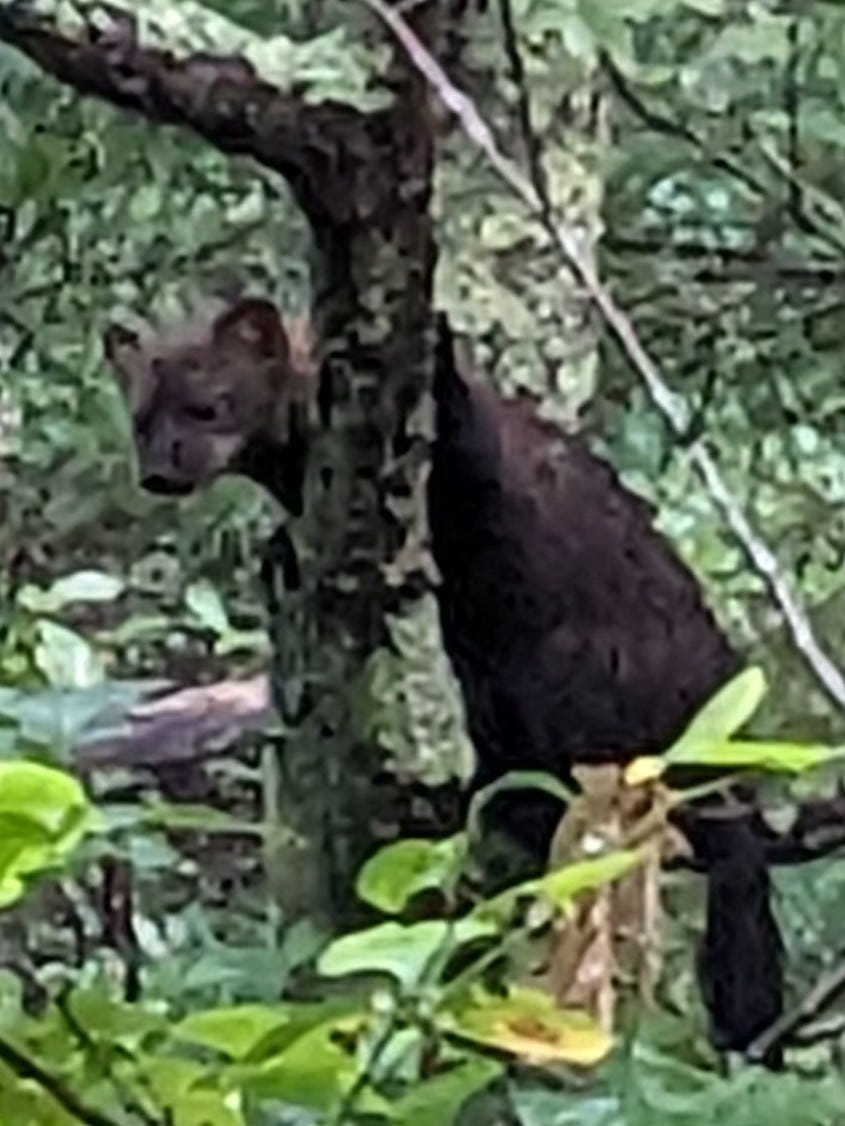
Yet great beauty lies in the closeness. In some ways, I would argue, it is more vivid and special than those distant spectacular views of mountain peaks. The impossible green of new leaves. The bright pink Lady’s Slipper peeking from beneath a blueberry bush. Mushrooms everywhere, sporting unreal colors on their fruiting bodies. The nutty aroma of dead leaves, so potent in places that my stomach growls, hungry for baked goods. The meandering line of an old stone wall, appearing on one side of the trail and disappearing on the other. The fuzzy face of a young fisher clinging to a tree, seemingly as curious about me as I am about it. The kingfisher skimming the pond’s flat surface, the osprey scanning for fish from its high snag, a chorus of invisible frogs. Something rustling the underbrush: a deer, an otter, a turkey, a gloriously red-brown coyote. I stop to soak in the surrounding jungle with all my senses, my face dripping with sweat or rain. Often I can’t tell which. Though the elevation gain is small compared to climbing an entire mountain, the roller-coaster ups and downs of the trail are just as exhausting. Maybe more so, in the heat of summer.

This slow, strenuous progress is probably why many people dislike revision. But I’ve come to love it. And when I’m finally ready to step back and read the whole manuscript again, to see whether it makes sense, it’s like stepping from the shade of the trees into the sunny field, brushing away the spiderwebs, knowing that soon I’ll wash all the bugs off in the shower, my dog collapsed on his side in a happy stupor. For both of us, only the sense of accomplishment and memories of forest beauty remain.

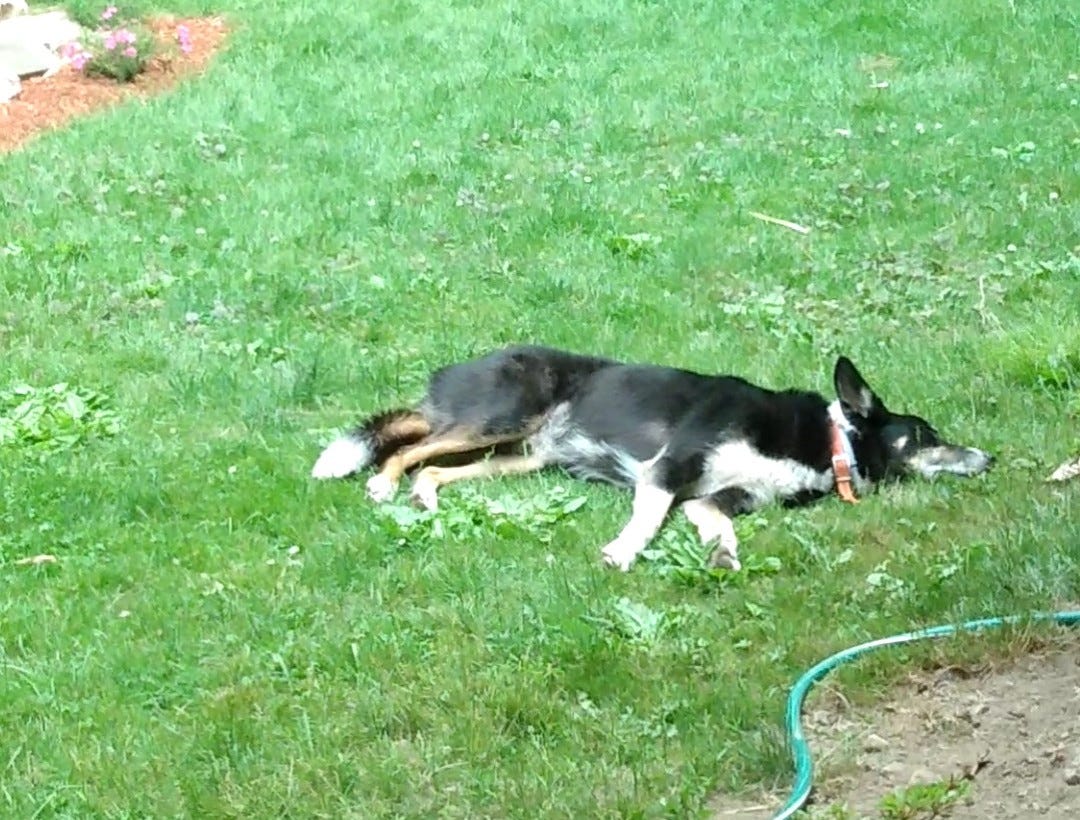
Dog sleeping in the grass

What’s your favorite part of the writing process: loose focus or close?

How about when you go outside?

Young fisher in a tree

Happy Tales!

Getting Back in the Game

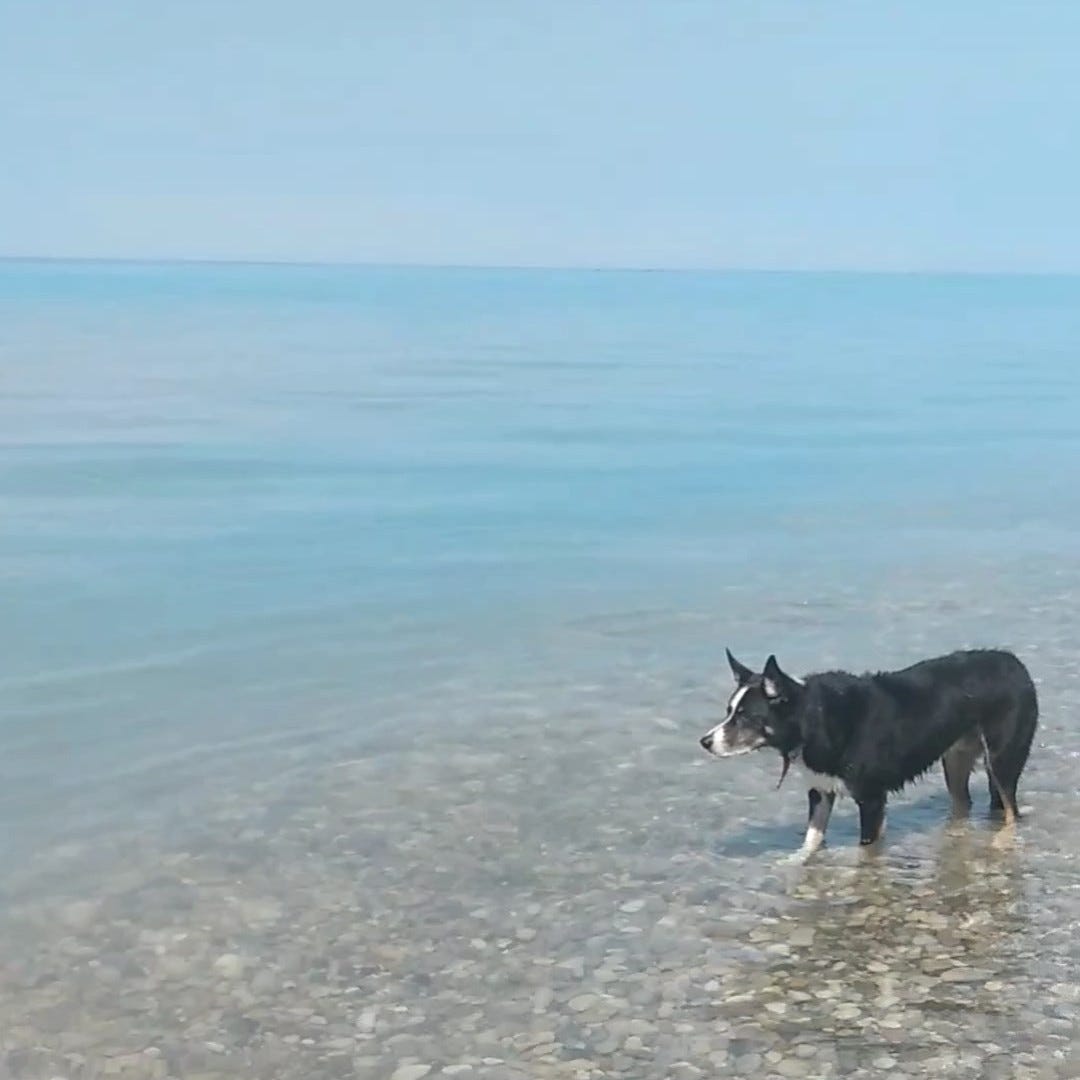
Dog staring vacantly into a lake

Have you ever felt as though you’re floundering, uncertain what to work on next? Perhaps (1) you’ve finally finished that first draft after months (years!) of effort, let it sit for weeks (months!), and now haven’t any idea what to do with it. Or (2) you’ve perfected your story (Seven revisions! Countless brainstorming sessions with critique partners!), to the point that you know if you work on it any more it’s only going to get worse—but the thought of querying is enough to freeze you from the inside out. Or (3) maybe you’re lucky enough to have moved past those hurdles and you’re actively querying, negotiating, revising (again!), publishing, or marketing, but everyone* wants to know what’s next and your muse isn’t merely hiding, it seems to have jumped off a cliff and swum out to sea. *By “everyone,” I mean you, plus at least one other person, if you’re lucky.

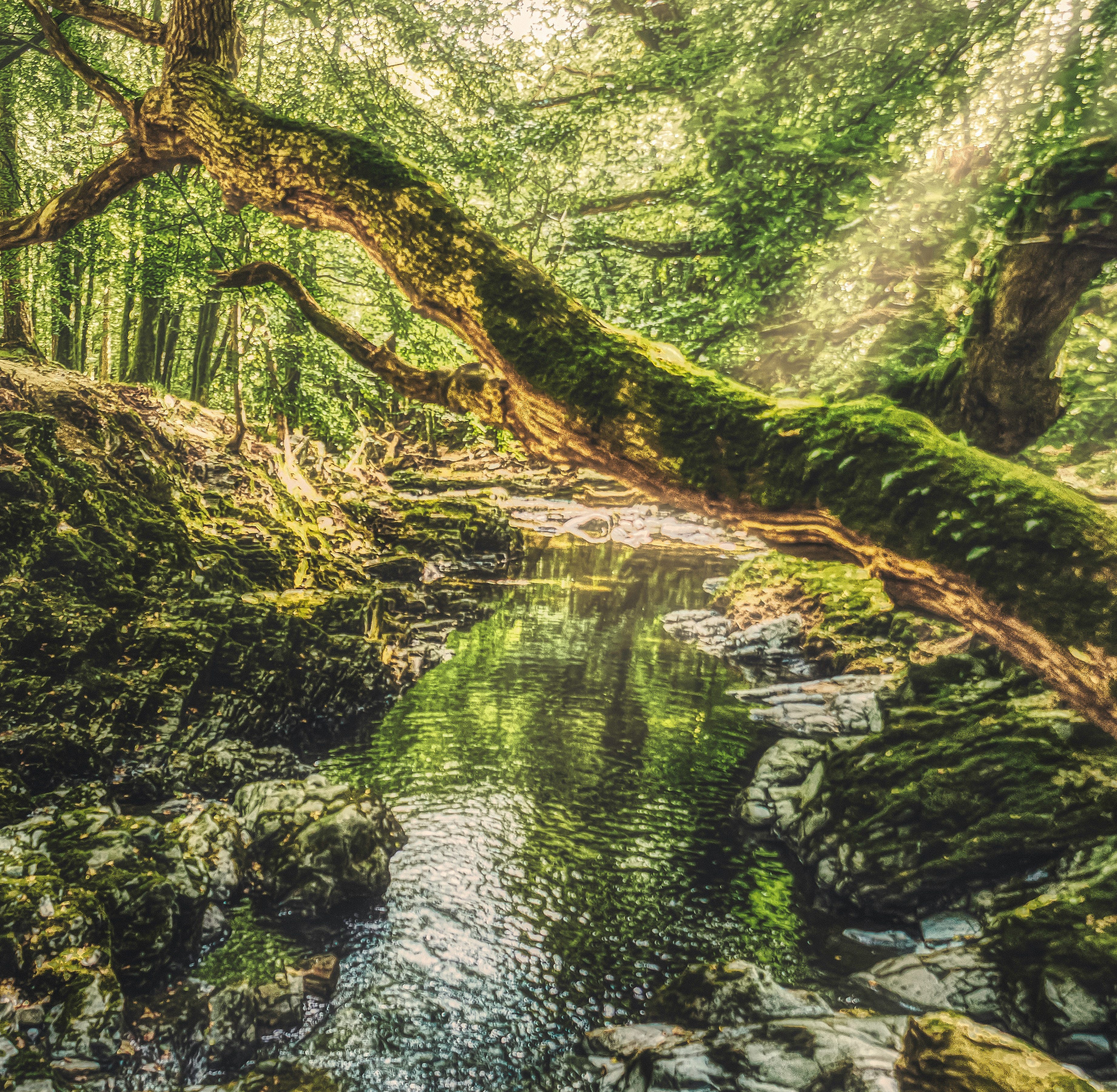
mossy tree limb stretching over a creek
Photo credit: K Mitch Hodge

Never fear. I’m going to go out on a limb here and say that if you haven’t experienced at least one of these gut-wrenching dilemmas, you’re not a writer. In fact, I might as well wobble my way to the end of that bouncy branch and say that if you haven’t experienced this in any pursuit you love, then you haven’t lived.

So … let’s address Dilemma #1, when you’re stymied after finishing your first draft. Well, I have a little confession to make. I never succeed in letting my story sit for long before transitioning into Editorial Mode. I have such an over-zealous work ethic that I can’t help but jump almost immediately into revising what I wrote, the same way I feel compelled to walk my dog every single day despite rain or shine, wind or blizzard.

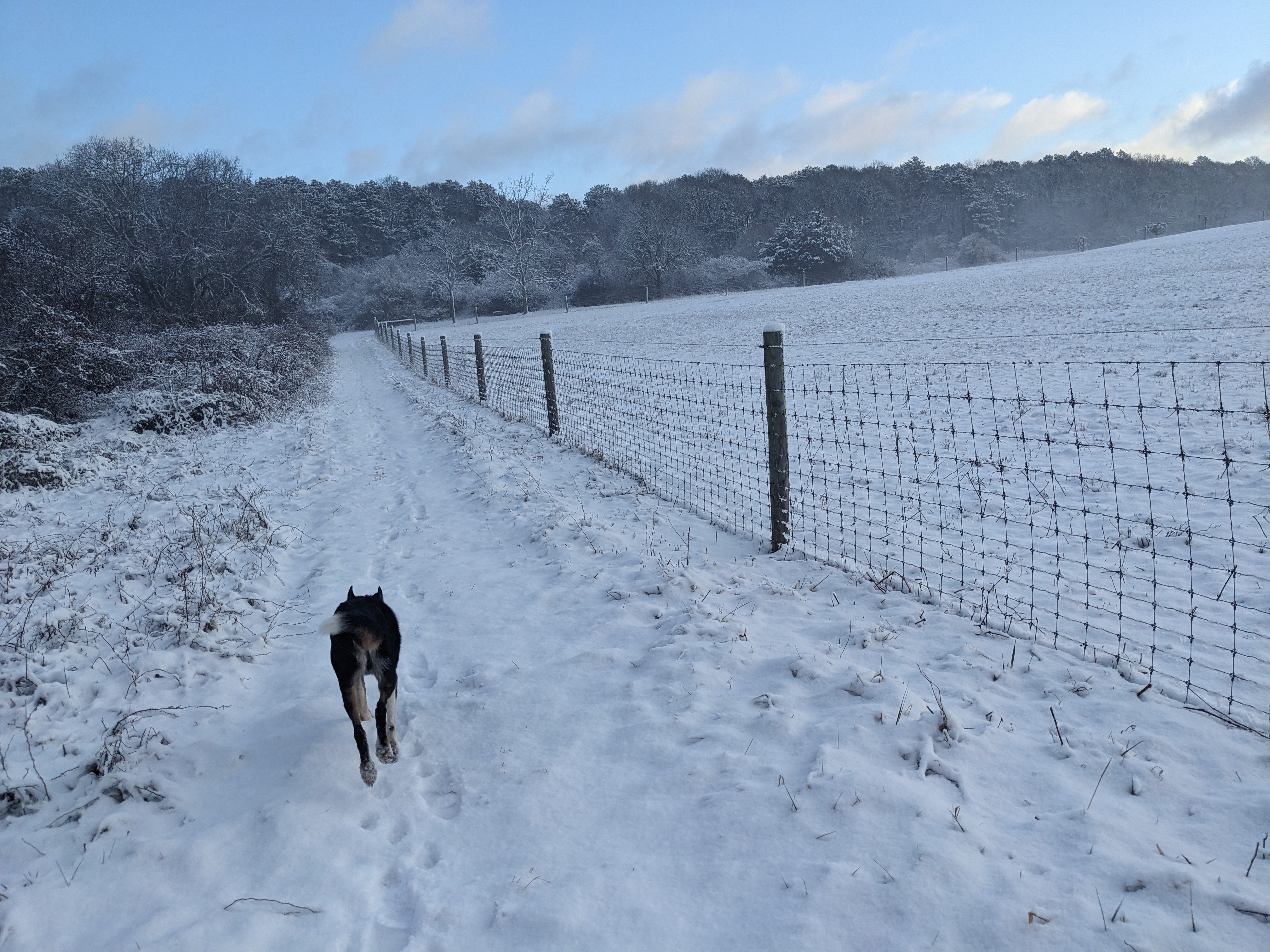
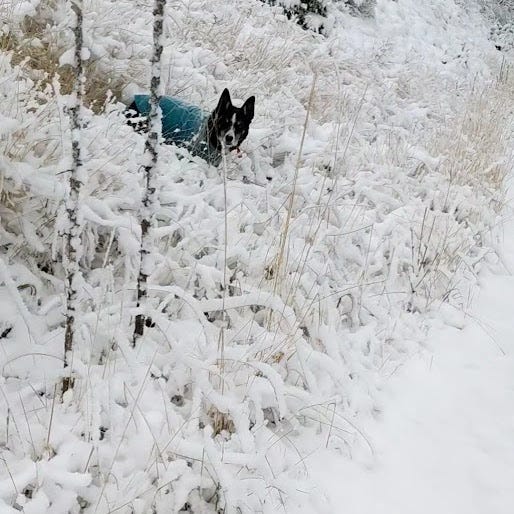
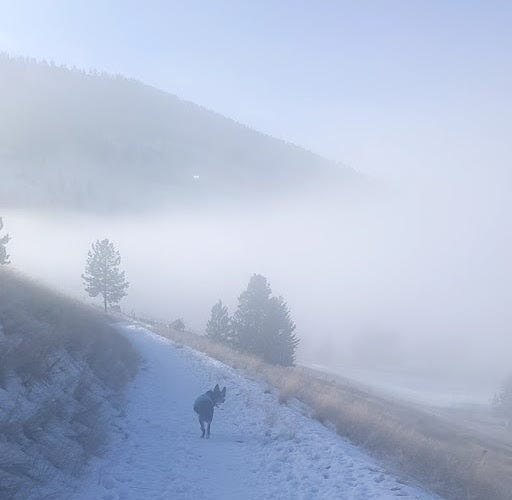
Dog waiting for me on snowy walk
Tock and I enjoy our walk no matter the weather.

Though my turnaround from writing to editing is quick, the process I use is gentle. This is because my revisions don’t begin with actual changes. Instead, I start with something that is so fun I want to do it. I look forward to it, the same way Tock faceplants into his bowl of breakfast or dinner kibble.

Dog eagerly polishing off his dinner

And what is that super fun step? Kind of like a dog sniffing where they peed the previous day, I get to read what I wrote. At last, I can see my story as a whole piece rather than merely a painful collection of sentences, paragraphs, and chapters. With sort-of completed arcs of character and plot, my story sort-of resembles what someone might want to read someday. It shows me that though I may yet have lots of work ahead, I wrote a story. I did it! Hooray for me! It’s a major confidence booster—and we introverted, insecure writers need all the ego boosting we can get. Most importantly, I make notes as I read on where the world and characters need development, where the plot drops into sinkholes, where the pacing sags or speeds too fast, and where things simply don’t make sense. These notes, in turn, give me a launching point from which I can step into real revisions. And after this full immersion in my manuscript, I not only can revise it, I want to!

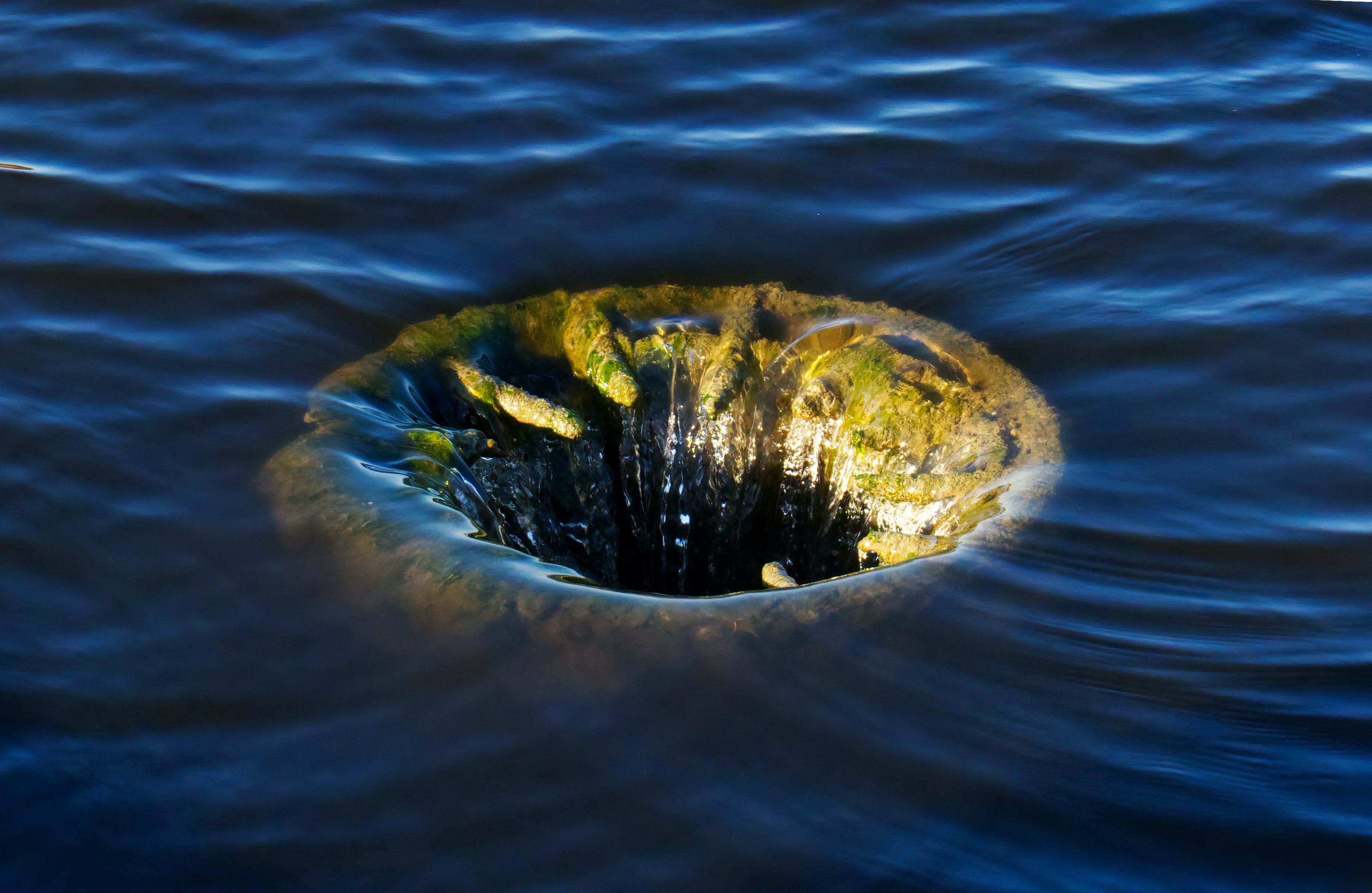
a mysterious hole in the water, into which the water is plunging
Spotting holes in the plot is the first step. Photo credit: Simon Hurry

But what happens once you’ve revised so much that you’re sick of it? I realize that I’ve gotten to this point when I start to question why I wrote the darned thing in the first place. It’s best if you don’t nitpick at it quite that long. Before all pride and joy in your creation vanishes, accept that it’s time to move on. Assuming you want to publish traditionally, this brings us to Dilemma #2.

Querying.

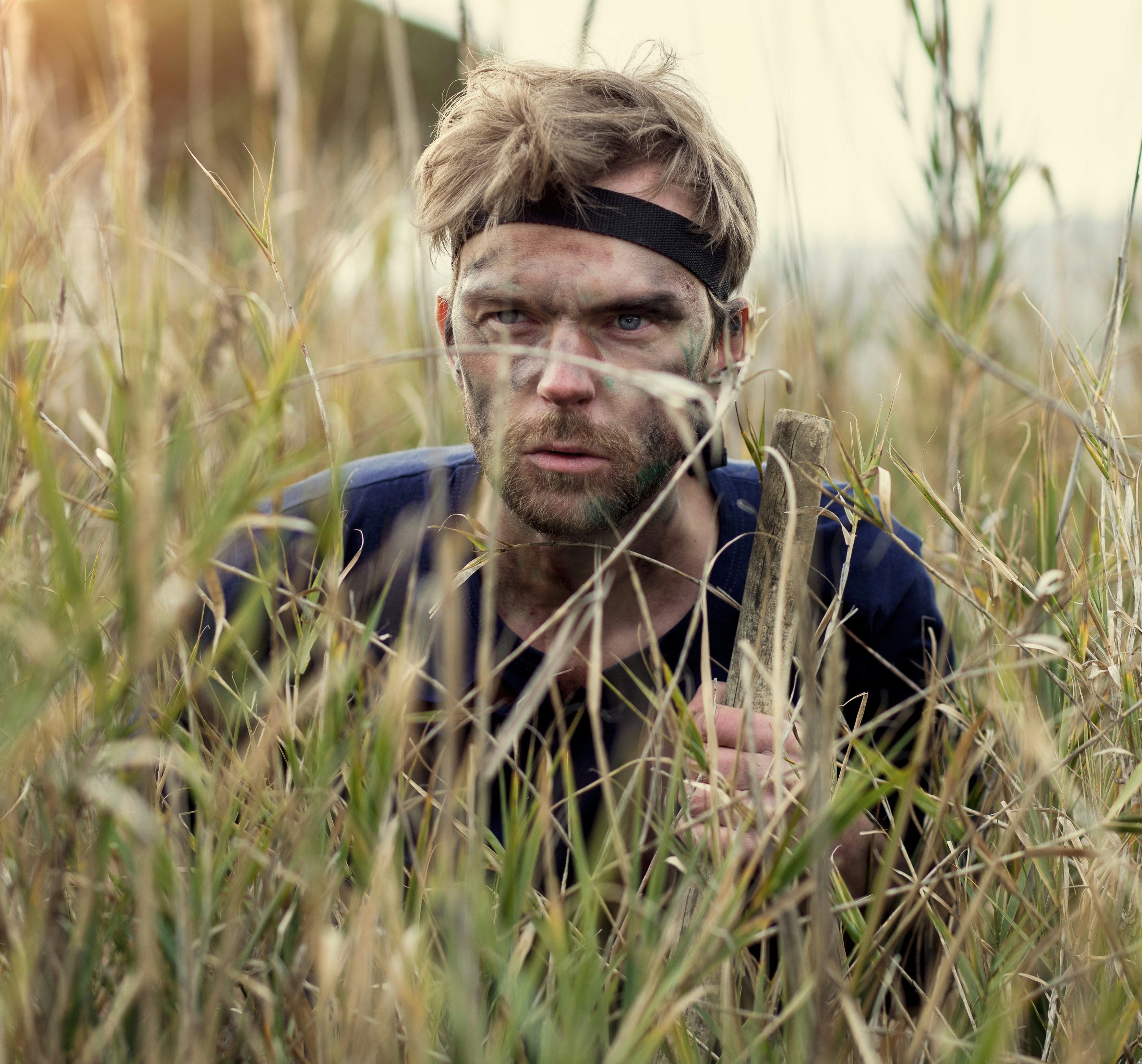
Tense, dirty soldier hiding in the grass
Photo credit: Sander Sammy

To me, this is the most terrifying, blood-shedding step in a writer’s life. You only get one chance with most literary agents to put your stuff in front of them, and if they reject you, you can never again try to persuade them to take on that particular manuscript. Even the rejections themselves are hard to bear – mostly form letters or no response at all. I don’t know which is worse: knowing with certainty that it’s a brutal “no thanks,” or not knowing and thus retaining some hope until, months later, you finally have to mark it down as a rejection by default.

I have nightmares about querying. I think it’s safe to say that prostrating myself in front of an agent is my least favorite activity on the planet. So what do I do? As so often is the case with me, I look to my dog for inspiration. He’s always been a scaredy-pup, startling at big birds flying overhead, or a skunk waddling out of the bushes like happened last week (did Tock investigate and get sprayed? Thankfully, no. He scurried past it and waited for me a respectful distance away). He used to worry about swimming, standing for minutes on end gazing forlornly at a stick in the water just out of his reach. He still takes his time, studying the stick for a few seconds to a minute before paddling out to it. But he’s learned to swim farther and farther these past couple years, and eventually retrieves the sticks, every time.

dog staring at stick in water a few feet away
dog has swum to the stick and captured it!

The most frightening thing that Tock recently experienced was when a large unleashed dog charged down the trail toward us and jumped on him. Not in a friendly way. In a split second, the dog had my poor puppy on his back and was standing over him, snarling and lunging at Tock’s neck. In the next split second, I got over my shock at what had just happened and called for Tock to come to me. He wriggled out from beneath the dog, ran to me (fortunately uninjured), and we hurried away. I was so anxious to make his experience seem less stressful than it surely was that I didn’t even stick around to chastise the aggressive dog’s owner, but walked briskly away, rewarding Tock with treats all the while for his smart decision. But I worried that now Tock would view meeting new dogs the same way I view querying: One hundred percent terrifying, one hundred percent something to be avoided forever.

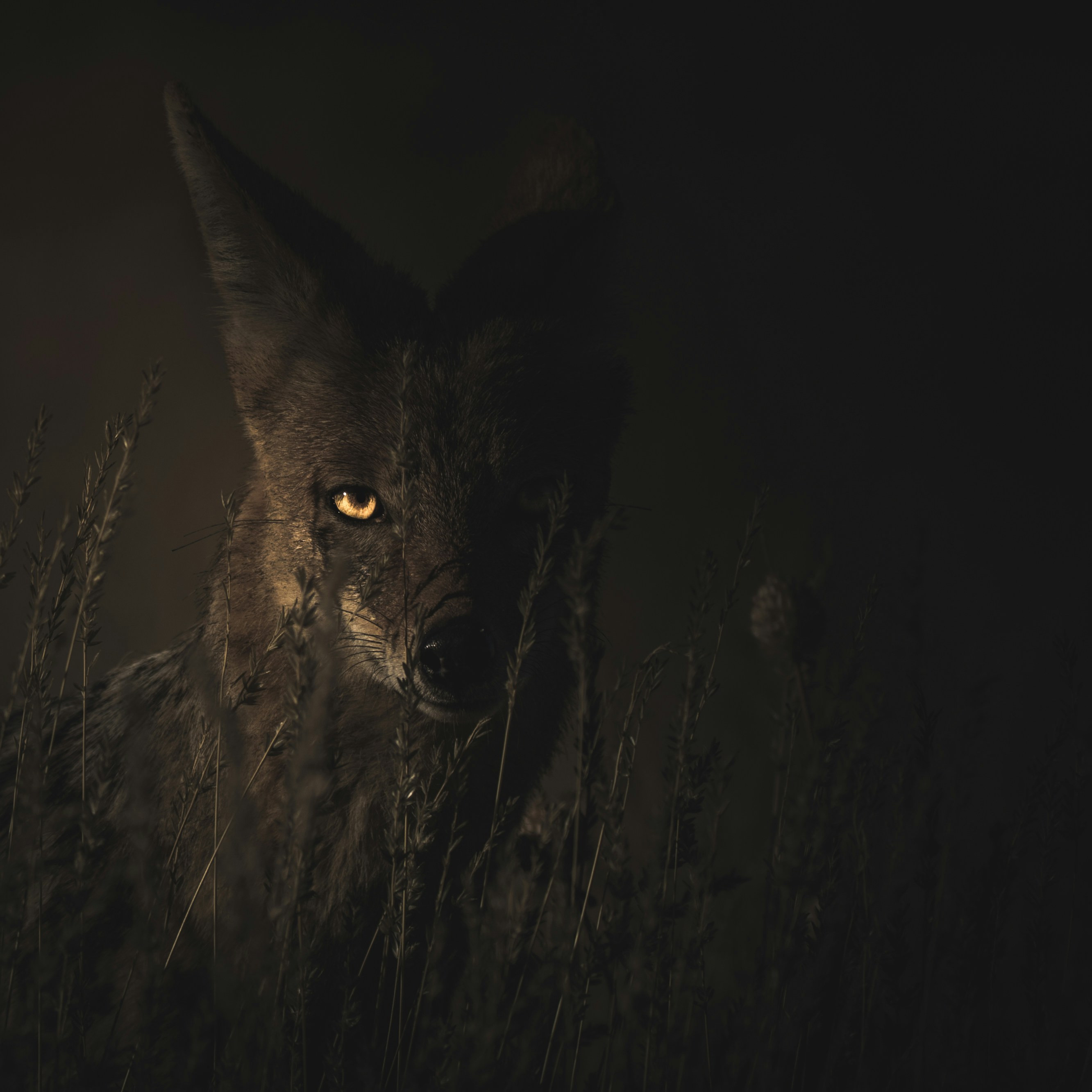
a yellow-eyed, prick-eared beast stares at the viewer from the dark

Still, I knew that Tock didn’t want to give up his daily walk due to fear of a savage beast, the same way I don’t want to abandon my dream of becoming traditionally published. We headed out the next morning—a little more watchful, a little more careful (I leashed Tock when we saw another dog approaching in case he’d developed fear aggression as a result of the attack, and kept his voluntary encounters very short). Tock was tentative that day, meeting dogs with his tail at half-mast rather than upright, silent rather than emitting the tiny happy whimpers he usually produces. By day two, his tail was back up, and by day three, he was whining with excitement again. He did it! He overcame his worries about another random attack. Hooray for Tock!

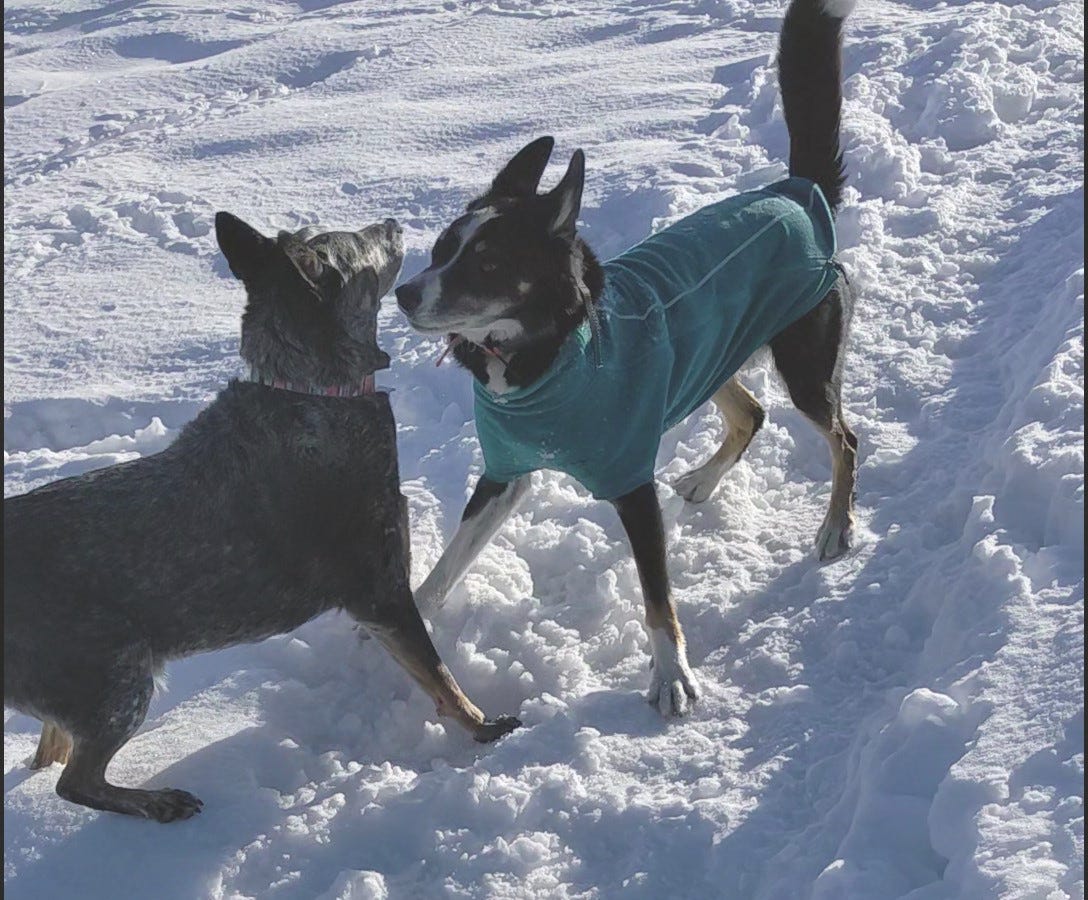
two happy dogs meeting eachother

And if my darling boy can put himself back out there despite his fear, so can I. No matter how many rejections I’ve suffered in the past, I simply need to pick out my preferred agents, organize and tailor my queries to them, and hit send. It’s a psychological hurdle that I must overcome—will overcome—for my latest manuscript if I ever want a shot at publication in the traditional way. The worst that will happen is another form letter. It’s not like I’m going to get bitten in the neck by some long-canined, drooling, bloodthirsty monster.

Right?

Happy Tales!
Note: Since I’ve already addressed Dilemma #3—writing something new—in a different post, I won’t address it here (see Stepping Out of Your Comfort Zone, https://substack.com/home/post/p-137672913e).

The Hardest Part of Revision

(and how your dog can help you)

Kill Your Darlings! All of us writers have heard the phrase countless times. It refers to one of the primary steps of revision: trimming the excess away from your manuscript, getting rid of unnecessary dialogue, long descriptions, excessive “telling” (rather than “showing”), superfluous scenes, redundant characters. Eliminating these things is fantastic because it helps you tighten your plot lines, increase clarity, and reduce word count, all at the same time.

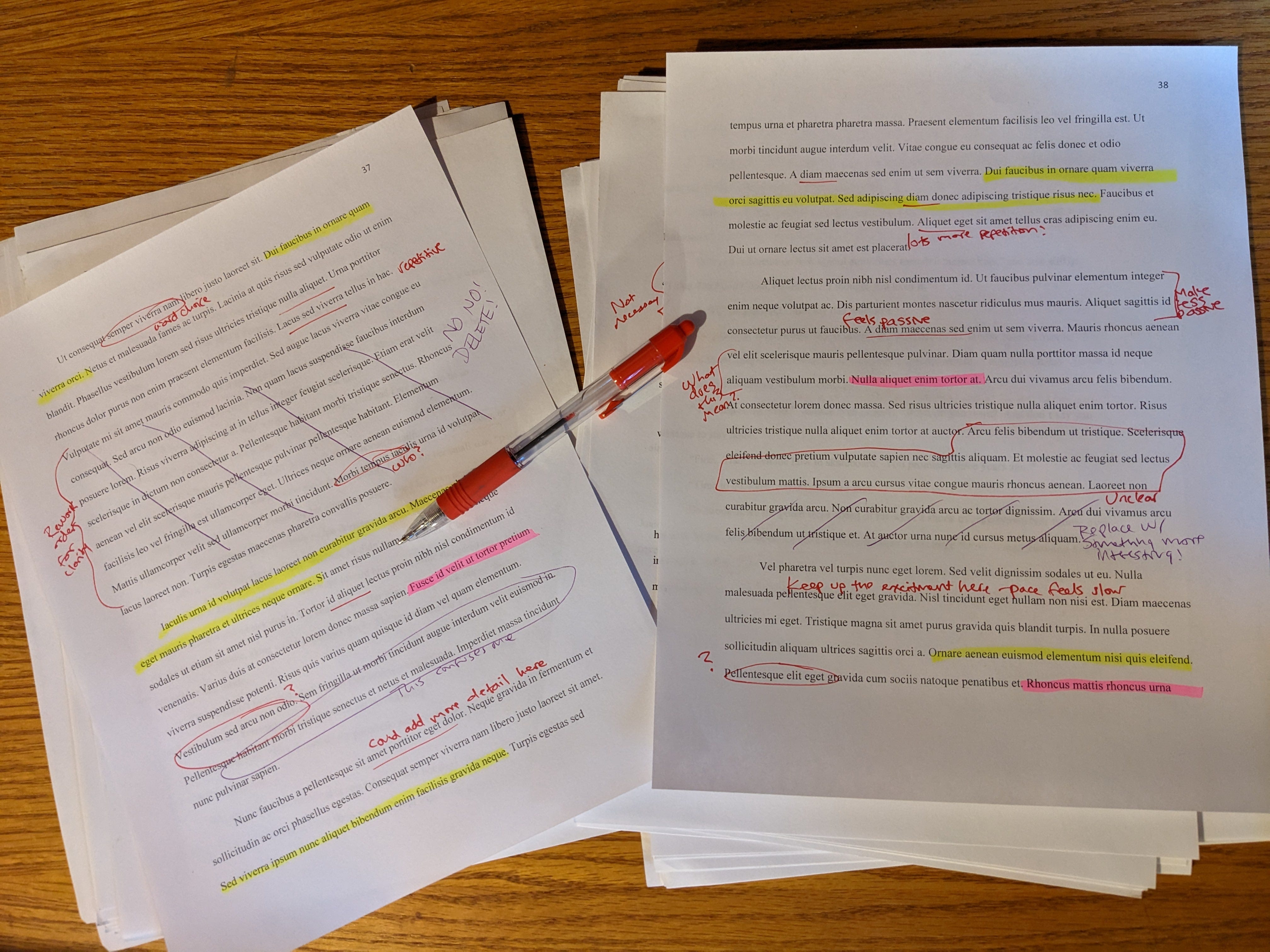
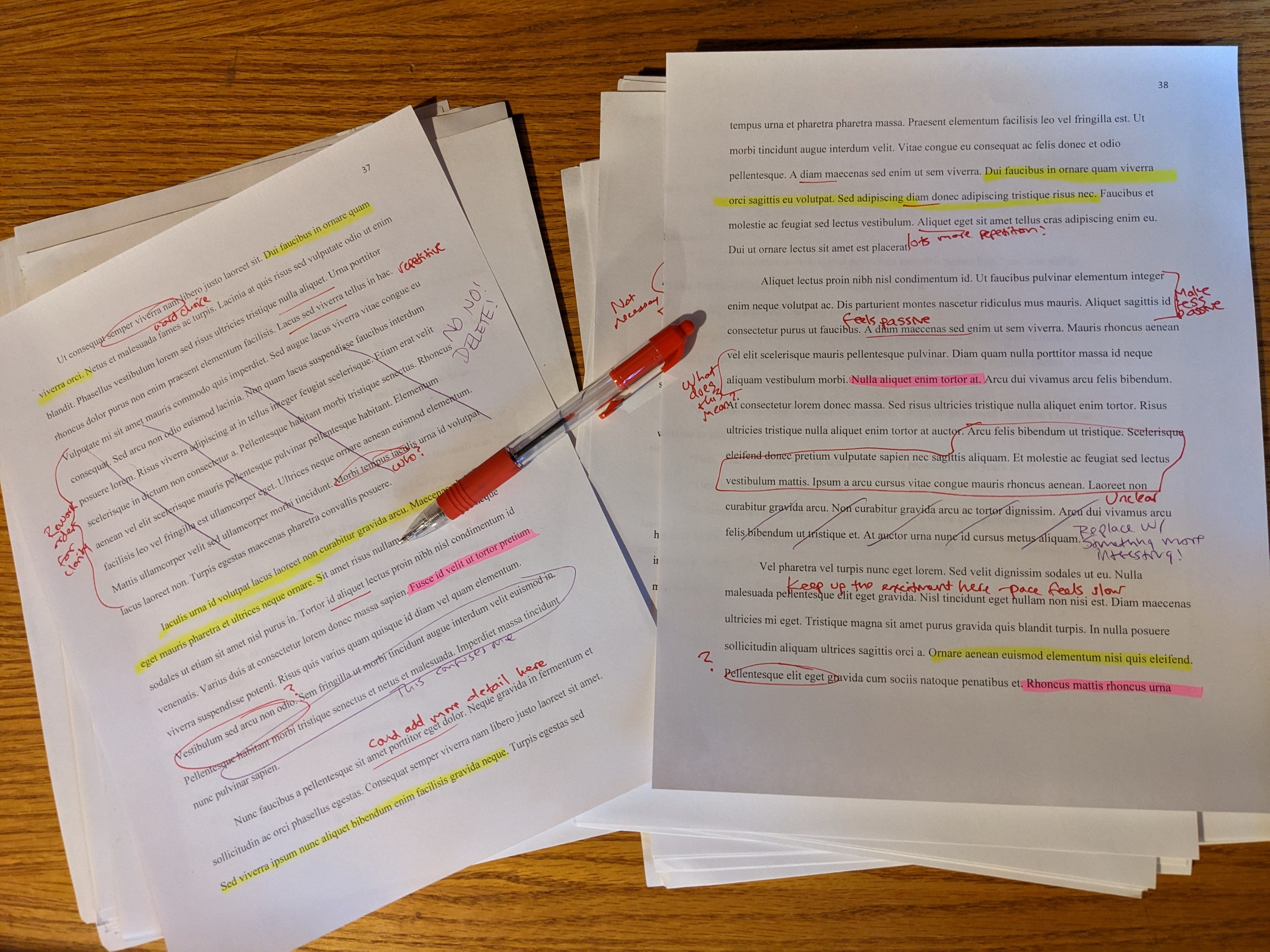
Marked-up manuscript

But it’s hard. These sections that you wrote are called “darlings” for a reason. You’ve possibly spent hours tweaking a particular phrase to get it perfect, so its lyricism and insight will reverberate through your readers hearts and minds for eons to come. Or perhaps a section came to you all at once in a moment of genius inspiration. And it’s gorgeous. Profound. It’s everything wonderful—except that your editor or beta readers or critiquers think it’s in the way. It slows the pace. It’s inconsistent with everything else that’s going on in the story.

When I wrote my first Middle-Grade manuscript, it was far too long. 138,000 embarrassing words long, in other words! But even more embarrassing was that I wasted time lamenting to other writers and even professionals that there was no possible way I could shorten it. I’d already gone through multiple drafts, scouring for places that didn’t feel like they belonged. In what alternate universe could I ever whittle the thing down to the 50-65,000 word maximum expected for an MG fantasy? J. K. Rowling wrote long books—why couldn’t I?

Answer 1: Sorry, you’ve only got the one universe, as far as we know. And you’re not J. K. Rowling. You’re gonna have to deal with it.

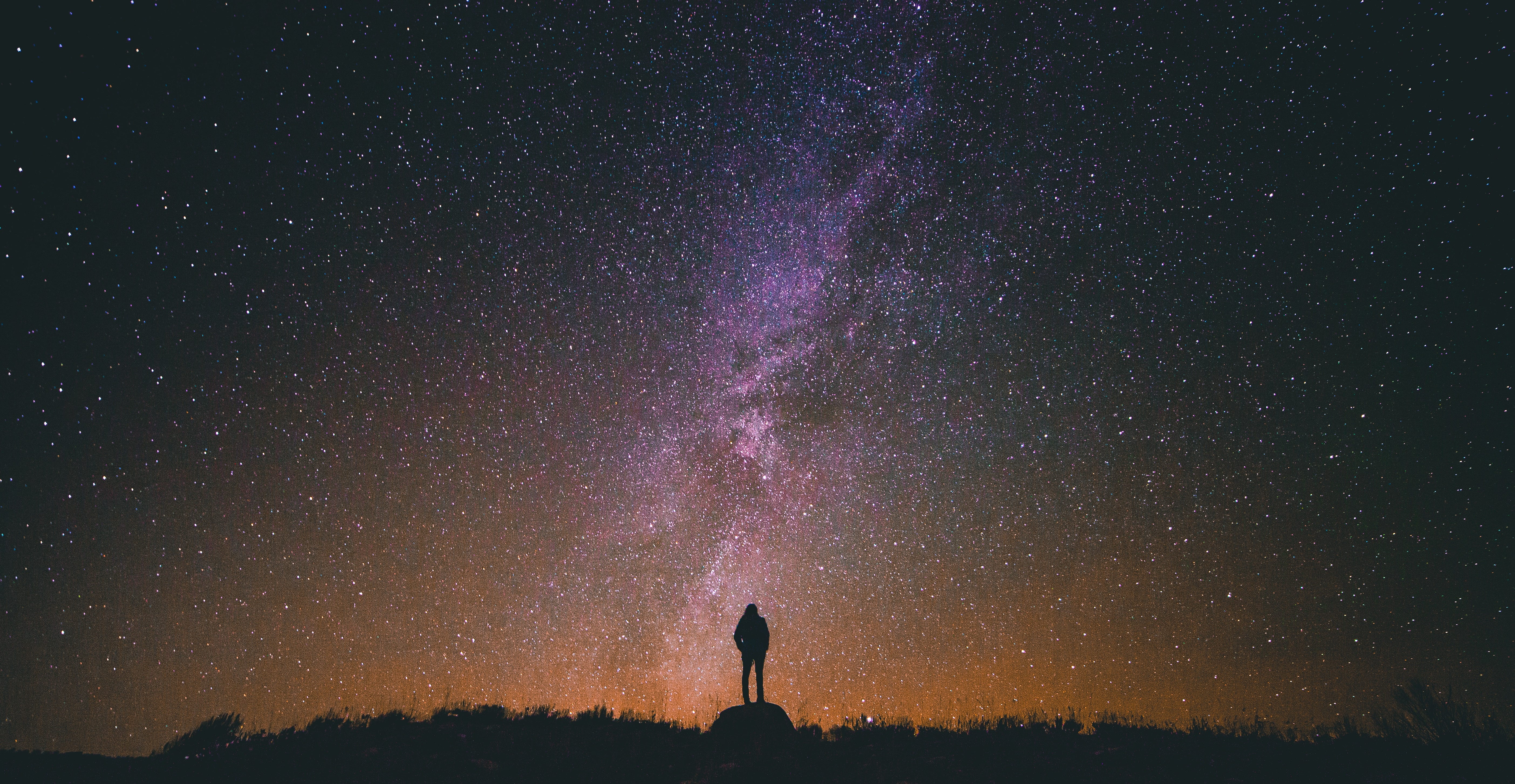
Milky Way Galaxy
Photo credit: Greg Rakozy

Answer 2: If you’re a debut author trying to publish traditionally in this universe these days, you might be able to break a couple tiny rules, but not the Word Count Rule. Not until you’re superhero famous and people will greedily buy everything you write, even if it’s longer than Encylopedia Britannica.

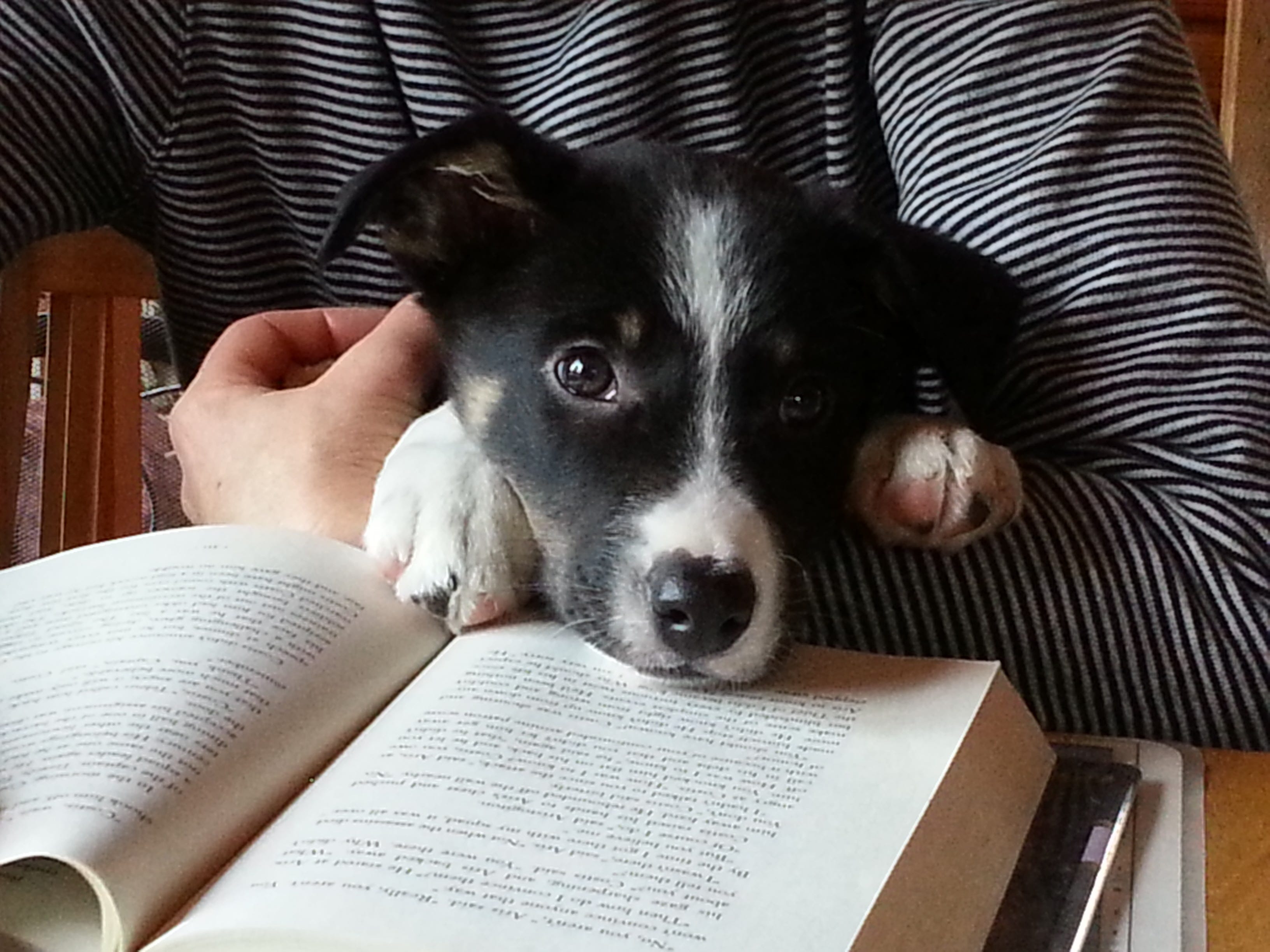
Dog reading book

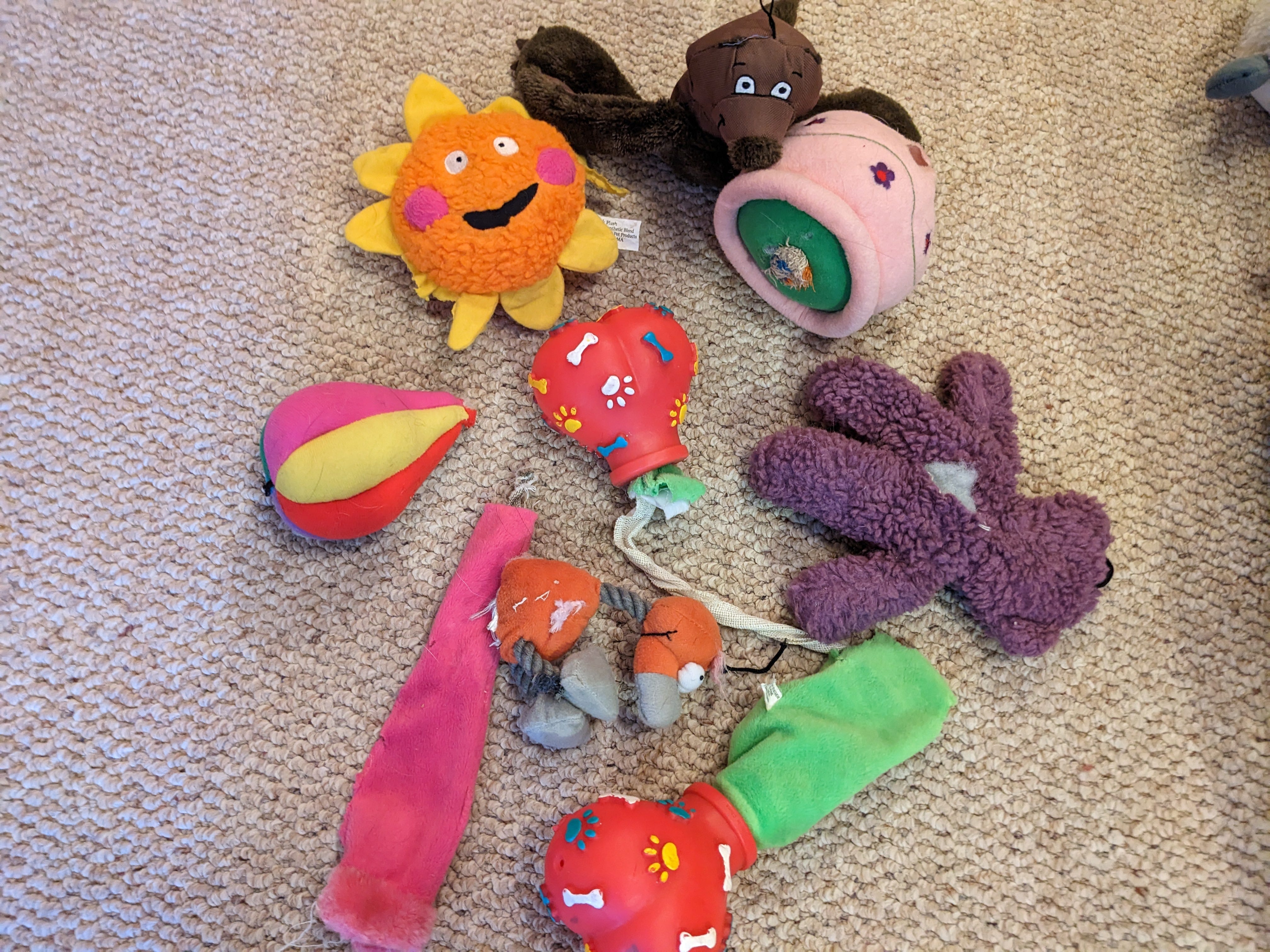
Ah, if only I’d thought to look to my dog for answers. Dogs are absolute masters at killing their darlings. Think how many fluffy squeaky toys you’ve purchased over the years for your canine companion. And then think how many you’ve purchased again because the first one got destroyed. Sometimes I think dog behaviors have evolved purely to speed up the rate at which they can find a squeaker and eviscerate a toy to get it out. This also goes for the tag on the back of a toy, in my dog’s case (his favorite predatory activity, however, is giving the “death thrash” to his Bungee Ball).

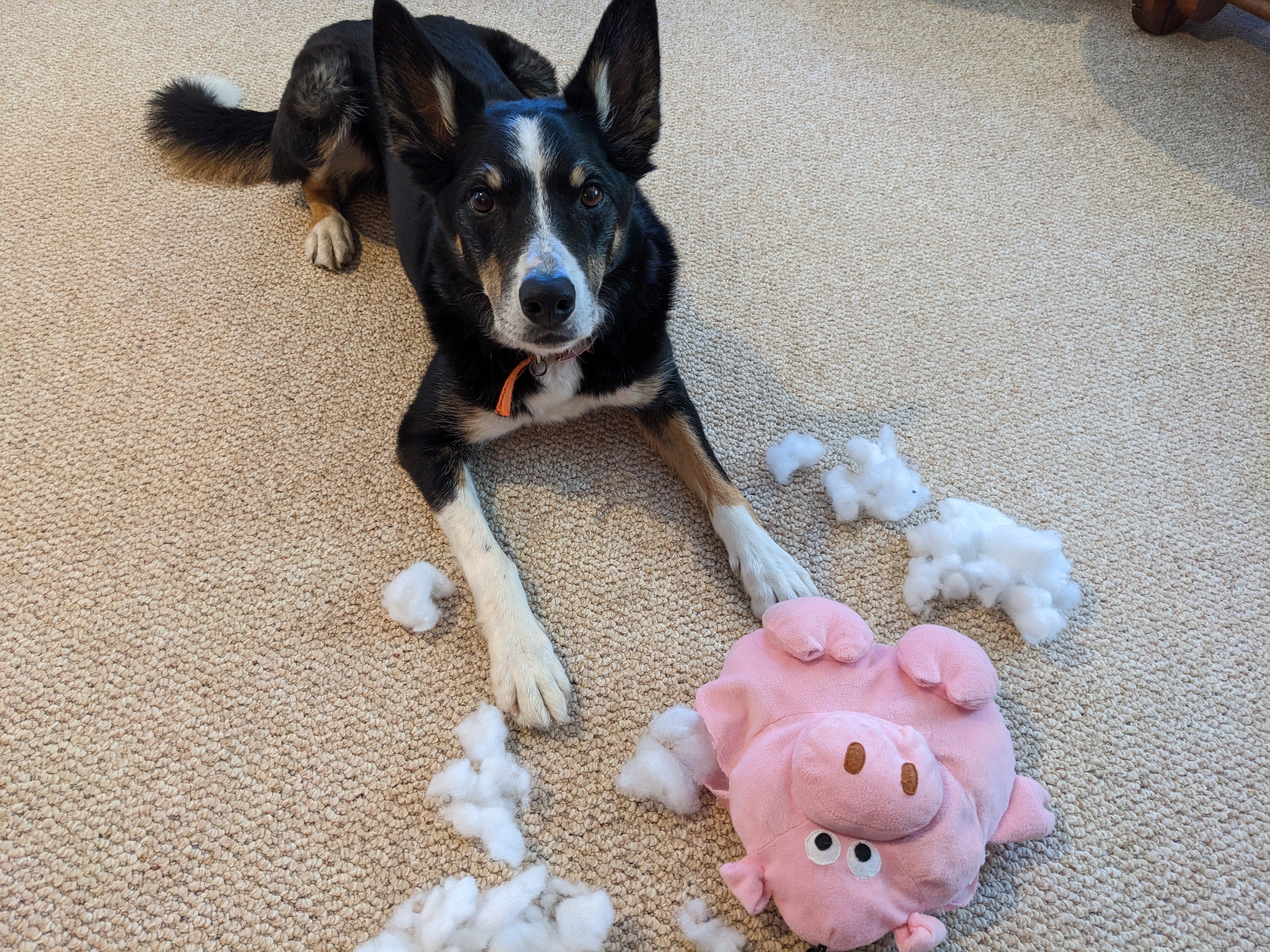
Dog with destroyed toy
Tock is quite proud of this pig that’s been de-fluffed, de-squeaked, and de-taggedThough in fairness to him, his former siblings were responsible for the first two things.

As a long-time dog owner, I’ve at last come up with some strategies for how to part with those ill-fated “toys” of yours (i.e., the parts of your story that people you respect have circled with a red pen, scrawling next to it either DELETEConsider removing, or Necessary? depending on how tactful they felt like being).

1. INCINERATE. Sometimes there’s no hope for these toys because they’re so utterly torn apart. You have to throw them in the trash. This is akin to a phrase, scene, or character in your book that truly deserves to be deleted forever. Maybe you once thought it beautiful, but upon further examination you discover it’s actually full of cliches, stereotypes, repetitive language, and boring verbs. It’s so bad it’s not even fixable. Select and delete, the sooner the better. Like ripping off a band-aid. It can actually be fun, if you channel the joy your dog obviously feels in yanking out the stuffing and flinging it all over the living room. Does he show remorse? Generally not—merely satisfaction at a job well done.

Collection of toy remnants
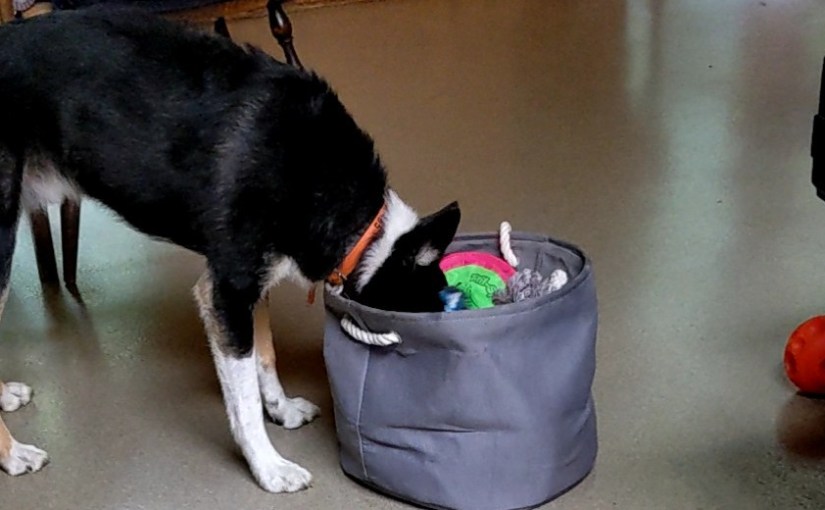
A few of the toy remnants in Tock’s collection

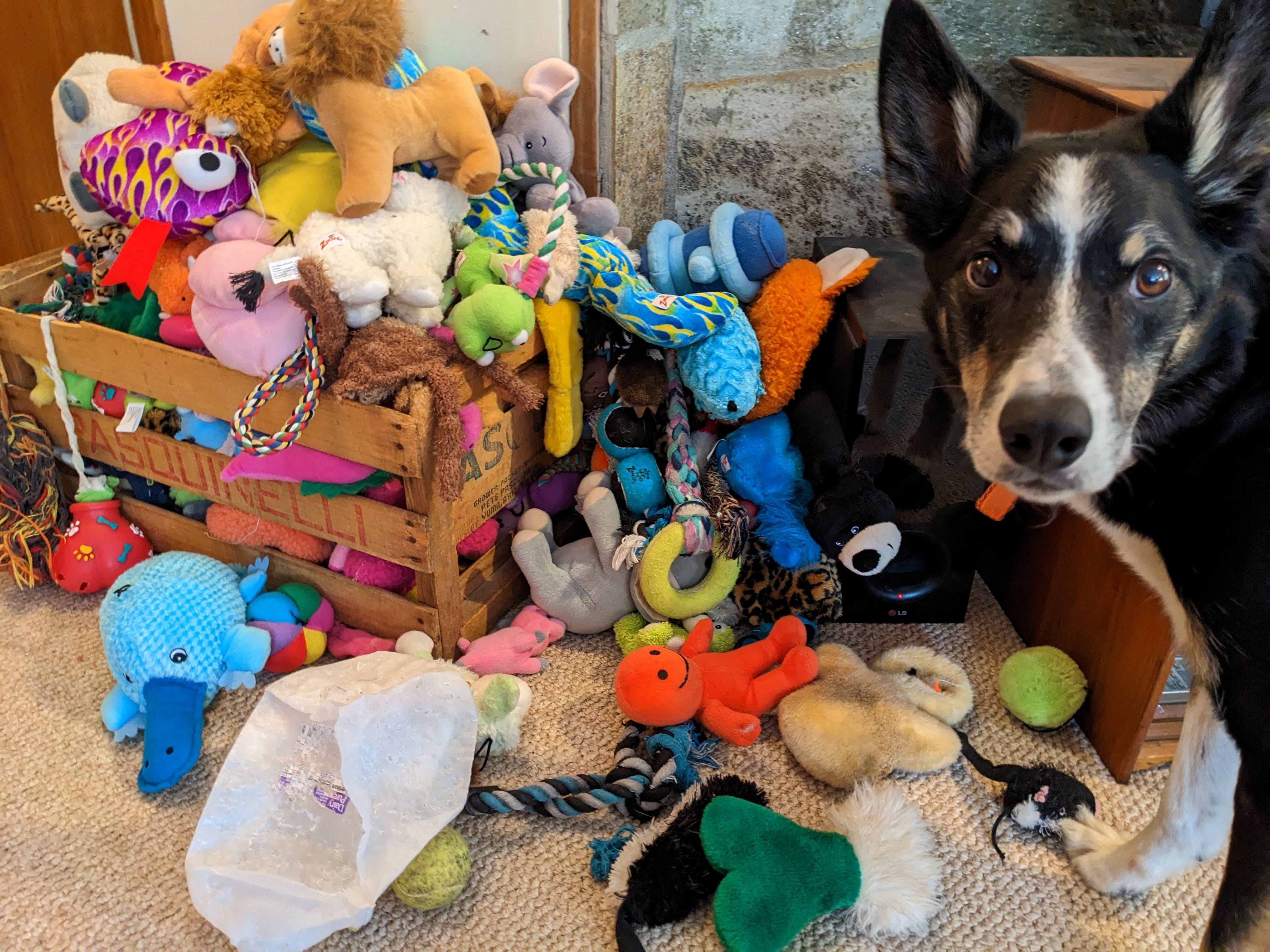
2. RETAIN HOPE / SAVE FOR LATER. Some toys might survive the onslaught. Maybe they only have a tiny tear in them, and if you hide them for a little while, your dog will forget that he initiated the supernova process once long ago. I frequently snatch a toy from the jaws of death and hide it in the bottom of my dog’s toybox. Sometimes he ferrets it out again right away, but often he forgets about it for a while, allowing both of us to pretend it’s still alive, somewhere. This is similar to taking your lovely snippet of writing and storing it in its own little file. Call it Precious Fragments, Scenes for the Sequel, Deleted Info that I Cannot Bear to Part With, call it what you will, but something about knowing it’s still out there can make the process less painful.

Dog with toybox
Tock’s toybox (Note: most of these toys were prizes from agility competitions, not purchases!)

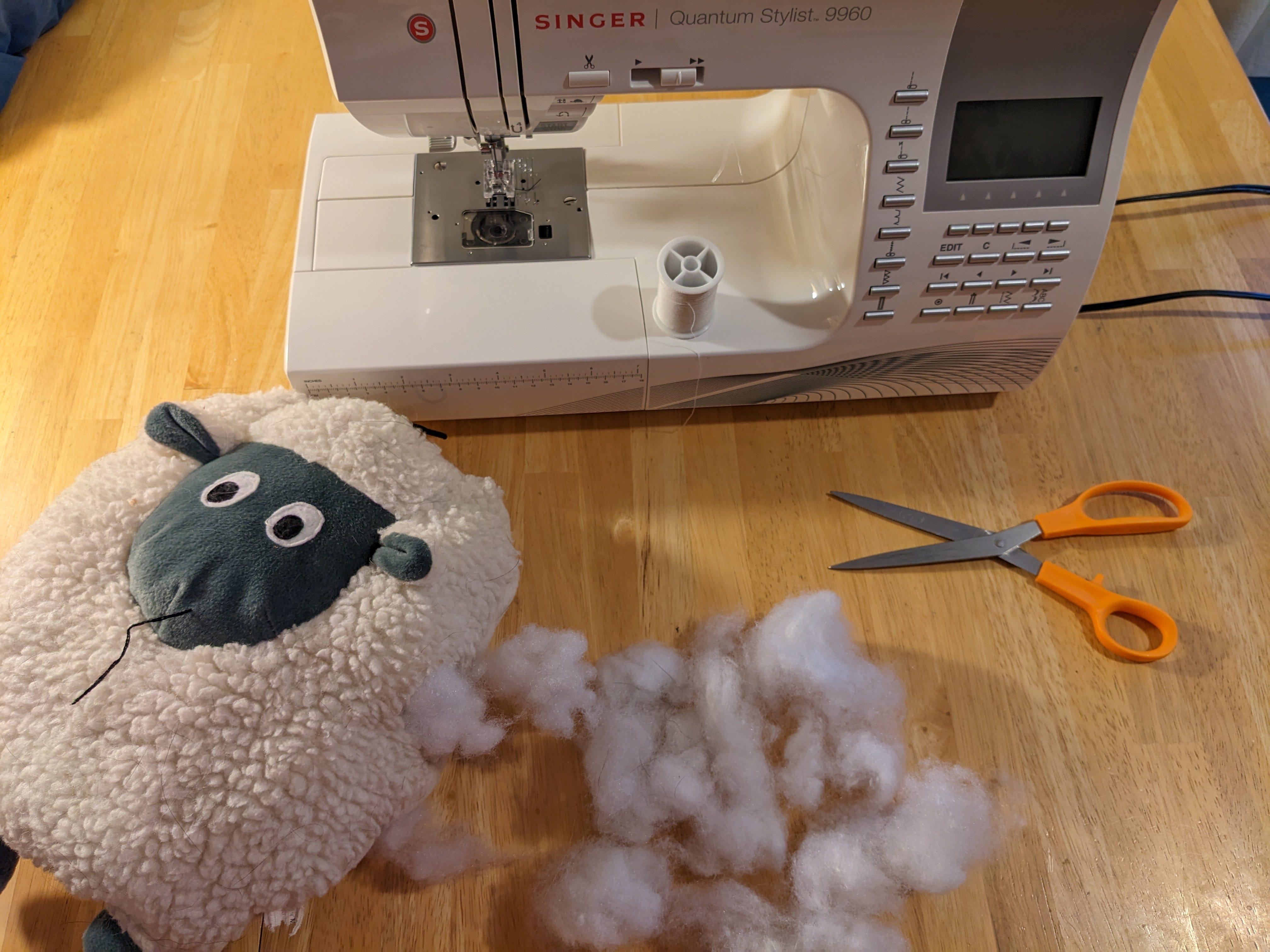
3. FIX? I put a question mark here because I’m a terrible seamstress. Sometimes I’ll try to handstitch toys back together, but they never last very long. As for writing, fixing can work well if the extent of the damage was small and only requires some re-wording for better clarity, or a little bit of reduction to avoid repetition. But in my experience, large-scale fixing almost always shows up in the story as a patch job. If you have a character that’s not needed, for instance, no amount of alteration to their personality is going to rectify the situation.

Toy needing stitching at sewing machine

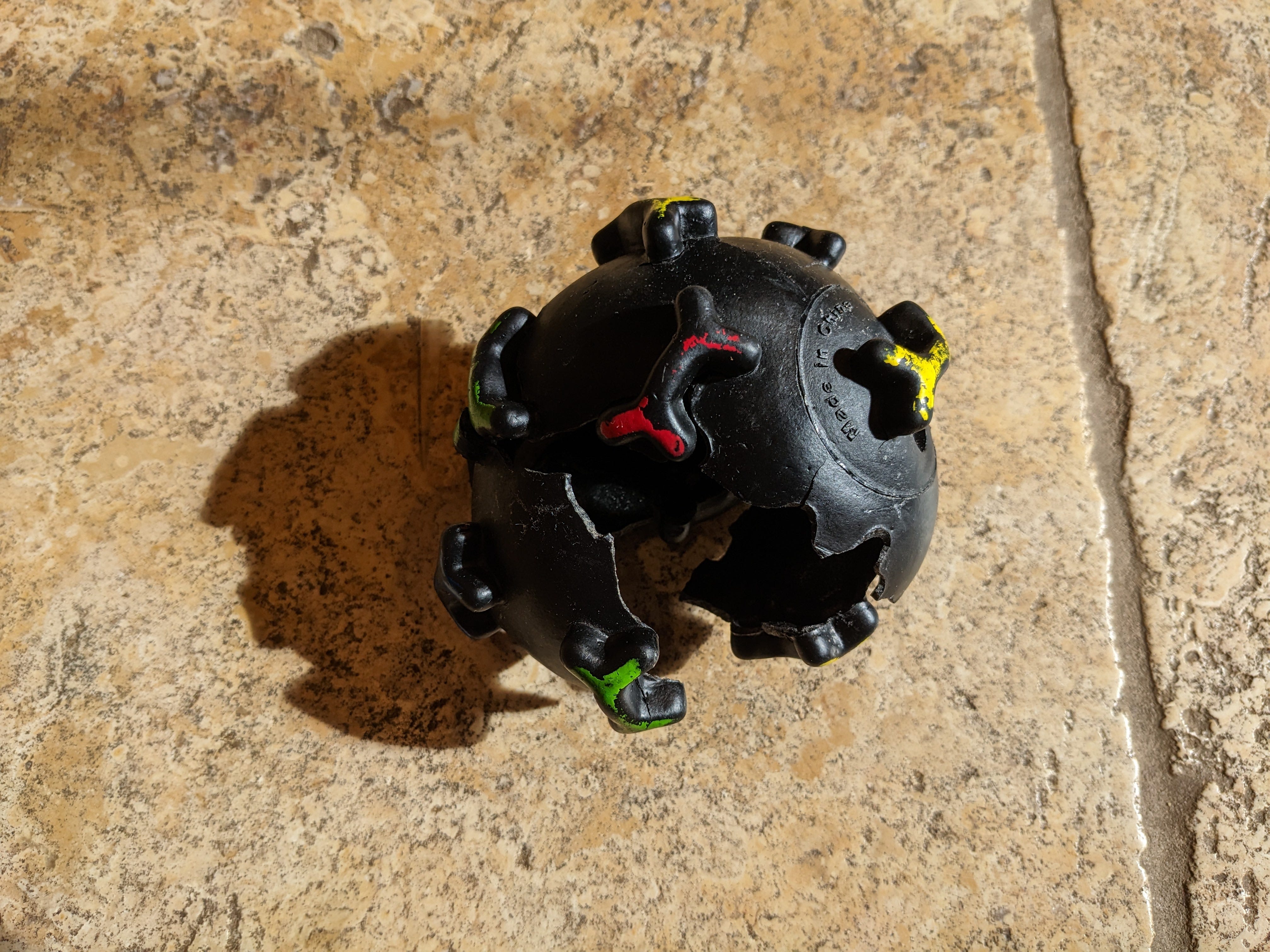
4. USE ELSEWHERE. Occasionally, a toy survives against all odds and finds a new life—not as the toy it once was but as something new. My dog, for instance, has a particular talent for recycling squeaky balls that long ago lost their squeakers and are so broken they resemble nothing more than a tattered piece of plastic. He’ll mouth them back into a rough ball shape and hold them carefully so as not to destroy their faint likeness to a toy—even though he knows he can no longer play with them in any way but a gentle game of tug (note: I would never let him do this if he had any inclination to ingest bits of plastic). Just as I love how Tock can recycle his toys like this, eking every bit of life out of them, I adore finding a new home in my story for those favorite-but-dysfunctional phrases. With careful insertion into just the right place, whether it’s one or ten chapters later, you may be in luck at saving some of your darlings from annihilation in this way, too.

Broken squeaky ball
Tock’s beloved Bone Ball – broken but still gently used

5. REPLACE WITH SOMETHING SHINY & NEW. When more than half of my dog’s squeaky balls have reached the broken-plastic phase, I take pity on him and get him a new one. Or two. Or three. This doesn’t stop him from playing with the bits of plastic (unless I subject those to Strategy #1), but he plays with the new ones more. This goes for writing, too. You can re-use phrases in different places all you want, but what do you do with the gap they left behind? Sometimes simple deletion doesn’t work. You need to come up with a new gem to put in its place. Just make sure to run it by your critiquers to see if they think it’s a keeper this time.

Dog with new toys
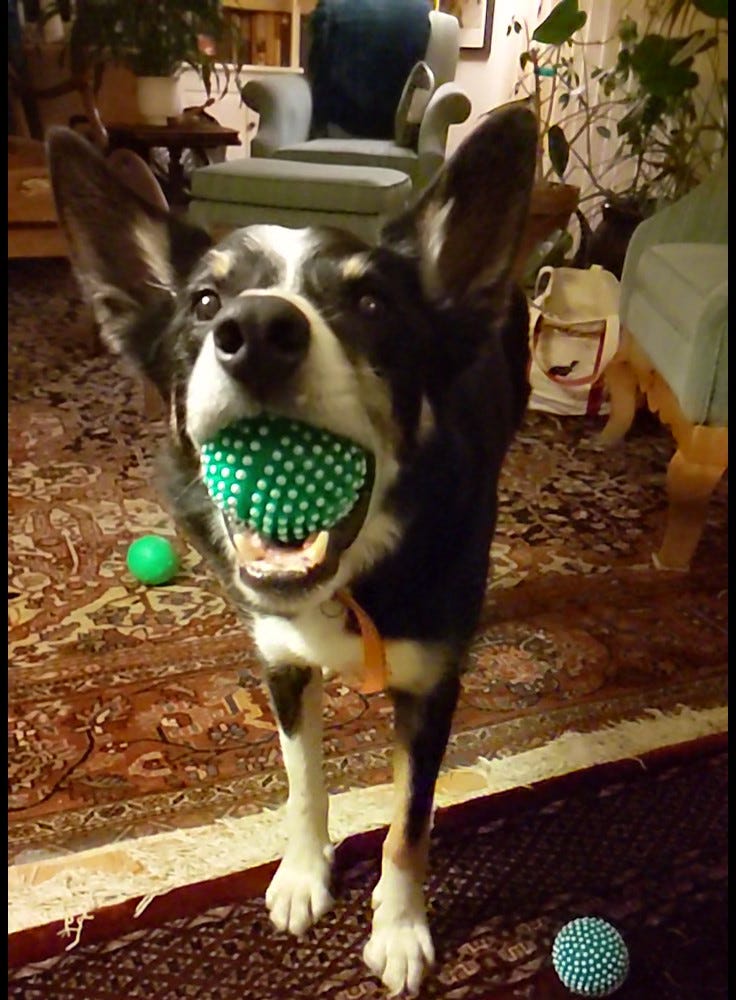
New squeaky balls!

The final word of wisdom I’d like to part with is that nothing lasts forever. Not toys, not pet phrases. And the more you look at a selection of your writing, the more you or someone else is going to find wrong with it. Revision is a terrific tool—my favorite part of writing, actually—but there is such a thing as too much of it. Give your specially crafted phrases a round with your most trusted critique partners and professionals, and at some point … make the decision to accept that final version. Then there’s nothing left but do query / publish (topics for another day), and sit back and enjoy it!

Happy Tales!
REVISION: Is your bowl of porridge too cold, too hot … or just right?

(Or: How do you know when your story has reached the “Goldilocks Zone?”)

Components of a bowl of porridige
Photo credit: Cleanlight Photo

When is a story good enough to stop working on it?

This is one of the most pressing questions facing the author of a revised manuscript (correction: a revised-and-revised-and-revised-to infinity manuscript). If you’re a conscientious and possibly obsessive writer who wants to produce the best possible experience for your reader, you won’t stop after the first couple drafts, regardless of how much organization and preliminary revision effort you’ve already put into them. You’ll keep re-visiting it, at first maybe making sweeping changes, followed by smaller and smaller alterations, sending it out to alpha readers, beta readers, critique groups, and paid professionals. Even after you’ve ceased finding anything wrong with it beyond an occasional typo, the people you solicit to look at it will make suggestions for improvement, every single time.

Marked-up manuscript

After looking at your manuscript so much that you no longer have any idea whether it’s good enough, and in fact might be getting worse with all the attention, I recommend a very simplistic formula to figure out the answer, which will place your work in one of three categories. It relates back to—big surprise here—going for a walk.

1. Your story’s too cold: Readers can’t connect to the unfeeling, underdeveloped, or commonplace characters, the plot meanders without actually going anywhere, the world lacks the spark of details. This is me when I first step out the door to go on a walk at dawn. The purplish air, even if it has the promise of heat in a few hours, turns my fingers to ice and my hands and forearms to the texture of cold marble. I’m so immersed in trying to stay warm that I enfold myself in my hood and pockets and trudge along looking only at my boots. I could be walking to the end of the driveway or I could be climbing Mt. Everest. How would I know? I’m too sunken within myself to notice.

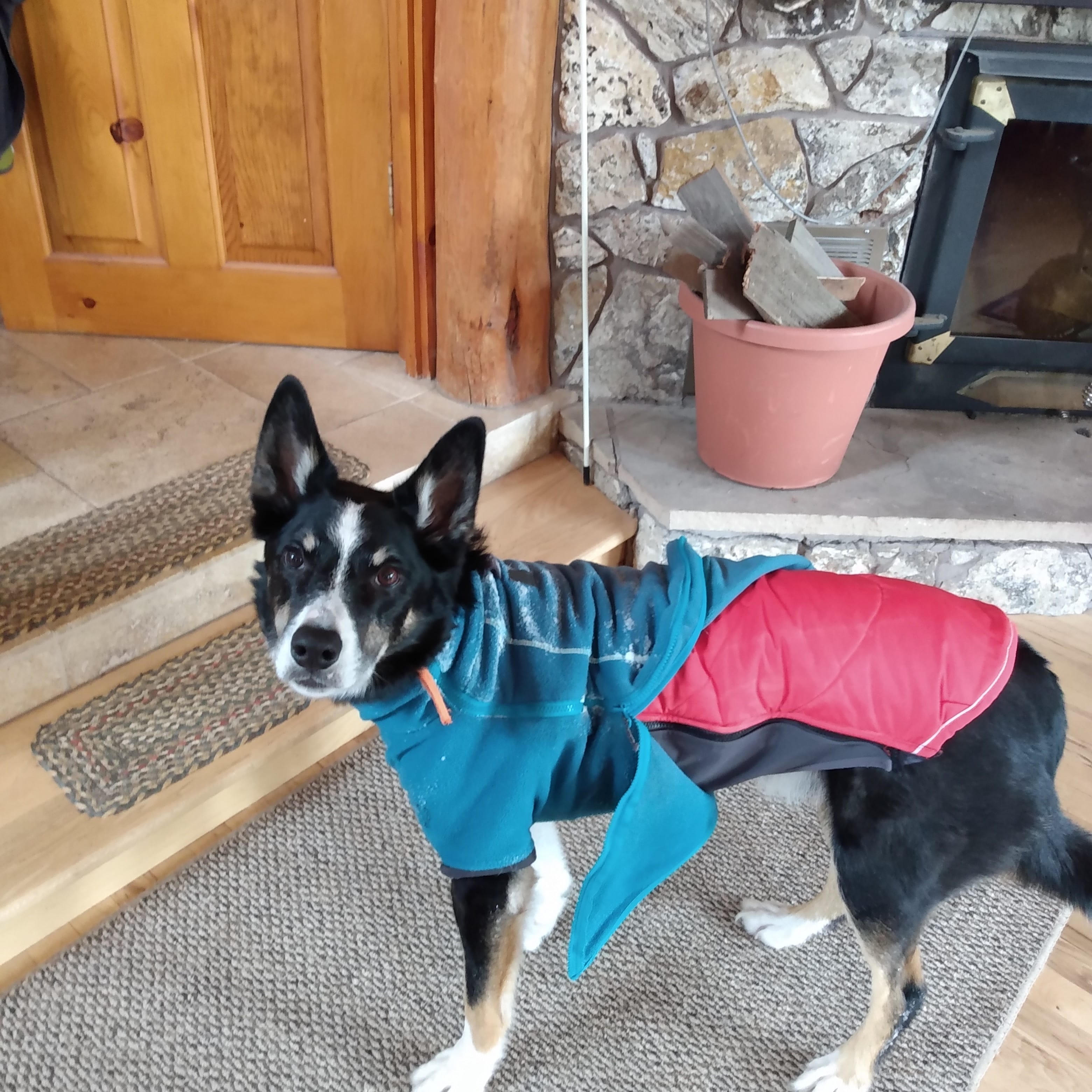
Dog wearing 2 jackets
Because of his short fur, Tock, too, wears a jacket when the temperature dips below freezing . Sometimes two jackets, if it gets down into the teens.

2. Your story’s too hot. You have so many characters and plot lines that readers can’t keep track of them all. Reviewers suggest that perhaps you have more than one book within your pages. The scenes overflow with backstory, info dumps, unnecessary dialogue, or superfluous adjectives. This overheated state creeps up on me about ten minutes into my walk. I find myself ripping off my gloves and wiping my sweaty hands on my pants. The sun hasn’t yet made its appearance and probably the air temperature hasn’t begun to change, but internally, I’m beginning to feel insufferably warm. My gaze jumps from one rock or tree or viewpoint to another, and I struggle to focus.

Dogs in a stream
On hot, dry days, dogs need plenty of water breaks. Here, Tarzan & Tenzing take refreshment during a long-ago hike.

3Your story’s just right. I prefer this phrase to “perfect.” Words, phrases, scenes, and stories are subjective, and every reader is going to like and dislike different things about them. Our stories won’t ever be perfect, because that state simply doesn’t exist. They’re not mathematical formulas. But readers will be most likely to enjoy them if there’s a nice balance of characters and plot, a thoughtfully paced mix of dialogue, interiority, and action, if there are enough details to see the world and understand why the characters do what they do, and if the character and plot arcs resolve themselves in satisfying ways. For me, this Goldilocks Zone on a walk happens most often on a calm, sunny-but not-too-hot day after I’ve reached a ridge or a lake basin. It’s a place where I can walk on mostly flat ground, still getting some brisk exercise in the invigorating fresh air, but not so much that I’m out of breath.

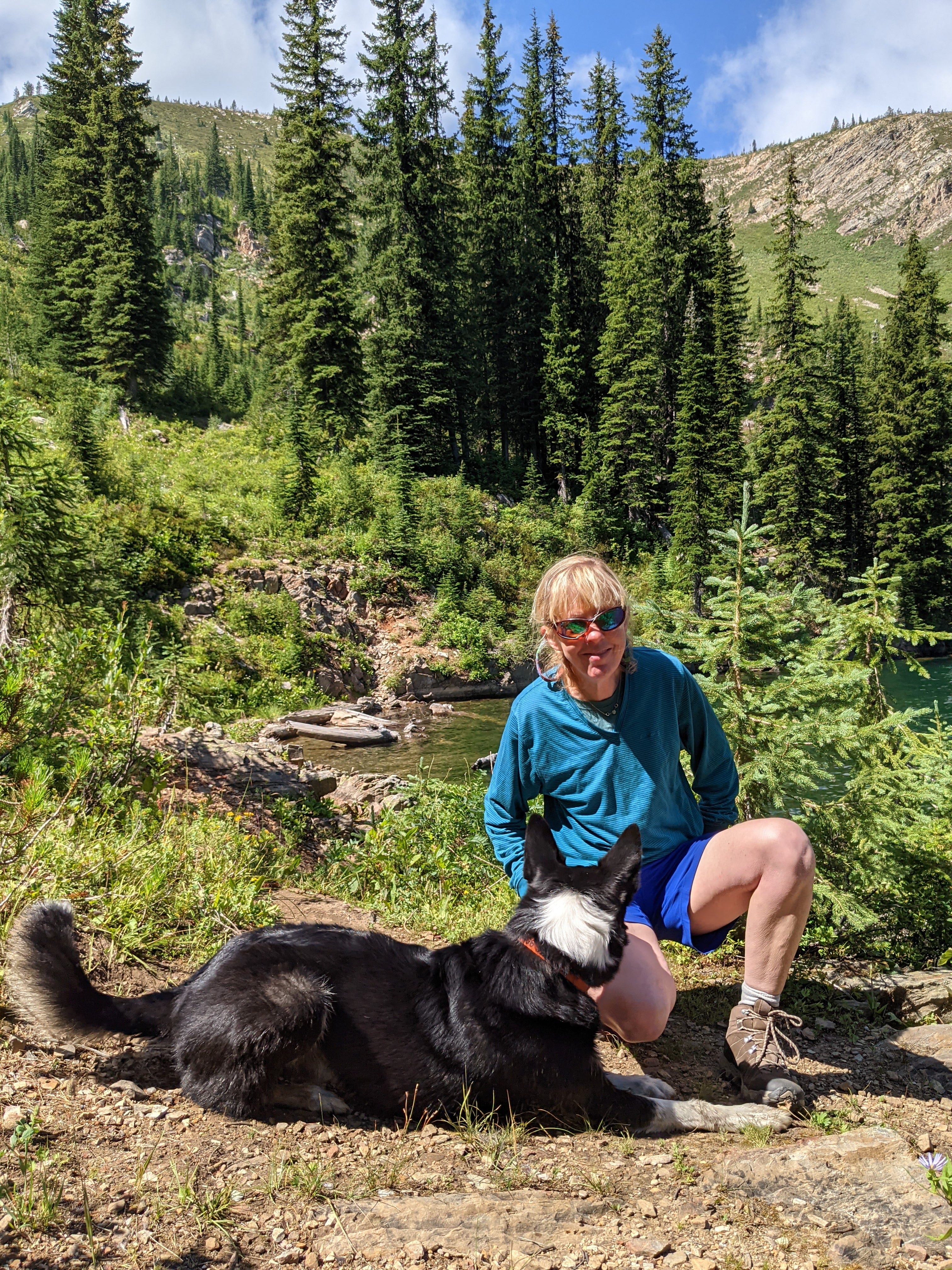
Author and dog at a lake
An alpine lake: my personal Goldilocks Zone

At some point during the revision process, it’s up to us writers to decide when we’ve gotten into the “just-right” zone. Any more tinkering beyond that point might start to suck the life out of our story, because we’re so far past that first euphoric flush of actually writing it. Yet I feel I’m a bit hypocritical to talk about this happy zone because I often have trouble turning off the self-editing mode for my own manuscripts. Even after I’ve reached the point where I have to re-visit my premise just to remind myself why I wrote the darned book in the first place.

Maybe I struggle with putting an end to revision because I hardly ever reach that state of satisfaction with the clothes on my back. Here’s my excuse: I live in the Rocky Mountains. Morning air is cold and often breezy, especially in the winter (wanna come for a walk with me at 12 degrees F—not counting wind chill—anyone?). Hills are steep and plentiful. Flat sections of trails are rare, especially near my house where I mostly walk. So no matter the season, I start out with multiple layers of clothing. Even in mid-summer on a warm morning, I need a little brisk exercise before my hands lose their chill and regain their function. And when it’s far below freezing in the winter, I’ve been known to wear five layers on my torso and two on my legs. Still, I’ll warm quickly and feel the need to tug my arms out of my sleeves, ending up at a single layer.

Suited up for a cold walk
Ready to brave the wintry woods

My husband says I have poor temperature control. I say I’m being smart. Secretly, I know he’s right … to some extent. My body temperature seems to fluctuate a lot more widely than his, and my extremities routinely segue from frozen and numb to overheated and sweaty, over and over during the course of a walk, depending on whether I’m walking up or down hill. I envy him for only having to wear one or two layers, every time.

I’m even more jealous of my dog. Sure, he wears coats because I put them on him and he jumps into lakes because I throw sticks for him, but he’s pretty much always in the Goldilocks Zone. His fur coat, though short, is quite suitable for a range of temperatures. With the thick undercoat he grows in the winter, he probably doesn’t need a jacket nearly as much as I think he does. If Tock were a writer, he’d compose one, two, maybe three drafts … and be done. No more nitpicking and dithering; he’d be happy with what he produced and move on.

Dog running down a trail

I can’t help but think about wild animals in this context, too. They don’t have owners to dress them and care for their every need. What if the summer is especially hot and dry, or the winter is filled with unpredictable and severe storms? What if animals can’t adjust to these changes in their environment in time? Evolution of adaptations is a long, slow process—far slower than the current pace of climate change. Most creatures have evolved to survive perfectly in the Goldilocks Zone of their current habitat, and they lack the ability to strip off their layers, or flee to a place with more shade, water, or warmth. Or less of those things. If they were writers, forget the revisions. Their stories might end before they finish the first draft.

polar bear
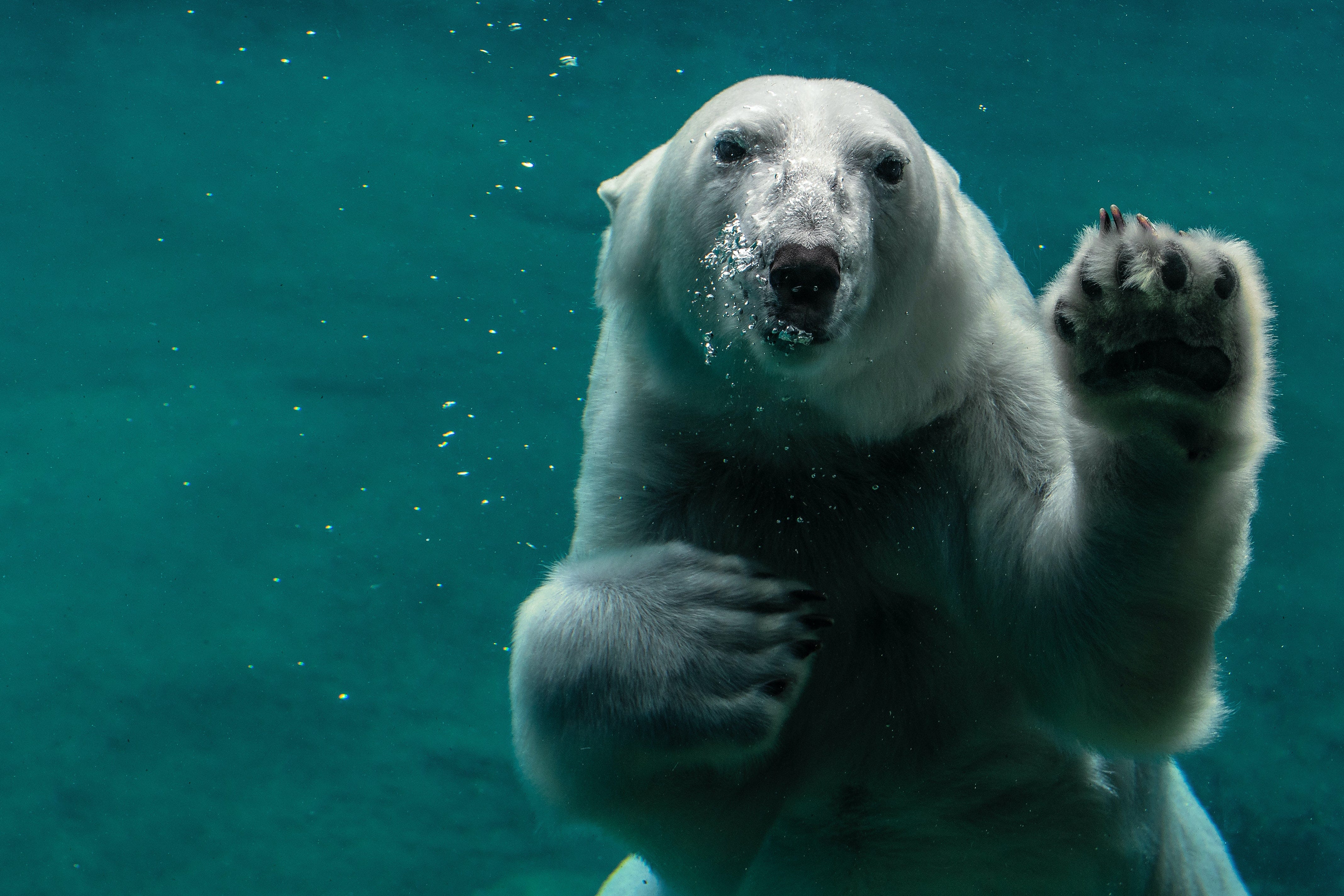
Polar bears are the most famous of the many species that are running out of time, living on a planet with an ever-shrinking Goldilocks Zone for their particular needs. Photo credit: Peter Neumann

Astronomers are on a quest to find other planets with the same large-scale Goldilocks Zone as Earth, where temperatures allow the existence of liquid water. This is primarily part of the effort to search for extraterrestrial life, but I suspect many people think the hunt is valuable for another reason: as a way to find other places humans might relocate to when we’ve outgrown our home planet. To me, this is akin to throwing your story in the trash and starting over. Similar to Planet Earth, populated with almost nine million species, a draft is an incredible accomplishment, filled with thousands of words that have been organized to work in harmony. Let’s keep these stories, no matter the scale, and figure out how we can make them “good enough” for everyone to enjoy.

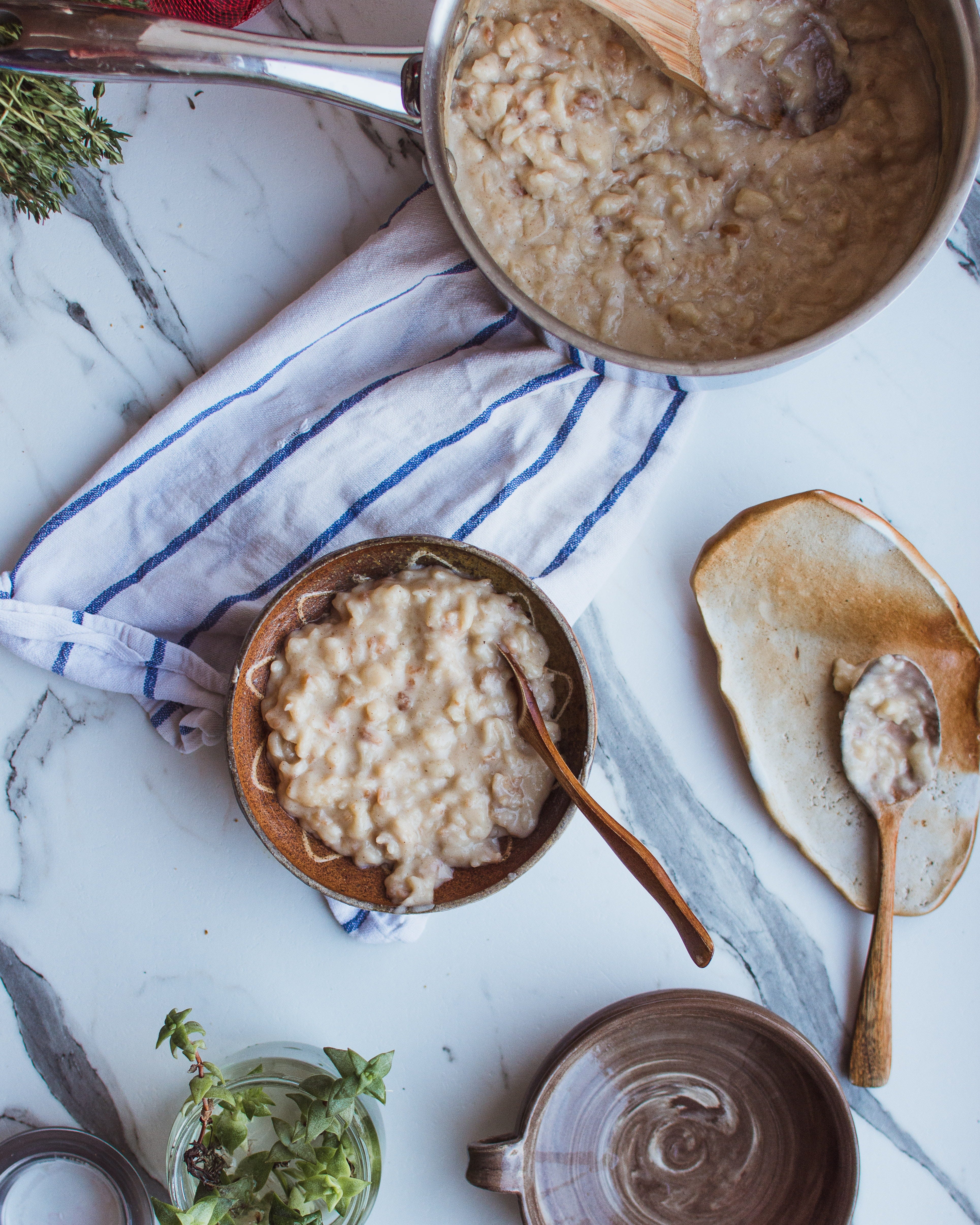
Porridge ready to eat
Photo credit: Klara Avsenik

Happy Tales!