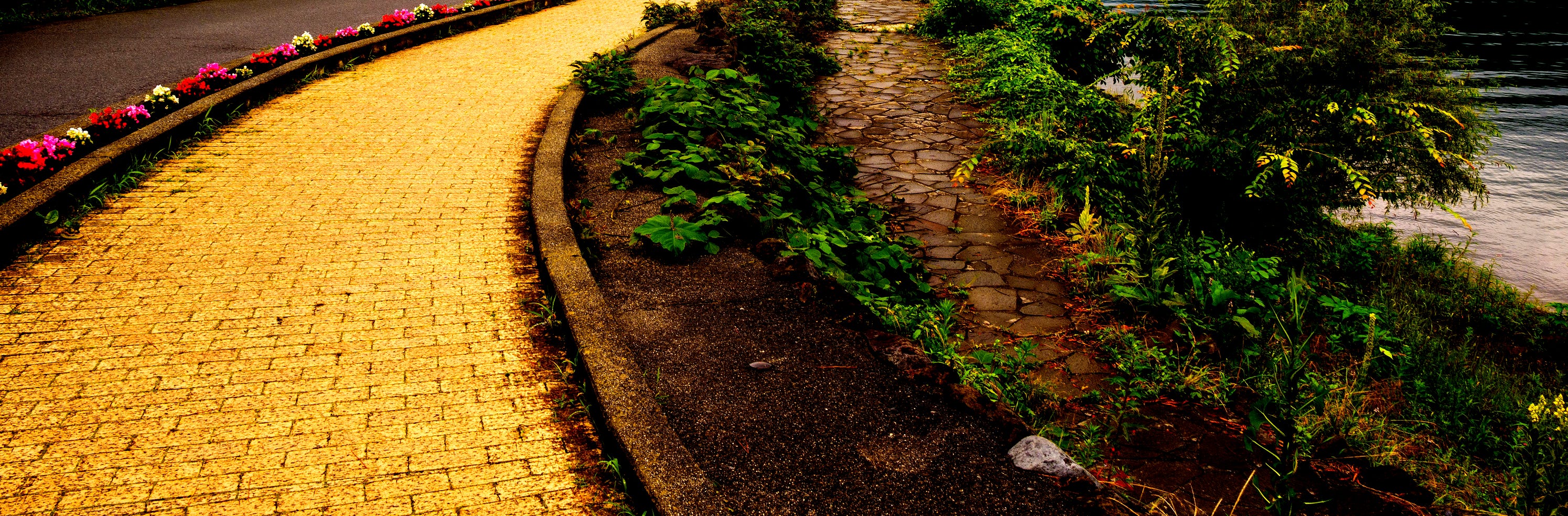
Walk with a View

Do you focus afar … or up close?
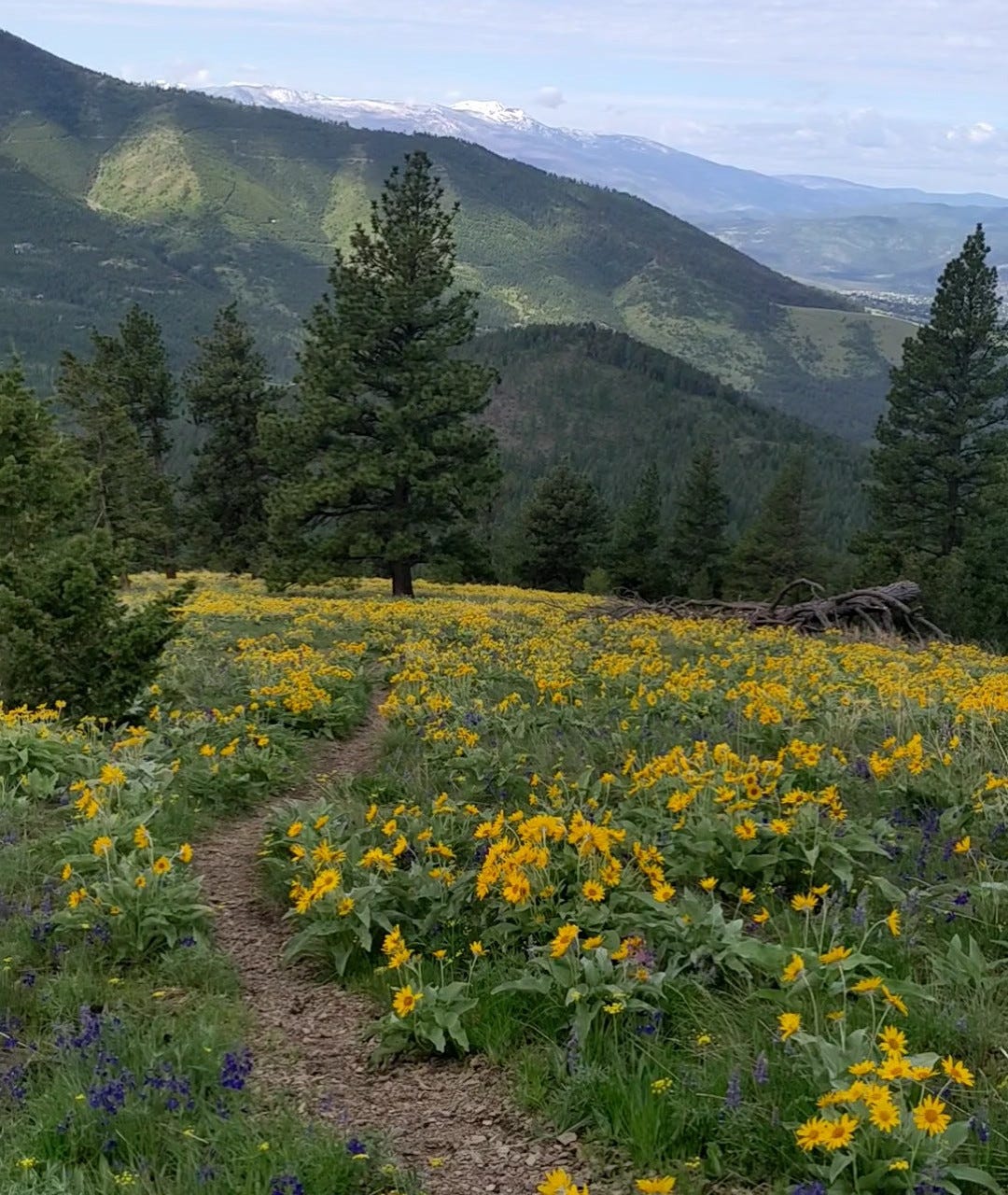
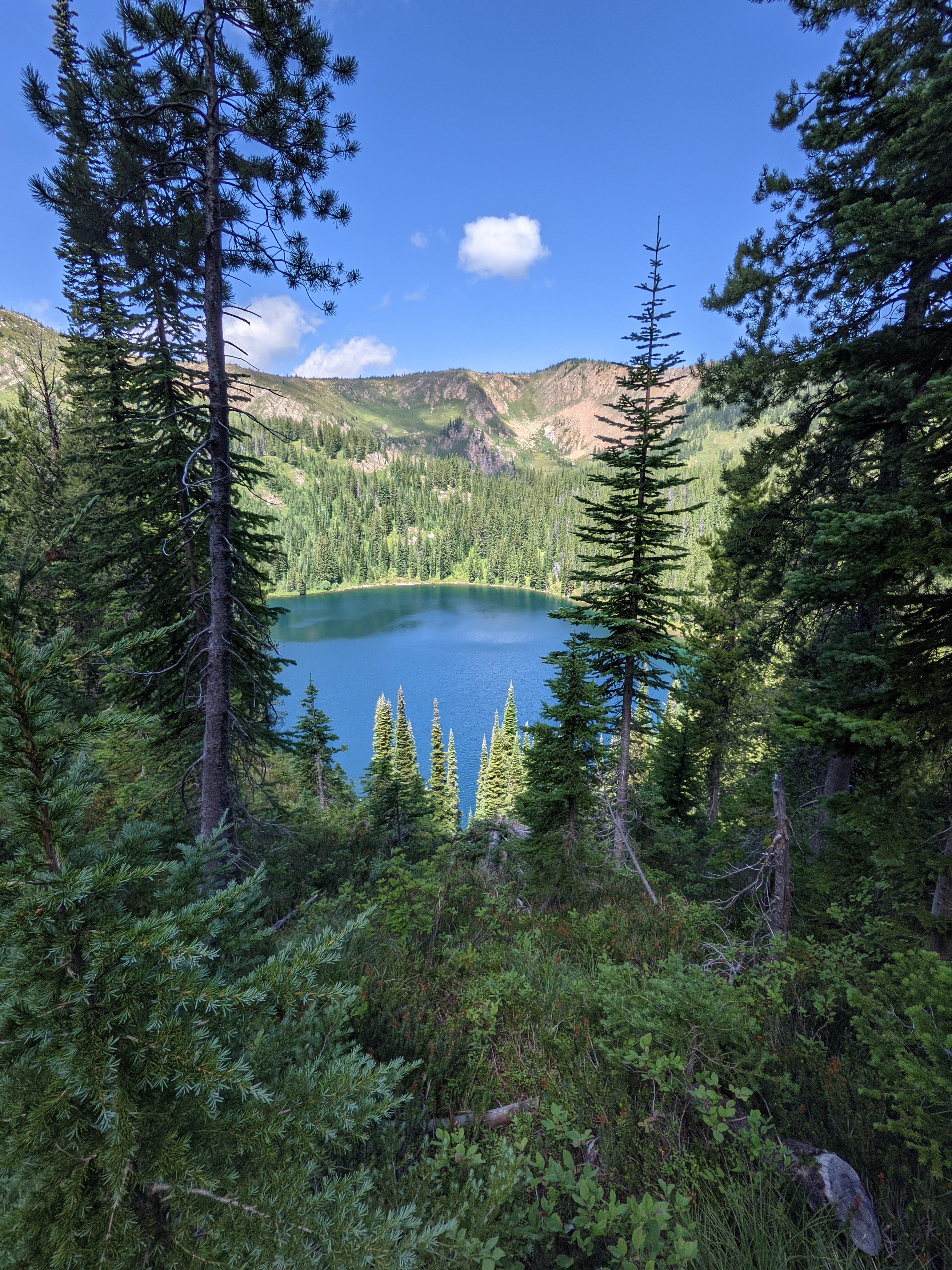
A grassy, flowered Montana slope with Ponderosa Pines and other mountains in the distance.

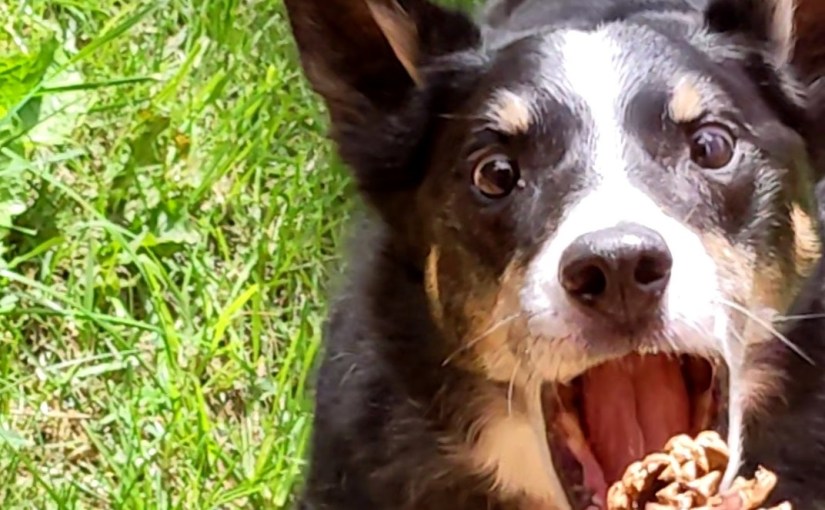
When I lived in Montana, the “Big Sky” state, I walked in the hills every day. These were grassy rises dotted with Ponderosa Pines, which prefer a lot of open space around their red-black trunks. Mountains rose not only beneath my feet, but miles away, blue with distance. Sometimes the grass was green and speckled with purple lupine, orange paintbrush, and yellow balsam root, sometimes it was brown and shriveled in the summer heat, and sometimes it was covered with a shawl of snow. But no matter the vividness of the hues, no matter the searing heat or the biting cold, my one constant was a sense of space. An expansive feeling, as if I had taken a big breath of helium over the course of an hour and a half walk and could practically float downhill toward home. My dog, too, seemed to feel this way, galloping and leaping far from me for pine cones, rarely slowing in the crisp dry air, even on the hottest of days. We always arrived home tired but exuberant. My head would spin at the thought of the distance we had covered and the far-off allure of hills we had yet to climb. Maybe tomorrow…
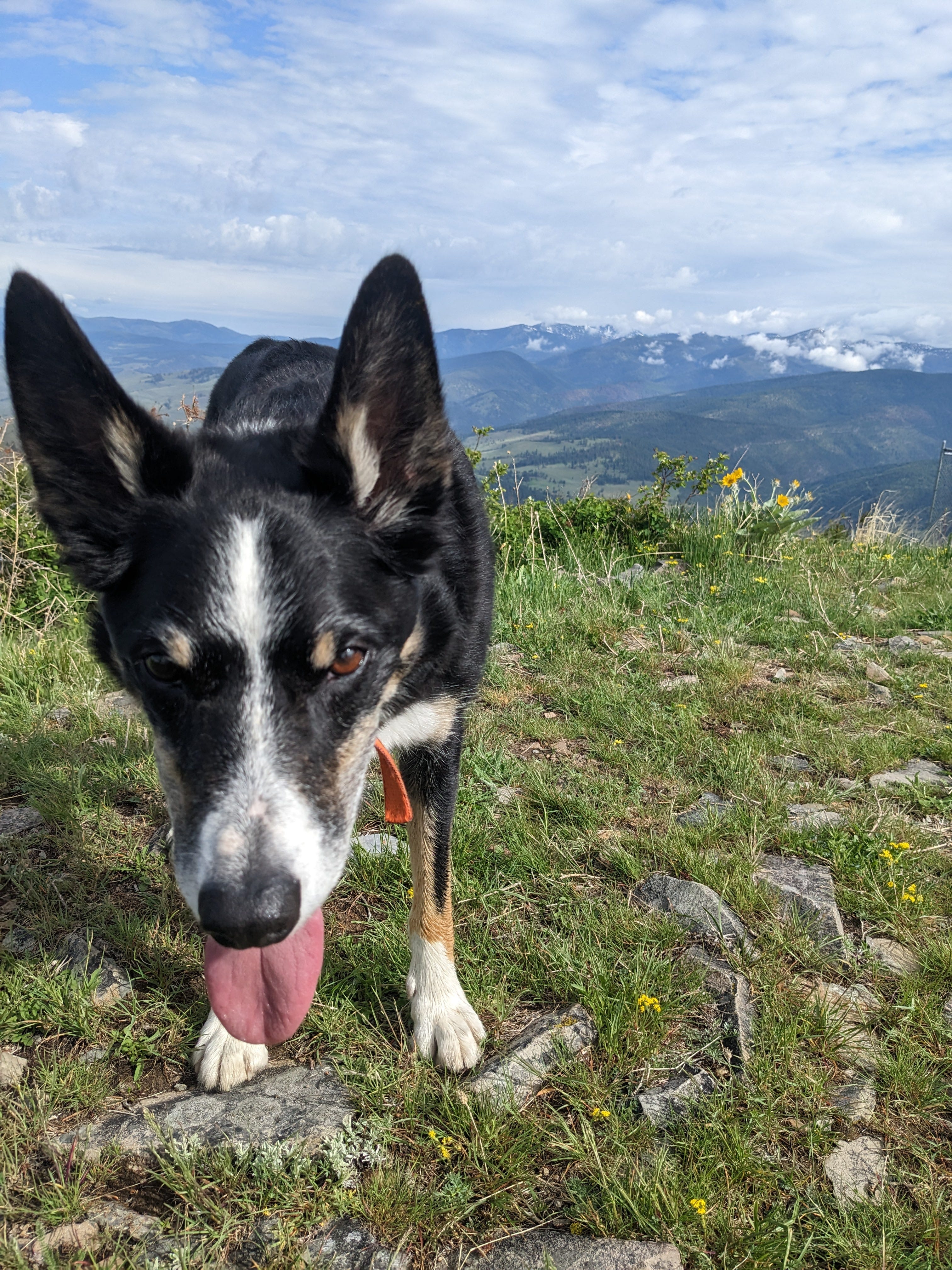
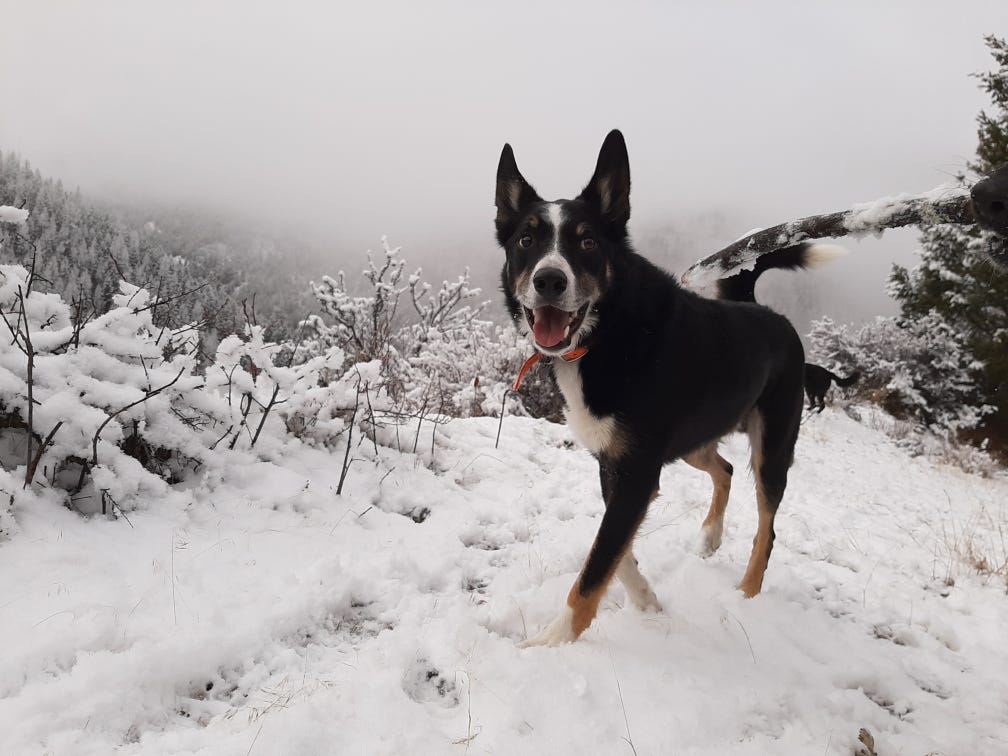
Dog panting on summit of a hill, with more mountains in view behind him.

To me, this experience of traveling while keeping a loose focus on the horizon mirrors how I feel when I draft a new novel. From that very first step onto the metaphorical path, I have a lofty goal in mind. The top of a hill becomes the “what-if” that my main character is heading toward. What if a musical prodigy suddenly loses her ability to play? What if a phobic kid discovers he has to get rid of his safe space? What if a girl wants to sing, but is forbidden because it’s too distracting? I take some loose warm-up steps and my mind releases the premise, the inciting incident, and the theme. I see the major obstacles my protagonist will face as clearly as spotting a plume of fire on a slope.
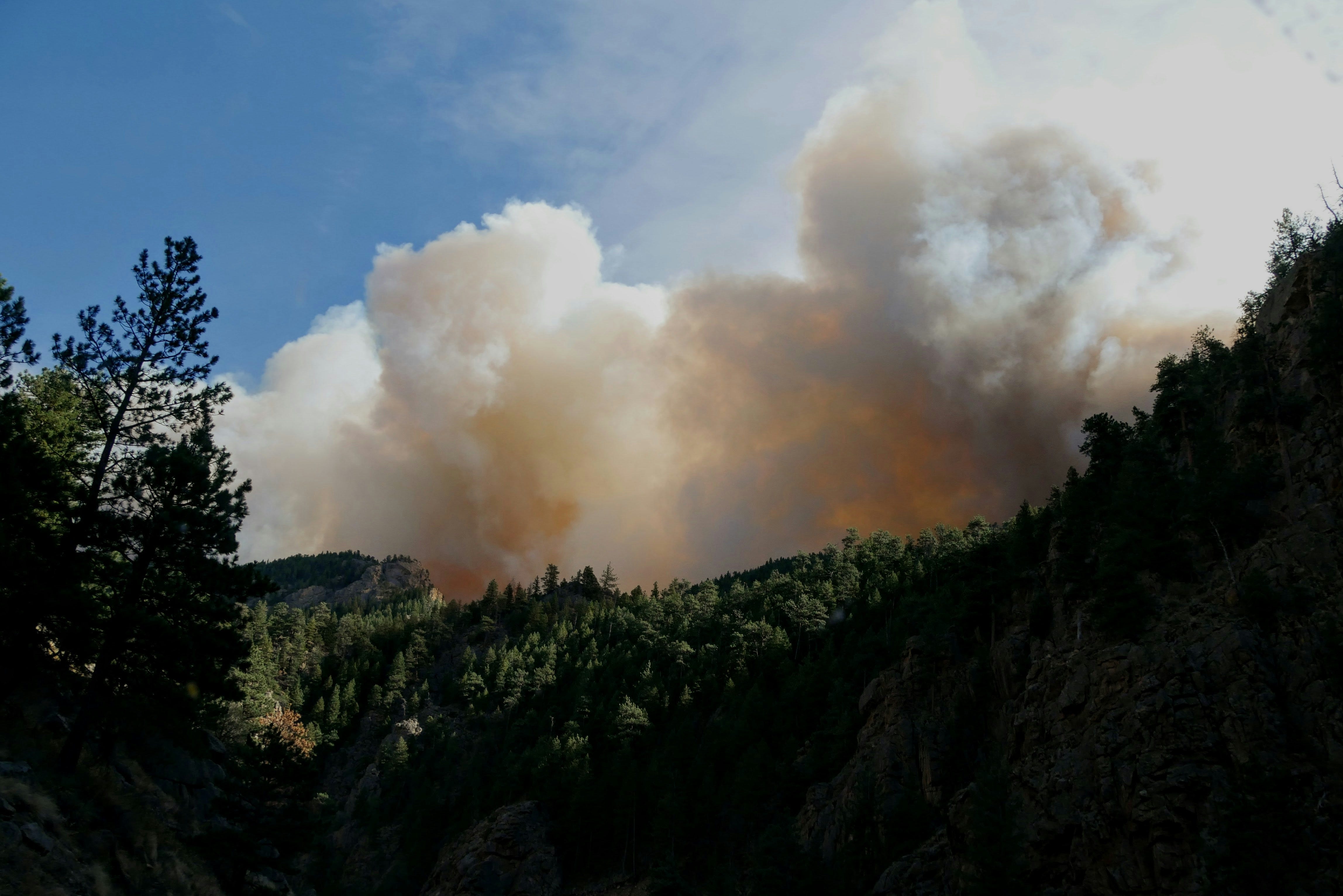
Orange smoke rising from behind a forested hill
Photo credit: Malachi Brooks

As I approach the top, chest heaving, legs burning, I begin to understand how my main character will take a long hard look in the mirror and come to grips with some difficult self truths. I scrabble higher still. The mountain no longer seems impossible to climb. I step to the summit — the climax of the story! On my way back down the hill, the final resolution unfolds. I’m now able to link my characters’ emotional journeys and all of those critical plot developments into a full story. Even the setting becomes more alive. I can see the entire thing! As soon as I get home, my fingers fly across the keyboard as fast as my feet.

Wrong turns happen, of course. Sometimes I end up on a completely different summit than the one I envisioned when I started out. This is not only the reason I spend so much time plotting out a story in advance but the reason it’s so fun. My creativity never feels constricted in any way – not during this plotting stage, nor during the actual writing of the story itself. There’s always room for change.
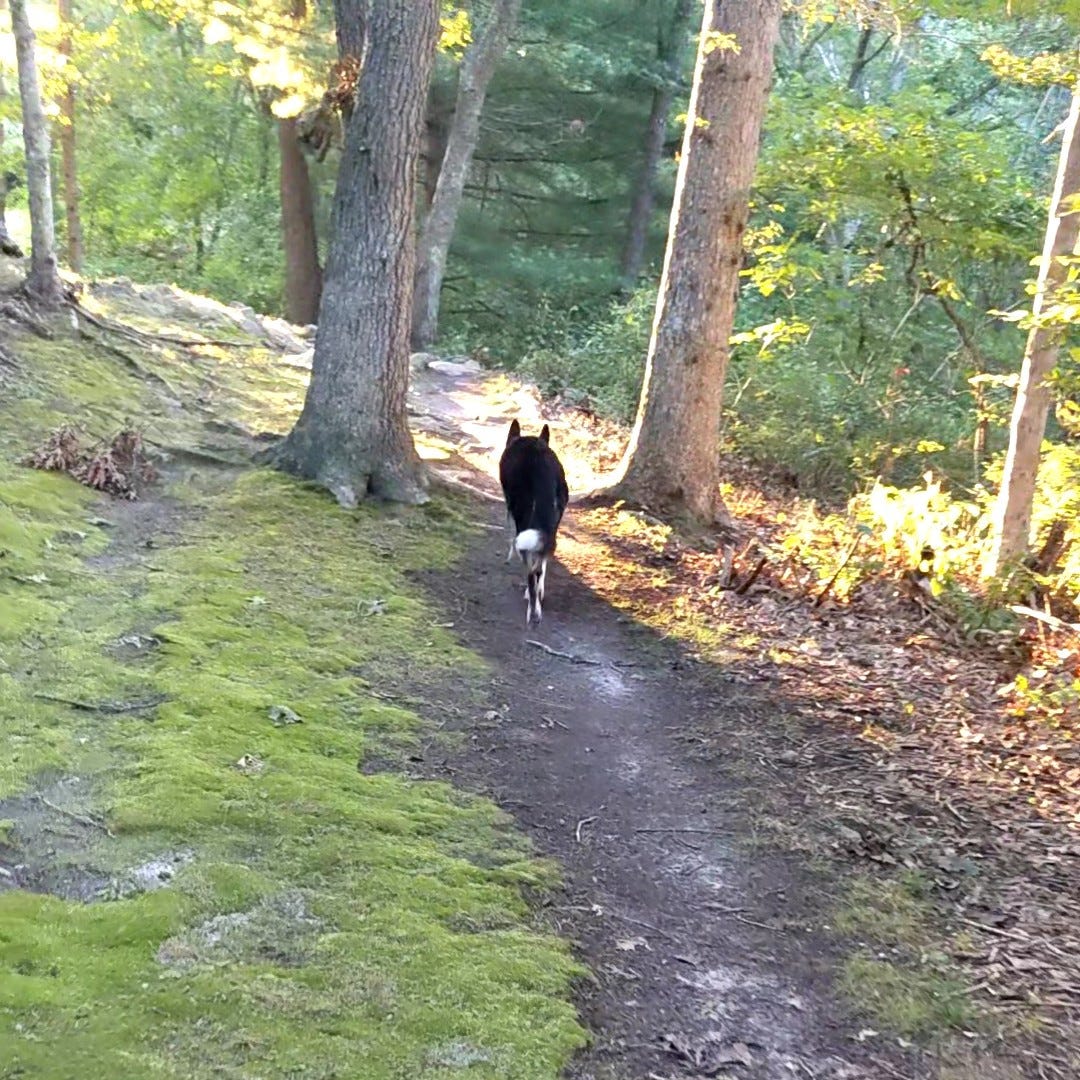
The time for a constricted view comes later in the writing process: the editorial stage. Though revision starts and ends with a big-picture look at the whole story, the majority of the work lies in much smaller sections. It’s crucial to read closely with an eye for detail and an ability to dismantle the writing chapter by chapter, scene by scene, even line by line.

My new daily walks in the woods on Cape Cod are the perfect example of close focus. As soon as my dog and I plunge into the dense vegetation, we lose sight of the sky. We’re immersed in a jungle of branches, vines, and leaves. We follow narrow paths beneath tilted rotten trunks, twisting to avoid the sticky, insect-ridden webs that stretch from one side to the other. My dog bites at deer flies. I swat at mosquitoes.
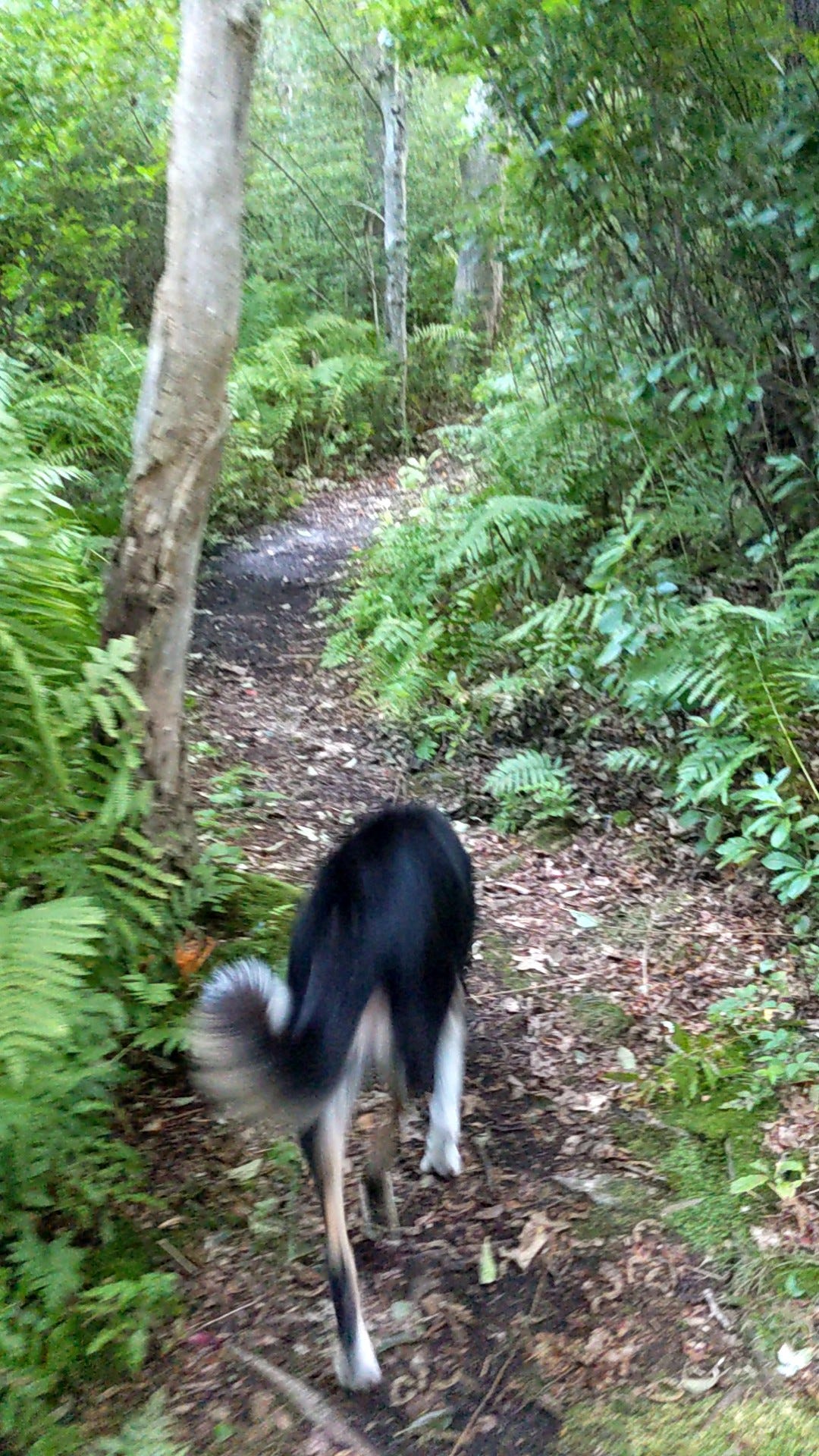
When vegetation brushes my arms, I think of the tiny, nearly invisible ticks it harbors, carrying all sorts of nasty diseases that can lead to joint pain, fevers, organ failure, and death. Unlike Montana with its bears, mountain lions, and wildfire, the dangers here are so small they can’t be seen with the naked eye: a parasite, a bacteria, a virus. My mind travels inward to dark, anxious problems that I know I must solve. What does my protagonist really want? How can I make her more relatable? Is his voice consistent from one page to the next? Except for a ferry foghorn and a Barred Owl’s hoot, sounds in the woods are small and muffled. A mosquito’s whine, the thud of a foot atop damp leaves. Even the air is difficult to breathe, close, still, thick with humidity.

Such is the slow, painstaking process of revision. If you feel trapped in the minutia of your story, you are not alone.

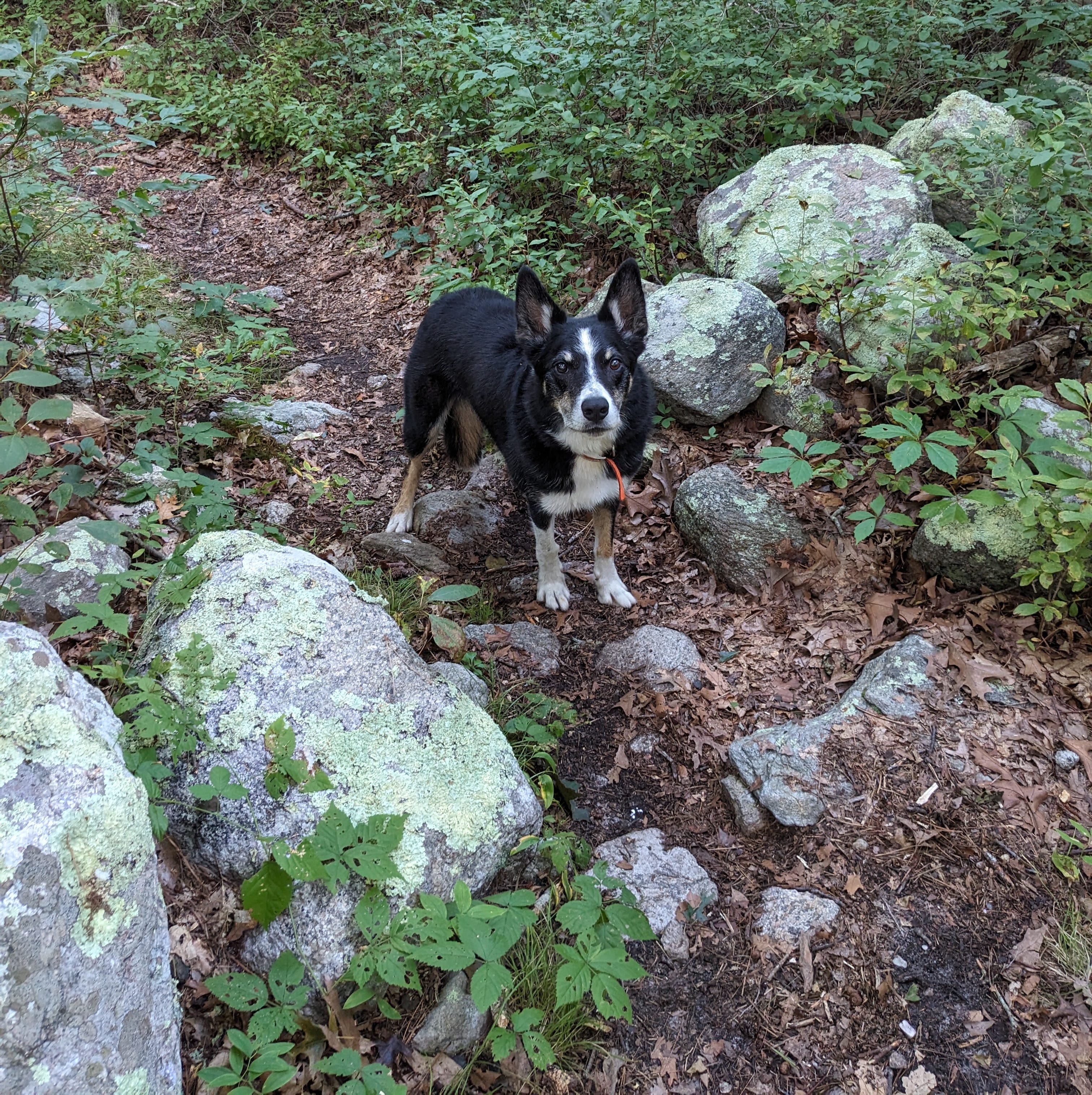
Dog sitting behind a bright red mushroom in the woods

Yet great beauty lies in the closeness. In some ways, I would argue, it is more vivid and special than those distant spectacular views of mountain peaks. The impossible green of new leaves. The bright pink Lady’s Slipper peeking from beneath a blueberry bush. Mushrooms everywhere, sporting unreal colors on their fruiting bodies. The nutty aroma of dead leaves, so potent in places that my stomach growls, hungry for baked goods. The meandering line of an old stone wall, appearing on one side of the trail and disappearing on the other. The fuzzy face of a young fisher clinging to a tree, seemingly as curious about me as I am about it. The kingfisher skimming the pond’s flat surface, the osprey scanning for fish from its high snag, a chorus of invisible frogs. Something rustling the underbrush: a deer, an otter, a turkey, a gloriously red-brown coyote. I stop to soak in the surrounding jungle with all my senses, my face dripping with sweat or rain. Often I can’t tell which. Though the elevation gain is small compared to climbing an entire mountain, the roller-coaster ups and downs of the trail are just as exhausting. Maybe more so, in the heat of summer.
This slow, strenuous progress is probably why many people dislike revision. But I’ve come to love it. And when I’m finally ready to step back and read the whole manuscript again, to see whether it makes sense, it’s like stepping from the shade of the trees into the sunny field, brushing away the spiderwebs, knowing that soon I’ll wash all the bugs off in the shower, my dog collapsed on his side in a happy stupor. For both of us, only the sense of accomplishment and memories of forest beauty remain.
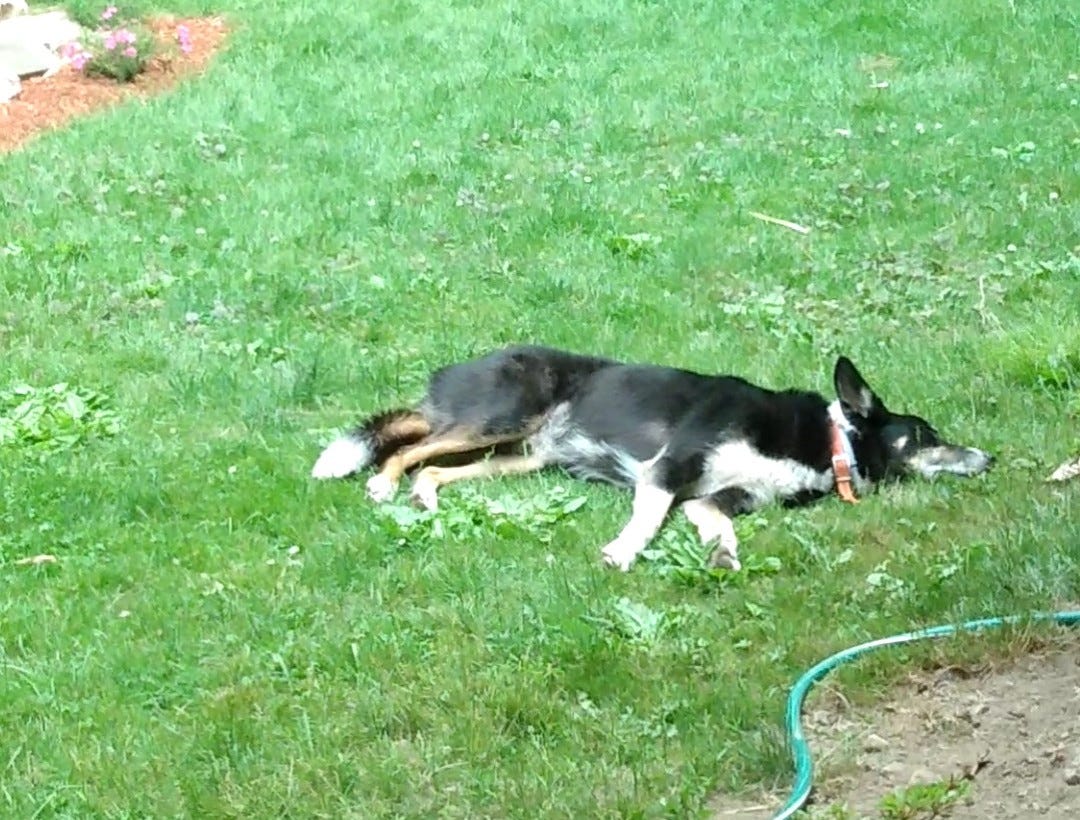
Dog sleeping in the grass

What’s your favorite part of the writing process: loose focus or close?

How about when you go outside?
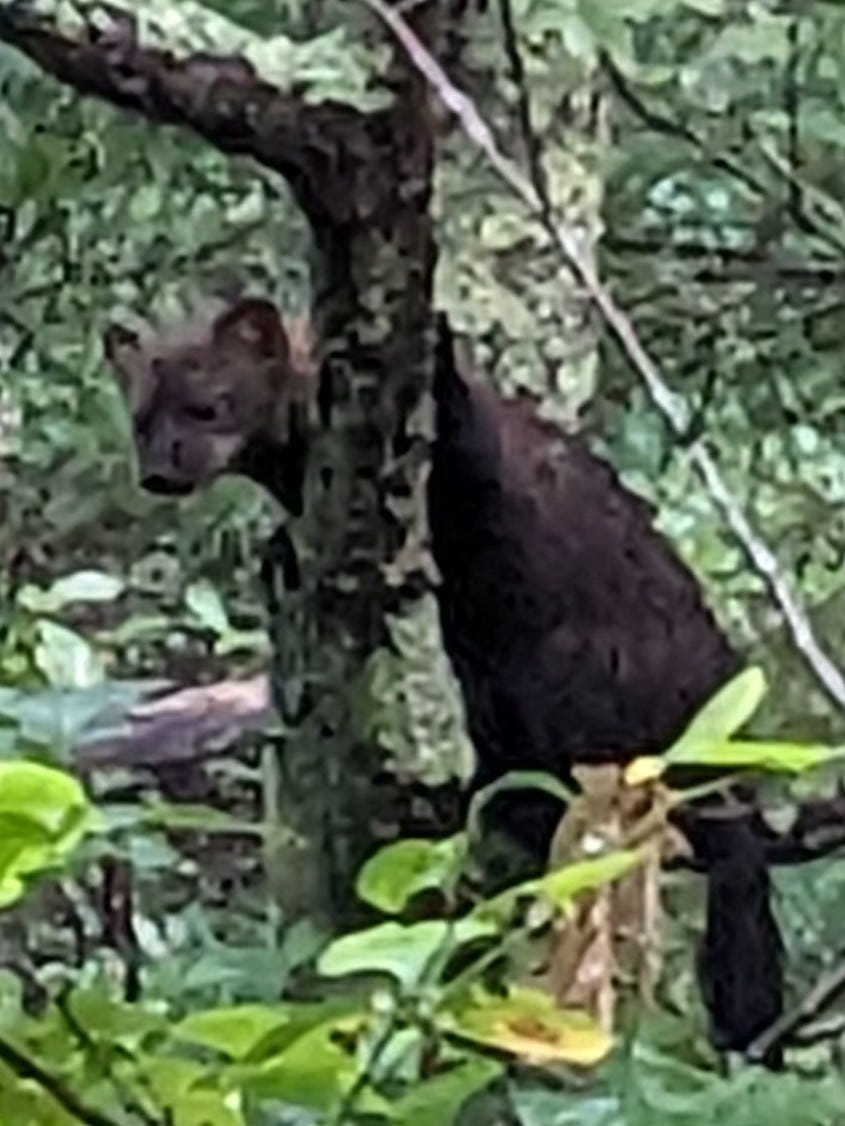
Young fisher in a tree

Happy Tales!

Getting Back in the Game

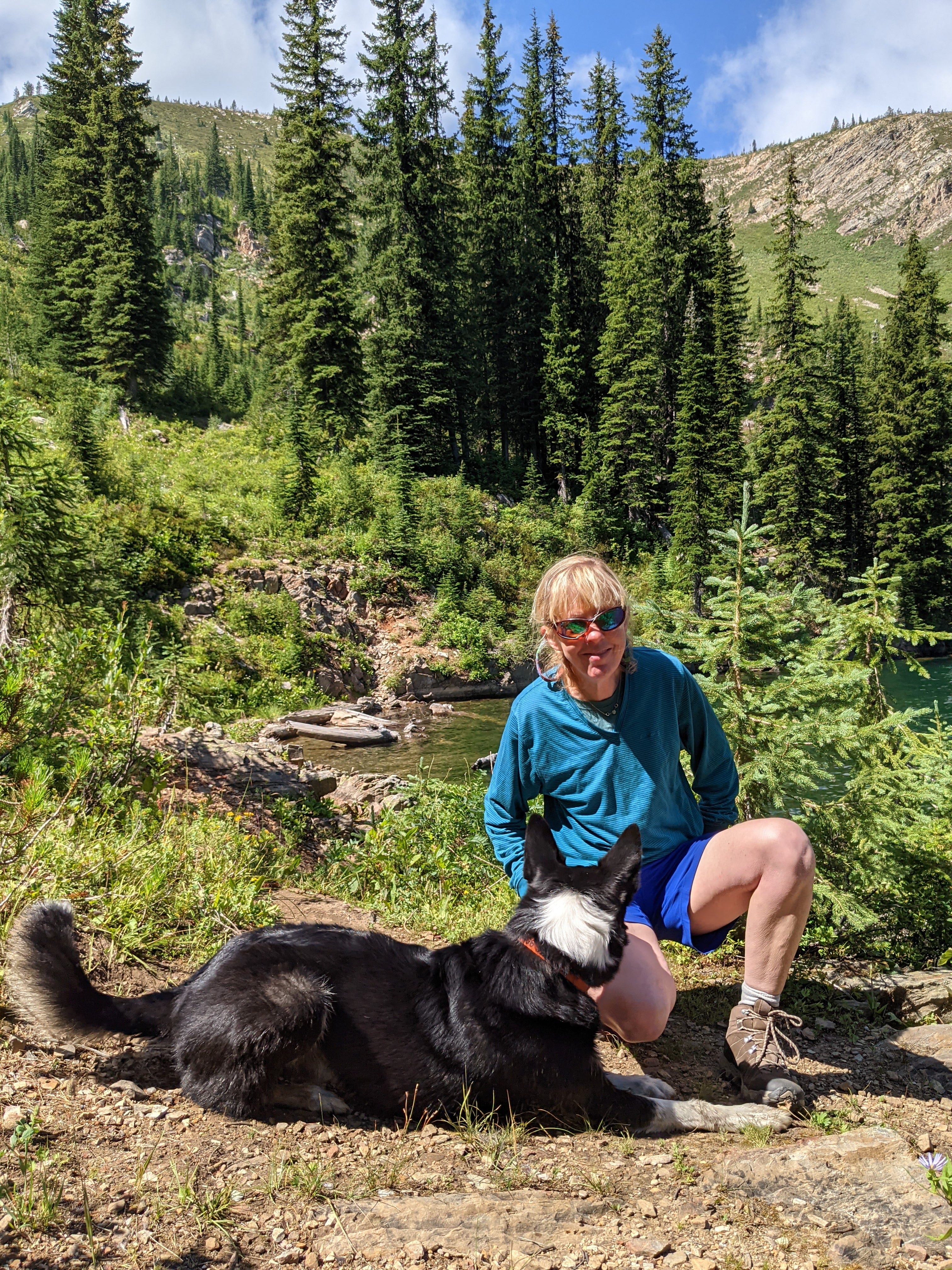
Dog staring vacantly into a lake

Have you ever felt as though you’re floundering, uncertain what to work on next? Perhaps (1) you’ve finally finished that first draft after months (years!) of effort, let it sit for weeks (months!), and now haven’t any idea what to do with it. Or (2) you’ve perfected your story (Seven revisions! Countless brainstorming sessions with critique partners!), to the point that you know if you work on it any more it’s only going to get worse—but the thought of querying is enough to freeze you from the inside out. Or (3) maybe you’re lucky enough to have moved past those hurdles and you’re actively querying, negotiating, revising (again!), publishing, or marketing, but everyone* wants to know what’s next and your muse isn’t merely hiding, it seems to have jumped off a cliff and swum out to sea. *By “everyone,” I mean you, plus at least one other person, if you’re lucky.

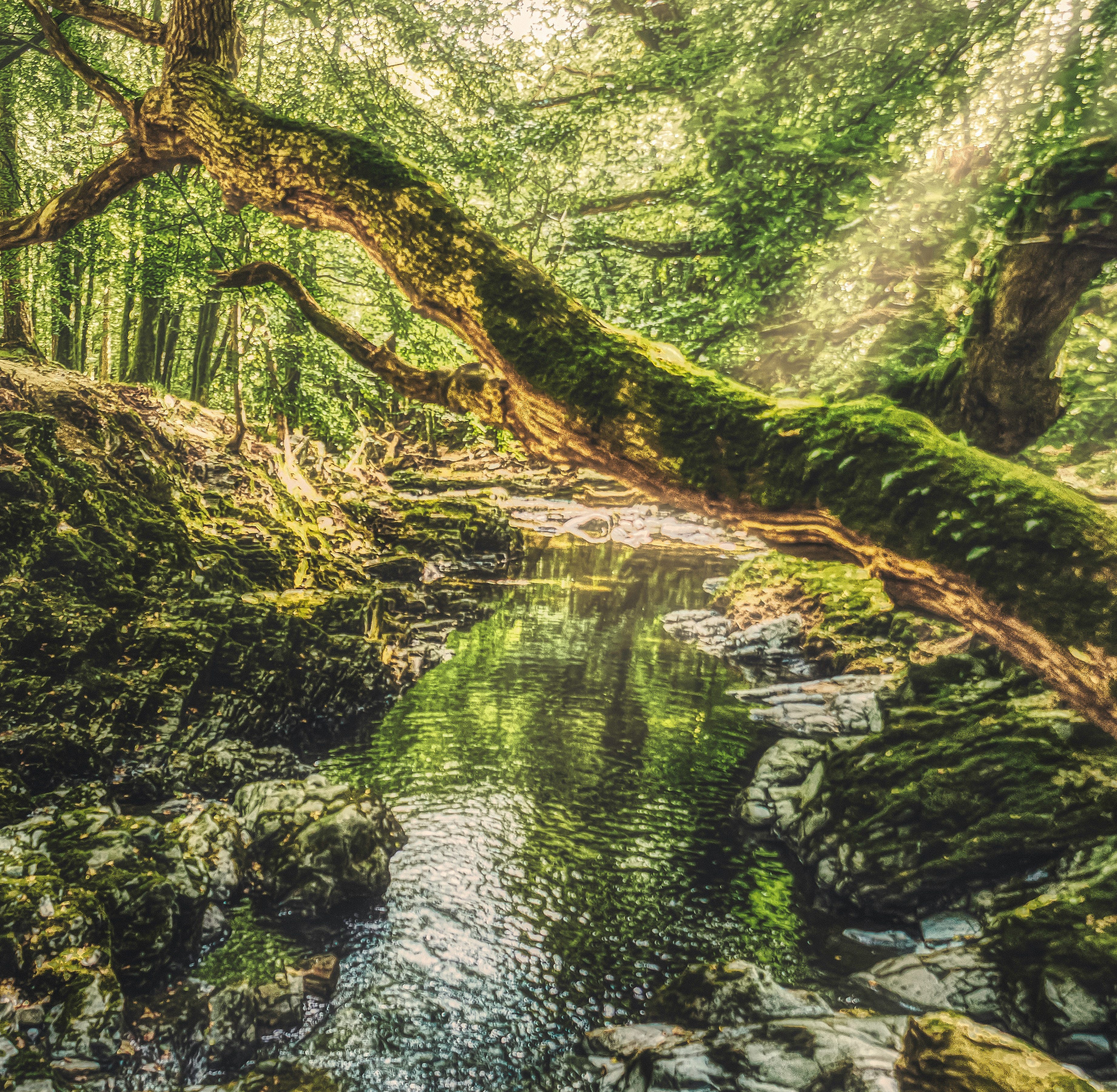
mossy tree limb stretching over a creek
Photo credit: K Mitch Hodge

Never fear. I’m going to go out on a limb here and say that if you haven’t experienced at least one of these gut-wrenching dilemmas, you’re not a writer. In fact, I might as well wobble my way to the end of that bouncy branch and say that if you haven’t experienced this in any pursuit you love, then you haven’t lived.

So … let’s address Dilemma #1, when you’re stymied after finishing your first draft. Well, I have a little confession to make. I never succeed in letting my story sit for long before transitioning into Editorial Mode. I have such an over-zealous work ethic that I can’t help but jump almost immediately into revising what I wrote, the same way I feel compelled to walk my dog every single day despite rain or shine, wind or blizzard.

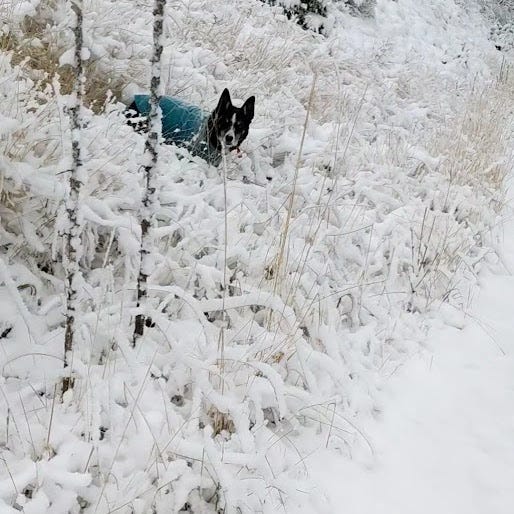
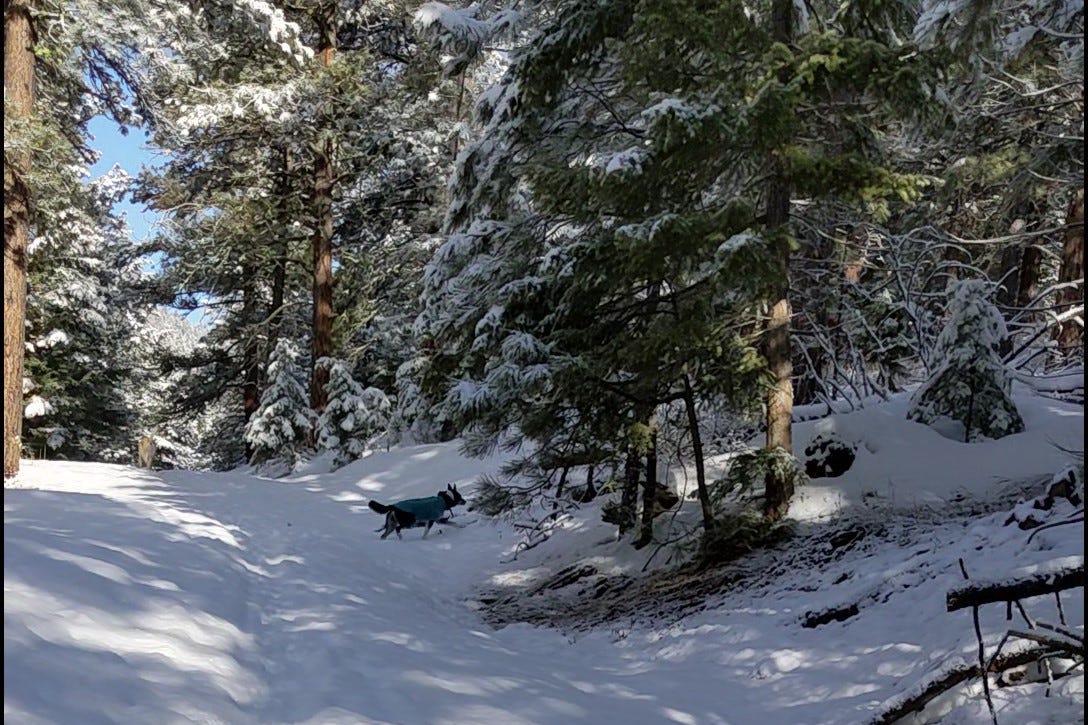
Dog waiting for me on snowy walk
Tock and I enjoy our walk no matter the weather.

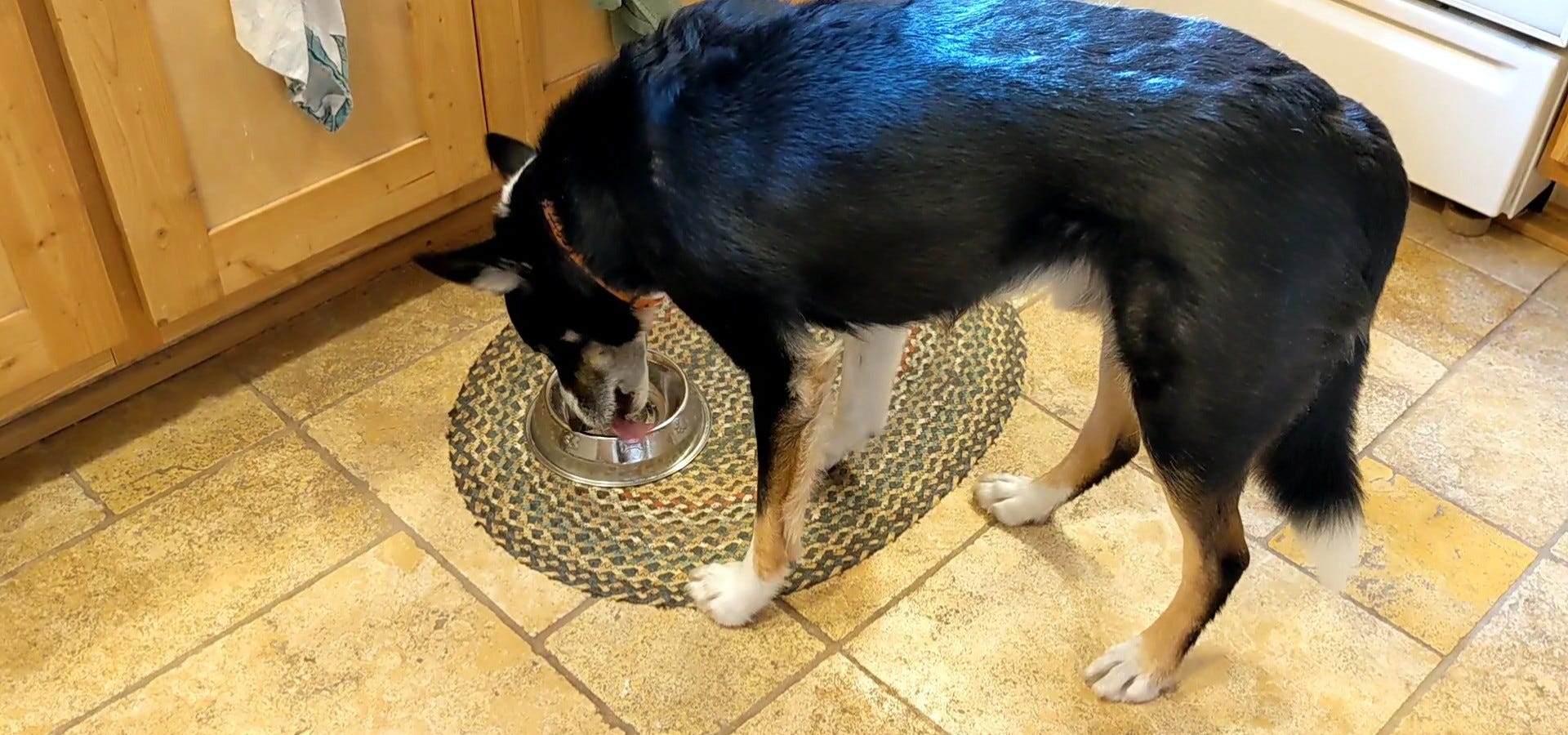
Though my turnaround from writing to editing is quick, the process I use is gentle. This is because my revisions don’t begin with actual changes. Instead, I start with something that is so fun I want to do it. I look forward to it, the same way Tock faceplants into his bowl of breakfast or dinner kibble.

Dog eagerly polishing off his dinner

And what is that super fun step? Kind of like a dog sniffing where they peed the previous day, I get to read what I wrote. At last, I can see my story as a whole piece rather than merely a painful collection of sentences, paragraphs, and chapters. With sort-of completed arcs of character and plot, my story sort-of resembles what someone might want to read someday. It shows me that though I may yet have lots of work ahead, I wrote a story. I did it! Hooray for me! It’s a major confidence booster—and we introverted, insecure writers need all the ego boosting we can get. Most importantly, I make notes as I read on where the world and characters need development, where the plot drops into sinkholes, where the pacing sags or speeds too fast, and where things simply don’t make sense. These notes, in turn, give me a launching point from which I can step into real revisions. And after this full immersion in my manuscript, I not only can revise it, I want to!

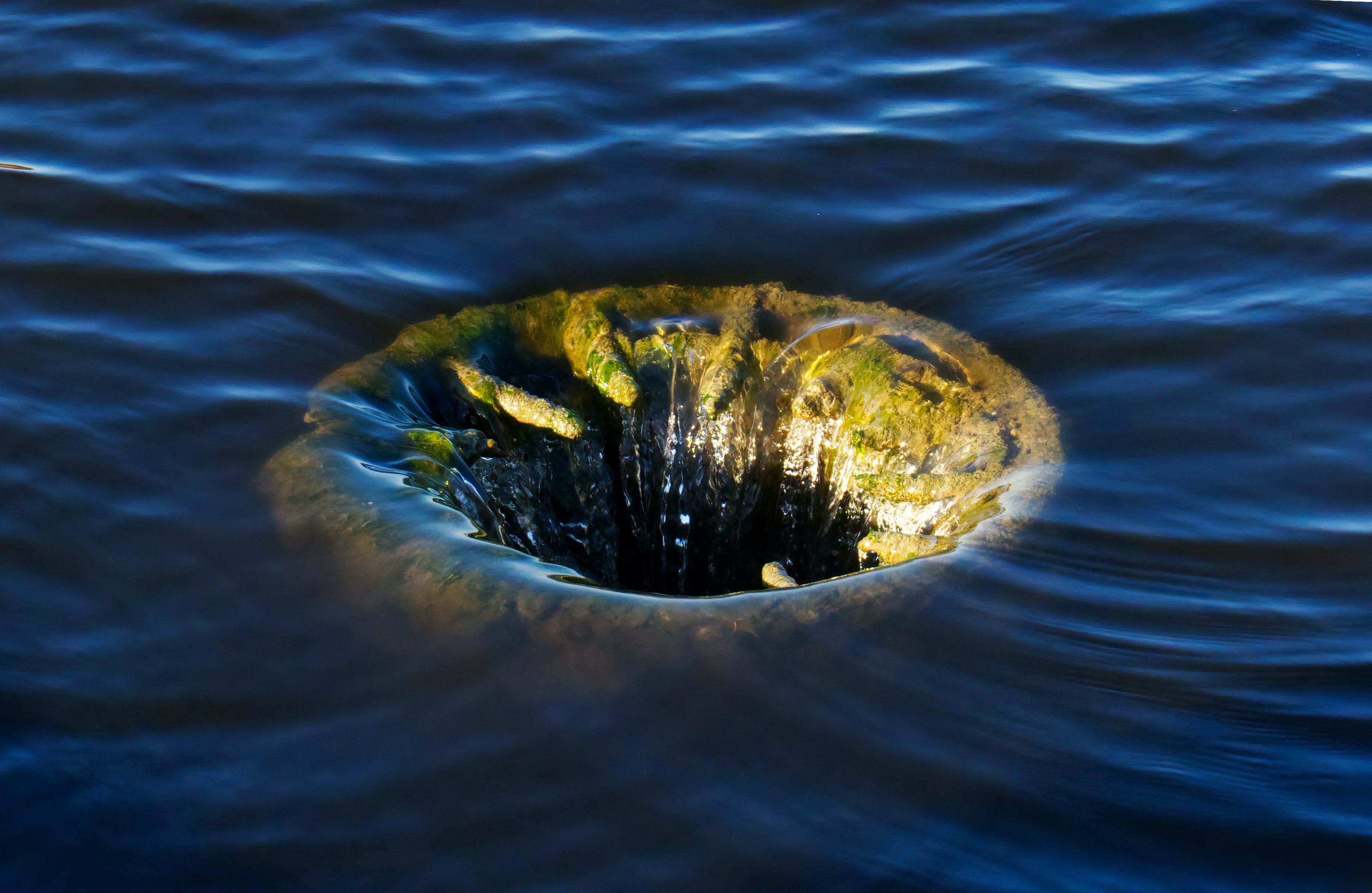
a mysterious hole in the water, into which the water is plunging
Spotting holes in the plot is the first step. Photo credit: Simon Hurry

But what happens once you’ve revised so much that you’re sick of it? I realize that I’ve gotten to this point when I start to question why I wrote the darned thing in the first place. It’s best if you don’t nitpick at it quite that long. Before all pride and joy in your creation vanishes, accept that it’s time to move on. Assuming you want to publish traditionally, this brings us to Dilemma #2.

Querying.

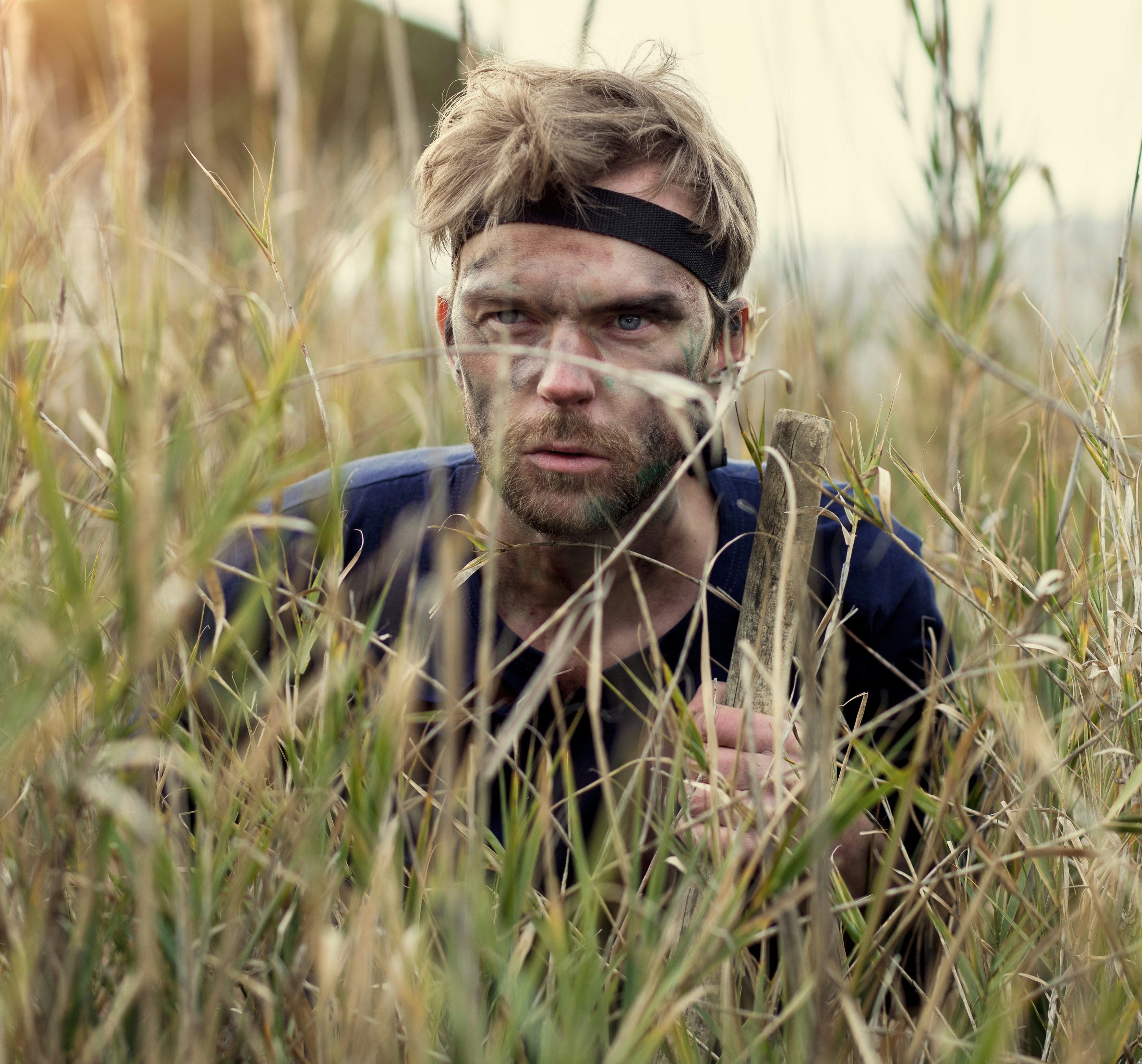
Tense, dirty soldier hiding in the grass
Photo credit: Sander Sammy

To me, this is the most terrifying, blood-shedding step in a writer’s life. You only get one chance with most literary agents to put your stuff in front of them, and if they reject you, you can never again try to persuade them to take on that particular manuscript. Even the rejections themselves are hard to bear – mostly form letters or no response at all. I don’t know which is worse: knowing with certainty that it’s a brutal “no thanks,” or not knowing and thus retaining some hope until, months later, you finally have to mark it down as a rejection by default.

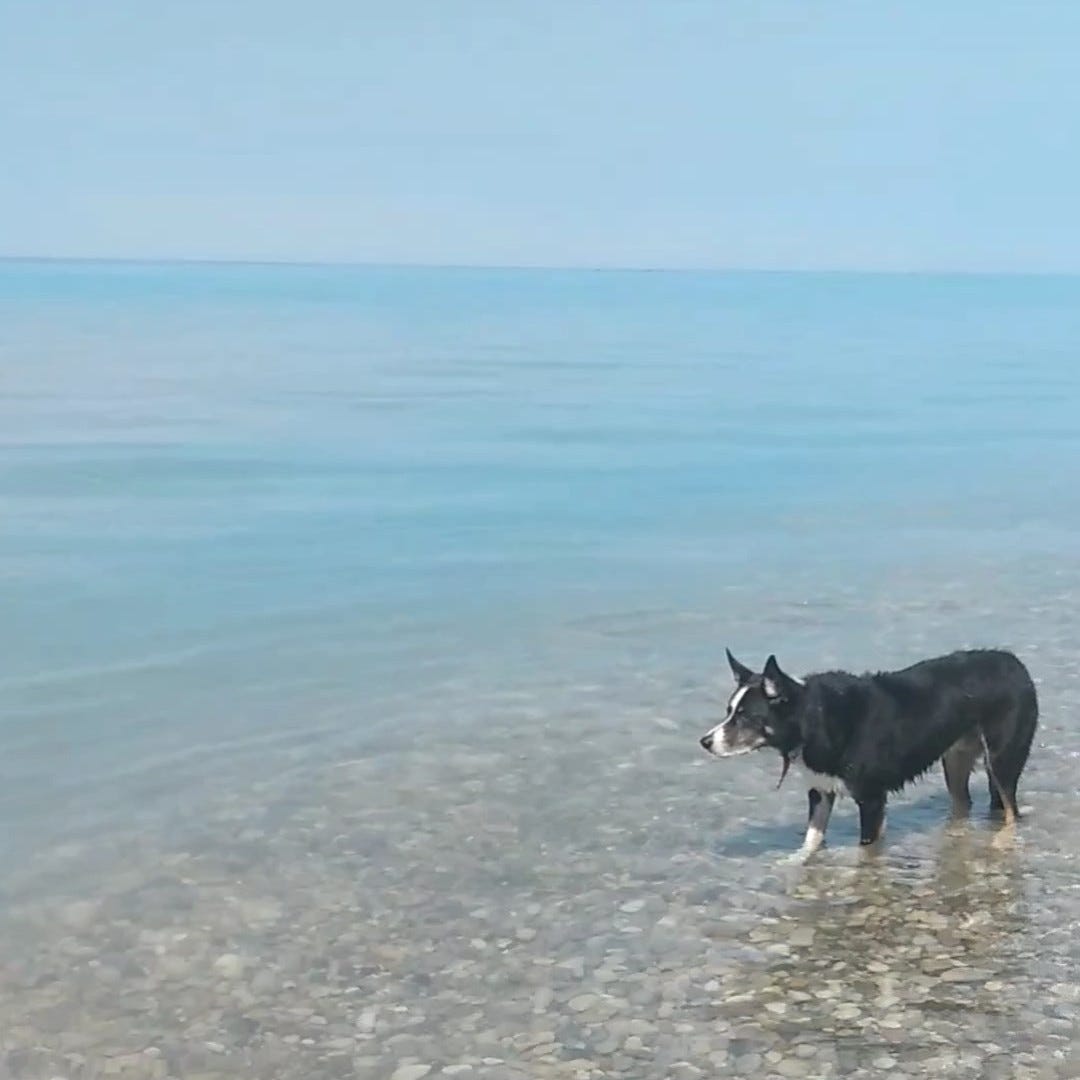
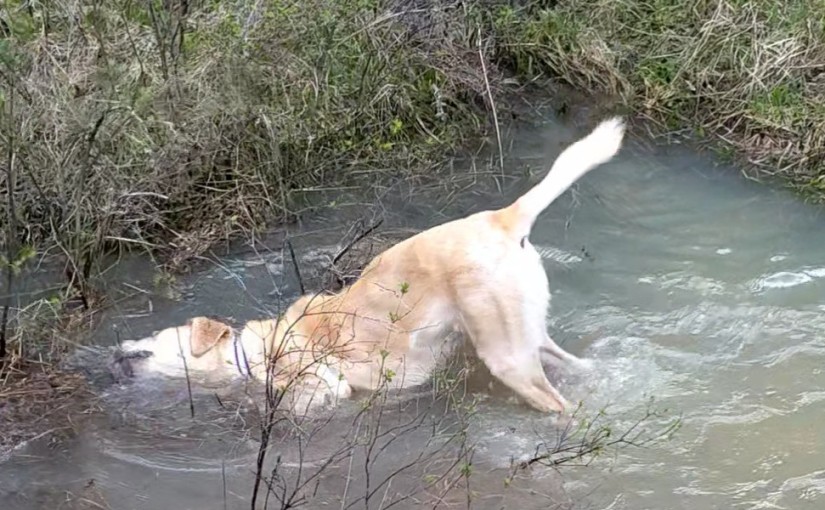
I have nightmares about querying. I think it’s safe to say that prostrating myself in front of an agent is my least favorite activity on the planet. So what do I do? As so often is the case with me, I look to my dog for inspiration. He’s always been a scaredy-pup, startling at big birds flying overhead, or a skunk waddling out of the bushes like happened last week (did Tock investigate and get sprayed? Thankfully, no. He scurried past it and waited for me a respectful distance away). He used to worry about swimming, standing for minutes on end gazing forlornly at a stick in the water just out of his reach. He still takes his time, studying the stick for a few seconds to a minute before paddling out to it. But he’s learned to swim farther and farther these past couple years, and eventually retrieves the sticks, every time.

dog staring at stick in water a few feet away
dog has swum to the stick and captured it!

The most frightening thing that Tock recently experienced was when a large unleashed dog charged down the trail toward us and jumped on him. Not in a friendly way. In a split second, the dog had my poor puppy on his back and was standing over him, snarling and lunging at Tock’s neck. In the next split second, I got over my shock at what had just happened and called for Tock to come to me. He wriggled out from beneath the dog, ran to me (fortunately uninjured), and we hurried away. I was so anxious to make his experience seem less stressful than it surely was that I didn’t even stick around to chastise the aggressive dog’s owner, but walked briskly away, rewarding Tock with treats all the while for his smart decision. But I worried that now Tock would view meeting new dogs the same way I view querying: One hundred percent terrifying, one hundred percent something to be avoided forever.

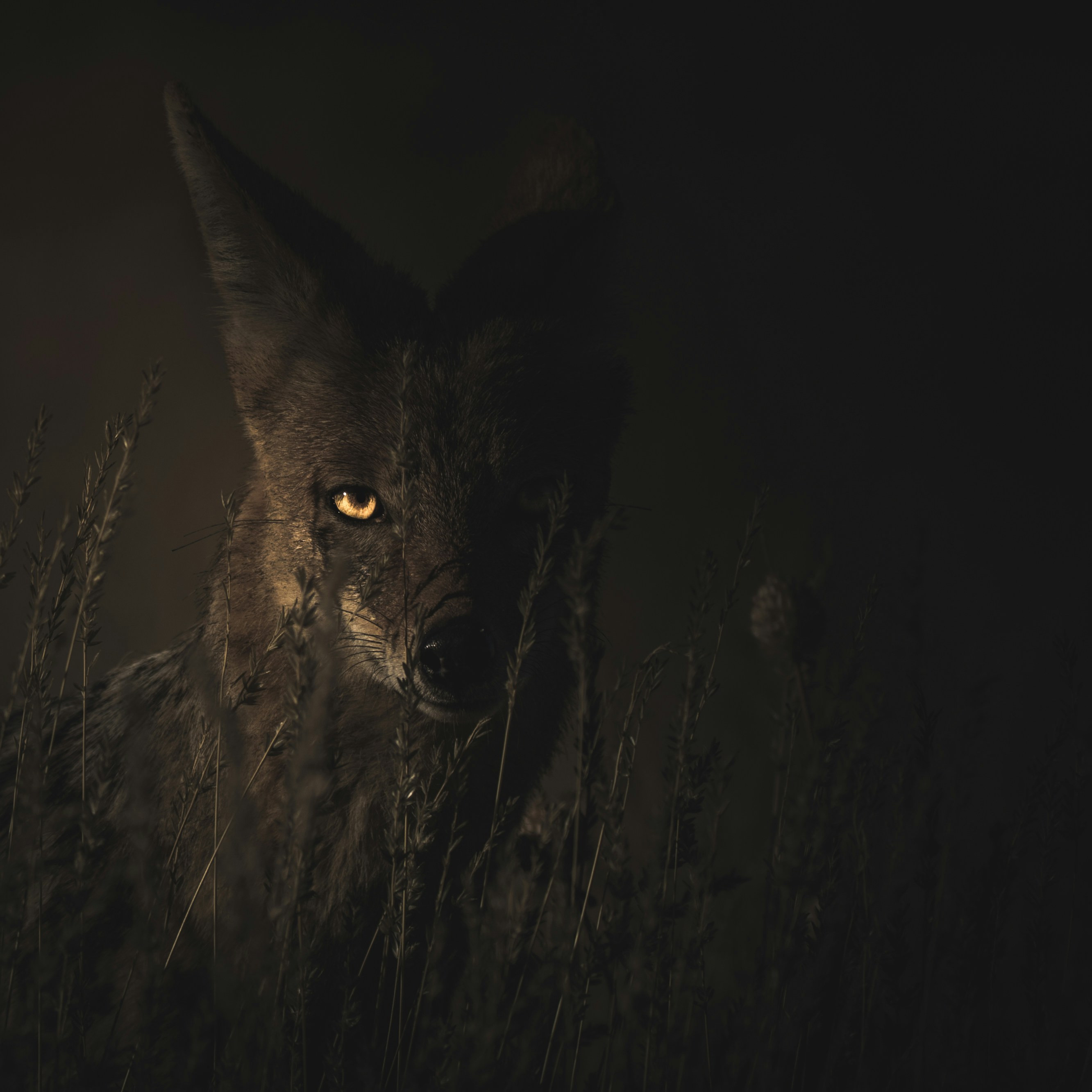
a yellow-eyed, prick-eared beast stares at the viewer from the dark

Still, I knew that Tock didn’t want to give up his daily walk due to fear of a savage beast, the same way I don’t want to abandon my dream of becoming traditionally published. We headed out the next morning—a little more watchful, a little more careful (I leashed Tock when we saw another dog approaching in case he’d developed fear aggression as a result of the attack, and kept his voluntary encounters very short). Tock was tentative that day, meeting dogs with his tail at half-mast rather than upright, silent rather than emitting the tiny happy whimpers he usually produces. By day two, his tail was back up, and by day three, he was whining with excitement again. He did it! He overcame his worries about another random attack. Hooray for Tock!

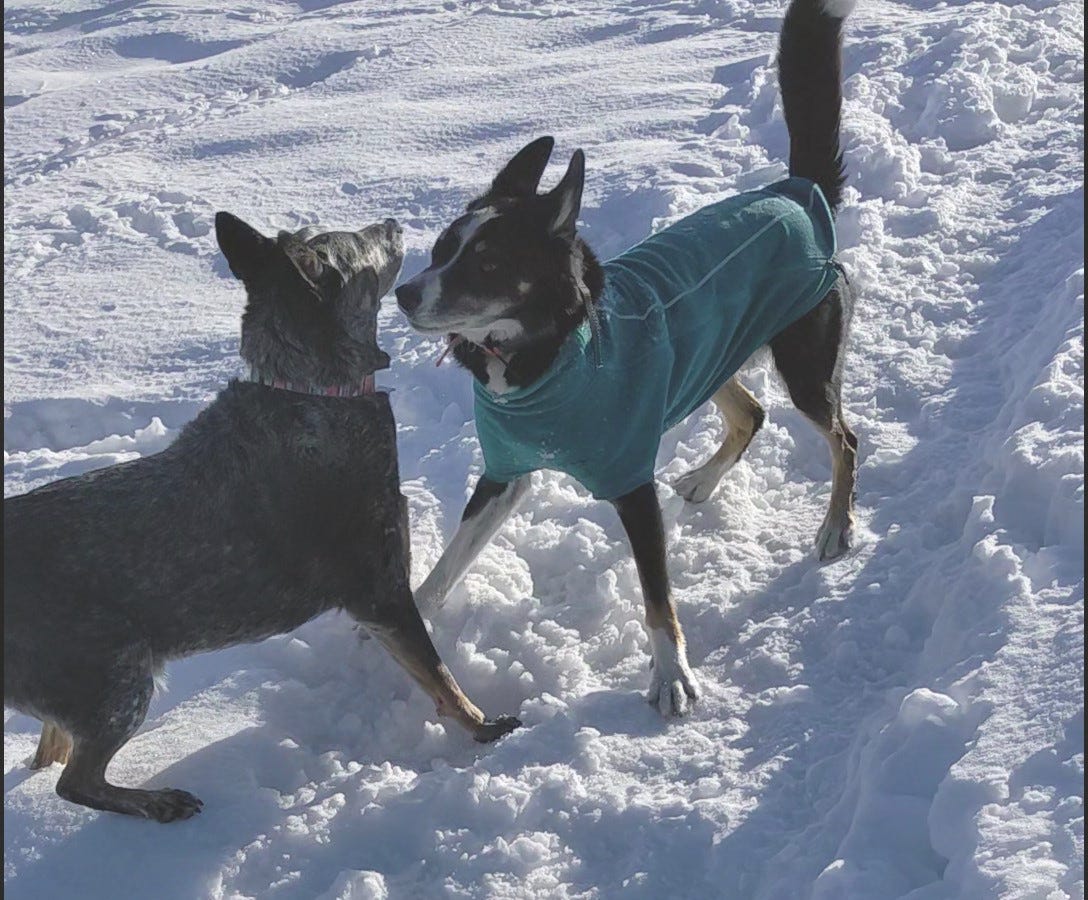
two happy dogs meeting eachother

And if my darling boy can put himself back out there despite his fear, so can I. No matter how many rejections I’ve suffered in the past, I simply need to pick out my preferred agents, organize and tailor my queries to them, and hit send. It’s a psychological hurdle that I must overcome—will overcome—for my latest manuscript if I ever want a shot at publication in the traditional way. The worst that will happen is another form letter. It’s not like I’m going to get bitten in the neck by some long-canined, drooling, bloodthirsty monster.

Right?

Happy Tales!
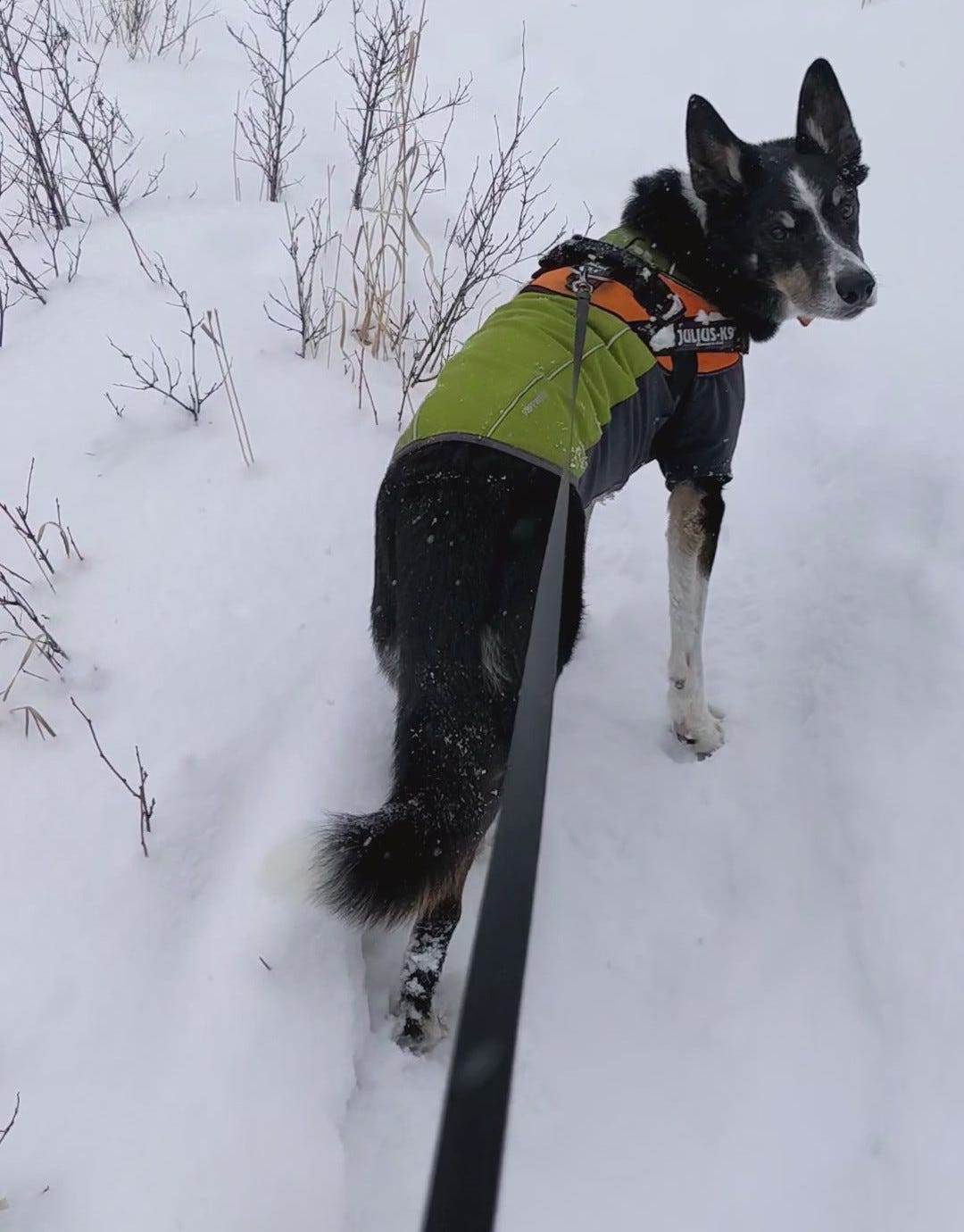
Note: Since I’ve already addressed Dilemma #3—writing something new—in a different post, I won’t address it here (see Stepping Out of Your Comfort Zone, https://substack.com/home/post/p-137672913e).

Mired in Mud

How to Keep Yourself—and Your Story—Afloat!

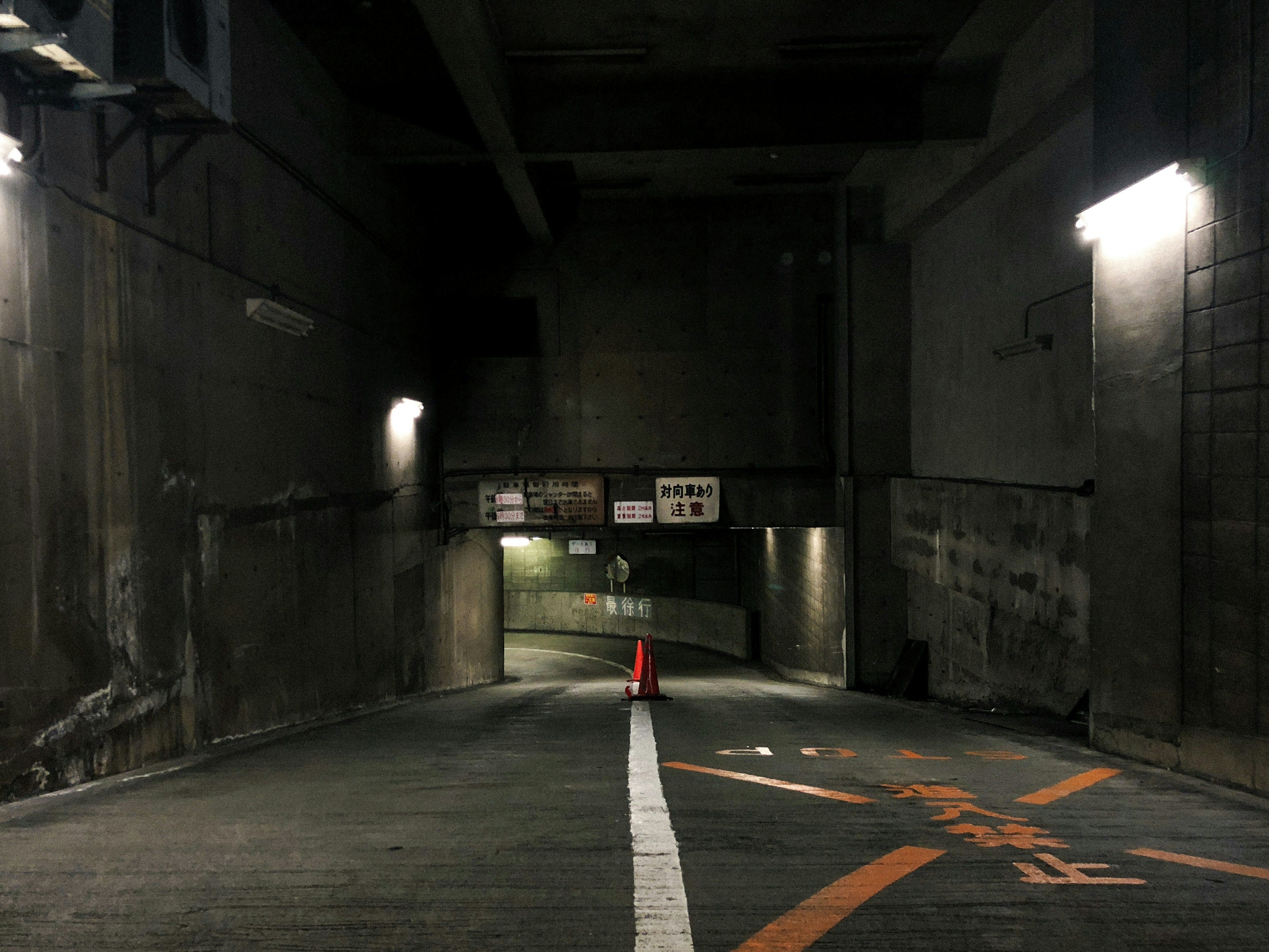
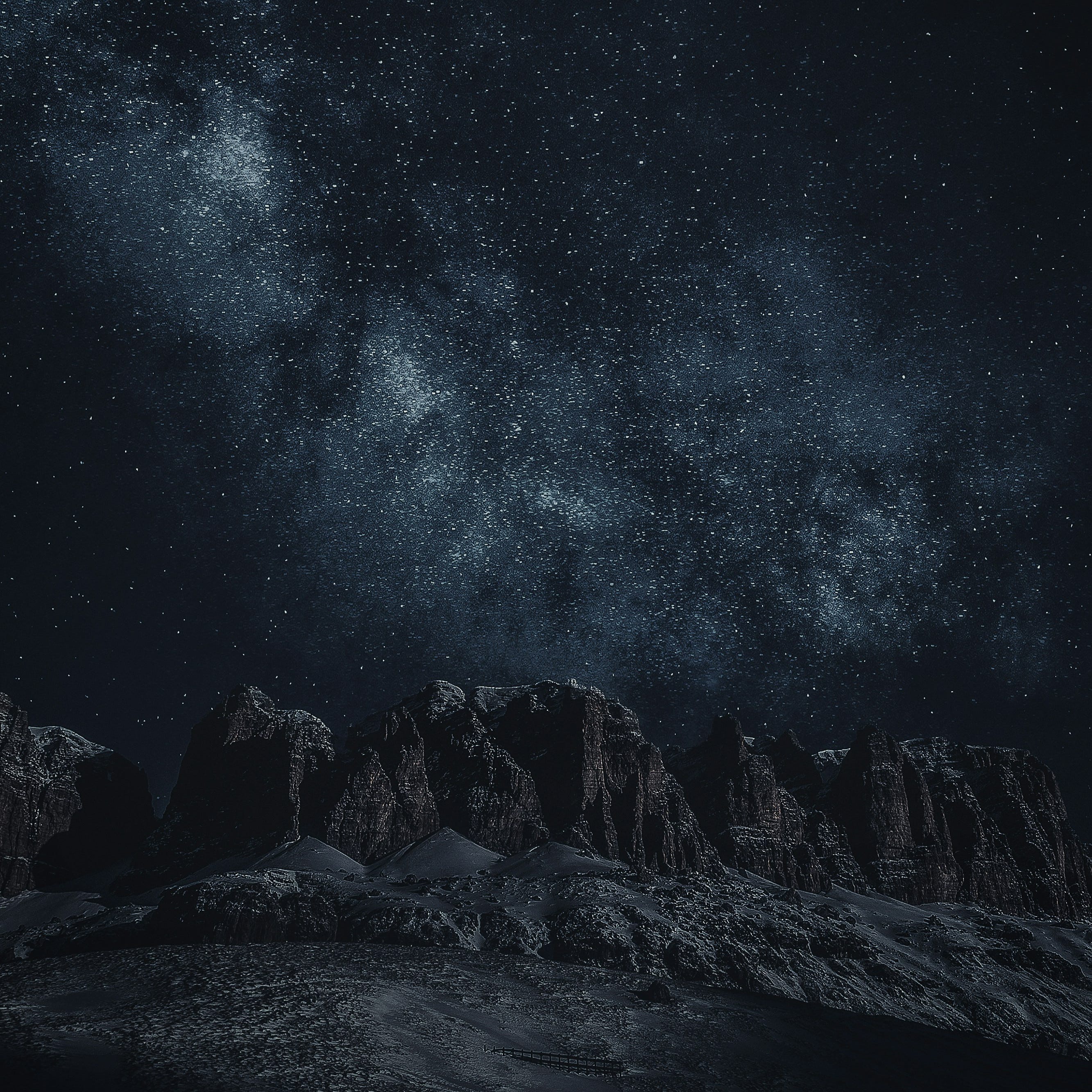
More than three months after embarking on my own Hero’s Journey, winnowing the innards of a house down to the most crucial ones, packing those up, enduring Covid for the first time, bidding farewell to friends and students, mountains and pine cones, selling the house and buying another one thousands of miles away, the process of unpacking interrupted by five visits to emergency rooms and twenty-three days in three different hospitals (not me, but someone beloved to me), navigating big-city traffic and a claustrophobic parking garage with not nearly enough spaces, circling around and around in the dark, wondering if I would ever have time to write again, certain each day was a new low point, wondering if I would write again even if I had the time … after all these difficulties, my hope for a new life shrank from a flame to a spark, from a spark to an ember, from an ember to a faint memory of something bright but unreachable, a fuzzy star on the edge of the galaxy. Some days I don’t think I could remember it at all, in fact.

I was lost.

Dark descending parking garage ramp
Photo credit: Nuno Silva

But even though writing became impossible, I never stopped thinking of myself as the main character in my real-life story. And that’s what saved me. It allowed me to look at my situation with some detachment, even amusement at times. We writers aren’t nice to our heroes, and I was the perfect flesh-and-blood example! We’re told to be cruel to our heroes, to keep making situations worse and worse. It’s completely acceptable to shove the poor characters alone into a new land, surrounded by enemies, shivering in torrential gales, uncertain what to do next, plagued by the thought that if they’d only made the right decisions they wouldn’t be in this mess, downtrodden, defeated, despairing. Stripping all hope from a hero makes for good reading, right?

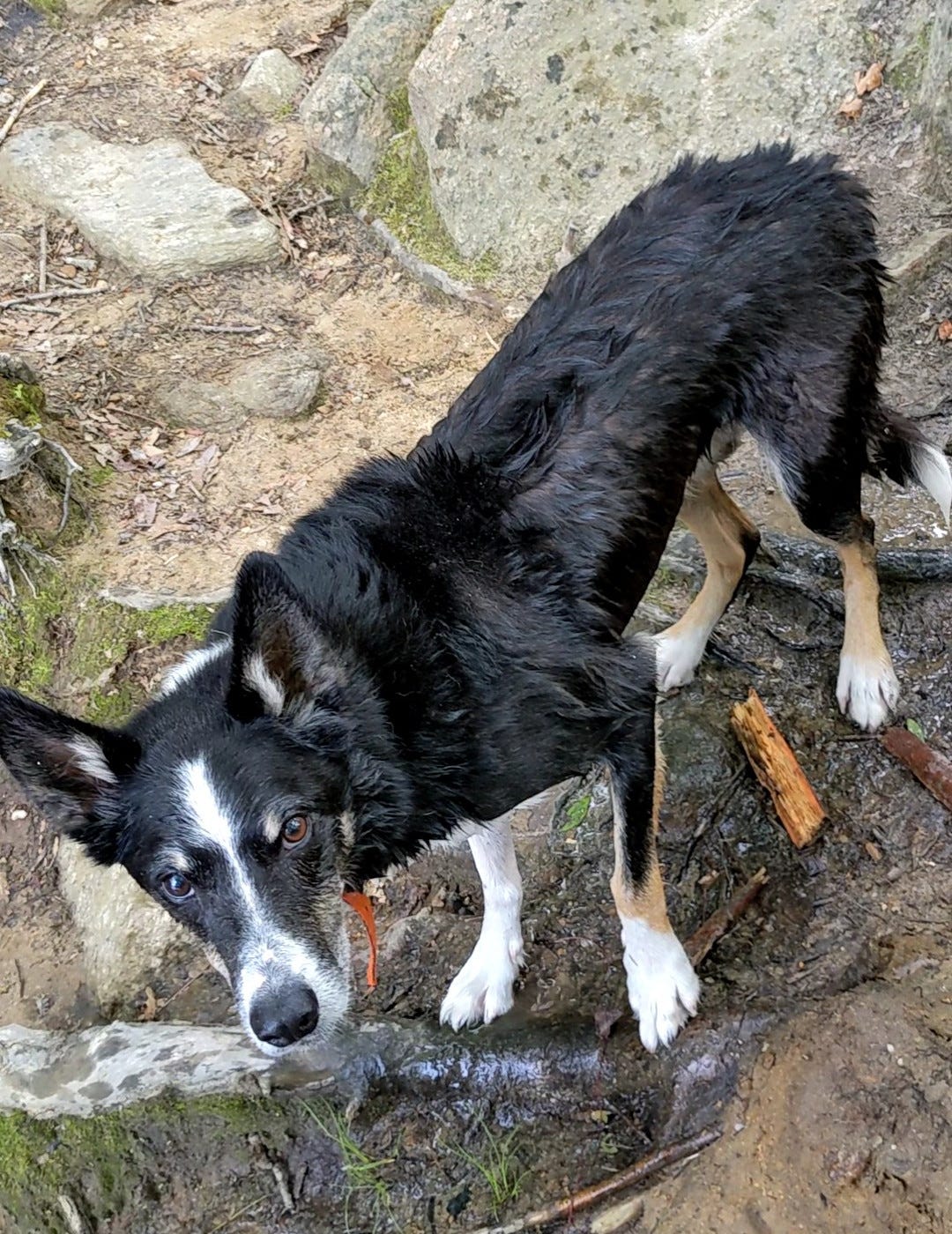
Wet Dog

Well, not entirely. It’s true that a strong sense of desperation is critical for the “All is Lost” scene, which typically occurs about three quarters of the way through a story. This scene leaves the hero certain there’s absolutely no way they can achieve their goal. They are one hundred percent screwed, and their hope for any sort of future has one hundred percent vanished. They are primed to enter the “Dark Night of the Soul,” which in story parlance is when everything the hero formerly thought was important to themselves is stripped away, forcing them to confront the truth.

Photo credit: Eberhard Grossgasteiger

But what about the rest of the story? What about all the parts that lead up to this terrible time: the inciting event that pushes a hero into a new world or a new way of thinking and acting, the difficult barriers they must surpass, the people or creatures they meet along the way, the bits of their past that they may either cling to or reject out of hand, the interesting things they learn during their journey? And how about the parts that follow the Dark Night of the Soul: the emergence of a wiser protagonist and the final showdown in which a hero uses their new skills or understanding to achieve some sort of resolution? Should they feel hopeless during these times?

My answer to this question is a resounding no. What allure would any story have if it provides no hope of something the hero can do, think, or say that will lead to a more promising future? Even if those things aren’t what readers would have anticipated or selected themselves, even if the future isn’t the happy ending they thought might happen, we need to feel as though the hero has some agency, some desire to mold the course of events.

We need hope.

Hopeful Dog Sitting and Looking at Camera
Tock is very good at hoping for a variety of things

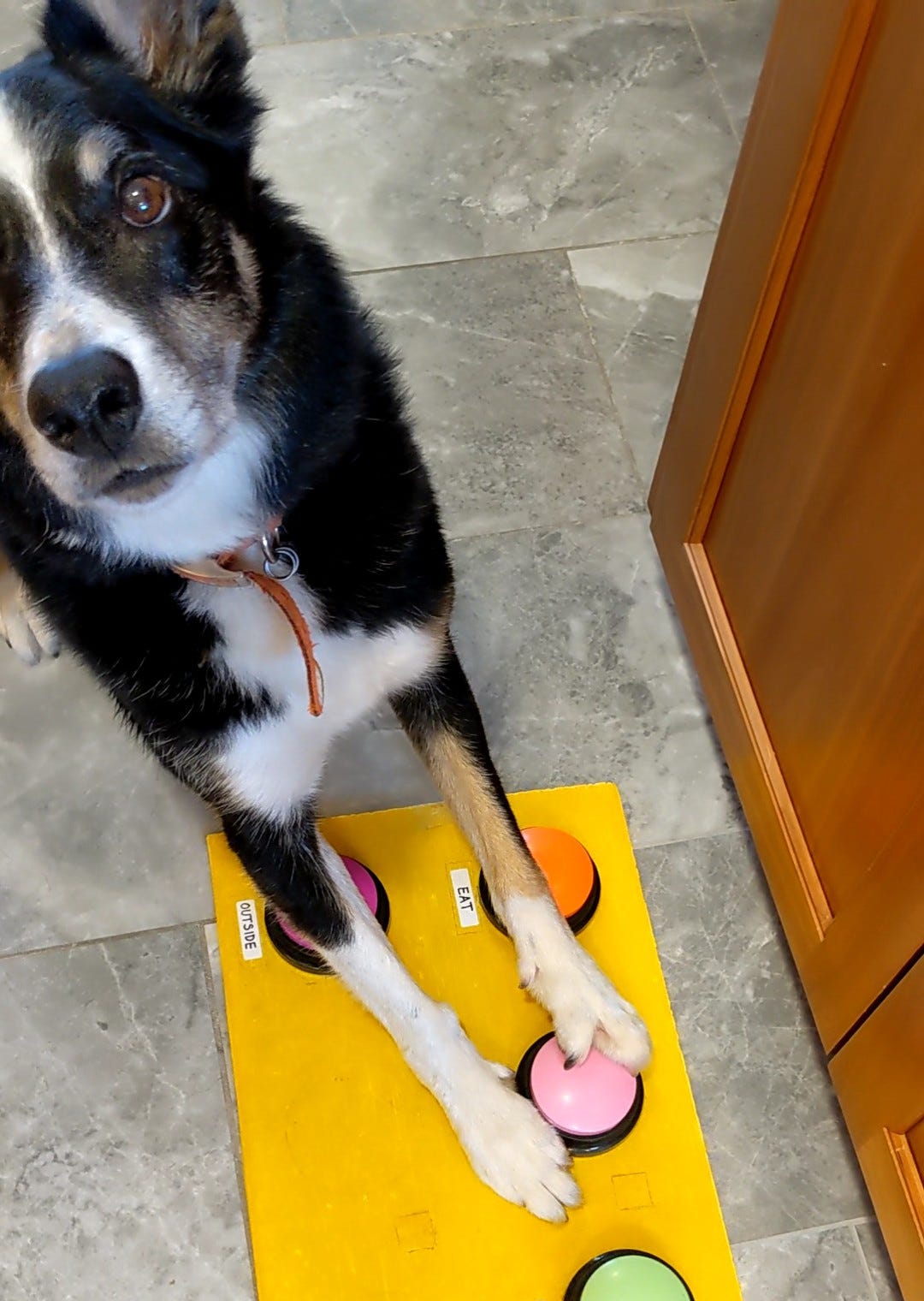
Sure, a string of calamities may grip us and give us empathy for a character — but only to a point. In the big picture, we get tired of characters who flounder endlessly in their own despair and negativity. We’ll empathize better with characters who keep trying. It doesn’t matter that most of their attempts will be misguided and make matters worse rather than better, like those of a hungry dog who paws at its owner’s leg and receives a reprimand rather than a treat. We appreciate that spark no matter the outcome. And eventually (if your dog is my dog), it’ll stop pawing and try something else, like staring at the treats on the counter, or pressing one of its talking buttons, and it’ll get a reward. Maybe not a treat, if the dog fails to press the “eat” button, but something equally interesting, such as a trip “outside” or “play” with a favorite toy.

Dog pressing a button on his "button board"
Tock accidentally presses “Love You” instead of “Eat,” which will result in a head scratch rather than the treat he was expecting.

Dogs are true masters of hope (as for me, I hope you knew I was going to get to dogs eventually). Though they’re not striving for some overarching goal that’s going to change their lives or the world, they demonstrate hope for simple things every single day. I can safely say that in addition to compartmentalizing my troubles into a Hero’s Journey format, the act of witnessing (and helping) my dog achieve his desires for food, walkies, and play has helped me through my own rough patch. He’s a fabulous example to me of how to write a character that never ever gives up. He reminds me that hope nourishes a story rather than the other way around.

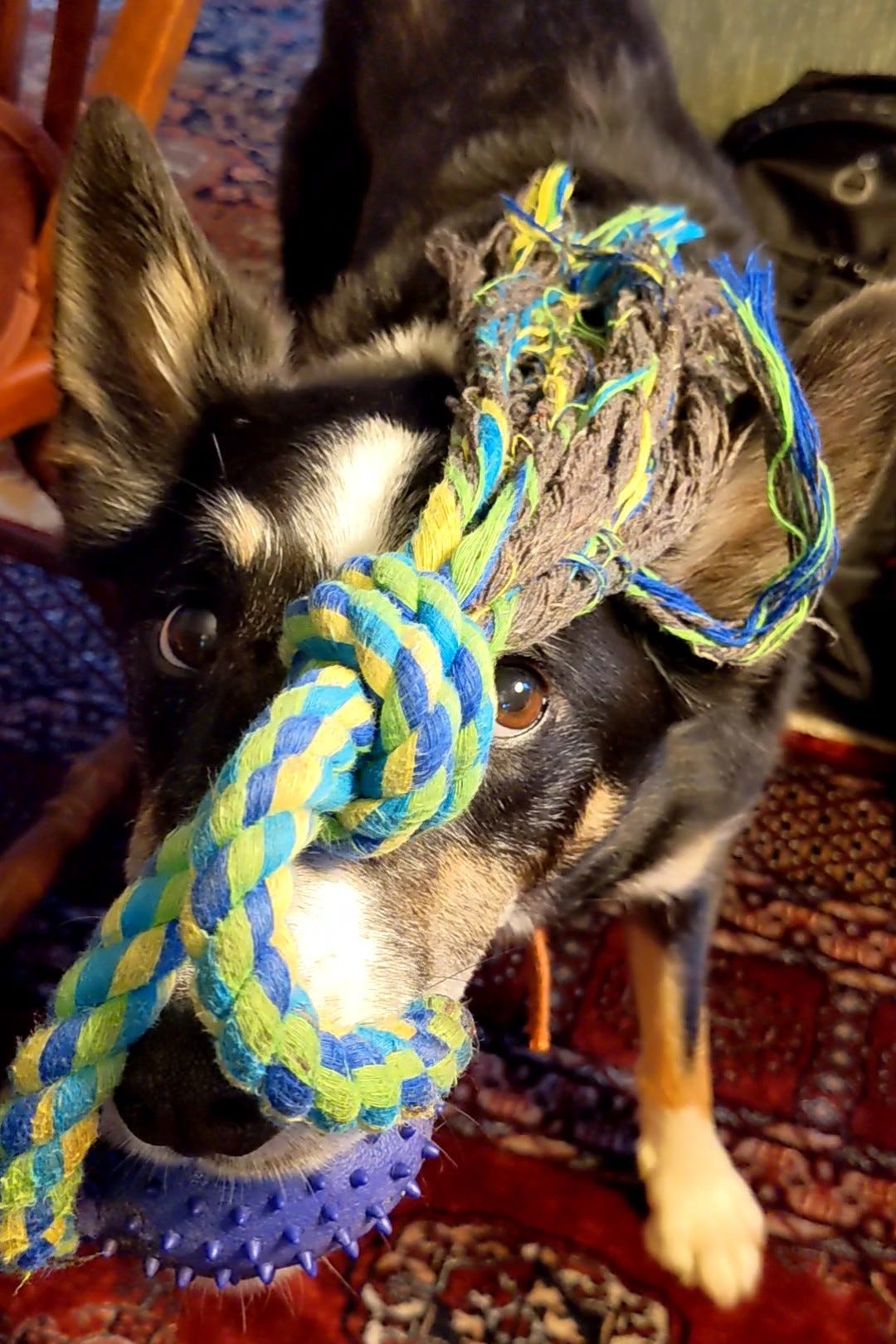
And so, as I make some tentative forays back into the writing world, I will cradle that hope in my palm. I will nurture it from a memory to an ember, a spark, a flame. I will cherish my life as much as those of my characters, and I will remember this every time my dog tells me he wants his breakfast, or a romp in the woods, a swim in the pond, or a tug-of-war game with a favorite toy.

How about your characters? Do they give up too easily? What helps them to keep going? And how about you?

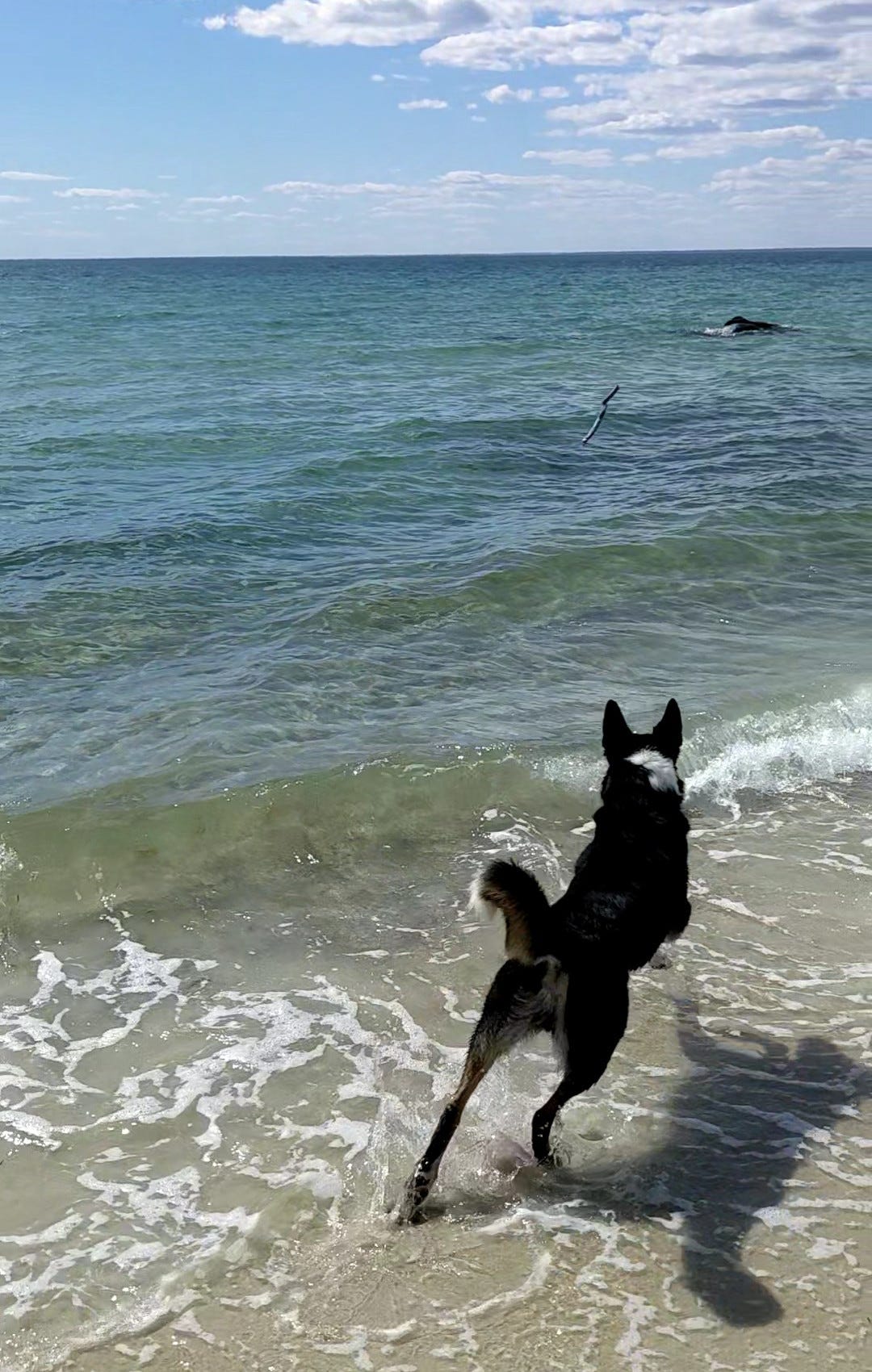
Dog leaping into blue water for a stick

Happy Tales!
What I Will Miss

Thoughts two weeks before embarking on the 2,627-mile journey to our new home.

Alpine lake nestled in coniferous trees surrounded by mountains

The sweet scent of pine pitch

The tang of subalpine fir

The golden glow of fall larch

The crest of dark conifers on the ridge

The hollow thwock of granite stones underfoot

The sweep of jagged peaks, up up up

The raven croaking over a still azure pool

The pungent meadow ripe with beargrass, glacier lilies, lupine, paintbrush

The contented burbles of a meandering stream

The joy a ponderosa pine cone brings to my dog

The exhausted afterglow of a strenuous climb

The granite and sandstone shrines beneath the pine — cat, parakeet, three dogs — our beloved family

These are more senses than things, yet they tie me to the land

Will the string break, or will I still feel tethered to it from far away?

Dog on trail ascending through meadow

I guess I’m going to find out.

Stepping Out of Your Comfort Zone

Yesterday, I was walking up a trail when I encountered a person who asked me to hold my dog so she could pass. “Sure!” I said, and called Tock away from a bush he was sniffing about twenty feet off the trail. Once he got to my side, I snapped on his leash and held him there until the woman had hurried by.

Dog on Leash

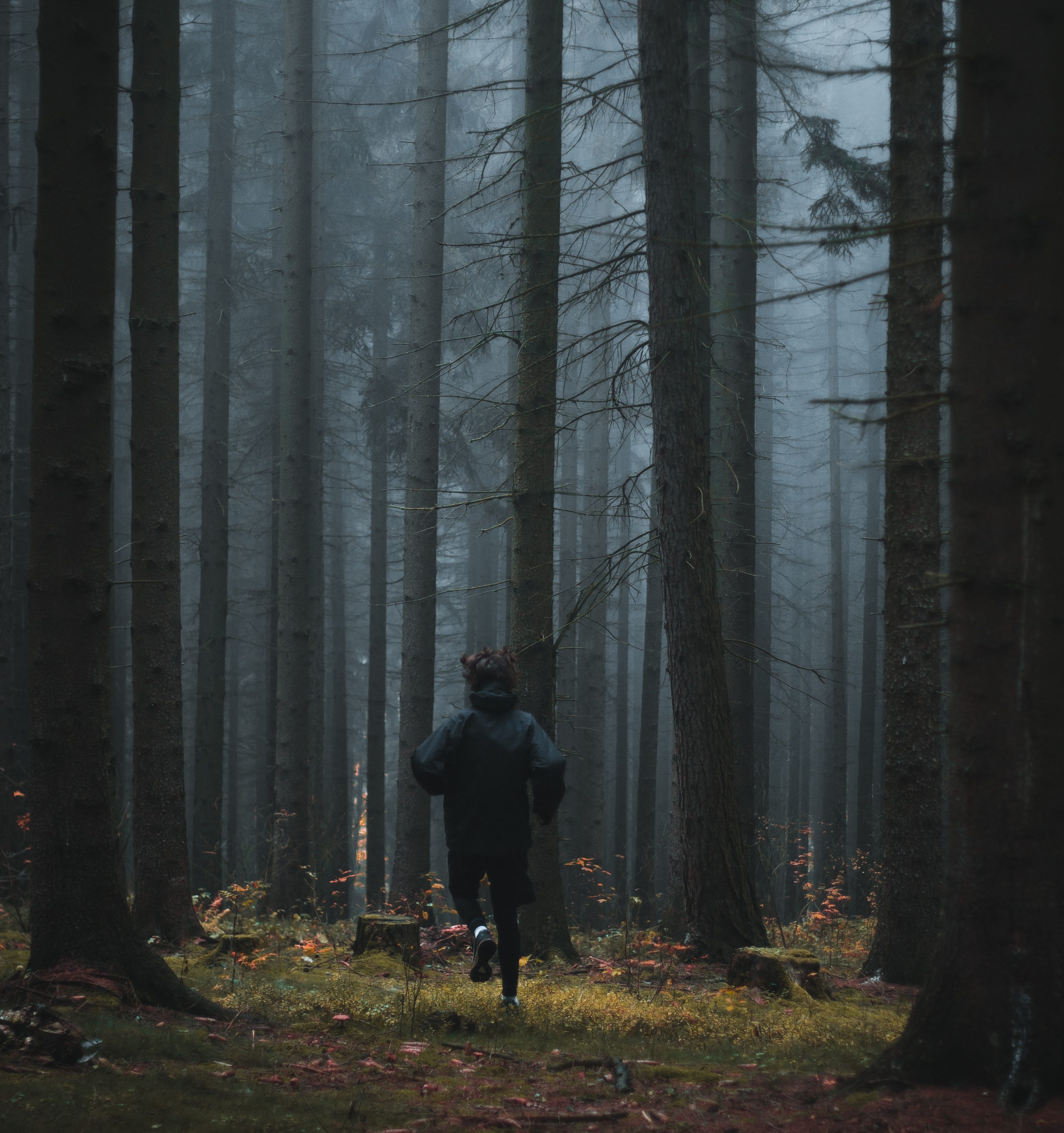
Now, this was not a trail with a leash requirement, nor was my dog exhibiting any sort of alarming behavior toward others on the trail (complete disinterest, in fact). But from the woman’s rather unexpected request to the nervous way she went past my dog, she was clearly feeling out of her comfort zone. Though I was surprised at seeing a person with such a fear of dogs on a path where dogs often outnumber humans, I’m impressed that she was brave enough to visit it, and to take the action she needed to get past her fear.

Person running down trail
Photo credit: Jakub Kriz

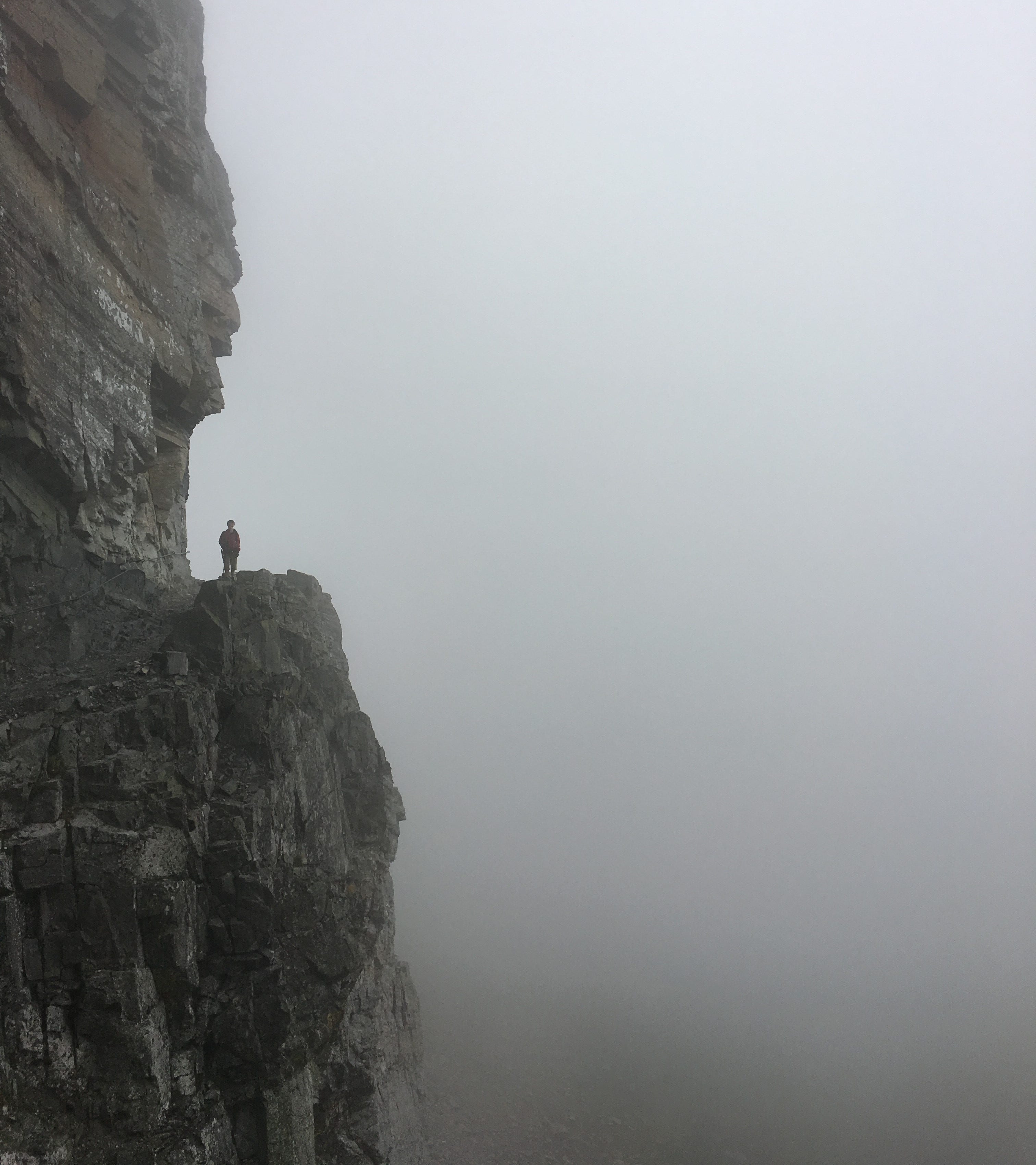
Like a dog-anxious person on a very doggy trail, we all have to do things we’re not comfortable with or not used to doing if we want to make any forward progress. It happens to me on narrow trails that cut into steep, treeless slopes, where vertigo literally causes my feet to freeze in place. And as a writer, it happens to me every single day.

Trail along a cliff
Photo credit: Michael Loftus

No time is more difficult than when I sit down to write the first couple chapters of a new novel. No matter how many weeks I’ve already spent outlining the story, developing the characters, and researching the setting, I still feel a pretty big mental block at actually starting to write. I’m overwhelmed with the thought that whatever I do is going to have huge implications for the rest of the story. I’m overcome with doubt that I’ll have the talent to create entirely new characters in a brand new world.

Woman in fantasy world
Photo credit: Evgeni Tcherkass

So if I’m to take inspiration from the worried trail-walker, I need to come up with a plan that’ll get me past my writing roadblock. For some writers, this might consist of simply waiting, putting the writing off for another day or week or month until their story starts to flow into their fingertips.

Not me. If I did that, I’d probably never write another word. I’d turn into a mummified husk of a writer staring at a dusty black screen, fingers permanently frozen to the keyboard. Ugh. I’d rather end up petrified while sitting on a sun-warmed rock by an alpine lake, thanks very much.

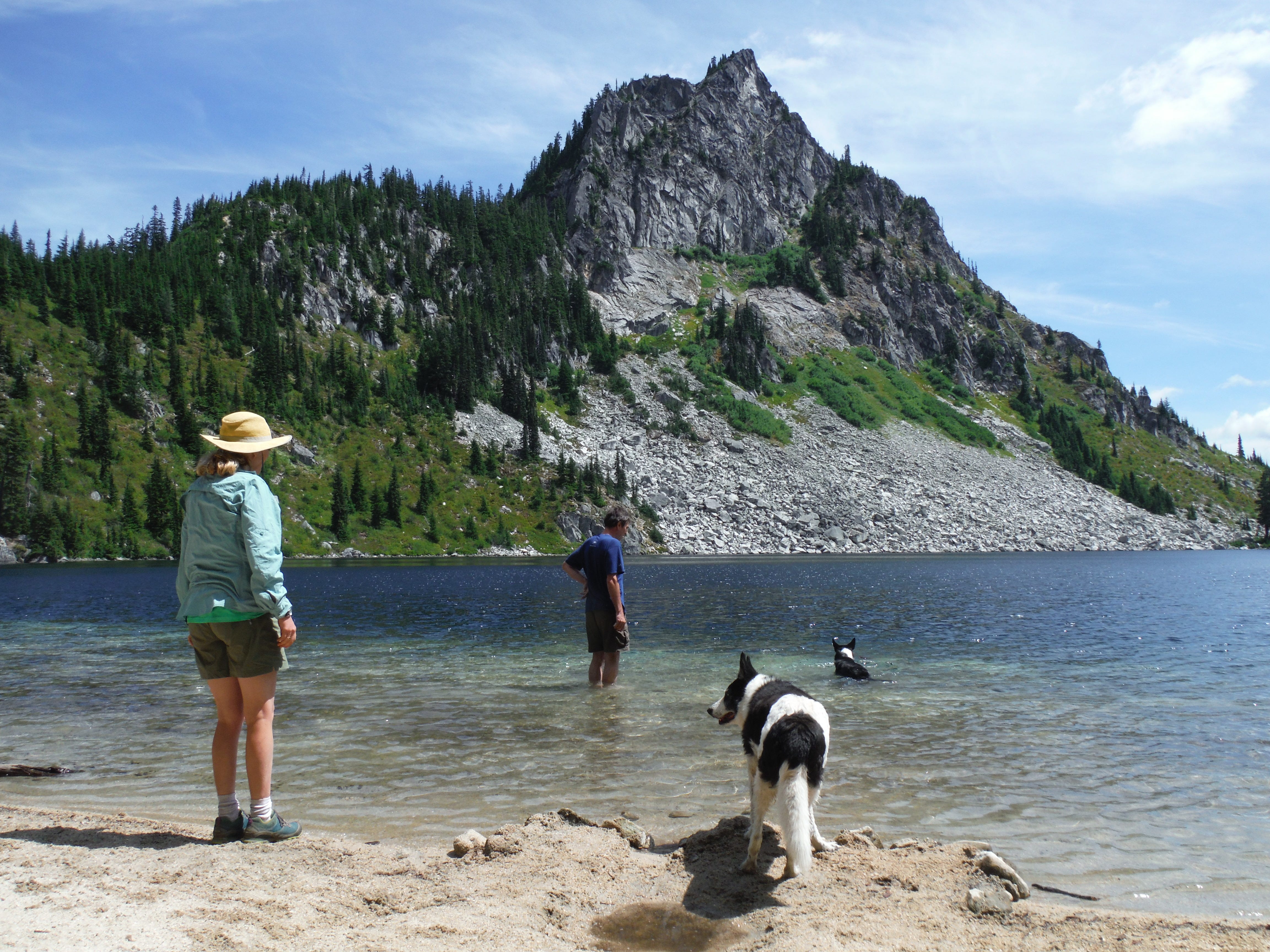
Couple & dogs enjoying an alpine lake
Now this would be a terrific place to remain stuck forever!

My plan for stepping out of my comfort zone happens in two steps:

(1) Akin to the dog-fearful person planning in advance to ask for help from those hikers who are crazy enough to own such slavering, vicious creatures, I seek help from my main characters so I can get as close to their eventual voices as possible. I do this by writing some first-person “prequel scenes,” which take place long before the story will occur, and in which my MC’s basic misunderstanding about the world develops (thanks to Lisa Cron’s Story Genius for this brilliant idea). There’s a lot less pressure in writing these scenes than in composing the actual story because they’re not the actual story. Not yet, anyway (full disclosure: I often end up incorporating bits and pieces of them into flashbacks).

(2) After playing around with character voice and motivation in this way, I’m ready to walk past the metaphorical scary dog. I open the document to the blank page and force myself to write. Word after word after word. I’m not saying this is easy for me. It’s terrifying and often feels painfully slow compared to writing later in the story, when I’m comfortable with all the of the character voices and how they relate to one another. But it gets my feet moving along the trail to a place where I feel much safer and happier.

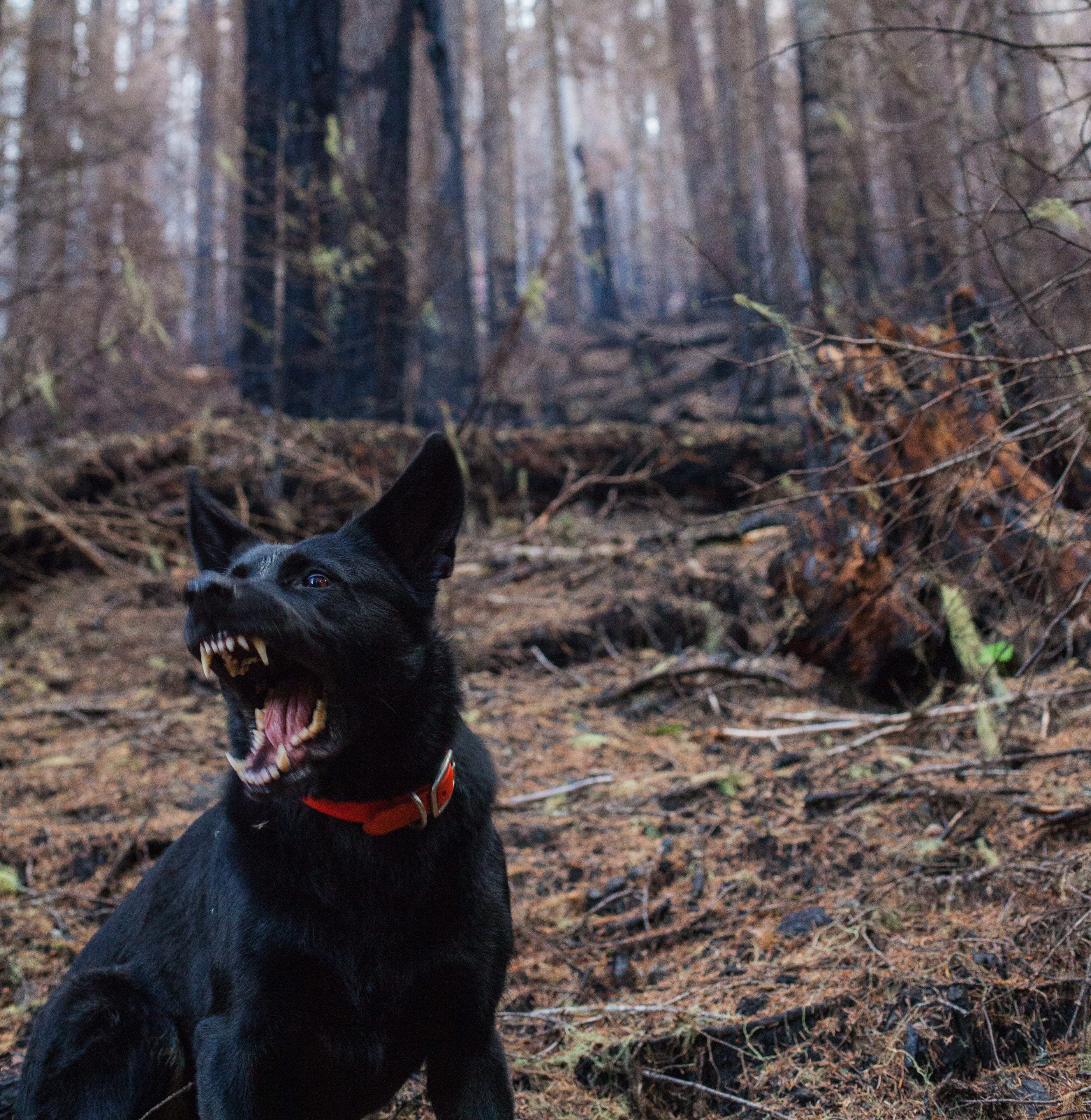
Snarling dog
Photo credit: Nick Bolton

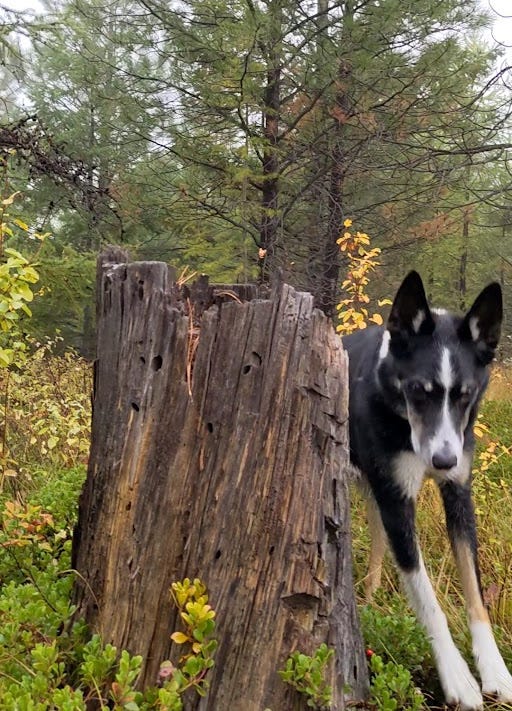
This combination of preparation and a little bit of sheer will power goes for any fear I might have. But what if you just can’t muscle your way into writing? Or what if the stranger-dog situation is reversed? What if it’s the dog that’s scared? I actually have a particularly fearful dog who gets nervous when he encounters “unfamiliar” things. I put that word in quotes because something that’s unfamiliar to him is generally not at all unexpected to me, from a visit to the vet to having to enter a barn through a large sliding door. Occasionally, a previously visited stump in the trail that’s turned extra black from rain or extra visible from lack of leaves will cause him to leap back in surprise with a little growl. Oh my goodness, it might attack us!

Dog running past stump
Racing past a scary stump.

I jest, but these are very real terrors to my dog. And since he’s pretty much joined at the hip to me, going wherever I go, I must own his fears and find ways to mitigate them. If you’ve read one of my previous posts, Backstory’s Bad Rap is Underserved, you’ll already know that I deal with Tock’s fear of the vet in the two-step manner I’ve described above. But for most of his fears, I have the option to replace that second step with an alternative that is always, always better for getting a dog over their terror: (3) the use of reverse psychology, or more generally, thinking outside the box.

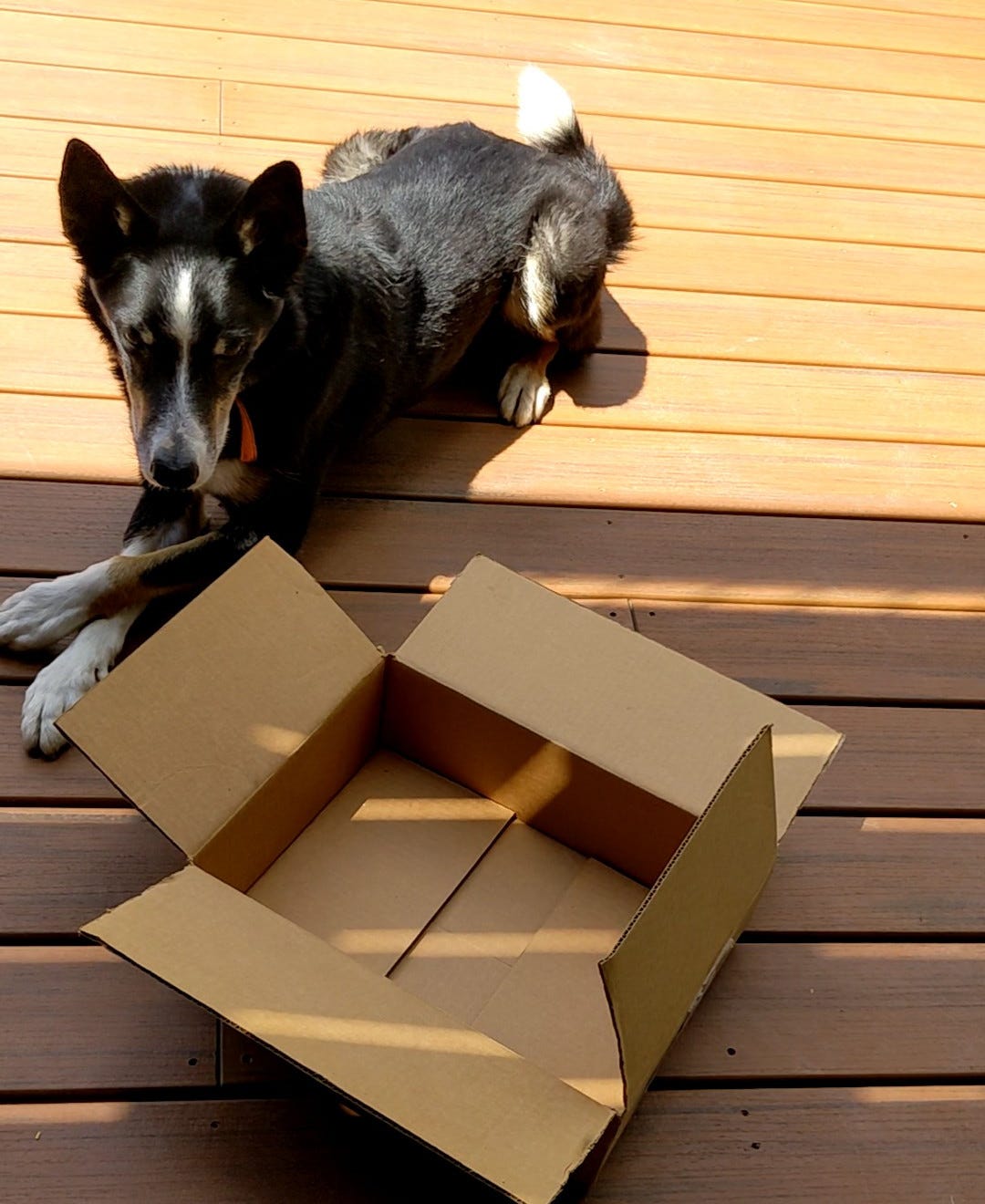
Dog lying outside of a box

For the scary barn door, for example, I found another entrance into the barn through a much smaller door. Tock was perfectly fine with going in that way. And once he did, he had no problem exiting—and then re-entering—through the big door. For a suspicious stump, I wait for him to take a single step toward it, and then reward him far away from it, so he realizes that doing one tiny difficult thing reaps great rewards in a safe place. Incidentally, this reverse psychology is the same approach I use for agility students’ dogs who are terrified of the teeter.

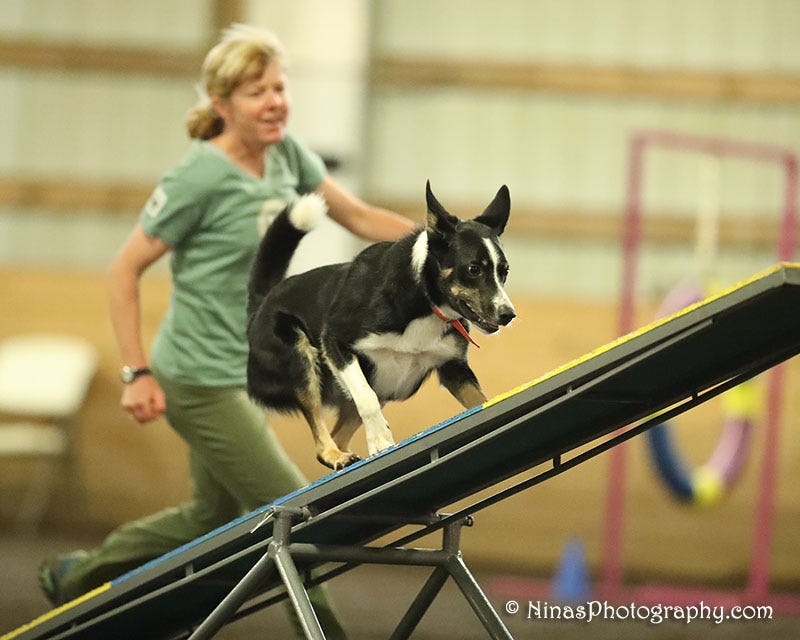
Dog on teeter

Some dogs are born scared of the teeter’s sudden tip, or the banging noise it makes when it hits the ground, or the height they have to ascend before the board tips. Others become scared due to a frightening experience, such as using a teeter that tips much faster than the one they were used to. Either way, asking for a tiny approach to the teeter, followed by a fun reward elsewhere works wonders (thanks to Leslie McDevitt’s Control Unleashed for this method).

Just as the second step of my Two-Step Approach needs gentling and modification to help dogs overcome their fears, it may need tweaking for you, too. If the setting of the new world causes you to stop and puzzle about it excessively, skip it for the moment and move straight to interiority or dialogue. This allows you to get directly into your character’s head in a manner that you’re already comfortable with (remember those prequel scenes?). Another way to sneak words out of your mind and onto paper is to write more prequel scenes that get closer and closer to the time the story takes place—until they are the story.

What techniques do you use to step out of your comfort zone, past the danger, and into a brave new world?

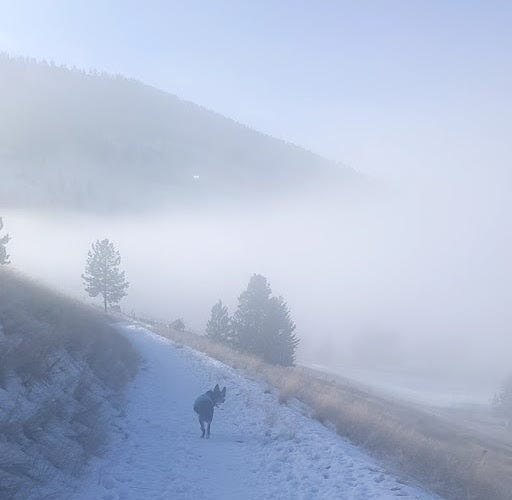
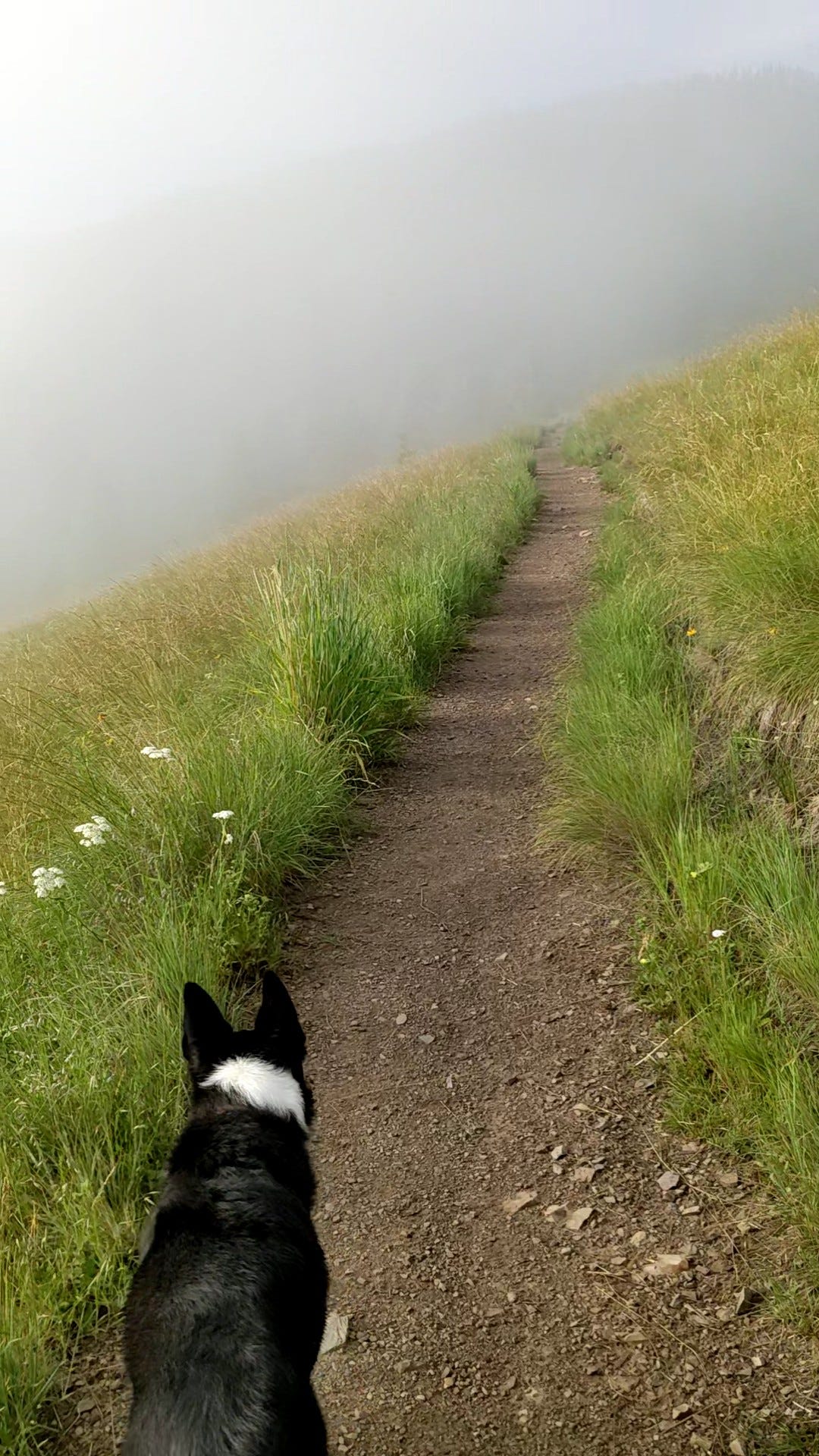
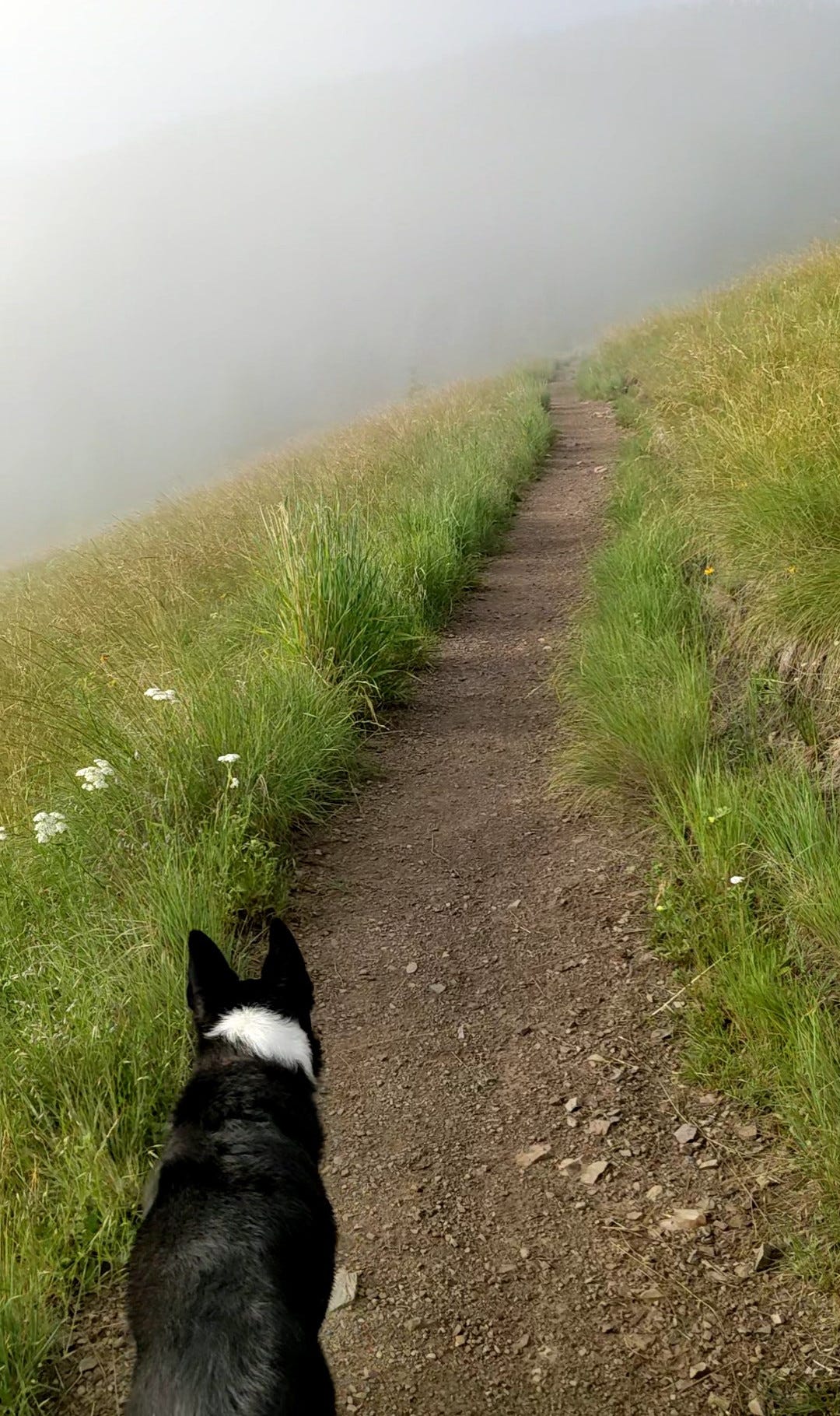
Dog heading up a trail into mist

Happy Tales!
The Path Less Traveled

Or: How Your Character Can Keep Things Interesting

When I’m walking with only my dog for company, as I usually do, I become lost in thought. My feet trace the circuitous paths they’ve taken so many times, while my brain goes off on whatever wild tangents it chooses: What am I going to do about that plot hole in my WIP? … that was such a funny story on the radio … better remember to add red pepper to the grocery list … how can I make my antagonist more villainous? … what exactly are we going to have for dinner

And then Tock barks at a squirrel and I return to full consciousness, back in the present. But unless I’ve made it out of the trees to a place with a view, the strange sensation of having no idea where I am sometimes sweeps over me.

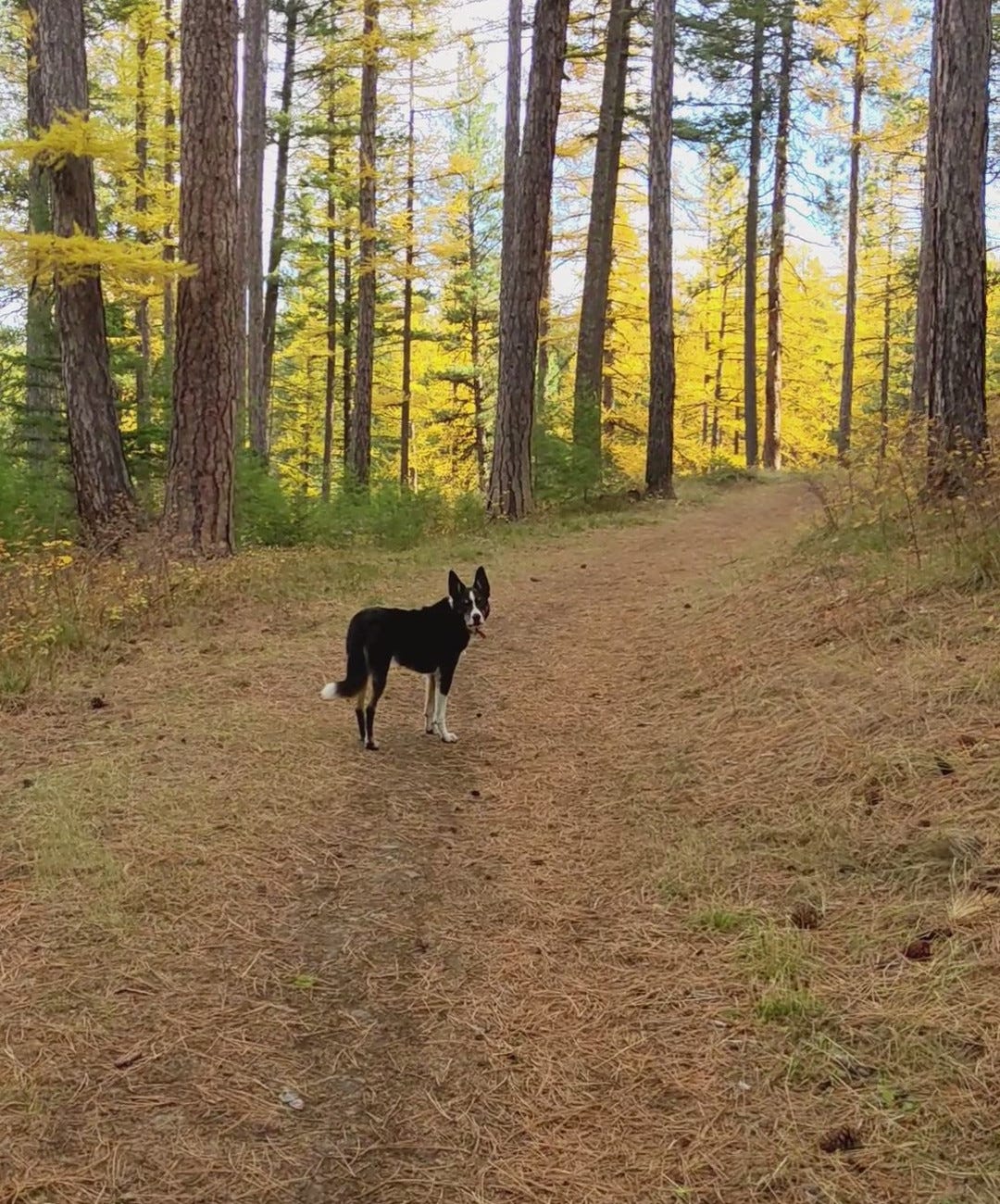
Dog standing in trail.

Let me put your concern that I’m a victim of amnesia to rest. I always know which general trail system I’m hiking in. Based on how sweaty and tired I am, I also know whether I’m still heading up to my destination or down toward the trailhead (except for the rare flat bits, it’s gonna be one of those two things). But the trails in the woods near me are plentiful and have a way of looping, branching, and re-connecting as if they can’t bear to stay apart from one another for too long. Every now and then while I’m in my semiconscious mode, I’ll even follow my dog into a wrong turn—not because he doesn’t know where to go, but because he enjoys taking little detours to explore scents or find an especially big, prickly pine cone for me to throw for him. On a wonderful walk with my dad (and dogs) once, we were so immersed in conversation that we failed to pay attention at a critical junction right near the trailhead. We ended up actually repeating a large portion of the entire walk before we figured it out (this was a flattish trail, or we probably would have noticed sooner).

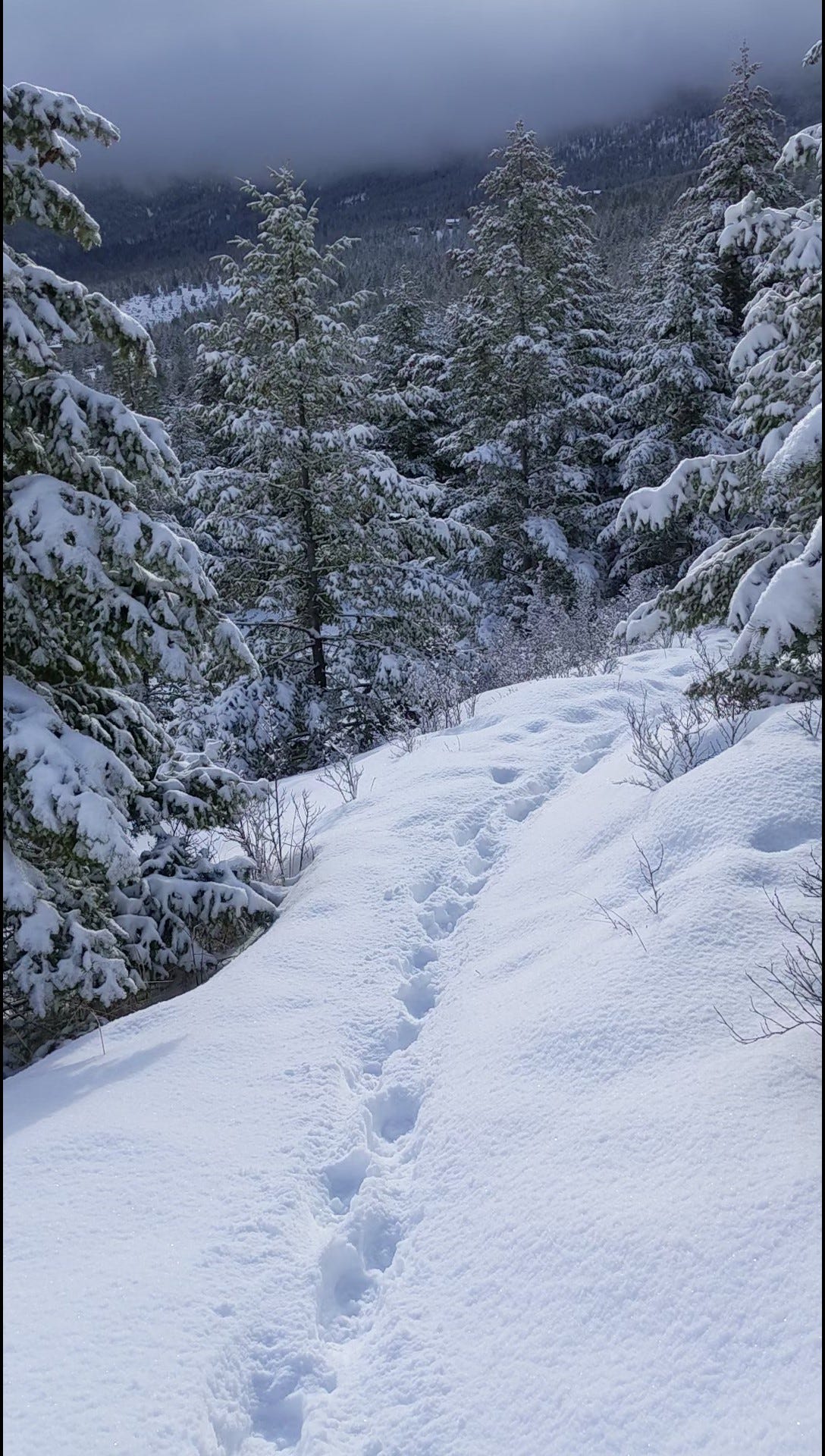
Footprints through snowy woods

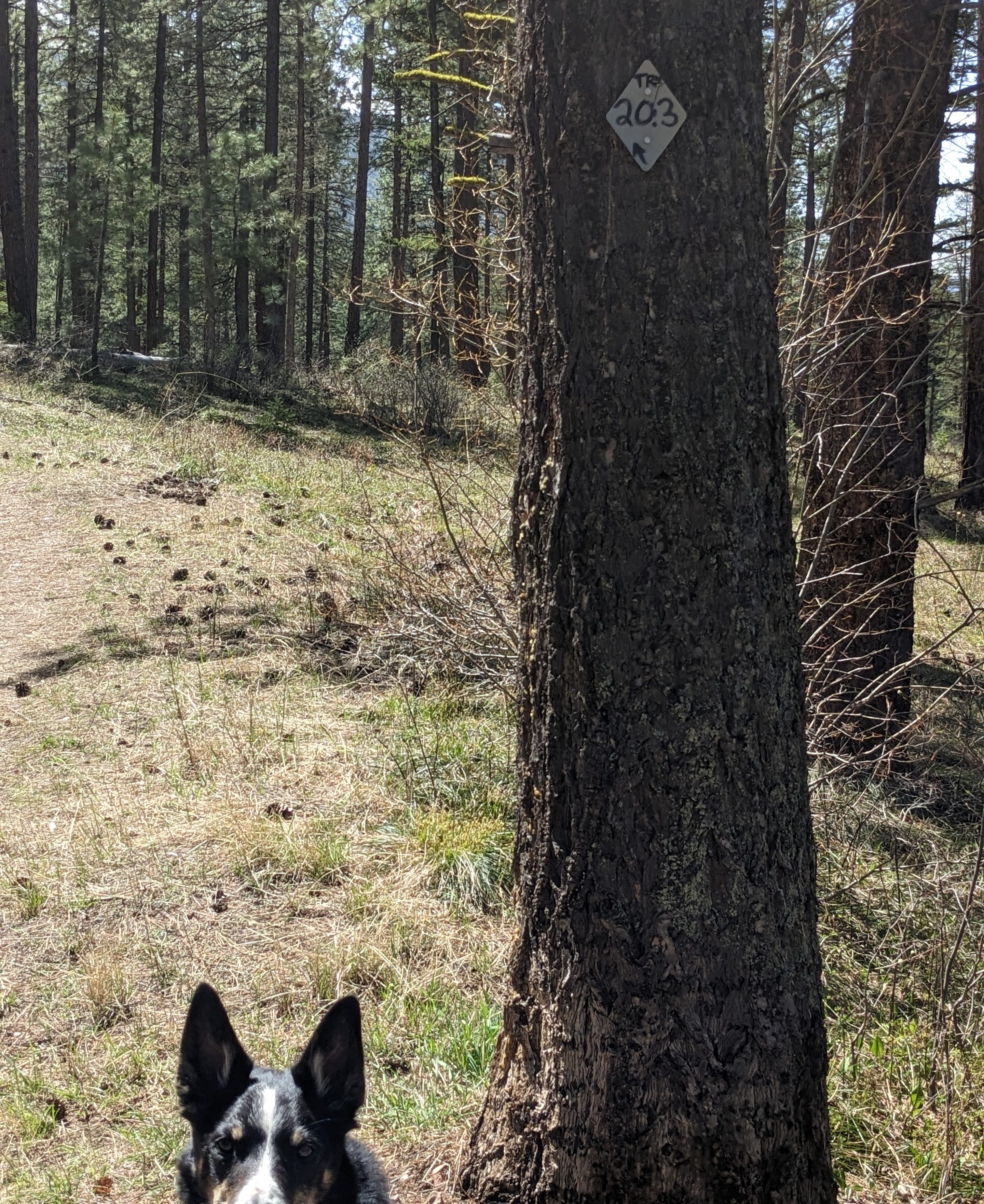
After I’ve “come to” and returned to reality, I tuck my confusion away and simply keep putting one foot in front of the other. I study the plentiful pine, larch, and fir trees on both sides of the trail and the even-more-plentiful needles at my feet, trying to figure out exactly which section of the trail I’m on. Did I pass the third junction already, or am I still on the second? Am I almost back to the car or do I still have a good half hour of walking ahead of me? The occasional trail signs posted on trees are spectacularly unhelpful because they often appear to have been conjured by someone who doesn’t believe in whole numbers.

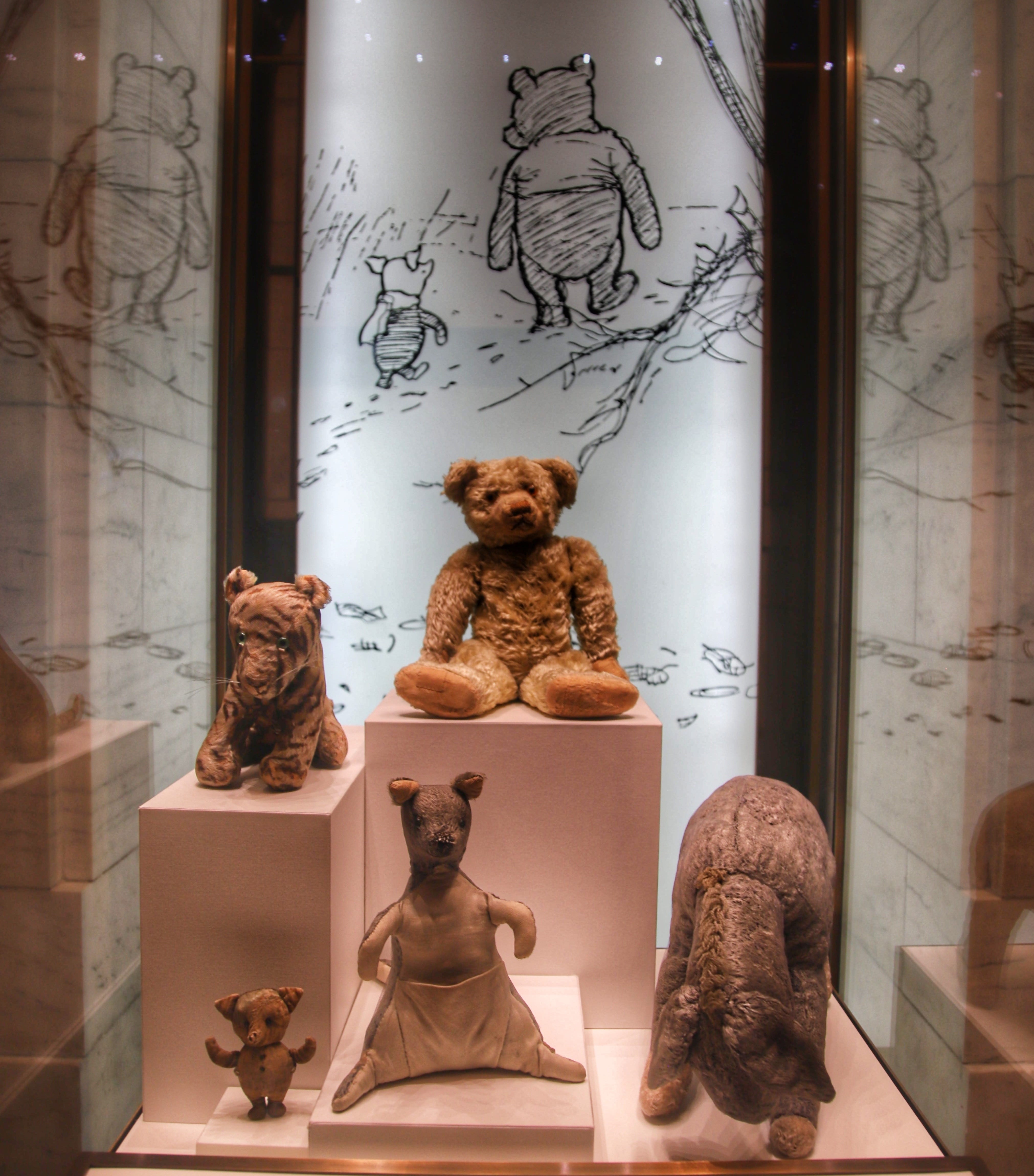
Questions about my location flit through my head, but they don’t alarm me. On the contrary, I revel in the feeling of not knowing, however briefly, where I’m going and what decision I’ll need to make at the next trail junction. I’m on a real adventure now! This chance to walk on an “unknown” path is such a rare opportunity in our GIS-programmed, cell-phone-connected, social-media-spiderweb of a world. On that memorable walk with my dad, I remember looking at the view with new eyes, certain it was a section of trail I’d never seen before, providing a glimpse into an unknown and unexplored valley. I experienced the thrill Winnie-the-Pooh and Piglet must have felt when they stomped around and around the same tree searching for the Woozle, finding more and more footprints the farther they went.

Winnie-the-Pooh and Piglet
Photo credit: Bernd Dittrich

All too soon, usually before I get to another fork in the trail, my sighting of a particular leaning tree or a hollow stump will jog my memory and snap, I’m back in the 21st century, with a walk to complete, errands to run, and people to see. My pace speeds up and my imagination dims.

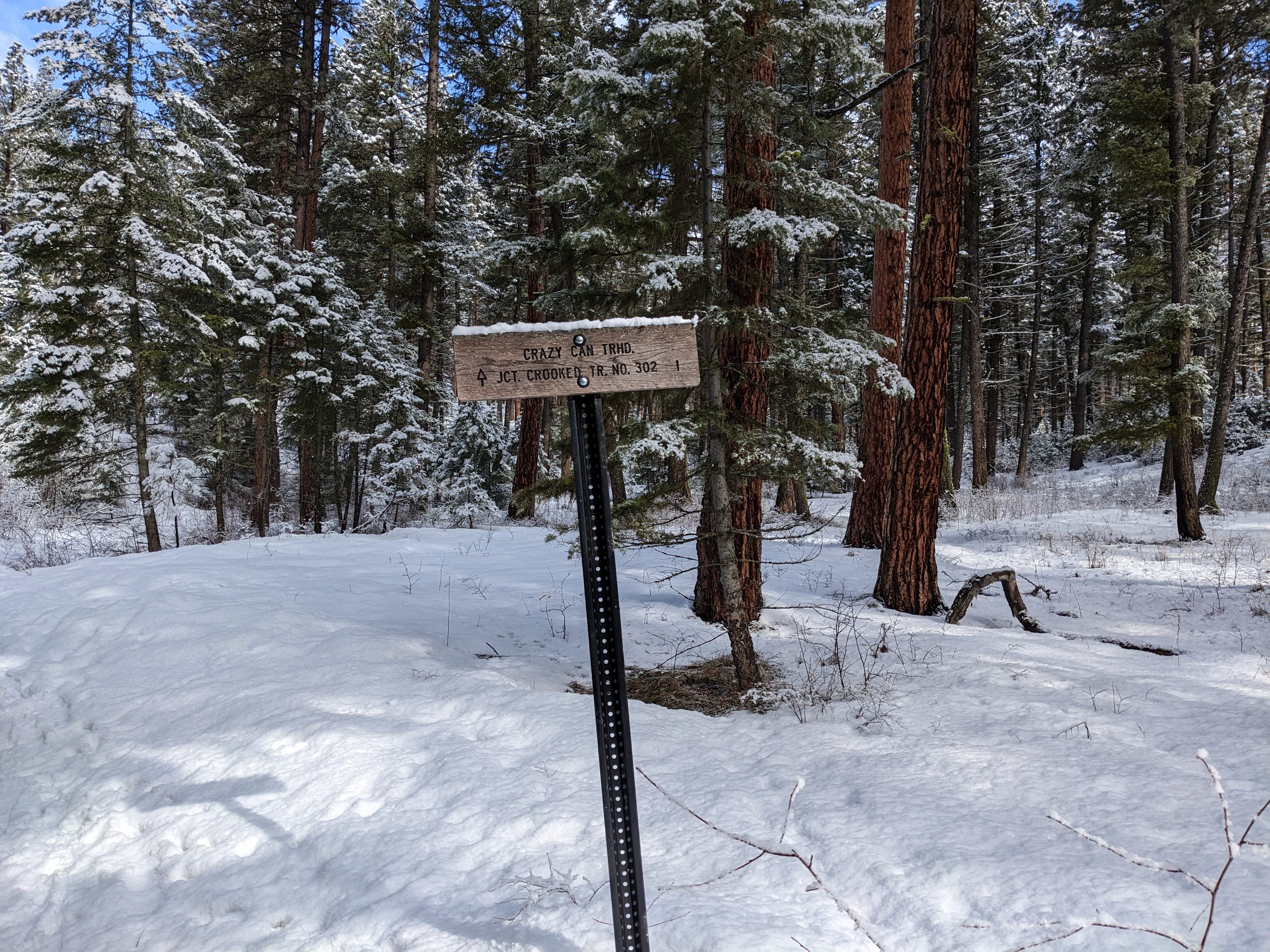
Trailhead Sign

But it doesn’t have to. As writers, we are lucky beings. We can allow our characters to take us on the path less traveled every time we whip out our pen and notepad, or sit down at our computer to write. This is true no matter whether we write free-form, with no idea what’s going to happen until the words start to flow (aka “pantsing”), or whether we prepare a detailed outline, with all of our plots, subplots, and setting and character details listed before we write a word of the story (aka “plotting”). In either case, all we have to do is follow our characters when they exhibit an inclination to head somewhere new.

I’m a fanatical plotter. I spend at least a month preparing an outline for a new novel. But my characters—sometimes the protagonist, sometimes secondary figures—never fail to surprise me by taking directions I didn’t anticipate. All I have to do is stay relaxed and keep my organized conscious mind out of the way long enough that I can listen to them. And if they choose to detour for just a moment from the reality of the plot, or if they head off on the path overgrown with weeds, I’ll walk right along behind them.

Dog taking a detour

It’s possible it’ll be a dead end, and my characters and I will need to backtrack to the plot I’d already envisioned. But on the way, you can bet we’ll see some fascinating things and we’ll learn a little more about one another. We might even receive a jolt of adrenalin from looking at the view in an entirely new way, counting two Woozles instead of only one, or maybe, frighteningly, two Woozles and a Wizzle. When I return to my outline, I’ll happily revise it to accommodate this new vision for my story. It’s always more interesting than the one I started out with.

So my questions for you, Dear Writer, are these:

1.       Which way will your character take you at the next fork in the trail?

2.       Will you let your guard down long enough to find out?

3.       And if it’s the path less traveled—will you allow yourself to take it, too?

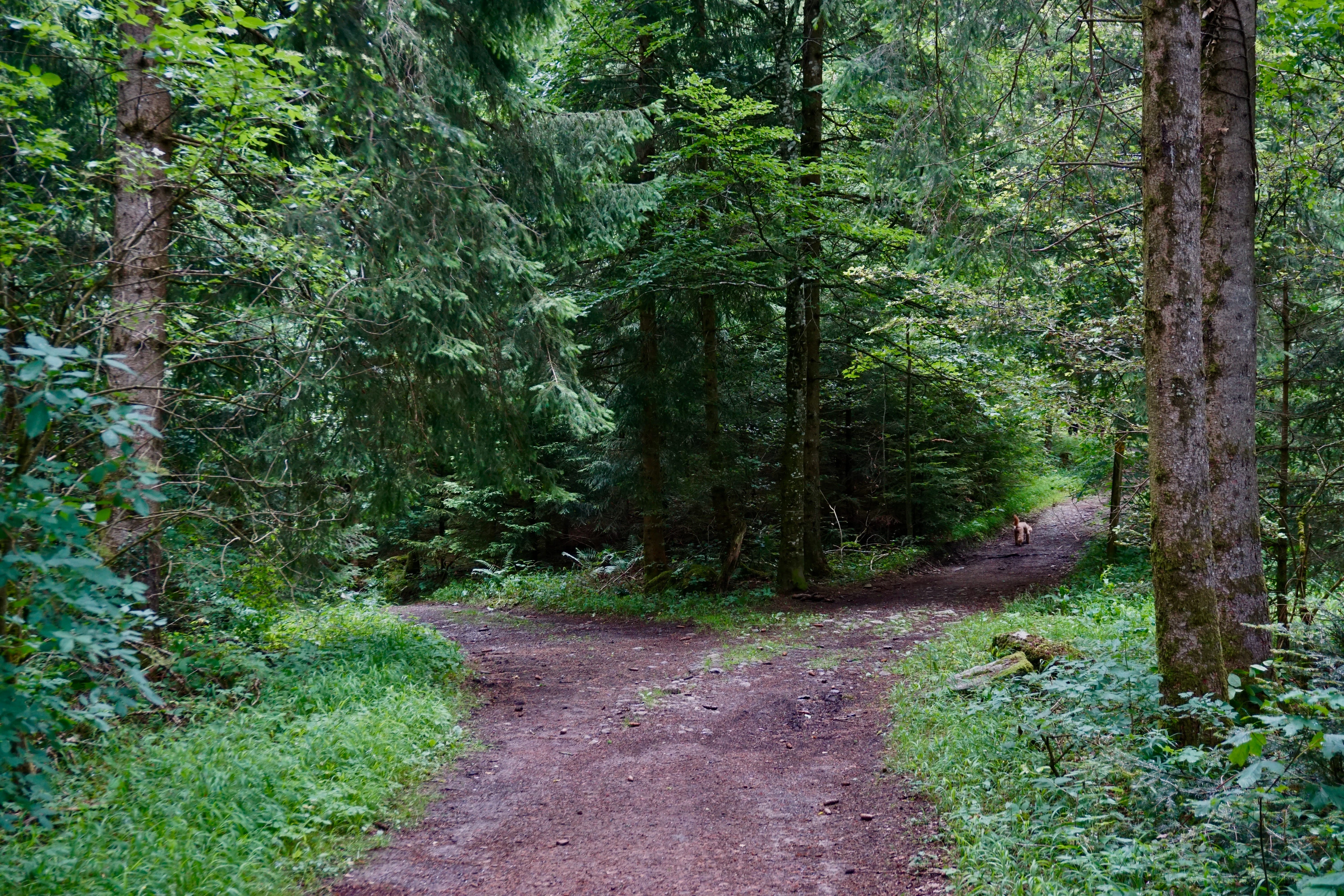
Fork in trail
Photo credit: Beth Macdonald

Happy Tales!
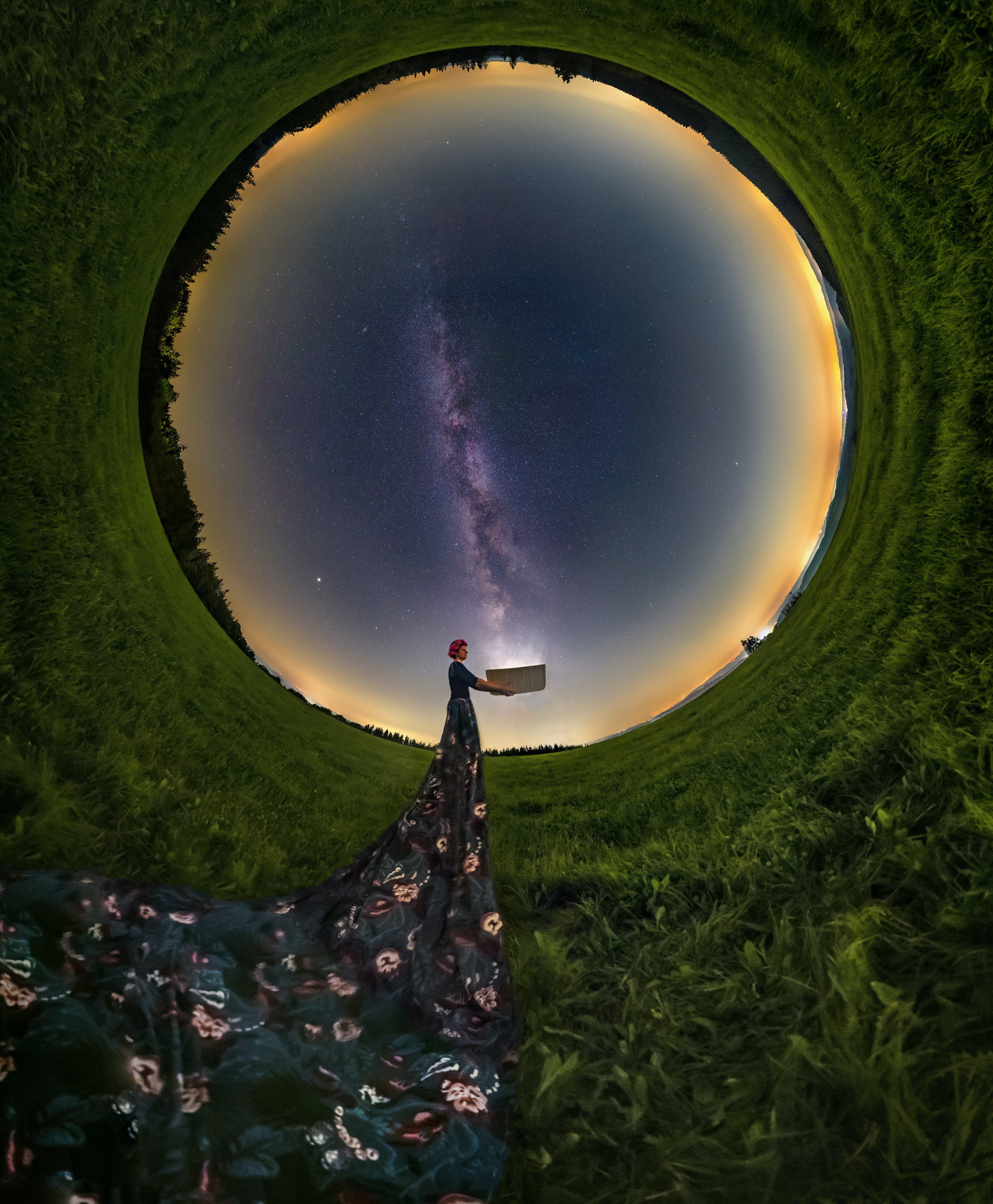
REVISION: Is your bowl of porridge too cold, too hot … or just right?

(Or: How do you know when your story has reached the “Goldilocks Zone?”)

Components of a bowl of porridige
Photo credit: Cleanlight Photo

When is a story good enough to stop working on it?

This is one of the most pressing questions facing the author of a revised manuscript (correction: a revised-and-revised-and-revised-to infinity manuscript). If you’re a conscientious and possibly obsessive writer who wants to produce the best possible experience for your reader, you won’t stop after the first couple drafts, regardless of how much organization and preliminary revision effort you’ve already put into them. You’ll keep re-visiting it, at first maybe making sweeping changes, followed by smaller and smaller alterations, sending it out to alpha readers, beta readers, critique groups, and paid professionals. Even after you’ve ceased finding anything wrong with it beyond an occasional typo, the people you solicit to look at it will make suggestions for improvement, every single time.

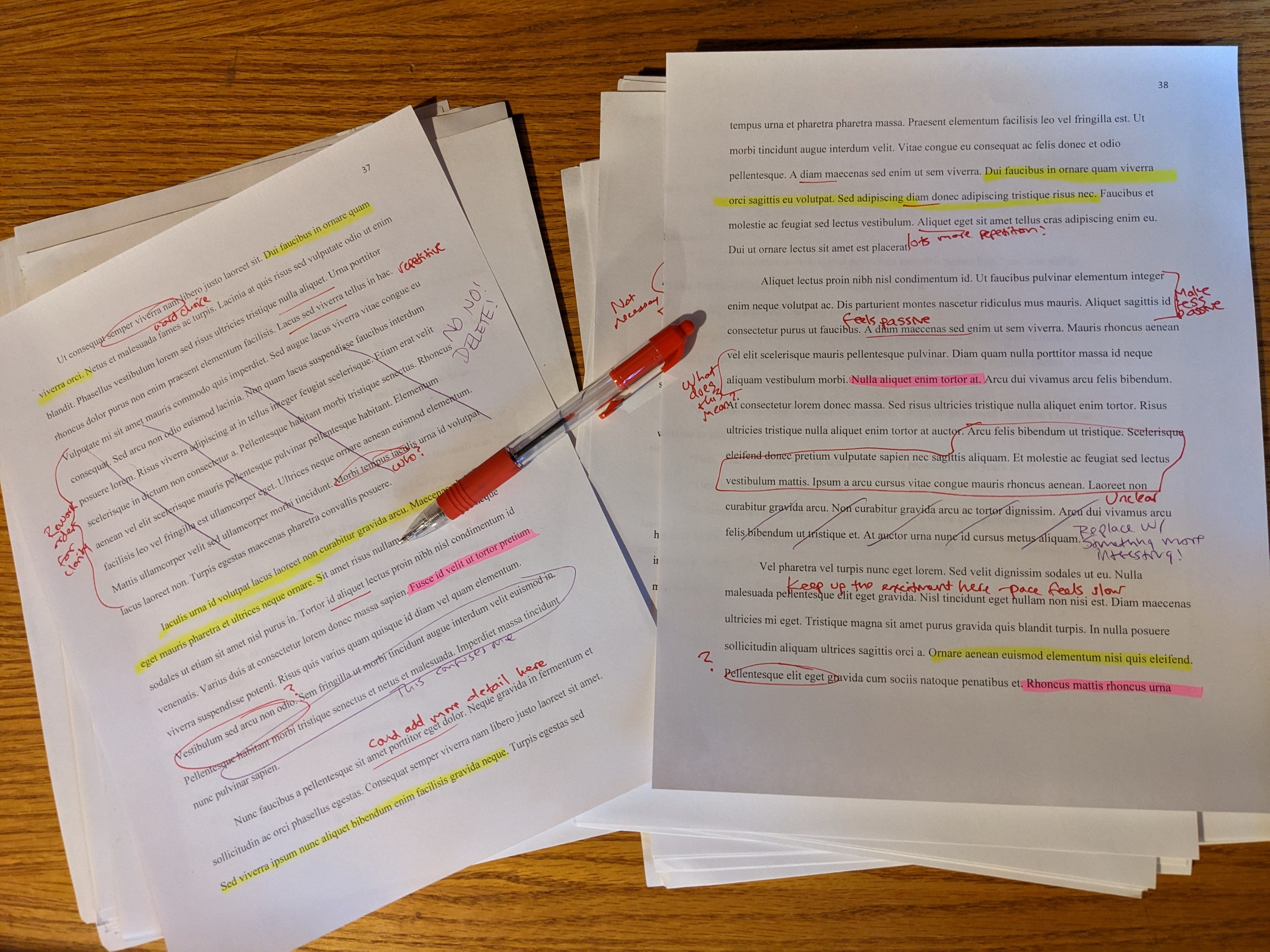
Marked-up manuscript

After looking at your manuscript so much that you no longer have any idea whether it’s good enough, and in fact might be getting worse with all the attention, I recommend a very simplistic formula to figure out the answer, which will place your work in one of three categories. It relates back to—big surprise here—going for a walk.

1. Your story’s too cold: Readers can’t connect to the unfeeling, underdeveloped, or commonplace characters, the plot meanders without actually going anywhere, the world lacks the spark of details. This is me when I first step out the door to go on a walk at dawn. The purplish air, even if it has the promise of heat in a few hours, turns my fingers to ice and my hands and forearms to the texture of cold marble. I’m so immersed in trying to stay warm that I enfold myself in my hood and pockets and trudge along looking only at my boots. I could be walking to the end of the driveway or I could be climbing Mt. Everest. How would I know? I’m too sunken within myself to notice.

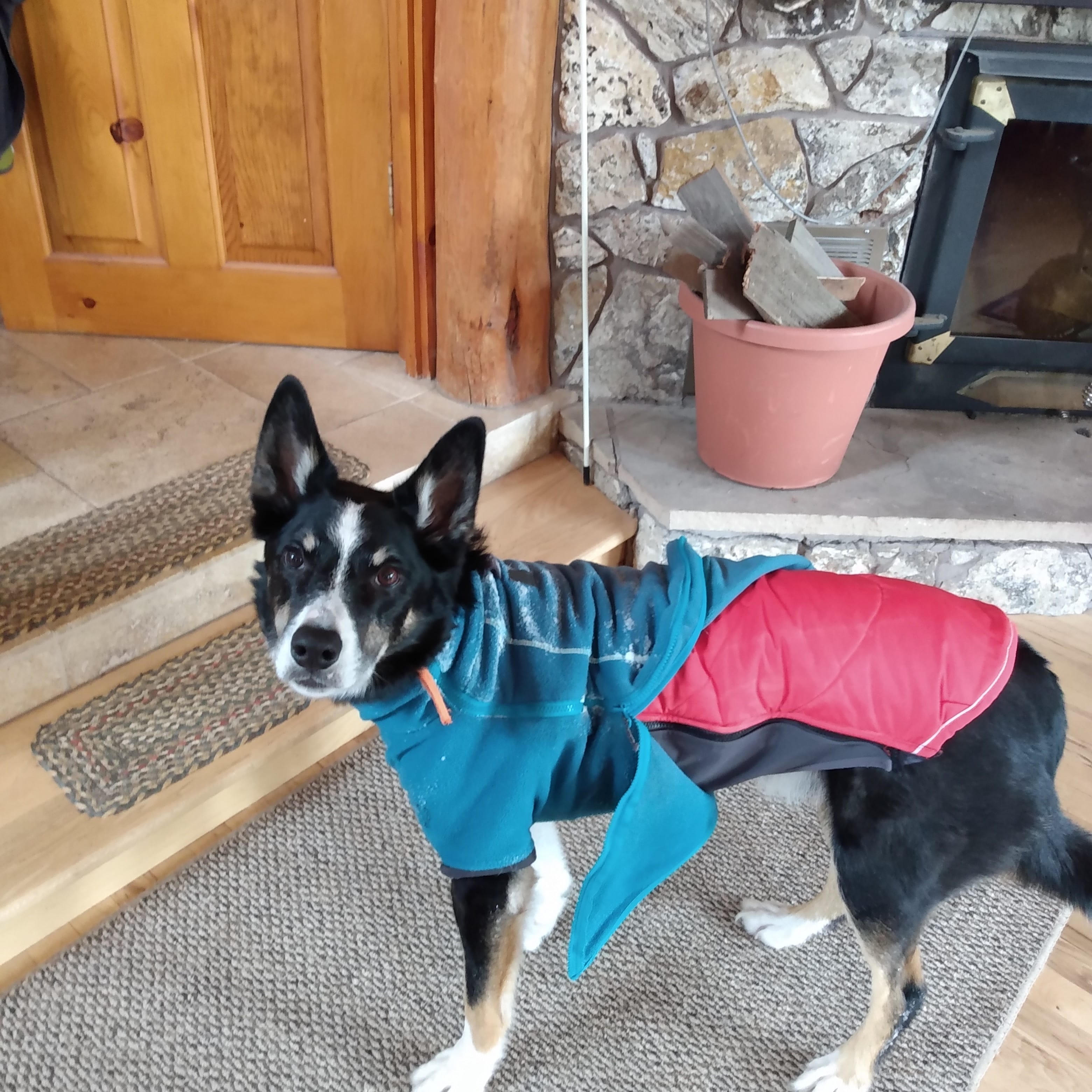
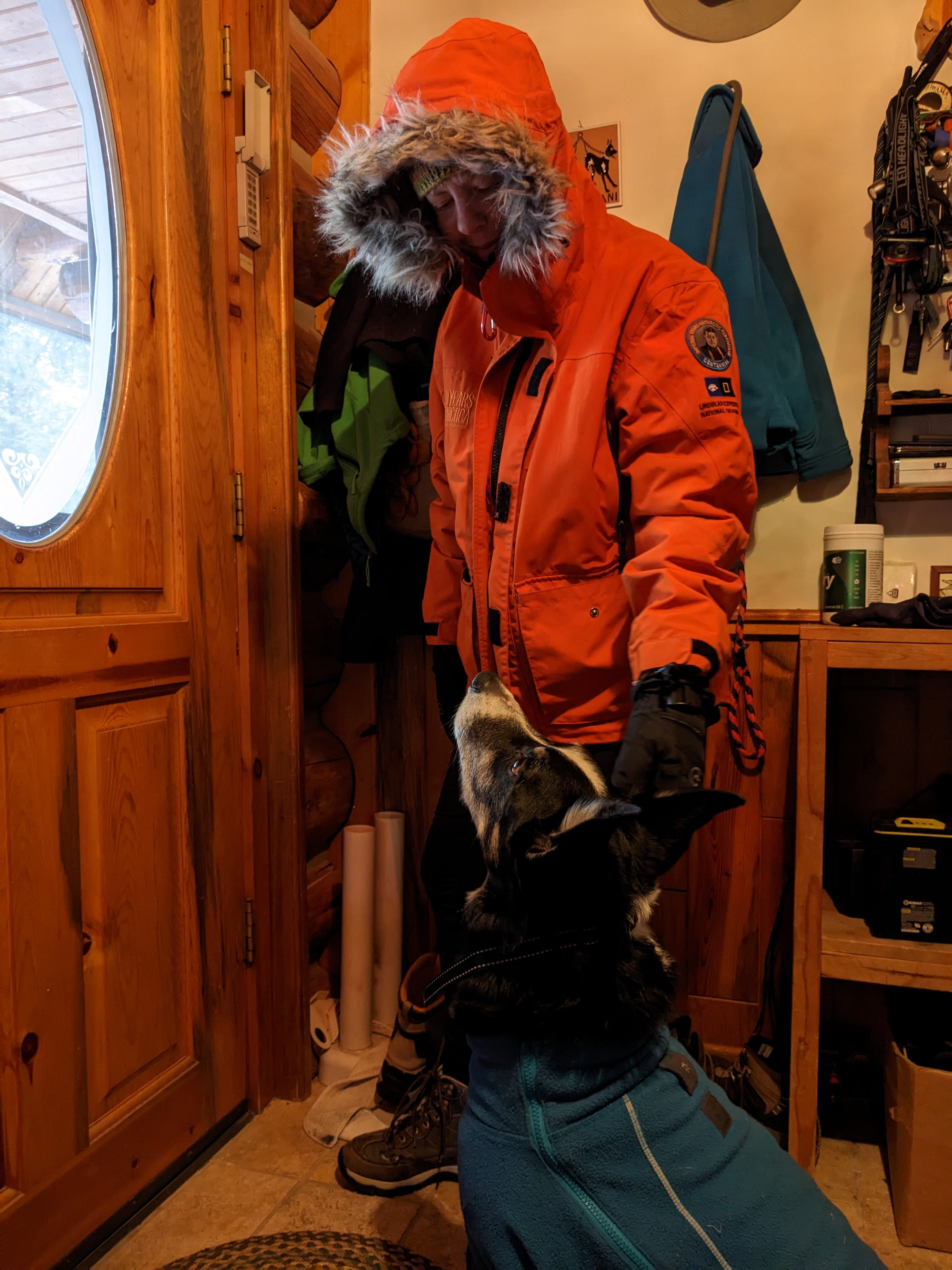
Dog wearing 2 jackets
Because of his short fur, Tock, too, wears a jacket when the temperature dips below freezing . Sometimes two jackets, if it gets down into the teens.

2. Your story’s too hot. You have so many characters and plot lines that readers can’t keep track of them all. Reviewers suggest that perhaps you have more than one book within your pages. The scenes overflow with backstory, info dumps, unnecessary dialogue, or superfluous adjectives. This overheated state creeps up on me about ten minutes into my walk. I find myself ripping off my gloves and wiping my sweaty hands on my pants. The sun hasn’t yet made its appearance and probably the air temperature hasn’t begun to change, but internally, I’m beginning to feel insufferably warm. My gaze jumps from one rock or tree or viewpoint to another, and I struggle to focus.

Dogs in a stream
On hot, dry days, dogs need plenty of water breaks. Here, Tarzan & Tenzing take refreshment during a long-ago hike.

3Your story’s just right. I prefer this phrase to “perfect.” Words, phrases, scenes, and stories are subjective, and every reader is going to like and dislike different things about them. Our stories won’t ever be perfect, because that state simply doesn’t exist. They’re not mathematical formulas. But readers will be most likely to enjoy them if there’s a nice balance of characters and plot, a thoughtfully paced mix of dialogue, interiority, and action, if there are enough details to see the world and understand why the characters do what they do, and if the character and plot arcs resolve themselves in satisfying ways. For me, this Goldilocks Zone on a walk happens most often on a calm, sunny-but not-too-hot day after I’ve reached a ridge or a lake basin. It’s a place where I can walk on mostly flat ground, still getting some brisk exercise in the invigorating fresh air, but not so much that I’m out of breath.

Author and dog at a lake
An alpine lake: my personal Goldilocks Zone

At some point during the revision process, it’s up to us writers to decide when we’ve gotten into the “just-right” zone. Any more tinkering beyond that point might start to suck the life out of our story, because we’re so far past that first euphoric flush of actually writing it. Yet I feel I’m a bit hypocritical to talk about this happy zone because I often have trouble turning off the self-editing mode for my own manuscripts. Even after I’ve reached the point where I have to re-visit my premise just to remind myself why I wrote the darned book in the first place.

Maybe I struggle with putting an end to revision because I hardly ever reach that state of satisfaction with the clothes on my back. Here’s my excuse: I live in the Rocky Mountains. Morning air is cold and often breezy, especially in the winter (wanna come for a walk with me at 12 degrees F—not counting wind chill—anyone?). Hills are steep and plentiful. Flat sections of trails are rare, especially near my house where I mostly walk. So no matter the season, I start out with multiple layers of clothing. Even in mid-summer on a warm morning, I need a little brisk exercise before my hands lose their chill and regain their function. And when it’s far below freezing in the winter, I’ve been known to wear five layers on my torso and two on my legs. Still, I’ll warm quickly and feel the need to tug my arms out of my sleeves, ending up at a single layer.

Suited up for a cold walk
Ready to brave the wintry woods

My husband says I have poor temperature control. I say I’m being smart. Secretly, I know he’s right … to some extent. My body temperature seems to fluctuate a lot more widely than his, and my extremities routinely segue from frozen and numb to overheated and sweaty, over and over during the course of a walk, depending on whether I’m walking up or down hill. I envy him for only having to wear one or two layers, every time.

I’m even more jealous of my dog. Sure, he wears coats because I put them on him and he jumps into lakes because I throw sticks for him, but he’s pretty much always in the Goldilocks Zone. His fur coat, though short, is quite suitable for a range of temperatures. With the thick undercoat he grows in the winter, he probably doesn’t need a jacket nearly as much as I think he does. If Tock were a writer, he’d compose one, two, maybe three drafts … and be done. No more nitpicking and dithering; he’d be happy with what he produced and move on.

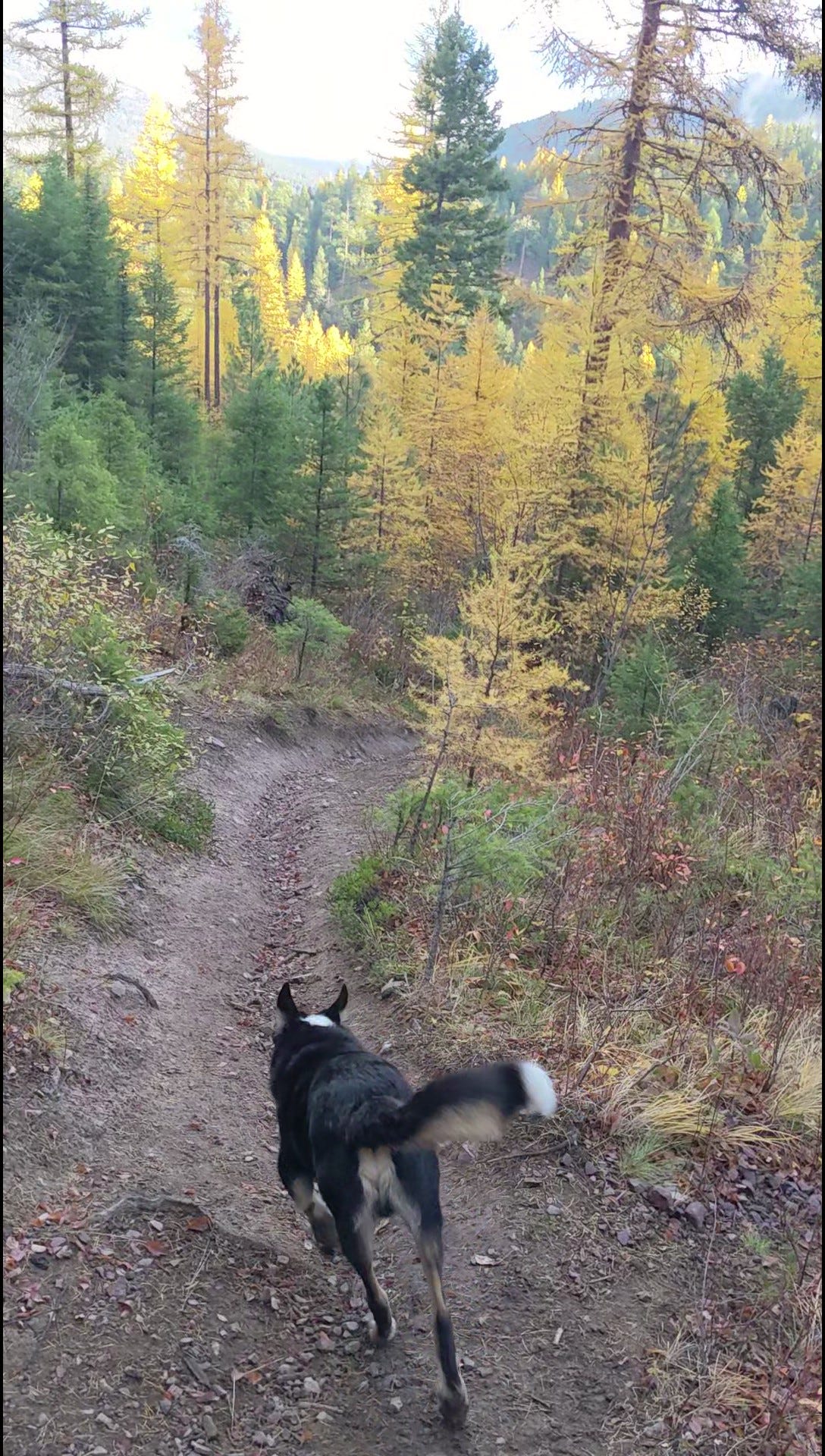
Dog running down a trail

I can’t help but think about wild animals in this context, too. They don’t have owners to dress them and care for their every need. What if the summer is especially hot and dry, or the winter is filled with unpredictable and severe storms? What if animals can’t adjust to these changes in their environment in time? Evolution of adaptations is a long, slow process—far slower than the current pace of climate change. Most creatures have evolved to survive perfectly in the Goldilocks Zone of their current habitat, and they lack the ability to strip off their layers, or flee to a place with more shade, water, or warmth. Or less of those things. If they were writers, forget the revisions. Their stories might end before they finish the first draft.

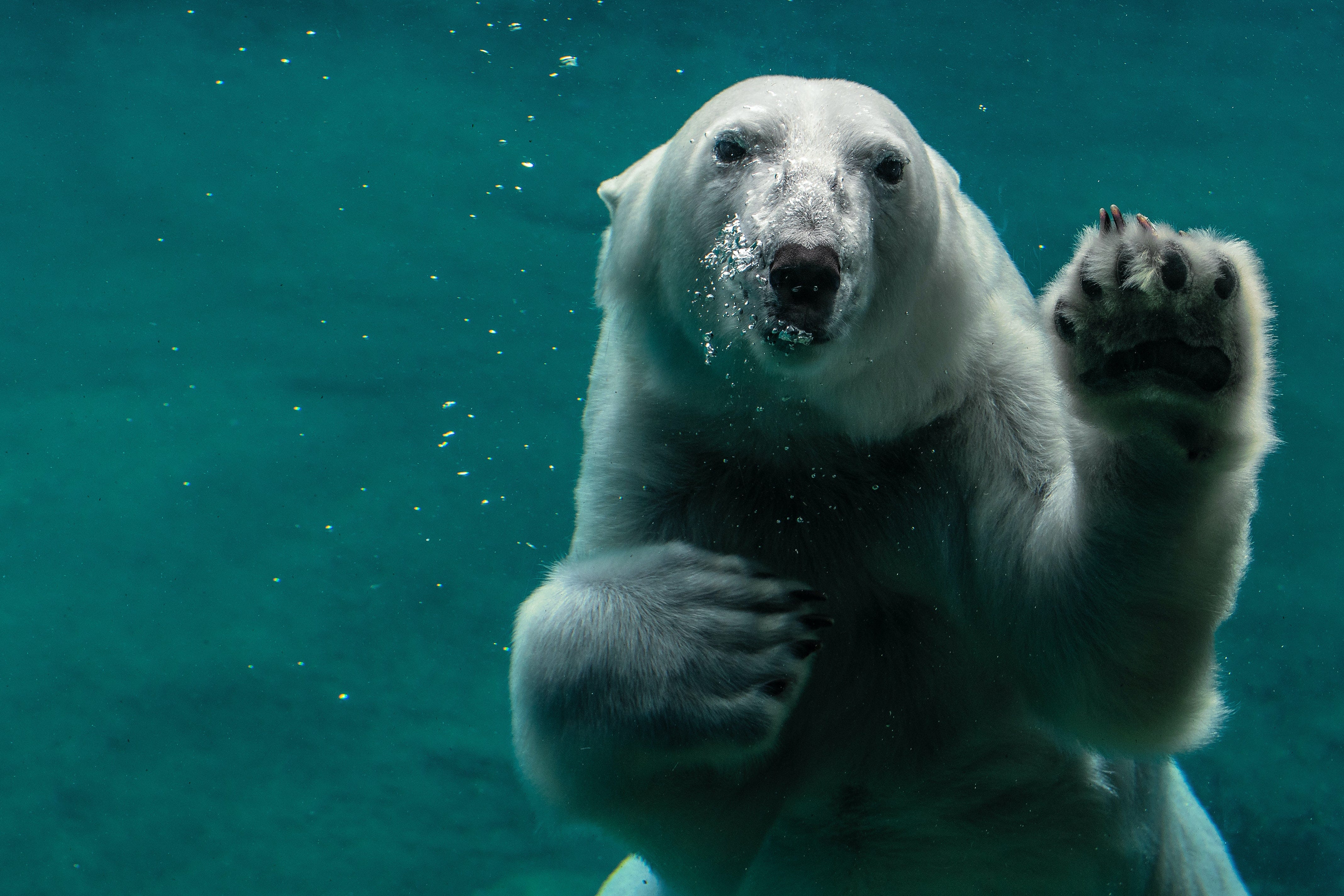
polar bear
Polar bears are the most famous of the many species that are running out of time, living on a planet with an ever-shrinking Goldilocks Zone for their particular needs. Photo credit: Peter Neumann

Astronomers are on a quest to find other planets with the same large-scale Goldilocks Zone as Earth, where temperatures allow the existence of liquid water. This is primarily part of the effort to search for extraterrestrial life, but I suspect many people think the hunt is valuable for another reason: as a way to find other places humans might relocate to when we’ve outgrown our home planet. To me, this is akin to throwing your story in the trash and starting over. Similar to Planet Earth, populated with almost nine million species, a draft is an incredible accomplishment, filled with thousands of words that have been organized to work in harmony. Let’s keep these stories, no matter the scale, and figure out how we can make them “good enough” for everyone to enjoy.

Porridge ready to eat
Photo credit: Klara Avsenik

Happy Tales!
Wanna Go For a Walk? (or: How Your Dog Will Solve Your Writer’s Block)

“Ready for walkies?”

Dog standing at door

If you have a dog, you probably say something of this sort every single day. Hopefully more than once. It’s an auditory litany that mustn’t be missed, even though as a writer, you’ve probably learned that unintentional repetition isn’t a great thing. If you skip it, you’re likely to end up with a miserable pet and a messy house (okay, one that’s even messier than usual). You’ll miss out on one of the most fruitful sources of inspiration known to humankind, and a surefire solution to Writer’s Block. This holds true even if you don’t have a dog, though of course a canine companion provides the best excuse for getting outside whether you feel like it or not.

An addiction to walks is why my dog and I traipse through the hills each morning. We put aside chores, snacks, conversations, and actual writing in favor of retreating to the forested hills out our back door. No matter whether it’s hot and smoky from forest fires, gray and rainy and inches deep in mud, or icy and blizzarding and ten degrees F, we suit up and begin a brisk walk up a bumpy trail. To the uninitiated, this trip might sound mundane or downright unpleasant. But to my dog and me, it’s an entry into our own fantastic Land of Oz.

Dog trotting through woods

Huh? you might wonder. How could a trudge along a dirt trail remotely resemble the fantasy world in one of the most classic of childrens’ books?

Easy. You know that trail my dog Tock and I follow? Don’t be fooled by the ice, dirt, rocks, roots, hounds-tongue burrs, and knapweed. Nope. It’s actually the yellow brick road. Not only does it lead us to our goal—a high point with a view—but we always, always get more than we bargained for. In a good way. Mostly. Here’s what happens:

  1. We get to hunt down wicked witches (Tock’s translation: pine cones or snowballs, depending on season. In desperate situations, a stick will suffice.)
  2. We make every effort to scare off the flying monkeys (Tock’s translation: squirrels).Photo credit: Andrey Svistunov
  3. We make some friends (Tock’s translation: other dogs) if we’re lucky.
  4. We go on an interesting adventure in which our hearts pump furiously.

And then? Like Dorothy and Toto, we go home.

Okay, fine, you say. Land of Oz. Cute analogy. But what does it have to do with me writing a single word of my recalcitrant Work-in-Progress?

Glad you asked. In fact, the great outdoors is one of the most perfect places to think about and talk about writing. First of all, we—meaning everyone, not just writers—live in our own stories all the time. Stories that we create every day. They might be wholly true, they might be wholly fictional, or they might be somewhere in between. They’re our own personal narratives, about ourselves, people we know, things that’ve happened to us, or things in news.

Now if you’re a writer, or want to be a writer, you spend even more time in your head sifting through those stories, and other people’s stories, and your thoughts, feelings, and reactions to all those stories to find the ones that you want to write down.

Sometimes, this is pretty overwhelming. You get stuck. You can’t dig through the mess deep enough to find a fresh new idea. Or you have so many ideas that you can’t decide which one to work on. Or you can’t solve a problem in your plot, or your characters, or your world. You might feel like the solution is off in the wings, in your peripheral vision where you just can’t quite grasp it. It darts away when you try to look at it because there’s simply too much stuff going on in your head. Too many thoughts and stories distracting you.

So what can you do? Simple. Get away from your screens! Put yourself in a situation where your subconscious mind can take over. Engage your entire body (your physical self) to the best of your ability, so much that you can damp out all the clutter. Get your heart pounding, your lungs acting like bellows, your muscles working, your sweat glands pumping. Get some fresh air! (Hopefully fresh, depending where you live.)

happy dog outdoors

And the beauty of this is that you can do all of it by going for a walk! As you probably know, exercise has major physical health benefits for your heart, muscles, bones, and immune system. All those endorphins released by exercise lead to higher levels of happiness and relaxation. Even better, regular aerobic exercise benefits your brain! It increases the size of your hippocampus (the part of the brain associated with verbal memory and learning) and promotes neurogenesis—the growth of nervous tissue. You can become more resistant to neurodegenerative disease.

From a writing standpoint, here’s the most important thing: moderate aerobic exercise such as walking can provide you with your best ideas. You get to live entirely in the present, experiencing the real world—the one that’s happening right this second. Because you’re devoting all your energy to your physical self, your brain simply doesn’t have energy to keep up with the many story threads whirling around inside it. It relaxes and lets go, unmooring you from preconceived notions, assumptions, and worries. You find yourself able to see details and the big picture at the same time. And that’s when the ideas happen.

I’m speaking from experience here. Unless it’s deathly cold (below ten degrees F is the cutoff for my dog’s paws) or I’m deathly ill, I walk every day. After a few throws of a pinecone for my dog, ideas, memories, and solutions to tricky plot problems begin to pop into my head without any effort on my part. By my side, Tock chases, fetches, sniffs, and runs, thoroughly enjoying every second.

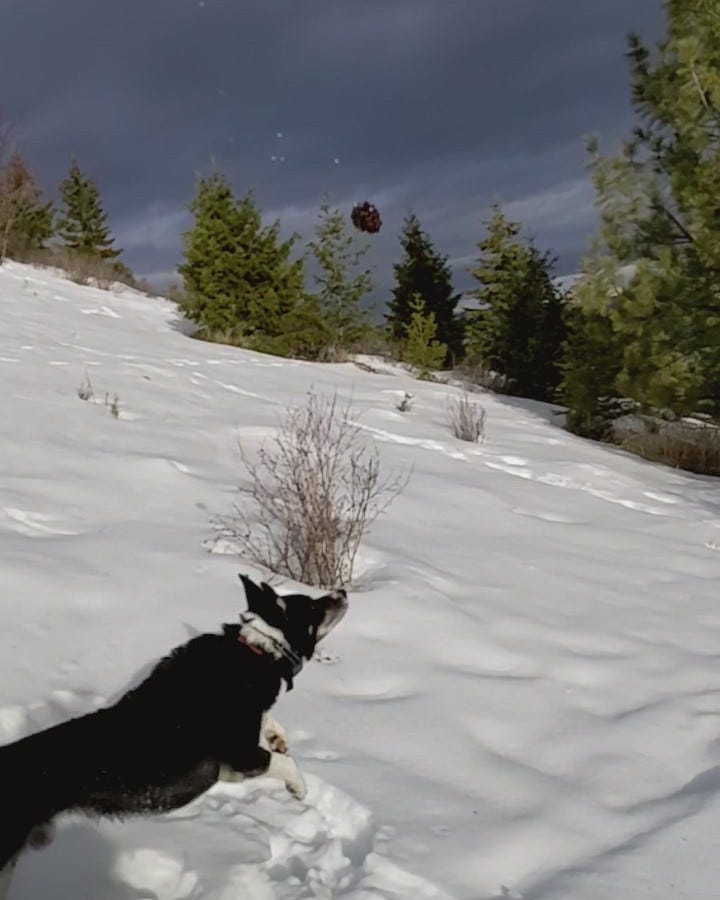
Dog running after pinecone

All you have to do to immerse yourself in your own Land of Oz adventure is to turn your phone off and your body on. Take your dog, if you have one and it’s willing. A walk in the woods is a truly magical place to most dogs. Unless they’re very nervous (in which case you’ll need to start much closer to home), they carry with them a sense of wonder, excitement and joy, as well as total immersion in the present. These feelings will spill over into you, too, no matter how down or worried you were before you went out the door.

This may sound strange, but I truly believe our dogs have a lot to teach us about writing. Twice per month, I’m gonna translate the basic precepts of dog minds, dog ownership, and dog training into simple writing tips. So if you love animals, if you love the outdoors, or if you love writing about these things, I invite you to join me here.

And now, from one writer to another, I urge you to get out there in the Land of Oz. I’ll be looking for you on the Yellow Brick Road.

Yellow brick road
Photo credit: Akshay Nanavati

Happy Tales!
(from: https://happytales.substack.com/p/wanna-go-for-a-walk)