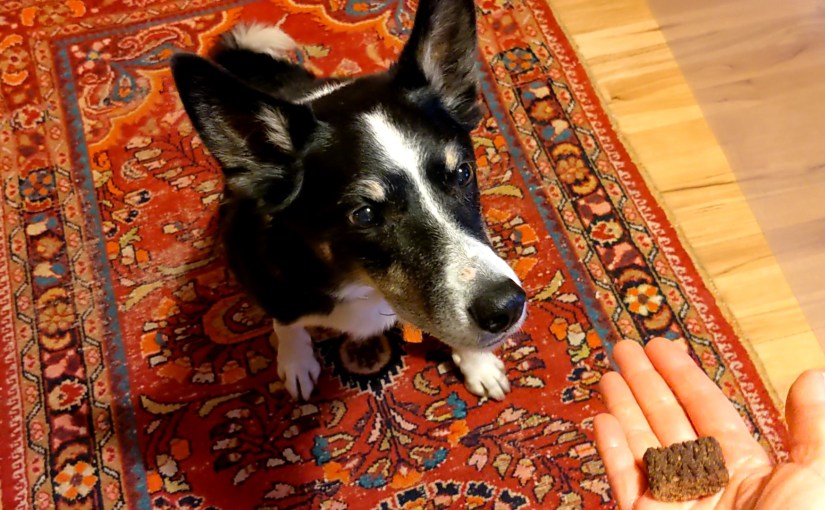
Upping the Ante

How to boost your confidence en route to your goal.

I don’t speak in superlatives very often, but the absolute best way to train a dog is through a process called shaping. The basic idea is that you don’t tell your dog what you want, but you reward them for doing it anyway.

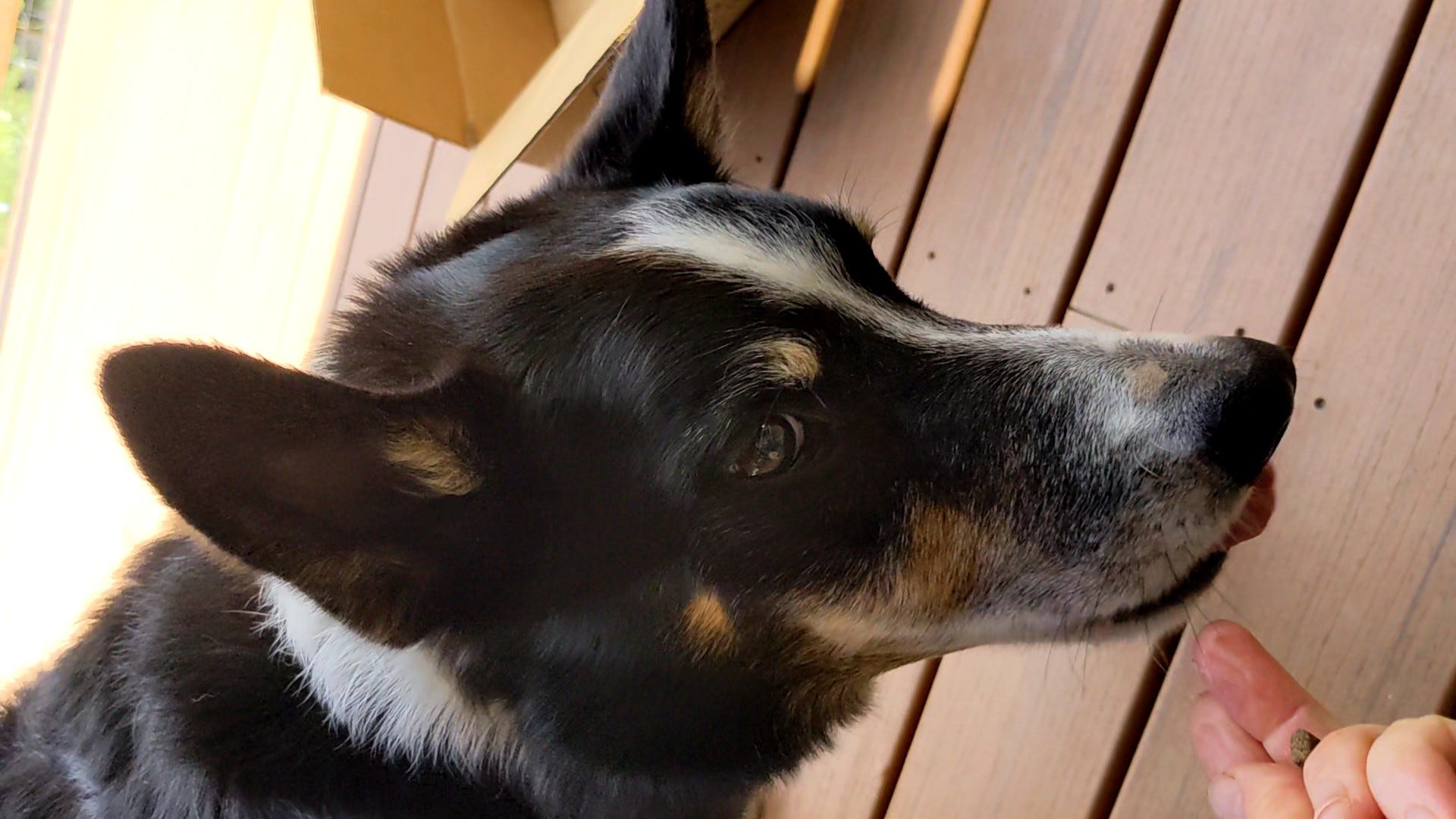
Dog getting treat reward
Tock gets a treat for doing something I wanted.

“Hold on,” you’re probably saying. “Why would a dog do something for you—a trick, a recall, a stay, whatever—if you never tell them to do it? Let alone how to do it.”

Thank goodness I’m here to tell you. The trick to shaping is that you start small.

Tiny dog
Photo credit: Summer C

Of course, I don’t mean small in the physical sense, but in terms of easiness. The same principle holds for writing. If you’re like most people, you’re not gonna sit down and write a novel on command when someone hands you a pen—especially if you’ve never written anything beyond a high-school essay until this point. No, you’ll start with something easier—a paragraph, a journal entry, a page.

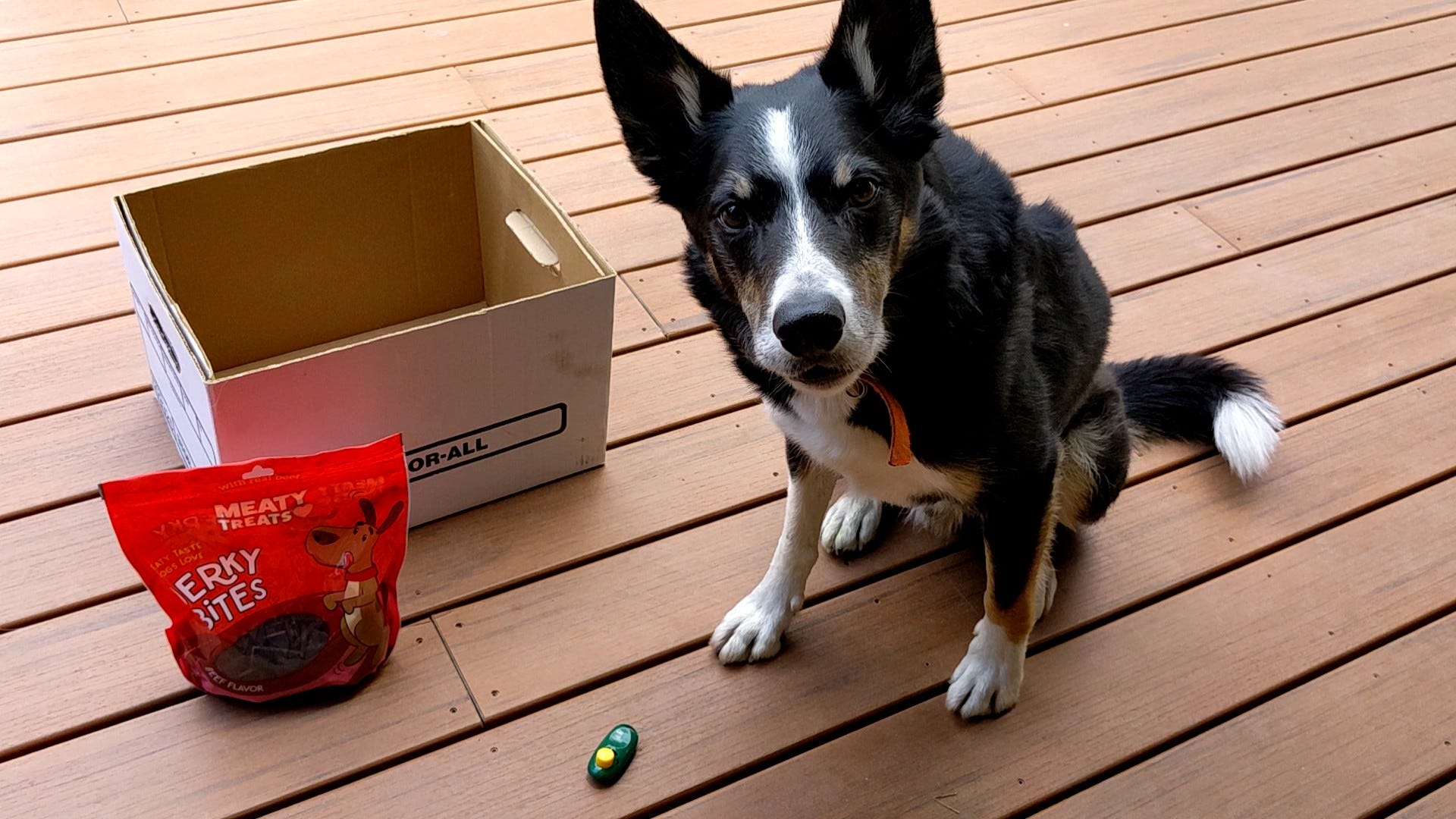
As for your dog, let’s say you want him to stand in a tiny cardboard box. Collect (1) a box that’s not tiny, but is roomy enough for him to fit inside comfortably, (2) a bag of treats, and (3) your dog. An optional item you can bring to the training session is (4) a clicker (I’ll explain more about that in a moment. For now, all you need to know is that it’s a handheld button that emits a loud click when pressed).

Box, treats, clicker, dog
All you need to train a dog to get in a box.

The second thing you need to do is very simple: put the box down near the dog. Unless your dog is totally distracted* or terrified of boxes,** he’s gonna check it out. The second he looks at it or sniffs it, press the clicker (if your dog has never experienced a clicker before, you should start by simply pressing the clicker and rewarding, over and over, until the dog has learned that the click means “you’re gonna get a treat!”). Instead of or in addition to the clicker, you can say a one-syllable word like “Yes!” or “Good!” Whatever sound you choose, you’ll use it to mark a behavior, the same way a camera click takes a snapshot to preserve the perfect pose.

*The solution for a distracted dog is to do your training in a boring room with no distractions.
**The solution for a terrified dog is to start with something that doesn’t resemble a box. A piece of cardboard, for instance.

Dog touching piece of cardboard
Photo credit: Sam Williams

In my parallel writing universe, I’d guess that this external marking of a dog’s behavior is analogous to making the conscious decision to write about … something. To sit down (click) and scrawl or type (click) with a purpose other than exercising your fingers. At the start, when you’re terrified that you cannot possibly write a single thing, just a bullet point for an outline or a sentence for a story will do.

Back to dogs: immediately after clicking, reward your dog with a treat. You can then either pick the box up and put it down again, or simply wait for the dog to do something with it again (either look at it, sniff it, or walk toward it, depending on the dog). After about five times, assuming your dog is hungry, he’ll have caught on that interacting with the box is quite valuable to him.

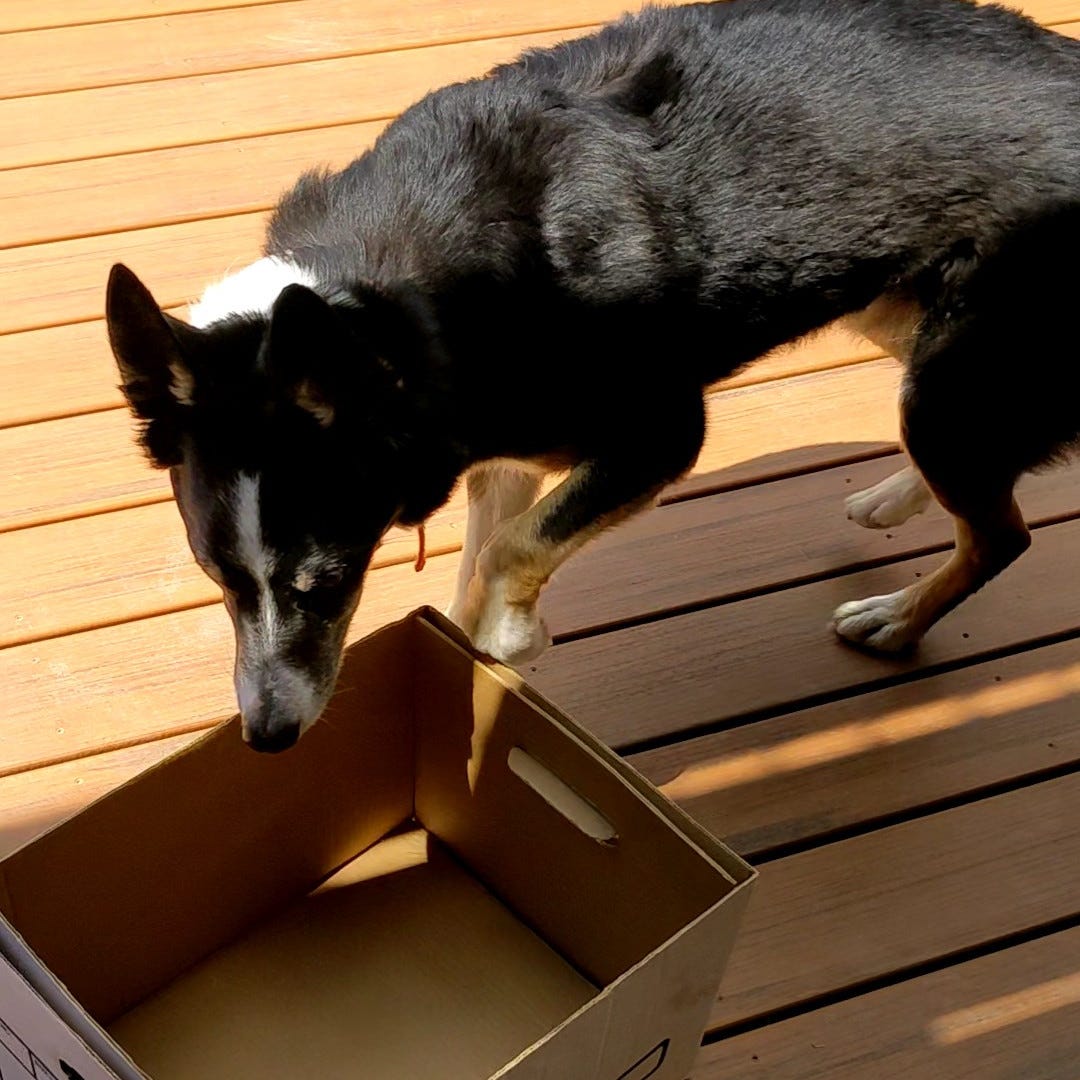
Dog sniffing box
Tock checks out the box when it’s put down near him.

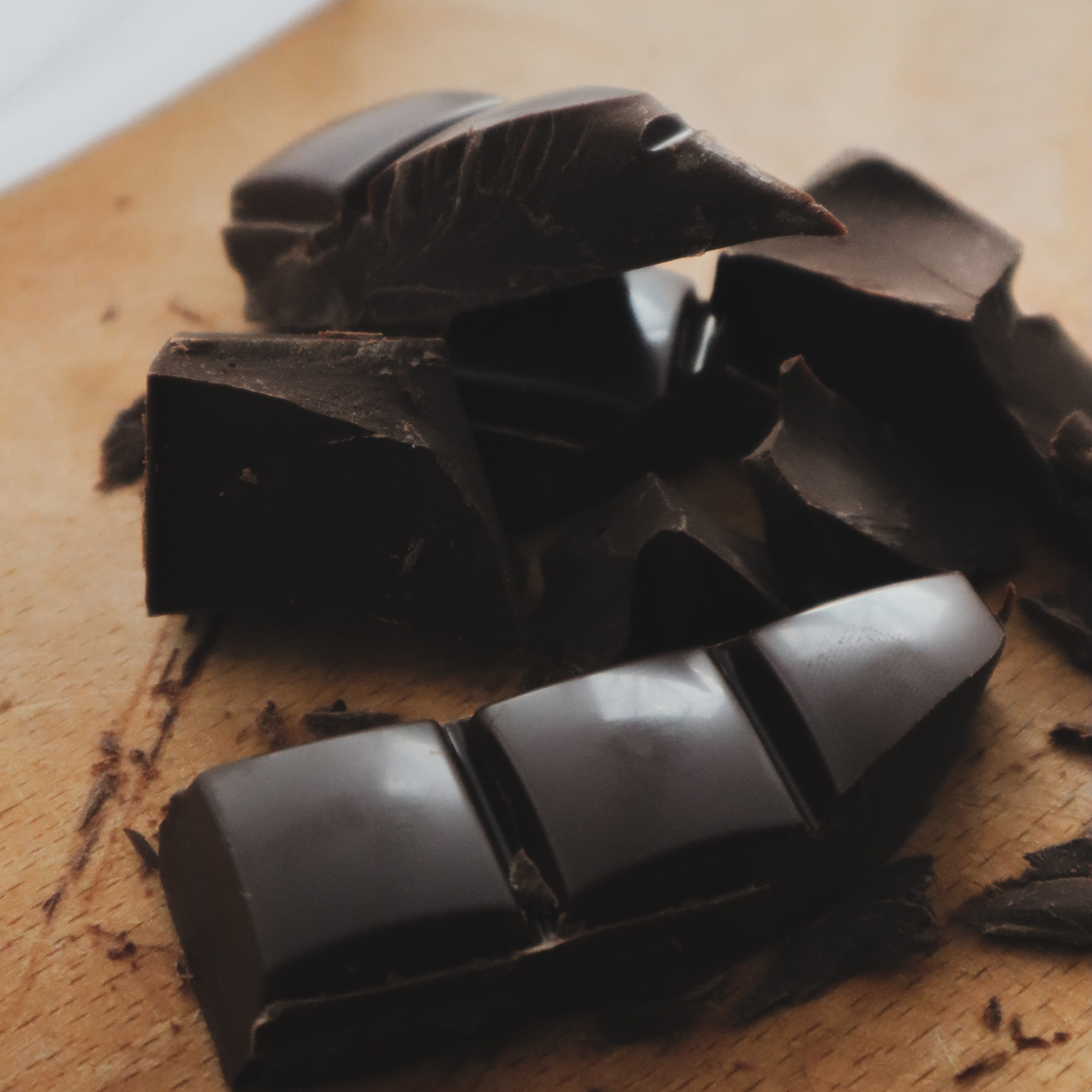
Clearly, writers aren’t going to stuff themselves with a piece of chocolate after every sentence. But when I’m finished writing my sentence, paragraph, page, or chapter, and I know I’ve accomplished a small goal of sorts, I allow myself to read what I wrote. Seeing that my labors produced a tangible result—no matter how much fixing or replacing will be necessary later—is the perfect reward for a writer.

Pile of chocolate
If I rewarded myself with my favorite treat every time I wrote a sentence, I’d no longer be able to move—or sleep. Photo credit: Taisiia-shestopal

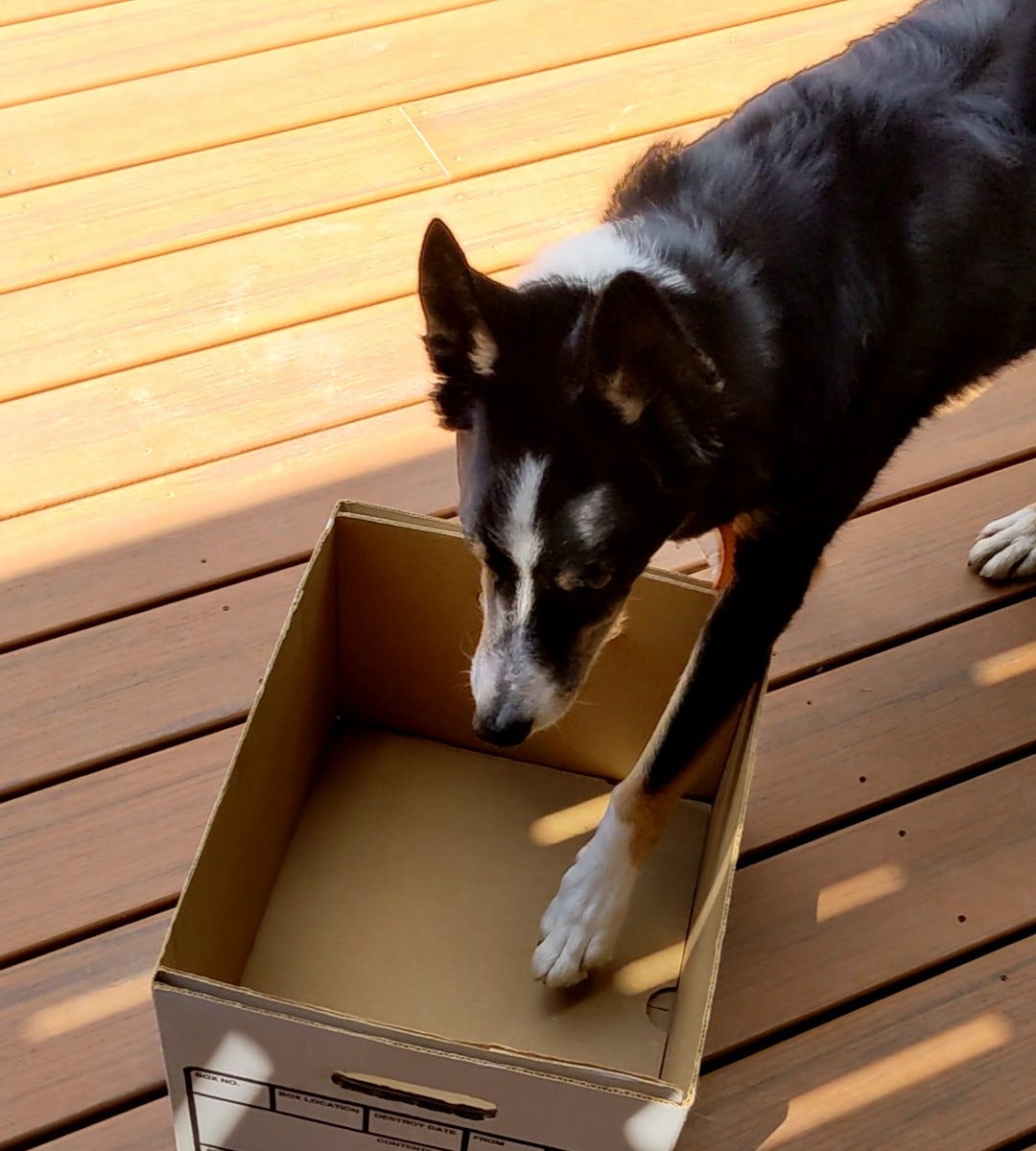
Once a dog has caught onto the game of doing-something-for-a-treat, this is where shaping gets fun. Now you’re going to raise your criteria for the click. Rather than stagnate at that one level of behavior, you’ll expect further progress. If your dog was looking at the box for a reward, wait until he sniffs it to mark the behavior. If he was sniffing it, put it a little farther away and wait until he steps toward it. If he was already stepping toward it, wait until he paws at it. Then until he puts a paw inside the box. Then two paws, then … you get the idea.

Dog putting paw in box

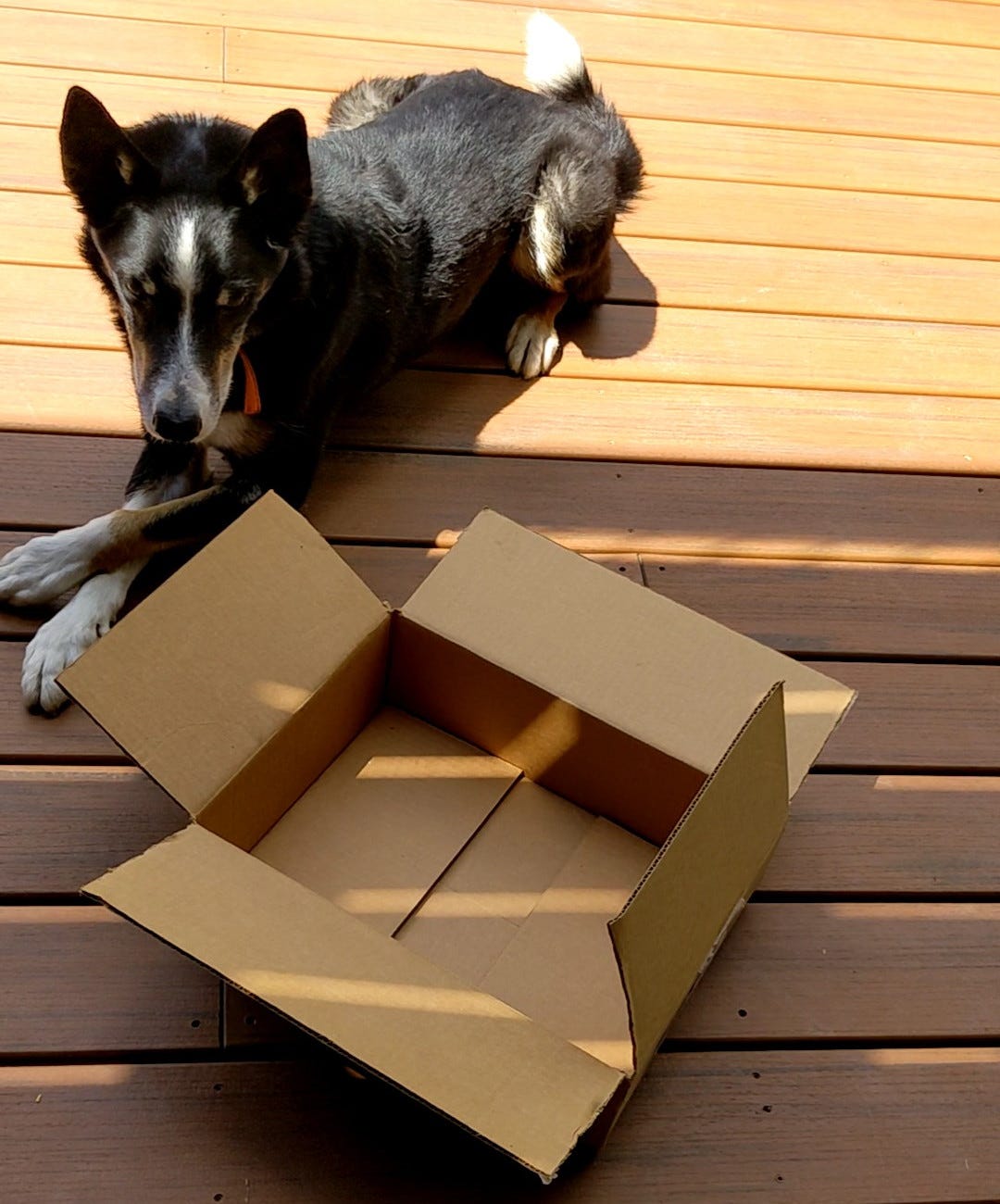
There are two important things to remember about this stage of shaping: (1) it requires great patience to wait for your dog to try something new, and (2) if your dog gives up or goes into mental meltdown, you’re raising the criteria too fast.

Dog lying down near box
Tock tries a different trick in the hopes that it’ll earn him a treat. It doesn’t.

If you’re a writer, these things might sound familiar. You know the tremendous patience and dedication that it takes to craft a story. You know just how much you can push yourself toward your goal without becoming overwhelmed and demoralized—and stop writing altogether (like 99% of people who say they’ve got a novel inside them to write, but then never end up writing it). You learn your craft in stages, you write some, you learn how to read your material critically and perfect what you’ve written. Eventually, you will write a complete work and be able to type THE END. Only now can you label it for what it is: a story!

Likewise, a trick that a dog learns through shaping only gets labelled once it’s complete. Your dog not only hops eagerly into the box, but stuffs himself into successively smaller and smaller boxes until he’s performing the behavior you had in mind all along. “Box!” you might call it, or “Get in!” You’re ready to ask him to repeat the performance in other places, with other boxes of various shapes and sizes, and you’re reasonably confident that he’ll do what you ask.

Dog putting two paws in box

Best of all, shaping has created a thinking dog, who voluntarily offers harder and harder behaviors all along the way to the finished product. He knows that when you get out your clicker and your treats, all he has to do is start offering behaviors and he’ll figure it out. Training him to do other tricks becomes an easy feat.

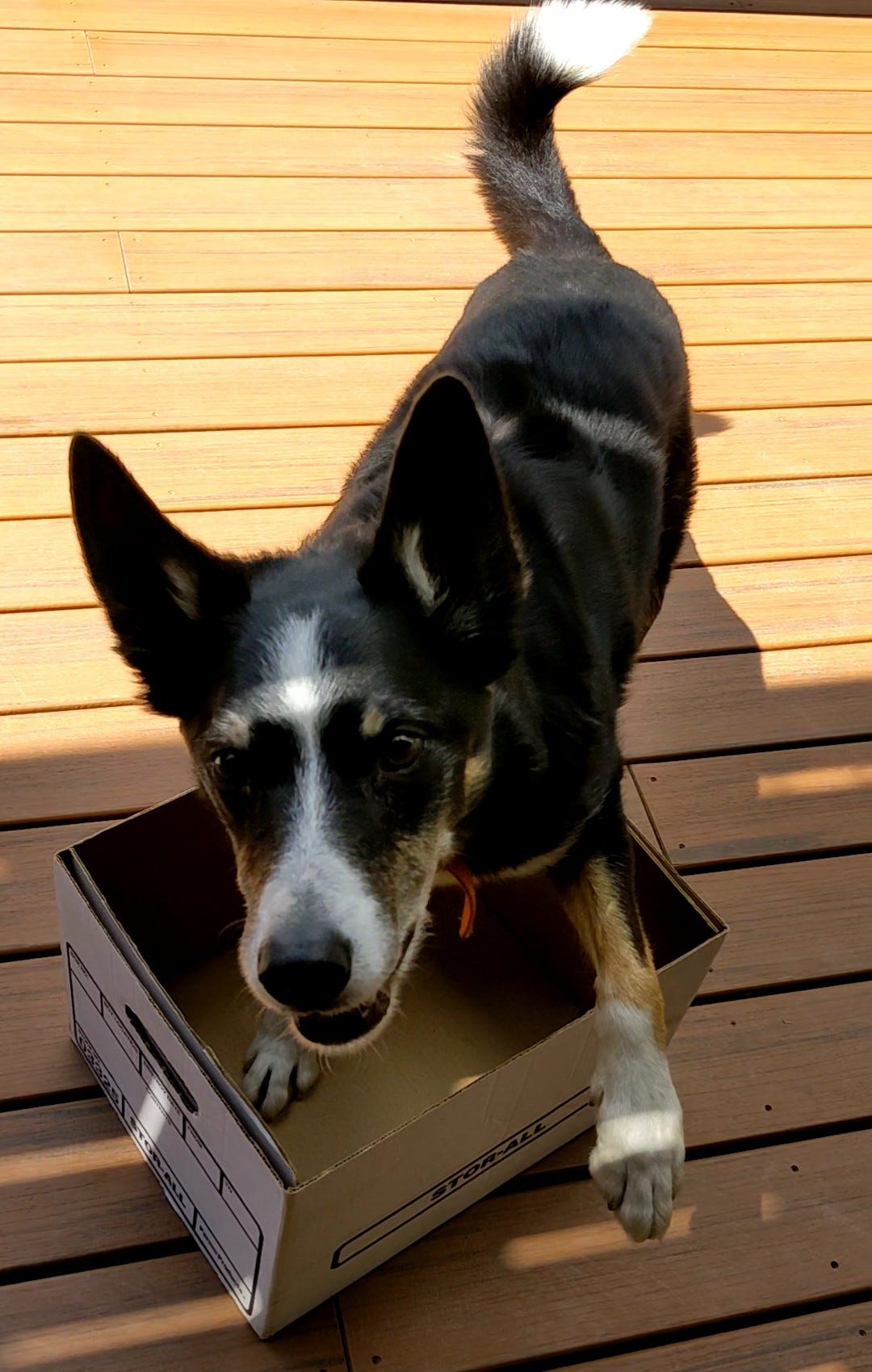
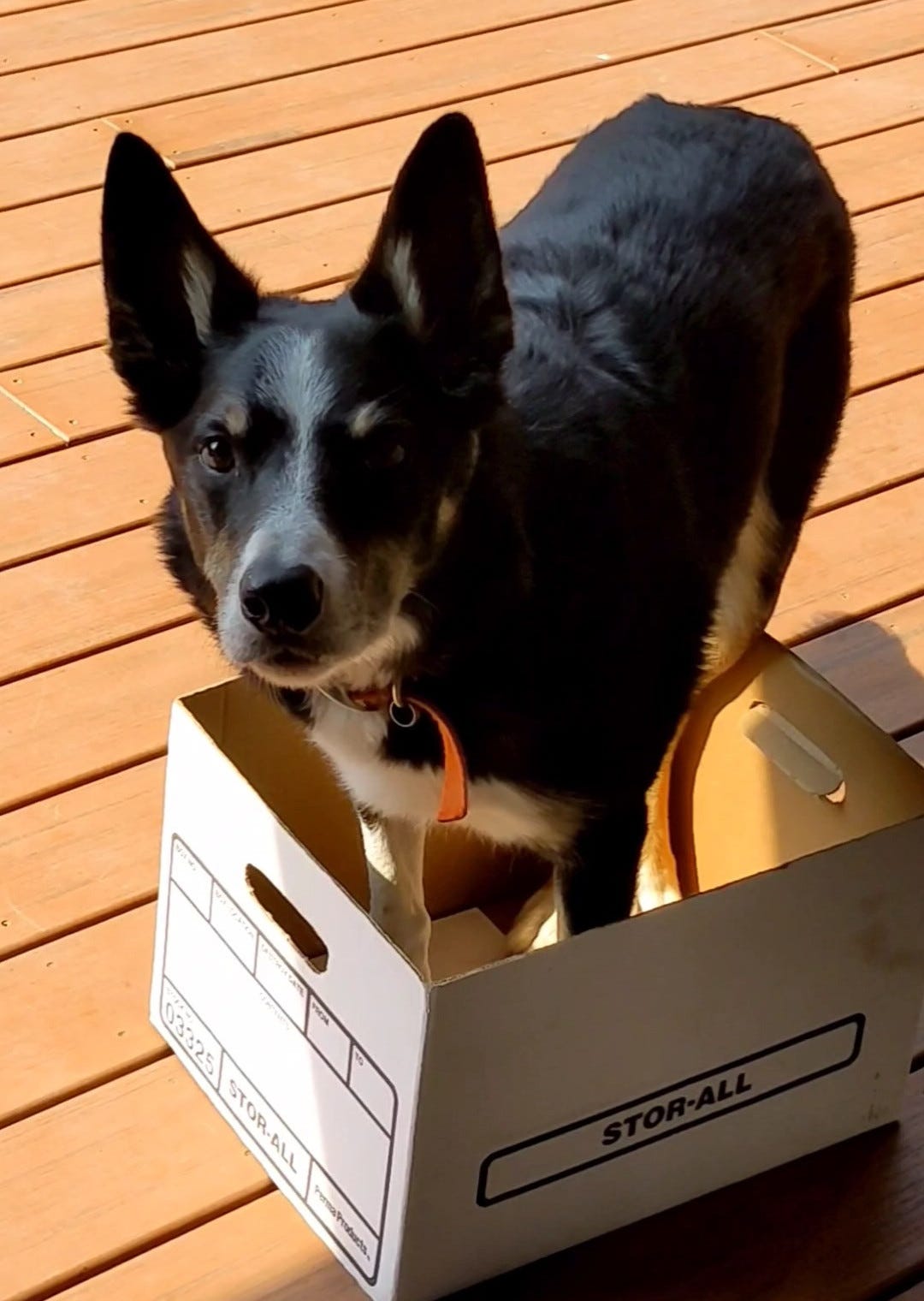
Dog in box
Success: all the way in!

Though the book we want to write is bound to take longer than the trick we teach a dog, we too can use the principle of shaping to simplify the process. All we have to do is start with an easy goal, accomplish it, and move on to something harder. We’ll learn how to write the first description of setting, dialogue, backstory, action … and keep upping our skills so we can write more. We’ll knock off the first page, first chapter, midpoint, climax, book. And because we’ve taught ourselves how to do it, why stop with one book? We can do it again, and again, and again…

Pile of books
Photo credit: Debby Hudson

Happy Tales!

The Hardest Part of Revision

(and how your dog can help you)

Kill Your Darlings! All of us writers have heard the phrase countless times. It refers to one of the primary steps of revision: trimming the excess away from your manuscript, getting rid of unnecessary dialogue, long descriptions, excessive “telling” (rather than “showing”), superfluous scenes, redundant characters. Eliminating these things is fantastic because it helps you tighten your plot lines, increase clarity, and reduce word count, all at the same time.

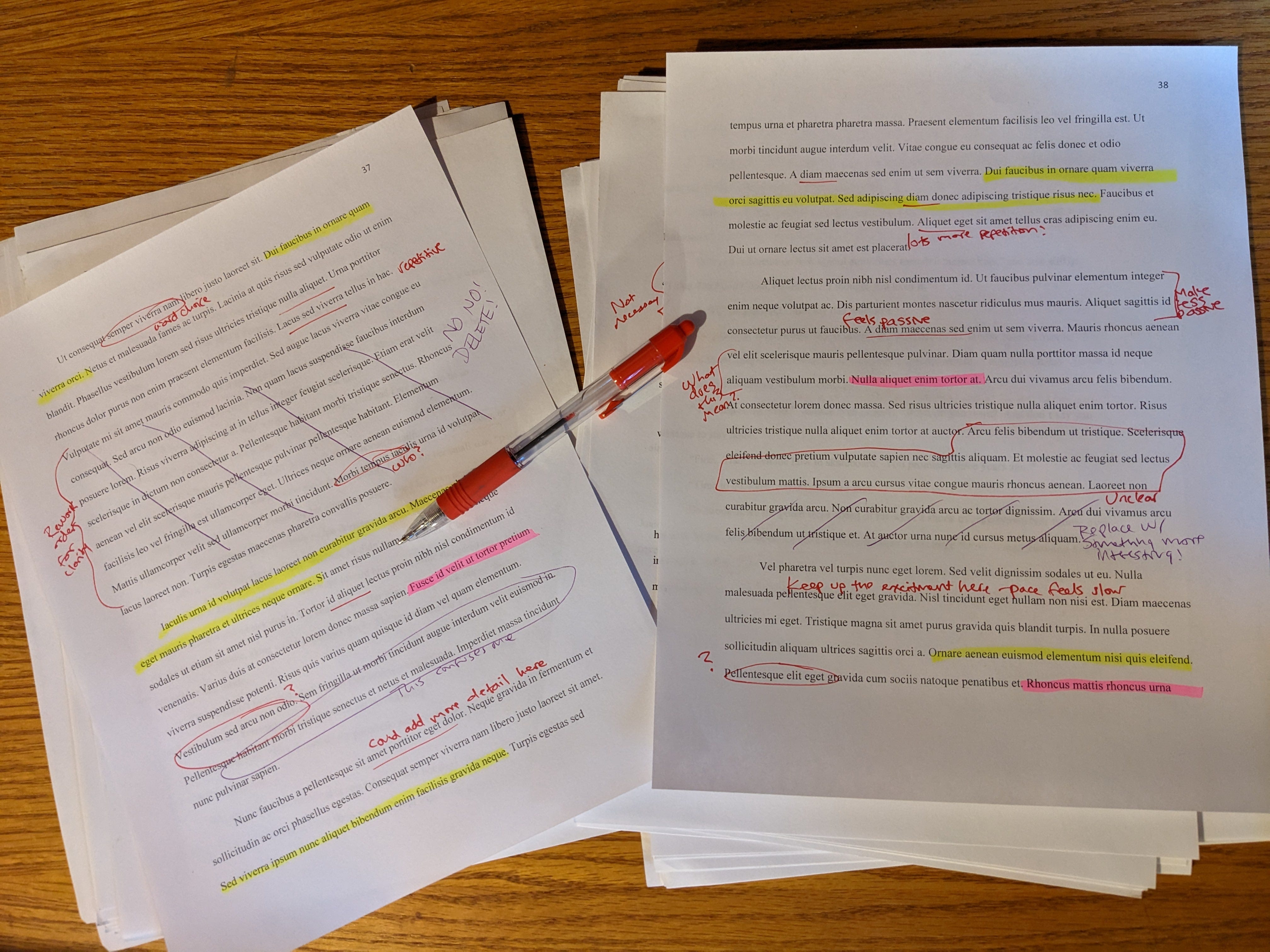
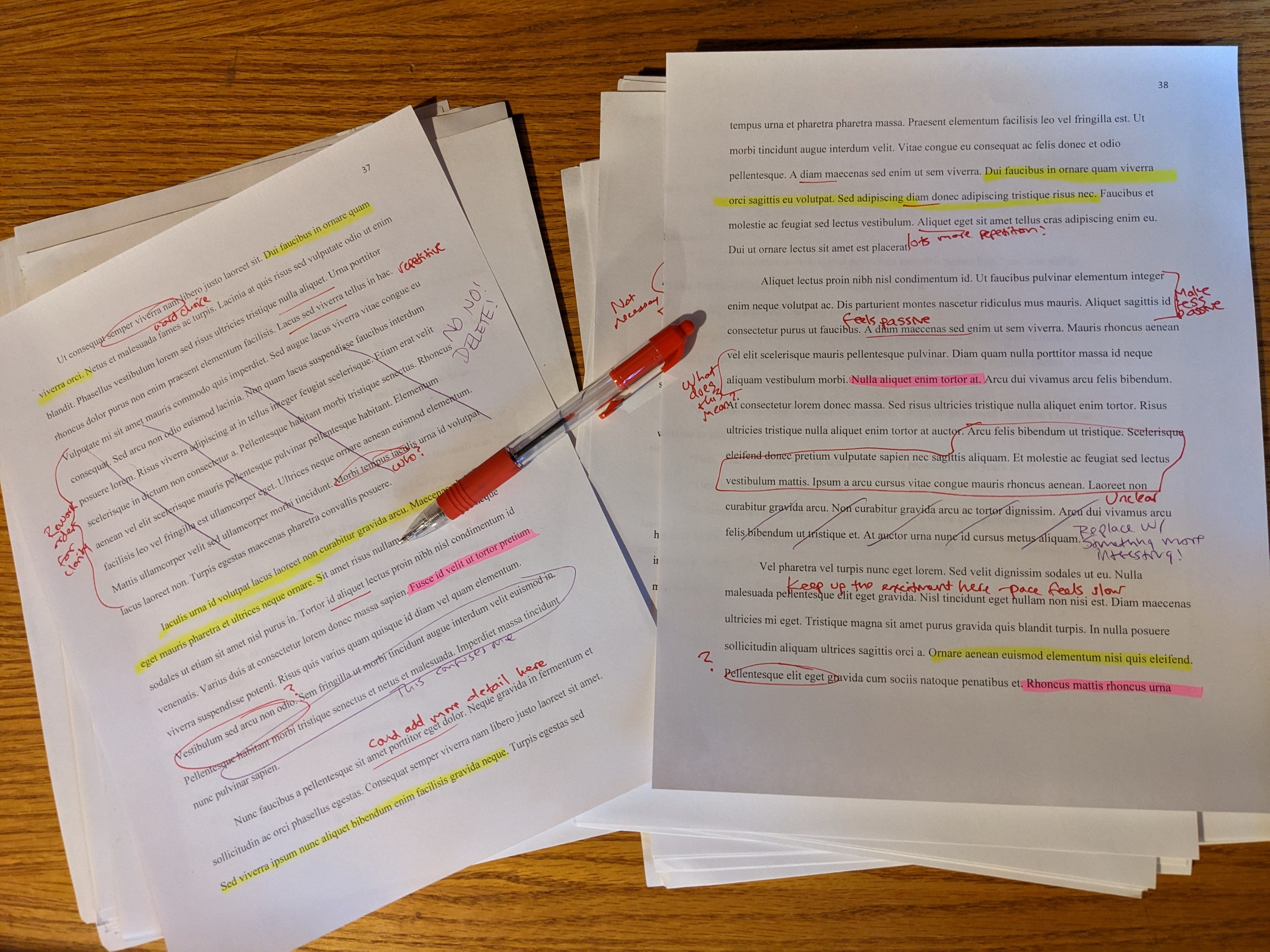
Marked-up manuscript

But it’s hard. These sections that you wrote are called “darlings” for a reason. You’ve possibly spent hours tweaking a particular phrase to get it perfect, so its lyricism and insight will reverberate through your readers hearts and minds for eons to come. Or perhaps a section came to you all at once in a moment of genius inspiration. And it’s gorgeous. Profound. It’s everything wonderful—except that your editor or beta readers or critiquers think it’s in the way. It slows the pace. It’s inconsistent with everything else that’s going on in the story.

When I wrote my first Middle-Grade manuscript, it was far too long. 138,000 embarrassing words long, in other words! But even more embarrassing was that I wasted time lamenting to other writers and even professionals that there was no possible way I could shorten it. I’d already gone through multiple drafts, scouring for places that didn’t feel like they belonged. In what alternate universe could I ever whittle the thing down to the 50-65,000 word maximum expected for an MG fantasy? J. K. Rowling wrote long books—why couldn’t I?

Answer 1: Sorry, you’ve only got the one universe, as far as we know. And you’re not J. K. Rowling. You’re gonna have to deal with it.

Milky Way Galaxy
Photo credit: Greg Rakozy

Answer 2: If you’re a debut author trying to publish traditionally in this universe these days, you might be able to break a couple tiny rules, but not the Word Count Rule. Not until you’re superhero famous and people will greedily buy everything you write, even if it’s longer than Encylopedia Britannica.

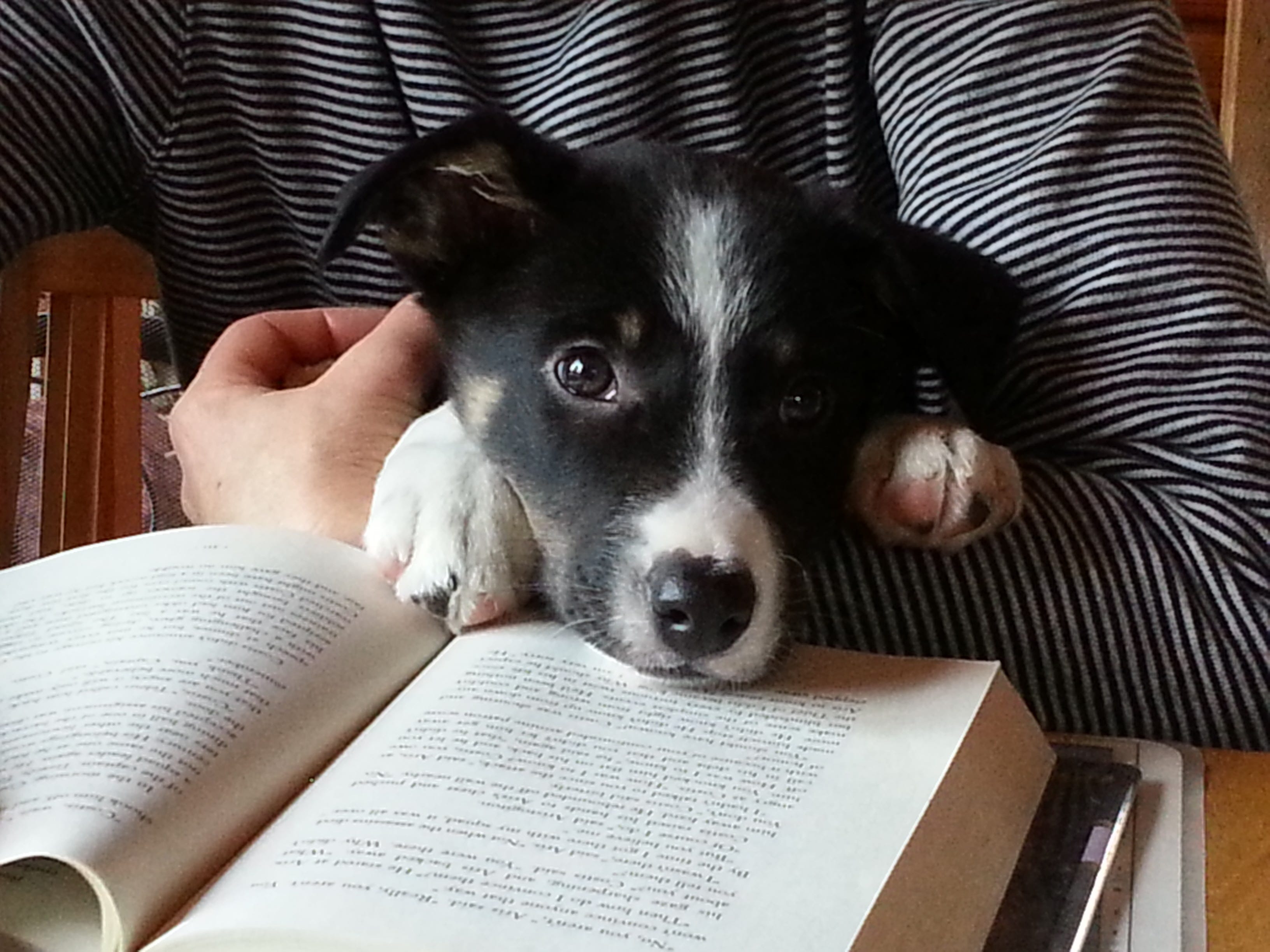
Dog reading book

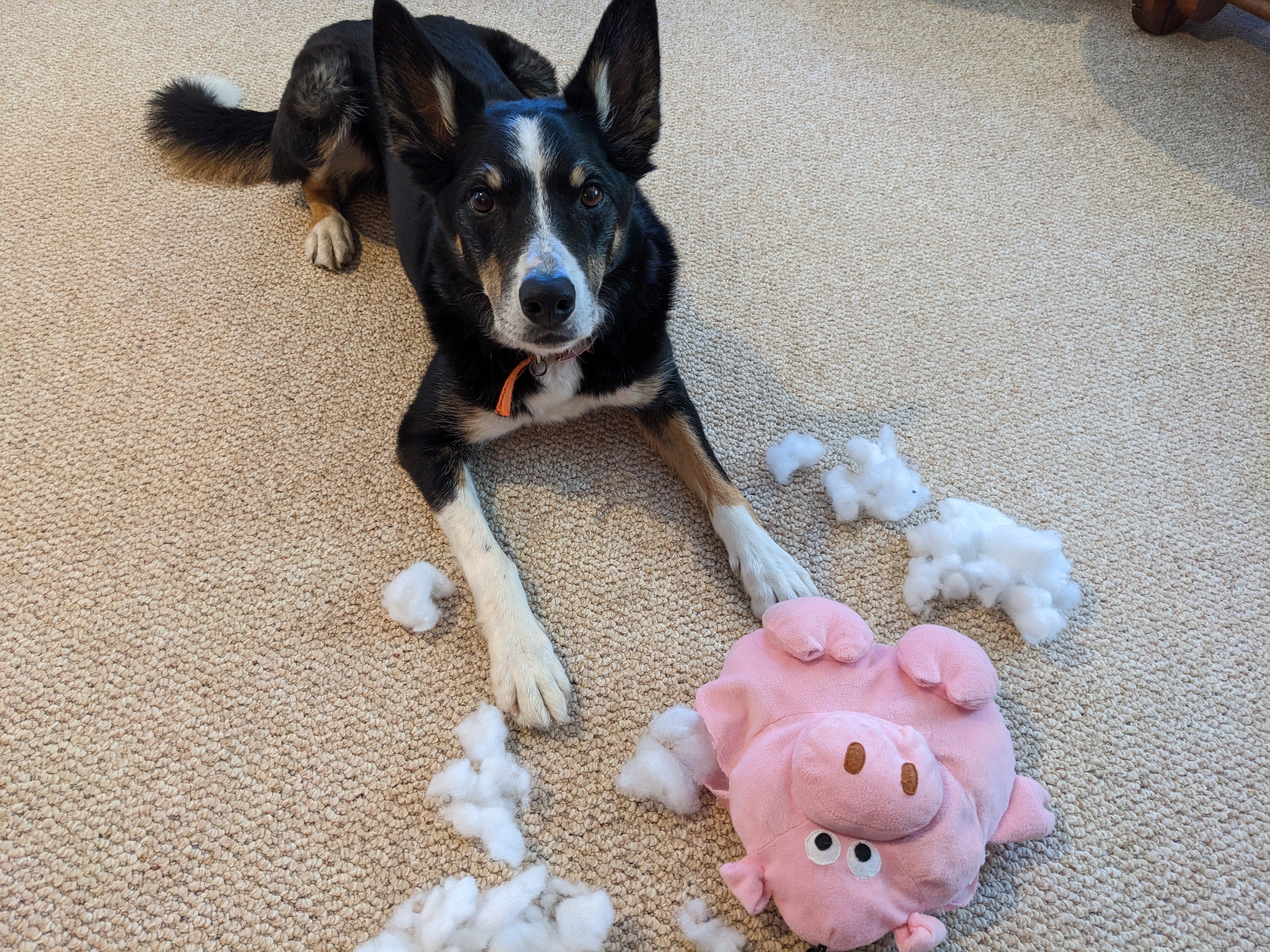
Ah, if only I’d thought to look to my dog for answers. Dogs are absolute masters at killing their darlings. Think how many fluffy squeaky toys you’ve purchased over the years for your canine companion. And then think how many you’ve purchased again because the first one got destroyed. Sometimes I think dog behaviors have evolved purely to speed up the rate at which they can find a squeaker and eviscerate a toy to get it out. This also goes for the tag on the back of a toy, in my dog’s case (his favorite predatory activity, however, is giving the “death thrash” to his Bungee Ball).

Dog with destroyed toy
Tock is quite proud of this pig that’s been de-fluffed, de-squeaked, and de-taggedThough in fairness to him, his former siblings were responsible for the first two things.

As a long-time dog owner, I’ve at last come up with some strategies for how to part with those ill-fated “toys” of yours (i.e., the parts of your story that people you respect have circled with a red pen, scrawling next to it either DELETEConsider removing, or Necessary? depending on how tactful they felt like being).

1. INCINERATE. Sometimes there’s no hope for these toys because they’re so utterly torn apart. You have to throw them in the trash. This is akin to a phrase, scene, or character in your book that truly deserves to be deleted forever. Maybe you once thought it beautiful, but upon further examination you discover it’s actually full of cliches, stereotypes, repetitive language, and boring verbs. It’s so bad it’s not even fixable. Select and delete, the sooner the better. Like ripping off a band-aid. It can actually be fun, if you channel the joy your dog obviously feels in yanking out the stuffing and flinging it all over the living room. Does he show remorse? Generally not—merely satisfaction at a job well done.

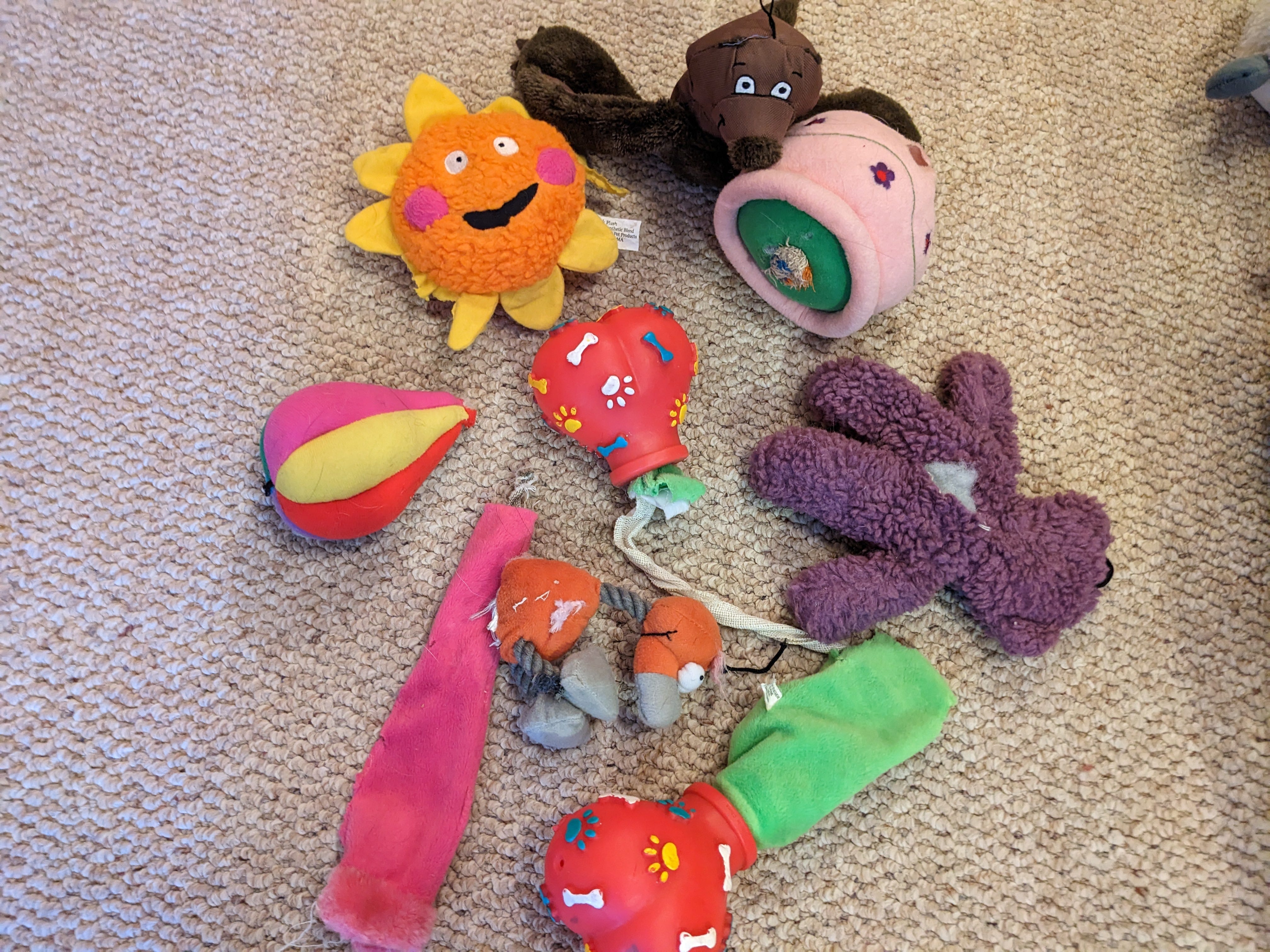
Collection of toy remnants
A few of the toy remnants in Tock’s collection

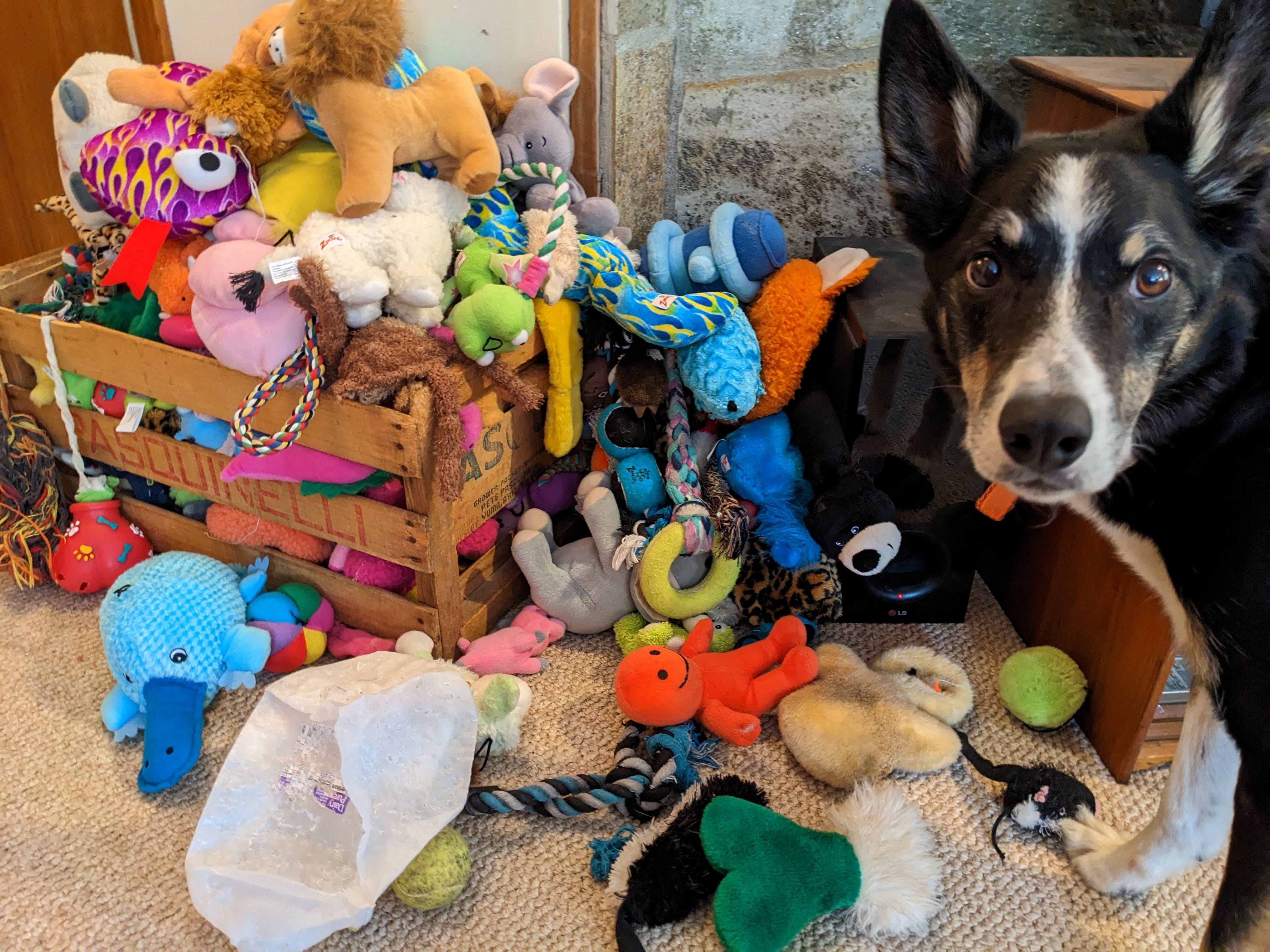
2. RETAIN HOPE / SAVE FOR LATER. Some toys might survive the onslaught. Maybe they only have a tiny tear in them, and if you hide them for a little while, your dog will forget that he initiated the supernova process once long ago. I frequently snatch a toy from the jaws of death and hide it in the bottom of my dog’s toybox. Sometimes he ferrets it out again right away, but often he forgets about it for a while, allowing both of us to pretend it’s still alive, somewhere. This is similar to taking your lovely snippet of writing and storing it in its own little file. Call it Precious Fragments, Scenes for the Sequel, Deleted Info that I Cannot Bear to Part With, call it what you will, but something about knowing it’s still out there can make the process less painful.

Dog with toybox
Tock’s toybox (Note: most of these toys were prizes from agility competitions, not purchases!)

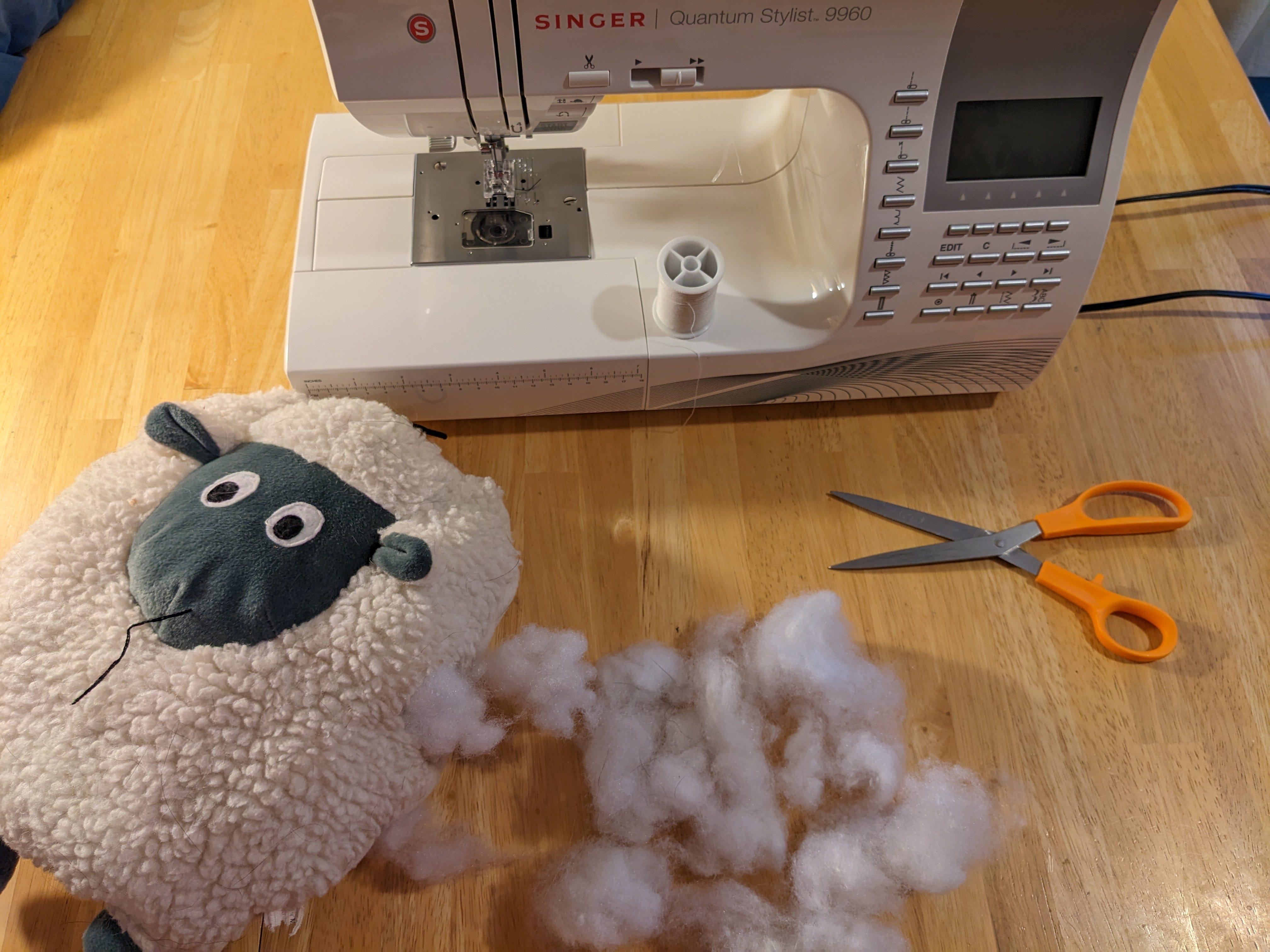
3. FIX? I put a question mark here because I’m a terrible seamstress. Sometimes I’ll try to handstitch toys back together, but they never last very long. As for writing, fixing can work well if the extent of the damage was small and only requires some re-wording for better clarity, or a little bit of reduction to avoid repetition. But in my experience, large-scale fixing almost always shows up in the story as a patch job. If you have a character that’s not needed, for instance, no amount of alteration to their personality is going to rectify the situation.

Toy needing stitching at sewing machine

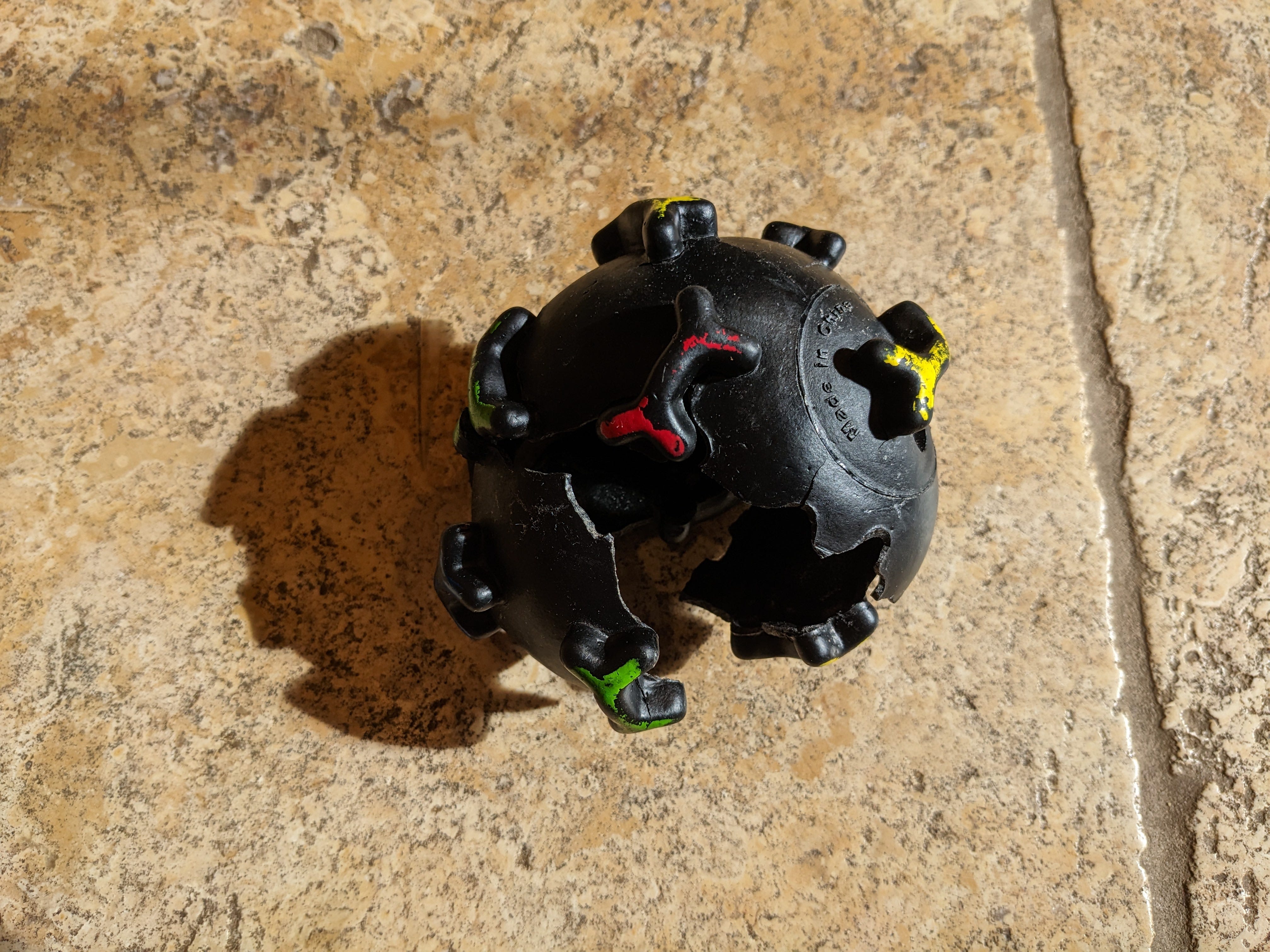
4. USE ELSEWHERE. Occasionally, a toy survives against all odds and finds a new life—not as the toy it once was but as something new. My dog, for instance, has a particular talent for recycling squeaky balls that long ago lost their squeakers and are so broken they resemble nothing more than a tattered piece of plastic. He’ll mouth them back into a rough ball shape and hold them carefully so as not to destroy their faint likeness to a toy—even though he knows he can no longer play with them in any way but a gentle game of tug (note: I would never let him do this if he had any inclination to ingest bits of plastic). Just as I love how Tock can recycle his toys like this, eking every bit of life out of them, I adore finding a new home in my story for those favorite-but-dysfunctional phrases. With careful insertion into just the right place, whether it’s one or ten chapters later, you may be in luck at saving some of your darlings from annihilation in this way, too.

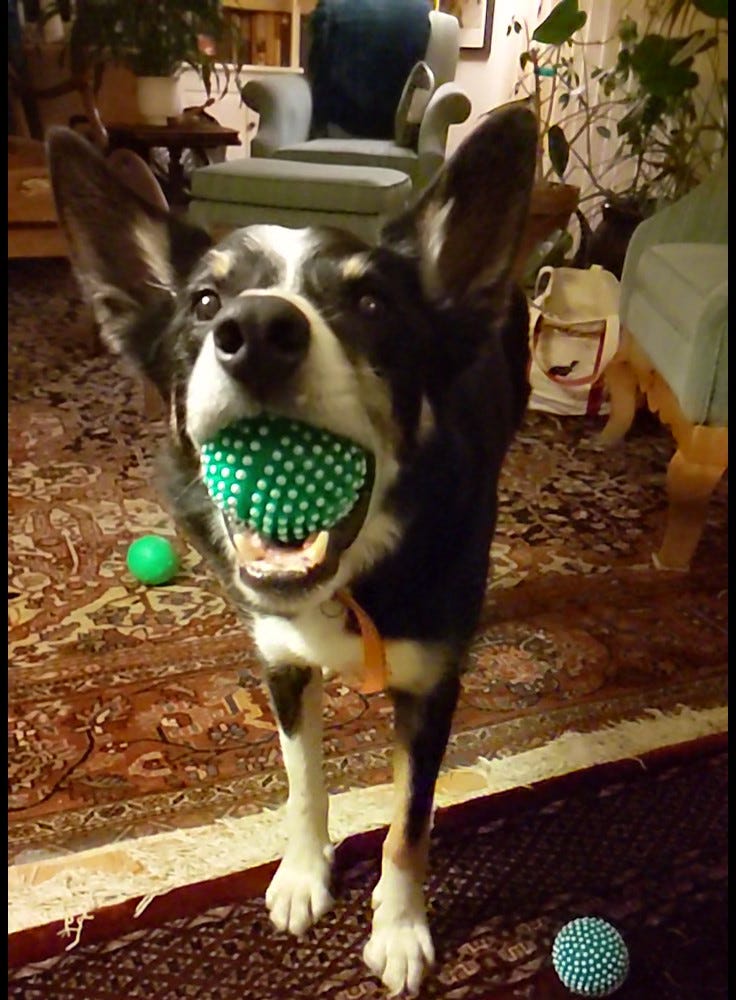
Broken squeaky ball
Tock’s beloved Bone Ball – broken but still gently used

5. REPLACE WITH SOMETHING SHINY & NEW. When more than half of my dog’s squeaky balls have reached the broken-plastic phase, I take pity on him and get him a new one. Or two. Or three. This doesn’t stop him from playing with the bits of plastic (unless I subject those to Strategy #1), but he plays with the new ones more. This goes for writing, too. You can re-use phrases in different places all you want, but what do you do with the gap they left behind? Sometimes simple deletion doesn’t work. You need to come up with a new gem to put in its place. Just make sure to run it by your critiquers to see if they think it’s a keeper this time.

Dog with new toys
New squeaky balls!

The final word of wisdom I’d like to part with is that nothing lasts forever. Not toys, not pet phrases. And the more you look at a selection of your writing, the more you or someone else is going to find wrong with it. Revision is a terrific tool—my favorite part of writing, actually—but there is such a thing as too much of it. Give your specially crafted phrases a round with your most trusted critique partners and professionals, and at some point … make the decision to accept that final version. Then there’s nothing left but do query / publish (topics for another day), and sit back and enjoy it!

Happy Tales!

What Do Literary Agents Really Want?

My dog agility students know the answer to this one!

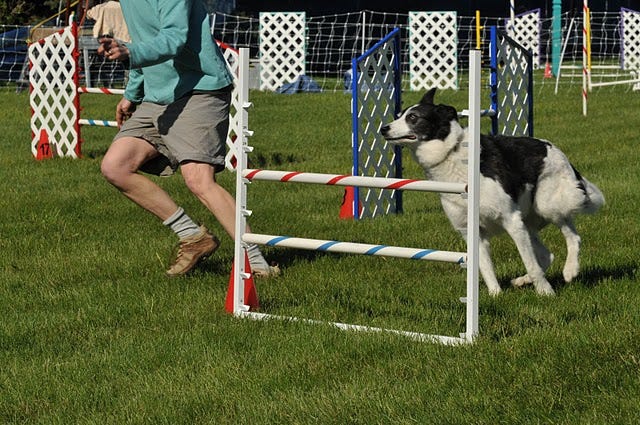
When I take on a new dog-handler team to teach them the sport of dog agility, I start by describing some different scenarios and posing the question: Which of the following dogs do you think is most ready to compete?

Dog taking jump

(1) A dog who moves at a medium pace through the course, mostly doing the obstacles in their correct order, but who keeps putting its nose to the ground to sniff things and trots right past some obstacles.

(2) A dog who’s super eager to work with its handler, though so quick to make decisions about where to go that it occasionally knocks a bar or has a wrong course (i.e., an obstacle inserted incorrectly into the sequence)

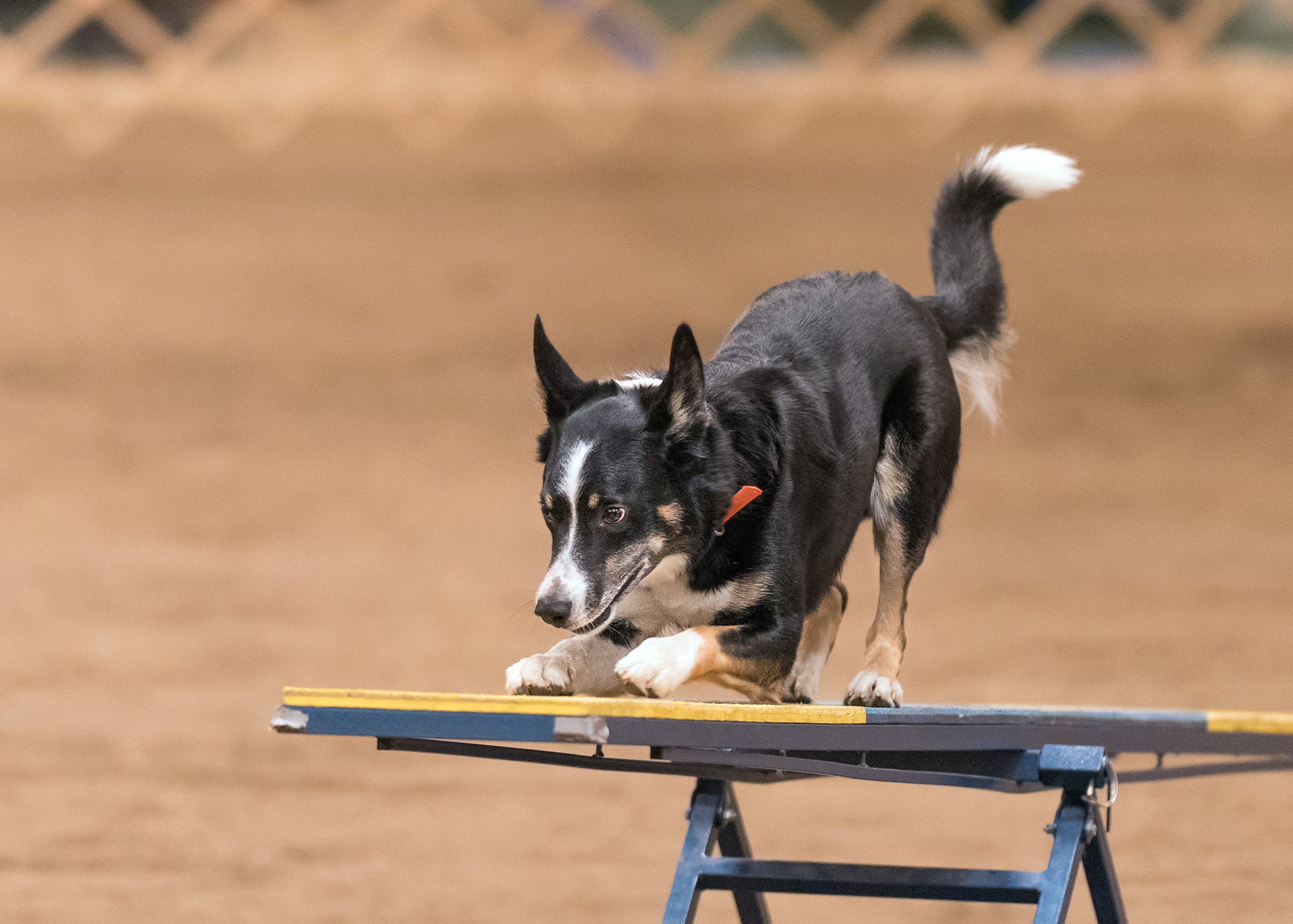
(3) A dog who’s even quicker than #2, but so fast that it flies off the teeter without waiting until the teeter touches the ground (thus breaking a safety rule), after which it zooms around the perimeter of the ring without taking the rest of the obstacles.

(4) A dog who takes all the obstacles in their correct order at a slow trot and wins the blue ribbon for having a clean run.

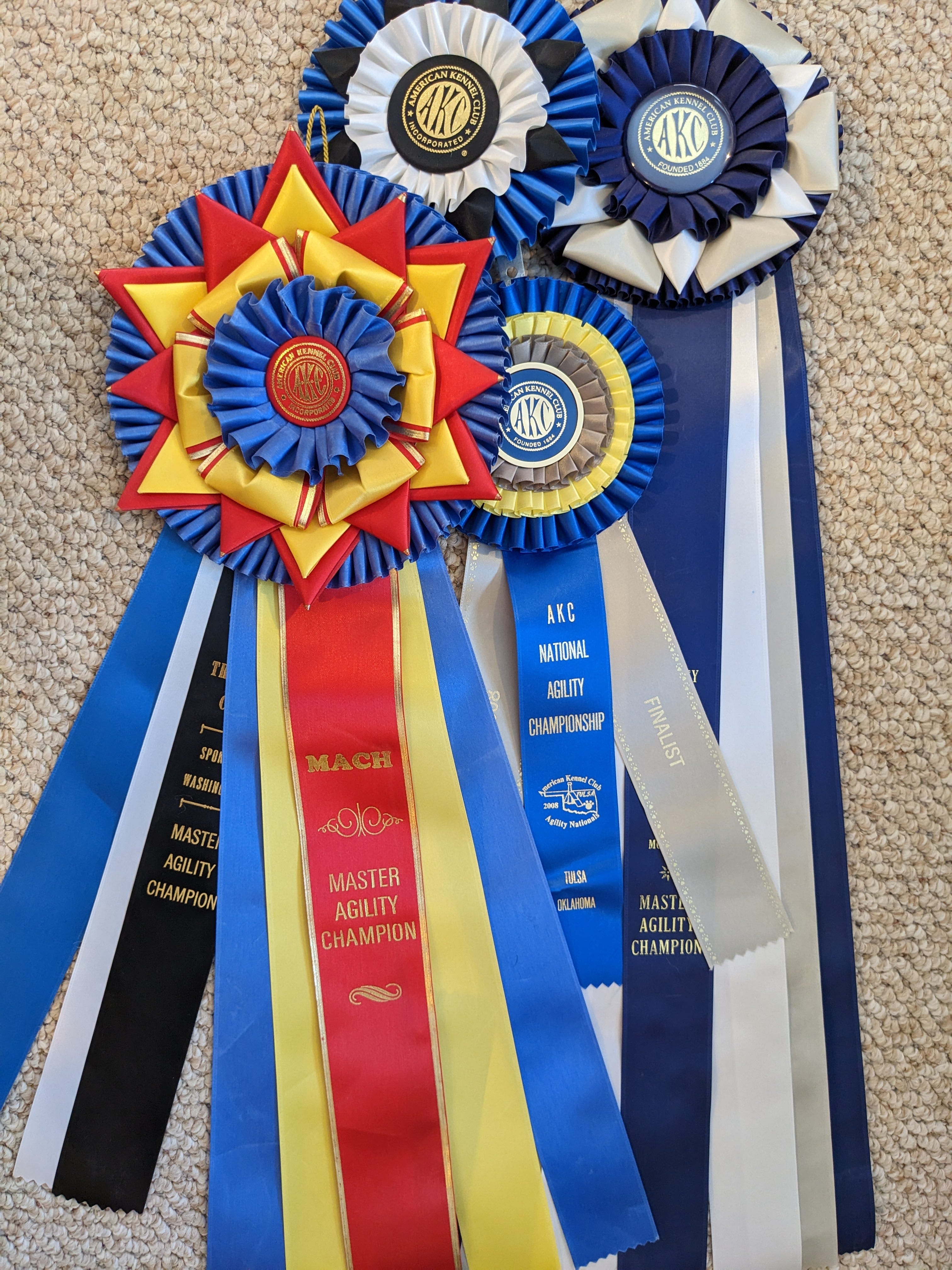
Ribbons

If you answered #4, you’re not alone. Most of my students give this answer, too. But in my view, you’re wrong. The correct answer is #2—the eager dog who makes mistakes. Here’s why: that dog exhibits a motivation to do what its person wants that none of the others has. It might make some mistakes, but it possesses a spark of life that not even the slow, accurate winner of the class displayed. It has drive.

Dog driving across dogwalk

It’s my firm belief that the agility teams who end up being happiest doing this sport—whether or not they ever compete—are the ones who’ve been trained in what I call the DASH principle. This is a simple acronym in which D = Drive, A = Accuracy, S = Speed, and H = Habitat, and it embodies the essence of dog agility. Drive gives you a motivated, happy dog. Accuracy gives you a dog who can do all the obstacles in correct order without knocking bars, jumping off teeters, refusing obstacles, taking incorrect obstacles, or accruing any of the many other possible faults. Speed gives you a dog who zips through the course well below the time limit. And habitat means you have a dog who can generalize and perform obstacles in different locations with all sorts of distractions around the ring (other dogs barking, children running, food everywhere, you name it). Learn the components in the proper order, and you’ll have a fun canine partner who loves bounding through a ringful of obstacles as much as you do (note: you don’t actually get to do the obstacles).

But this bears repeating: you must learn DASH in order. Train your dog to do simple tricks with drive before you do anything else. Soon you’ll be able to raise the difficulty level of the “tricks,” and voila, you have a dog who can accurately perform the weave poles, or the teeter, or any of the other obstacles. As your dog gains confidence, so will its speed. And finally, you’re ready to take your dog on the road and test its skills in new habitats.

Dog performing weave poles

Now, back to the question that has plagued writers through the ages (or at least as long as agents have been a necessary part of the traditional publishing process): what do those agents want, anyway?

After attending more query, pitch, and submission workshops than I can count, and after celebrating friends and colleagues who have managed to land an agent, I think the answer lies within the principles of good dog agility training. Agents are looking for drive. They’re looking for a premise that is so motivating to them personally that it stirs their soul. Sure they appreciate a writer with excellent (i.e., accurate) technique who has clearly spent years studying the craft and has polished their submission materials to a brilliant sheen. Sure, they respect a writer who’s got the speed of mind to have other projects in the works. And of course they like a writer who has the potential to show their book to as wide an audience as possible (i.e., many habitats).

But an agent needs that drive above all else. Without the spark of a premise that interests them, they’ll never read past the query letter to the first page. And with it, they’re willing to overlook a lot of mistakes. They know they’ll enjoy the story so much that they won’t mind working with the author as long as it takes to make it as good as it can be. Their goal? A book that wins the blue ribbon not for plodding correctly through all the steps of Writing 101, but for its heart, its intrigue, its fascinating portrayal of life in all its messiness.

Dog performing A-frame

If we compare the agility dogs that have the D in DASH to the books that are lucky enough to obtain an agent, they have one thing in common. They’re fun! Not in a comedy sense (unless the book is a comedy, of course), but in the sense of having heart and soul. They’re fun to watch run at an agility competition, or fun to settle down with on the couch and read. They’re not always error-free, but they’re as enthralling as a musician who sings or plays their heart out, not caring about the occasional wrong note. To me, they’re like the opera tenor Placido Domingo, who sings with a fervor and intensity that stirs my heart even more than the pure and perfect tones of Luciano Pavarotti.

Opera hall
Photo credit: Gwen King

If I raised a few brows by daring to elevate any singer above the great Pavarotti, I meant to. That’s because the appreciation of drive in someone else’s work is subjective. Very subjective, especially when it comes to the creative arts (books, music, etc). One agent might be completely unmoved by your work, while another is almost instantly ready to fly with it to the moon and back. But your chances of finding any agent are going to increase enormously if you revisit your premise, your query, and your characters and look for heart, passion, and purpose every step of the way. Something that elicits those feelings is gonna be far more stirring and memorable than a perfect performance.

And I’m fairly certain a lot of those agents might just happen to agree with me.

Dog taking panel jump

Happy Tales!

The Path Less Traveled

Or: How Your Character Can Keep Things Interesting

When I’m walking with only my dog for company, as I usually do, I become lost in thought. My feet trace the circuitous paths they’ve taken so many times, while my brain goes off on whatever wild tangents it chooses: What am I going to do about that plot hole in my WIP? … that was such a funny story on the radio … better remember to add red pepper to the grocery list … how can I make my antagonist more villainous? … what exactly are we going to have for dinner

And then Tock barks at a squirrel and I return to full consciousness, back in the present. But unless I’ve made it out of the trees to a place with a view, the strange sensation of having no idea where I am sometimes sweeps over me.

Dog standing in trail.

Let me put your concern that I’m a victim of amnesia to rest. I always know which general trail system I’m hiking in. Based on how sweaty and tired I am, I also know whether I’m still heading up to my destination or down toward the trailhead (except for the rare flat bits, it’s gonna be one of those two things). But the trails in the woods near me are plentiful and have a way of looping, branching, and re-connecting as if they can’t bear to stay apart from one another for too long. Every now and then while I’m in my semiconscious mode, I’ll even follow my dog into a wrong turn—not because he doesn’t know where to go, but because he enjoys taking little detours to explore scents or find an especially big, prickly pine cone for me to throw for him. On a wonderful walk with my dad (and dogs) once, we were so immersed in conversation that we failed to pay attention at a critical junction right near the trailhead. We ended up actually repeating a large portion of the entire walk before we figured it out (this was a flattish trail, or we probably would have noticed sooner).

Footprints through snowy woods

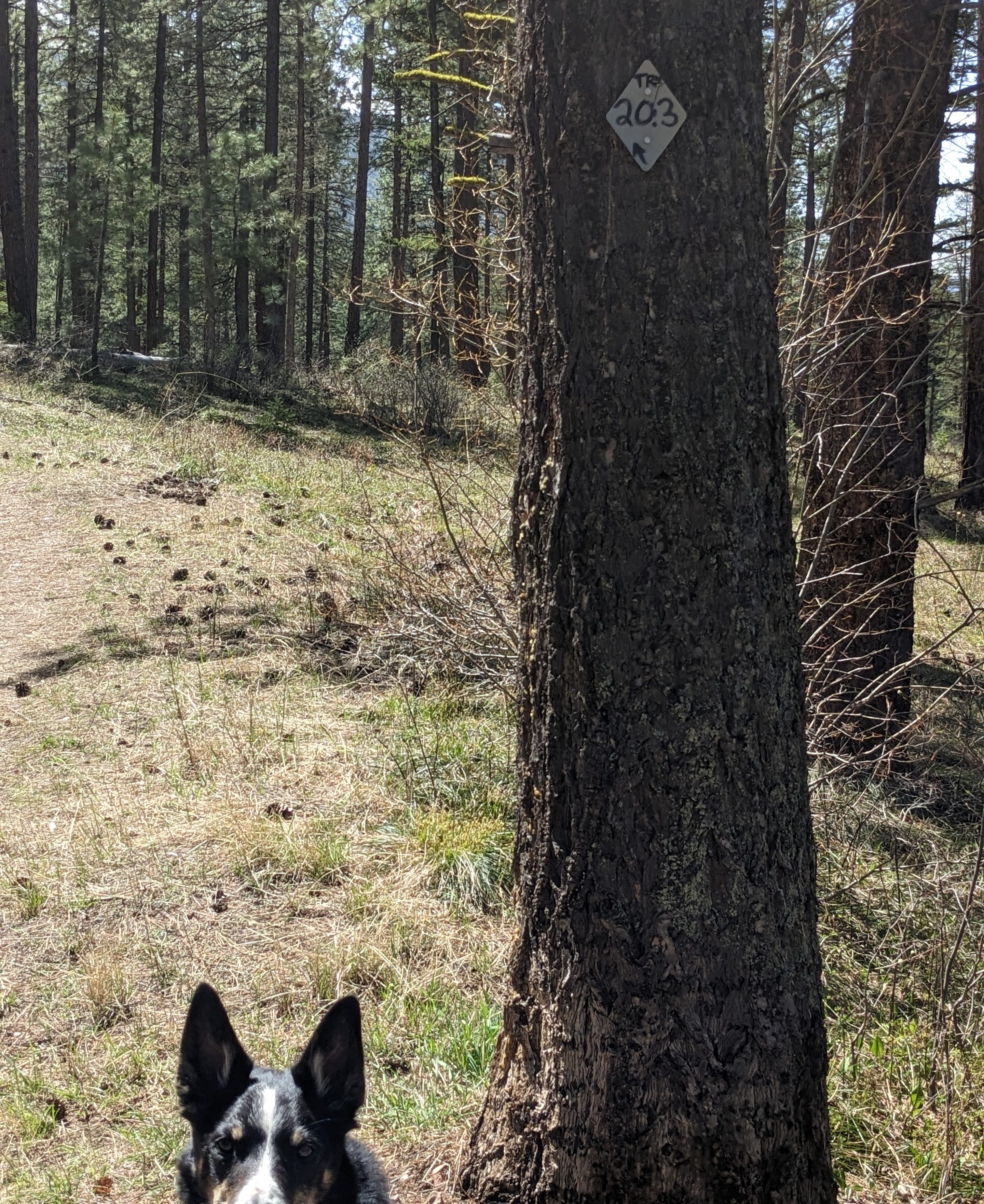
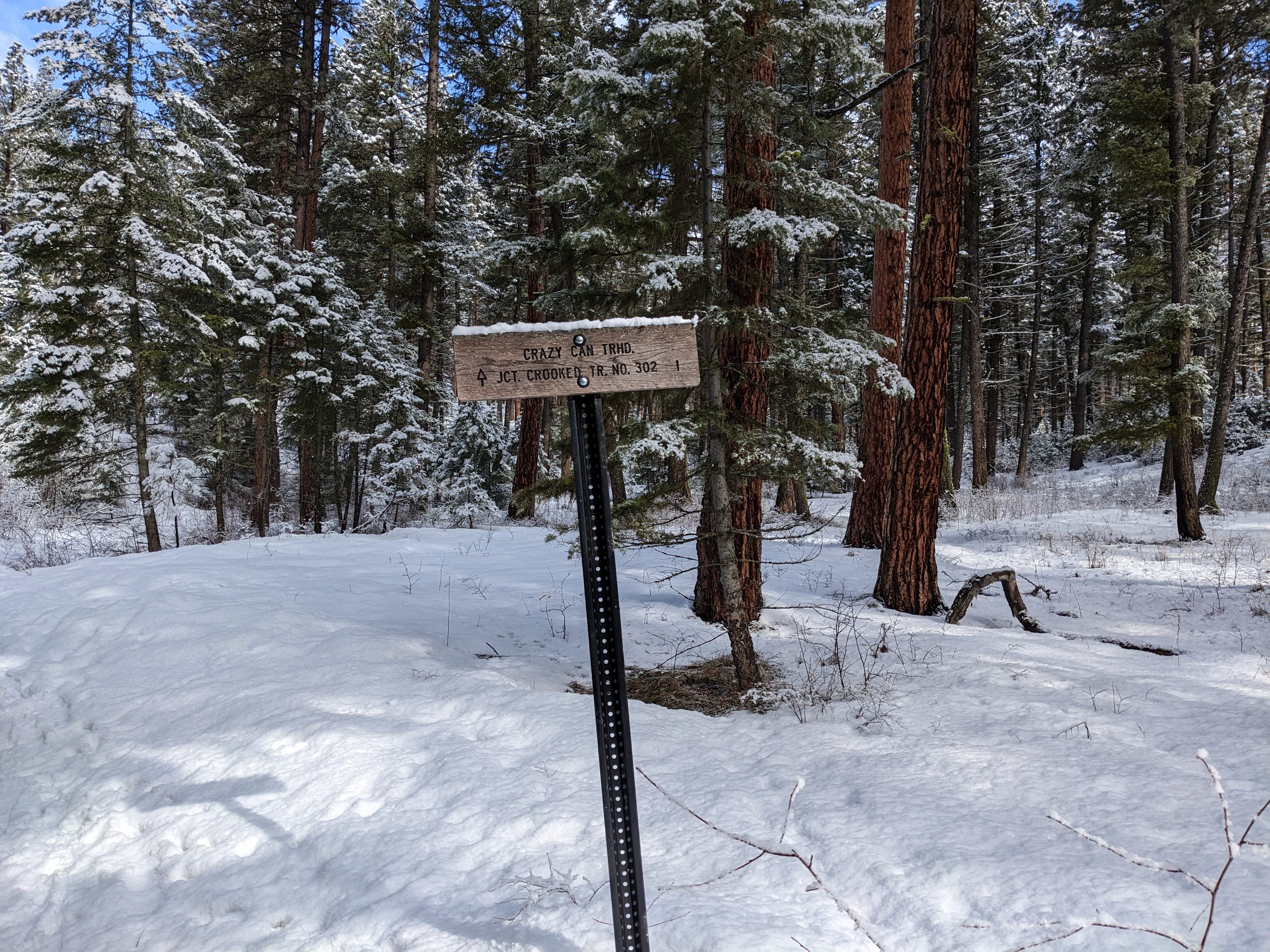
After I’ve “come to” and returned to reality, I tuck my confusion away and simply keep putting one foot in front of the other. I study the plentiful pine, larch, and fir trees on both sides of the trail and the even-more-plentiful needles at my feet, trying to figure out exactly which section of the trail I’m on. Did I pass the third junction already, or am I still on the second? Am I almost back to the car or do I still have a good half hour of walking ahead of me? The occasional trail signs posted on trees are spectacularly unhelpful because they often appear to have been conjured by someone who doesn’t believe in whole numbers.

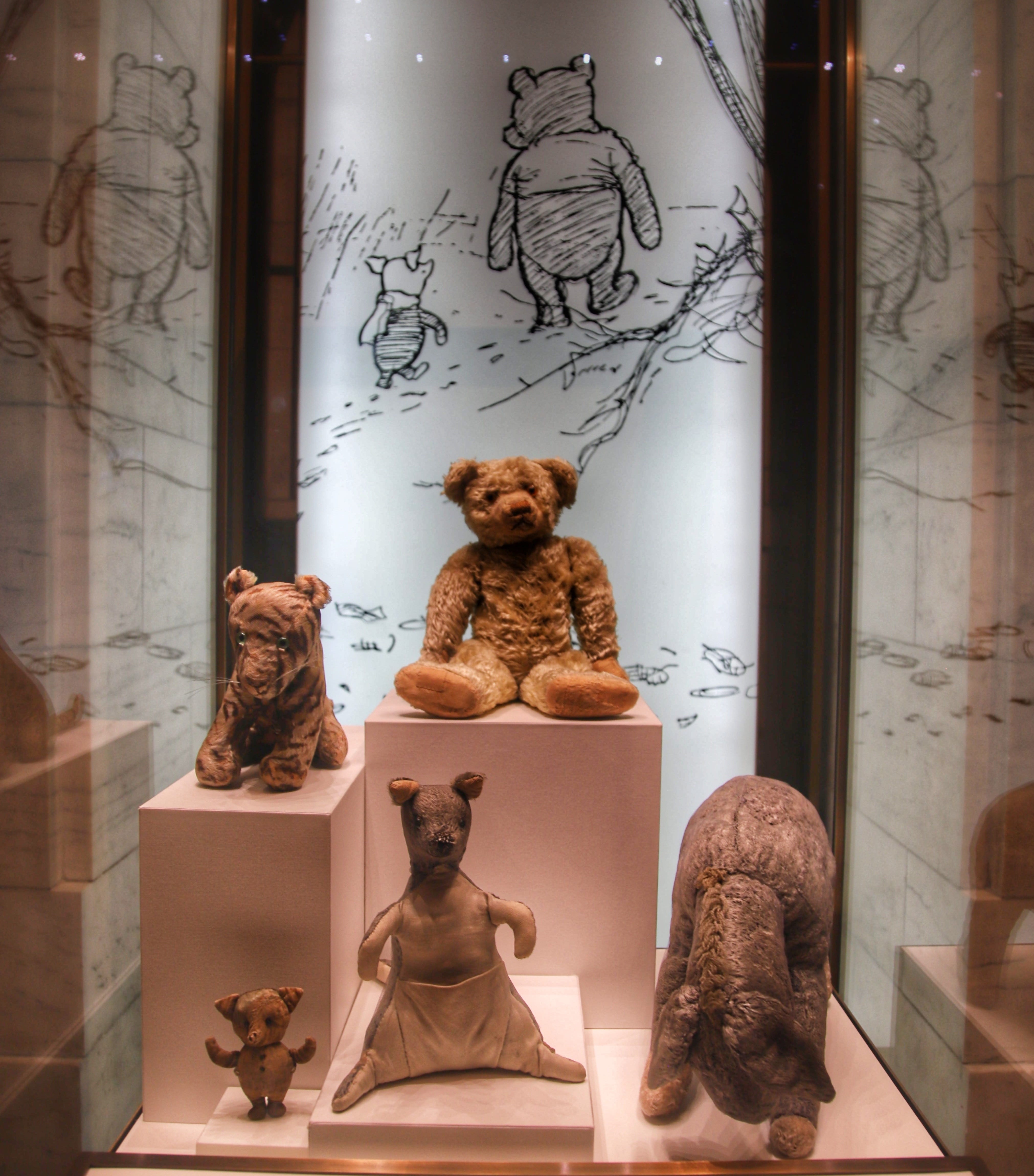
Questions about my location flit through my head, but they don’t alarm me. On the contrary, I revel in the feeling of not knowing, however briefly, where I’m going and what decision I’ll need to make at the next trail junction. I’m on a real adventure now! This chance to walk on an “unknown” path is such a rare opportunity in our GIS-programmed, cell-phone-connected, social-media-spiderweb of a world. On that memorable walk with my dad, I remember looking at the view with new eyes, certain it was a section of trail I’d never seen before, providing a glimpse into an unknown and unexplored valley. I experienced the thrill Winnie-the-Pooh and Piglet must have felt when they stomped around and around the same tree searching for the Woozle, finding more and more footprints the farther they went.

Winnie-the-Pooh and Piglet
Photo credit: Bernd Dittrich

All too soon, usually before I get to another fork in the trail, my sighting of a particular leaning tree or a hollow stump will jog my memory and snap, I’m back in the 21st century, with a walk to complete, errands to run, and people to see. My pace speeds up and my imagination dims.

Trailhead Sign

But it doesn’t have to. As writers, we are lucky beings. We can allow our characters to take us on the path less traveled every time we whip out our pen and notepad, or sit down at our computer to write. This is true no matter whether we write free-form, with no idea what’s going to happen until the words start to flow (aka “pantsing”), or whether we prepare a detailed outline, with all of our plots, subplots, and setting and character details listed before we write a word of the story (aka “plotting”). In either case, all we have to do is follow our characters when they exhibit an inclination to head somewhere new.

I’m a fanatical plotter. I spend at least a month preparing an outline for a new novel. But my characters—sometimes the protagonist, sometimes secondary figures—never fail to surprise me by taking directions I didn’t anticipate. All I have to do is stay relaxed and keep my organized conscious mind out of the way long enough that I can listen to them. And if they choose to detour for just a moment from the reality of the plot, or if they head off on the path overgrown with weeds, I’ll walk right along behind them.

Dog taking a detour

It’s possible it’ll be a dead end, and my characters and I will need to backtrack to the plot I’d already envisioned. But on the way, you can bet we’ll see some fascinating things and we’ll learn a little more about one another. We might even receive a jolt of adrenalin from looking at the view in an entirely new way, counting two Woozles instead of only one, or maybe, frighteningly, two Woozles and a Wizzle. When I return to my outline, I’ll happily revise it to accommodate this new vision for my story. It’s always more interesting than the one I started out with.

So my questions for you, Dear Writer, are these:

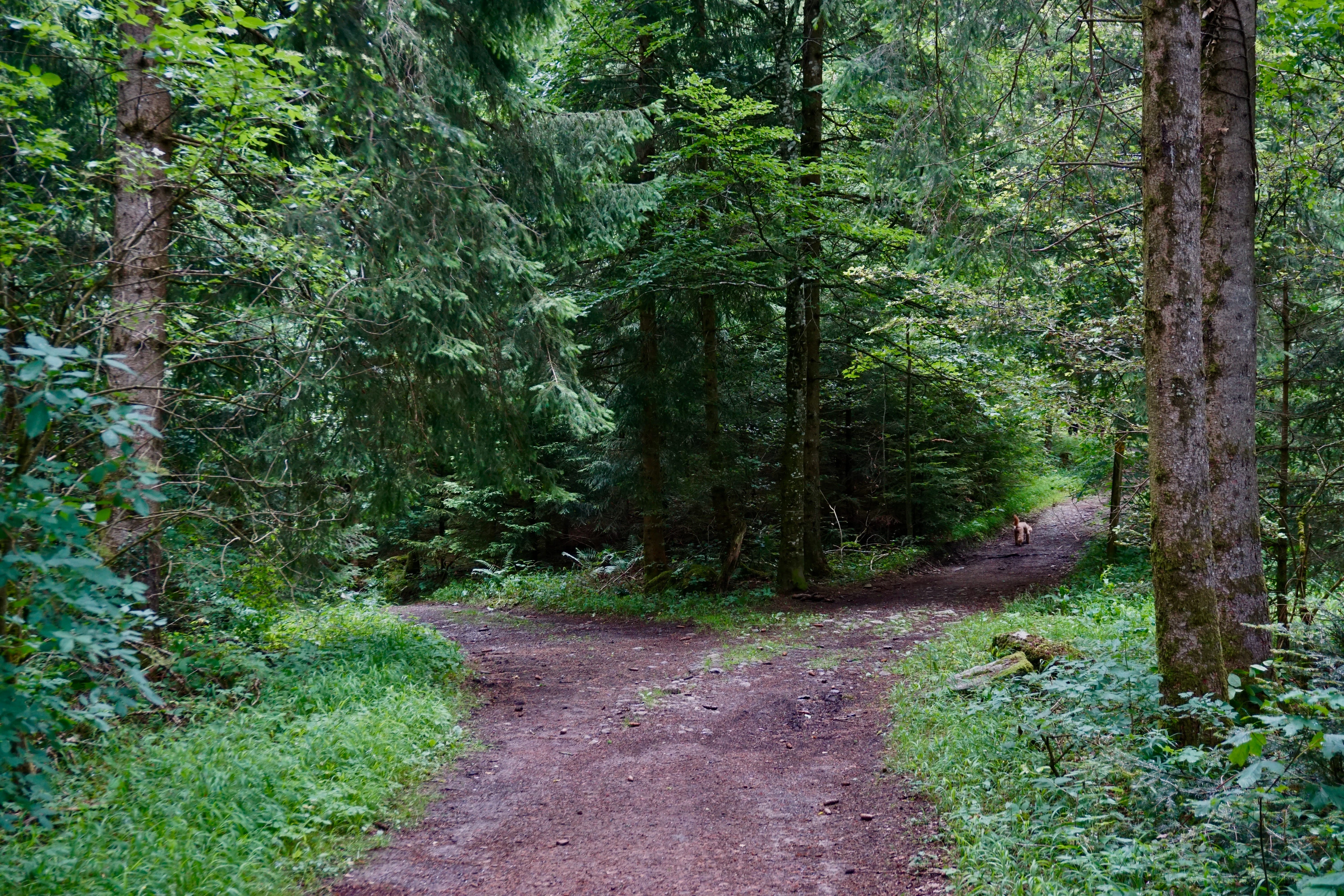
1.       Which way will your character take you at the next fork in the trail?

2.       Will you let your guard down long enough to find out?

3.       And if it’s the path less traveled—will you allow yourself to take it, too?

Fork in trail
Photo credit: Beth Macdonald

Happy Tales!

A Character is More than the Clothes on their Back!

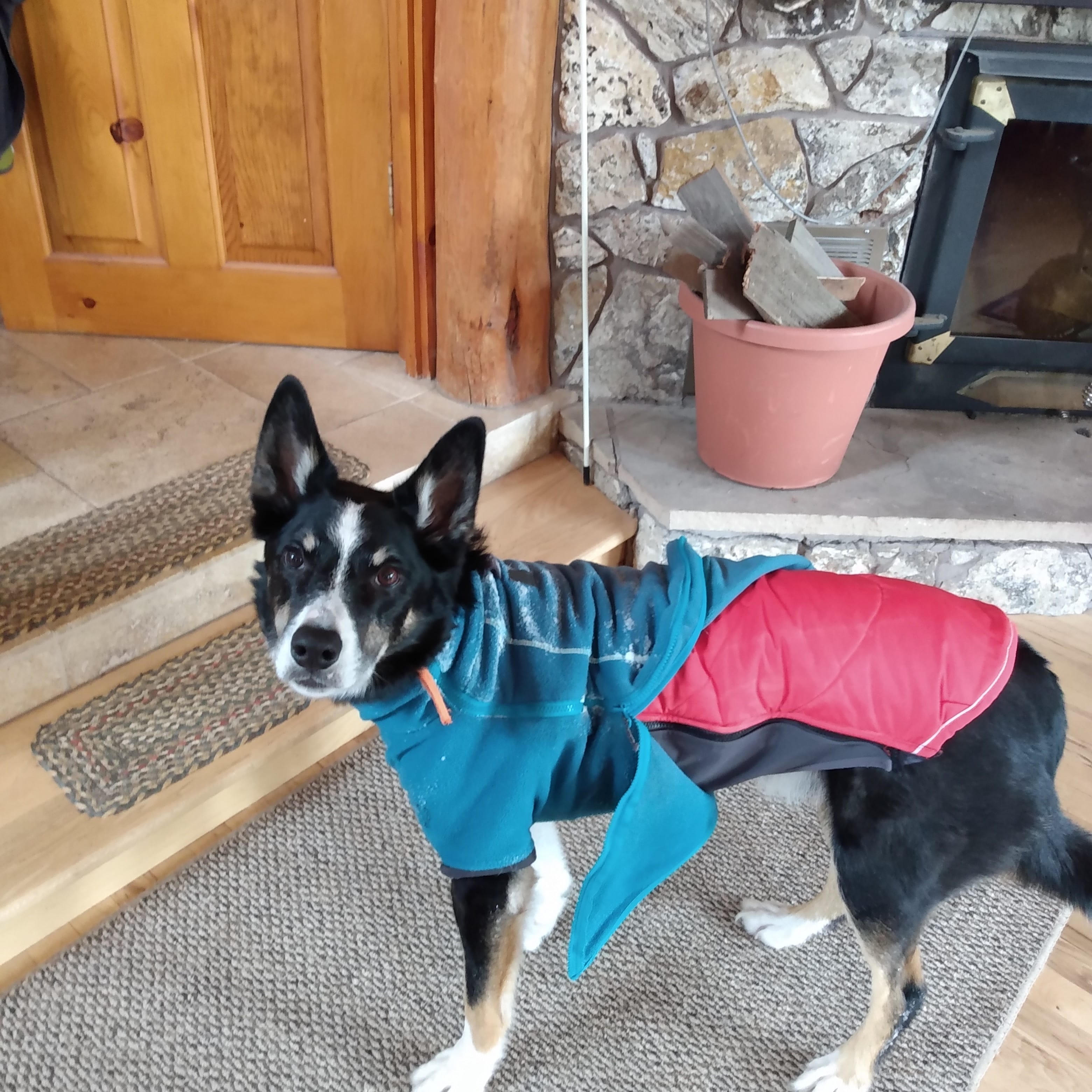
Dog in Blue Jacket

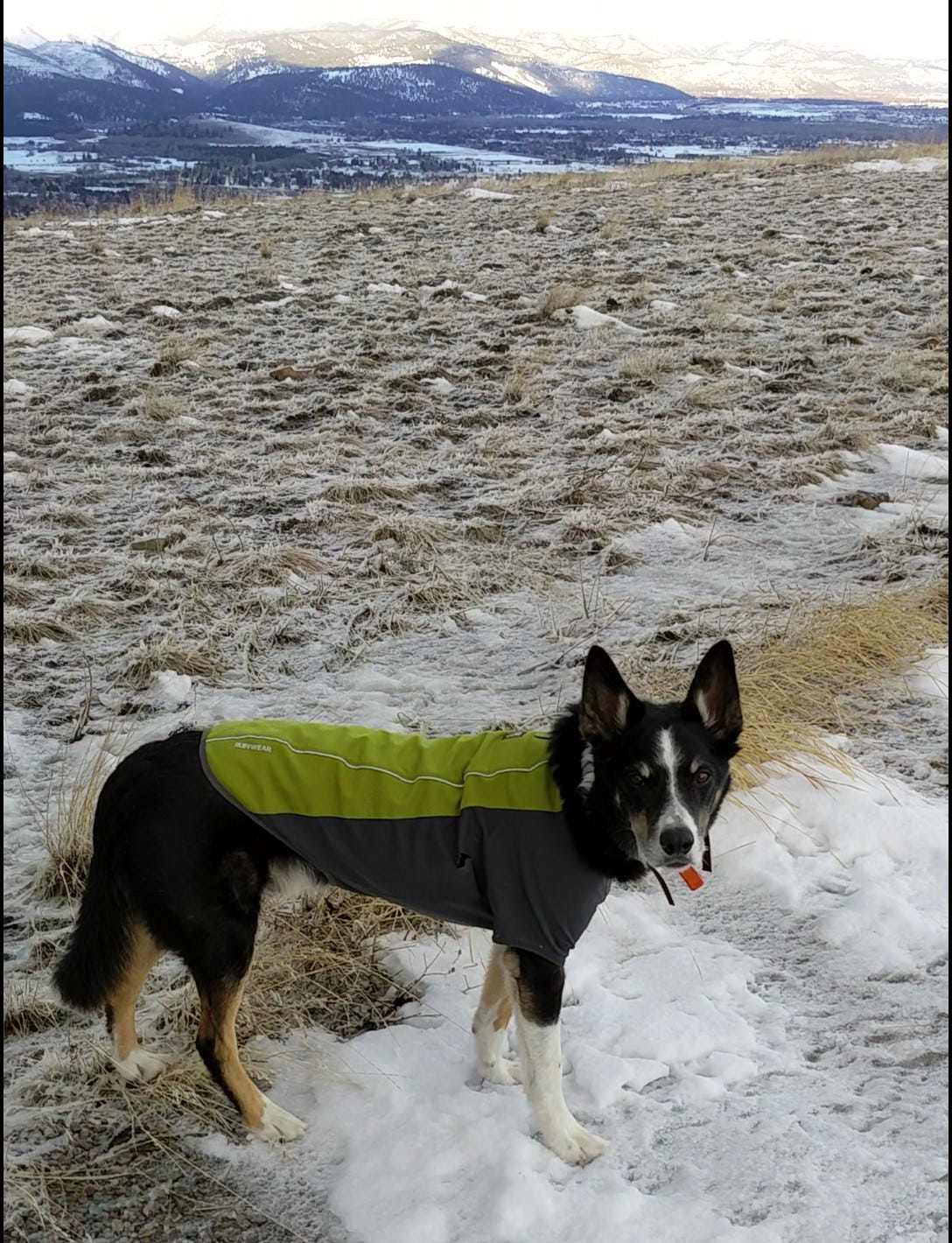
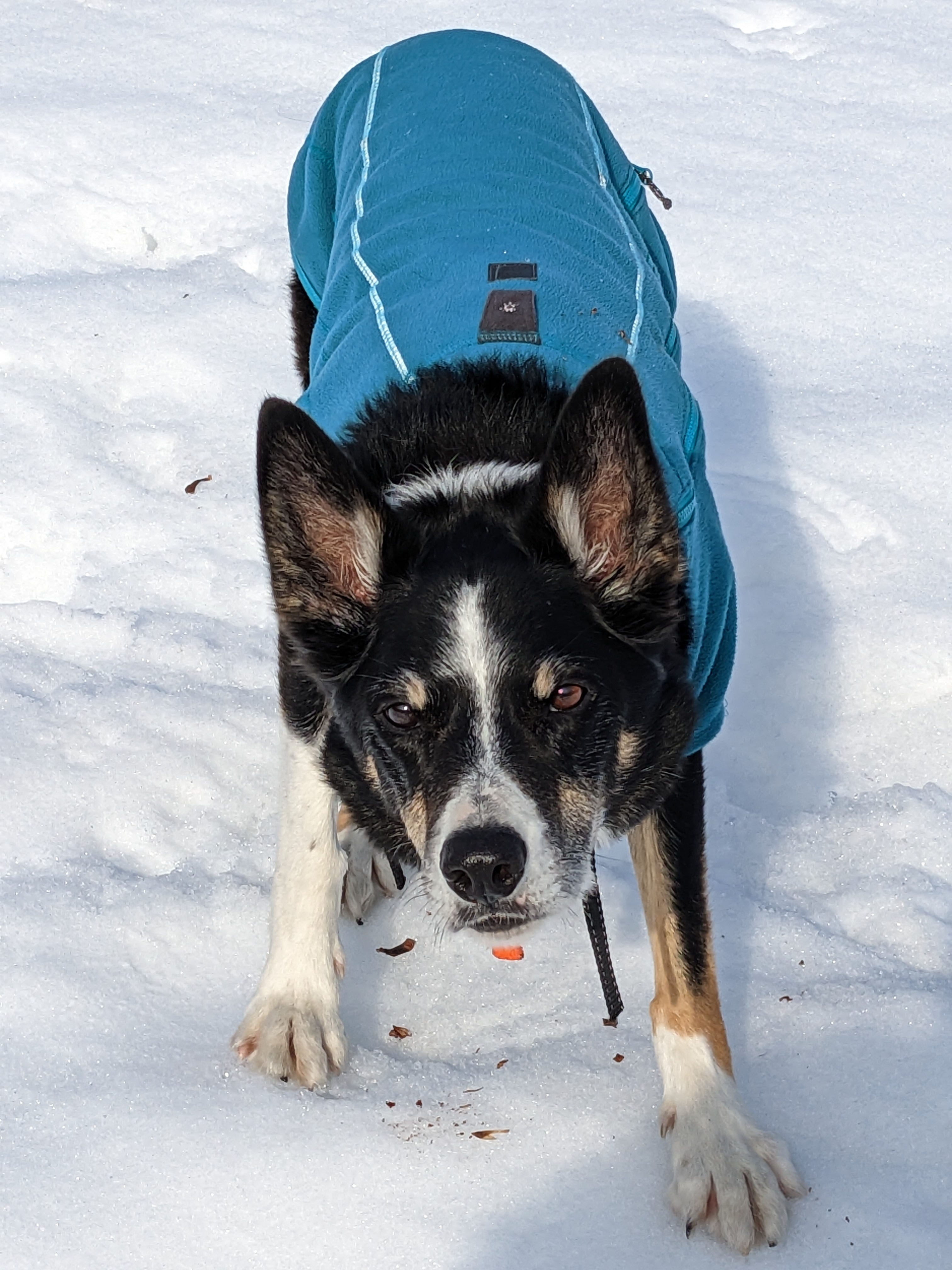
You might think I’m a fashionista based on how much I like to dress up my dog. Trust me, his clothing is for functional purposes only. Tock has short fur and in below-freezing and snowy conditions, he starts lifting up his paws from the cold if he’s not wearing a jacket. And as for the fact that he currently owns five jackets, this is because all but one were inherited from the dogs in our household who came before him.

Dog in Green Jacket

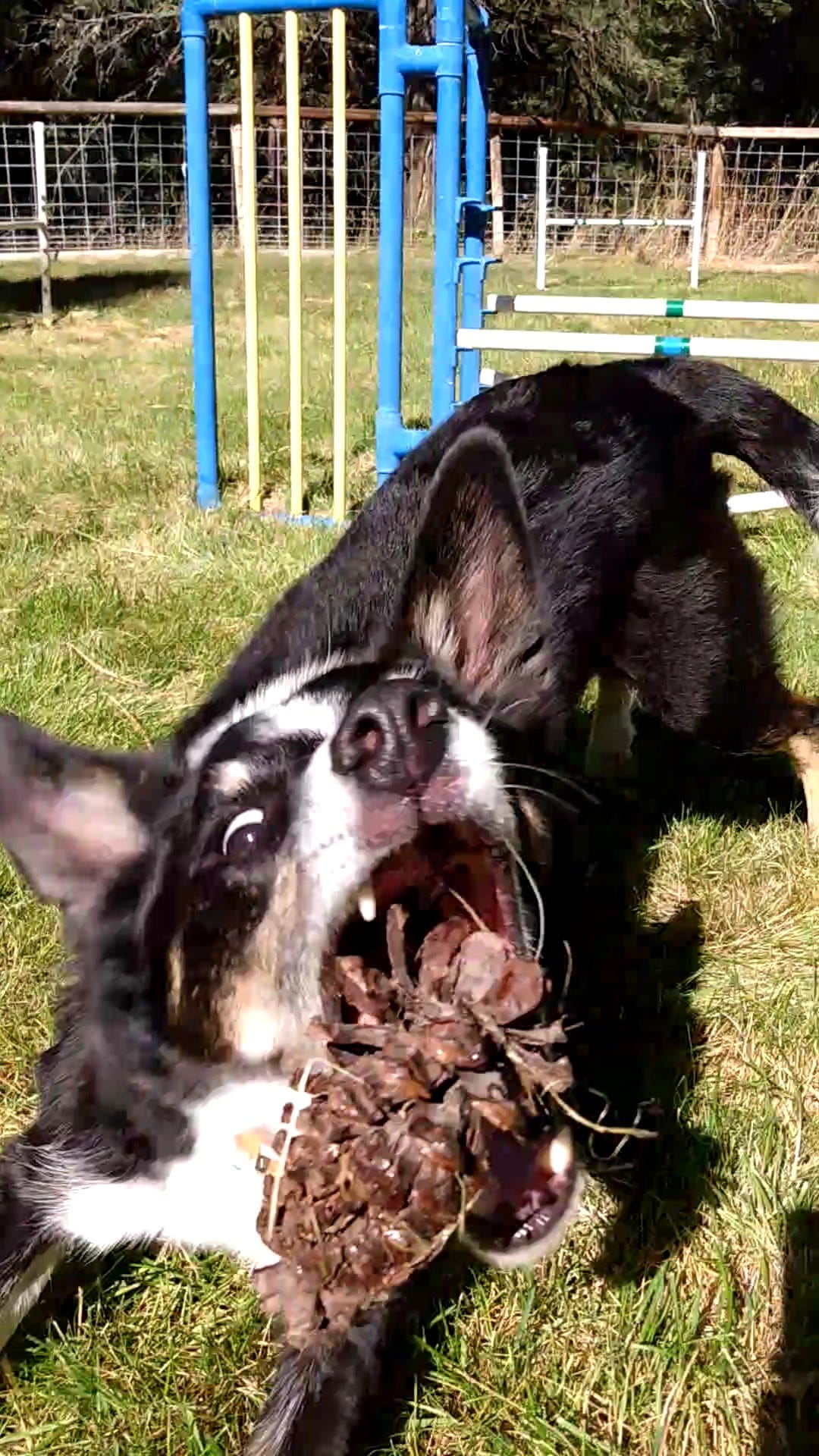
But when I think of Tock, I don’t consider what jacket he’s wearing, or if, in fact, he’s wearing anything at all. Instead, I recall the intent expression in his eyes as he switches his gaze back and forth between me and the object he wants me to throw. I think of his confidence when his ears and tail are upright, or his fear when he runs up to me, ears pressed back, tail between his legs. His boastfulness (and naughtiness) when he leaps up on me to show off the latest pinecone in his collection. His happiness to see me when he “grins” as I come in the door. His obsessive desire for toys exhibited by pawing at something, though often the thing he’s pawing isn’t the thing he actually wants. His desire to be as big a pest as possible and get me to pay attention to him either by standing at my elbow while I’m typing, or by diving between my legs while we’re on a walk. I’m not sure what he’s thinking when he sings along to my son’s clarinet and saxophone, but he’s adorable nonetheless.

Dog Baring Teeth in a Grin
“I’m so happy to see you!”

In short, my dog is way, way more than just a jacket. He’s got more aspects to his personality than he has nicknames (thirteen at last count, way too corny to share). All of his actions and feelings add up to make him who he is: the incomparable, totally unique Tock.

I hope all this talk of Tock has got you thinking about the characters who are important in your own life. Of course, if you’re a writer, this includes the cast of people, animals, and possibly other creatures that occupy your stories. By making them unique, you’ll turn them into personalities that readers will fall in love with and will never forget.

When I reflect on the book characters who are most memorable to me, certain aspects of their natures stand out. The spirit and love for family that young Joseph Johnson displays in Dan Gemeinhart’s Some Kind of Courage. The courage and resourcefulness of the “skinjacker” Allie in Neal Shusterman’s Everlost. The loyalty of Tock in Norton Juster’s The Phantom Tollbooth. (Yes, I named my dog after him.) I could go on and on about characters in lots of Middle-Grade books (the genre in which I write), but it’s true for all the other genres I enjoy reading as well.

Cover of "The Phantom Tollbooth"
My favorite kid book ever, largely because of its extraordinary characters

One thing is constant. Even if I last read a book years ago, the thing I remember most about its characters is their temperament: those parts of their nature that make up their identity. I have no recollection of what they looked like (well, except for the dog with a giant clock embedded in his side. Kind of hard to forget that). I don’t remember what sort of clothing they wear, the color of their eyes, the length of their hair, the shape and size of their body—unless these things featured in some important way in the plot.

NOTE TO WRITER SELF: Avoid description of what a character looks like unless absolutely necessary! If you must, include the briefest possible mention of it. Concentrate instead on how a character acts and speaks.

To be fair, I must return to the subject of dog jackets. Tock’s puffy red one, for instance, has special significance to me because it used to belong exclusively to his older sister Moth. By the time she died, the zipper was broken and the whole thing really wasn’t functional anymore. Yet I couldn’t bring myself to throw it out because it made me feel as if I were losing Moth all over again. Not only is it quite useful for Tock as an inner layer when the temps dip into the teens, but putting Tock in it made me feel a lingering connection to my dear departed girl. And who knows, maybe he retains some fleeting memories of her every time he wears it, too. So when my husband (a master sewer in addition to being a master engineer) replaced the zipper and gave it to me, it was the best present I ever got. That jacket is much more than a jacket. It’s a symbol.

3 dogs; one in red jacket
The red jacket reminds me not only of Moth, but of a time when all three of my dogs walked the woods with me.

SECOND NOTE TO WRITER SELF: Symbols can include items of clothing, along with many other things.

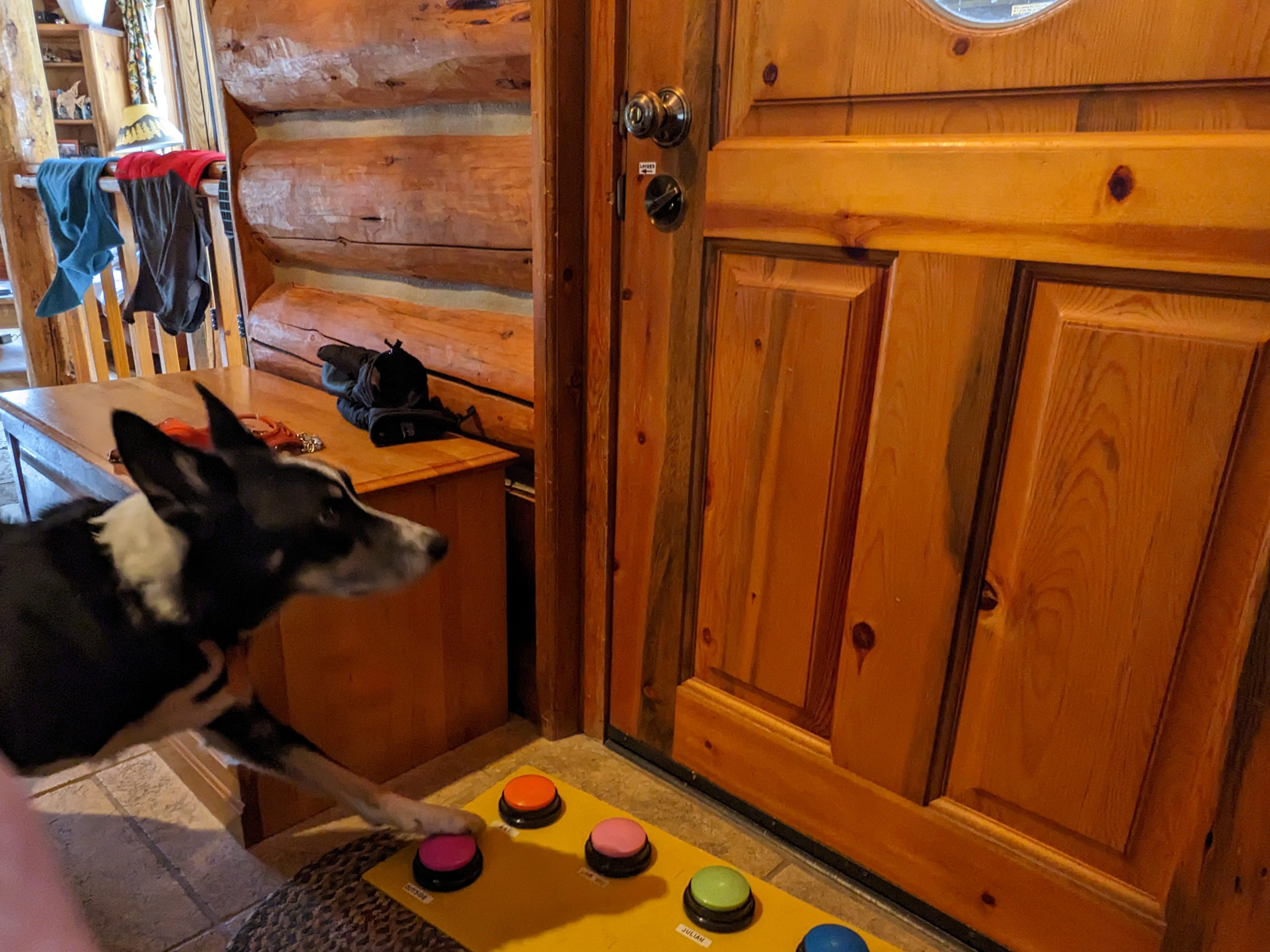
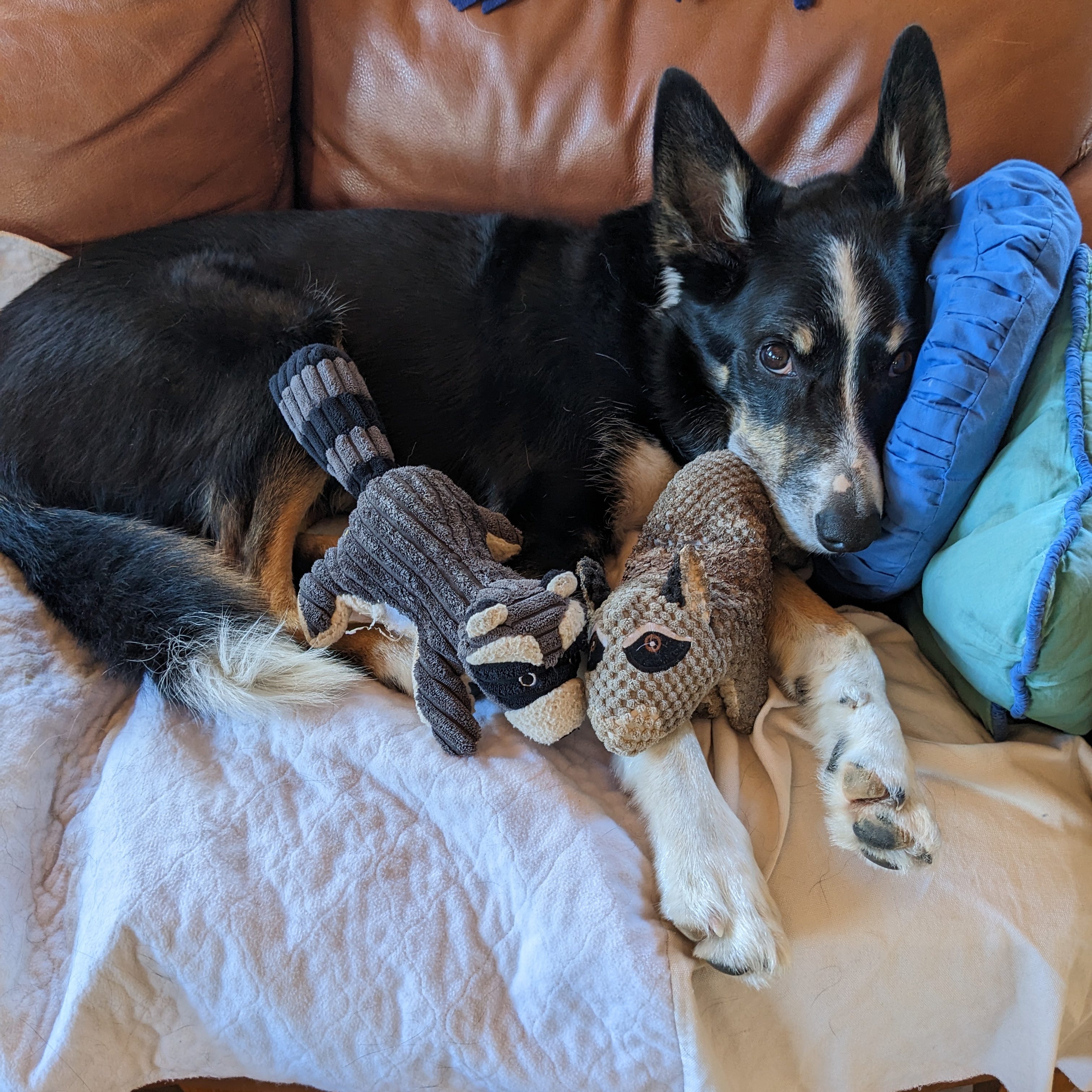
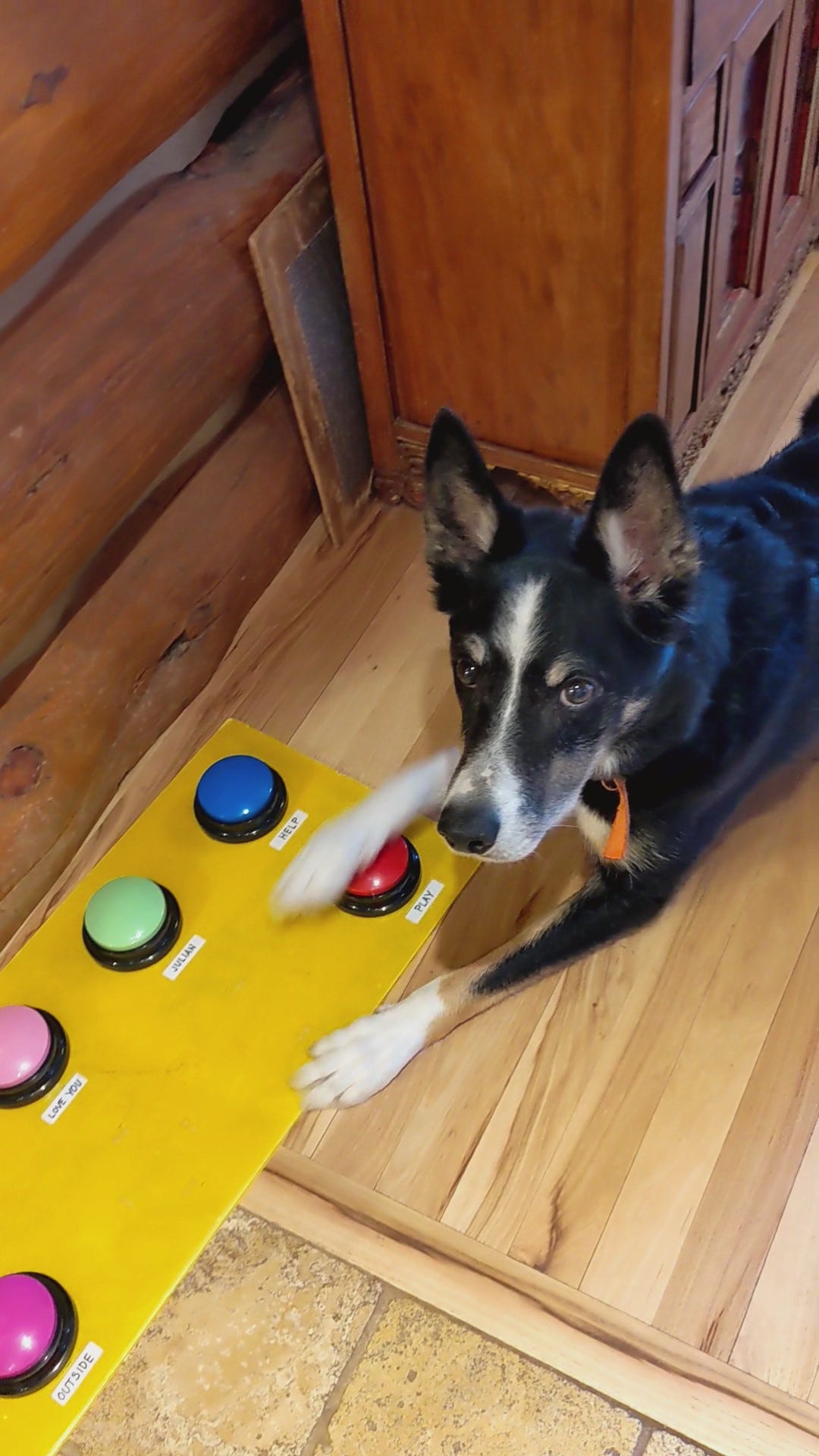
Oh, come on, you might be thinking. Do dogs really understand symbols? Now that Moth’s scent is long gone from that jacket, Tock may not think of her anymore when he wears it—but I sure do. And be assured that Tock has plenty of other symbols in his life that he does understand. His pinecones, tennis balls, frisbee, and sticks all symbolize “work.” His rubber chicken, squeaky balls, and fluffy toys symbolize “play.” His bedtime racoon squirrel symbolizes “comfort,” as do the pillows he likes to rest his head upon. His button board represents a selection of the words that are most important to him (note: the ”Love You” button is wishful thinking on our part, as Tock only likes to engage in affection for about five minutes per day, total). As a whole, these things represent Tock and his world, and if I think of any one of them, I immediately think of him.

Dog lying on pillows with fluffy toy
Here reclines the “Prince of Pillows,” along with Racoon Squirrel and its less successful replacement, Rocket Racoon.

So when you craft your characters, make special note of the things that are important to them, of the physical mannerisms they engage in when they’re feeling a certain way, of the way they speak to others and the way they think to themselves. To quote Salman Rushdie, characters are “inexhaustibly interesting.” But it’s up to us to write them into a three-dimensional reality that’s as full as it can possibly be.

Dog Sleeping with Pillows
If my dog yips or twitches when he’s got his eyes closed, I can be fairly certain he’s dreaming of chasing something. Other than that, I have no idea. Thank goodness I have the power to reveal this sort of interiority in my characters.

Happy Tales!
Backstory’s Bad Rap is Undeserved

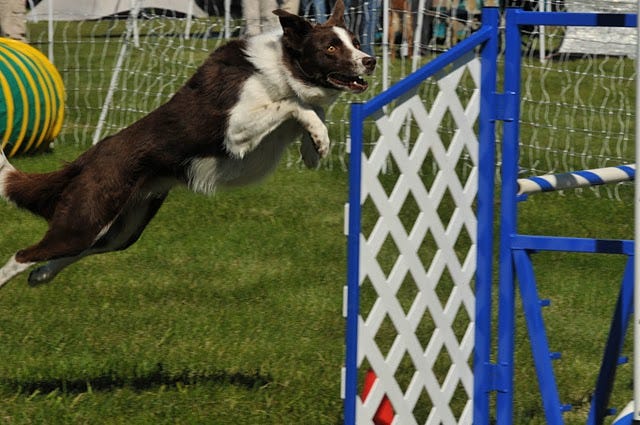
Dog hurdling a jump
Tock navigating the triple jump

My dog does lots of things with confidence. He performs agility obstacles at high speed, he races through the woods and leaps in the air after pinecones, he willingly meets people and most other dogs—especially old border collies, and he’s only a little bit scared of sheep (okay, I know that’s weird for a herding dog). But there’s one thing that fills him with absolute terror. When subjected to this particular thing, he can think only of his need to escape, to the point that I use two leashes hooked to both collar and harness to make sure he can’t make a quick getaway.

Dog hooked to two leashes

What is this awful thing and why would I make my dog endure it? If you’re a dog owner, you might have guessed already.

Photo credit: Karsten Winegeart

The vet’s office. Yep, that super friendly place where dogs get treats and the staff is interested in nothing more than Tock’s health and well-being. Lots of dogs dislike going to the vet, but why does my dog go into mental meltdown over it? I’m a dog trainer, for goodness’ sake. How come I can’t seem to train him out of it?

This description I’ve presented of my dog could remain just that—a mystery—if I didn’t fill you in on some crucial details from Tock’s past. In other words, I need to provide one of the crucial backbones of any story to this situation: the use of backstory.

Backstory has a pretty bad reputation in the eyes of editors and critiquers, but not because it’s unnecessary. In fact, it’s an indispensable tool that helps writers flesh out characters and explain character motivations—their desires, hangups, fears, and needs. The problem with backstory isn’t in using it, but in misusing it. Beware, writers, of succumbing to the temptation to give your readers every little detail about your characters’ former lives in the early chapters of your story!

The best backstory doesn’t all happen right away, but in small doses that leave you wanting more. You can drop clues into dialogue, into the way characters react to external situations, and within their thoughts. I love presenting snippets of interiority right before or after my protagonist says or does something that needs further explanation. But again, I keep it as brief as possible to avoid unnecessarily slowing the pace and leaving the reader feeling as though they’ve become mired in a swamp of information.

If Tock were my main character, I might show him trying to slip his leash in front of the vet’s office, followed by him thinking: This is the home of that evil microchip. Must flee before it attacks me again! Then I’d continue on with the early events of the story without dwelling further on Tock’s evasive action until he again does something that requires a little more insight.

A scared dog--crouching, ears back, tail down
Terrified Tock. I’m way too pre-occupied to get a picture of him entering the vet’s office, but this is what he looks like when scared (here by the sudden motion of a kinetic owl sculpture).

Another scene I might write in the early pages to develop my main character is one in which Tock emits a hopeful little whine when he sees an old border collie. The sweetness of this sound would give the reader some early empathy for Tock: a true “Save the Cat” moment, as recommended by writing craft expert Jessica Brody. Tock’s interiority for his action and “dialogue” would read something like: Moth, is that you? Tarzan, I miss you.

Young dog looking up at older dog
Further reveals in Tock’s story would show his former relationship with Moth and especially Tarzan, the old dog who remained Tock’s BFF until the day he died.

So at this point you have enough information to understand why Tock loves old dogs so much—especially ancient border collies. The ghosts of our past pets drift through our thoughts forever, as well as through the minds of other animals in the family who knew and loved them. It’s terribly hard to say goodbye to a departed dog’s story, but one thing that makes losing them easier is seeing their memories and spirit carried on in the next generation. When Tock plays gently with an old dog, I’m reminded of Tock as a puppy, running circles around and beneath Tarzan, while old Tarzan gently waved his big white plume of a tail.

But what about the vet? If I were writing a story of Tock’s life, I’d eventually show him in a scene where he’s especially fearful—perhaps startled by the owl in the picture above, and ideally by something related to the story’s inciting incident. As the scene develops, darker thoughts of Tock’s former fears would begin to surface. Fear of his new owner (me), taking him away from the ranch where he was scared of the sheep. Fear of ravens circling overhead that made him want to run inside, fear of entering a big barn door at his first agility competition, fear of entering a dog crate even though it was exactly the same as his much-loved crate at home. And then the culmination … fear of a big fat needle, plunged into the formerly happy-at-the-vet puppy in order to insert a microchip.

Syringe
Photo credit: Kristine Wook

The problem, you see, stemmed from the extremely strong fear periods that Tock exhibited until he was at least two years old. None of my other dogs had them, or had outgrown them by the time I adopted them. I didn’t even fully comprehend what was going on until after the fearful incidents had passed (bad, bad dog owner). But subjecting a dog to that needle when he was in the middle of a fear period made him certain for life that the vet was out to kill him. Gradual reintroductions to the vet “just for fun” all backfired, resulting in him refusing even to get out of the car. At this point, I only take him in, double-leashed, for his annual shots and whisk him out fast, in order to keep his terror to a minimum.

Dog eating lots of treats
Tock getting a “jackpot” reward after surviving another round of shots at the vet’s

Whew. That little demonstration of backstory is my embarrassing admission for the day. But examining my life as a dog owner gives me a free tutorial in backstory’s value in explaining why characters do—or won’t do—various things (never do something scary with a dog during a fear period!).

Perhaps it can help us learn from our mistakes on a more global scale as well. As a scientist, I know full well the importance of developing one’s hypotheses and experiments based on the research that came before. And as writers, of course, we can’t help but be influenced by the wealth of wonderful stories that have already been written. But there are lots of things we humans could keep expanding our knowledge, some more desperately needed than others. My personal favorites include (list warning!): reducing air and water pollution, supporting alternative energy in order to mitigate climate change, managing natural resources so they can sustain plant and animal biodiversity, and reducing the use of non-biodegradable products. But caring enough about these issues to take even a single step towards their solution requires us to know what’s already happened—both the good and the bad. Like fleshing out a character in a story, revealing the facts of our past—our collective backstory—will help us build a stronger future on this planet we all call home.

Planet Earth
Photo credit: NASA

Happy Tales!
REVISION: Is your bowl of porridge too cold, too hot … or just right?

(Or: How do you know when your story has reached the “Goldilocks Zone?”)

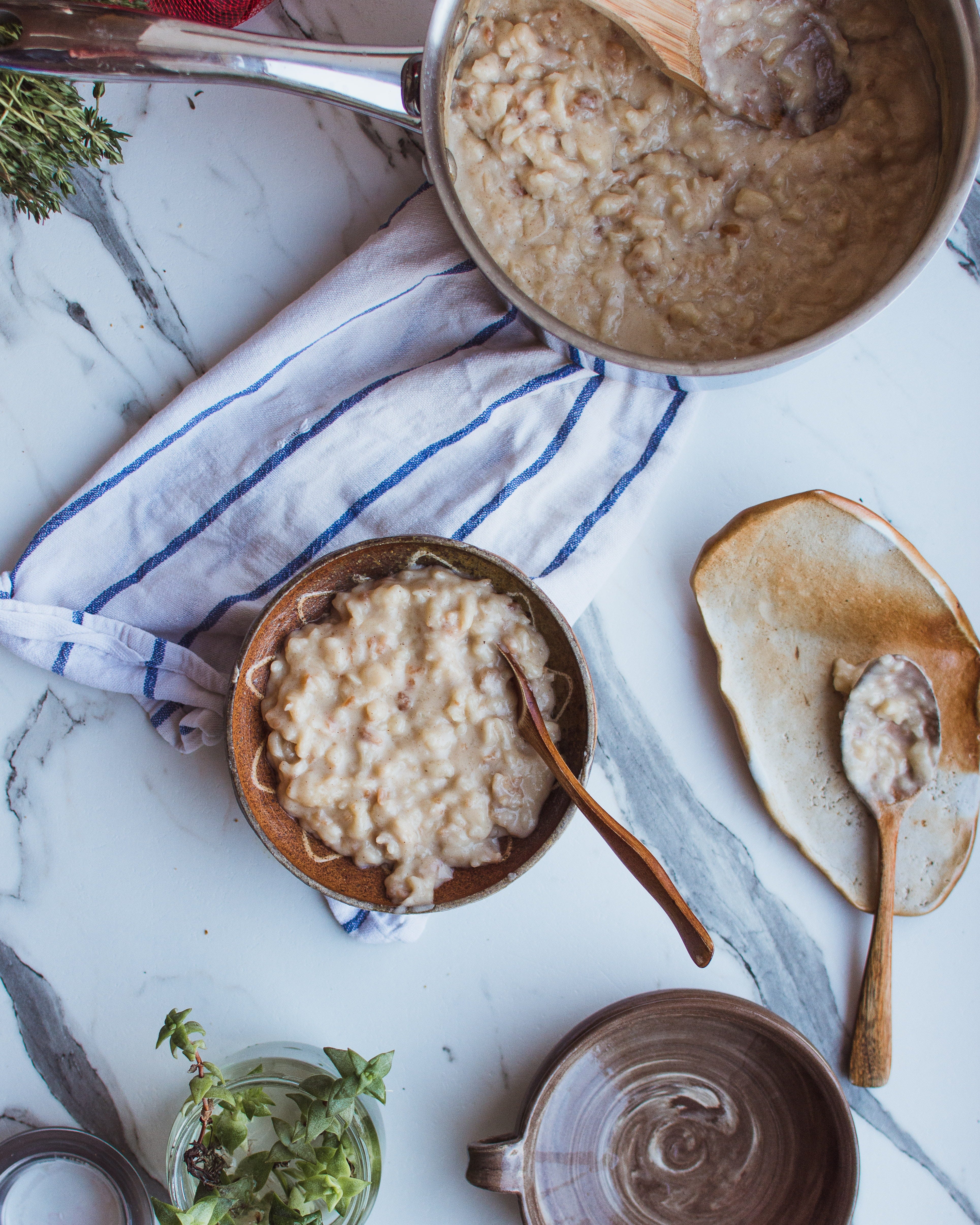
Components of a bowl of porridige
Photo credit: Cleanlight Photo

When is a story good enough to stop working on it?

This is one of the most pressing questions facing the author of a revised manuscript (correction: a revised-and-revised-and-revised-to infinity manuscript). If you’re a conscientious and possibly obsessive writer who wants to produce the best possible experience for your reader, you won’t stop after the first couple drafts, regardless of how much organization and preliminary revision effort you’ve already put into them. You’ll keep re-visiting it, at first maybe making sweeping changes, followed by smaller and smaller alterations, sending it out to alpha readers, beta readers, critique groups, and paid professionals. Even after you’ve ceased finding anything wrong with it beyond an occasional typo, the people you solicit to look at it will make suggestions for improvement, every single time.

Marked-up manuscript

After looking at your manuscript so much that you no longer have any idea whether it’s good enough, and in fact might be getting worse with all the attention, I recommend a very simplistic formula to figure out the answer, which will place your work in one of three categories. It relates back to—big surprise here—going for a walk.

1. Your story’s too cold: Readers can’t connect to the unfeeling, underdeveloped, or commonplace characters, the plot meanders without actually going anywhere, the world lacks the spark of details. This is me when I first step out the door to go on a walk at dawn. The purplish air, even if it has the promise of heat in a few hours, turns my fingers to ice and my hands and forearms to the texture of cold marble. I’m so immersed in trying to stay warm that I enfold myself in my hood and pockets and trudge along looking only at my boots. I could be walking to the end of the driveway or I could be climbing Mt. Everest. How would I know? I’m too sunken within myself to notice.

Dog wearing 2 jackets
Because of his short fur, Tock, too, wears a jacket when the temperature dips below freezing . Sometimes two jackets, if it gets down into the teens.

2. Your story’s too hot. You have so many characters and plot lines that readers can’t keep track of them all. Reviewers suggest that perhaps you have more than one book within your pages. The scenes overflow with backstory, info dumps, unnecessary dialogue, or superfluous adjectives. This overheated state creeps up on me about ten minutes into my walk. I find myself ripping off my gloves and wiping my sweaty hands on my pants. The sun hasn’t yet made its appearance and probably the air temperature hasn’t begun to change, but internally, I’m beginning to feel insufferably warm. My gaze jumps from one rock or tree or viewpoint to another, and I struggle to focus.

Dogs in a stream
On hot, dry days, dogs need plenty of water breaks. Here, Tarzan & Tenzing take refreshment during a long-ago hike.

3Your story’s just right. I prefer this phrase to “perfect.” Words, phrases, scenes, and stories are subjective, and every reader is going to like and dislike different things about them. Our stories won’t ever be perfect, because that state simply doesn’t exist. They’re not mathematical formulas. But readers will be most likely to enjoy them if there’s a nice balance of characters and plot, a thoughtfully paced mix of dialogue, interiority, and action, if there are enough details to see the world and understand why the characters do what they do, and if the character and plot arcs resolve themselves in satisfying ways. For me, this Goldilocks Zone on a walk happens most often on a calm, sunny-but not-too-hot day after I’ve reached a ridge or a lake basin. It’s a place where I can walk on mostly flat ground, still getting some brisk exercise in the invigorating fresh air, but not so much that I’m out of breath.

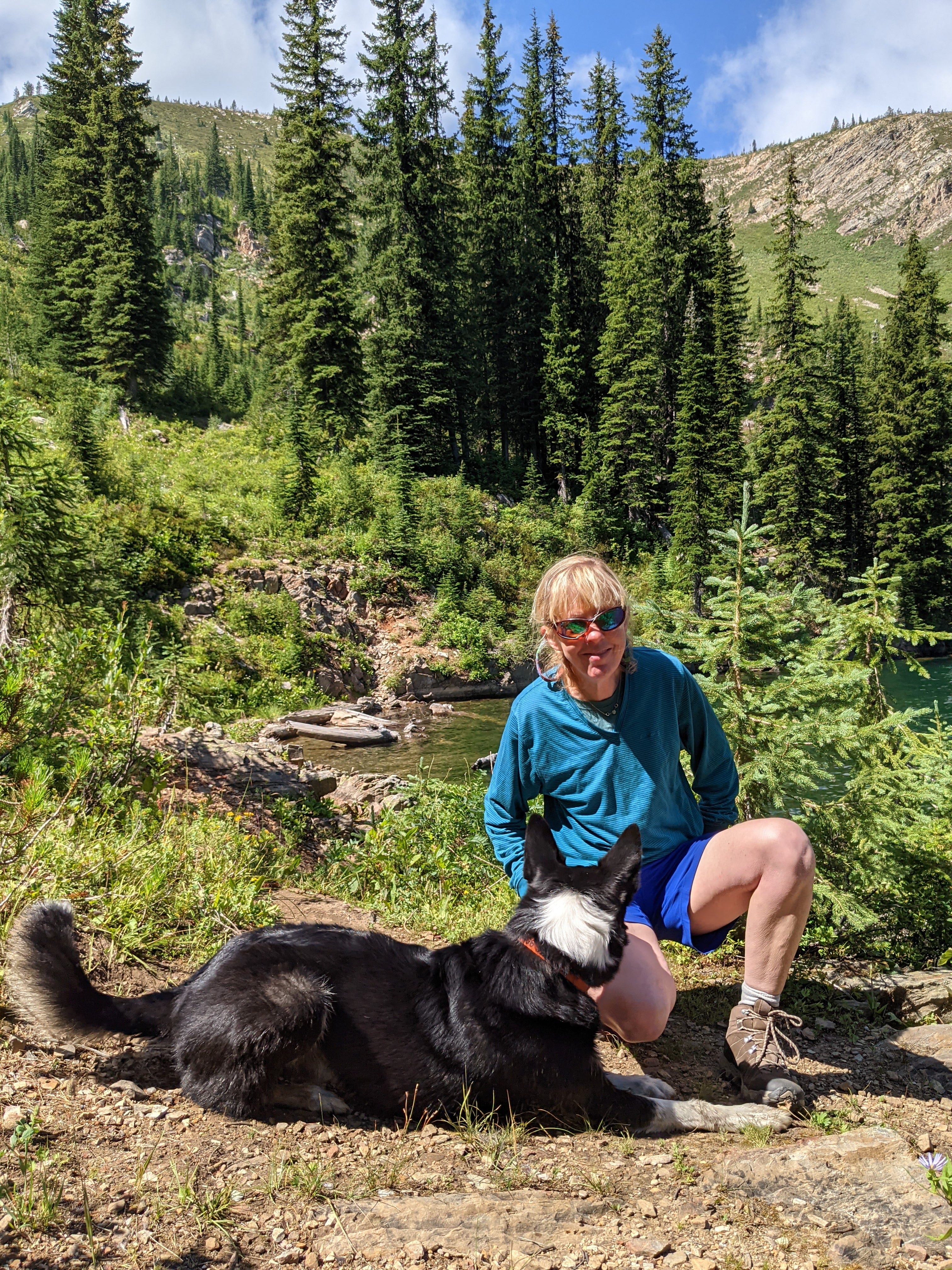
Author and dog at a lake
An alpine lake: my personal Goldilocks Zone

At some point during the revision process, it’s up to us writers to decide when we’ve gotten into the “just-right” zone. Any more tinkering beyond that point might start to suck the life out of our story, because we’re so far past that first euphoric flush of actually writing it. Yet I feel I’m a bit hypocritical to talk about this happy zone because I often have trouble turning off the self-editing mode for my own manuscripts. Even after I’ve reached the point where I have to re-visit my premise just to remind myself why I wrote the darned book in the first place.

Maybe I struggle with putting an end to revision because I hardly ever reach that state of satisfaction with the clothes on my back. Here’s my excuse: I live in the Rocky Mountains. Morning air is cold and often breezy, especially in the winter (wanna come for a walk with me at 12 degrees F—not counting wind chill—anyone?). Hills are steep and plentiful. Flat sections of trails are rare, especially near my house where I mostly walk. So no matter the season, I start out with multiple layers of clothing. Even in mid-summer on a warm morning, I need a little brisk exercise before my hands lose their chill and regain their function. And when it’s far below freezing in the winter, I’ve been known to wear five layers on my torso and two on my legs. Still, I’ll warm quickly and feel the need to tug my arms out of my sleeves, ending up at a single layer.

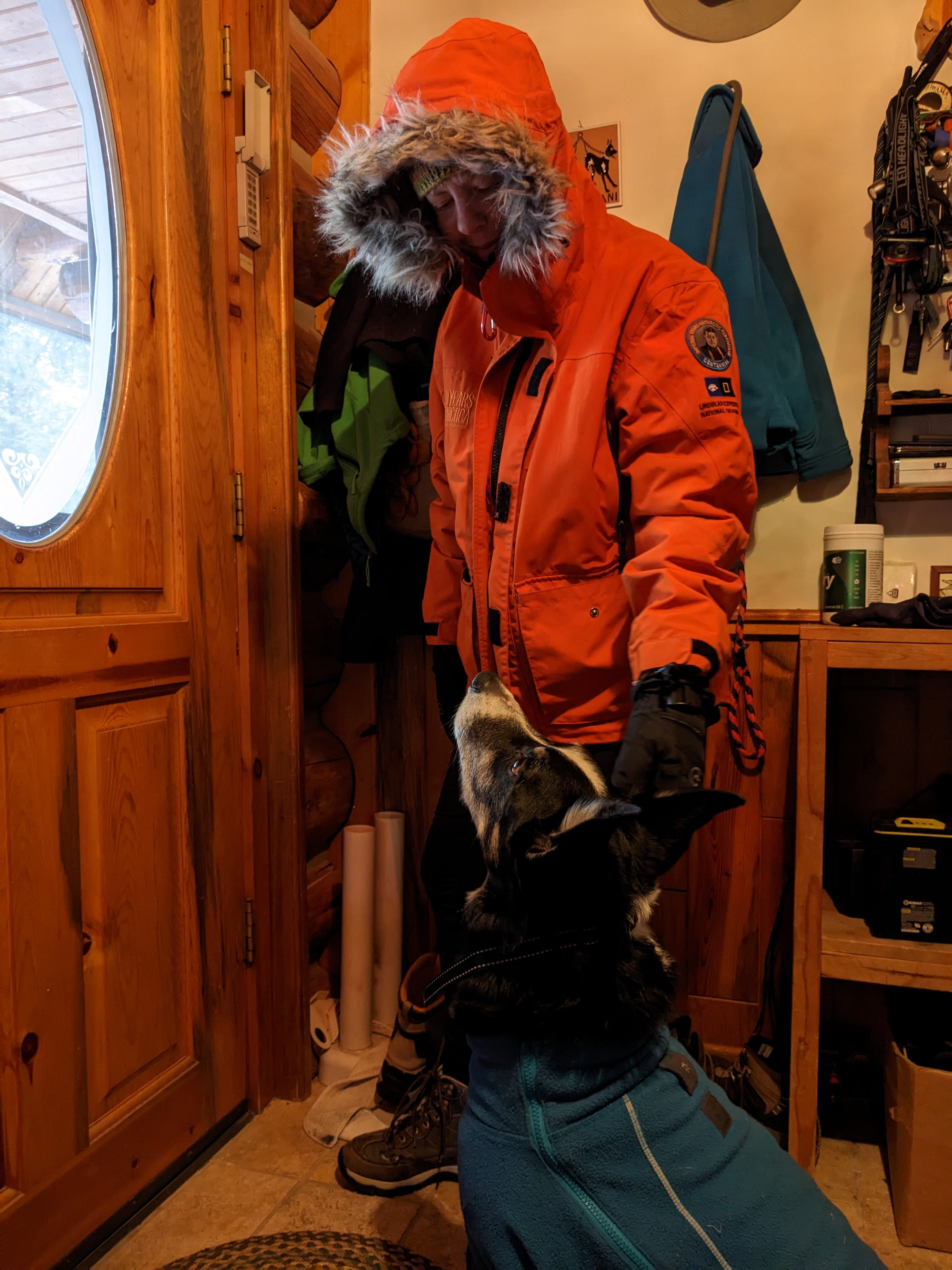
Suited up for a cold walk
Ready to brave the wintry woods

My husband says I have poor temperature control. I say I’m being smart. Secretly, I know he’s right … to some extent. My body temperature seems to fluctuate a lot more widely than his, and my extremities routinely segue from frozen and numb to overheated and sweaty, over and over during the course of a walk, depending on whether I’m walking up or down hill. I envy him for only having to wear one or two layers, every time.

I’m even more jealous of my dog. Sure, he wears coats because I put them on him and he jumps into lakes because I throw sticks for him, but he’s pretty much always in the Goldilocks Zone. His fur coat, though short, is quite suitable for a range of temperatures. With the thick undercoat he grows in the winter, he probably doesn’t need a jacket nearly as much as I think he does. If Tock were a writer, he’d compose one, two, maybe three drafts … and be done. No more nitpicking and dithering; he’d be happy with what he produced and move on.

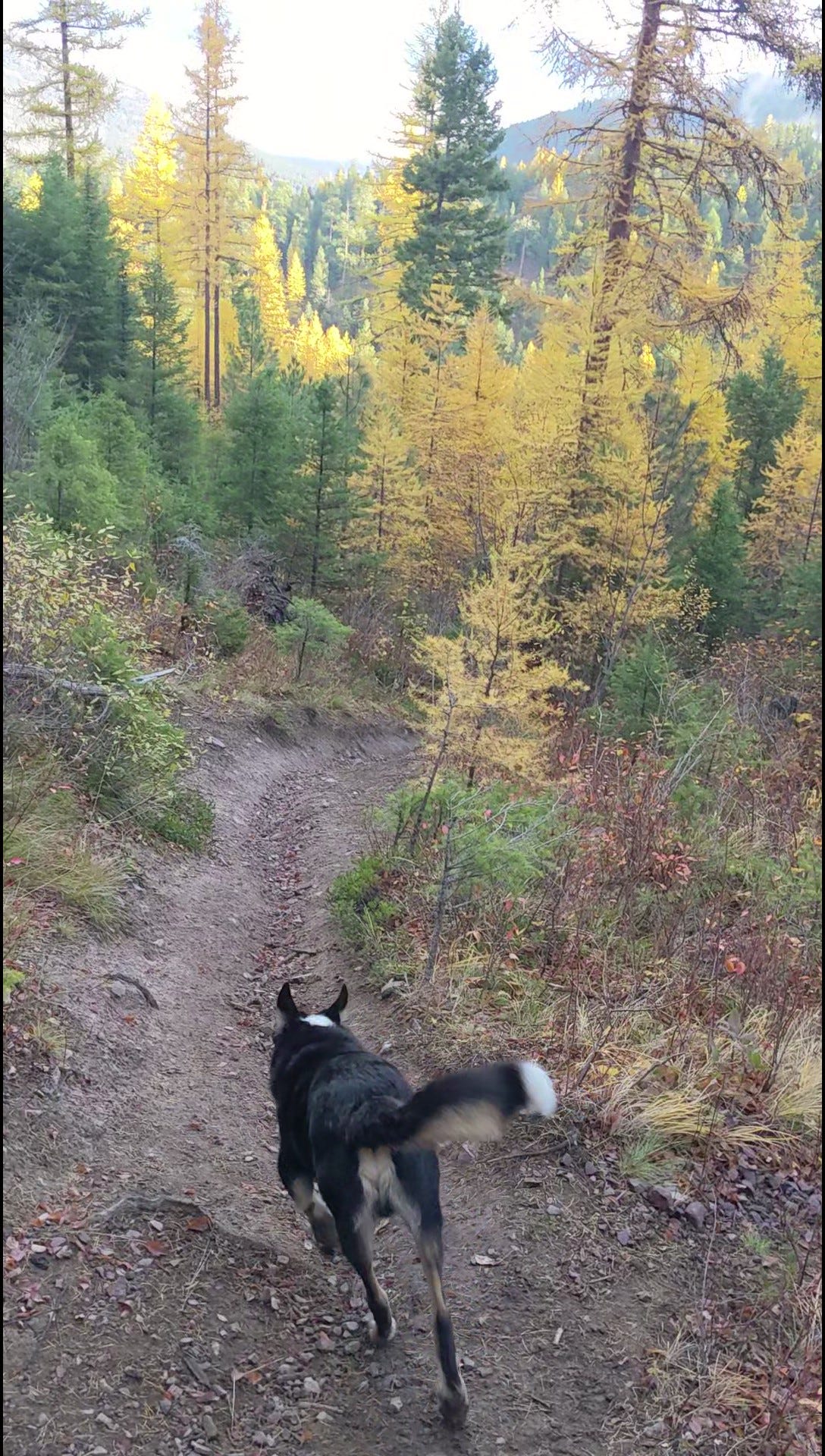
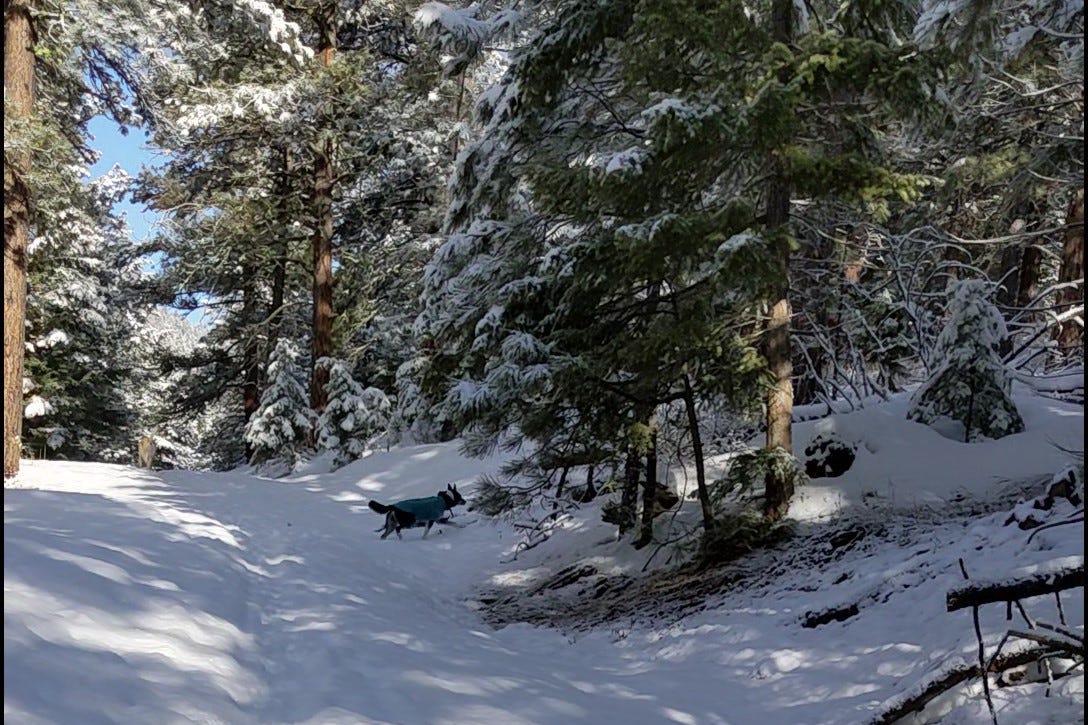
Dog running down a trail

I can’t help but think about wild animals in this context, too. They don’t have owners to dress them and care for their every need. What if the summer is especially hot and dry, or the winter is filled with unpredictable and severe storms? What if animals can’t adjust to these changes in their environment in time? Evolution of adaptations is a long, slow process—far slower than the current pace of climate change. Most creatures have evolved to survive perfectly in the Goldilocks Zone of their current habitat, and they lack the ability to strip off their layers, or flee to a place with more shade, water, or warmth. Or less of those things. If they were writers, forget the revisions. Their stories might end before they finish the first draft.

polar bear
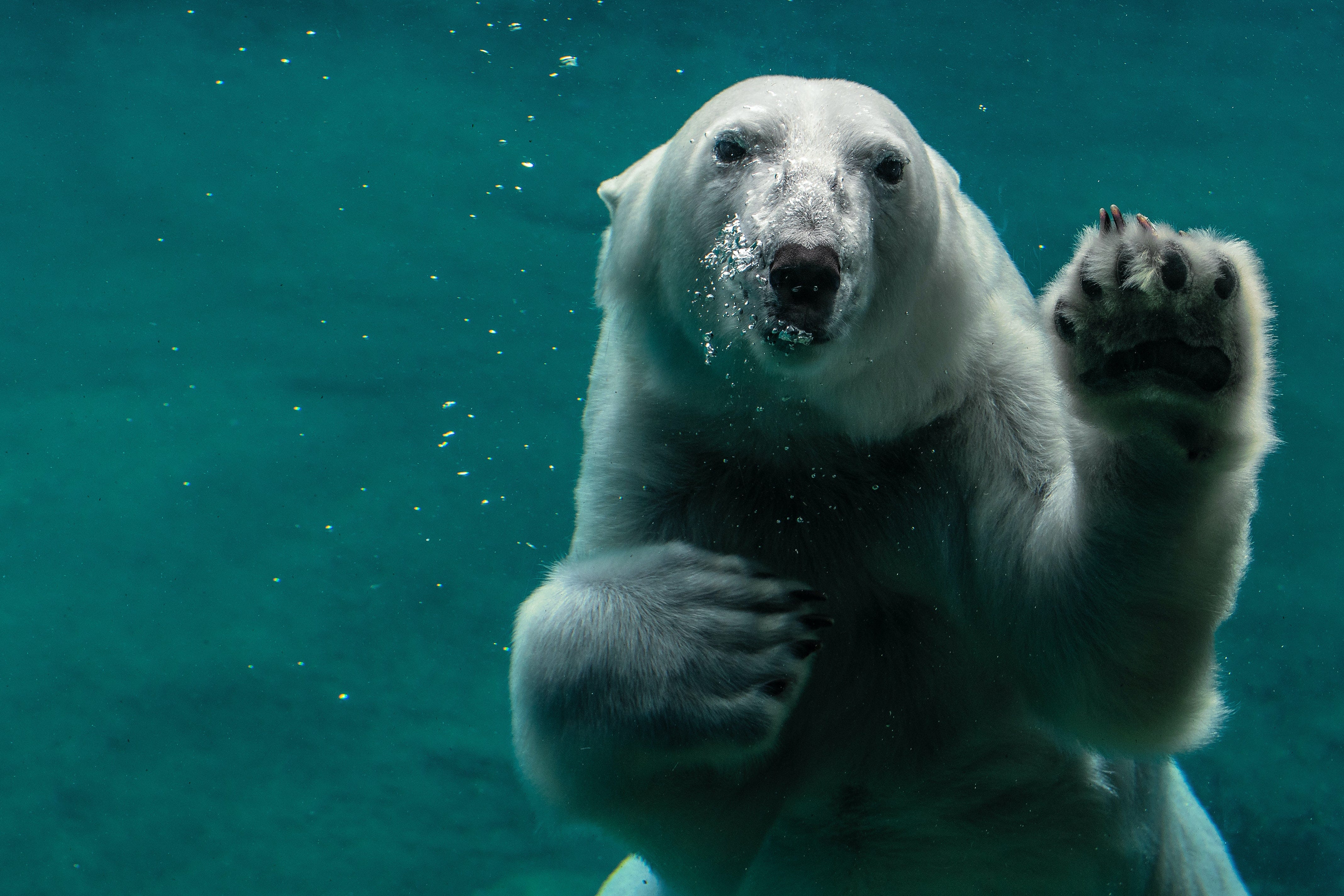
Polar bears are the most famous of the many species that are running out of time, living on a planet with an ever-shrinking Goldilocks Zone for their particular needs. Photo credit: Peter Neumann

Astronomers are on a quest to find other planets with the same large-scale Goldilocks Zone as Earth, where temperatures allow the existence of liquid water. This is primarily part of the effort to search for extraterrestrial life, but I suspect many people think the hunt is valuable for another reason: as a way to find other places humans might relocate to when we’ve outgrown our home planet. To me, this is akin to throwing your story in the trash and starting over. Similar to Planet Earth, populated with almost nine million species, a draft is an incredible accomplishment, filled with thousands of words that have been organized to work in harmony. Let’s keep these stories, no matter the scale, and figure out how we can make them “good enough” for everyone to enjoy.

Porridge ready to eat
Photo credit: Klara Avsenik

Happy Tales!
What’s in a Verb?

Ask any dog for the answer…

Even though they don’t speak, dogs have an incredible ability to understand language. I can hardly think of a dog who doesn’t get excited when they hear the words “walk,” “dinner,” or “get it!” Conversely, they’ll put their tails between their legs when they hear words like “no,” “bad dog,” or “leave it.” And if they’ve been trained well, they’ll respond quickly and correctly when they hear “come,” “sit,” or “down.” They demonstrate that they can distinguish between these words through their appropriate responses to each one.

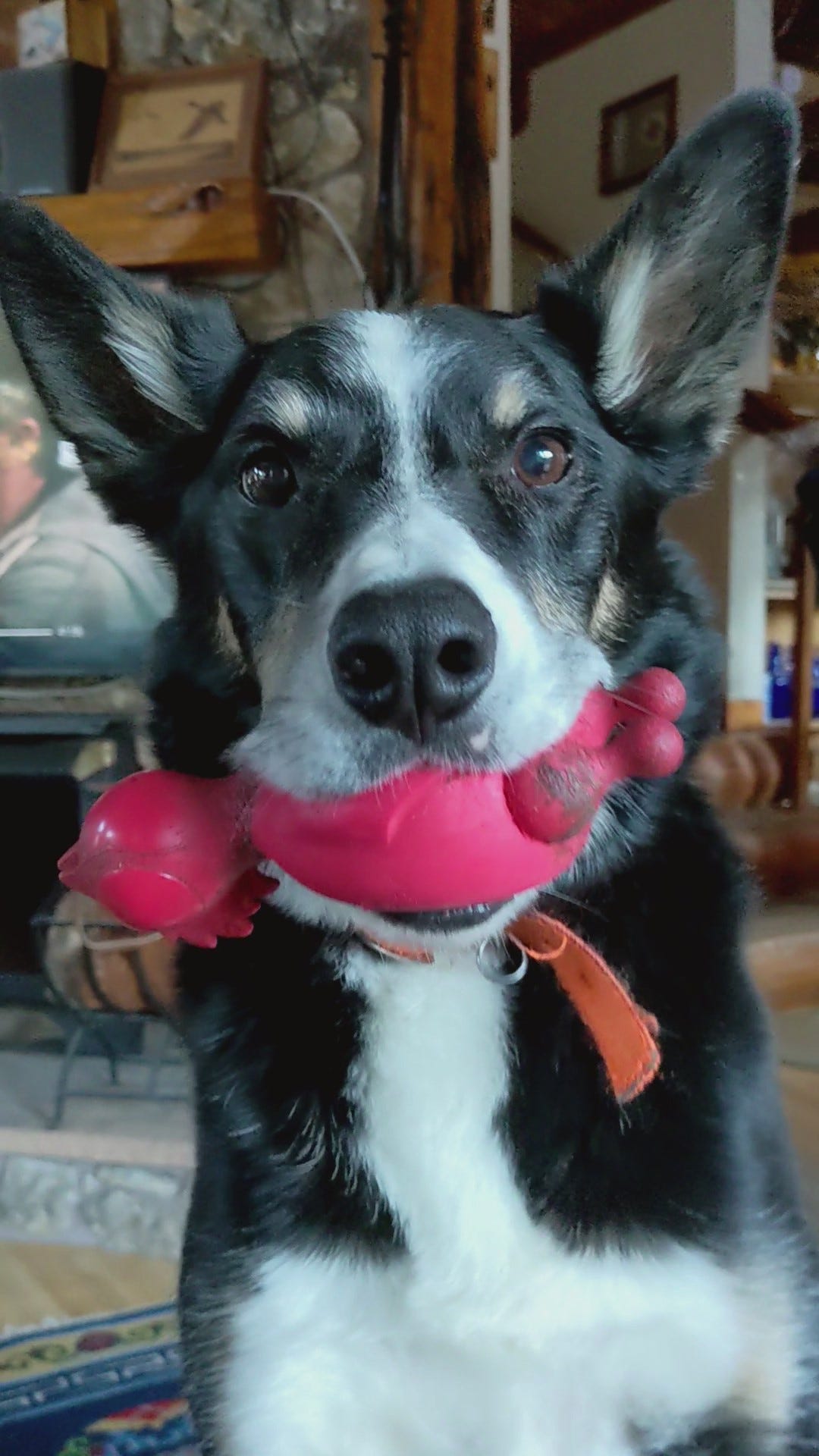
Dog with toy
Tock fetches his rubber chicken when asked, even if it’s hidden in a pile of toys in another room.

Naturally, this canine affinity to words is super exciting to someone who writes. I can spend enjoyable day upon day searching for the perfect words for my stories … and I like to give my dog that opportunity, too. In agility training, I invest a lot of time in deciding which words to use for commands—for my students’ dogs as well as my own. Our time running a competition agility course is short—from thirty to sixty seconds, usually—so we don’t want to blather on, using three words when one will do, or hollering out a word that’s difficult to enunciate or one that could be confused with other commands we’re also using. We need the right word for each situation, telling the dog exactly which obstacle to take, how to take it, or where to run.

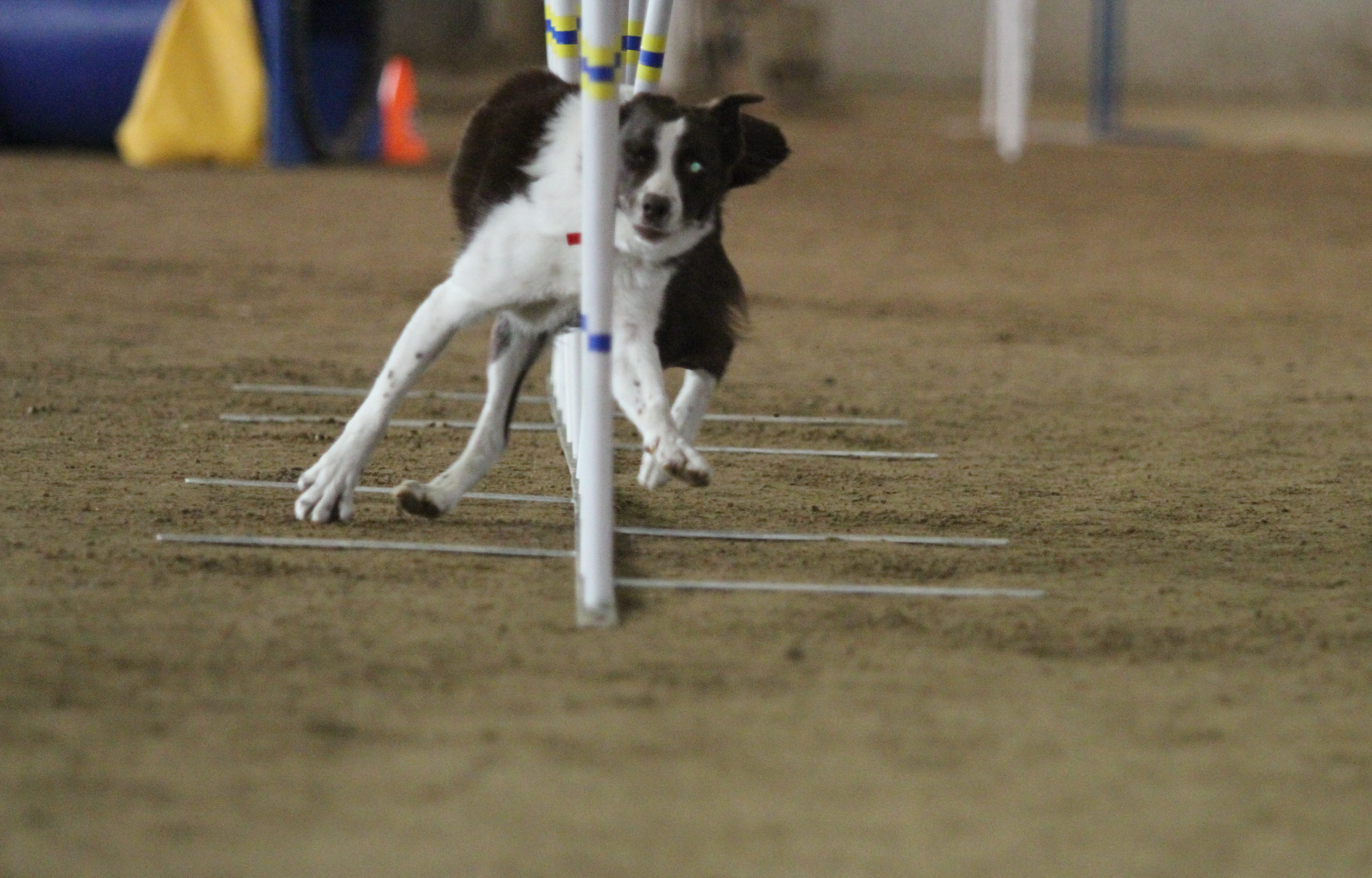
Tock responds to the “Dig” verbal cue. My dogs learn 4 commands for different turns, which they receive as they commit to an obstacle, alerting them to collect their stride so they’re ready to turn. “Right” means turn 90 deg to the right, “left” is 90 deg to the left, “dig” is a tight righthand wrap (much more than 90 deg), and “tuck” a tight lefthand wrap. The prefix “Go” before any of these words tells my dog that I’ll be crossing behind him as he takes the jump ahead of me.

Humans are intensely verbal creatures, and the more our dogs can understand us, the happier we are in our interactions with them. From the dogs’ perspective, words provides them with a way to learn and grow even as they age. You may have heard of the border collies who’ve mastered 200 to 1,000 or more words for their toys. Even more impressive, though, is the latest evidence that shows dogs have the capability to learn new contexts for words, and to put words together into novel (and appropriate) phrases that they’ve never heard before. And the coolest thing is that dogs can learn to communicate using these words, rather than simply hearing them as commands.

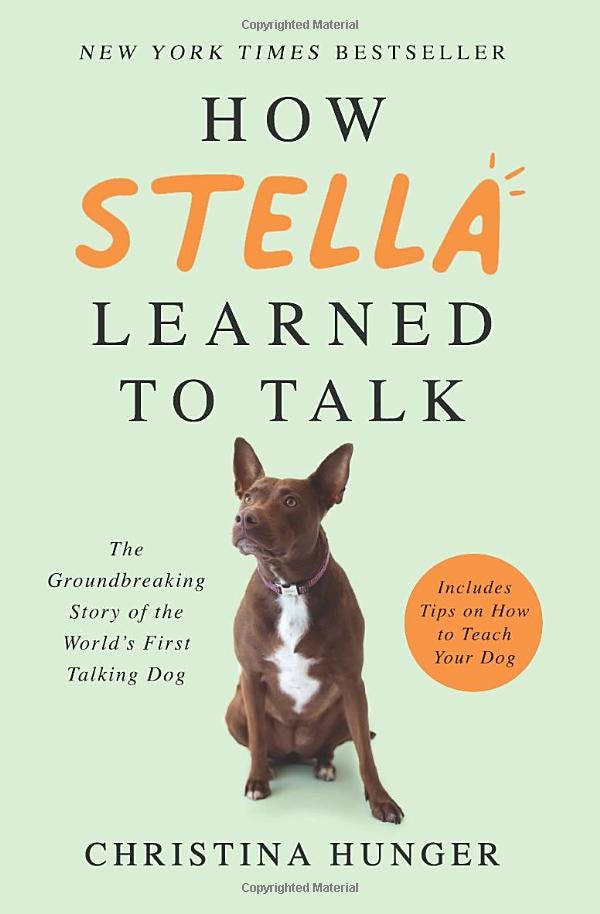
Book cover for "How Stella Learned to Talk"
Thanks to Christina Hunger’s book, Tock is learning to use his knowledge of words to get what he wants.
Dog pressing a "talking" button
Tock mastered his first “talking” button within a week, though at eight years old, it’s taking him awhile to understand that he can ask for things whenever he wants and not just when I expect him to.

If you’ve read my previous posts, you’re probably wondering how I’m going to tie canine word use to some sort of writing advice. I will not disappoint, so here goes: I think that the satisfaction gained from the ideal word has a positive effect on the relationship not only between humans and dogs, but between writers and readers. As my critique groups know all too well, one word I write quite a lot in my comments for other people’s writing samples is “vague.” It almost always applies to word choice. Verb choice, in particular.

This attention to verbs is probably no coincidence for me. In the dog world, I’m constantly looking for new verbs to describe actions my dog uses that I, in turn, could put to use in agility or on Tock’s button board. But I’ve found that many writers get lazy when employing verbs, saying things like “she came forward,” or “he moved across the room,” rather than a more descriptive verb that gives us additional information. How do these characters come or move? Are they skulking, trotting, hurrying, bounding, or stumbling?

Another problem that brings out my metaphorical red pen is when writers employ boring verbs to describe characters engaging in the repetitive motions that we all do a million times in a day. These include words such as “looking,” “staring,” “gazing”, “turning,” or “pointing.” Now, I’m the first one to admit that finding substitutions for these words isn’t easy. How can we show what our characters are seeing without using them? My first choice for a solution is simply that: show it. Just describe the thing they’re looking at, and the word “looked” is implied. The reader knows the character had to look at it in order to see it, and thus the verb itself isn’t even necessary. My second choice is to find a more interesting way to describe those actions. You could describe a character’s eyes, and then we know that another character is staring at or gazing into them. You could use a verb phrase, such as “he spun on his toes,” or “she prodded his chest with her finger,” to indicate turning or pointing.

Border collie staring
Stemming from their sheep-herding history, border collies are famous for giving “the eye” at something they want. Tock uses this technique at least fifty times a day. Probably a hundred.

I need to digress here with an important note: verbs for written dialogue are the one exception you’ll want to make to the use of “interesting” words. This is because dialogue tags (such as “said,” “shouted,” and “whispered”) ought to remain as invisible as possible so our brains can simply read the spoken exchange without interference from the tags. Words such as “whined,” “snapped,” and “interrupted,” tend to distract readers too much from the characters’ back-and-forth. Also, a lot of verbs are mistakenly used as tags that aren’t in fact dialogue words at all. It’s best to save actions such as “smiled,” “giggled,” and “sobbed” for complete sentences separate from the dialogue.

So as usual, my advice is pretty simple. The next time you’re writing an action scene, remember your dog! Think up bright, memorable verbs or verb phrases that encapsulate the situation in the most concise but appropriate way possible. Your dog will get a clearer understanding of what’s going on … and so will your reader.

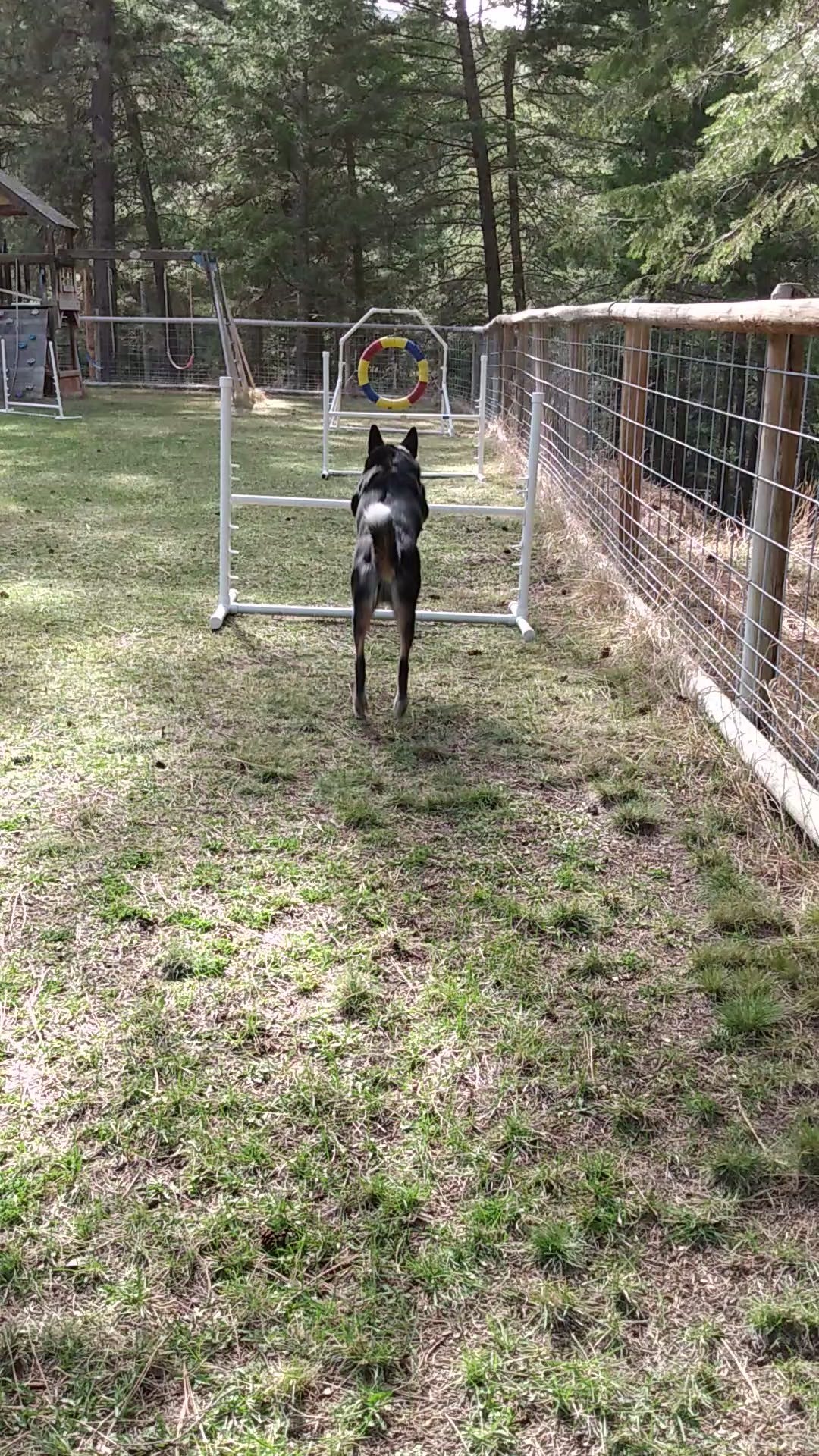
Dog in extension over jumps, heading away from camera
Here, Tock has been given his “Go On” command. Can you tell what that means?

Happy Tales!
Writing is Just Another Trick!

When most people think about dog training, they think “tricks.” Dogs doing sits, downs, and stays, rollovers, high-fives, and sitting up on their haunches. There are books about the 101 tricks you can teach your dog to do with a carboard box. And the beauty of these tricks is that they’re not hard to teach, as long as you have a reward your dog really likes, a way of marking the moment they do something right, the patience to teach the trick in small, incremental steps, and the wisdom of when to raise the bar and ask for your dog to do something a little bit harder. Keep upping your criteria and bingo, you have a fully trained behavior that your dog will perform after a single command.

Dog performing a trick

Wouldn’t it be great if we could write books that way?

Impossible, you’re probably thinking. Writers aren’t dogs, or monkeys, or seals with balls on our noses! We’re artists. Creatives. We write when the muse calls, through a magical process that’s known only to us. Other writers might have the tiniest glimmer of understanding of how it works—but they’ll have trouble describing it if pressed.
I disagree. Now, I appreciate my muse as much as any writer ever does. I know all too well that glorious feeling of urgency when I’m in the throes of a work-in-progress—when I must simply write rather than think, when my soul pours into the words flowing off my fingertips and onto the page. But this sort of writing is the end result of study and planning. I know it’s good writing because I’ve spent years teaching myself all the writerly tricks of the trade. I’ve studied premises, first pages, inciting incidents, plot arcs, character goals and development, dialogue, voice, pacing, show versus tell, world-building, how to use backstory effectively, and on and on. Most important of all, I’ve come to appreciate that these components of writing—these “tricks,” if you will—can be synthesized into something that’s greater than the sum of its parts. The humongous, artful, creative, and tricky masterpiece of a good story.

Story Genius book cover
One of my favorite books on the craft of writing

It’s possible I think about writing this way because of my background as a dog agility trainer. I still remember the epiphany I experienced when I learned from another trainer that agility is nothing more than a series of tricks.

Whoa, you might be saying. Aren’t all dogs agile until they get old? Why would you need to train them in something called agility?

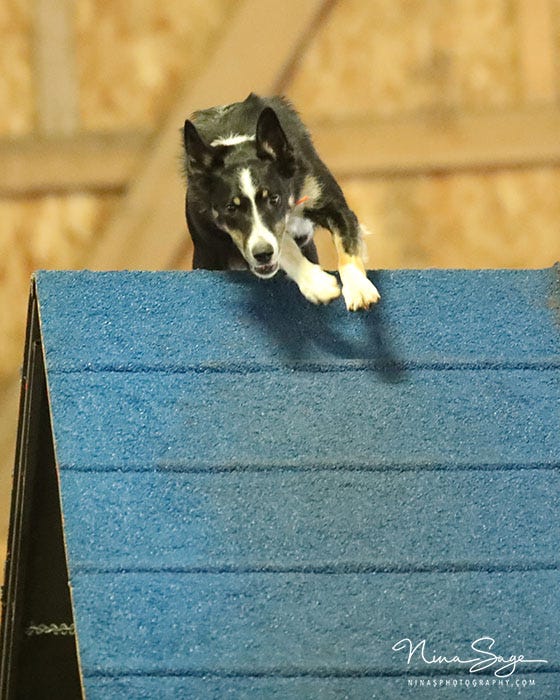
You’ve probably caught a glimpse of agility on television or in someone’s back yard, or you’ve glazed over when a dog-owning friend of yours complained to you about how expensive their agility classes have become. But on the chance that you haven’t heard of it, dog agility consists of directing a dog through a course filled with obstacles. These include fun things such as jumps, tunnels, tire jumps, weave poles, and giant painted structures (teeter-totter, A-frame, and a long, skinny plank called a dogwalk). In competition, two courses are never the same, and each run is timed so that dogs are judged both on speed and on whether they run the course without accruing any faults (knocked bars, wrong courses, refusals, and many, many more).

Dog about to jump
Tock’s departed “brother” and BFF Tarzan navigating through a minefield of jumps in a competition.

Just as people don’t need to come from a particular background or level of education to learn to write effectively, dogs don’t have to be innately “agile” to participate in the sport of dog agility. Sure, some dogs are better at it than others (okay, a lot better), but this mostly has to do with motivation and not with any genetic differences that predispose them to the skills.

Dog on teeter
Tock demonstrating his motivation to bang the teeter to the ground!
Lest this lead you to think that agility is easy, I can assure you that it’s not. There are invariably students in beginning agility classes who assume that all they need to do is clip a leash on their dog and cajole them over the jumps, haul them onto the contact obstacles (the A-frame, teeter, and dogwalk), and stuff them into the tunnels. They’re certain that they’ll be doing a full course by the end of the first class.

But I forgot to mention that there are no leashes. And dogs need to learn how to run through courses they’ve never seen before without any mistakes. At full speed. An inexperienced handler attempting to achieve all this in one evening is akin to a novice writer whipping out a captivating, error-free book on the first try. I suppose it could be done (in a parallel universe?), but the chances are infinitesimally small.

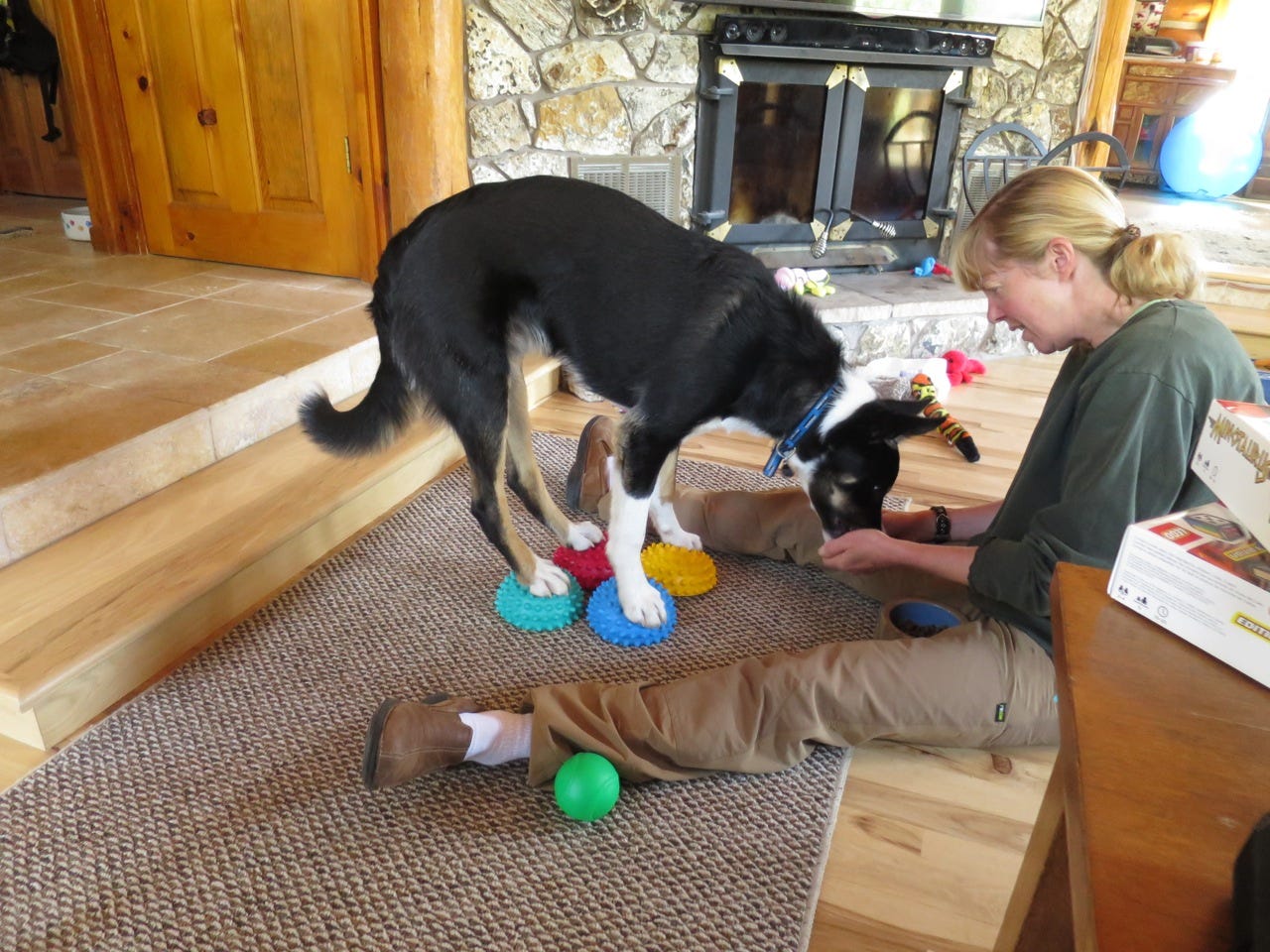
This is why my beginning students don’t start on the obstacles. They get foundation training, in which they learn how to shape their dog’s behaviors into lots of little tricks. Because the foundation I teach is specific to agility, the tricks dogs learn all lead to something they eventually need to do. Some are so basic that the dogs may already know them, like sit, down, stay, and recall. Others are a bit more advanced, like learning to “go on” to some distant point away from their handler, or learning to move by their handler’s side at a walk or a run, stopping when they stop, and switching to the other side when signaled to do so. They’ll even get to start learning how to interact with the obstacles—the ends of the contact equipment, the openings of tunnels, the standards of jumps (but no bars!).

Dog catching pinecone
Tock learning what he has to do to get his pinecone reward. Training agility foundation is similar to attending writing workshops or reading books in which you learn the basic components of writing craft.

Similar to writing a book, agility training happens in many stages. After dogs learn how to work and move with their human handlers, they need to become comfortable with the individual obstacles. Once they’re performing an obstacle correctly and confidently, they’re ready to learn its name, so they can run to it when they’re commanded to do so (beware of assigning names to things too early, or you’ll end up having to say “tunnel” five times while your dog runs around it or stares cluelessly at you). Finally, dogs have to learn how to string obstacles together into sequences and to understand both verbal and body language signals in order to know where to go next on course.

After lots of time learning the little things, Moth & I became a team

The main point I’m trying to make here is that for agility dogs and writers both, it takes time and lots of patience to learn the craft. But as you master the tricks of your trade, you’ll be able to string them together into an entire manuscript. This masterpiece is the most tremendous trick of all—and only you will know just how much work went into it.

Happy Tales!