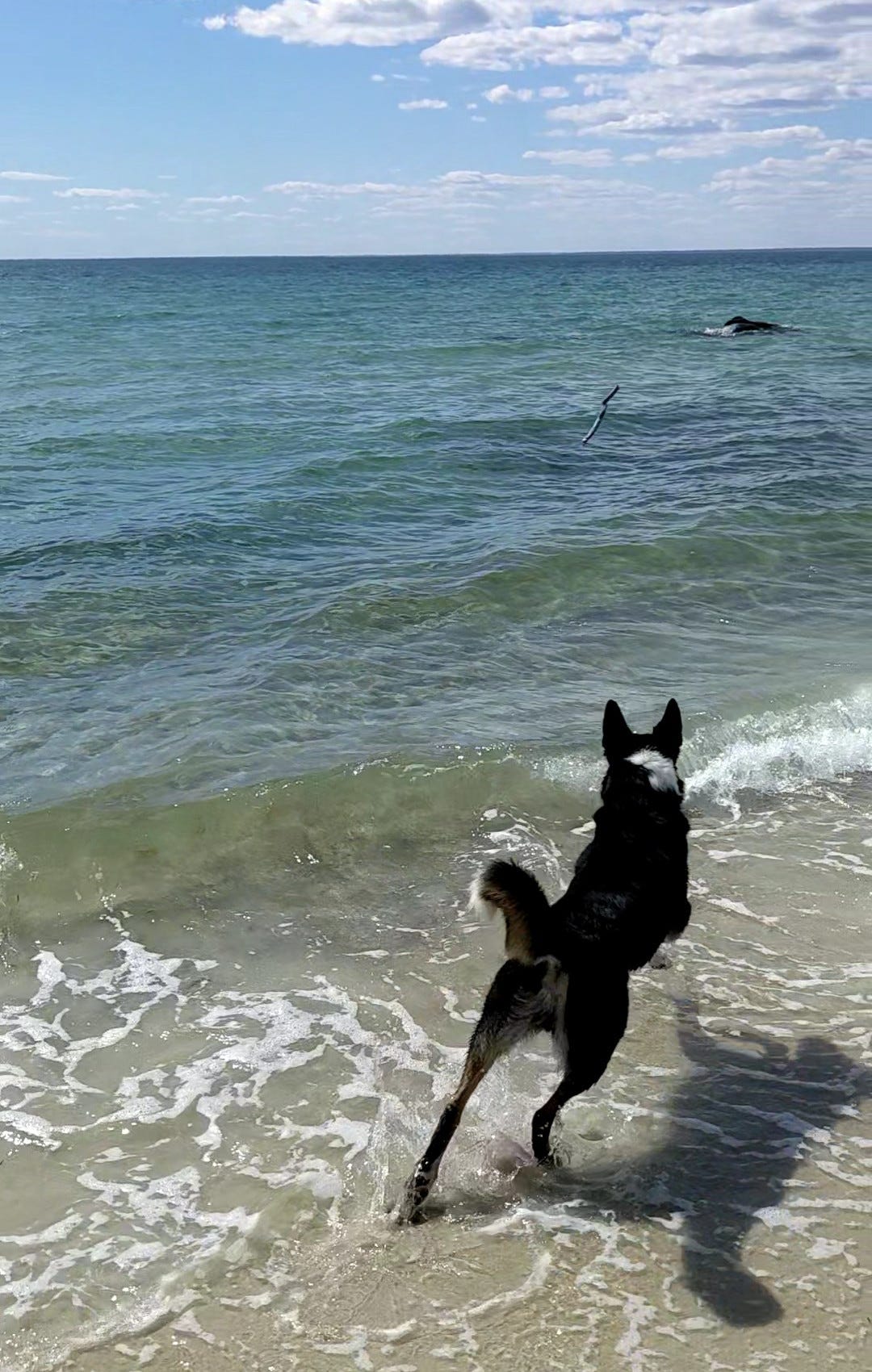
Are You Ready?

This phrase is one that a lot of dog owners know well. They’ll ask their furry companions this question before tossing a frisbee, or heading out for a walk, up to bed, or in and out of the car. Really, they’ll ask it before any sort of change in their dog’s routine from one activity to another. It’s a fabulous way to get a dog’s attention and motivate them to start paying attention and get moving, or do whatever it is you want them to do next.
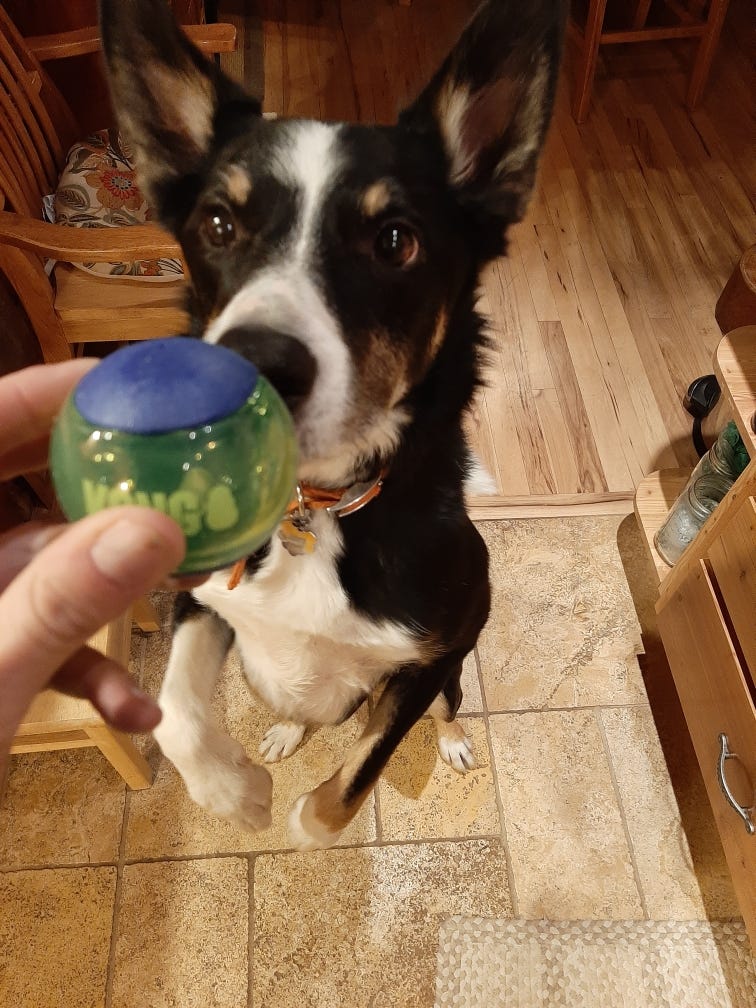
Dog standing on hind legs with his eyes on a ball held right in front of him
Tock is definitely ready for this ball!

Those of us who participate in dog sports know the phrase even better. I learned it when I first took an agility class, and it became part of the “rev-up words” that I’d teach my beginning students to use before beginning any training activity.
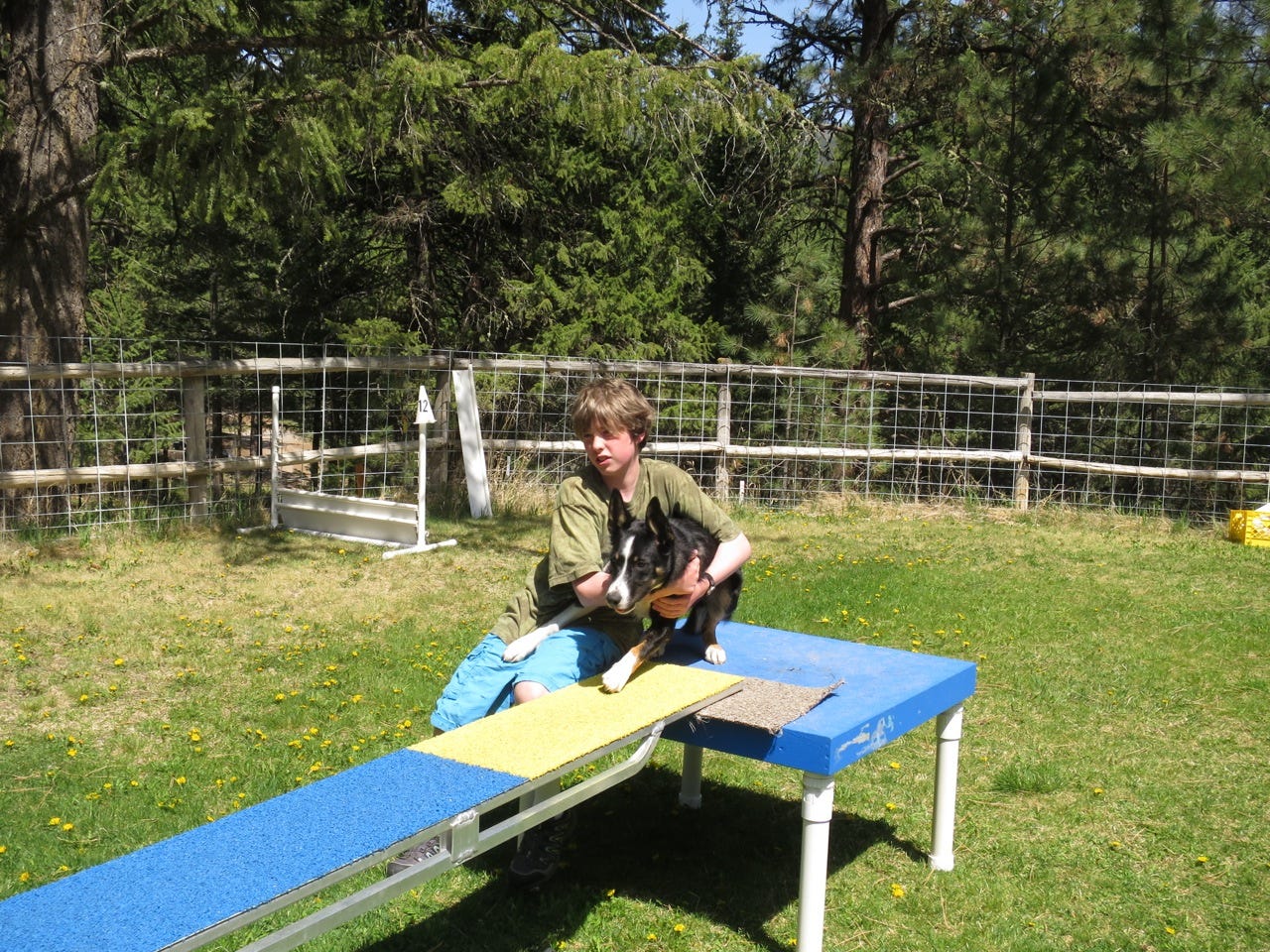
Boy restraining dog at the start of the teeter
Here is Tock learning the teeter. My faithful assistant (and son) restrains him while I rev him up from the other end. This is a great way to get a dog excited about tearing across a noisy, tippy board (as long as it’s raised incrementally to full height).

Are you ready? In an excited voice, we handlers will ask this of our dog, who is lying, sitting, or standing, maybe in front of an agility obstacle like a jump, or maybe not, if the goal is to train something else, like a recall. It’s an invitation to our dog to get ready to do something fun with us.
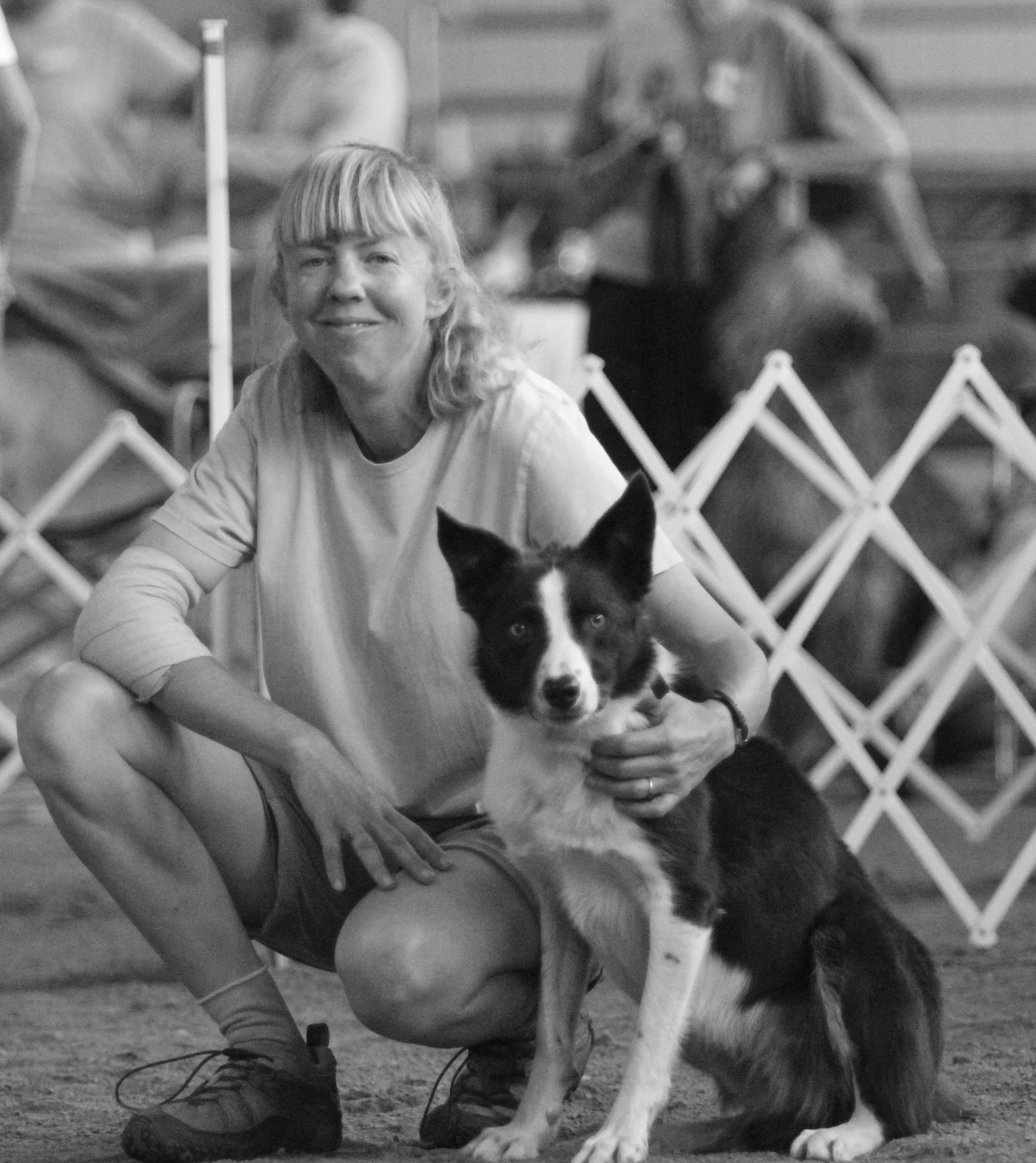
Handler & dog crouching together at the start line of an agility course
Moth & me at the start line, getting ready to run

Are you steady? We’ll follow up with another eager phrase if our dog still seems a bit distracted and not bursting at the seams to do what’s coming. And hey, rhyming phrases are easy to remember, so why not?
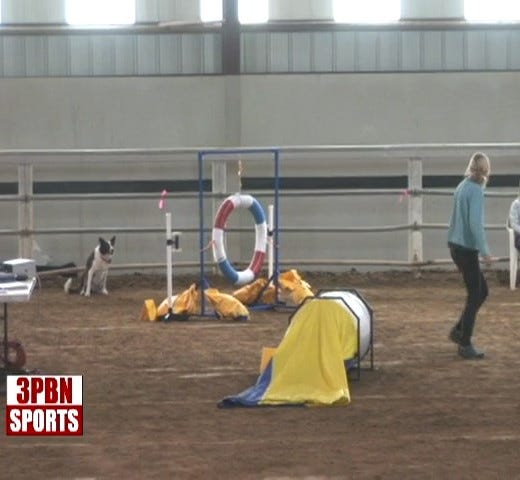
Handler has led out from dog in an agility course, and dog is sitting waiting to be released
At this point, Moth has received her rev-up words and is anxiously waiting to be released.

Okay! When our dog can barely restrain itself from a rocket launch (i.e., is quivering, salivating, or possibly bug-eyed with anticipation), we’ll at last use our specially chosen “release word.” Note: it’s always best to rely on a release word that can’t be mistaken for something else and is unlikely to be used for some unrelated purpose. I was taught to use Okay and kept it up with successive dogs out of habit, but my students and many others have more wisely chosen a less common word such as Break! This is because it’s all too easy to release your dog accidentally from a start line in an agility competition while saying “okay” to the judge or some other official. And then your dog is racing off through the ring, leaving you standing there, completely unprepared.
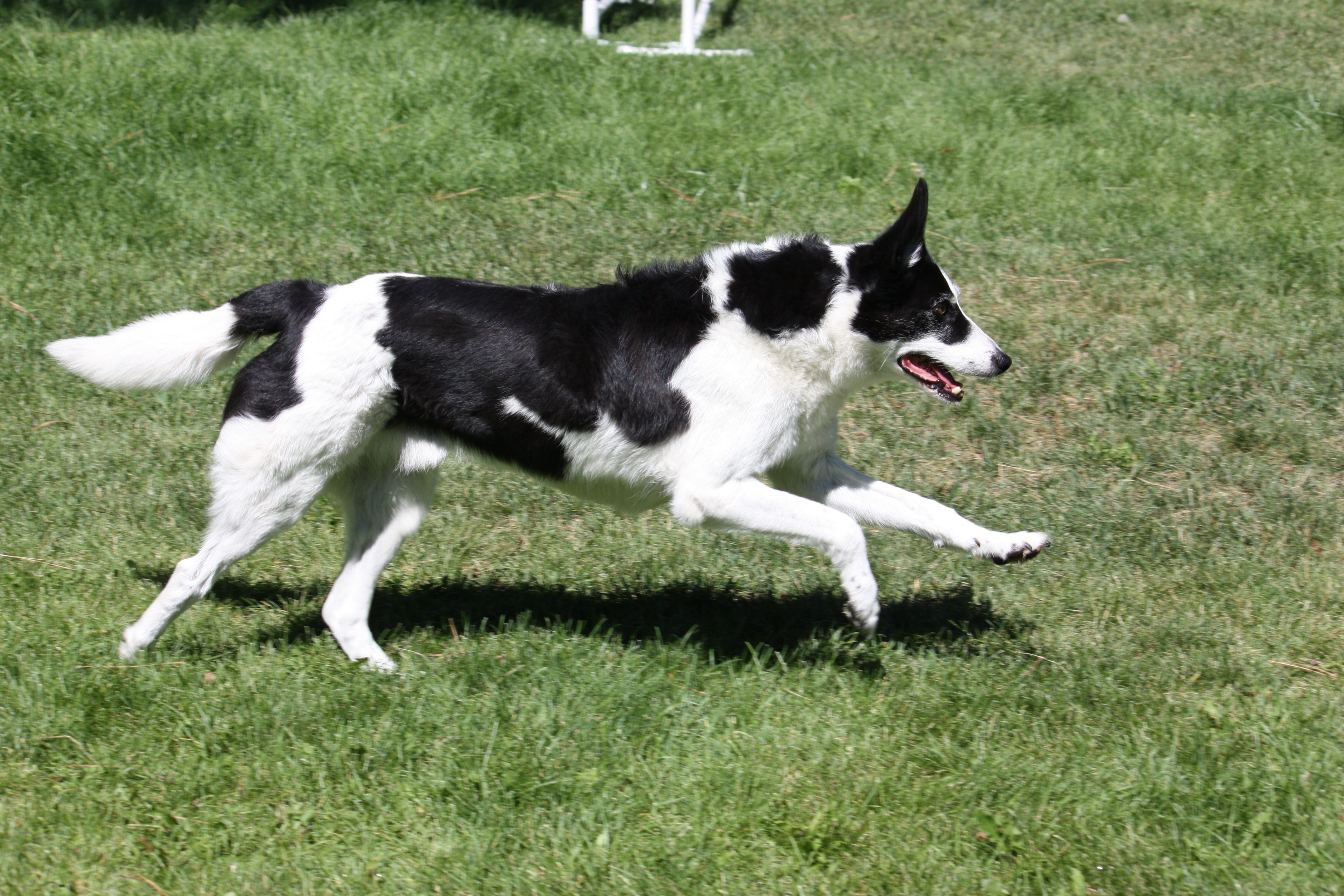
Border collie galloping unrestrained through an agility field
Tarzan, galloping free! (full disclosure: Tarzan never actually had a release-word accident at the start line. This picture was taken by Sneed B Collard III for the cover of his wonderful MG novel, The Governor’s Dog is Missing.)

Because everything in my past life seems to parallel things in my present, I can’t help but think of these rev-up words in the context of writing. One of the most essential things we learn as new writers is that our story must hook the readers. The obvious hook, of course, is a line at the end of the first chapter that compels us to keep reading. But the hook itself isn’t analogous to the rev-up words. No, the hook is the same as the release word in the doggy world. It’s the thing that gives the reader permission to zoom off into the rest of the story. Before the hook can make any sense, your readers need to be revved up. They need to understand the context for the hook: why should they care about your character and the situation the character has found themselves in? The “rev-up” material in your early pages can present the character in all their misunderstood (or misunderstanding) glory—quivering with desperation for something to happen. Once this foundation is laid, the hook makes total sense.

Person walking with a book draped over their face
This reader appears to be fully hooked. Photo credit: Hosein Ashrafosa

Another writerly use of the rev-up—and this time it’s the actual words—comes once you’ve written something. Humans are social creatures who secretly crave to share their work. This is true even if they’re cave-dwelling introverts (speaking from experience). Readings by an external audience will likely result in some pleasant and self-affirming compliments, while at the same time providing us writers with valuable editorial feedback. So why not let others—family, friends, critique group partners—read our pages before they’re in publishable form? Isn’t it terrific to get feedback at every stage, whether it’s an idea for a premise, a first page, or a first draft?

An enthusiastic crowd, one member of which is making the "heart" symbol
Every writer’s dream: an appreciative audience. Photo credit: Anthony Delanoix

Not necessarily. Here’s where the rev-up part comes in. I feel strongly that we need to ask ourselves in a firm voice: Are you ready? Have you thought about your story on your own enough that input from others isn’t going to strip your own writerly essence away from it? Are you steady in your ideas, your voice, and your determination to say something in particular, so that now all you need are some nudges from others to catapult you in the right direction—whether that’s writing an outline, or that first page, or what comes after the first page, or draft two, three, four, etc?

I personally never share a single thing about my stories until I’ve written and self-edited Draft 1. Sometimes I don’t show them to anyone until after Draft 2. At that point, if someone asks me about my premise, I have a pretty solid idea of what I’ll say. I also think I get why I’ve started the story in a particular place, I think I’ve gotten to know my characters better than my own family, and I think I understand how I want the journey to unfold. Note: I’ve prefaced all these statements with “I think” because I’m often wrong. Editorial feedback will be crucial to point me in the right direction. Probably many times over.

But this isn’t an essay about the value of critical feedback. It’s about how to maximize that value by asking for it when you’re truly ready for it. Depending on your writing process, this point may happen at a different stage for you than for other writers you know. J.R.R. Tolkien, for instance, was an extremely thorough and careful writer, who took seventeen years from when he first started writing the Lord of the Rings to its completion (and that’s not counting the forty years he worked on the Elvish languages!). He wanted things to be as perfect as possible before revealing them. Though I have nowhere near his skills, I think of myself as that type of writer. Tolkien’s methodical nature contrasts with his pal C.S. Lewis, who met in the same weekly literary group and wrote much faster, without Tolkien’s level of revision (thanks to John Hendrix’s The Mythmakers for these insights). Both of them, of course, were brilliant writers. I bring them up simply to point out that neither approach is right or wrong.
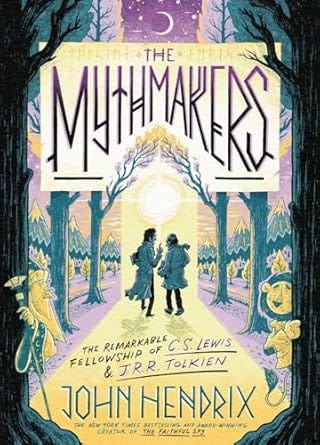
Cover the "The Mythmakers"

The real question is: what is right for you? When will you submit your premise, hook, first pages, or manuscript for review? When are you ready to gallop into the ring and show your writing to the world?
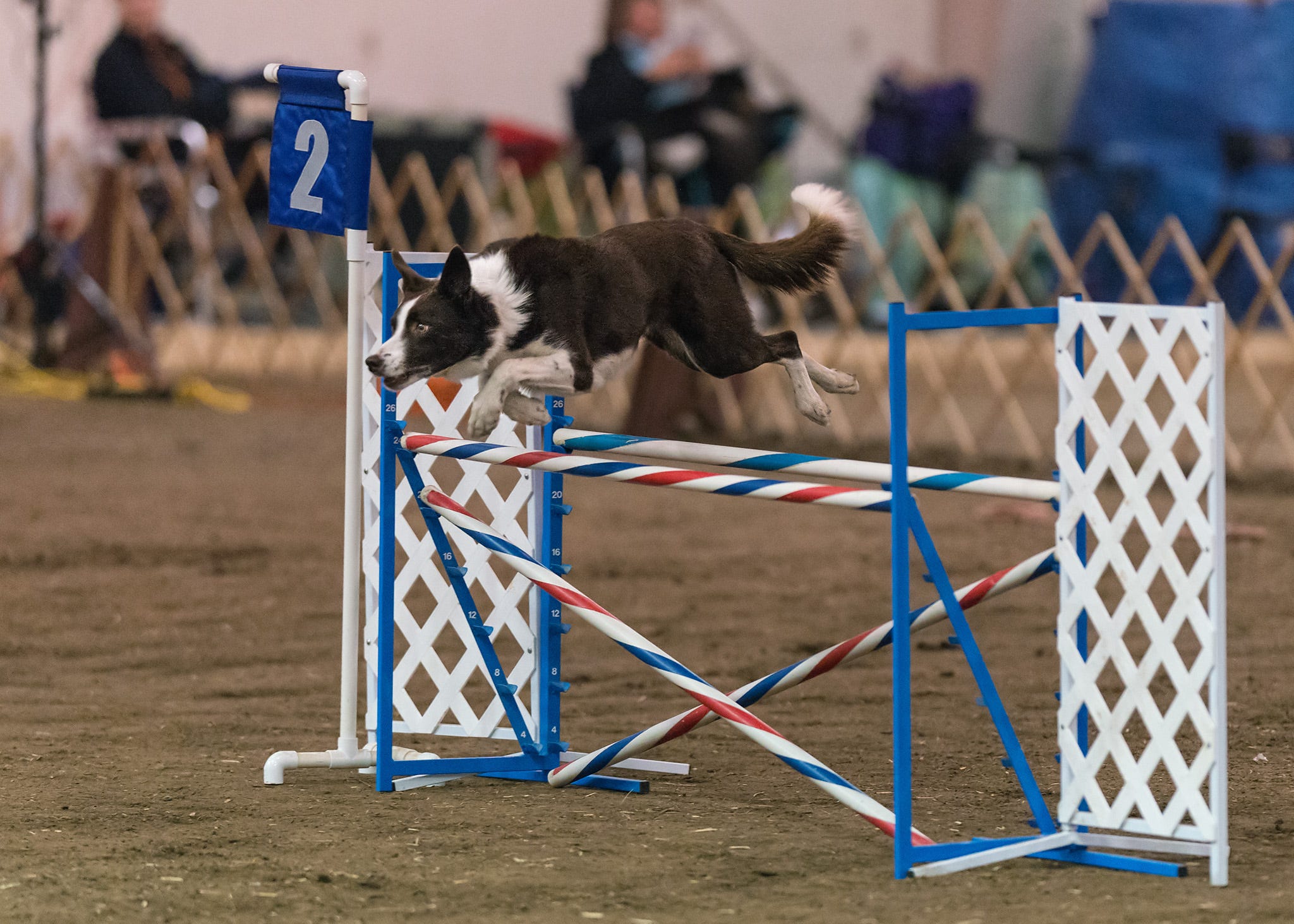
Border collie leaping over a double jump

Happy Tales!

The Endless Search for Empathy

Or: How to Get Readers to Relate to Your Characters

How many times have you put down a book because you can’t get close to the main character? Maybe they give no sense of what’s important to them and thus come across as lifeless automatons. Or maybe they express themselves, but in a way that makes no sense.

Metal robot with round eyes and a grimace
This robot actually has a lot more life to it than some characters I’ve read. Photo credit: Rock’n Roll Monkey.

Worse, how many times have you gotten a query rejection in which an agent tells you they don’t find themselves invested in the protagonist? And you’ve wondered what is wrong with your writing? Are you really that terrible?

Both of the above-mentioned scenarios have happened to me. Tthe first not as much because I tend to plug away at books for far too long even when I’m not enjoying them. But the second thing—the professional rejection—has occurred more times than I care to admit.

I could use the excuse that writing is a subjective business and some agents simply don’t like my style. I do tend to write strange stories, with quirky characters set in strange worlds and situations. But if reading hundreds of books over the years has taught me anything, it’s that even when a particular genre of story or style of writing isn’t my favorite, I often can relate to the characters within it.

So what’s the secret? How do we get readers to “fall in love with” our protagonists?

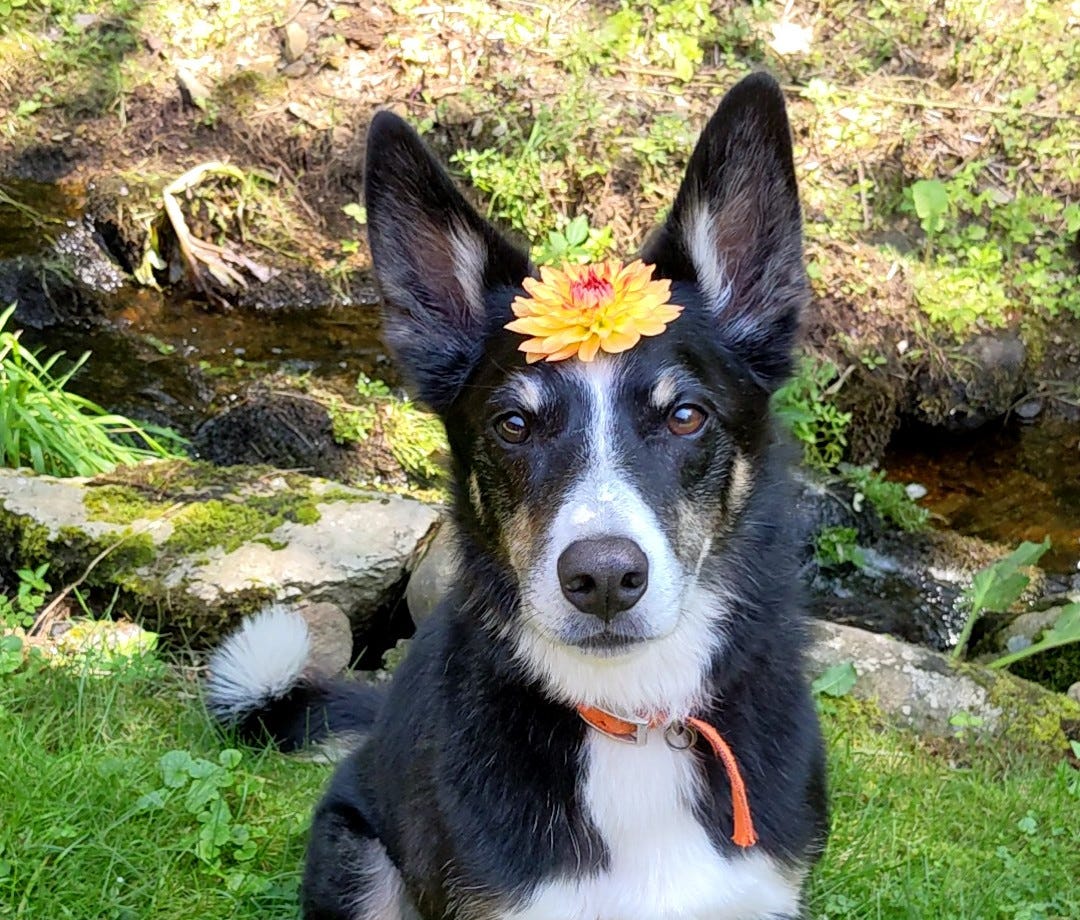
Border Collie with a large yellow flower on his forehead

We might as well ask: How do we fall in love with a new dog? (don’t worry, Tock. You are our One and Only for many more years yet. I hope). Puppy cuteness aside, many new dogs are a lot of work. They might be fully grown with their own personalities already set. They might have behavioral issues that make them difficult to handle. No matter their age, they are most definitely not a replacement for our other dogs. Each one has unique traits, and it can takes some time to get used to them.

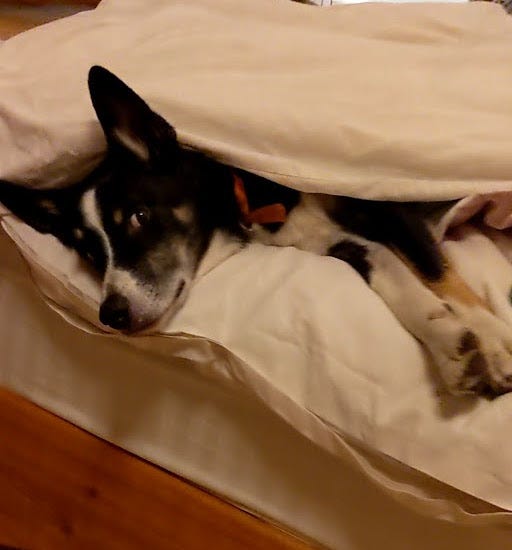
Dog lying inside a comforter
Unlike our previous dog, Tock has only a few precise times of day when he will allow himself to be cuddled. It can be hard to wait!

What is it, then, that causes us to take that new creature into our home? To essentially sign a contract that says we will commit to the care and well-being of this furry beast for the rest of its life?

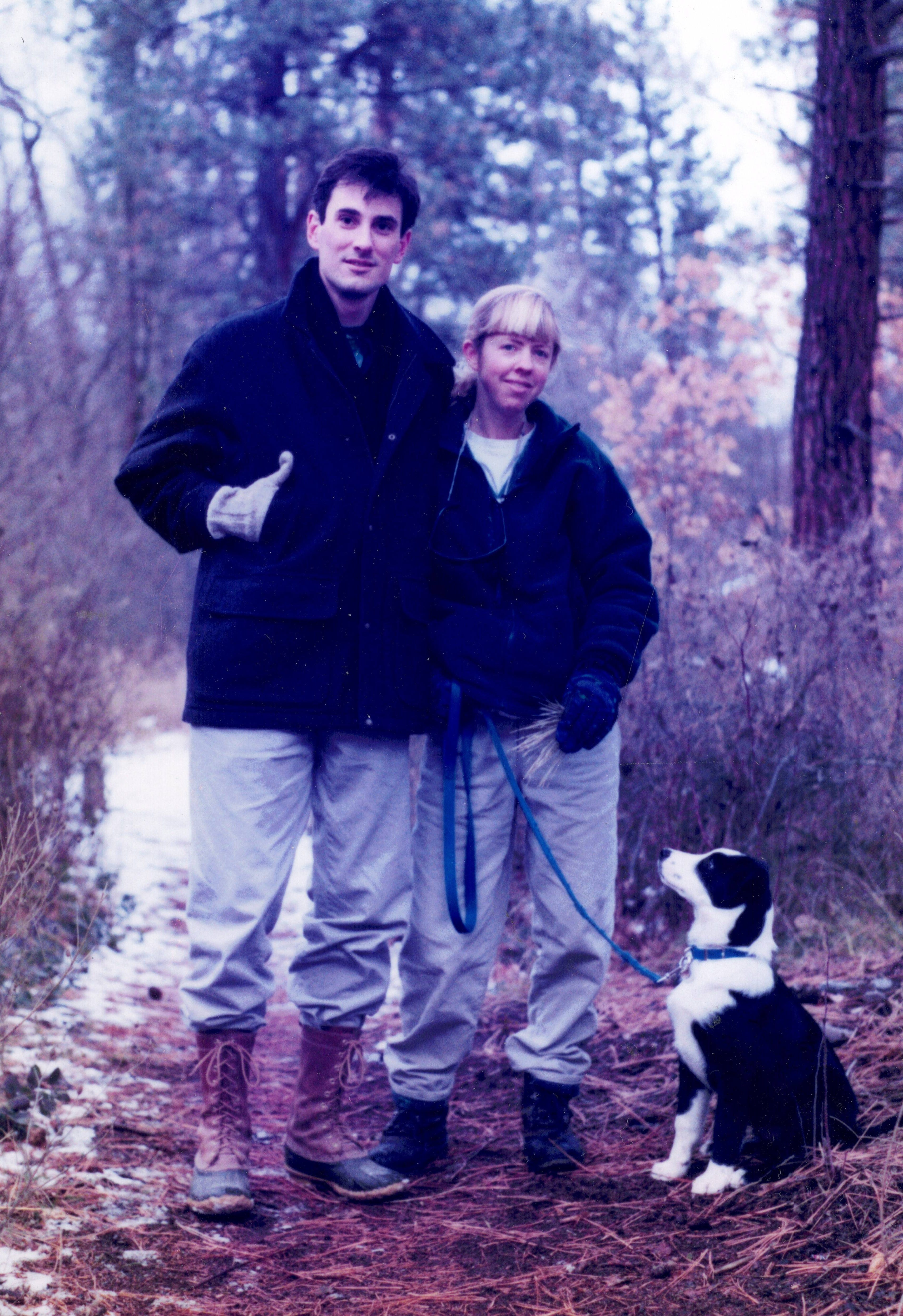
The answer, I believe, comes down to a way of being a particular dog possesses that makes us empathize with it. Think about the first time you gazed upon that litter of puppies, or on that one animal out of dozens or hundreds at the rescue facility. My husband and I still remember spotting our first dog, Tenzing, at the Humane Society. The little guy sat alone in a corner, clearly overwhelmed by the barks echoing from the cages around him. But the thing that drew him to us in an instant was the way he searched our faces, his chocolate eyes switching back and forth from one to the other of us. Clearly, he was trying to send us the telepathic message: Are you my parents? Will you get me out of here?

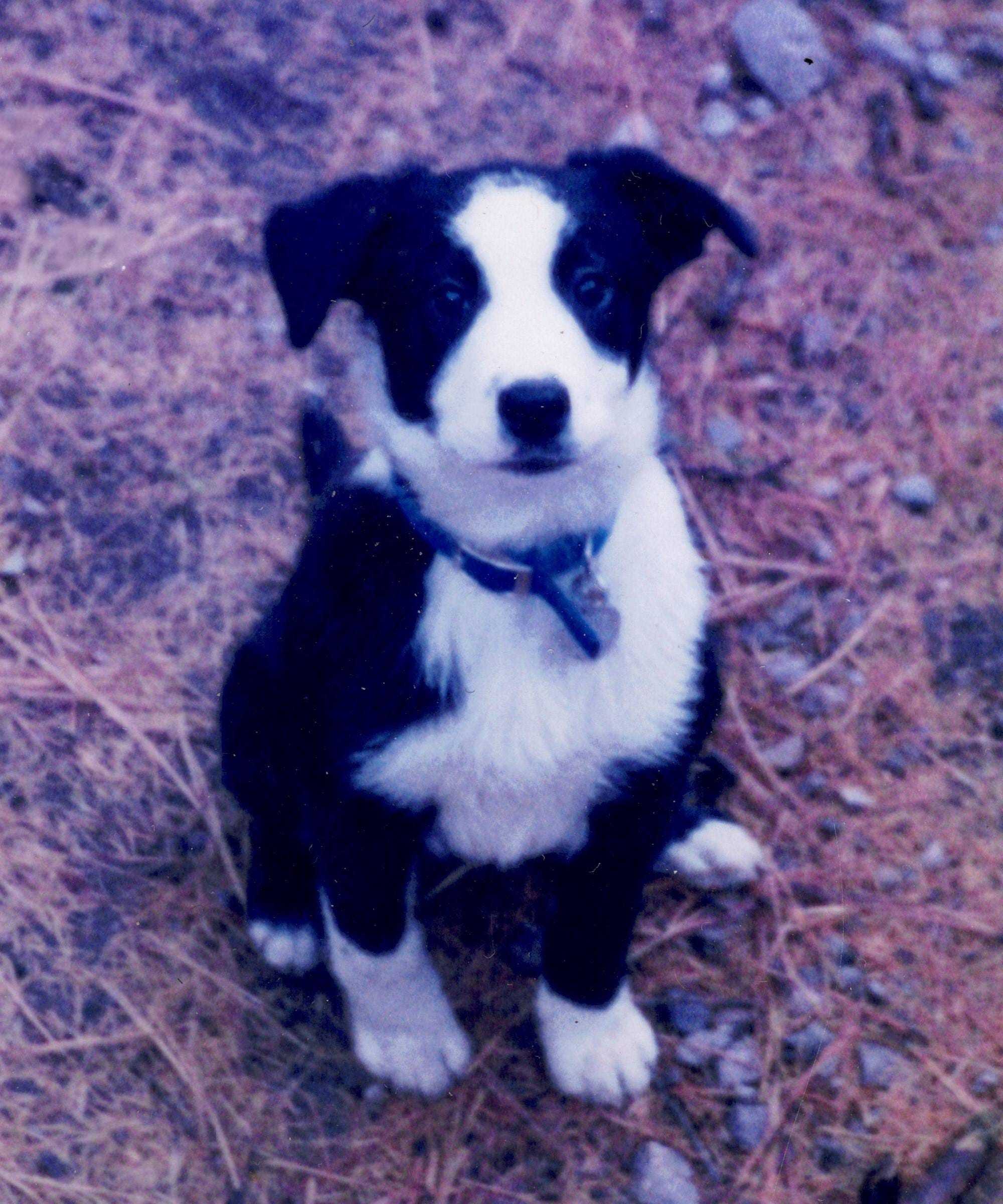
border collie puppy sitting and gazing at camera
Tiny Tenzing

We adopted him in minutes. If he’d been in a book, I would have read past the first page. And by the time I finished Chapter One, my bond would have been so strong that I’d have kept turning the page to the end.

When agents talk about falling in love with a character, my guess is they’re expecting some sort of spark on that first page. By the completion of the first chapter, for sure. Unlike getting used to a new dog, we don’t have the luxury of months when introducing readers to our story. We need something fast.

We need to generate empathy!

One of the most tried-and-true methods for producing empathy in readers for a character lies in the Save the Cat method (see the many books by Blake Snyder). This is when a character demonstrates something warm-hearted, likeable, or thoughtful about their personality. They might literally save a cat stuck in a tree, or they might simply display a way of thinking about something that indicates they’ve got an ability to feel. We readers understand that even if the character seems pretty screwed up, they’re not all bad.

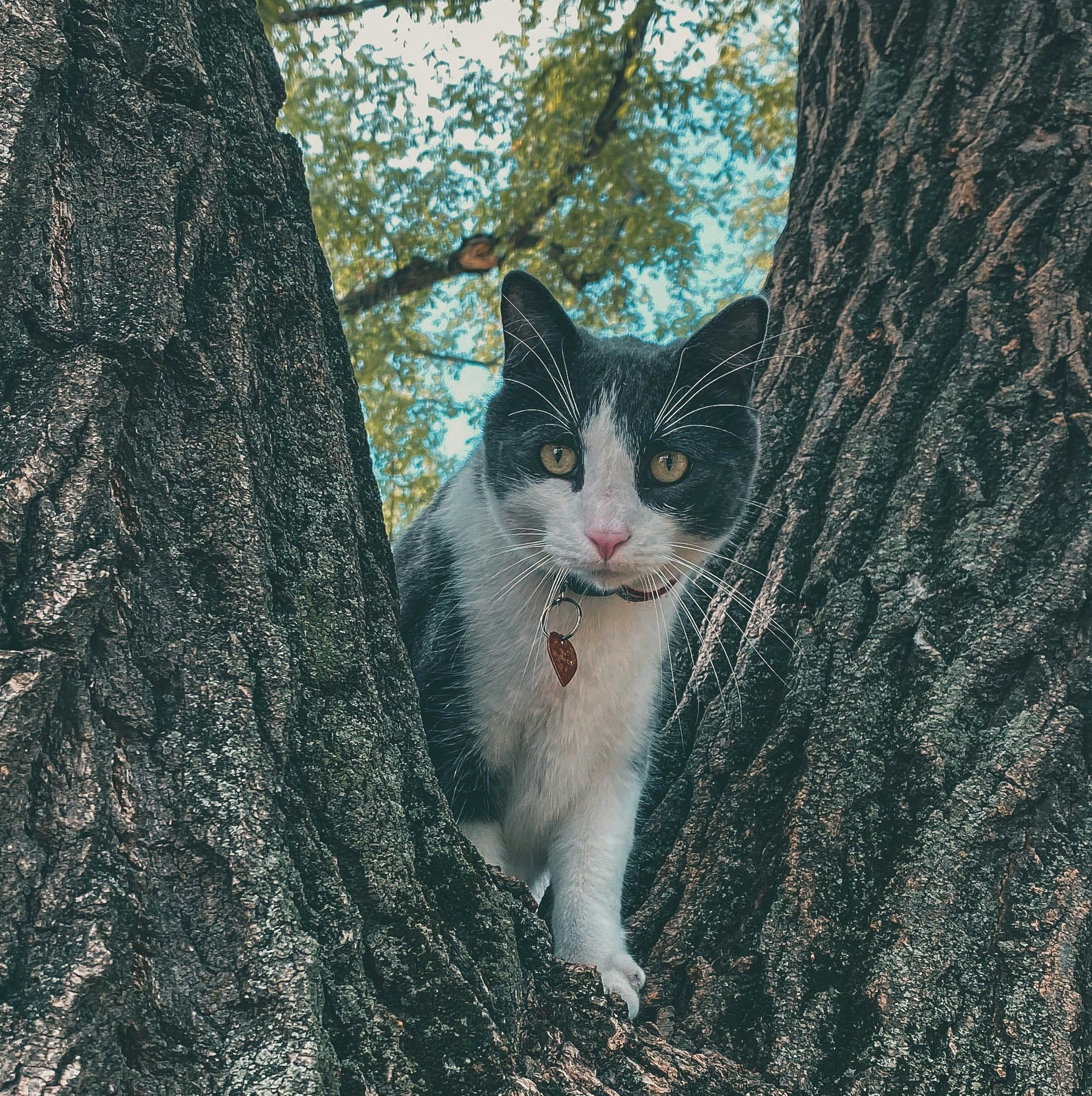
A cat up a tree, peering between two trunks
Photo credit: Braedon McLeod

To me, generating empathy lies in a combination of action (e.g., Tenzing’s eyes darting back and forth), thought (it was pretty obvious what he was thinking), and dialogue (it was too noisy to hear him, but it’s entirely possible that he was whimpering or at least snuffling a little). The trick is to put a bit of this on Page One, like sprinkling seasoning on a soup, and then add more as the story progresses. This will enable your reader to relate to the character in some small way, and to feel as though they’re developing a relationship with them.

But what about the rest of the story? How do you maintain that trust? No matter how endearing a character is initially, a reader’s only going to want to stick with them if the things that character does, feels, and says make sense in the context of their life. And not only in the present, but in their history. Their backstory.

Writer and dog in deep contemplation in front of computer
Figuring out a character requires lots of thought.

You know how sometimes you do things that you wish you hadn’t—and you don’t know why? Or you suspect something happened to you in the past that messed you up—but you can’t quite figure out what? This is often true of a character in a book, too. The difference between real life and fiction is that in a story, you the author need to understand precisely why your character is acting, thinking, or speaking a certain way. You need to know that character better than you know yourself. Bit by bit, you can then impart a character’s historical context to your reader so they’re not completely befuddled by what the character is doing, saying, or thinking.

There are a lot of things I still don’t understand about myself. I don’t know why I have a revulsion to the sight of rows of seeds in a cantaloupe or rows of scales on a fish (actually, I think it’s at least partly genetic, because my son has it too. He’s the one who told me it’s called Trypophobia). I don’t know why I frantically yank at my coat if the zipper gets stuck (actually, I think it stems from accidentally locking myself in a closet at age four and developing a fear of tight spaces). Self-analysis aside, I truly don’t know why I feel like I have to apologize for everything, or why I need to work every second of the day until I collapse in bed and finally allow myself some time to read.

Half a cantaloupe, cut open
This perfectly fine picture makes me cringe. Photo credit: Martin Moore

As a dog owner, on the other hand, I strive to develop a thorough understanding of my dog’s personality and actions. Tenzing, for instance, began growling at children after an incident in which he was snorkeling for pebbles in a pool (one of his favorite pasttimes), and a group of schoolchildren surrounded him and began “helpfully” tossing stones at him. This terrified him, and though I pulled him out of the situation quickly, he’d made an unforgettable association between children and danger. It’s especially tricky with an adult rescue dog, for whom you don’t know all the things that contributed to their strange and often defensive behaviors. But by watching them closely or knowing a little of their history, you can make some strong conclusions about what might have led them to a particular mannerism. We knew our dog Moth had been forced to spend the first years of her life in a basement, and as a border collie must have been desperately bored and looking for work. I believe this explained her obsession with light spots on floors and walls. The poor thing would jab at them until her nose bled, so we had to make every effort to keep her away from them (and provide her with more suitable work in dog agility).

Border collie staring at the ground while lying in the grass
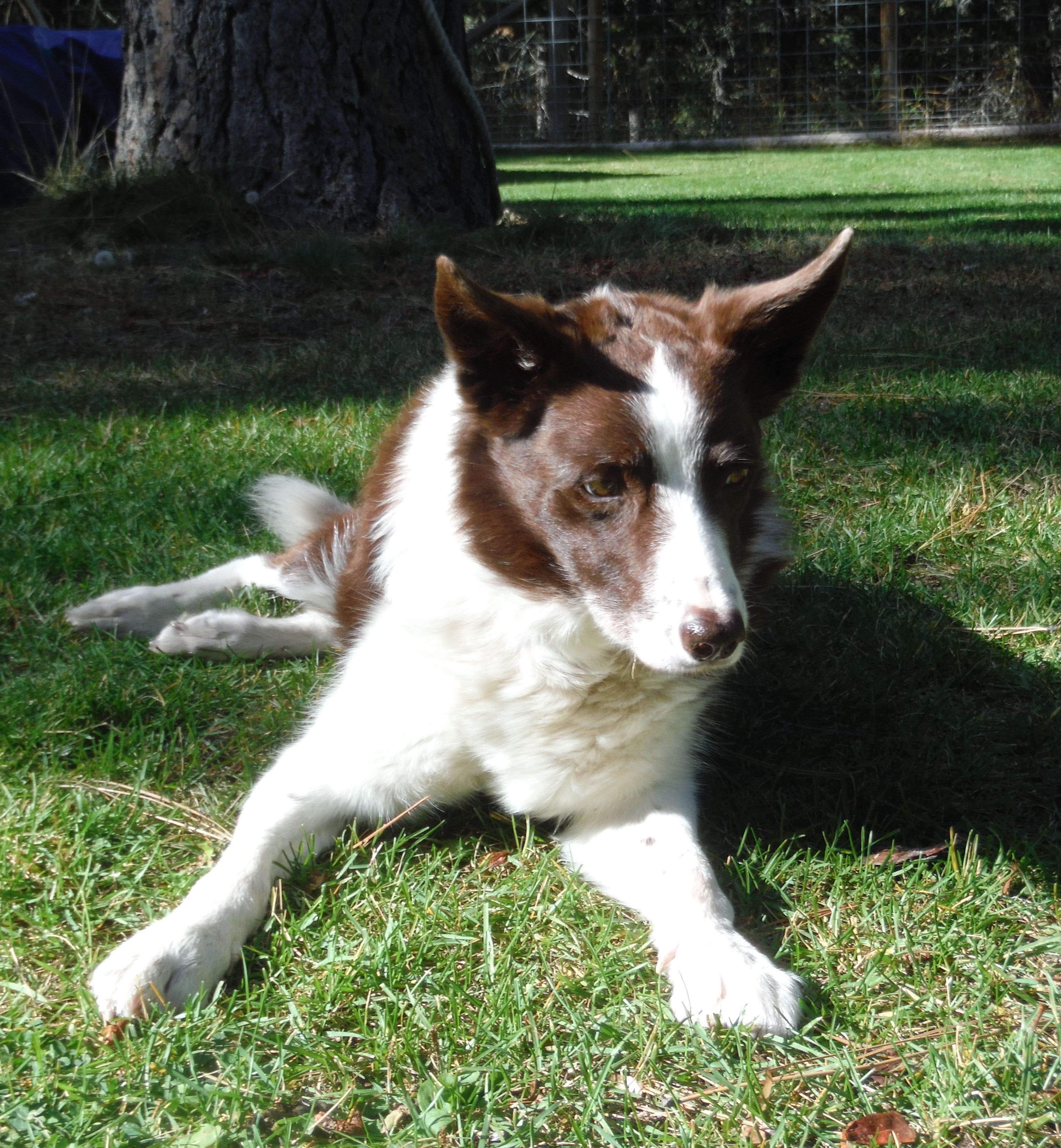
Even near the end of her life, Mothie spent her spare time gazing at light and shadows.

Like a responsible dog owner, a good writer yearns for a deep knowledge of their characters. When I begin a new draft, I work up detailed character sketches, complete with preliminary scenes of emotionally scarring incidents that show how they became who they are in the story. Even with those sketches entrenched in my mind, I invariably discover that my knowledge of my characters isn’t yet full enough. I have to step back from writing and think some more. Why are they acting the way they do? Saying the things they say? Enduring those thoughts that keep running through their heads? Only by knowing their inner histories can I write my characters in a meaningful way—and a way that generates empathy in my readers.

How about you? Do you toss books down in frustration when the protagonist isn’t relatable? Have you ever gotten one of those “can’t quite relate” query rejections? Here’s hoping our next attempts draw readers in rather than push them out.

Happy Tales!

Mired in Mud

How to Keep Yourself—and Your Story—Afloat!

More than three months after embarking on my own Hero’s Journey, winnowing the innards of a house down to the most crucial ones, packing those up, enduring Covid for the first time, bidding farewell to friends and students, mountains and pine cones, selling the house and buying another one thousands of miles away, the process of unpacking interrupted by five visits to emergency rooms and twenty-three days in three different hospitals (not me, but someone beloved to me), navigating big-city traffic and a claustrophobic parking garage with not nearly enough spaces, circling around and around in the dark, wondering if I would ever have time to write again, certain each day was a new low point, wondering if I would write again even if I had the time … after all these difficulties, my hope for a new life shrank from a flame to a spark, from a spark to an ember, from an ember to a faint memory of something bright but unreachable, a fuzzy star on the edge of the galaxy. Some days I don’t think I could remember it at all, in fact.

I was lost.

Dark descending parking garage ramp
Photo credit: Nuno Silva

But even though writing became impossible, I never stopped thinking of myself as the main character in my real-life story. And that’s what saved me. It allowed me to look at my situation with some detachment, even amusement at times. We writers aren’t nice to our heroes, and I was the perfect flesh-and-blood example! We’re told to be cruel to our heroes, to keep making situations worse and worse. It’s completely acceptable to shove the poor characters alone into a new land, surrounded by enemies, shivering in torrential gales, uncertain what to do next, plagued by the thought that if they’d only made the right decisions they wouldn’t be in this mess, downtrodden, defeated, despairing. Stripping all hope from a hero makes for good reading, right?

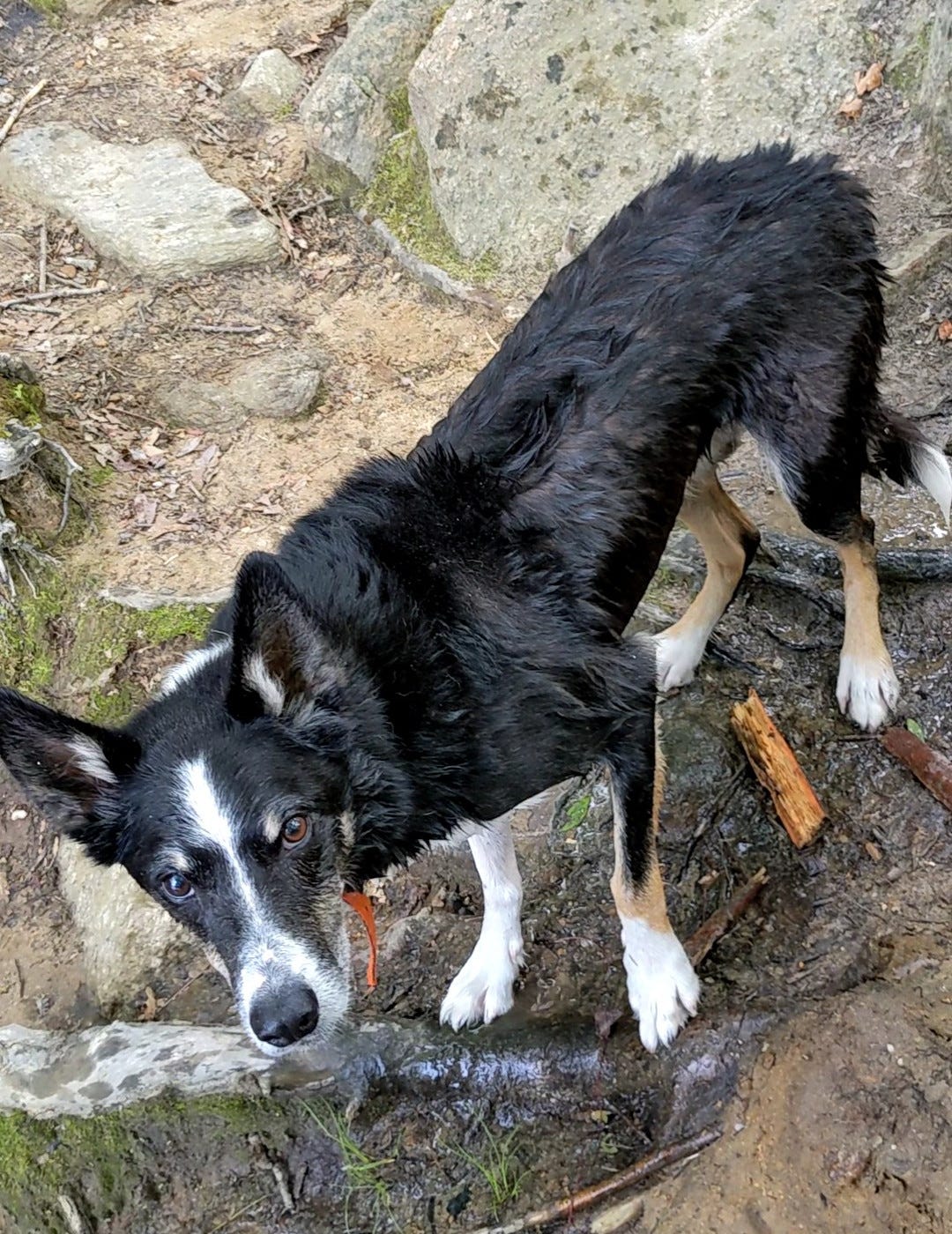
Wet Dog

Well, not entirely. It’s true that a strong sense of desperation is critical for the “All is Lost” scene, which typically occurs about three quarters of the way through a story. This scene leaves the hero certain there’s absolutely no way they can achieve their goal. They are one hundred percent screwed, and their hope for any sort of future has one hundred percent vanished. They are primed to enter the “Dark Night of the Soul,” which in story parlance is when everything the hero formerly thought was important to themselves is stripped away, forcing them to confront the truth.

Photo credit: Eberhard Grossgasteiger

But what about the rest of the story? What about all the parts that lead up to this terrible time: the inciting event that pushes a hero into a new world or a new way of thinking and acting, the difficult barriers they must surpass, the people or creatures they meet along the way, the bits of their past that they may either cling to or reject out of hand, the interesting things they learn during their journey? And how about the parts that follow the Dark Night of the Soul: the emergence of a wiser protagonist and the final showdown in which a hero uses their new skills or understanding to achieve some sort of resolution? Should they feel hopeless during these times?

My answer to this question is a resounding no. What allure would any story have if it provides no hope of something the hero can do, think, or say that will lead to a more promising future? Even if those things aren’t what readers would have anticipated or selected themselves, even if the future isn’t the happy ending they thought might happen, we need to feel as though the hero has some agency, some desire to mold the course of events.

We need hope.

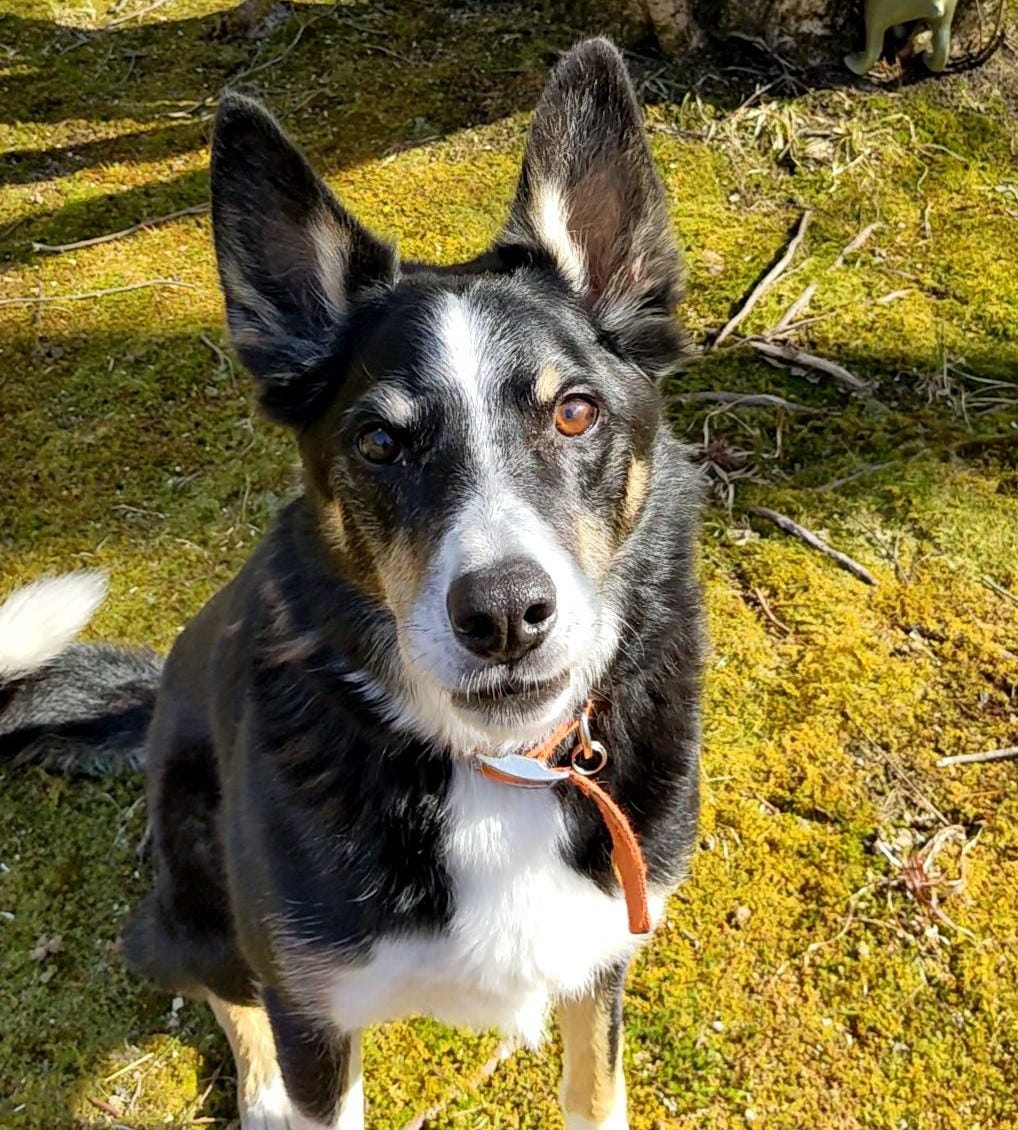
Hopeful Dog Sitting and Looking at Camera
Tock is very good at hoping for a variety of things

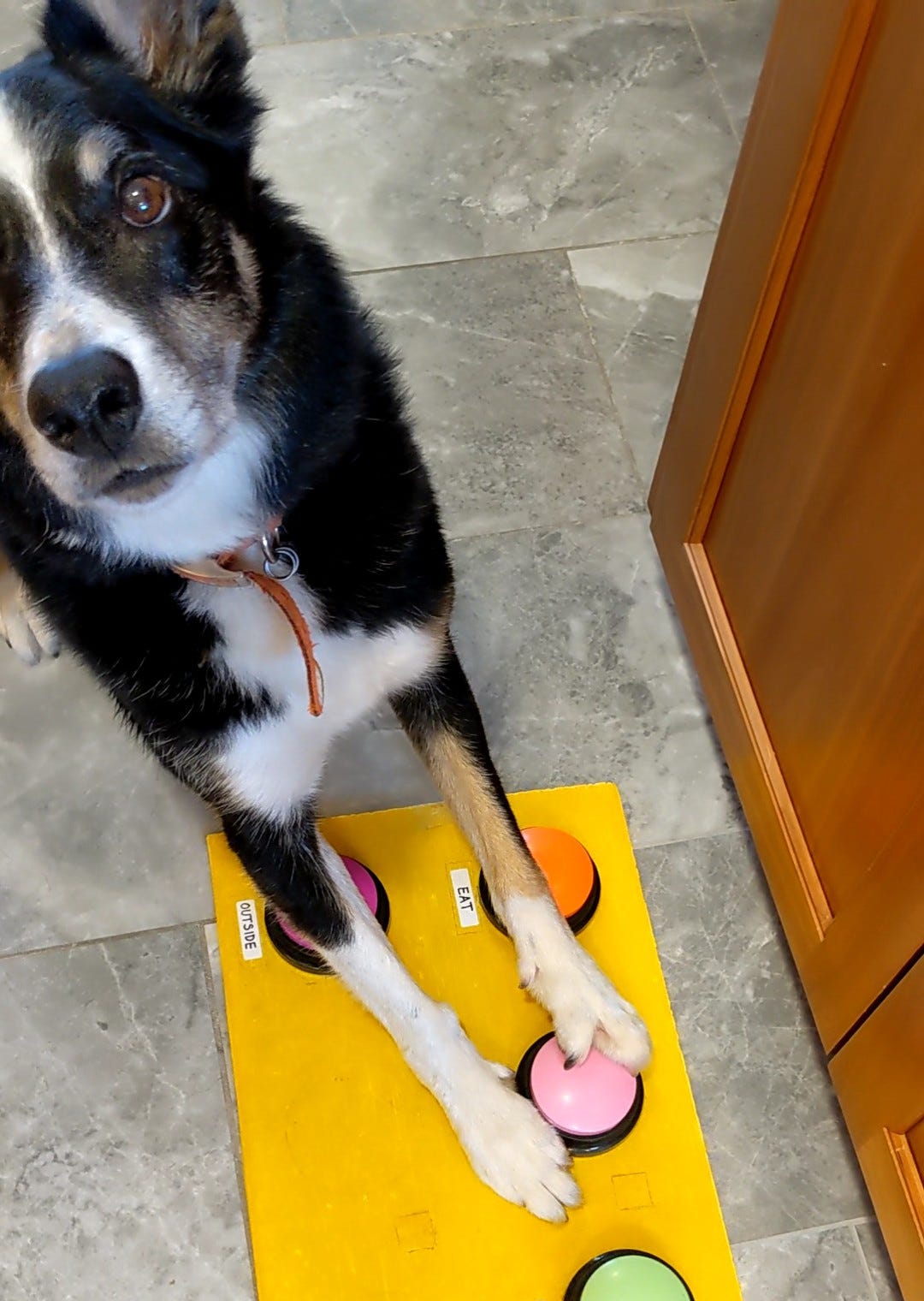
Sure, a string of calamities may grip us and give us empathy for a character — but only to a point. In the big picture, we get tired of characters who flounder endlessly in their own despair and negativity. We’ll empathize better with characters who keep trying. It doesn’t matter that most of their attempts will be misguided and make matters worse rather than better, like those of a hungry dog who paws at its owner’s leg and receives a reprimand rather than a treat. We appreciate that spark no matter the outcome. And eventually (if your dog is my dog), it’ll stop pawing and try something else, like staring at the treats on the counter, or pressing one of its talking buttons, and it’ll get a reward. Maybe not a treat, if the dog fails to press the “eat” button, but something equally interesting, such as a trip “outside” or “play” with a favorite toy.

Dog pressing a button on his "button board"
Tock accidentally presses “Love You” instead of “Eat,” which will result in a head scratch rather than the treat he was expecting.

Dogs are true masters of hope (as for me, I hope you knew I was going to get to dogs eventually). Though they’re not striving for some overarching goal that’s going to change their lives or the world, they demonstrate hope for simple things every single day. I can safely say that in addition to compartmentalizing my troubles into a Hero’s Journey format, the act of witnessing (and helping) my dog achieve his desires for food, walkies, and play has helped me through my own rough patch. He’s a fabulous example to me of how to write a character that never ever gives up. He reminds me that hope nourishes a story rather than the other way around.

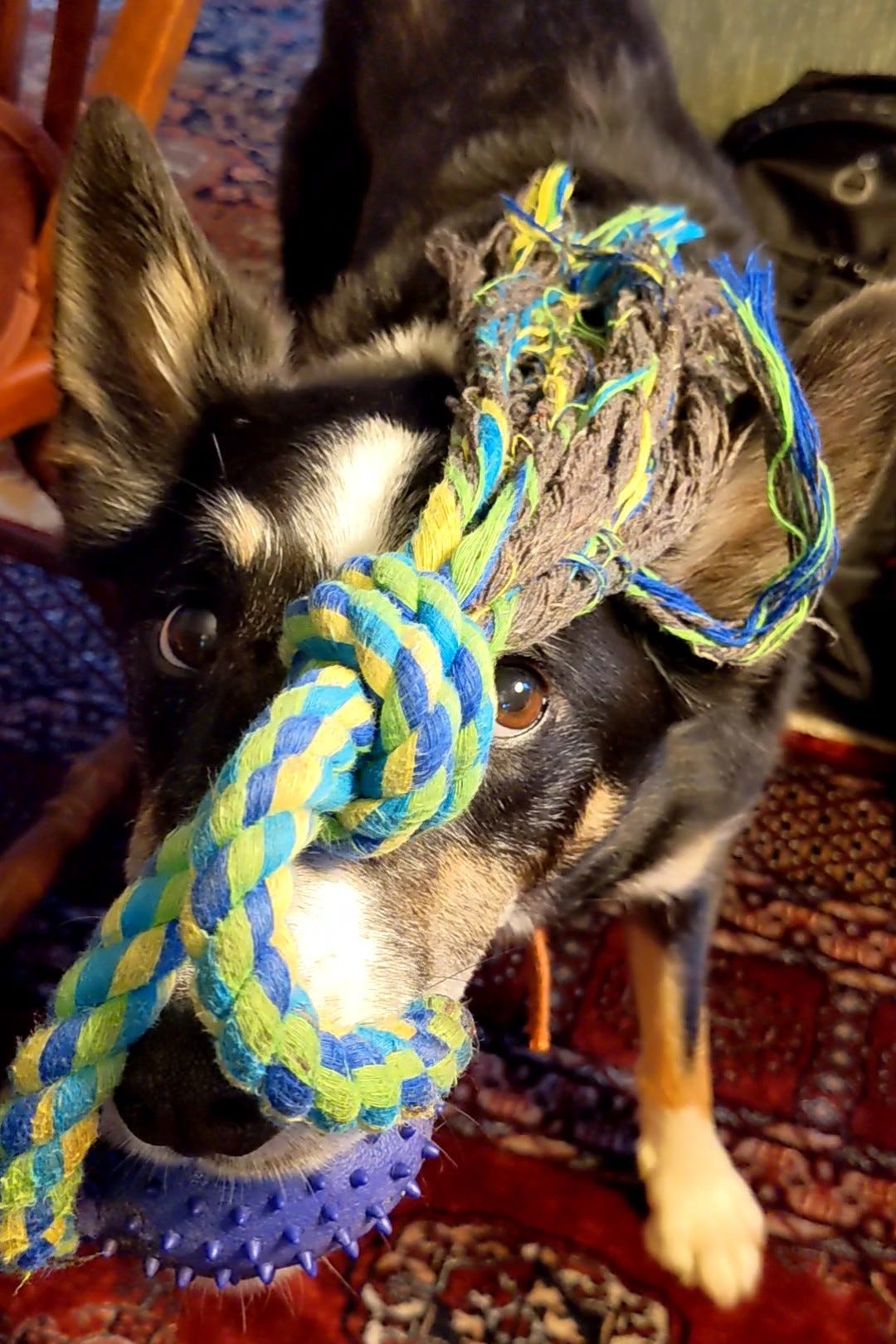
And so, as I make some tentative forays back into the writing world, I will cradle that hope in my palm. I will nurture it from a memory to an ember, a spark, a flame. I will cherish my life as much as those of my characters, and I will remember this every time my dog tells me he wants his breakfast, or a romp in the woods, a swim in the pond, or a tug-of-war game with a favorite toy.

How about your characters? Do they give up too easily? What helps them to keep going? And how about you?

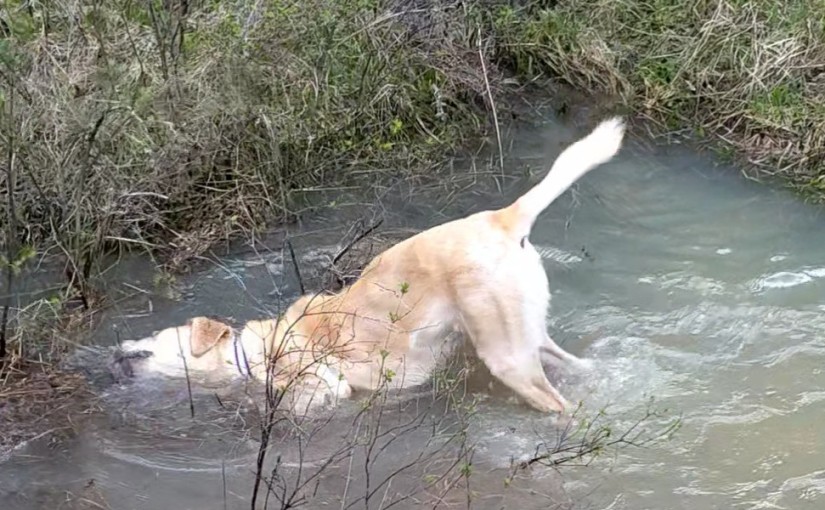
Dog leaping into blue water for a stick

Happy Tales!