REVISION: Is your bowl of porridge too cold, too hot … or just right?

(Or: How do you know when your story has reached the “Goldilocks Zone?”)

Components of a bowl of porridige
Photo credit: Cleanlight Photo

When is a story good enough to stop working on it?

This is one of the most pressing questions facing the author of a revised manuscript (correction: a revised-and-revised-and-revised-to infinity manuscript). If you’re a conscientious and possibly obsessive writer who wants to produce the best possible experience for your reader, you won’t stop after the first couple drafts, regardless of how much organization and preliminary revision effort you’ve already put into them. You’ll keep re-visiting it, at first maybe making sweeping changes, followed by smaller and smaller alterations, sending it out to alpha readers, beta readers, critique groups, and paid professionals. Even after you’ve ceased finding anything wrong with it beyond an occasional typo, the people you solicit to look at it will make suggestions for improvement, every single time.

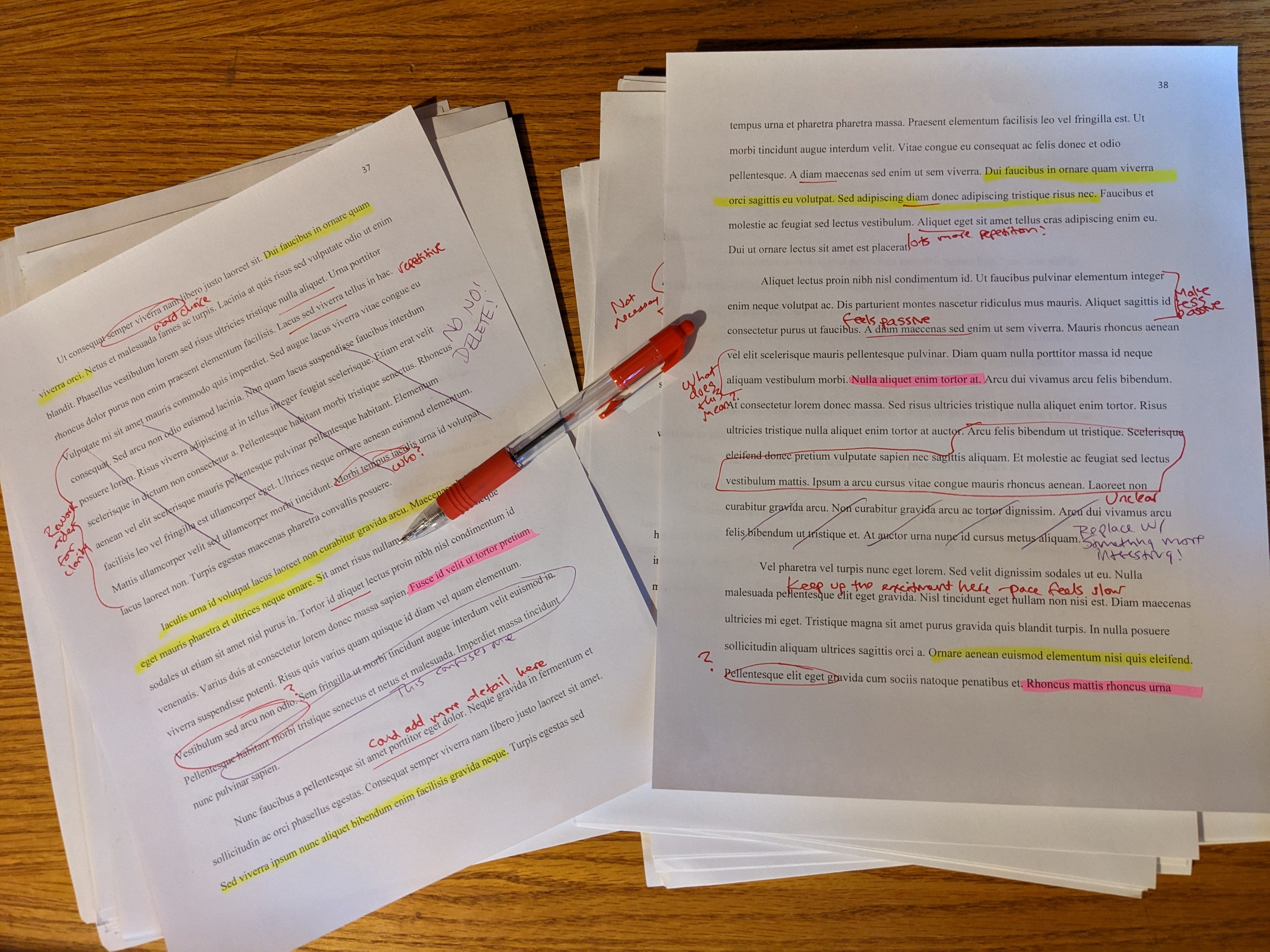
Marked-up manuscript

After looking at your manuscript so much that you no longer have any idea whether it’s good enough, and in fact might be getting worse with all the attention, I recommend a very simplistic formula to figure out the answer, which will place your work in one of three categories. It relates back to—big surprise here—going for a walk.

1. Your story’s too cold: Readers can’t connect to the unfeeling, underdeveloped, or commonplace characters, the plot meanders without actually going anywhere, the world lacks the spark of details. This is me when I first step out the door to go on a walk at dawn. The purplish air, even if it has the promise of heat in a few hours, turns my fingers to ice and my hands and forearms to the texture of cold marble. I’m so immersed in trying to stay warm that I enfold myself in my hood and pockets and trudge along looking only at my boots. I could be walking to the end of the driveway or I could be climbing Mt. Everest. How would I know? I’m too sunken within myself to notice.

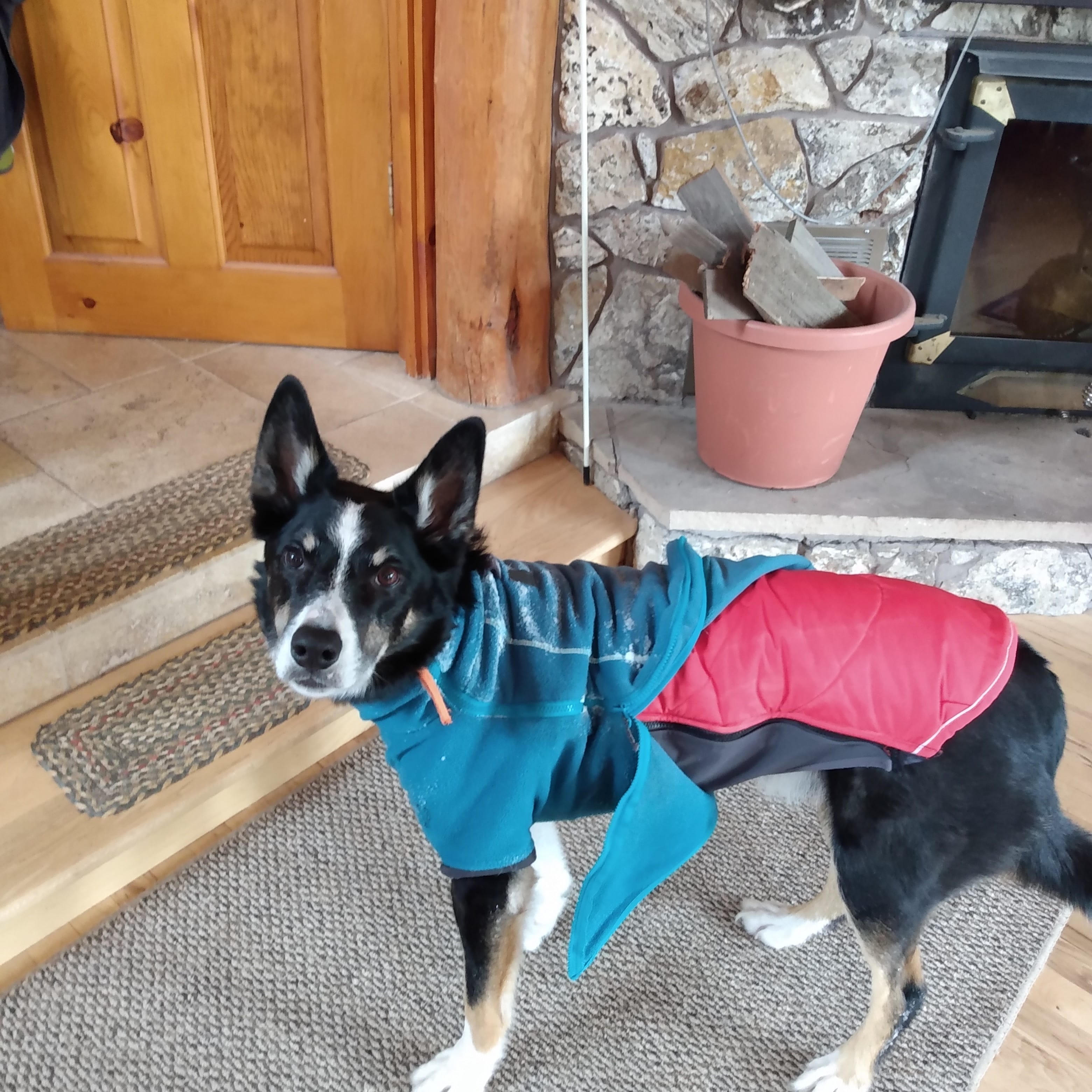
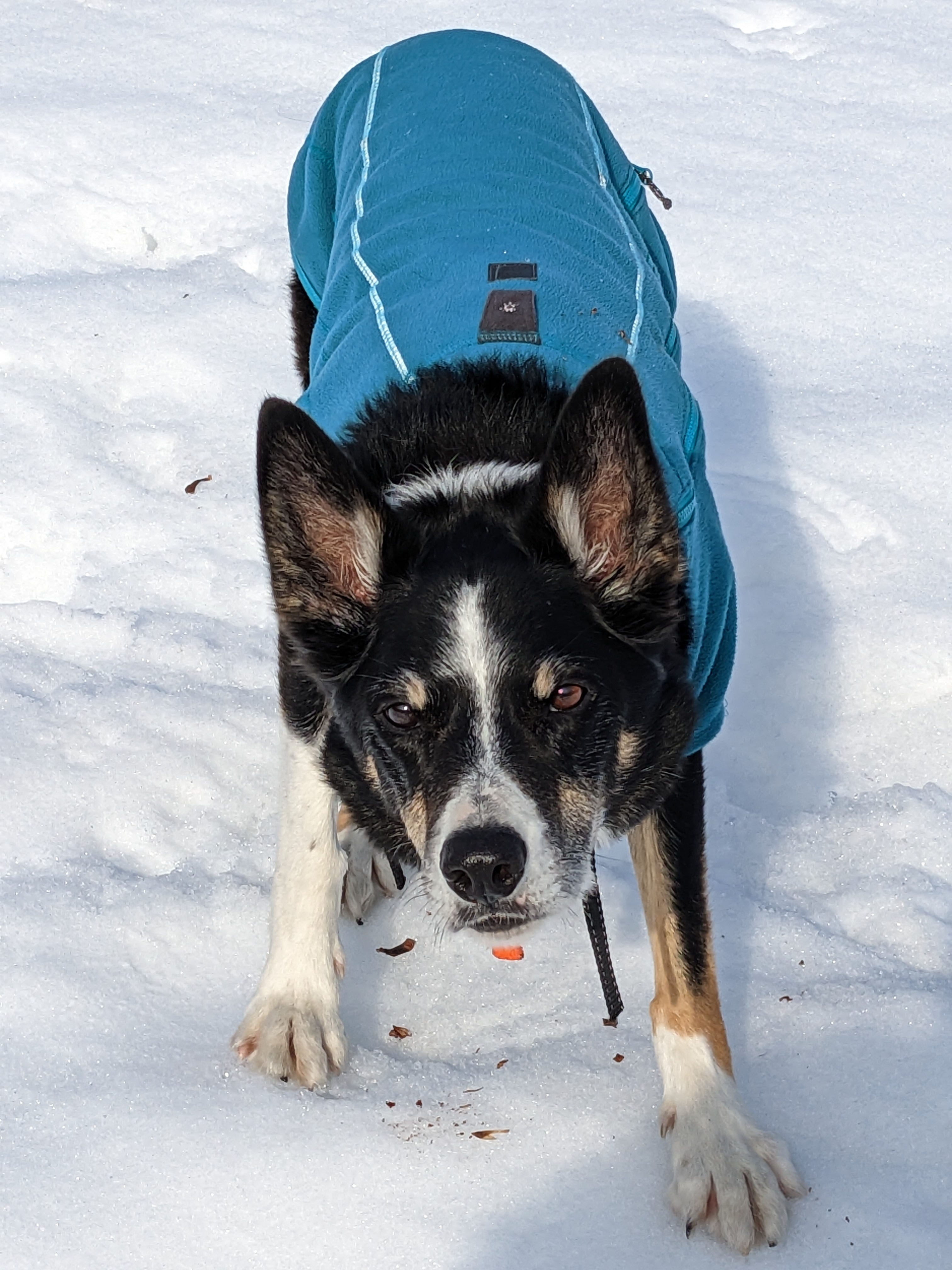
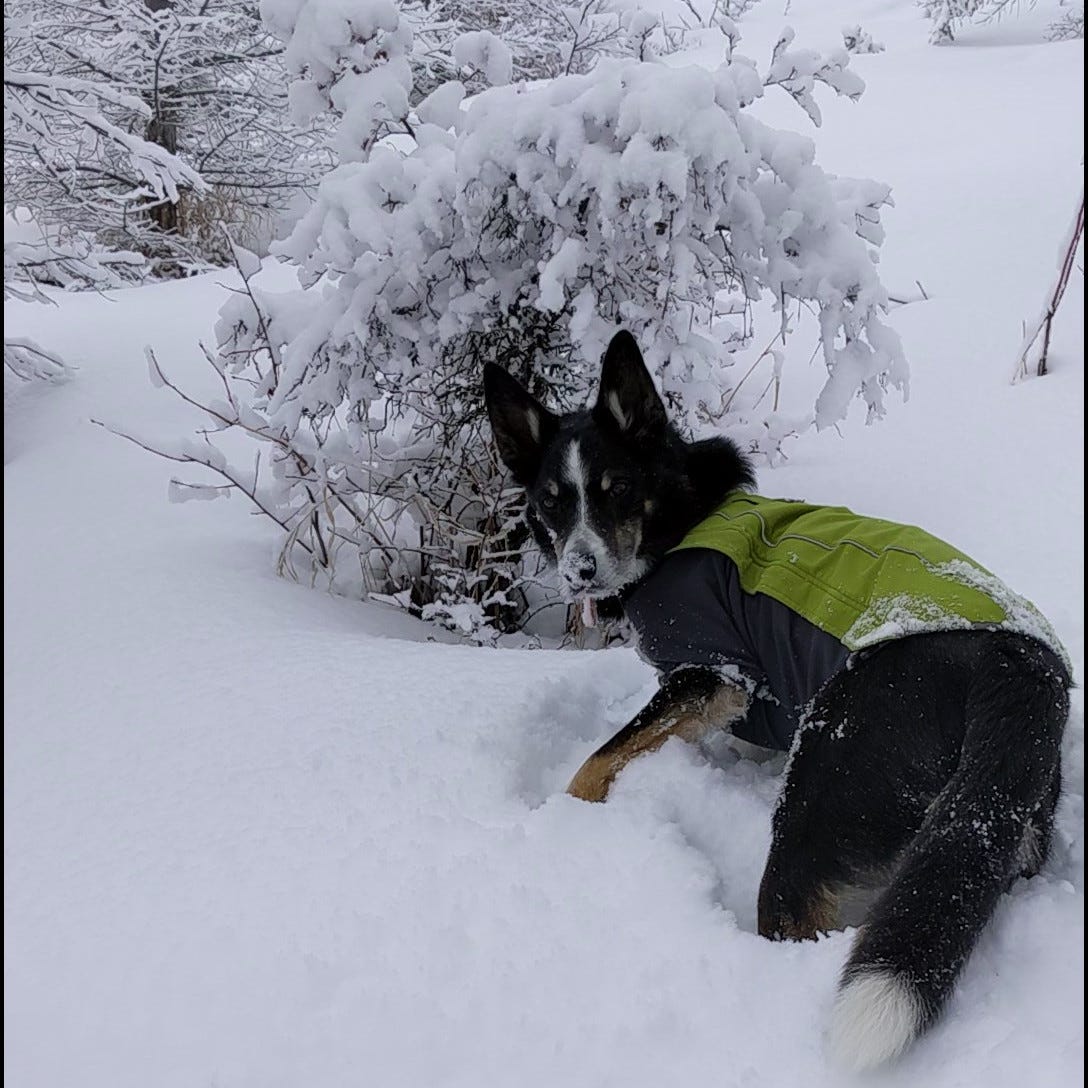
Dog wearing 2 jackets
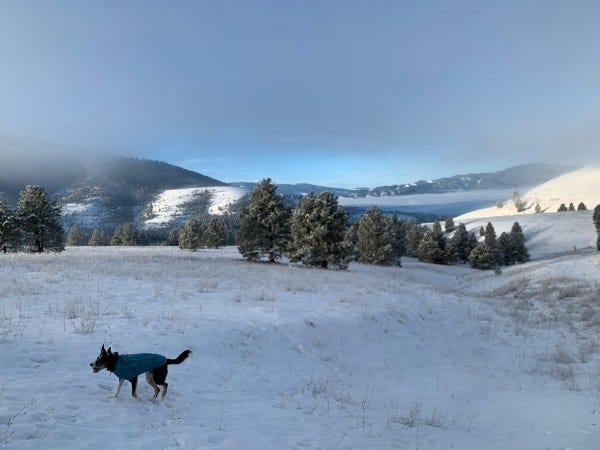
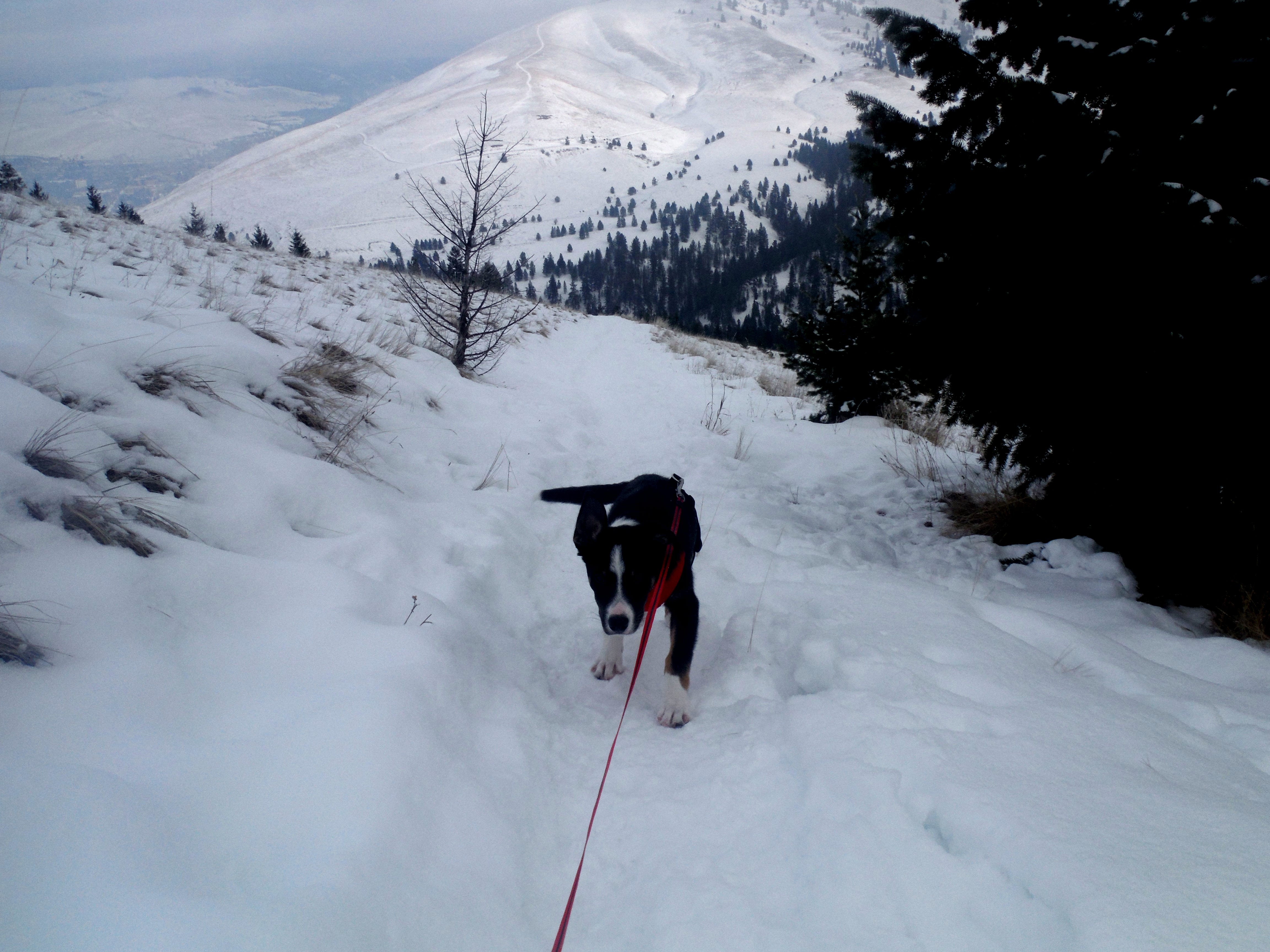
Because of his short fur, Tock, too, wears a jacket when the temperature dips below freezing . Sometimes two jackets, if it gets down into the teens.

2. Your story’s too hot. You have so many characters and plot lines that readers can’t keep track of them all. Reviewers suggest that perhaps you have more than one book within your pages. The scenes overflow with backstory, info dumps, unnecessary dialogue, or superfluous adjectives. This overheated state creeps up on me about ten minutes into my walk. I find myself ripping off my gloves and wiping my sweaty hands on my pants. The sun hasn’t yet made its appearance and probably the air temperature hasn’t begun to change, but internally, I’m beginning to feel insufferably warm. My gaze jumps from one rock or tree or viewpoint to another, and I struggle to focus.

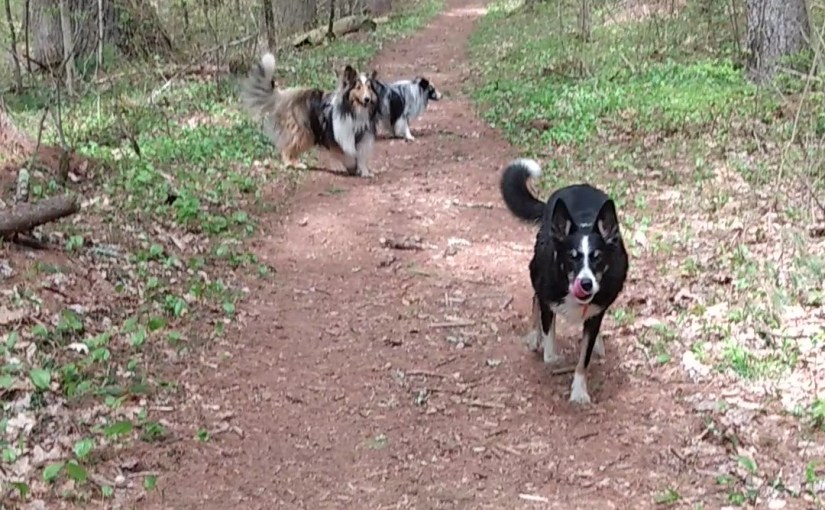
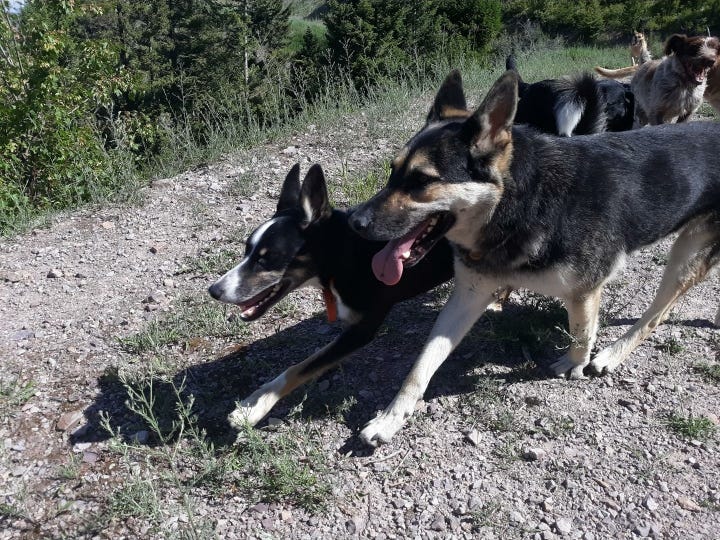
Dogs in a stream
On hot, dry days, dogs need plenty of water breaks. Here, Tarzan & Tenzing take refreshment during a long-ago hike.

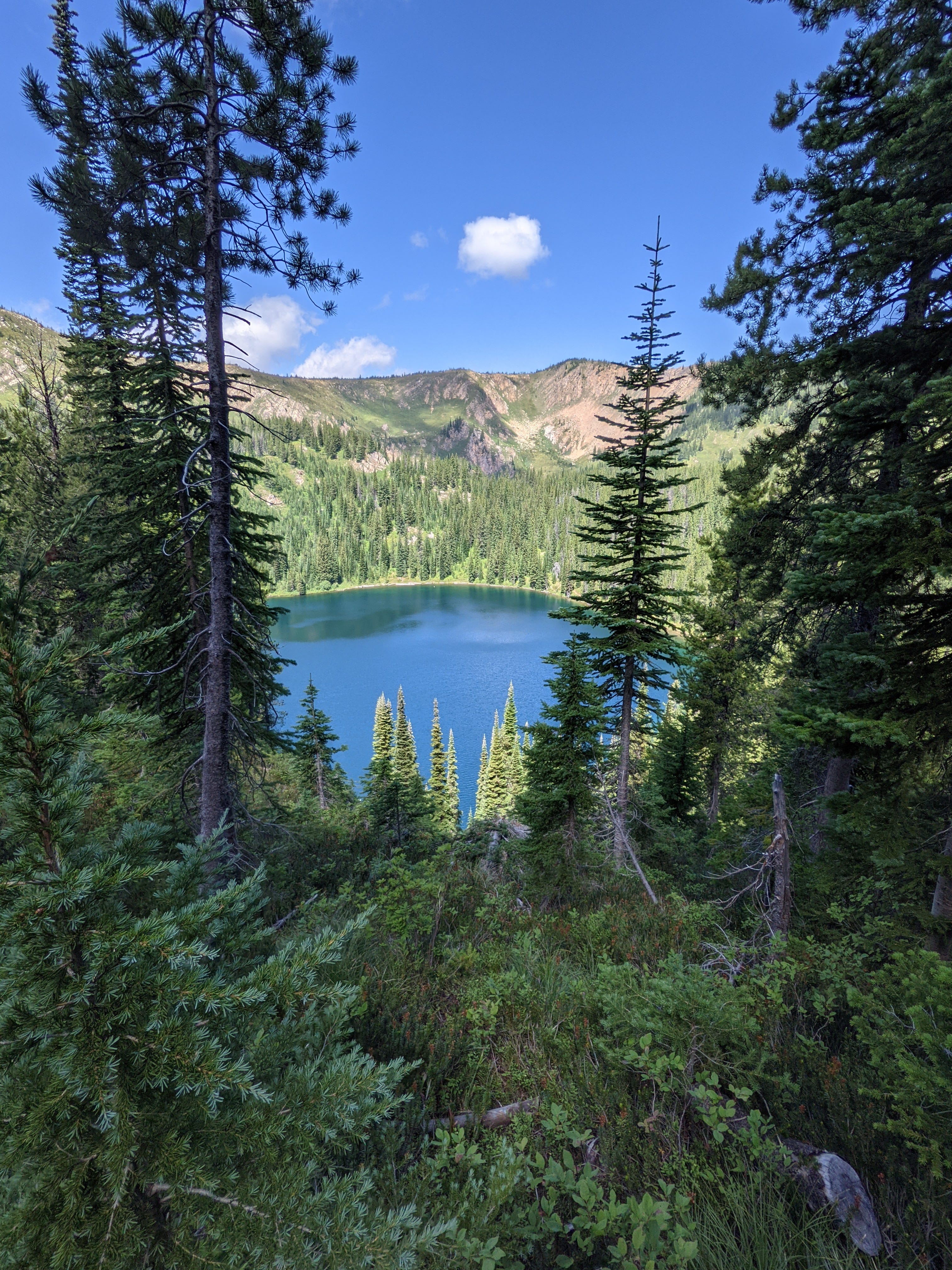
3Your story’s just right. I prefer this phrase to “perfect.” Words, phrases, scenes, and stories are subjective, and every reader is going to like and dislike different things about them. Our stories won’t ever be perfect, because that state simply doesn’t exist. They’re not mathematical formulas. But readers will be most likely to enjoy them if there’s a nice balance of characters and plot, a thoughtfully paced mix of dialogue, interiority, and action, if there are enough details to see the world and understand why the characters do what they do, and if the character and plot arcs resolve themselves in satisfying ways. For me, this Goldilocks Zone on a walk happens most often on a calm, sunny-but not-too-hot day after I’ve reached a ridge or a lake basin. It’s a place where I can walk on mostly flat ground, still getting some brisk exercise in the invigorating fresh air, but not so much that I’m out of breath.

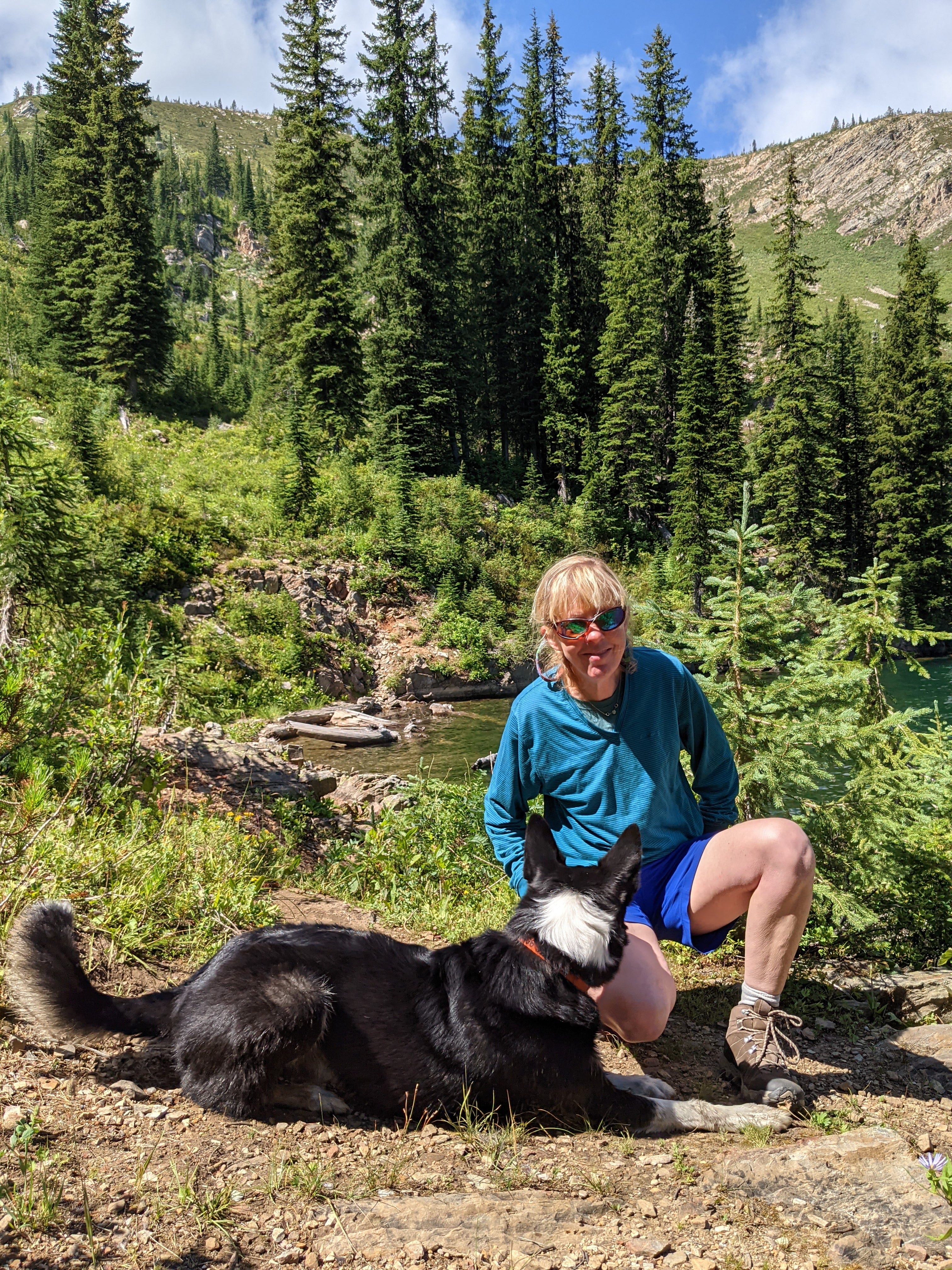
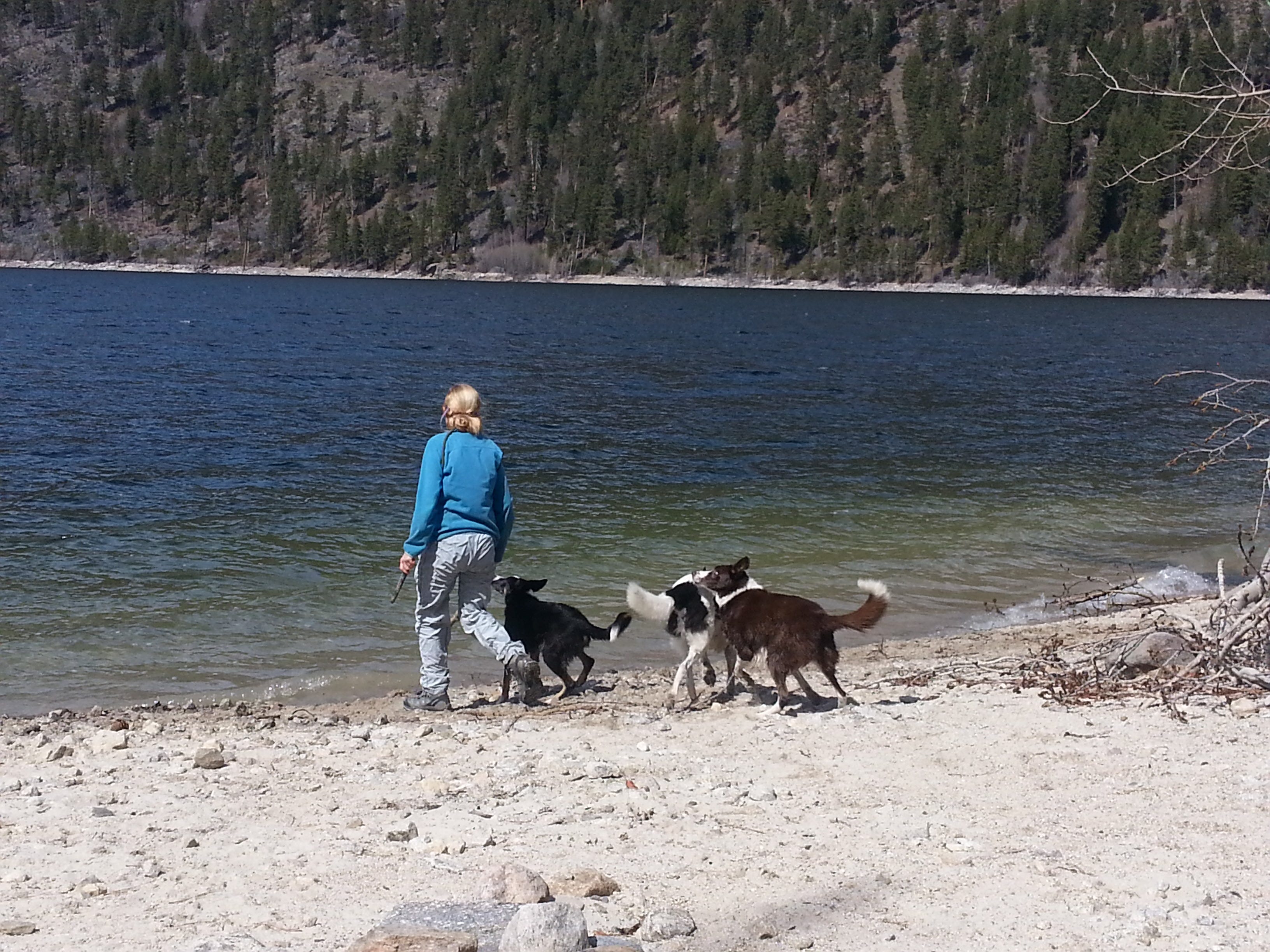
Author and dog at a lake
An alpine lake: my personal Goldilocks Zone

At some point during the revision process, it’s up to us writers to decide when we’ve gotten into the “just-right” zone. Any more tinkering beyond that point might start to suck the life out of our story, because we’re so far past that first euphoric flush of actually writing it. Yet I feel I’m a bit hypocritical to talk about this happy zone because I often have trouble turning off the self-editing mode for my own manuscripts. Even after I’ve reached the point where I have to re-visit my premise just to remind myself why I wrote the darned book in the first place.

Maybe I struggle with putting an end to revision because I hardly ever reach that state of satisfaction with the clothes on my back. Here’s my excuse: I live in the Rocky Mountains. Morning air is cold and often breezy, especially in the winter (wanna come for a walk with me at 12 degrees F—not counting wind chill—anyone?). Hills are steep and plentiful. Flat sections of trails are rare, especially near my house where I mostly walk. So no matter the season, I start out with multiple layers of clothing. Even in mid-summer on a warm morning, I need a little brisk exercise before my hands lose their chill and regain their function. And when it’s far below freezing in the winter, I’ve been known to wear five layers on my torso and two on my legs. Still, I’ll warm quickly and feel the need to tug my arms out of my sleeves, ending up at a single layer.

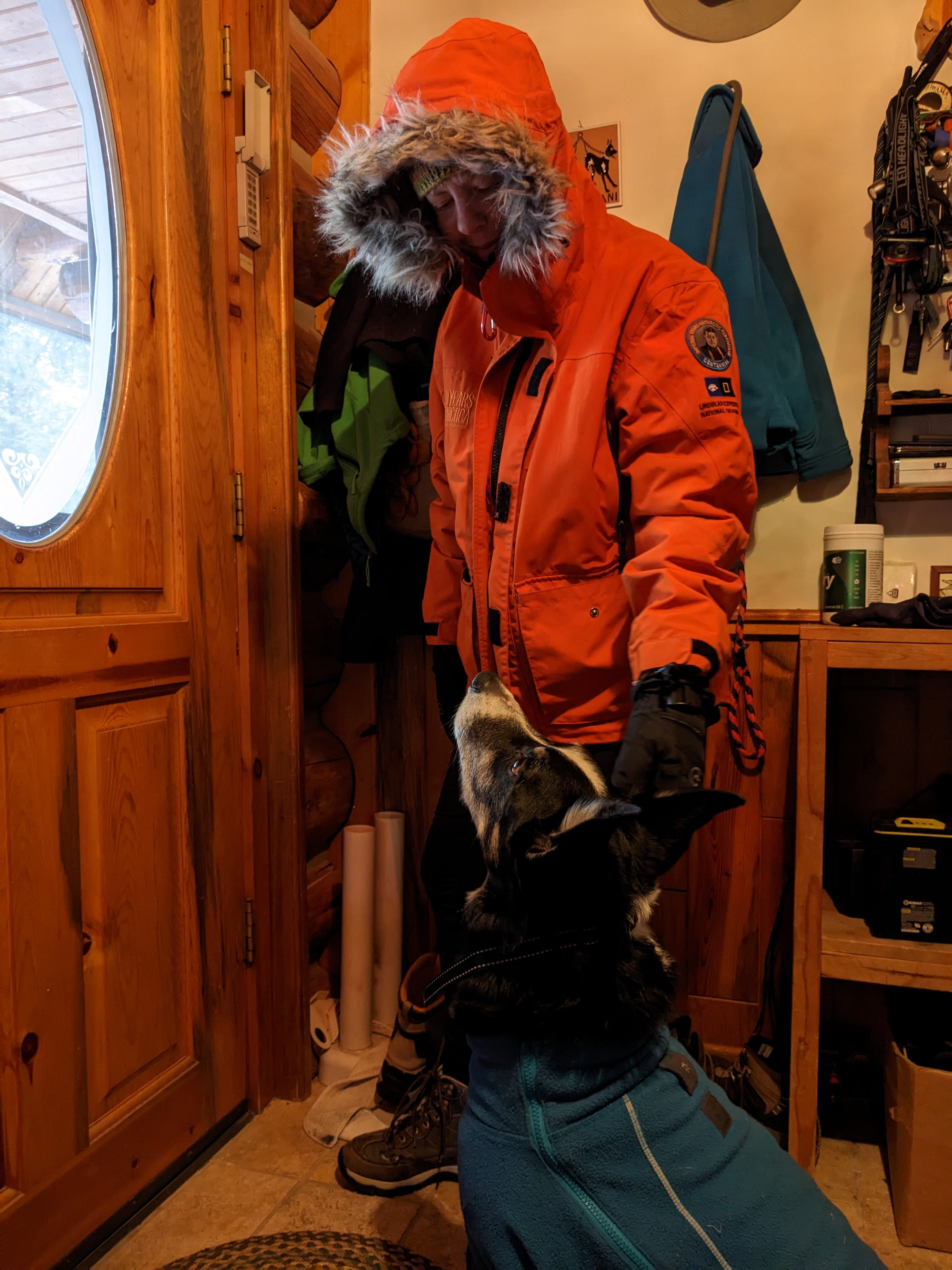
Suited up for a cold walk
Ready to brave the wintry woods

My husband says I have poor temperature control. I say I’m being smart. Secretly, I know he’s right … to some extent. My body temperature seems to fluctuate a lot more widely than his, and my extremities routinely segue from frozen and numb to overheated and sweaty, over and over during the course of a walk, depending on whether I’m walking up or down hill. I envy him for only having to wear one or two layers, every time.

I’m even more jealous of my dog. Sure, he wears coats because I put them on him and he jumps into lakes because I throw sticks for him, but he’s pretty much always in the Goldilocks Zone. His fur coat, though short, is quite suitable for a range of temperatures. With the thick undercoat he grows in the winter, he probably doesn’t need a jacket nearly as much as I think he does. If Tock were a writer, he’d compose one, two, maybe three drafts … and be done. No more nitpicking and dithering; he’d be happy with what he produced and move on.

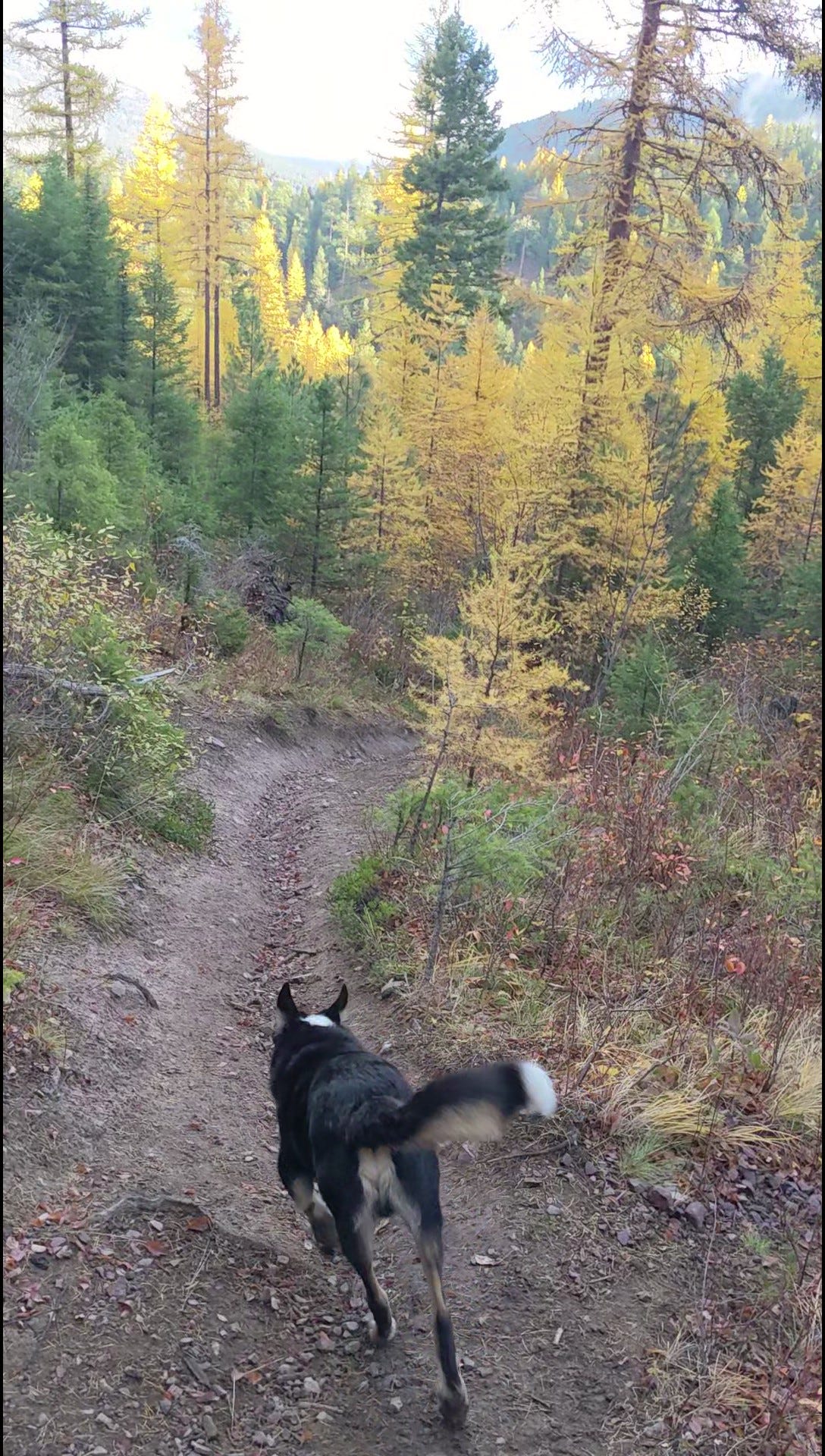
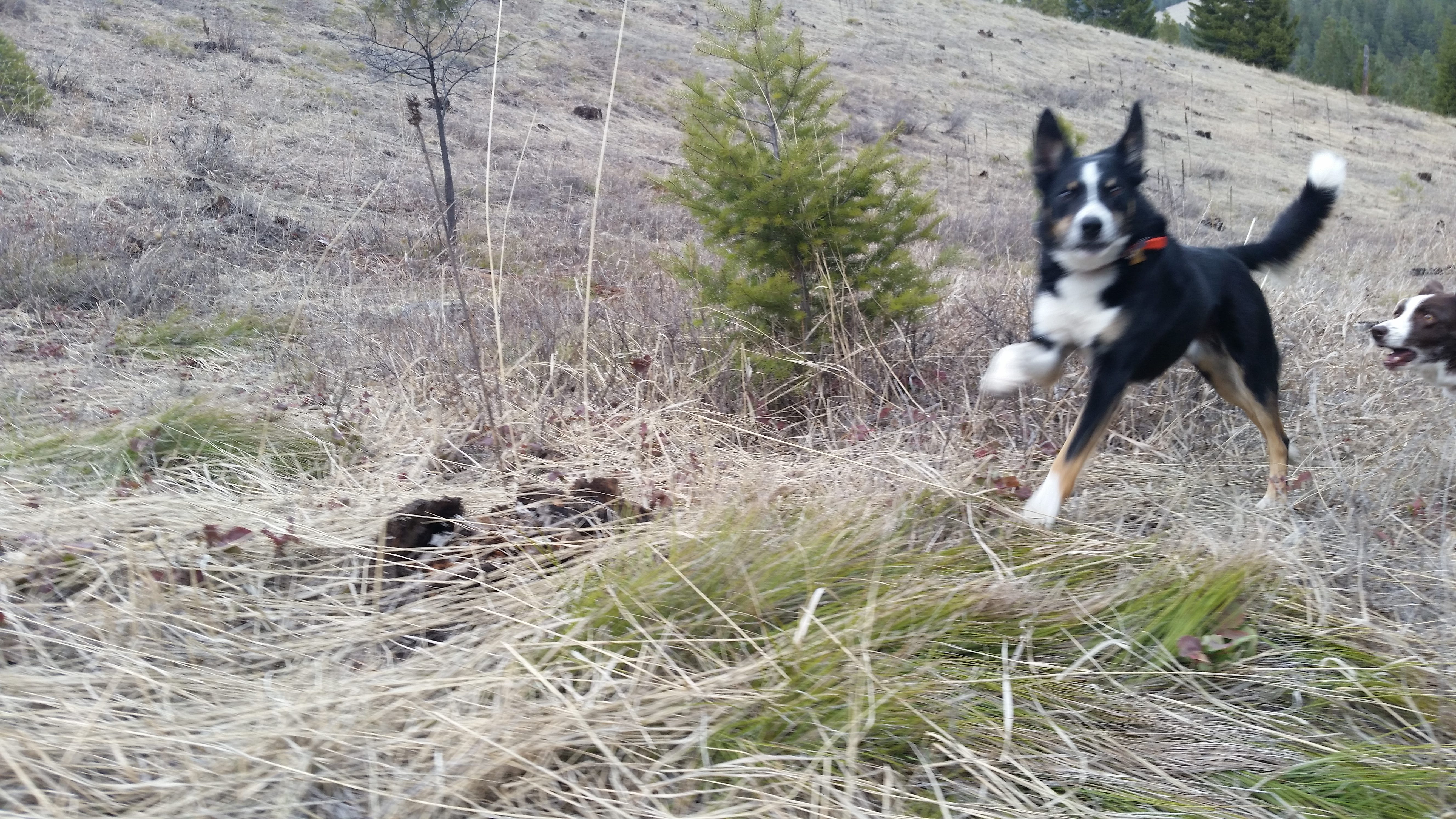
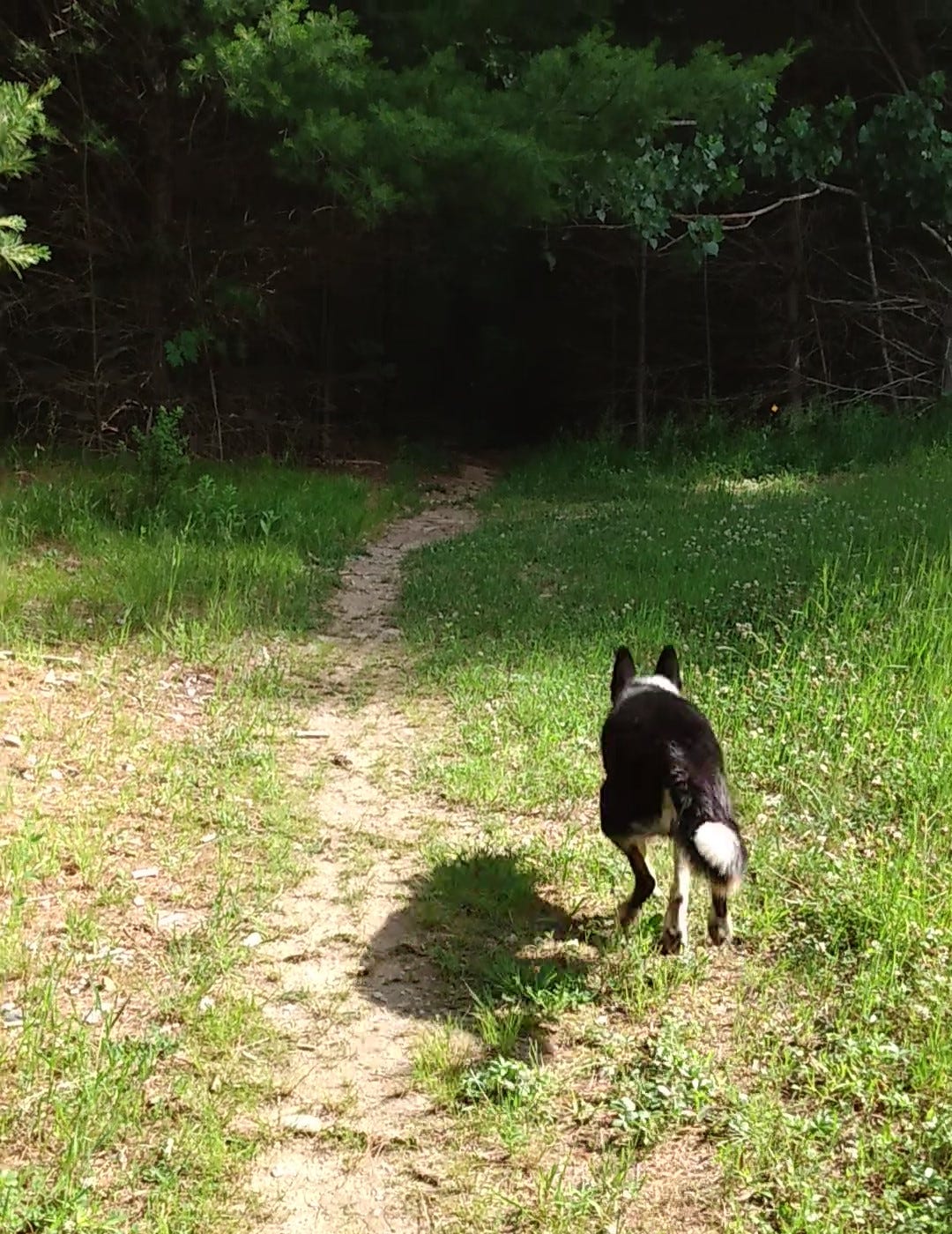
Dog running down a trail

I can’t help but think about wild animals in this context, too. They don’t have owners to dress them and care for their every need. What if the summer is especially hot and dry, or the winter is filled with unpredictable and severe storms? What if animals can’t adjust to these changes in their environment in time? Evolution of adaptations is a long, slow process—far slower than the current pace of climate change. Most creatures have evolved to survive perfectly in the Goldilocks Zone of their current habitat, and they lack the ability to strip off their layers, or flee to a place with more shade, water, or warmth. Or less of those things. If they were writers, forget the revisions. Their stories might end before they finish the first draft.

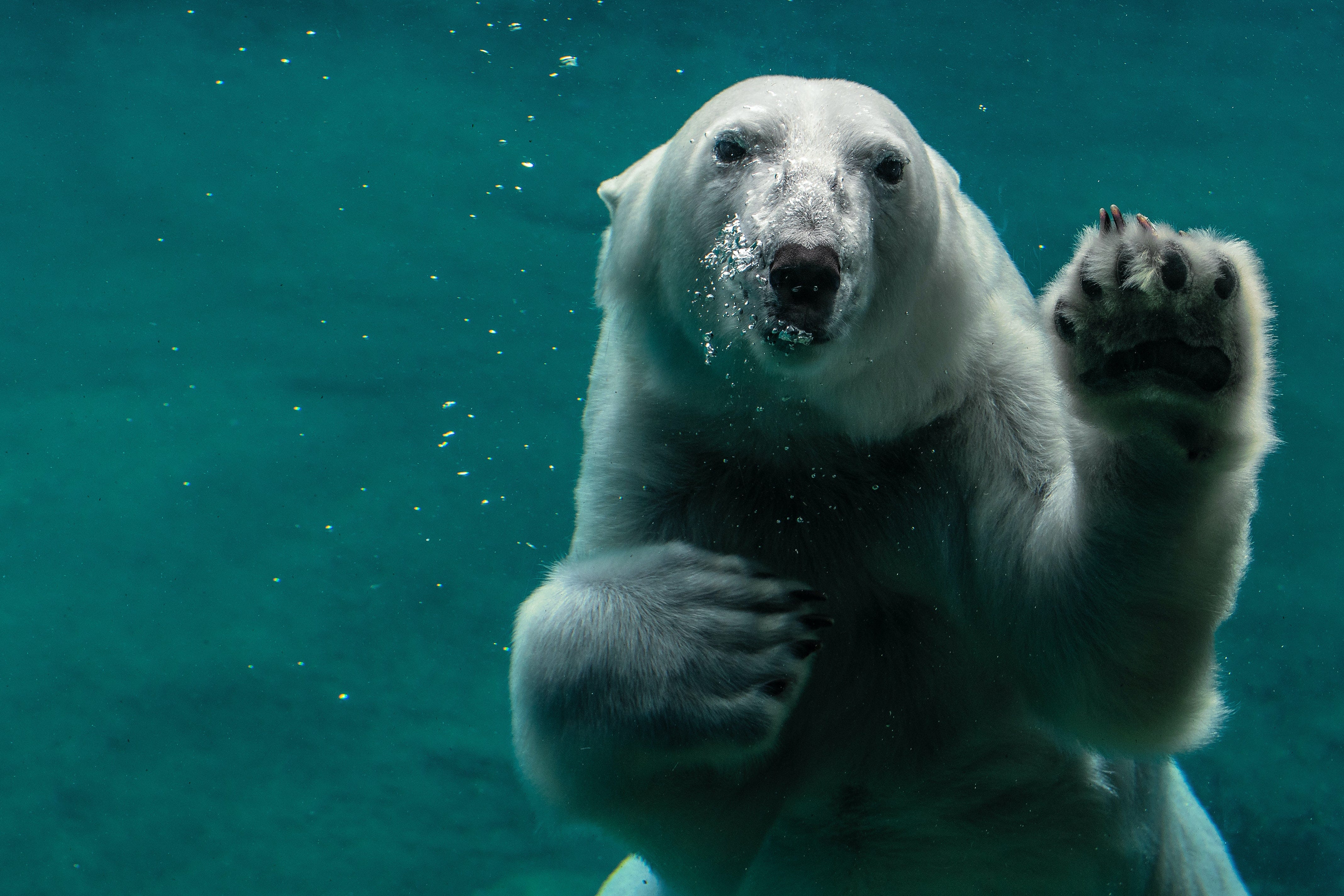
polar bear
Polar bears are the most famous of the many species that are running out of time, living on a planet with an ever-shrinking Goldilocks Zone for their particular needs. Photo credit: Peter Neumann

Astronomers are on a quest to find other planets with the same large-scale Goldilocks Zone as Earth, where temperatures allow the existence of liquid water. This is primarily part of the effort to search for extraterrestrial life, but I suspect many people think the hunt is valuable for another reason: as a way to find other places humans might relocate to when we’ve outgrown our home planet. To me, this is akin to throwing your story in the trash and starting over. Similar to Planet Earth, populated with almost nine million species, a draft is an incredible accomplishment, filled with thousands of words that have been organized to work in harmony. Let’s keep these stories, no matter the scale, and figure out how we can make them “good enough” for everyone to enjoy.

Porridge ready to eat
Photo credit: Klara Avsenik

Happy Tales!

What’s in a Verb?

Ask any dog for the answer…

Even though they don’t speak, dogs have an incredible ability to understand language. I can hardly think of a dog who doesn’t get excited when they hear the words “walk,” “dinner,” or “get it!” Conversely, they’ll put their tails between their legs when they hear words like “no,” “bad dog,” or “leave it.” And if they’ve been trained well, they’ll respond quickly and correctly when they hear “come,” “sit,” or “down.” They demonstrate that they can distinguish between these words through their appropriate responses to each one.

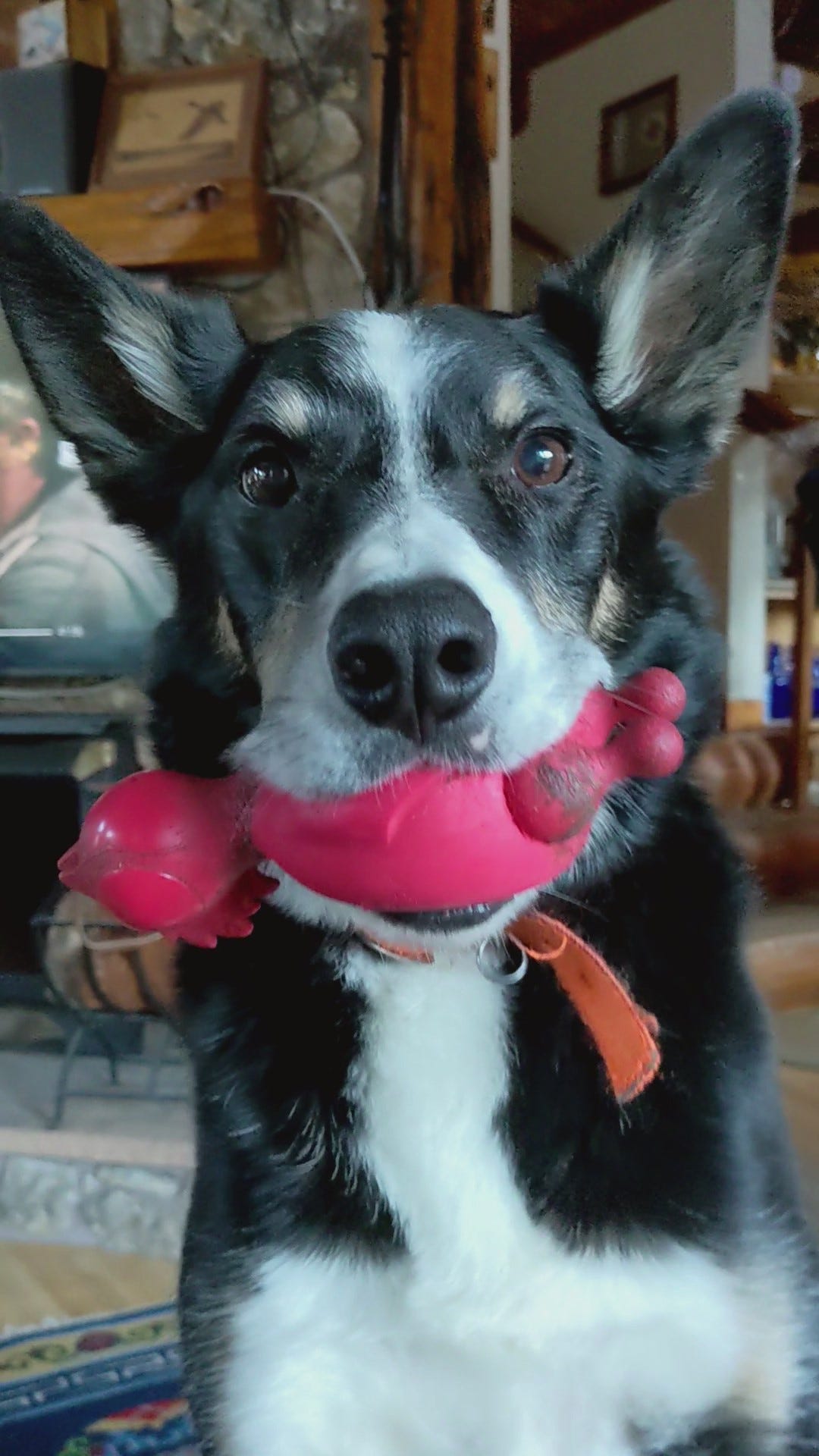
Dog with toy
Tock fetches his rubber chicken when asked, even if it’s hidden in a pile of toys in another room.

Naturally, this canine affinity to words is super exciting to someone who writes. I can spend enjoyable day upon day searching for the perfect words for my stories … and I like to give my dog that opportunity, too. In agility training, I invest a lot of time in deciding which words to use for commands—for my students’ dogs as well as my own. Our time running a competition agility course is short—from thirty to sixty seconds, usually—so we don’t want to blather on, using three words when one will do, or hollering out a word that’s difficult to enunciate or one that could be confused with other commands we’re also using. We need the right word for each situation, telling the dog exactly which obstacle to take, how to take it, or where to run.

Tock responds to the “Dig” verbal cue. My dogs learn 4 commands for different turns, which they receive as they commit to an obstacle, alerting them to collect their stride so they’re ready to turn. “Right” means turn 90 deg to the right, “left” is 90 deg to the left, “dig” is a tight righthand wrap (much more than 90 deg), and “tuck” a tight lefthand wrap. The prefix “Go” before any of these words tells my dog that I’ll be crossing behind him as he takes the jump ahead of me.

Humans are intensely verbal creatures, and the more our dogs can understand us, the happier we are in our interactions with them. From the dogs’ perspective, words provides them with a way to learn and grow even as they age. You may have heard of the border collies who’ve mastered 200 to 1,000 or more words for their toys. Even more impressive, though, is the latest evidence that shows dogs have the capability to learn new contexts for words, and to put words together into novel (and appropriate) phrases that they’ve never heard before. And the coolest thing is that dogs can learn to communicate using these words, rather than simply hearing them as commands.

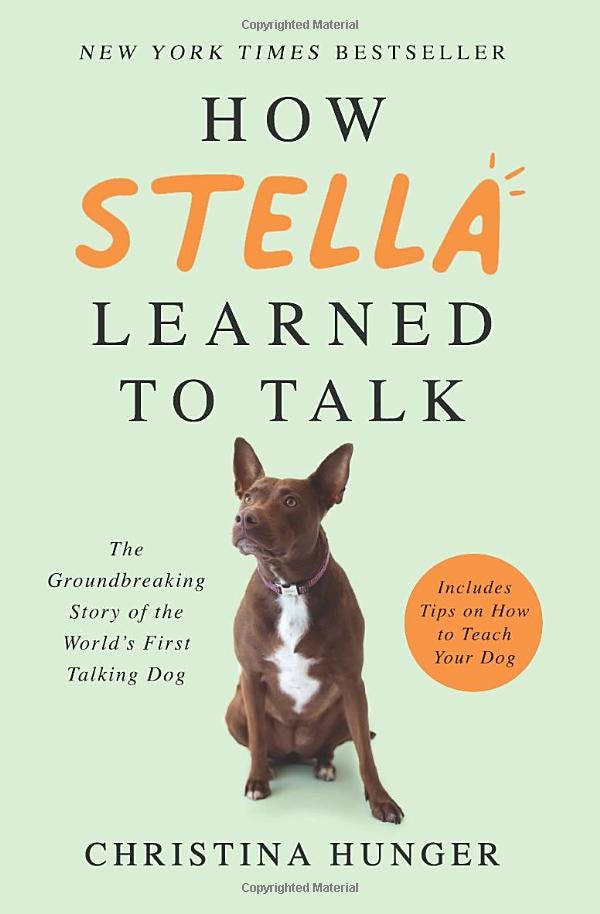
Book cover for "How Stella Learned to Talk"
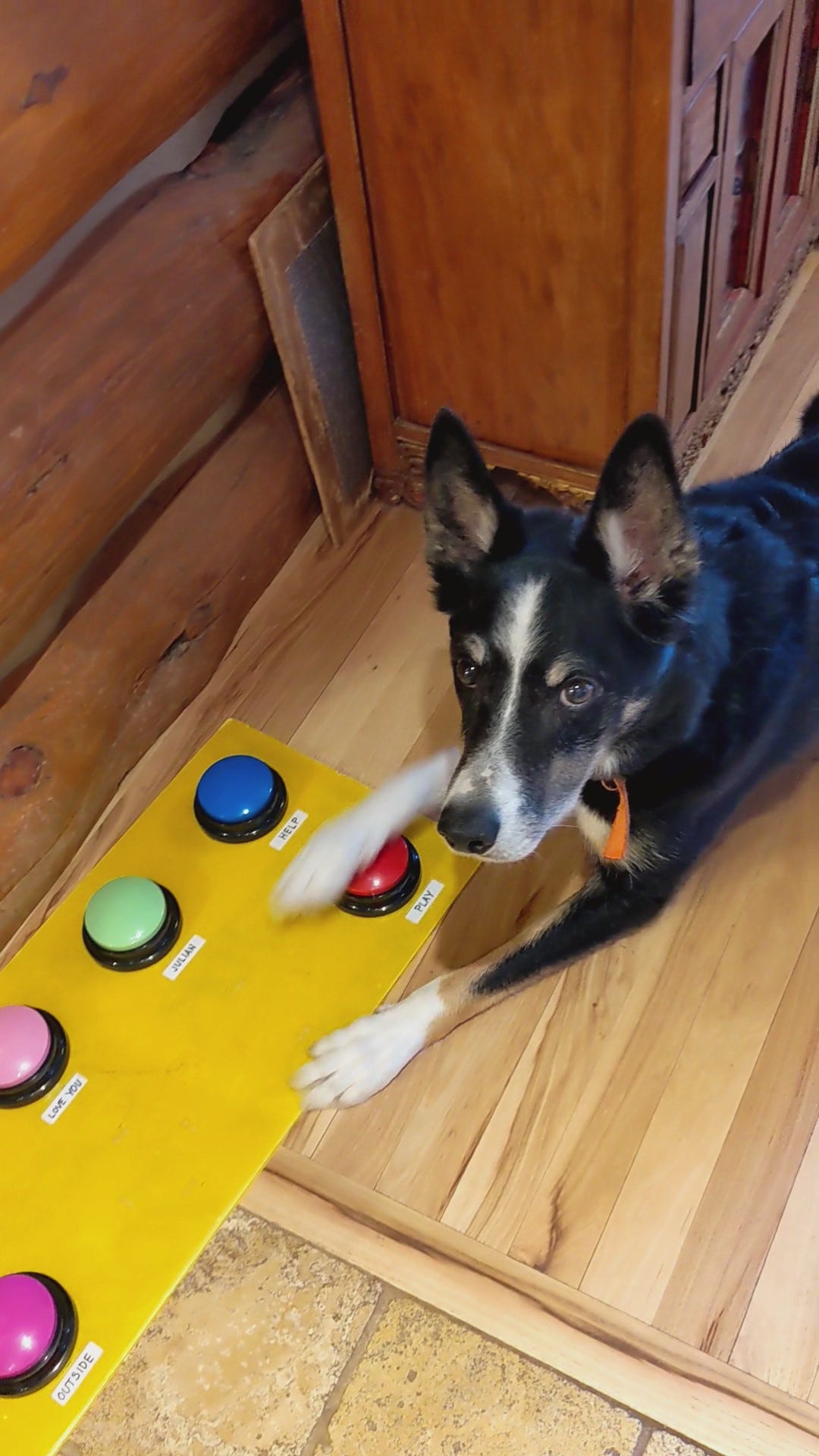
Thanks to Christina Hunger’s book, Tock is learning to use his knowledge of words to get what he wants.
Dog pressing a "talking" button
Tock mastered his first “talking” button within a week, though at eight years old, it’s taking him awhile to understand that he can ask for things whenever he wants and not just when I expect him to.

If you’ve read my previous posts, you’re probably wondering how I’m going to tie canine word use to some sort of writing advice. I will not disappoint, so here goes: I think that the satisfaction gained from the ideal word has a positive effect on the relationship not only between humans and dogs, but between writers and readers. As my critique groups know all too well, one word I write quite a lot in my comments for other people’s writing samples is “vague.” It almost always applies to word choice. Verb choice, in particular.

This attention to verbs is probably no coincidence for me. In the dog world, I’m constantly looking for new verbs to describe actions my dog uses that I, in turn, could put to use in agility or on Tock’s button board. But I’ve found that many writers get lazy when employing verbs, saying things like “she came forward,” or “he moved across the room,” rather than a more descriptive verb that gives us additional information. How do these characters come or move? Are they skulking, trotting, hurrying, bounding, or stumbling?

Another problem that brings out my metaphorical red pen is when writers employ boring verbs to describe characters engaging in the repetitive motions that we all do a million times in a day. These include words such as “looking,” “staring,” “gazing”, “turning,” or “pointing.” Now, I’m the first one to admit that finding substitutions for these words isn’t easy. How can we show what our characters are seeing without using them? My first choice for a solution is simply that: show it. Just describe the thing they’re looking at, and the word “looked” is implied. The reader knows the character had to look at it in order to see it, and thus the verb itself isn’t even necessary. My second choice is to find a more interesting way to describe those actions. You could describe a character’s eyes, and then we know that another character is staring at or gazing into them. You could use a verb phrase, such as “he spun on his toes,” or “she prodded his chest with her finger,” to indicate turning or pointing.

Border collie staring
Stemming from their sheep-herding history, border collies are famous for giving “the eye” at something they want. Tock uses this technique at least fifty times a day. Probably a hundred.

I need to digress here with an important note: verbs for written dialogue are the one exception you’ll want to make to the use of “interesting” words. This is because dialogue tags (such as “said,” “shouted,” and “whispered”) ought to remain as invisible as possible so our brains can simply read the spoken exchange without interference from the tags. Words such as “whined,” “snapped,” and “interrupted,” tend to distract readers too much from the characters’ back-and-forth. Also, a lot of verbs are mistakenly used as tags that aren’t in fact dialogue words at all. It’s best to save actions such as “smiled,” “giggled,” and “sobbed” for complete sentences separate from the dialogue.

So as usual, my advice is pretty simple. The next time you’re writing an action scene, remember your dog! Think up bright, memorable verbs or verb phrases that encapsulate the situation in the most concise but appropriate way possible. Your dog will get a clearer understanding of what’s going on … and so will your reader.

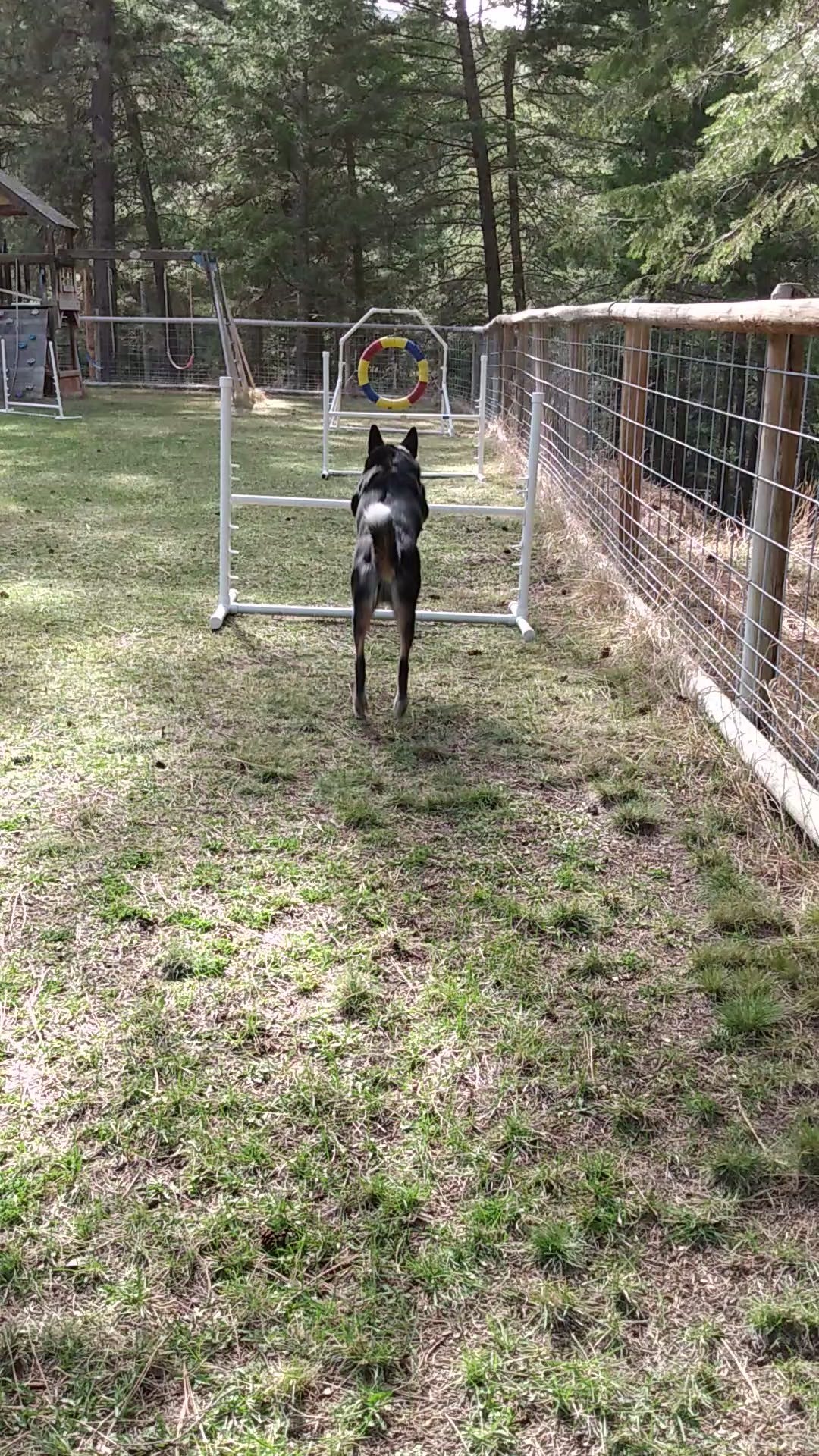
Dog in extension over jumps, heading away from camera
Here, Tock has been given his “Go On” command. Can you tell what that means?

Happy Tales!

Writing is Just Another Trick!

When most people think about dog training, they think “tricks.” Dogs doing sits, downs, and stays, rollovers, high-fives, and sitting up on their haunches. There are books about the 101 tricks you can teach your dog to do with a carboard box. And the beauty of these tricks is that they’re not hard to teach, as long as you have a reward your dog really likes, a way of marking the moment they do something right, the patience to teach the trick in small, incremental steps, and the wisdom of when to raise the bar and ask for your dog to do something a little bit harder. Keep upping your criteria and bingo, you have a fully trained behavior that your dog will perform after a single command.

Dog performing a trick

Wouldn’t it be great if we could write books that way?

Impossible, you’re probably thinking. Writers aren’t dogs, or monkeys, or seals with balls on our noses! We’re artists. Creatives. We write when the muse calls, through a magical process that’s known only to us. Other writers might have the tiniest glimmer of understanding of how it works—but they’ll have trouble describing it if pressed.

I disagree. Now, I appreciate my muse as much as any writer ever does. I know all too well that glorious feeling of urgency when I’m in the throes of a work-in-progress—when I must simply write rather than think, when my soul pours into the words flowing off my fingertips and onto the page. But this sort of writing is the end result of study and planning. I know it’s good writing because I’ve spent years teaching myself all the writerly tricks of the trade. I’ve studied premises, first pages, inciting incidents, plot arcs, character goals and development, dialogue, voice, pacing, show versus tell, world-building, how to use backstory effectively, and on and on. Most important of all, I’ve come to appreciate that these components of writing—these “tricks,” if you will—can be synthesized into something that’s greater than the sum of its parts. The humongous, artful, creative, and tricky masterpiece of a good story.

Story Genius book cover
One of my favorite books on the craft of writing

It’s possible I think about writing this way because of my background as a dog agility trainer. I still remember the epiphany I experienced when I learned from another trainer that agility is nothing more than a series of tricks.

Whoa, you might be saying. Aren’t all dogs agile until they get old? Why would you need to train them in something called agility?

You’ve probably caught a glimpse of agility on television or in someone’s back yard, or you’ve glazed over when a dog-owning friend of yours complained to you about how expensive their agility classes have become. But on the chance that you haven’t heard of it, dog agility consists of directing a dog through a course filled with obstacles. These include fun things such as jumps, tunnels, tire jumps, weave poles, and giant painted structures (teeter-totter, A-frame, and a long, skinny plank called a dogwalk). In competition, two courses are never the same, and each run is timed so that dogs are judged both on speed and on whether they run the course without accruing any faults (knocked bars, wrong courses, refusals, and many, many more).

Dog about to jump
Tock’s departed “brother” and BFF Tarzan navigating through a minefield of jumps in a competition.

Just as people don’t need to come from a particular background or level of education to learn to write effectively, dogs don’t have to be innately “agile” to participate in the sport of dog agility. Sure, some dogs are better at it than others (okay, a lot better), but this mostly has to do with motivation and not with any genetic differences that predispose them to the skills.

Dog on teeter
Tock demonstrating his motivation to bang the teeter to the ground!

Lest this lead you to think that agility is easy, I can assure you that it’s not. There are invariably students in beginning agility classes who assume that all they need to do is clip a leash on their dog and cajole them over the jumps, haul them onto the contact obstacles (the A-frame, teeter, and dogwalk), and stuff them into the tunnels. They’re certain that they’ll be doing a full course by the end of the first class.

But I forgot to mention that there are no leashes. And dogs need to learn how to run through courses they’ve never seen before without any mistakes. At full speed. An inexperienced handler attempting to achieve all this in one evening is akin to a novice writer whipping out a captivating, error-free book on the first try. I suppose it could be done (in a parallel universe?), but the chances are infinitesimally small.

This is why my beginning students don’t start on the obstacles. They get foundation training, in which they learn how to shape their dog’s behaviors into lots of little tricks. Because the foundation I teach is specific to agility, the tricks dogs learn all lead to something they eventually need to do. Some are so basic that the dogs may already know them, like sit, down, stay, and recall. Others are a bit more advanced, like learning to “go on” to some distant point away from their handler, or learning to move by their handler’s side at a walk or a run, stopping when they stop, and switching to the other side when signaled to do so. They’ll even get to start learning how to interact with the obstacles—the ends of the contact equipment, the openings of tunnels, the standards of jumps (but no bars!).

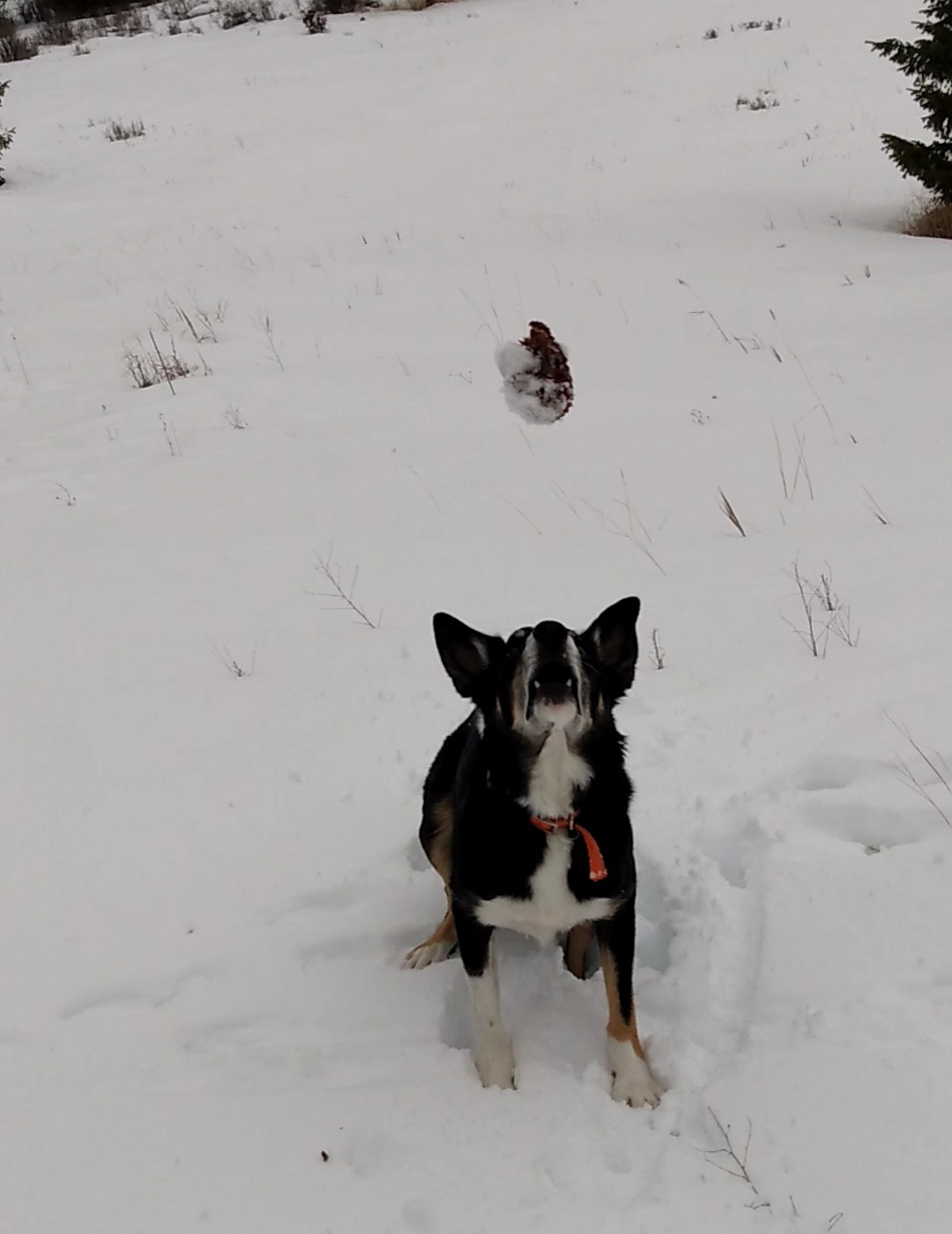
Dog catching pinecone
Tock learning what he has to do to get his pinecone reward. Training agility foundation is similar to attending writing workshops or reading books in which you learn the basic components of writing craft.

Similar to writing a book, agility training happens in many stages. After dogs learn how to work and move with their human handlers, they need to become comfortable with the individual obstacles. Once they’re performing an obstacle correctly and confidently, they’re ready to learn its name, so they can run to it when they’re commanded to do so (beware of assigning names to things too early, or you’ll end up having to say “tunnel” five times while your dog runs around it or stares cluelessly at you). Finally, dogs have to learn how to string obstacles together into sequences and to understand both verbal and body language signals in order to know where to go next on course.

After lots of time learning the little things, Moth & I became a team

The main point I’m trying to make here is that for agility dogs and writers both, it takes time and lots of patience to learn the craft. But as you master the tricks of your trade, you’ll be able to string them together into an entire manuscript. This masterpiece is the most tremendous trick of all—and only you will know just how much work went into it.

Happy Tales!

How Fast is Fast Enough? A Question of Pacing.

For a young to moderately old dog (face it, Tock, that second one is you) who’s chasing after something that’s running away, catching up to it as fast as possible seems to consume them. They extend their stride and fly over the ground, stretching and leaping…

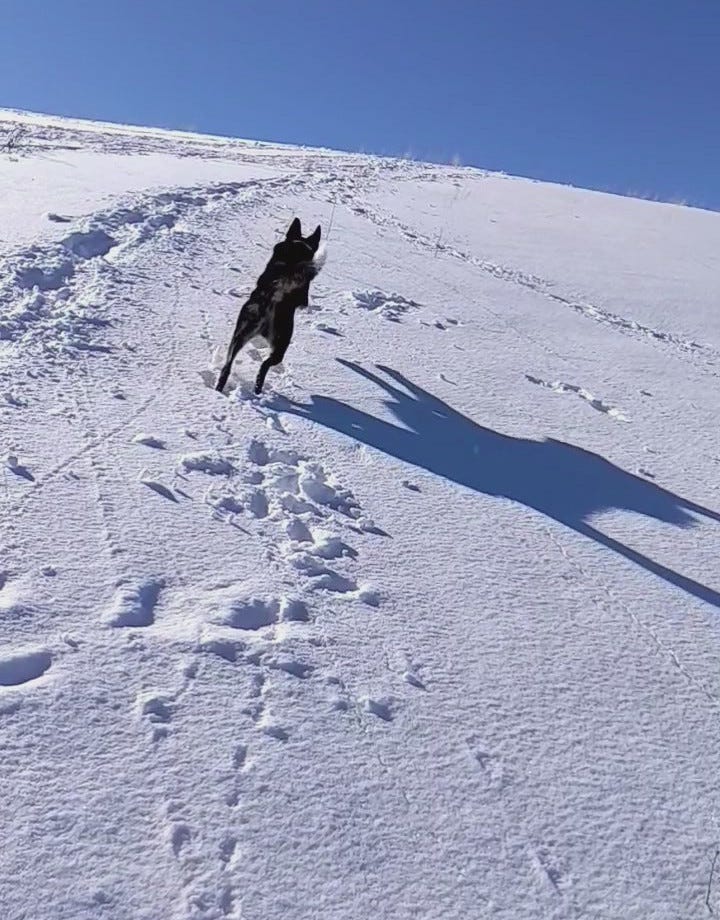
Dog bounding uphill

…until wham, they reach it. And stop dead. For a short moment to a long while, depending on both the dog and the object that’s been caught, nothing happens. No running, no excited barking and whining, nothing at all except perhaps the chomping of the dog’s jaws, or the sniffing of the place where the thing disappeared.

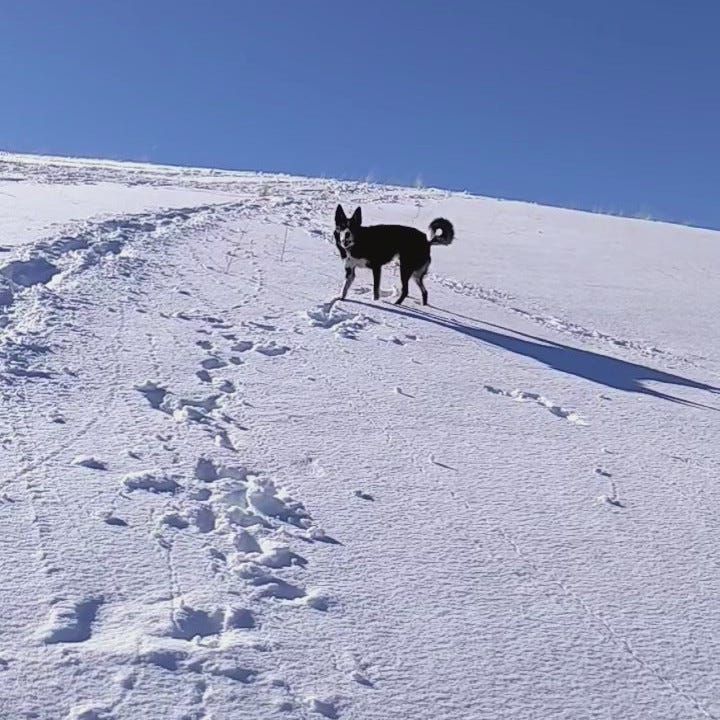
Dog standing still

If we translate this into the universal language of writers, these two actions would exist at the furthest extremes of what we know as pacing—a critical concept that governs the ebb and flow of a story’s narrative and a reader’s sense of time. The narrative might rocket along, perhaps getting a character away from an evil villain or blasting someone into another universe, the reader turning pages so fast their fingers begin to blister. Or the action might vanish altogether, leaving the story dwelling on a single moment, a deep thought, or a detailed description of setting. Or the story could settle on a pace somewhere in between.

When I received an early critique of one of my first manuscripts long ago, one line in the editorial letter stuck out to me more than the rest: Your pacing is inconsistent. Unfortunately, the editor didn’t provide examples and went on to discuss other things. In my naiveté, I didn’t know whether this remark was meant to point out something good or something bad. After many more years of writing and both giving and receiving critiques, I reached the conclusion that that editorial comment had pointed out something I’d done that was very bad indeed. A reader doesn’t want to feel jolted out of high-speed mode, or conversely, thrust ahead without warning.

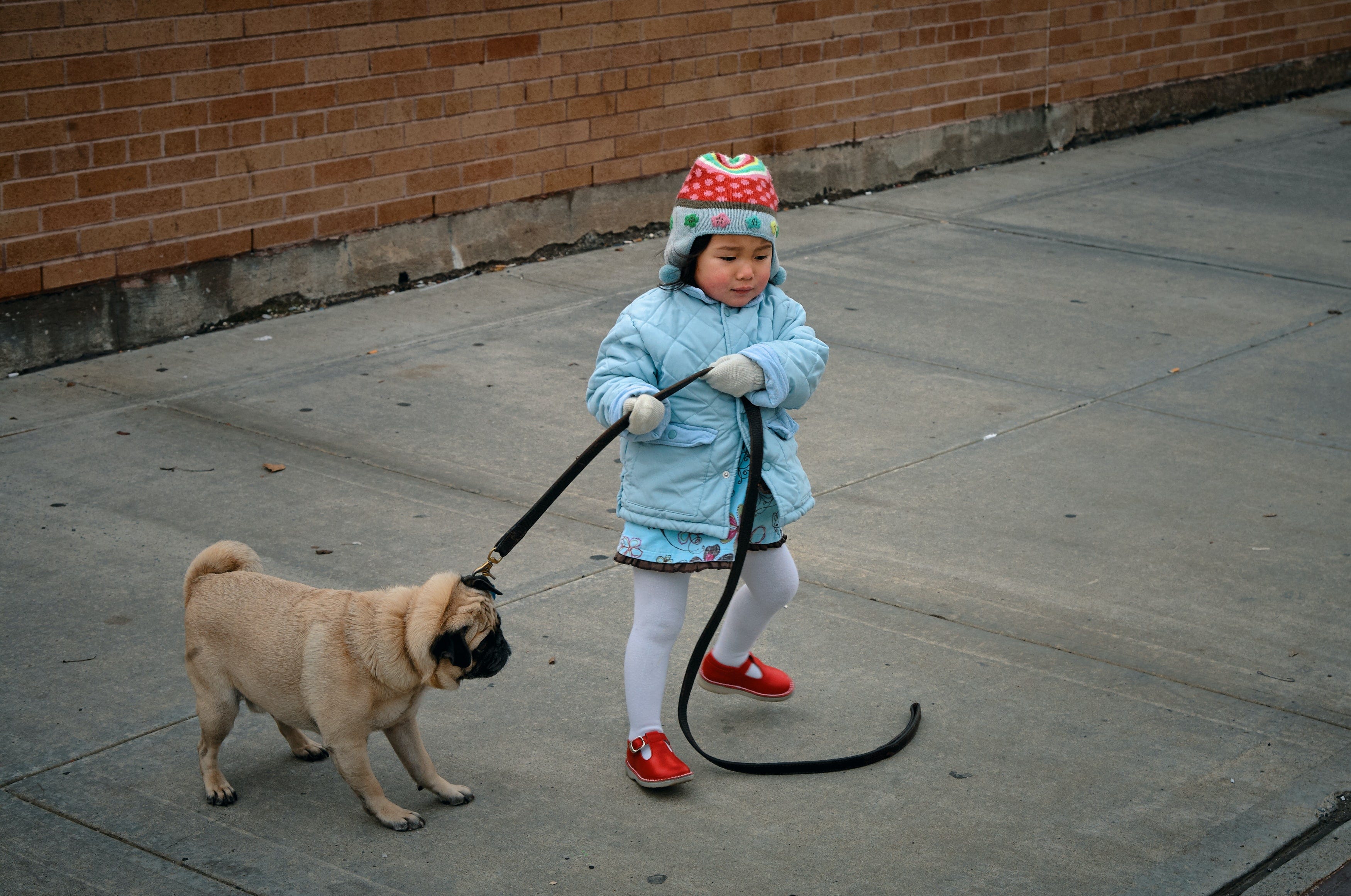
Child pulling resistant dog on leash
Photo credit: Vidar Nordli Mathisen

Consistency in pacing is especially important when discriminating one genre from another. When we pick up a thriller or an adventure, we expect almost non-stop action from start to finish. We want a book heavy on plot, with a relatively small amount of time spent digressing into characters, their thoughts, and their backstories. We want a book we could inhale in a single night if we so desire. Conversely, when we pick up a book of literary fiction, we’re anticipating a long, slow read in which we can take time to appreciate each poetic phrase, each carefully chosen word, each well-developed character, no matter how secondary they are to the plot.

But what about all those books in the middle, which might require an equal treatment of plot and character? Crime Novels, Psychological Thrillers, Women’s Fiction, and Mysteries, for instance (author Elizabeth George’s contemporary mysteries are just one example of masterful blending of plot and character). Or stories that need to incorporate lots of slow-paced world-building, like Sci-fi and Fantasy? And don’t forget the many books that cross genres, like “literary thrillers.” In all of these categories, I’m not so sure anymore that consistent pacing is necessary. Or even desirable.

Lest this alarm you, let me clarify. I’m not advocating that your story should stop and start haphazardly. If you do that, your poor reader will end up disjointed and confused, probably with a headache. They’ll feel like a dog might who’s expecting a nice, relaxing amble, and instead is yanked around on the end of leash, or ordered to do lots of things for no apparent purpose.

Poor Tock was a bit confused when told to lie down shortly after being told to come.

Instead, what I’m suggesting is that it’s perfectly fine to change your pace as long as there’s a reason for it. Or as long as it’s consistent with the plot and character arcs at that moment (this is what I now think that past editor must have meant!). If the plot demands a page or a chapter of tense action, the reader will expect it. Alternatively, if you’re moving characters into a new location, your readers will likely become confused unless you slow down and spend a paragraph describing the scenery. Your characters are allowed to act as fast or slow or erratically as you need them to—as long as you’ve included some inner thoughts that explain their actions. Only then will the readers understand (and anticipate) pacing changes.

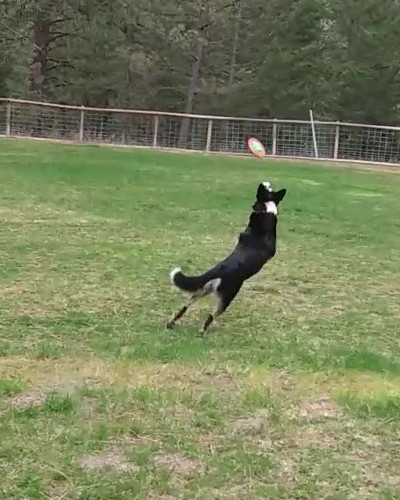
We fully expect Tock to come to a sudden stop in another second because we know in advance that his main goal is to catch the frisbee.

I like to view pacing as a continuum. It’s perfectly okay to shift gears, either gradually or slowly. The trick, ultimately, lies in whether the change in pacing makes sense. Like a dog on an exploration, readers look forward to speeding up and then slowing down, over and over through the course of a story.

Dog sniffing snow
A lot of dogs are happiest when they’re just allowed to be dogs—going for a walk, running, or stopping to sniff as they see fit.

Another thing to keep in mind is that a story that’s fast-paced from start to finish is in danger of tiring a reader out so much that they can’t finish. After a fast section that spans many pages, your characters—and your readers—will appreciate a brief rest via a retreat into thoughts or dialogue.

Panting dog
Tock’s dearly departed older “sister,” Moth

And conversely, be careful not to spend too long on your slow sections. They take longer to read and process, and are best digested in little bits, interspersed throughout more active scenes. Otherwise, you risk losing your readers to boredom … or worse!

Sleeping dog

If only I’d realized long ago that the phrase inconsistent pacing really means illogical pacing. Pacing, in other words, that is too fast or too slow to make sense at that point in the story. So the next time you read through your work, pretend as though you’re starting out on a delightful walk with your dog. Let him stroll, let him trot or gallop or jump in the air, let him stop to sniff and pee and paw at the soil—and then start moving again. As long as he’s having a good time, you’re doing it right.

Dog trotting across landscape

Happy Tales!
Want vs. Need: What’s the Difference, Anyway?

Literary Agent: I’d like a better understanding of your protagonist’s motivation in the first few pages. What do they want?

Writer:

Frustrated writer staring at computer

What Does Your Character Want?

First of all, don’t tear your hair out! As budding writers, we hear this request a lot from agents, editors, and critique partners. Heck, you’ve heard it from me already (see my previous post), and I’m not even a professional in the publishing industry. Despite the fact that I know full well how critical Character Want is, I spend a lot of time revisiting those first pages while I’m writing, double-checking that everything my protagonist does later stems from this initial want. And when I’m finished Draft One, character motivation is still one of the primary areas I tackle in revision. Why is this such a problem for us? (I say “us” rather than “me,” because based on every critique group and workshop I’ve participated in since the beginning of time, I know I’m not the only one).

Part of the issue, of course, is the obvious one: figuring out exactly what our characters want when we first meet them in the story. For my middle-grade characters, this is often something small and relatively simple, centered around friends, family, and school. One protagonist wants to protect her learning-disabled brother, another his autistic sister. One wants to stop getting in trouble, one wants to cause as much trouble as possible, another wants to win a role-playing game, and yet another wants to be allowed to sing her heart out rather than do her schoolwork.

But in terms of the stories themselves, these external wants are only the tip of the iceberg. They’re a starting point, a way to show our readers that our characters have human desires and face obstacles in achieving them. They’re a fabulous stepping stone into our fictional worlds, helping readers form attachments with the characters that populate them. The most important thing these desires do is drive our characters to take action—sometimes silly or dangerous—in their desperation to obtain them.

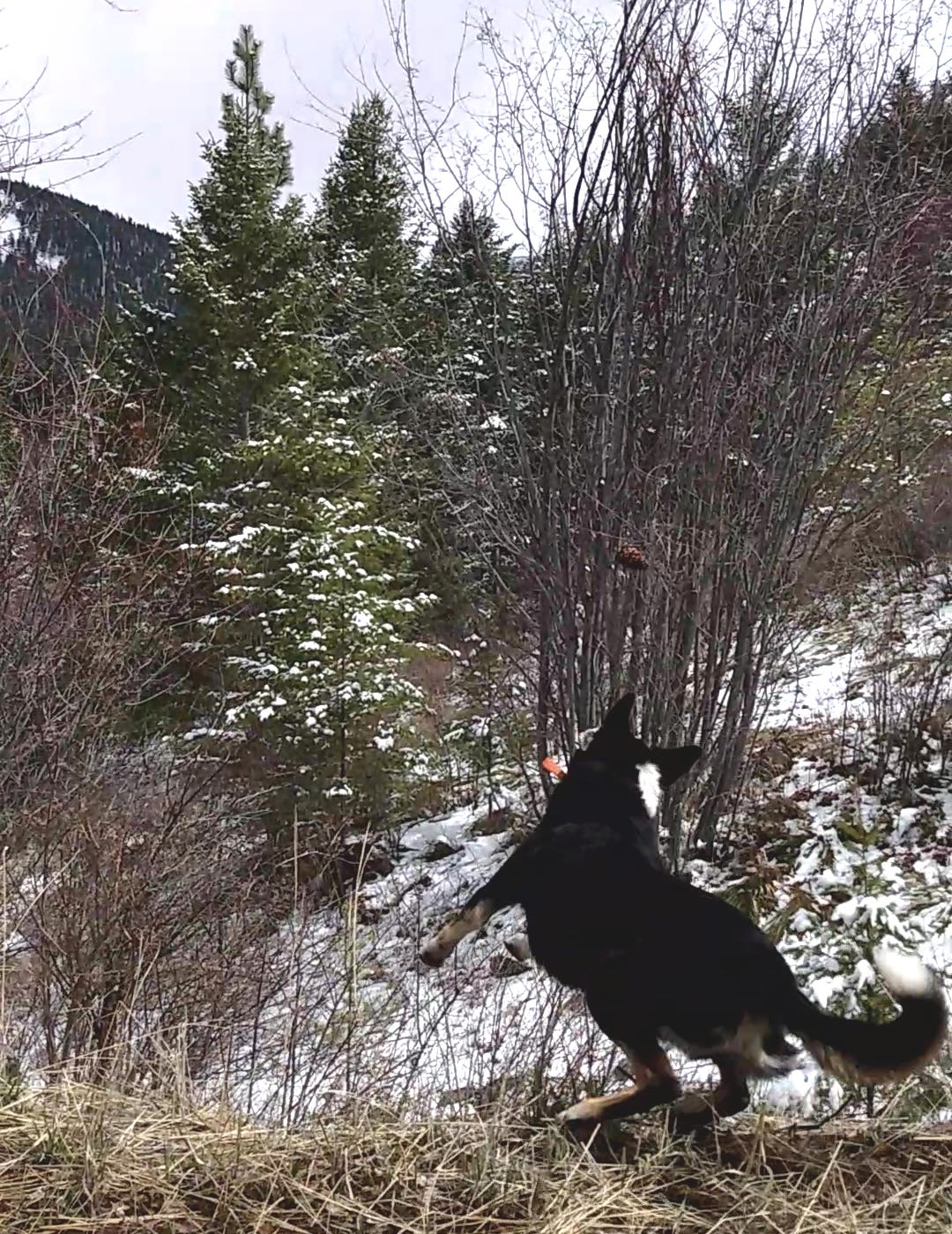
Dog leaping down embankment

Tock will do anything for a pinecone. Just like his motion propels him closer to his prize, so do the actions of the protagonist in pursuit of their initial goal and the things they desperately want.

Initial. Remember that word. It’s my firm belief that in the most interesting stories, a character’s first want doesn’t end up being the internalized one they eventually realize they need. It might have the opposite effect, in fact, at first hindering their emotional growth and putting them in danger of any sort of resolution of their character arc—until they recognize the underlying need they must fulfill.

So What Does a Character Need?

A need is something essential to survival. In the strictest sense, this means physical survival and includes only the most basic things, like food, shelter, clothes, and medical care. But emotional needs are so important for mental health that we’ve got to consider them, too. Common emotional needs include friendship or a sense of community, self-expression, love, and happiness.

A dog’s needs are simple: Food, water, exercise, a “pack” to belong to, a human to love and be loved by. Medicines, if necessary. In the developed world, many dogs have moved beyond these needs into the luxury of material wants. Tock’s coveted pinecone, for instance, is ultimately an external material good (though I’d argue that his innate desire to work—by fetching cones—brings him the joy and self-fulfillment of a basic emotional need). Tock achieves all of his needs every day, but a lot of dogs aren’t so lucky. Their character arcs aren’t complete—no matter how much I wish I could resolve every single one of them.

Logo for HSWM
My favorite animal rescue organization. What’s yours?
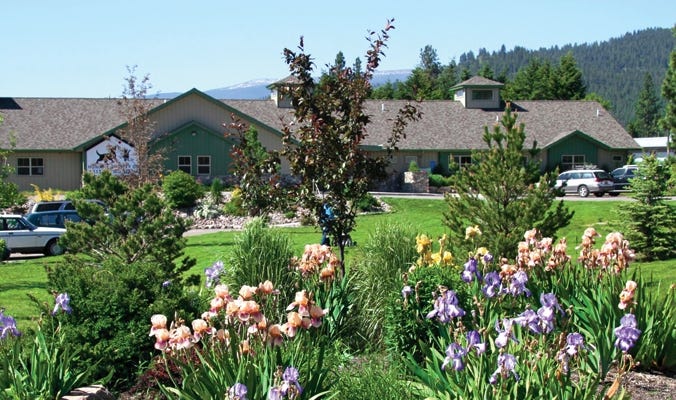
Humane Society of Western MT
The Humane Society of Western Montana

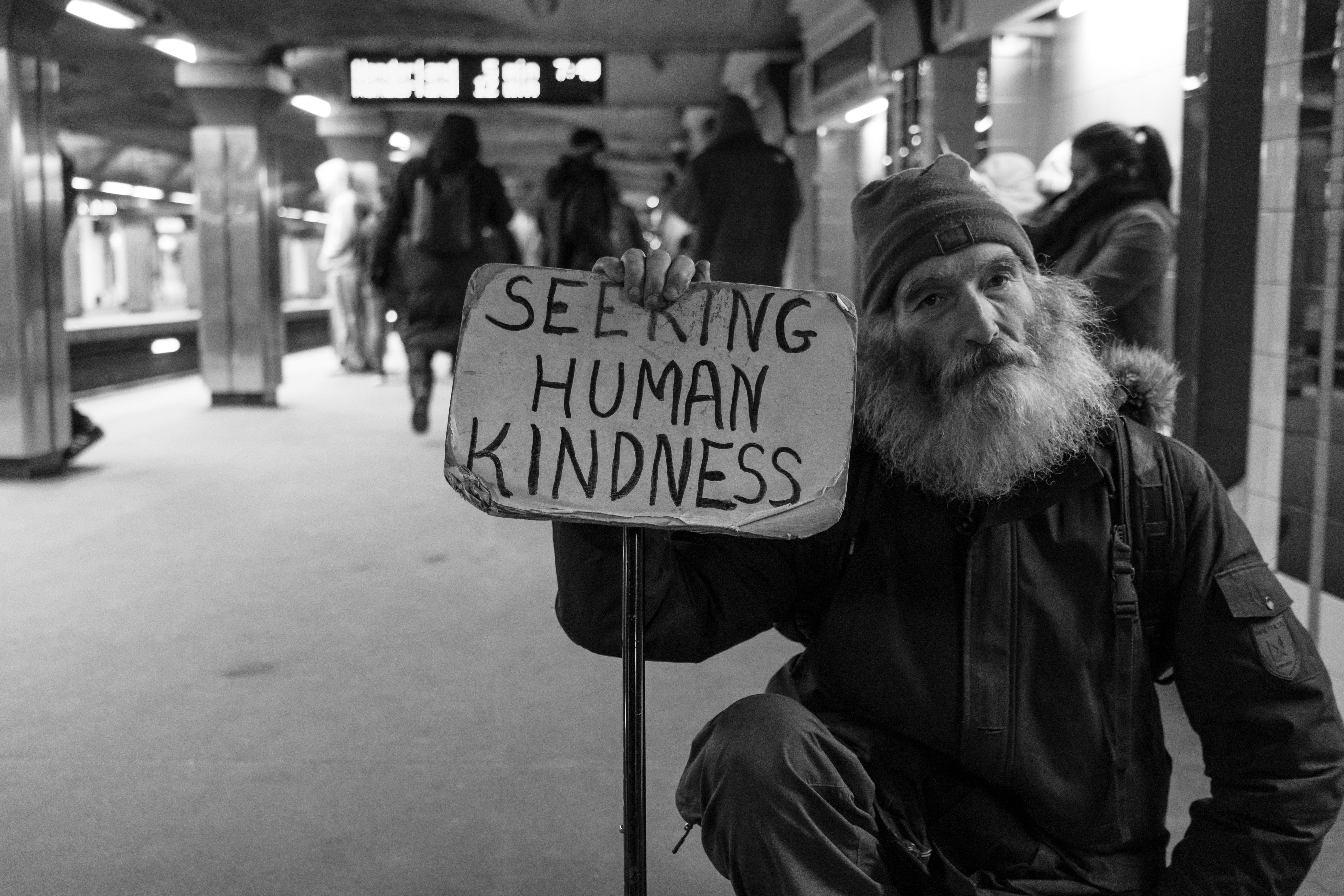
A lot of people aren’t so lucky at satisfying their basic needs, either, because they’re mired in poverty, mental illness or other health issues, or natural disasters. Due to circumstances that are often beyond their control, they must struggle to survive each day, no matter how hard they try for more.

Homeless man
Photo credit: Matt Collamer

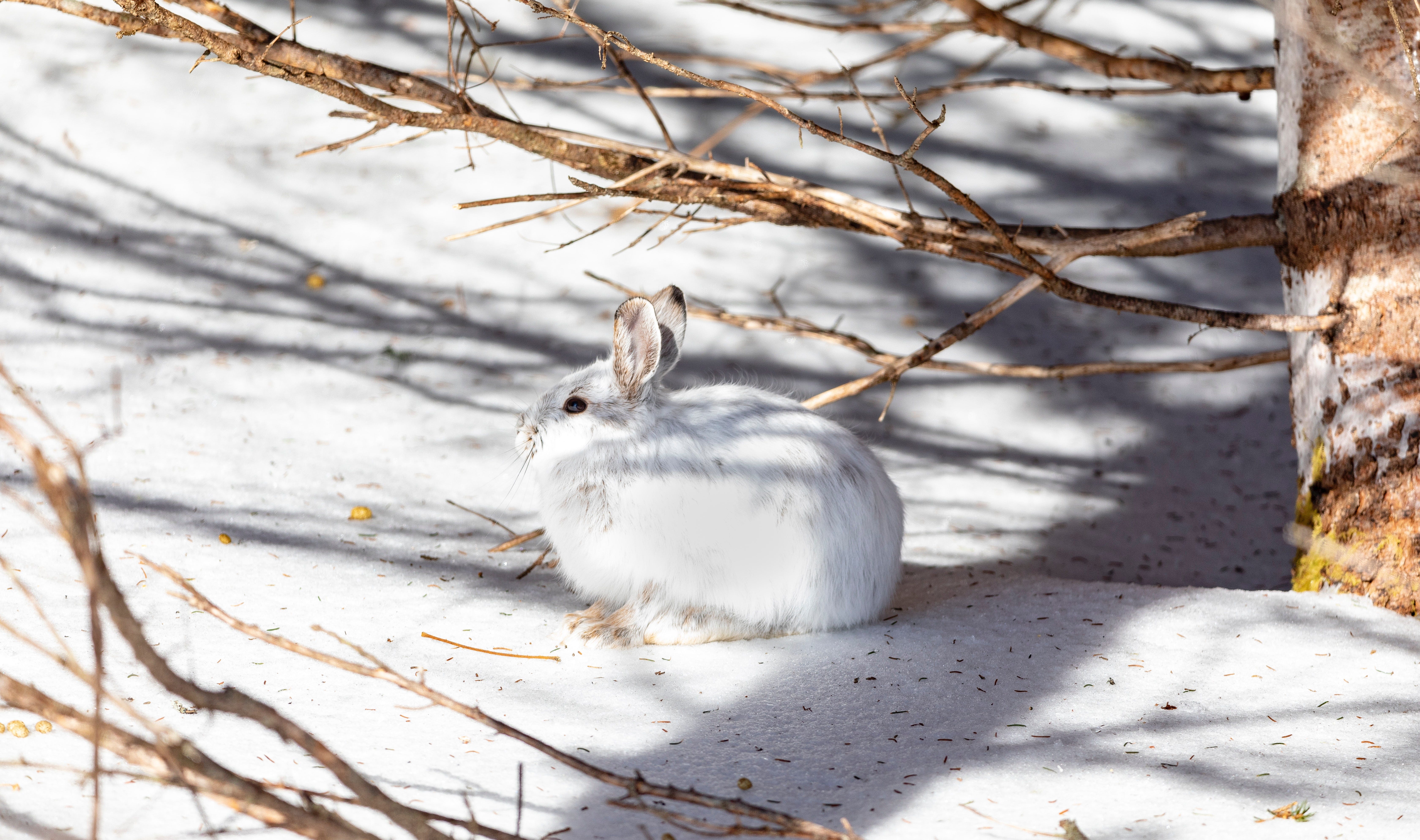
In this era of climate change and rapidly fluctuating environmental conditions, plants and wildlife are having trouble meeting their needs as well. This is true whether they live in California, the ocean, the mountains, or the boreal forests, tundra and ice of the far north.

Snowshoe hare in winter
With shrinking snow cover, the white winter coat of the snowshoe hare has become increasingly out of sync with its environment, making it more vulnerable to predators. Photo credit: Thomas Lipke

I don’t say these things to make you sad or feel guilty, but rather to think about the difference between the external things you want but could probably live without and the internal things you desperately need. As someone who’s spent most of my life fighting against clutter in my own home, I’m all too aware of how quickly unnecessary things can pile up.

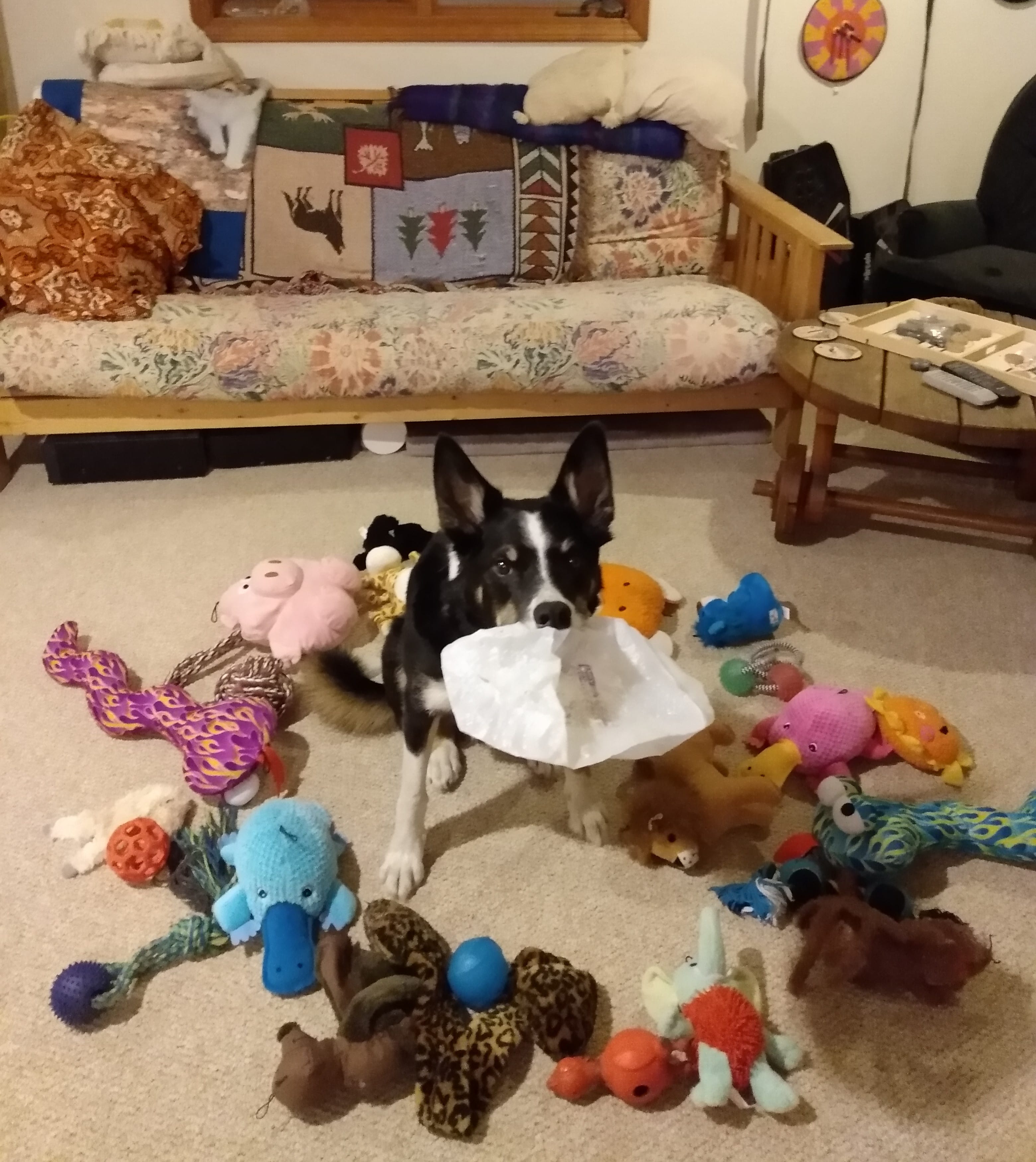
Dog surrounded by toys

And just as Tock is happier to go on lots of walks rather than sit home alone with a pile of toys, I know my life can be improved by removing some of my own material goods and replacing them with simple necessities or things that fulfill my deepest emotional needs—like hikes in exquisite places and the chance to listen to beautiful music and to write down my thoughts.

Alpine lake

I’m pretty sure that this holds true for my characters, too. Every protagonist I’ve written so far comes to the realization that their initial want is actually somewhat self-centered and narrow-minded, and that by taking a broader view of what they and those around them truly need, they’ll all be happier. A few of them completely abandon their initial wants, like the kid afraid of getting in trouble, the kid who only wants to cause trouble, and the kid who wants to become a game champion. My other main characters keep their initial desires (to protect their siblings, to sing), but develop them into much more far-reaching goals, like an awareness that their siblings need understanding more than protection, and that music can reach far beyond the performer, if people only learn how to listen. Whether or not these protagonists succeed remains up in the air, but hey, at least they’re trying!

Open book
Photo credit: Dollar Gill

What about your characters? Have you examined what they want versus what they need? Do these things change during the course of your story?

And how about you?

Happy Tales!
The Recall (or: Hook Your Readers!)

What’s the single most important command your dog needs to understand?

Dog running toward camera

That’s right! The recall.

Being able to get your dog back to your side whenever and wherever you want is super critical. Not just for convenience, but for safety. Imagine if you see him running in a high-speed game of chase with another dog toward a road. Or what if an aggressive-looking dog is heading your way, or a dog you know yours won’t like for some other reason? Or maybe you see a herd of deer that your beloved pet will be quite interested in disturbing, or a raft of ducks, or a clowder of cats. Even just one cat.

Without a recall, you’ve got zero control. A dog-owner relationship can’t really happen, in fact, because you won’t have a dog most of the time. Instead, you’ll have a loose fluffy cannon that’s likely to get itself lost, run over, taken home by someone else, or spend a delightful afternoon chasing rabbits or deer in the woods (delightful for your dog, not so much for you or the wildlife, of course).

Dog running away

We’ll talk more about training the recall in a moment, but let’s take a quick turn inward toward our writerly selves. We need to ask the same critical question about our stories as we did about our dogs:

What’s the single most important part of your story?

Open book
Photo credit: Kourosh Qaffari

Yep. The hook. Most readers, agents, and editors agree that they simply won’t continue reading without a good one.

If, like me, you’ve been querying publishing professionals for some time, you already know that both queries and pitches contain a single line that captures the essence of what your protagonist wants and what’s keeping them from getting it. This is the hook. Add another line about what happens if they don’t get what they want, and boom, you’ve got the stakes of your story.

Of course, in the story itself, setup of the hook can take many pages. The obstacles to a character’s chief want may not actually present themselves until the end of the first few chapters, but readers should have a solid idea of what the character wants on page one or by the end of chapter one, depending whom you ask. And by the time readers are ten percent of the way through your story, they’re gonna want to know what it’s about. Smaller hooks work great at the end of each scene or chapter.

In other words, a story hook answers the question: why do we care enough to keep reading?

Agents often say they read queries and sample pages line by line. If they don’t feel intrigued enough to go on at any point, they’ll put it down. This goes for readers, too. So it’s good idea to begin to get the essence of your hook out there from the very first sentence. Can you hook your readers into sticking around?

Likewise, can you hook your dog into sticking around?

Pack of trotting dogs

There’s actually a lot of similarity here. Picture your dog as the “reader” and yourself as the “story.” What can you do to make your dog care enough to come back to you?

The simplest solution is to divide that question into three smaller ones:
1. What do they want most in the world?
2. How easily and successfully can they get it? (specifically, are there any obstacles or distractions in their way?)
3. What happens if they don’t get it? (i.e., what are the stakes?)

Let’s answer those three questions for Tock:
Q. What does he want?
A. Tock: “Pinecone, please. If we (translation: Wendy) can’t find one, then I’ll take a snowball. Or a frisbee. In desperate situations, a stick.

Dog about to catch pinecone


Q. How can he get it?
A. Tock: Wierdest thing. Wendy always wants me close to her before she throws the darned thing. So I get close. Who cares about what other dogs, squirrels, or deer are doing if something’s gonna go hurtling through the air that I get to fetch?

Dog next to person holding stick

Q. What are the stakes for him not getting it?
A. Tock: Obvs. If I don’t come back right away, I don’t get to play my favorite game! And if I’m really bad, not that I ever, ever am (clarification: Tock may have a faulty memory of his younger days), I might find myself on the boring end of a leash for a while.

Dog on leash

Now, not all dogs have a pinecone receptor in their brains like Tock. They might prefer playing catch or tug with another kind of toy, or getting to inhale a treat. But—and this is important—it better be the most fascinating toy (preferably one they only get to see during recall training) or the most delectable treat ever! No boring kibble, unless that’s the thing they love most. And little treats in a row are way better than just one. Dogs can count. They know when they’ve hit the jackpot.

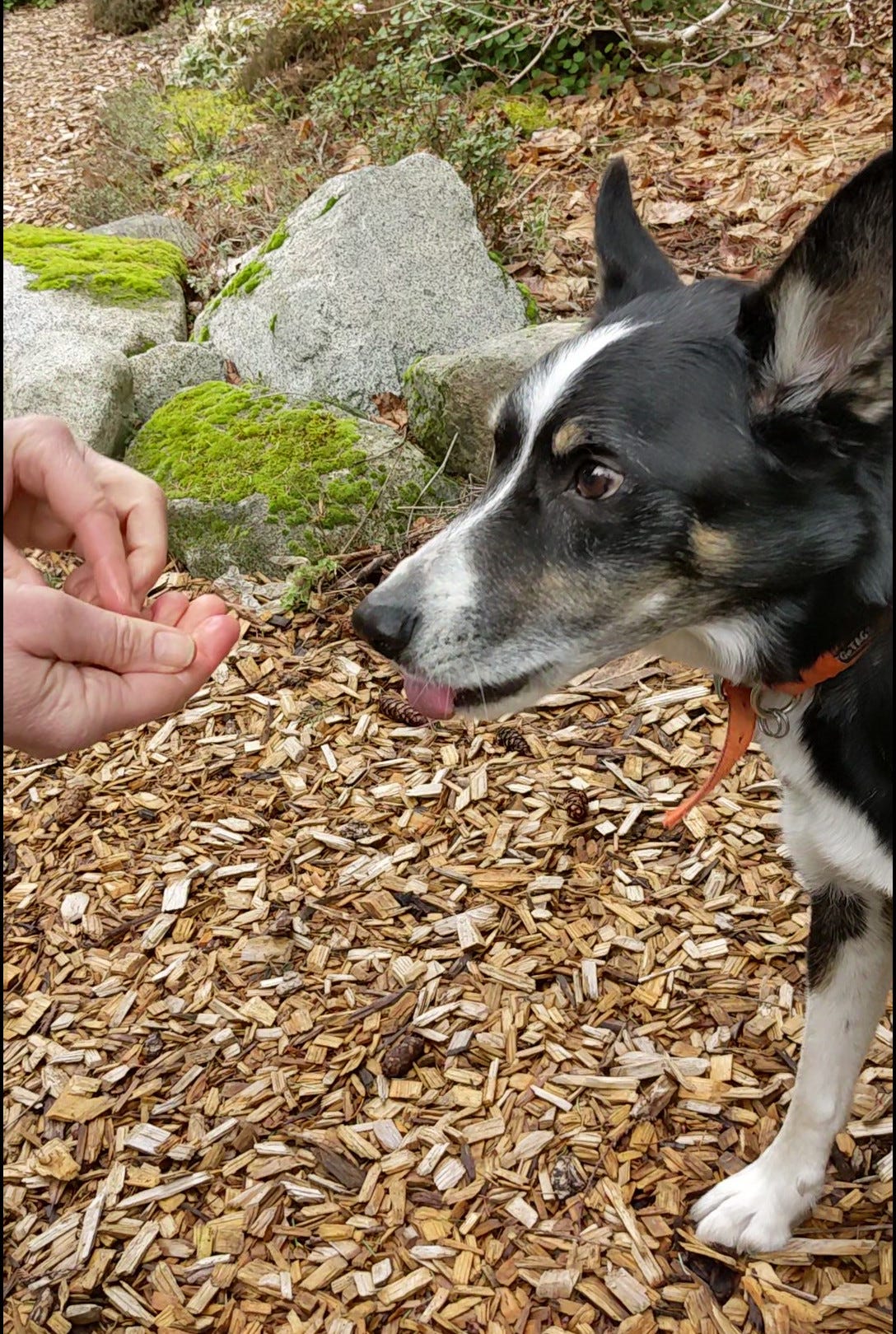
Dog getting treat reward
Tock getting the first of many treats in a row for a good recall.

Some dogs might like being petted and fussed over by their human more than anything else.

Person patting dog
Tock is 99% work, but here he is getting love anyway.

The biggest rule to live by is to keep yourself interesting to your dog! No matter what the reward, lots of dogs love to engage in a game of chase with their person right before getting it. Just as a live squirrel is way more fun for a dog than a dead squirrel, so is a “live” toy or treat that the dog has to chase and perhaps tug away from you. A recall should always be a fun game in which you get to be an active participant!

Share Happy Tales

When either training a dog or thinking about your story hook, it’s best to start simple. Many beginning writers throw too many enormous life or death obstacles at their poor protagonist right away. But your readers might not care about the characters enough at that point to get why those problems even matter. Remember to start with: What does your protagonist want? (Note: this doesn’t mean lots of backstory. Make sure characters aren’t too passive and keep as much of the action as you can in the present time.)

Likewise, it’s tempting to try recalls with dogs all the time, all over the place—at the dog park, on the sidewalk, in the hills. But your poor puppy might not know you well enough yet to want to come back to you in the presence of all those fun distractions (translation: he might not understand the stakes he’ll be missing out on.) Start your recall training inside with lots of great rewards (trust me, if your dog isn’t crazy over-the-top about them, they’re not good enough). Start by calling your dog a very short distance with zero distractions! And don’t jack up the difficulty until you’re 100% sure they’ll do it. Otherwise you’re diluting the power of their name. They’ll learn that they can ignore it when the Great Outdoors offers them something more interesting than you.

Dog in a sit-stay, waiting for treat

Back to writing, try crafting a simple hook before you even start your story. This can help it gel in your mind. Most importantly, this hook helps you bond with your story – because if you don’t understand it, how will your readers? Next, keep that hook in mind while you’re writing the first draft of your first few chapters. Re-visit it and make sure it’s compelling. Envision your hook like an invisible leash, pulling your readers—or your dog—back to you whenever and wherever you want.

Dog recalled to handler, getting treat

Happy Tales!
Wanna Go For a Walk? (or: How Your Dog Will Solve Your Writer’s Block)

“Ready for walkies?”

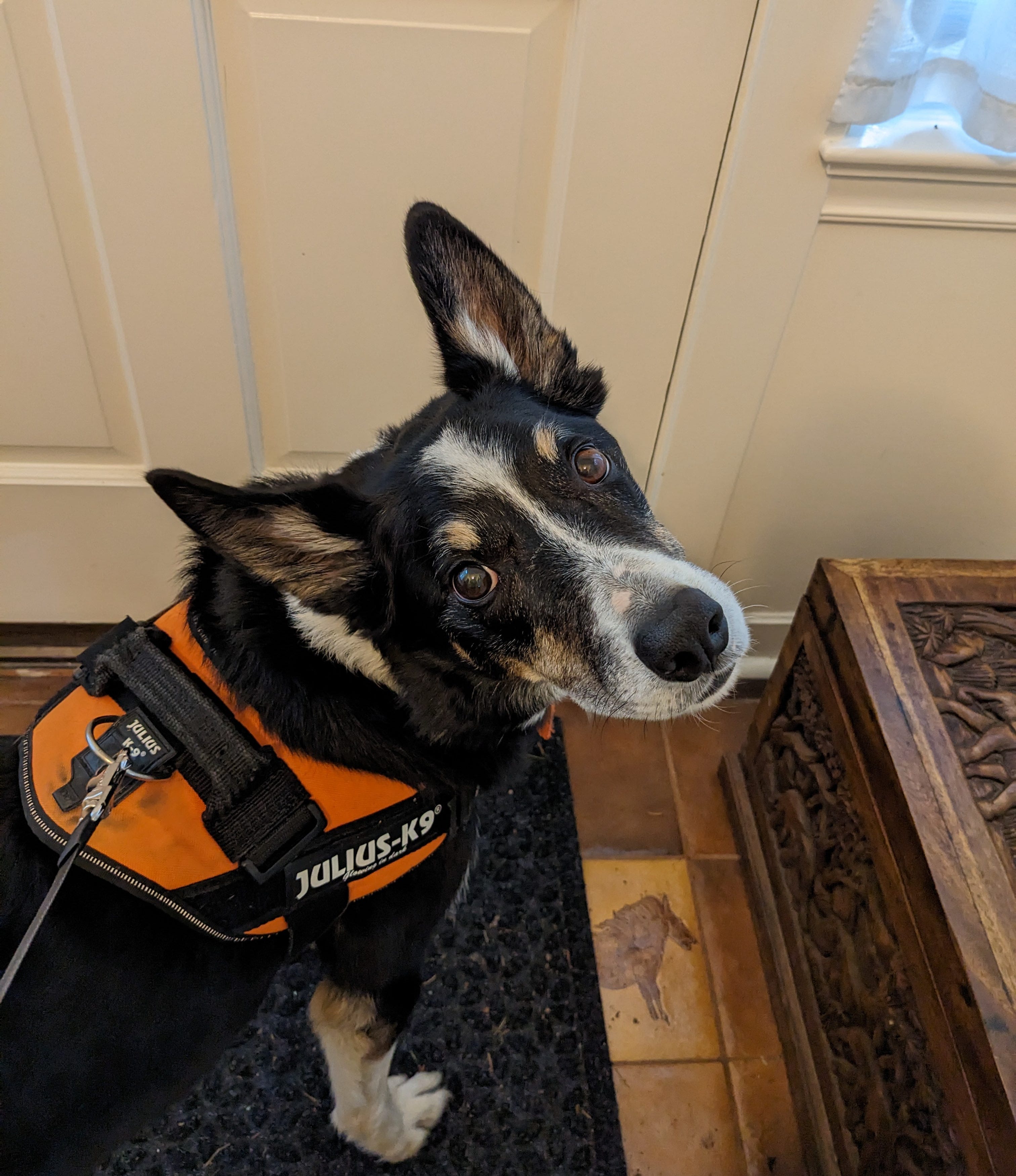
Dog standing at door

If you have a dog, you probably say something of this sort every single day. Hopefully more than once. It’s an auditory litany that mustn’t be missed, even though as a writer, you’ve probably learned that unintentional repetition isn’t a great thing. If you skip it, you’re likely to end up with a miserable pet and a messy house (okay, one that’s even messier than usual). You’ll miss out on one of the most fruitful sources of inspiration known to humankind, and a surefire solution to Writer’s Block. This holds true even if you don’t have a dog, though of course a canine companion provides the best excuse for getting outside whether you feel like it or not.

An addiction to walks is why my dog and I traipse through the hills each morning. We put aside chores, snacks, conversations, and actual writing in favor of retreating to the forested hills out our back door. No matter whether it’s hot and smoky from forest fires, gray and rainy and inches deep in mud, or icy and blizzarding and ten degrees F, we suit up and begin a brisk walk up a bumpy trail. To the uninitiated, this trip might sound mundane or downright unpleasant. But to my dog and me, it’s an entry into our own fantastic Land of Oz.

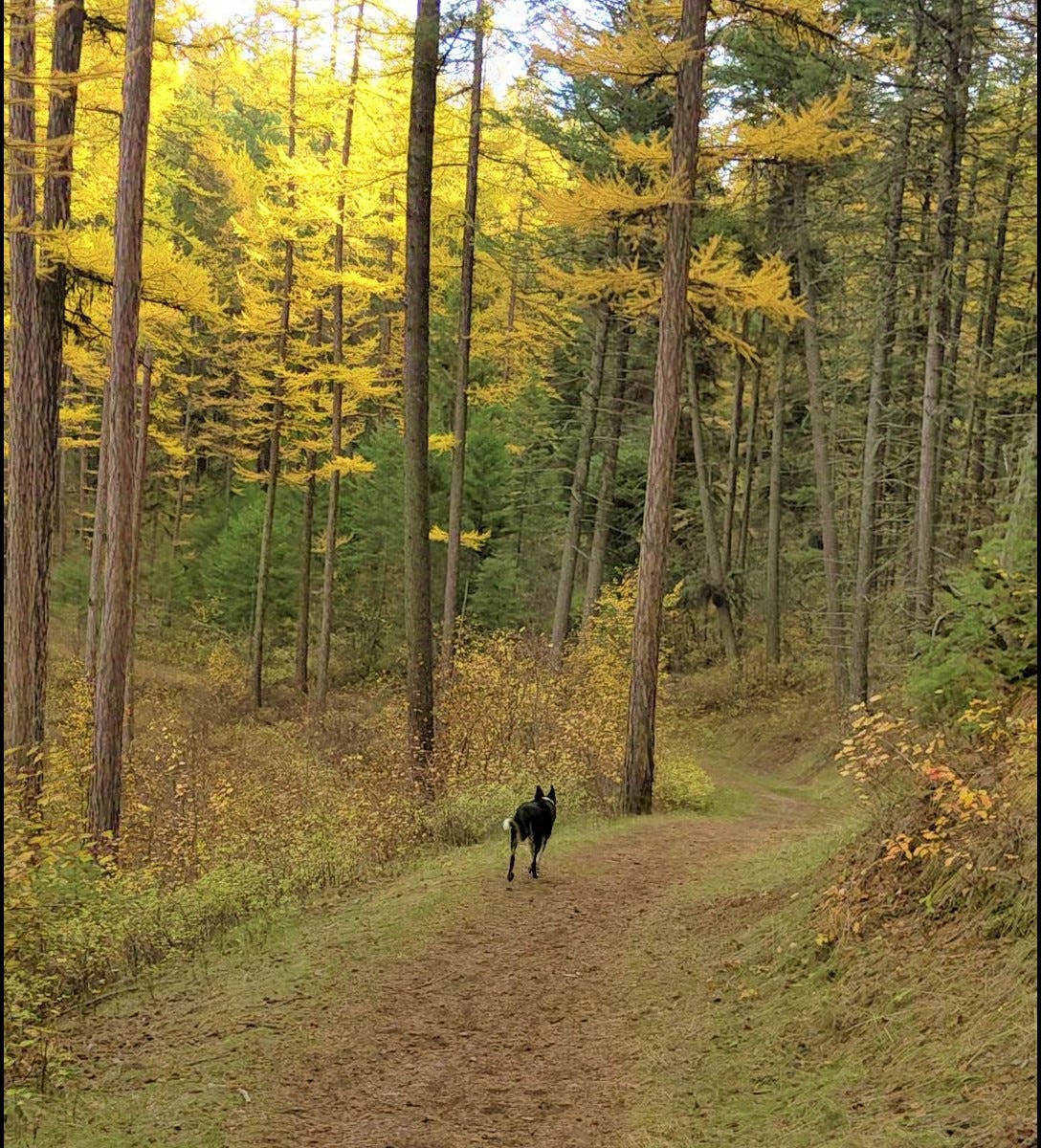
Dog trotting through woods

Huh? you might wonder. How could a trudge along a dirt trail remotely resemble the fantasy world in one of the most classic of childrens’ books?

Easy. You know that trail my dog Tock and I follow? Don’t be fooled by the ice, dirt, rocks, roots, hounds-tongue burrs, and knapweed. Nope. It’s actually the yellow brick road. Not only does it lead us to our goal—a high point with a view—but we always, always get more than we bargained for. In a good way. Mostly. Here’s what happens:

  1. We get to hunt down wicked witches (Tock’s translation: pine cones or snowballs, depending on season. In desperate situations, a stick will suffice.)
  2. We make every effort to scare off the flying monkeys (Tock’s translation: squirrels).Photo credit: Andrey Svistunov
  3. We make some friends (Tock’s translation: other dogs) if we’re lucky.
  4. We go on an interesting adventure in which our hearts pump furiously.

And then? Like Dorothy and Toto, we go home.

Okay, fine, you say. Land of Oz. Cute analogy. But what does it have to do with me writing a single word of my recalcitrant Work-in-Progress?

Glad you asked. In fact, the great outdoors is one of the most perfect places to think about and talk about writing. First of all, we—meaning everyone, not just writers—live in our own stories all the time. Stories that we create every day. They might be wholly true, they might be wholly fictional, or they might be somewhere in between. They’re our own personal narratives, about ourselves, people we know, things that’ve happened to us, or things in news.

Now if you’re a writer, or want to be a writer, you spend even more time in your head sifting through those stories, and other people’s stories, and your thoughts, feelings, and reactions to all those stories to find the ones that you want to write down.

Sometimes, this is pretty overwhelming. You get stuck. You can’t dig through the mess deep enough to find a fresh new idea. Or you have so many ideas that you can’t decide which one to work on. Or you can’t solve a problem in your plot, or your characters, or your world. You might feel like the solution is off in the wings, in your peripheral vision where you just can’t quite grasp it. It darts away when you try to look at it because there’s simply too much stuff going on in your head. Too many thoughts and stories distracting you.

So what can you do? Simple. Get away from your screens! Put yourself in a situation where your subconscious mind can take over. Engage your entire body (your physical self) to the best of your ability, so much that you can damp out all the clutter. Get your heart pounding, your lungs acting like bellows, your muscles working, your sweat glands pumping. Get some fresh air! (Hopefully fresh, depending where you live.)

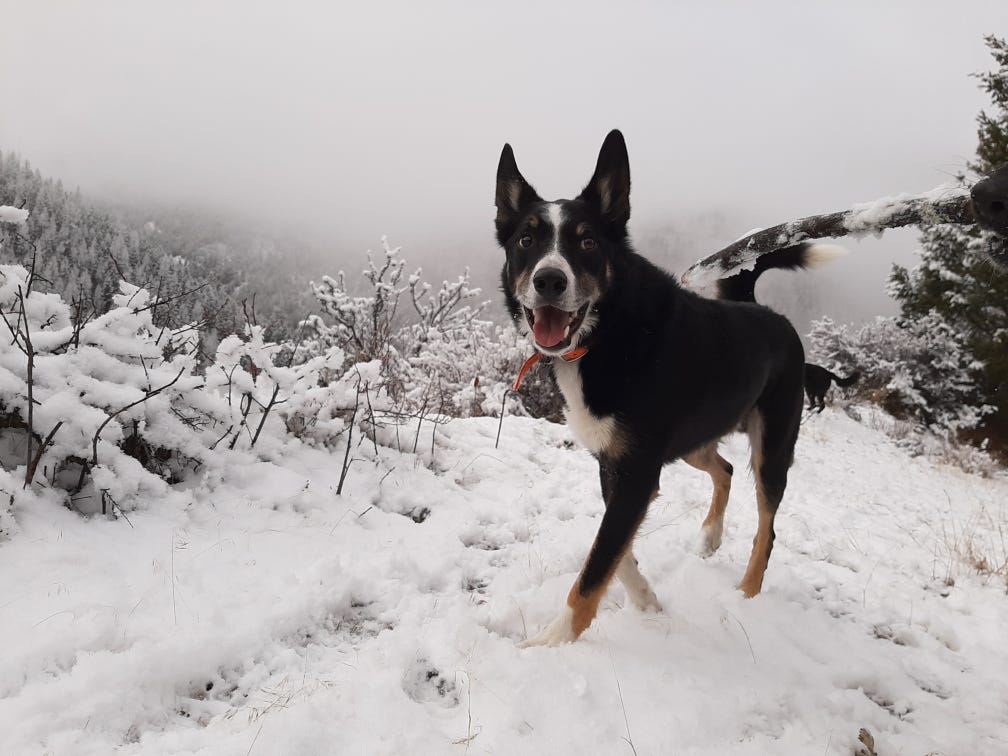
happy dog outdoors

And the beauty of this is that you can do all of it by going for a walk! As you probably know, exercise has major physical health benefits for your heart, muscles, bones, and immune system. All those endorphins released by exercise lead to higher levels of happiness and relaxation. Even better, regular aerobic exercise benefits your brain! It increases the size of your hippocampus (the part of the brain associated with verbal memory and learning) and promotes neurogenesis—the growth of nervous tissue. You can become more resistant to neurodegenerative disease.

From a writing standpoint, here’s the most important thing: moderate aerobic exercise such as walking can provide you with your best ideas. You get to live entirely in the present, experiencing the real world—the one that’s happening right this second. Because you’re devoting all your energy to your physical self, your brain simply doesn’t have energy to keep up with the many story threads whirling around inside it. It relaxes and lets go, unmooring you from preconceived notions, assumptions, and worries. You find yourself able to see details and the big picture at the same time. And that’s when the ideas happen.

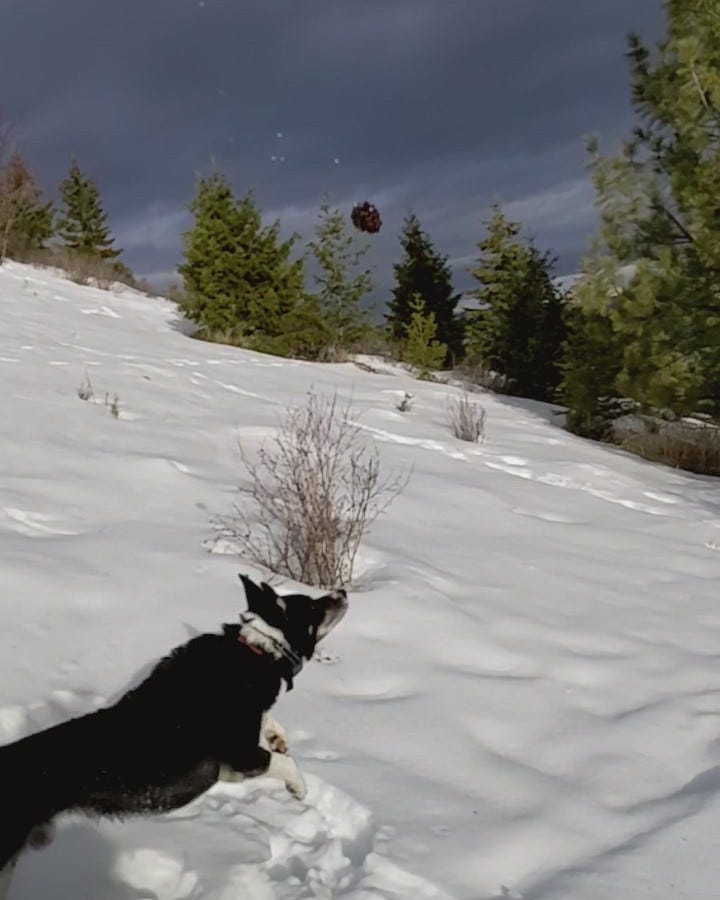
I’m speaking from experience here. Unless it’s deathly cold (below ten degrees F is the cutoff for my dog’s paws) or I’m deathly ill, I walk every day. After a few throws of a pinecone for my dog, ideas, memories, and solutions to tricky plot problems begin to pop into my head without any effort on my part. By my side, Tock chases, fetches, sniffs, and runs, thoroughly enjoying every second.

Dog running after pinecone

All you have to do to immerse yourself in your own Land of Oz adventure is to turn your phone off and your body on. Take your dog, if you have one and it’s willing. A walk in the woods is a truly magical place to most dogs. Unless they’re very nervous (in which case you’ll need to start much closer to home), they carry with them a sense of wonder, excitement and joy, as well as total immersion in the present. These feelings will spill over into you, too, no matter how down or worried you were before you went out the door.

This may sound strange, but I truly believe our dogs have a lot to teach us about writing. Twice per month, I’m gonna translate the basic precepts of dog minds, dog ownership, and dog training into simple writing tips. So if you love animals, if you love the outdoors, or if you love writing about these things, I invite you to join me here.

And now, from one writer to another, I urge you to get out there in the Land of Oz. I’ll be looking for you on the Yellow Brick Road.

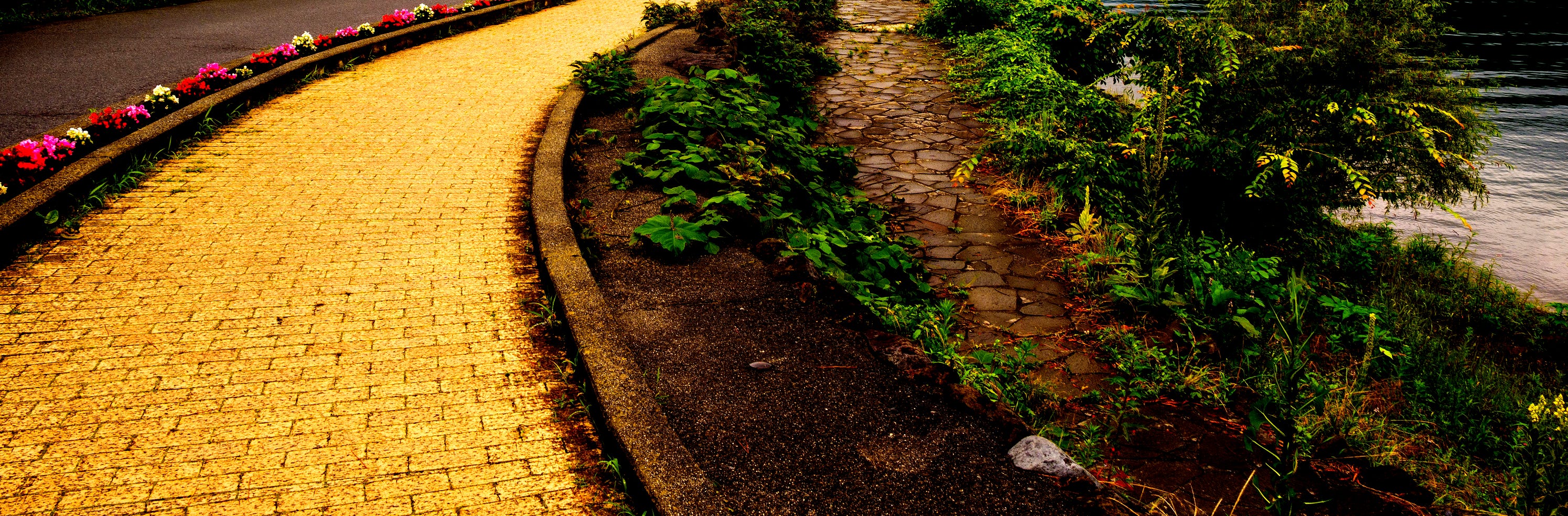
Yellow brick road
Photo credit: Akshay Nanavati

Happy Tales!

(from: https://happytales.substack.com/p/wanna-go-for-a-walk)